French Question Words Worksheet: Qui, Où, Quand and Est-ce que
French question words from qui to quel are matched to replies, agreed with nouns, used in est-ce que questions and written into 13 word-bank blanks, with a full answer key.

- Grades
- Grades 9–12, High School
- Pages
- 4
- File type
- Answer key
- Included


- Subject
- Foreign Languages, French
- Topic
- French words, interrogative words
- Resource types
- Worksheets & Printables, Worksheets
- Answer key
- Included
About this resource
What's inside this resource
Qui, qu’est-ce que, où, quand, comment, pourquoi, combien de and quel / quelle open page 1 in a question word chart, each with its English meaning and a model question such as « Qu’est-ce que tu lis ? ». Part A turns the chart around: students read eight replies, from « Au parc. » to « Parce que j’ai faim. », and write the question word each reply answers. In Part B, students choose quel, quelle, quels or quelles, with small m., f. and pl. markers after each noun.
Page 2 moves to asking. Students order word tiles into two questions, then turn underlined information into est-ce que questions after a model box that compares rising voice, est-ce que and inversion. Part E is a two-question classmate interview.
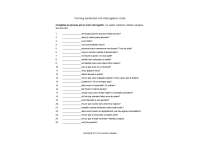
Page 3 is a fill-in-the-blank page: a bank of seven words (où, quand, comment, combien (de), pourquoi, qui, qu’) and 13 questions missing their first word, each followed by a reply that points to the answer, such as « En bus. ». The items mix est-ce que, inversion and qui as subject. English directions guide every French task, and page 4 gives every answer with accepted alternatives.
Related resources
More resources teachers may find useful
24 related resources were found using this product's title, contributor, categories and tags.



In the classroom
Teaching tips & learning objectives

Learning objectives
- Match common French question words to the information they ask for.
- Complete questions with the question word that fits a given reply.
- Choose quel, quelle, quels or quelles to agree with a noun's gender and number.

Teaching tips
- Have partners ask their Part E questions aloud with a rising voice, then again with est-ce que.
- For a quick oral check, read a Part F reply aloud and let partners ask a question that fits it.
- Watch for qu’est-ce que written as que est-ce que, and for quel left unchanged before feminine or plural nouns.

Skills covered
- Question word meaning — students link replies such as « Cinq euros. » and « Demain matin. » to the question word each one answers.
- Word-bank completion — students supply où, quand, comment, combien (de), pourquoi, qui or qu’ in 13 questions using the reply clues.
- Adjective agreement — students choose the form of quel that matches sport, heure, livres and amies.
Good to know
Questions teachers ask about this resource
Which ways of asking a question does the worksheet show?
A model box in Part D compares three: raising the voice (« Tu vas où ? »), adding est-ce que (« Où est-ce que tu vas ? ») and swapping verb and subject (« Où vas-tu ? »). Part F then mixes est-ce que questions, inversion such as « va-t-elle » and questions with qui as the subject.
How does the word-bank page handle qu’ and combien de?
A note under the bank explains that qu’ joins the next word, as in « Qu’est-ce que… », and that combien de comes before a noun. The answer key adds a short note on the items where elision or de makes the difference.
Which answers are accepted for the trickier replies in Part A?
Where more than one question word fits a reply, such as « Cinq euros. » or « La chemise rouge. », the key names the best answer and lists the other accepted ones.
How do students know the gender of each noun in Part B?
Each noun is followed by a small marker: m. for masculine, f. for feminine and pl. for plural. The direction explains the abbreviations, so students can choose quel, quelle, quels or quelles without a dictionary.

No reviews yet
Downloaded this resource? Tell other teachers how it went.
Resource details
Concepts & topics
Core concepts
 Core concepts
- Interrogative words
- Est-ce que questions
- Inversion
- Quel agreement
- Elision with qu’
 Topics
Explore more
Categories this resource belongs to
Explore related searches
More to explore
You may also like