Diagram of Solar Eclipse Shadows Lesson




About This Product
A comprehensive and enjoyable fully resourced lesson on shadows and lunar and solar eclipses for middle school.
What’s Covered
> The shadow of a point source only has an umbra but the shadow of a large point source has an umbra and a penumbra.
> If the light source moves closer to the object, the shadow gets bigger.
> If the object moves closer to the screen, the shadow gets smaller .
> A lunar eclipse happens when the Earth stops all, or some, of the Sun’s light from reaching the Moon.
> The Moon orbits the Earth once every 29.5 days.
> When the entire moon passes through the Earths penumbra it appears slightly darker (penumbral eclipse).
> If only part of the moon passes through the Earth’s umbra it is a partial eclipse.
> A solar eclipse happens when the Moon stops all, or some, of the Sun’s light from reaching the Earth
> A person on Earth, standing in the Moon’s umbra will see a total solar eclipse.
> A person on Earth, standing in the Moon’s penumbra will see a partial solar eclipse.
> When the Moon is at its furthest point from Earth, it no longer covers the whole surface of the Sun and an annular eclipse is seen from the umbra.
> The Moon’s orbit is angled relative to the Earth so the Sun, Earth and Moon are not often in the alignment needed for a lunar Eclipse to occur.
> When the entire moon passes through the Earths umbra it appears red due to refracted red light (total or umbral eclipse).
What’s Included
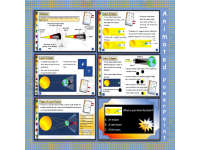
> Animated PowerPoint for teaching with exit ticket quiz
> Flip it (pupil writes questions to given answers)
> Anticipation Guides (combined starter and plenary)
> Foldable
> Cut and stick activity.
> Worksheet (x2) to support the PowerPoint
> Fact sheet
> Homework
> Fact share worksheet
> Pupil progress self-assessment checklist
> Exit Ticket
> Suggested lesson plan showing choices possible between resources
This pack contains fourteen printable resources as it is intended that the teacher uses them to build their own unique lesson to take account of student ability and time available. Literacy, oracy, self-assessment and peer assessment are all built in to the resources. These features are clearly marked on the comprehensive one-page flow chart lesson plan which shows where the logical choices between resources can be made.
See more Elf Off the Shelf resources on this topic and many others
What's Included
1 Zip file
Resource Tags
0 Reviews
Check out these other great products