Monster Genetics Activity
- Grades
- Grades 6–8, Middle School
- File type
- Preparation
- Print ready


- Subject
- Science, Life Sciences, Biology
- Topic
- monster, genetics
- Resource types
- Activities
- Preparation
- Print ready
About this resource
What's inside this resource
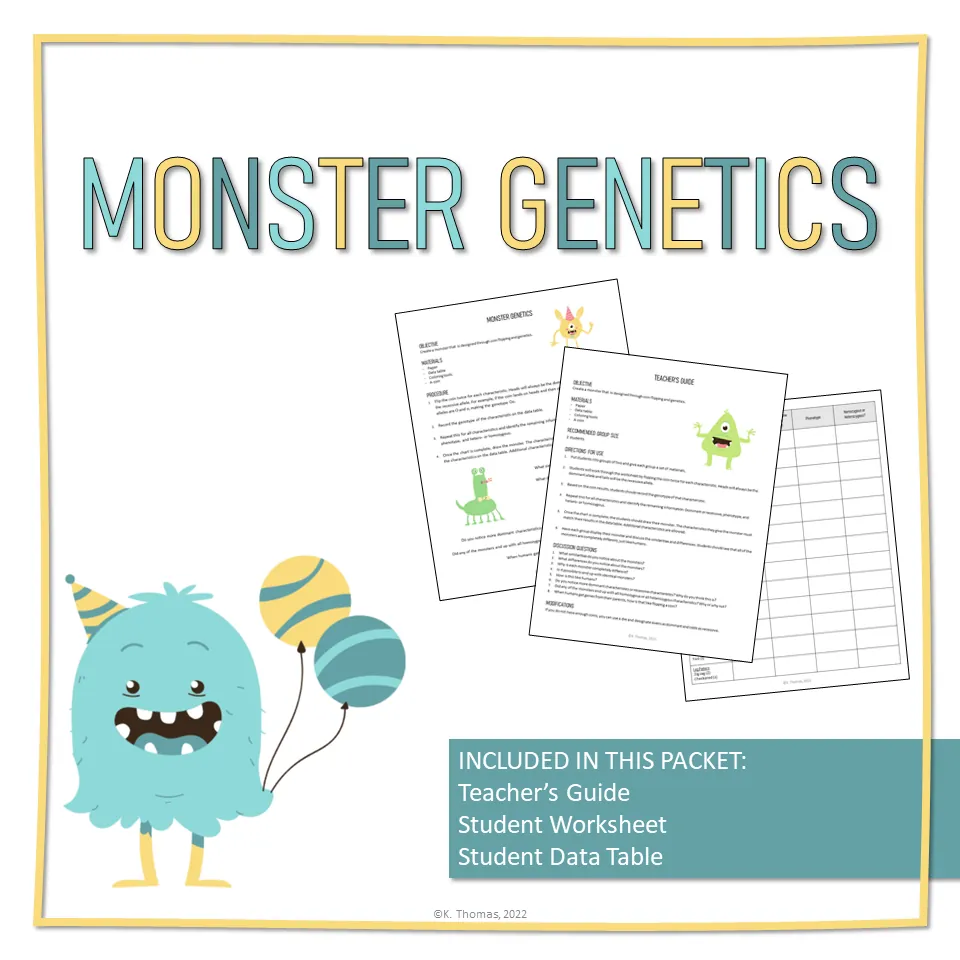
This resource is a Monster Genetics Activity.
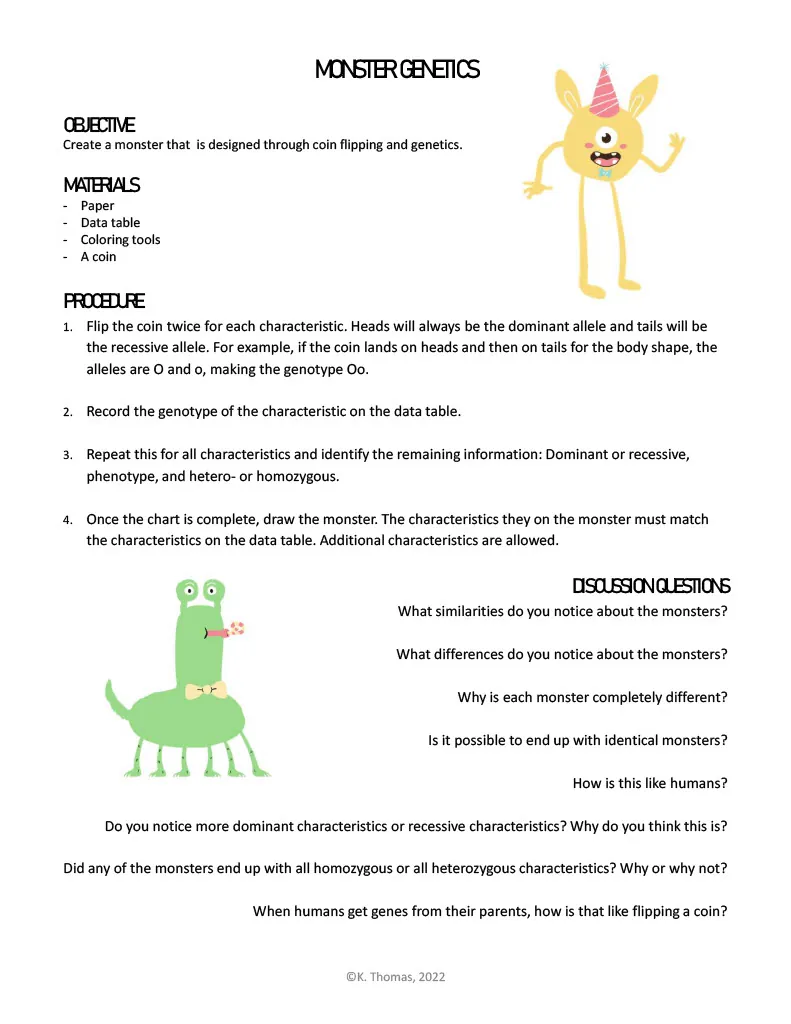
Students will flip a coin to determine the traits of the monster!
This is an exciting way to teach students how to follow procedures.
Included:
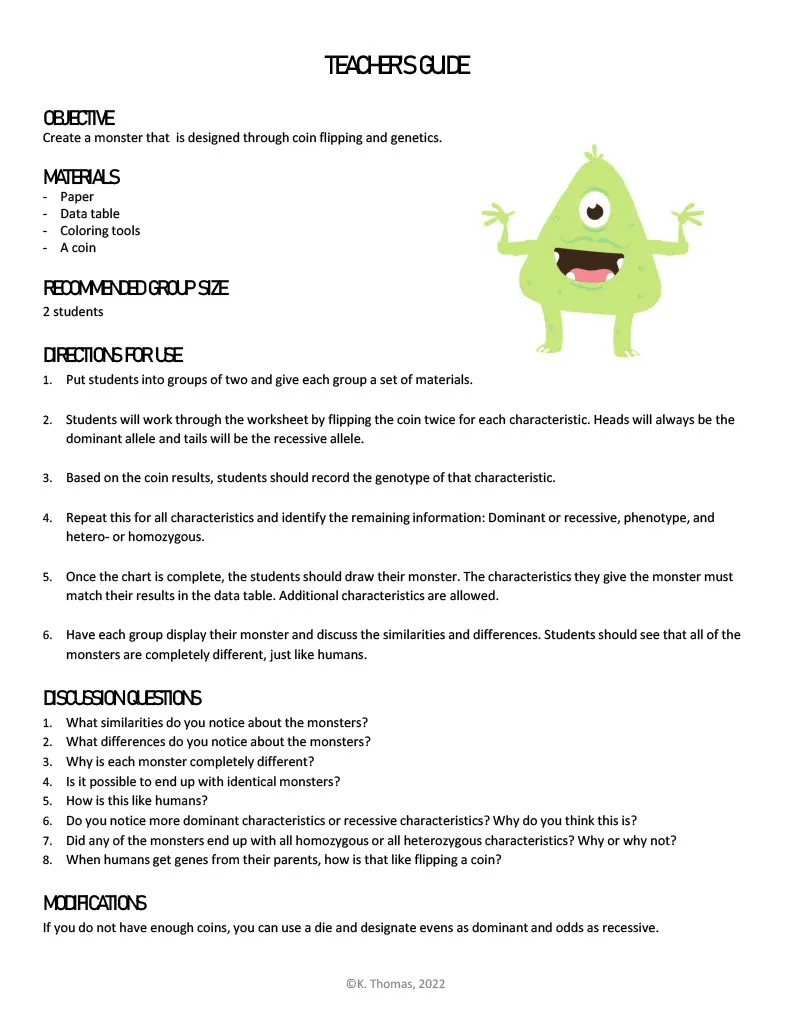
- Teacher's guide
- Student worksheet
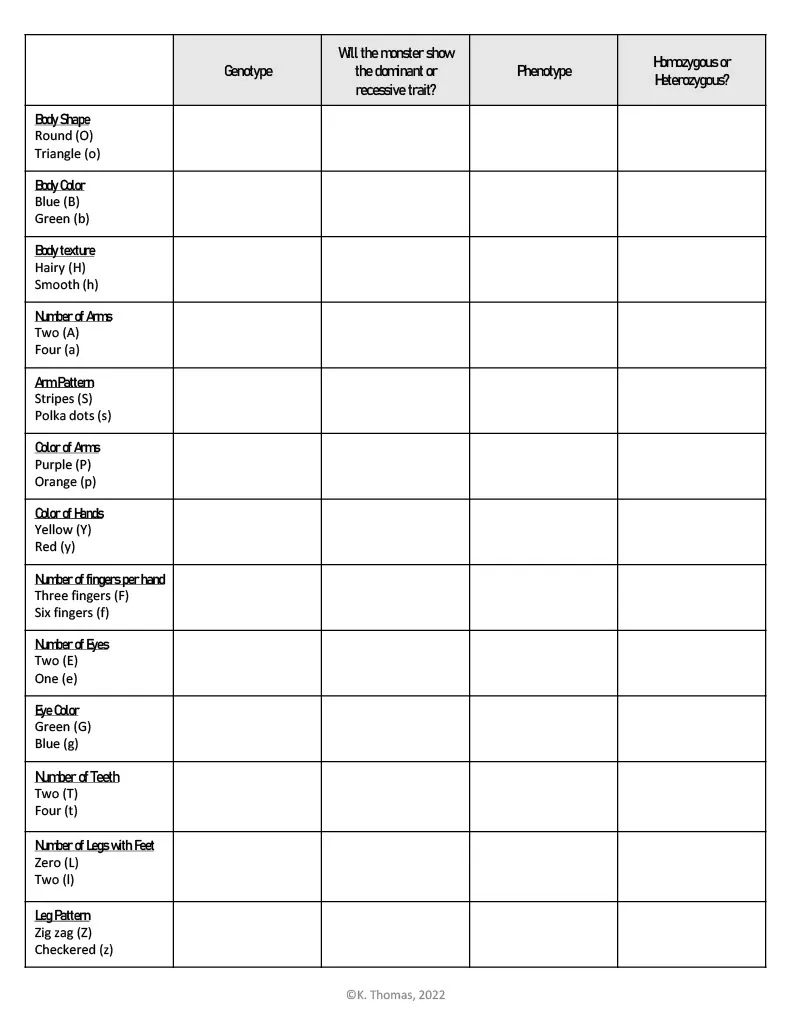
- Student data table
Related resources
More resources teachers may find useful
24 related resources were found using this product's title, contributor, categories and tags.


In the classroom
Teaching tips & learning objectives

Learning objectives
Use a coin flip to generate a genotype (e.g., Oo, BB, gg) for a given trait, with heads representing the dominant allele and tails the recessive allele
Determine whether a given genotype is homozygous or heterozygous
Determine the phenotype that results from a given genotype, applying the rule that the dominant allele is expressed when present

Teaching tips
Put students in groups of two, as recommended, since the activity is designed around pairs sharing one coin and one data table
Have every group flip in the same trait order so the class can compare monsters trait-by-trait during the discussion, since the data table lists all 12 traits in a fixed order
Use the 8 provided discussion questions after the monsters are drawn and displayed, since several (e.g., "Is it possible to end up with identical monsters?") depend on comparing multiple finished monsters

Skills covered
Genotype notation — students record each trait's result as a two-letter genotype (e.g., Oo, BB) based on a coin flip standing in for allele inheritance.
Dominant/recessive and phenotype determination — students work out which allele is expressed and what the resulting visible trait (phenotype) is for each of the 12 traits.
Homozygous/heterozygous classification — students classify each completed genotype as homozygous or heterozygous.
Good to know
Questions teachers ask about this resource
How many traits does each monster end up with, and where do the allele options come from?
Twelve traits total, from body shape and color down to leg pattern and tooth number, each with two named allele options already listed on the data table (for example Round (O) or Triangle (o) for body shape) — students don't invent the options, only determine which allele wins the coin flip.

No reviews yet
Downloaded this resource? Tell other teachers how it went.
Resource details
Concepts & topics
 Core concepts
 Topics
Explore more
Categories this resource belongs to
Explore related searches
More to explore
You may also like