Out of My Mind – Novel Study Unit (200+ Pages)
- Grades
- Grades 3–5, Elementary
- File type
- Preparation
- Print ready


- Subject
- ELA, Literature
- Topic
- Out of My Mind, literature
- Resource types
- Novel Studies, Worksheets & Printables
- Preparation
- Print ready
- Standards
- CCSS.L.5.5 CCSS.L.5.4 +1
About this resource
What's inside this resource
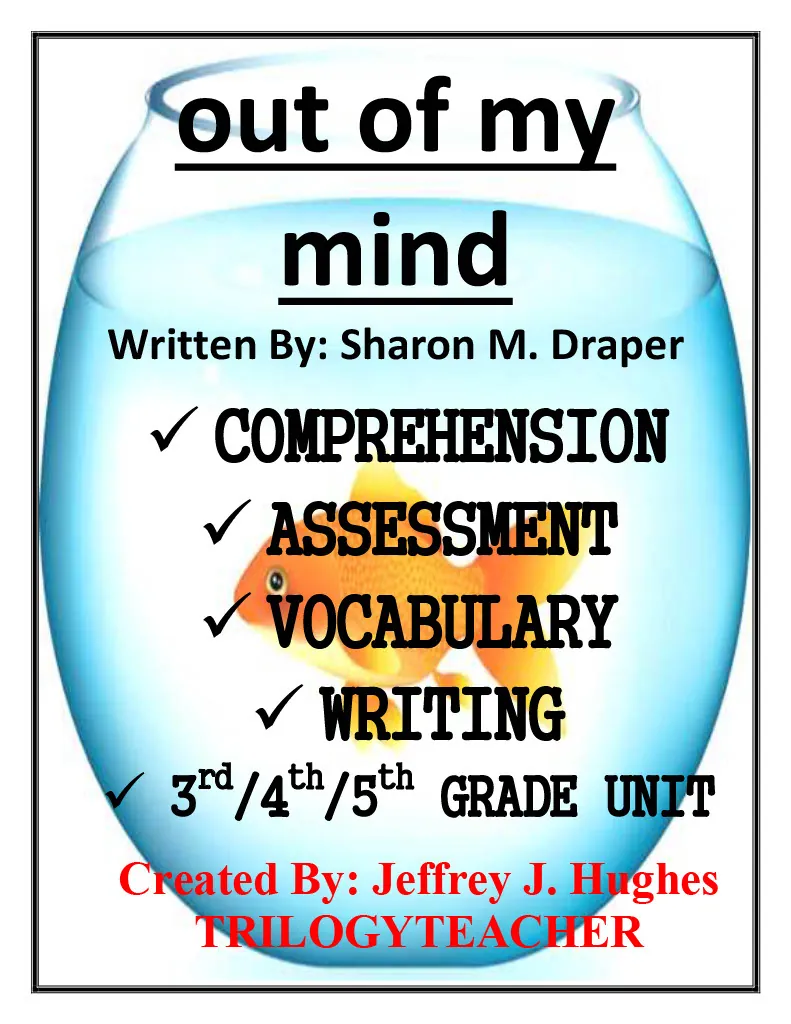
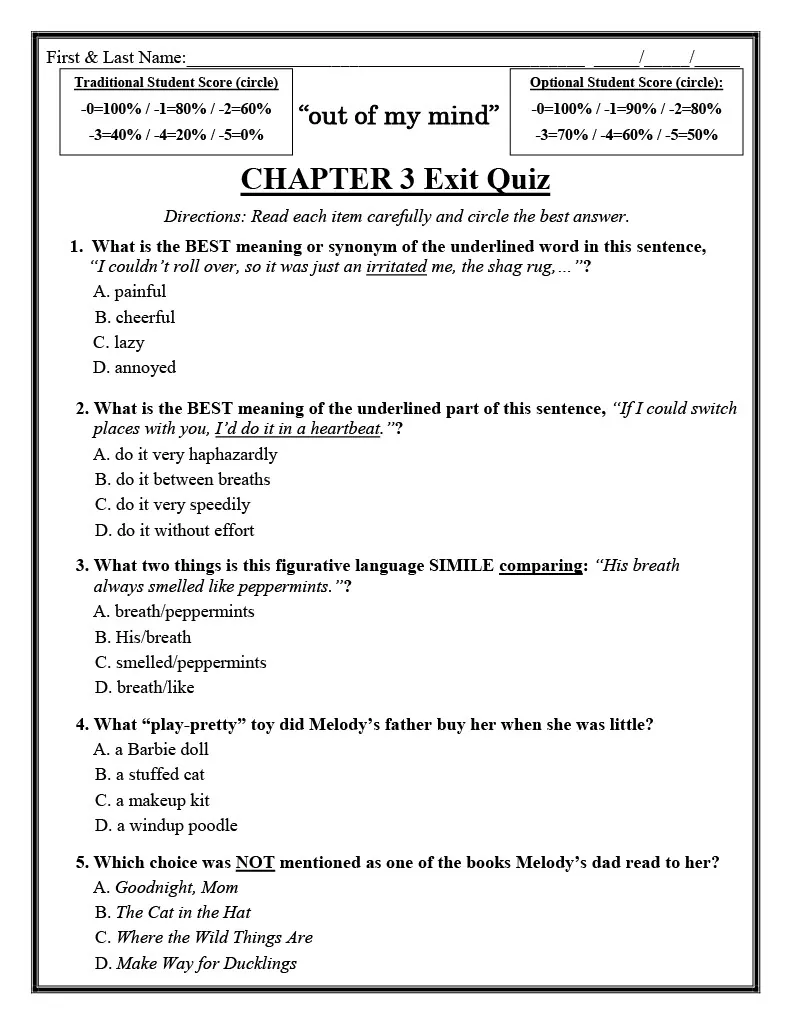
This "Out of My Mind" Novel Study Unit is packed with over 200 pages of engaging resources for students.
Included:
- Chapter comprehension worksheets
- Mystery match vocabulary words
- Exit quizzes
- Group work
- Summative assessment
& so much more.
All you have to do is print and go!
Answer keys included.
Related resources
More resources teachers may find useful
24 related resources were found using this product's title, contributor, categories and tags.


In the classroom
Teaching tips & learning objectives

Learning objectives
Identify and explain figurative language devices — similes, metaphors, idioms, hyperbole, personification, and onomatopoeia — as they appear in the novel.
Use context clues to determine the meaning of unfamiliar "mystery vocabulary" words from each chapter.
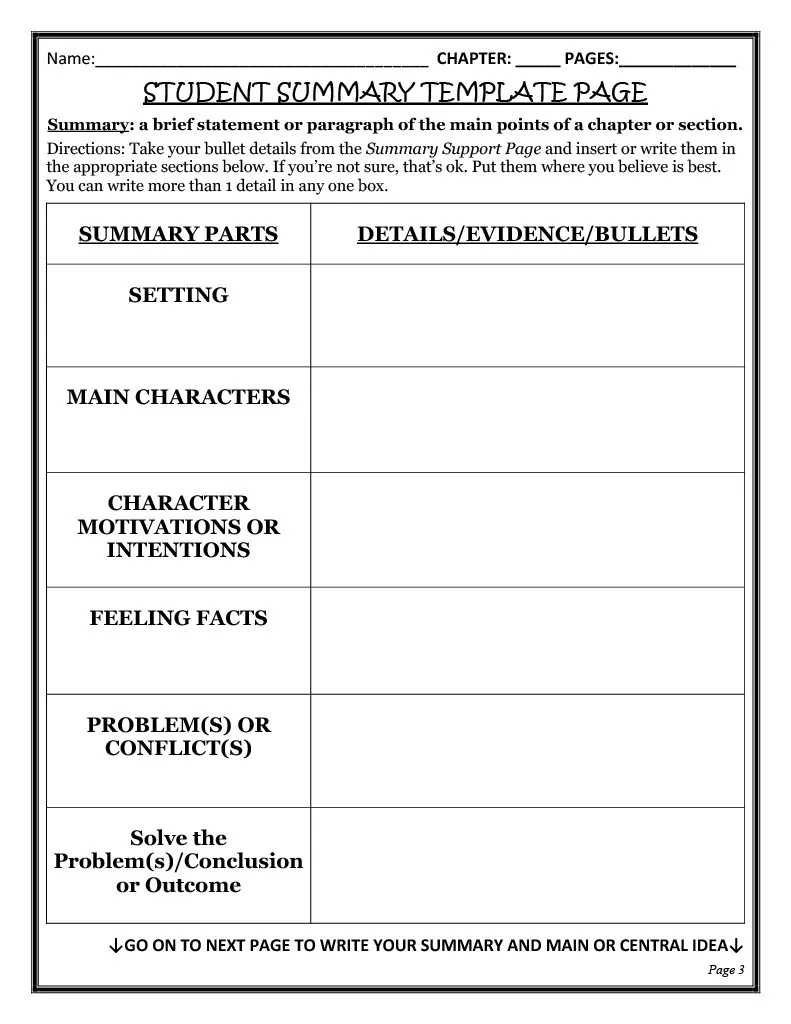
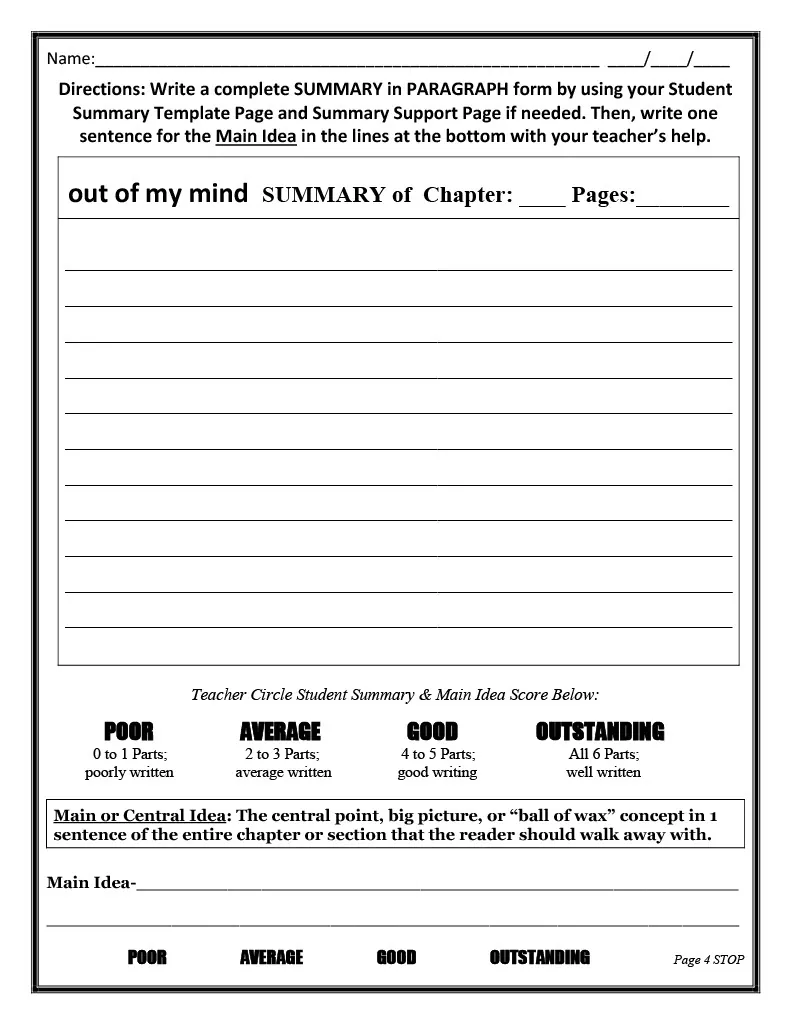
Summarize a chapter by identifying its setting, main characters, character motivations, feelings, conflict, and resolution.

Teaching tips
Use the Student English Reference Page as a pre-unit handout so students have the literary-term definitions available before starting chapter 1.
Play instrumental background music during independent work time, as the unit's own teacher notes suggest, to help set a reflective mood matching the novel's content.
Assign the Summary Support Page before the Student Summary Template Page so students gather bullet-point evidence first, then organize it into the six-part summary structure.

Skills covered
Figurative language analysis — students identify similes, metaphors, personification, and other devices used throughout the novel.
Context-clue vocabulary building — students work out 65 "mystery" vocabulary words across the unit using surrounding sentence clues.
Chapter summarization — students extract setting, characters, motivations, and conflict/resolution to write a structured paragraph summary.
Good to know
Questions teachers ask about this resource
Why does the unit ask students to write about what Ben would say when summarizing a movie, before ever assigning a real chapter summary?
The unit uses the Ben-and-the-movie scenario as an analogy to teach what a summary is and is not — a quick run-down of key events rather than every small detail — before students apply that same six-part structure (setting, characters, motivations, feelings, conflict, resolution) to an actual chapter of the novel.

No reviews yet
Downloaded this resource? Tell other teachers how it went.
Curriculum
Standards, concepts & topics
Standards
 Standards
- CCSS.L.5.5 — Demonstrate understanding of figurative language, word relationships, and nuances in word meanings. a. Interpret figurative language, including similes and metaphors, in context. b. Recognize and explain the meaning of common idioms, adages, and proverbs. c. Use the relationship between particular words (e.g., synonyms, antonyms, homographs) to better understand each of the words.
- CCSS.L.5.4 — Determine or clarify the meaning of unknown and multiple-meaning words and phrases based on grade 5 reading and content, choosing flexibly from a range of strategies. a. Use context (e.g., cause/effect relationships and comparisons in text) as a clue to the meaning of a word or phrase. b. Use common, grade-appropriate Greek and Latin affixes and roots as clues to the meaning of a word (e.g., photograph, photosynthesis). c. Consult reference materials (e.g., dictionaries, glossaries, thesauruses), both print and digital, to find the pronunciation and determine or clarify the precise meaning of key words and phrases.
- CCSS.W.5.9 — Draw evidence from literary or informational texts to support analysis, reflection, and research. a. Apply grade 5 Reading standards to literature (e.g., “Compare and contrast two or more characters, settings, or events in a story or a drama, drawing on specific details in the text [e.g., how characters interact]”). b. Apply grade 5 Reading standards to informational texts (e.g., “Explain how an author uses reasons and evidence to support particular points in a text, identifying which reasons and evidence support which point[s]”).
Core concepts
 Core concepts
figurative language
context clues
summarizing
main idea
reading comprehension
 Topics
Explore more
Categories this resource belongs to
Explore related searches
More to explore
You may also like