Skin Diagram Worksheet – Body Systems Activity

- Grades
- Grades 5–6
- Pages
- 1
- File type
- Preparation
- Print ready


- Subject
- Science, Human Body
- Topic
- Human Body, Simple skin diagram
- Resource types
- Worksheets
- Preparation
- Print ready
Product description
From the author
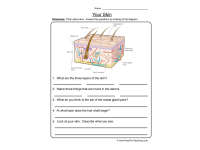
This Skin Diagram Worksheet is a great resource for students to learn about how skin works to keep us healthy. The diagram is easy to follow and understand, and provides a great visual for students who are learning about this topic.
Related resources
More resources teachers may find useful
24 related resources were found using this product's title, contributor, categories and tags.


In the classroom
Teaching tips & learning objectives

Learning objectives
Identify the epidermis, dermis and subcutaneous tissue shown in the diagram
Locate labeled structures
Connect skin structures with their functions and observable features

Teaching tips
Have students trace from the epidermis down to the subcutaneous layer on the diagram before answering, since two of the five questions ask about layer order and location.
Pair the final observation question with a hand lens or mirror activity, since it explicitly asks students to look at and describe their own skin.

Skills covered
Anatomical diagram reading — students locate and interpret the labeled layers and structures on a skin cross-section.
Structure-function reasoning — students infer what a sweat gland pore does based on its diagram position and label.
Scientific observation — students compare labeled diagram content to a firsthand look at their own skin.

No reviews yet
Downloaded this resource? Tell other teachers how it went.
Resource details
Concepts & topics
Core concepts
 Core concepts
Skin layers
Epidermis and dermis
Body systems
 Topics
Explore more
Categories this resource belongs to
Explore related searches
More to explore
You may also like