


Poner Verb Chart: Present and Preterite Practice
Spanish learners build their own poner verb chart for the present and preterite, then use it to fix forms, pick the tense from time words and talk about putting on clothes with ponerse.


- Grades
- Grades 9–12, High School
- Pages
- 3
- File type
- Answer key
- Included


- Subject
- Foreign Languages, Spanish
- Topic
- Spanish, languages
- Resource types
- Worksheets & Printables, Worksheets
- Answer key
- Included
About this resource
What's inside this resource
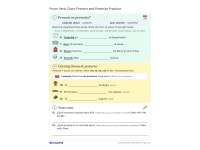
Pongo in the present and the stem pus- in the preterite are the two irregular spots in poner (to put), and students build a two-column verb chart for both tenses from rule boxes on page 1. One form in each column is given, nosotros ponemos and yo puse, and a strip adds the gerund poniendo, the participle puesto and the tú command pon.
Pono, pusó and ponieron are the errors in a three-sentence fix-it section. On page 2, underlined time words such as cada día, ahora, ayer and anoche tell students which tense to write in four sentences about setting the alarm, setting the table, packing books and putting on music. A ponerse section uses me, te and se with clothing such as el abrigo and los zapatos, and two personal questions ask what students put on when it is cold and what they put in their backpack yesterday.
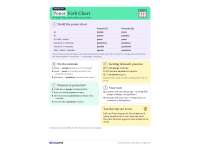
The answer key doubles as a finished reference chart; it lists every answer, shows that compound verbs such as componer follow the same pattern and suggests an act-it-out speaking game with commands like Ponte la gorra.
Related resources
More resources teachers may find useful
24 related resources were found using this product's title, contributor, categories and tags.


In the classroom
Teaching tips & learning objectives

Learning objectives
- Conjugate poner in the present and preterite from stem and ending rules.
- Recognize the irregular yo form pongo and the preterite stem pus-.
- Choose present or preterite from time words such as ayer and cada día.

Teaching tips
- Have students build the chart from the rule boxes rather than from memory, then check it against the finished chart on the key.
- Stress the no-accent rule for the preterite (puse, puso), which item 4 tests.
- Go over the set phrases above Part C (poner el despertador, poner la mesa, poner música) before students write.

Skills covered
- Building a verb chart — students apply the pon- and pus- stems and endings to fill both columns.
- Irregular forms — students correct pono to pongo and ponieron to pusieron.
- Tense choice — students use cada día and ahora for the present and ayer and anoche for the preterite.
Good to know
Questions teachers ask about this resource
Is the chart printed, or do students fill it in?
Students fill it in. The rule boxes give the stem and endings for each tense and one form in each column, and page 3 shows the finished chart, so it can also be kept as a reference.
Which time words signal each tense?
Cada día and ahora point to the present; ayer and anoche point to the preterite. The time word is underlined in each Part C sentence.
Why do the preterite forms have no written accents?
Poner has an irregular preterite stem, pus-, and its endings carry no written accents: puse, puso. Item 4 asks students to fix pusó for this reason.

No reviews yet
Downloaded this resource? Tell other teachers how it went.
Resource details
Concepts & topics
Core concepts
 Core concepts
- Poner
- Present tense
- Preterite
- Irregular verbs
- Reflexive verbs
 Topics
Explore more
Categories this resource belongs to
Explore related searches
More to explore
You may also like


