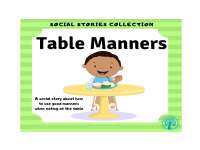
Table Manners Social Story

- Grades
- Preschool–2
- Pages
- 17
- File type
- Preparation
- Print ready


- Subject
- Life Skills, Social Emotional Learning (SEL)
- Topic
- Table manners, Social story
- Resource types
- Activities
- Preparation
- Print ready
Product description
From the author
Discuss a meal routine with a seventeen-page illustrated social story. Ten rule pages cover handwashing, sitting at the table, eating and speaking, cutlery choices, saying “pardon me” and politely asking to leave.
Opening pages introduce mealtimes and manners, followed by the rules, a closing page and credits. Read selected pages with a child and rehearse the routines that fit their needs and family practices.
Related resources
More resources teachers may find useful
24 related resources were found using this product's title, contributor, categories and tags.


In the classroom
Teaching tips & learning objectives

Learning objectives
Name the two steps that come before eating — washing hands and taking a seat to stay in
Keep to the mouth rules while eating: chewing with the mouth closed and waiting until it is empty before speaking
Use the repair phrase "pardon me" after an unavoidable burp, and ask politely before getting down from the table

Teaching tips
The pages follow a meal in sequence, so the story can be read on the way to the table and paused at whichever point is being worked on
One rule to a page means a single page can be lifted out as a reminder card for the specific behaviour a child is practising
The mealtime rules use first-person wording, so it reads as the child's own intentions rather than as instructions delivered by an adult

Skills covered
Mealtime routine sequencing — the pages follow a meal in order, from washing hands and finding a seat through to asking to leave the table.
Politeness scripts — the story supplies the exact words for two situations: "pardon me" after a burp, and asking whether they are allowed to get down.
Understanding the reason behind a rule — an early page states that using manners shows kindness and respect, so the list is framed as considerate behaviour rather than as commands.
Good to know
Questions teachers ask about this resource
Does the story make room for things going wrong?
Yes, on one page. Burping at the table is described as rude and something to try to avoid, but the page then tells the child what to do if it happens anyway — cover the mouth and say "pardon me" afterwards.
What does the story say about foods that do not need cutlery?
It names them as a category and hands the decision back to an adult. One page states that there are some foods that can be eaten without a knife and fork, shows illustrated examples including pizza and a sandwich, and tells the child that if they are not sure they can ask a grown-up.

No reviews yet
Downloaded this resource? Tell other teachers how it went.
Resource details
Concepts & topics
Core concepts
 Core concepts
Social story
Table manners
Mealtime routine
Politeness
 Topics
Explore related searches
More to explore