The Age of Absolutism




- Grades
- Grades 7–12, Middle School, High School
- File type
- Preparation
- Print ready


- Subject
- Social Studies, History, History: World
- Topic
- age of absolutism, world history
- Preparation
- Print ready
About this resource
What's inside this resource
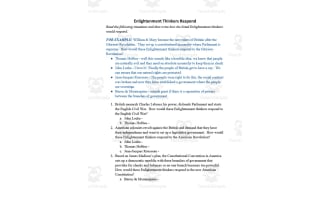
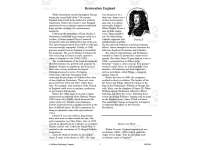
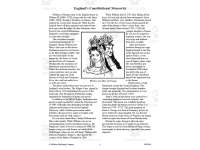
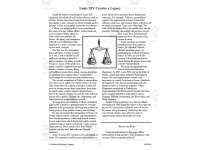
"The Age of Absolutism" (1650—1789) covers the final years of the last great European monarchies and the divestiture of monarchical power through reform and revolution. Emphasis is given to the absolute reign of Louis XIV of France, and the growth of constitutional monarchy in late-17th century England. Enlightenment thinkers, such as Voltaire, Rousseau, and Locke, and their theorectical impact on the unraveling of royal power and the revolutions in France and America are discussed. Challenging map exercises and provocative review questions encourage meaningful reflection and historical analysis. Tests and answer keys included.
Related resources
More resources teachers may find useful
24 related resources were found using this product's title, contributor, categories and tags.


In the classroom
Teaching tips & learning objectives

Learning objectives
Explain the concept of Absolutism and how England's Glorious Revolution and Bill of Rights moved it toward constitutional monarchy instead.
Describe Louis XIV's absolute reign in France, including his court at Versailles and Colbert's mercantilist economic policy.
Compare John Locke's philosophy of natural rights and government by consent with divine-right Absolutism, and connect it to the American and French Revolutions.

Teaching tips
Assign Test I as a checkpoint after lesson 13 (Europe's Global Economy) before moving into the Eastern Europe unit, since the two tests split the 27 lessons roughly in half.
Use the 1648 Europe map study (lesson 2) as a standalone geography warm-up before the political-history lessons that follow it.
Use the answer key's model response for the Locke vs. Absolutism short-answer question as a rubric guide, since it explicitly connects Locke's natural-rights language to the Declaration of Independence.

Skills covered
Historical map reading and analysis (1648 Europe map study).
Matching key historical figures, terms, and events to their definitions across two full-length tests.
Historical argumentation — comparing Locke's natural-rights philosophy against divine-right Absolutism in a short written response.
Good to know
Questions teachers ask about this resource
Are the test questions all matching, or is there any written-response component?
Both — each test includes matching sections (24 items in Test I alone), and Test I also has a 'Respond and Write' short-answer question asking students to compare Locke's political ideas with Absolutism; a full model response for it is provided alongside the matching answers.

No reviews yet
Downloaded this resource? Tell other teachers how it went.
Resource details
Concepts & topics
Core concepts
 Core concepts
Absolutism
constitutional monarchy
the Enlightenment
mercantilism
divine right of kings
 Topics
Explore related searches
More to explore
You may also like