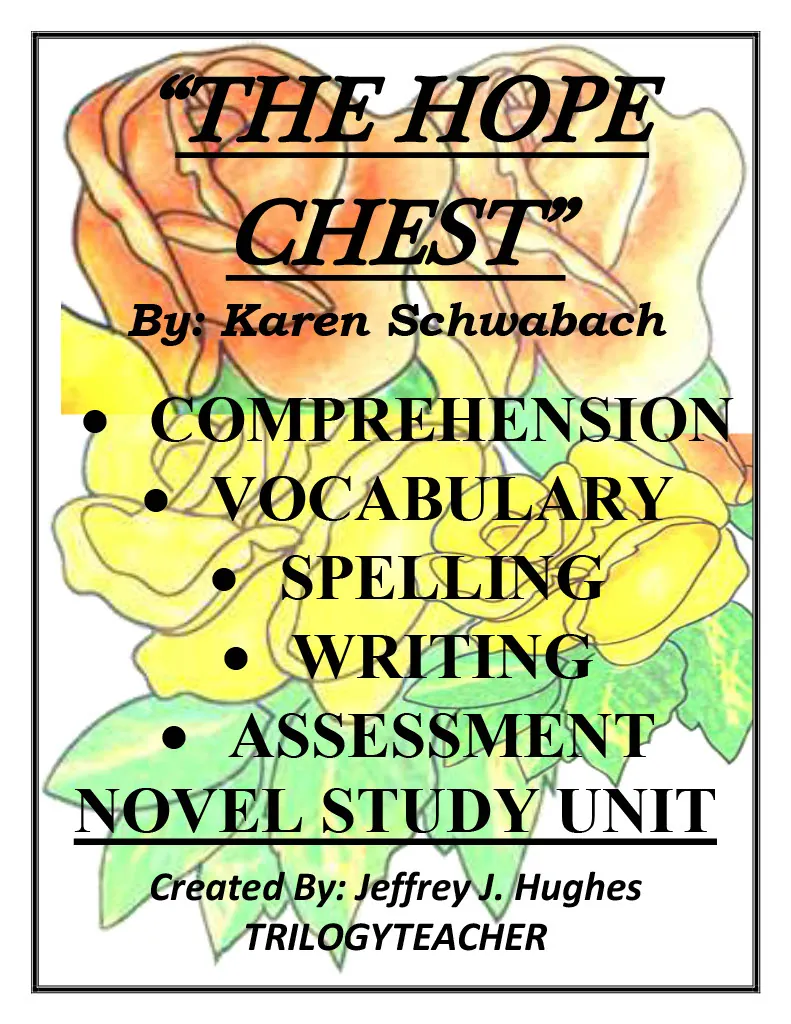
"The Hope Chest" Novel Study Unit
- Grades
- Grades 4–6
- Pages
- 411
- File type
- Answer key
- Included


- Subject
- ELA
- Topic
- The Hope Chest, Novel study
- Resource types
- Novel Studies, Worksheets, Quizzes
- Answer key
- Included
- Standards
- RL.5.1
Product description
From the author
This "The Hope Chest" Novel Study Unit is packed with over 400 pages of engaging resources for students.
Included:
- Chapter comprehension worksheets
- Mystery match vocabulary words
- Exit quizzes
- Group work
- Writing prompts
- Summative assessment
& so much more.
Supply the novel separately, then print the selected activities and assessments.
Answer keys included.
Related resources
More resources teachers may find useful
24 related resources were found using this product's title, contributor, categories and tags.



In the classroom
Teaching tips & learning objectives

Learning objectives
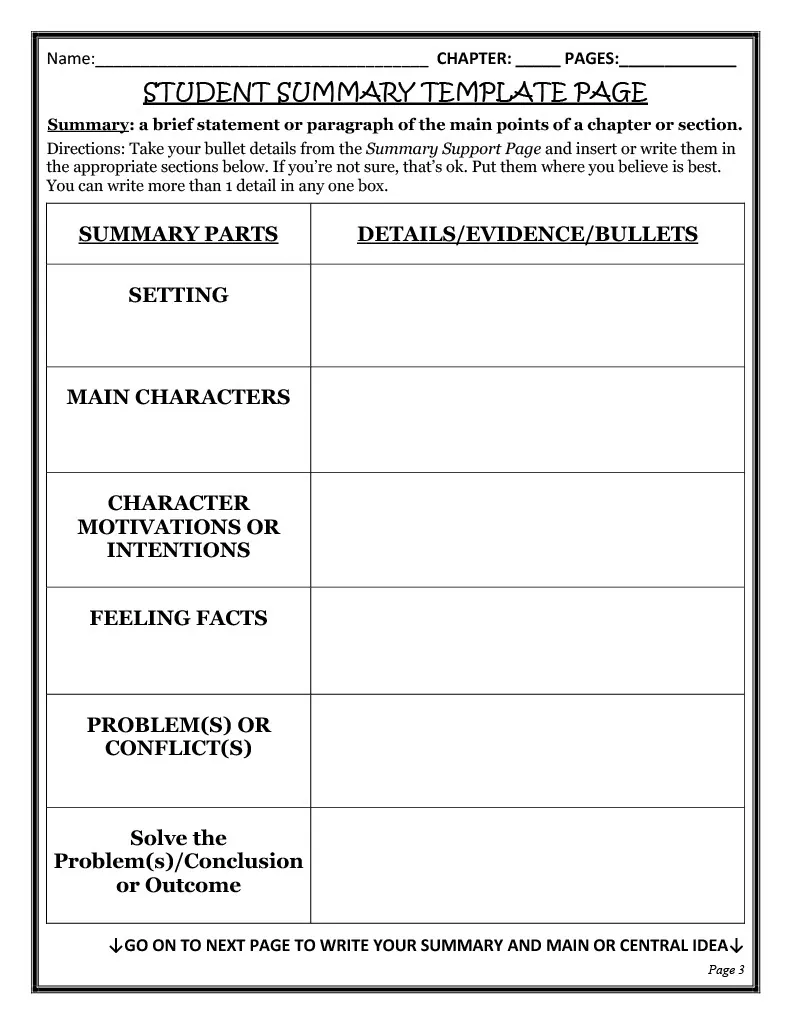
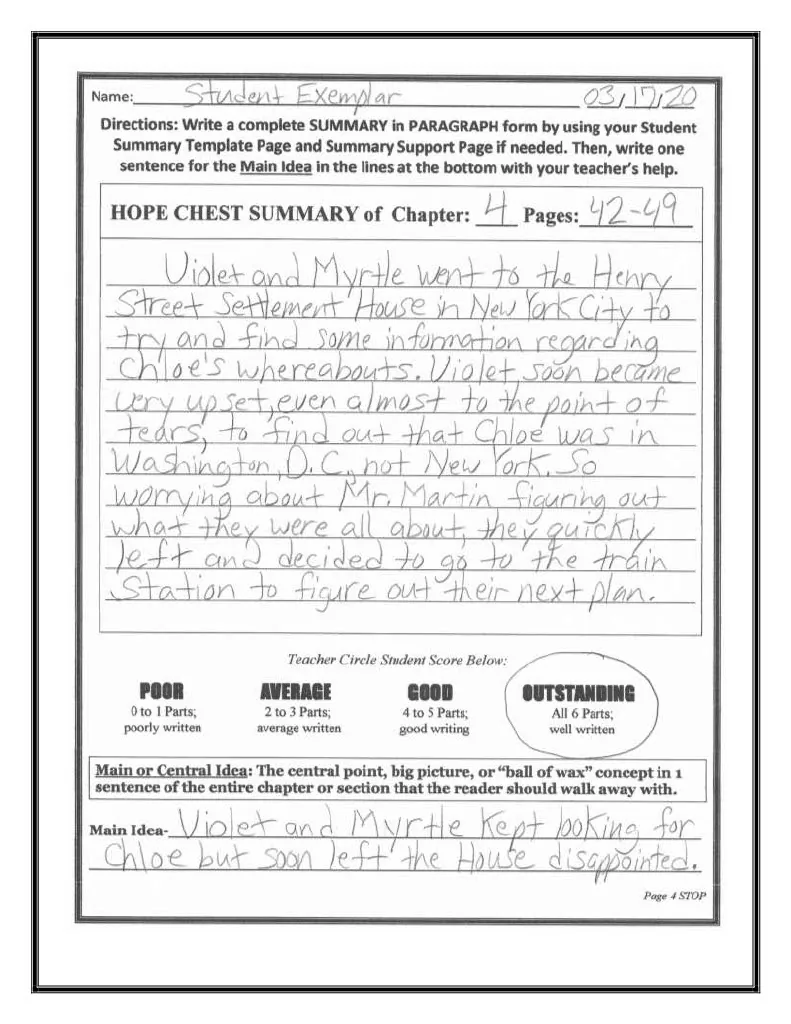
Students summarize each chapter by identifying its setting, main characters, character motivations, and central conflict.
Students determine the novel's overall theme after completing all 19 chapters.
Students connect historical events referenced in the novel (Prohibition, the Suffrage Movement, World War I) to comprehension and quiz questions.

Teaching tips
Budget 1.5 to 2 hours per chapter lesson, as the unit's own teacher instructions estimate, since each chapter combines a comprehension worksheet, vocabulary activities, and a quiz.
Use the 'Souvenir Walking Tour' vocabulary activity described in the teacher instructions: after students guess their own word definitions, they trade definitions in pairs around the room before the teacher reveals the actual meaning.
Have students keep a dedicated Hope Chest folder for all worksheets and quizzes so they can review before the summative test, as the teacher instructions suggest.

Skills covered
- Chapter summarization.
- Using context clues.
- Connecting the novel to its historical setting.
Good to know
Questions teachers ask about this resource
What are the two grading options offered for each chapter quiz?
A traditional grading scale, and an alternate scale that counts 4 out of 5 correct as mastery-level performance; the teacher instructions note the alternate option can reward students who are solid readers but occasionally miss a question.
What does the Summary/Main Idea template ask students to record for each chapter?
Six categories: setting, main characters, character motivations or intentions, feeling facts, the problem or conflict, and how that conflict is resolved, with space to add supporting details or evidence for each.

No reviews yet
Downloaded this resource? Tell other teachers how it went.
Curriculum
Standards, concepts & topics
Standards
 Standards
- RL.5.1
Core concepts
 Core concepts
Novel study
Context clues
Theme and main idea
Figurative language
1920S U.S. history
 Topics
Explore more
Categories this resource belongs to
Explore related searches
More to explore
You may also like