The Roaring Twenties Color by Number
- Grades
- Grades 4–6, Elementary, Middle School
- File type
- Preparation
- Print ready


- Subject
- Social Studies, History, History: USA
- Topic
- social studies, color by number
- Resource types
- Worksheets & Printables, Worksheets
- Preparation
- Print ready
About this resource
What's inside this resource
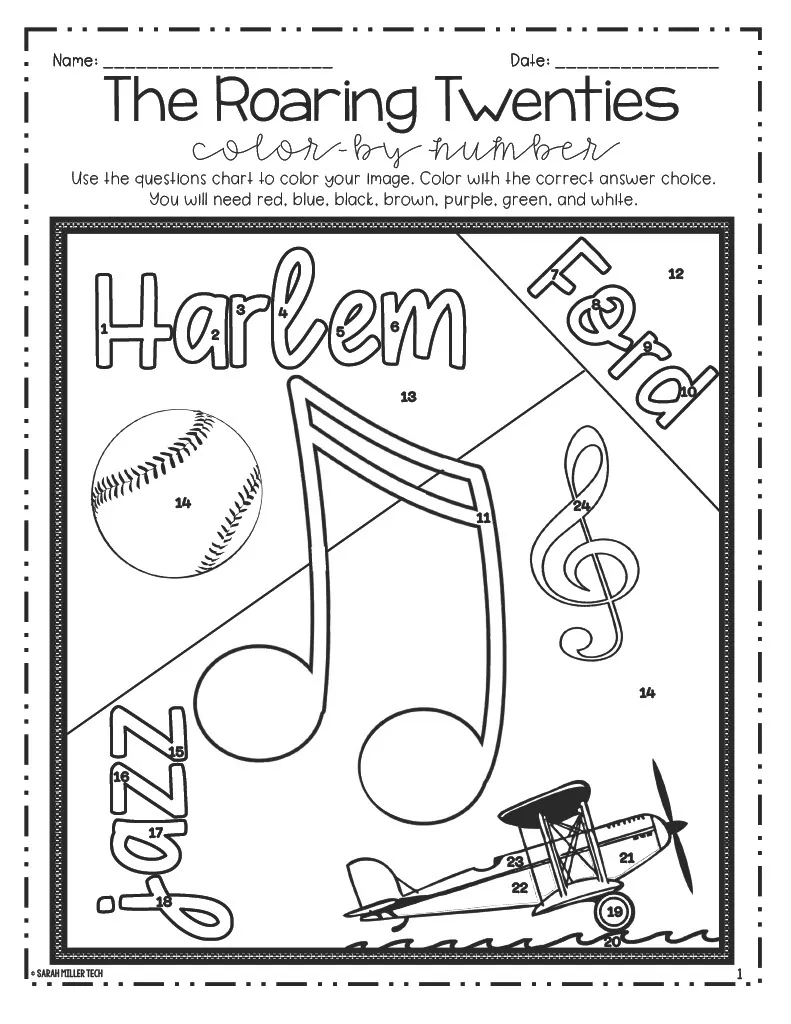
The Roaring Twenties Color by Number is a fun way for students to review this integral part of American history.
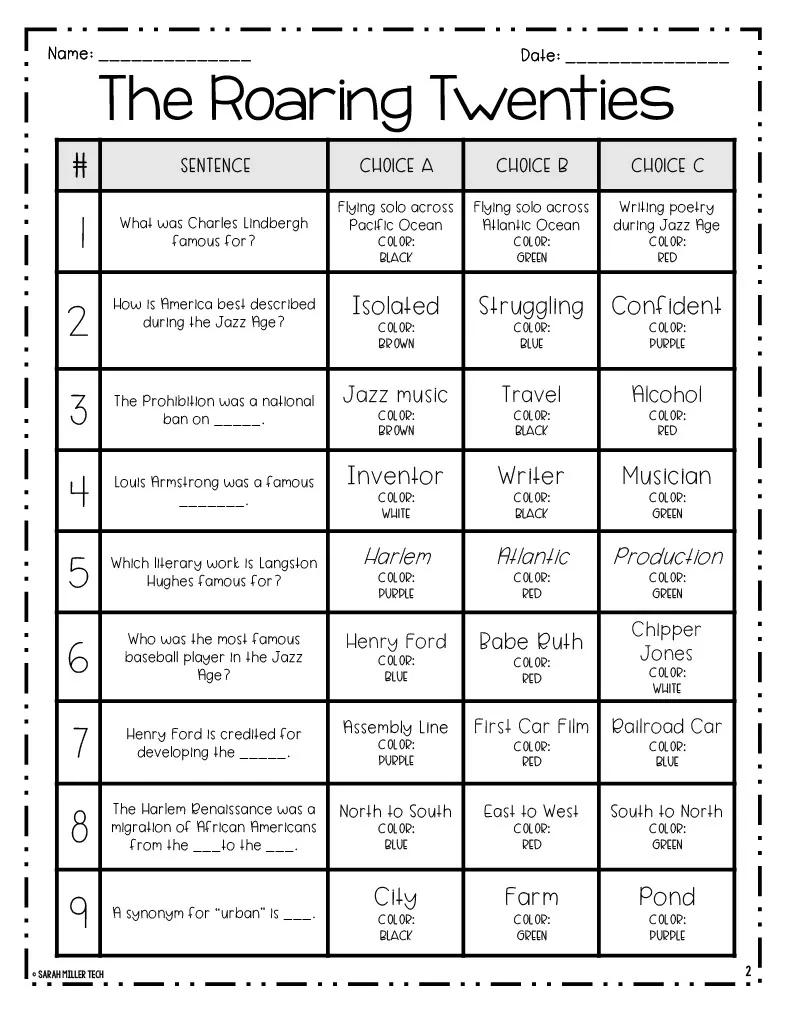
Students will use the questions chart to color their image. They will color with the correct answer choice.
There are 23 questions related to the 1920s. Students will have 3 answer choices to choose from for each question.
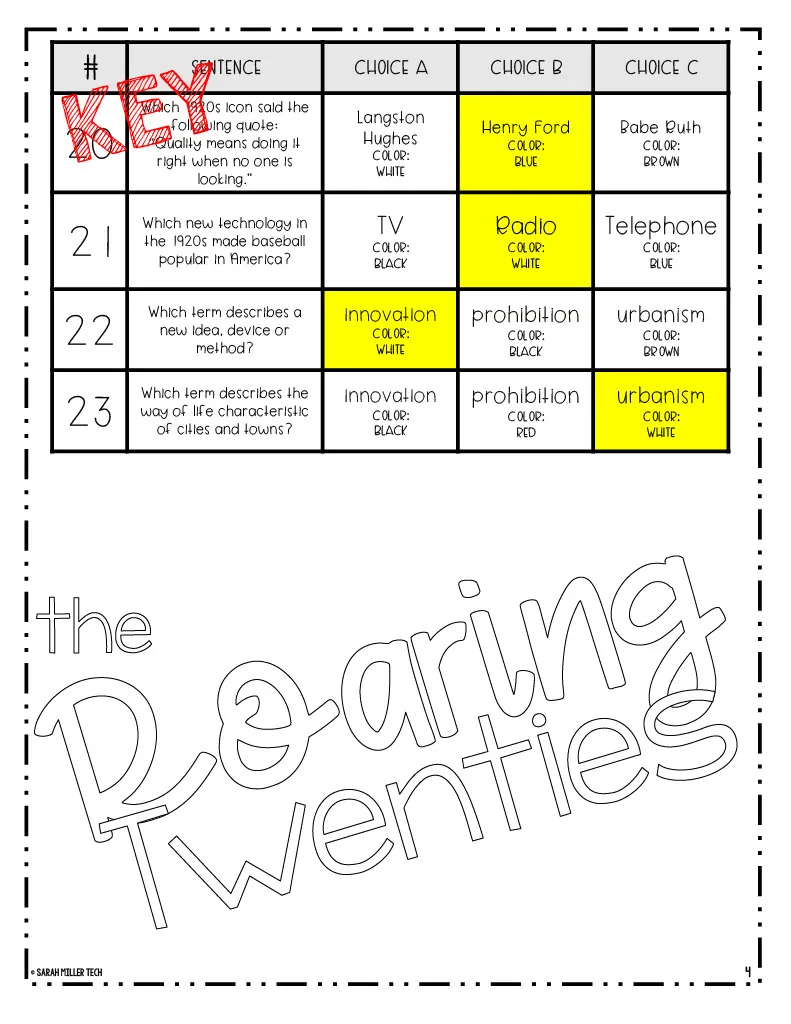
Students should answer each question and check the answer key before proceeding with coloring.
A final coloring page is included.
Related resources
More resources teachers may find useful
24 related resources were found using this product's title, contributor, categories and tags.


In the classroom
Teaching tips & learning objectives

Learning objectives
Identify the contributions of 1920s figures including Charles Lindbergh, Henry Ford, Louis Armstrong, Langston Hughes, and Babe Ruth
Describe Jazz Age developments such as Prohibition, the Harlem Renaissance, women's suffrage, and the rise of radio
Distinguish era vocabulary terms including innovation, prohibition, and urbanism

Teaching tips
Gather the seven listed colors (red, blue, black, brown, purple, green, white) before starting, since every question resolves to one of them
Schedule the page as end-of-unit review: the questions assume students have already met Lindbergh, Ford, Armstrong, Hughes, and Prohibition
Use questions 18 and 19, which sort figures into music-and-literature versus industry-and-transportation contributors, as a wrap-up discussion prompt

Skills covered
1920s history recall — students answer 23 multiple-choice questions on figures such as Charles Lindbergh, Louis Armstrong, Langston Hughes, Henry Ford, and Babe Ruth.
Historical categorization — two questions ask which people drove cultural and social change through music and literature versus industrial and transportation change.
Domain vocabulary — students distinguish the terms innovation, prohibition, and urbanism and match a synonym for urban.
Good to know
Questions teachers ask about this resource
Which 1920s people and topics do the questions cover?
Charles Lindbergh, Louis Armstrong, Langston Hughes, Henry Ford, and Babe Ruth, plus Prohibition, the Harlem Renaissance, women's suffrage, radio, the Model T and assembly line, and vocabulary terms such as innovation and urbanism.
How does a wrong answer show up in the finished picture?
Every answer choice carries its own color, so choosing the wrong option puts a visibly wrong color into that numbered region of the scene — the completed picture doubles as a quick visual check of the whole review.

No reviews yet
Downloaded this resource? Tell other teachers how it went.
Resource details
Concepts & topics
Core concepts
 Core concepts
Roaring Twenties
Harlem Renaissance
U.S. history
Color by number
 Topics
Explore more
Categories this resource belongs to
Explore related searches
More to explore
You may also like