Unplugged Cyber-STEM Pack 4: Binary & Bus Logic (Grades 4–8)



About This Product
Introduce optical binary transmission, 8-bit conversions, parity bit error checking, I2C bus wiring schematics, serial packet parsing algorithms, and real-world aerospace computing history with Unplugged Robotics & Cyber-STEM Unit 4: Binary Communication & Bus Logic! Designed for grades 4 through 8, this 9-page printable resource is 100% unplugged (requiring zero screens, coding software, or digital hardware) and engineered for a seamless 60- to 75-minute rotation lab, workshop, or whole-class STEM activity using low-cost materials like flashlights, colored paper, rulers, and calculators.
What Is Included in This 9-Page Pack?
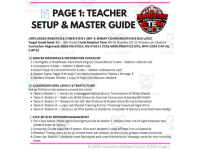
Page 1: Teacher Setup & Master Guide
Contains a complete materials checklist, room layout diagram, optical signaling setup instructions, and rotation pacing strategies.
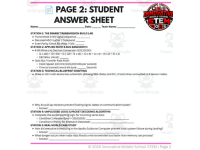
Page 2: Student Answer Sheet (1-Page Master Handout)
A single, organized recording worksheet designed for students to clip to a clipboard and carry through every station for effortless accountability.
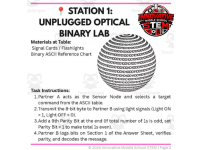
Page 3: Station 1 Sign — Unplugged Optical Binary Lab
Hands-on transmission lab where students encode and send 8-bit ASCII characters using light pulses, calculate parity check bits, and verify message integrity.
Page 4: Station 2 Sign — Binary Conversion & Bus Speed Lab
Applied math and computer science station where students convert 8-bit binary numbers to base-10 decimals and calculate serial packet bus latency times.
Page 5: Station 3 Sign — I2C Bus Protocol Schematic
Technical drafting station where students map multi-device circuit schematics featuring shared Data (SDA) and Clock (SCL) lines with pull-up resistor networks to prevent signal noise.
Page 6: Station 4 Sign — Packet Decoding & Error-Checking Algorithm
Unplugged algorithm station where students trace conditional decision trees assessing packet header validation, checksum verification, and corrupted data rejection pathways.
Page 7: Station 5 Sign — Real-World Case Study
Informational reading passage exploring the 1969 Apollo 11 Guidance Computer Overload, analyzing priority task scheduling, bus cycle limits, and core memory management in space exploration.
Page 8: Detailed Teacher Answer Key
Provides fully worked binary conversions, bus latency math, circuit diagram standards, algorithm decision keys, and case study answers in plain text.
Page 9: 10-Point Master Grading Rubric
A single-page evaluation rubric scoring each station on a clear 0-to-2 point scale for efficient, objective assessment.
Standards Alignment & Materials:
NGSS: MS-ETS1-1, MS-ETS1-2 (Engineering Systems & Data Reliability)
CSTA Standards: 2-AP-10, 2-AP-15 (Binary Data Encoding, Bus Communication, & Packet Parsing)
CCSS Math Practices: MP1 & MP4 (Binary Mathematics & Transmission Latency)
Materials Needed: Flashlights or red/green cardstock, graph paper, rulers, and basic calculators.
0 Reviews
Check out these other great products