Watch or Warning? Reading Weather Alerts and Shelter Signs



About This Product
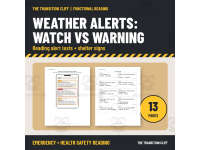
This weather alerts reading set teaches students the difference between a watch and a warning, how to read alert texts, and how to find the shelter sign.
Why I made this: A student once read "Flood Watch" on her phone and asked if we had to go home right then. She stopped at "flood." The word that mattered came next. This set slows down on watch versus warning, and on finding the shelter sign.
What's included:
• A 13-page PDF and an editable Word copy
• A teacher page with a three-level table and a 2-week plan
• 3 documents: a phone screen with 3 made-up alerts, a "watch or warning?" card, and shelter signs with a shelter map
• Level A ●: 10 cards with 2 choices, in 16 point type
• Level B ■: 10 cards with 3 choices
• Level C ▲: 10 short-answer cards
• 3 practice pages, an answer key, a data sheet with a 10-session graph, a try-it-for-real page, and blank cards
How to use it: Read the "watch or warning?" card first, then the phone alerts and the shelter page. Do one level at a time and use the card codes to check. Then find the real shelter sign in your building.
Who it's for: High school special education teachers, 18-21 program teachers, job coaches, and families teaching calm reading of weather alerts.
Format: PDF, US Letter, 13 pages, plus an editable Word copy. Prints well in black and white.
How this is different: Community + Workplace Safety Signs Task Cards | Functional Reading Life Skills covers many posted signs. Bus Schedule Worksheets | Bus + Train Timetables + Fares | Life Skills SPED covers reading times on schedules. This set is only about weather alerts and shelter signs. For any alert, it teaches one thing: listen to adults and official alerts.
Pairs with: Community + Workplace Safety Signs Task Cards | Functional Reading Life Skills; Bus Schedule Worksheets | Bus + Train Timetables + Fares | Life Skills SPED
Jeremy D. Gooch, 20+ years in education.
Resource Tags
0 Reviews
Check out these other great products