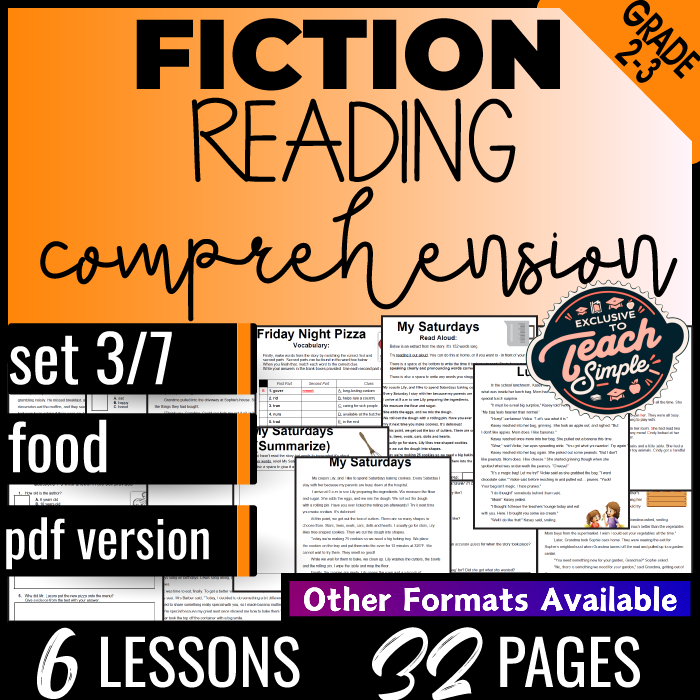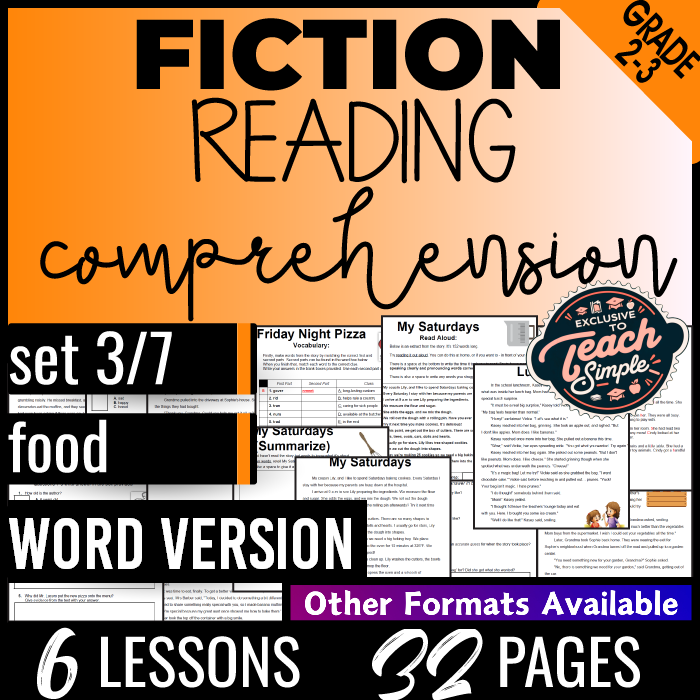
Reading Comprehension Passages Fiction Set 3 - Food (Google Docs)
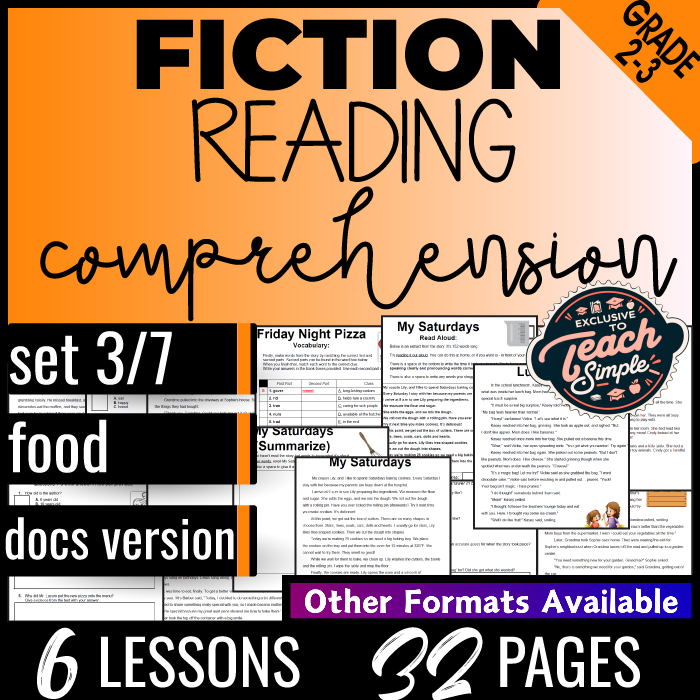
Give early-elementary students (Grade 2-3) short original fiction passages on food-related topics to read for comprehension, paired with vocabulary and follow-up activities.
Classroom resources
Browse by lesson focus
Choose the topic or kind of practice you need.
Give early-elementary students (Grade 2-3) short original fiction passages on food-related topics to read for comprehension, paired with vocabulary and follow-up activities.
A single-chapter 'Chapter Slice' teaching resource on conservation (natural resources, renewable/non-renewable resources, and waste-reduction methods), part of a Waste Management: Prevention, Recycling & Conservation series, intended to build reading comprehension and critical-thinking skills (per Bloom's Taxonomy) for grades 5-8
Give students life-science reading passages on plant parts, classification, and ecosystems, with comprehension, word-decoding, and spelling activities.
A cross-curricular science unit teaching how taste buds and olfactory receptors work together, delivered through a narrative dialogue between two siblings, paired with comprehension, vocabulary, writing and math-graphing activities.
Builds on basic map-reading skills (map elements, drawing/labeling maps) to teach a specific mapping topic ("Weather Maps") through a reading passage with embedded Google Earth activities, per the resource's teacher guide; the series overall covers weather maps, choropleth maps, and physical/cultural features of country, continent and world.
Give early-elementary students (Grade 2-3) short original fiction passages on food-related topics to read for comprehension, paired with vocabulary and follow-up activities.
A single-chapter 'slice' from the Classroom Complete Press book 'Critical Thinking' (CCP1118), focused on introducing and defining what critical thinking skills are, combining a reading passage, reproducible worksheets, and an answer key built around Bloom's Taxonomy.
Give grades 5-8 students a leveled (reading levels 3-4) nonfiction reading-comprehension unit on the single topic "Where Is Fresh Water?" within fresh water conservation, part of Classroom Complete Press's "Conservation: Fresh Water Resources" Climate Change Series (this is a single-chapter 'Chapter Slice' excerpt of the full CCP5773 book, sold as its…
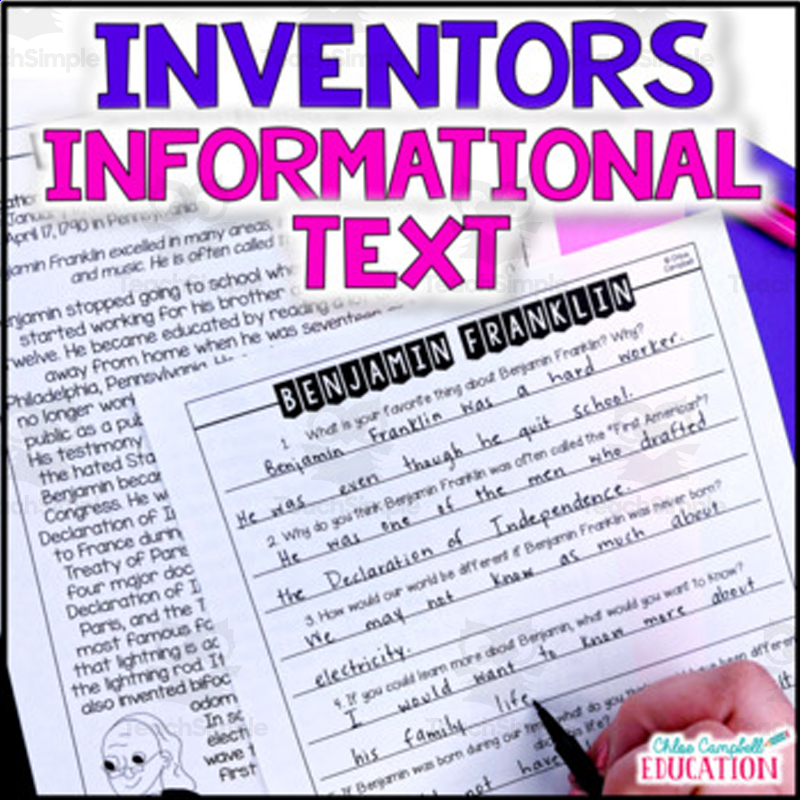
A set of non-fiction reading comprehension passages profiling ten famous inventors/historical scientific figures, for Grades 4-6.
Builds on basic map-reading skills (map elements, drawing/labeling maps) to teach a specific mapping topic ("Map Your Continent") through a reading passage with embedded Google Earth activities, per the resource's teacher guide; the series overall covers weather maps, choropleth maps, and physical/cultural features of country, continent and world.
Builds on basic map-reading skills (map elements, drawing/labeling maps) to teach a specific mapping topic ("Population Maps") through a reading passage with embedded Google Earth activities, per the resource's teacher guide; the series overall covers weather maps, choropleth maps, and physical/cultural features of country, continent and world.
Give grades 5-8 students a leveled (reading levels 3-4) nonfiction reading-comprehension unit on the single topic "What Is Fresh Water?" within fresh water conservation, part of Classroom Complete Press's "Conservation: Fresh Water Resources" Climate Change Series (this is a single-chapter 'Chapter Slice' excerpt of the full CCP5773 book, sold as its own…
A high-interest, low-vocabulary reading comprehension anthology (one of six in a series) with short stories drawn from famous figures, sports, mysteries, and other engaging themes, each followed by comprehension questions.
Cross-curricular reading unit built around the novel 'The Mouse and the Motorcycle' by Beverly Cleary, combining reading comprehension, writing, social studies (map skills), and science (STEM/energy/biology) extensions.
Single-page launch/cover screen for an interactive 'Have Fun Teaching' alphabet story titled "The Painter", labeled in the file itself as a Reading Comprehension Digital Worksheet.
A single-chapter excerpt ('Chapter Slice') titled 'How to Read a Map' from the GRADES PK - 2 'Mapping Skills with Google Earth' series (Classroom Complete Press, written by Paul Bramley) - built around a reading passage with embedded Google Earth activities, reproducible worksheets, and assessment tools to teach a specific map-reading skill.
A single-chapter 'slice' from the Classroom Complete Press book 'Critical Thinking' (CCP1118), focused on asking effective questions as a critical thinking skill, combining a reading passage, reproducible worksheets, and an answer key built around Bloom's Taxonomy.
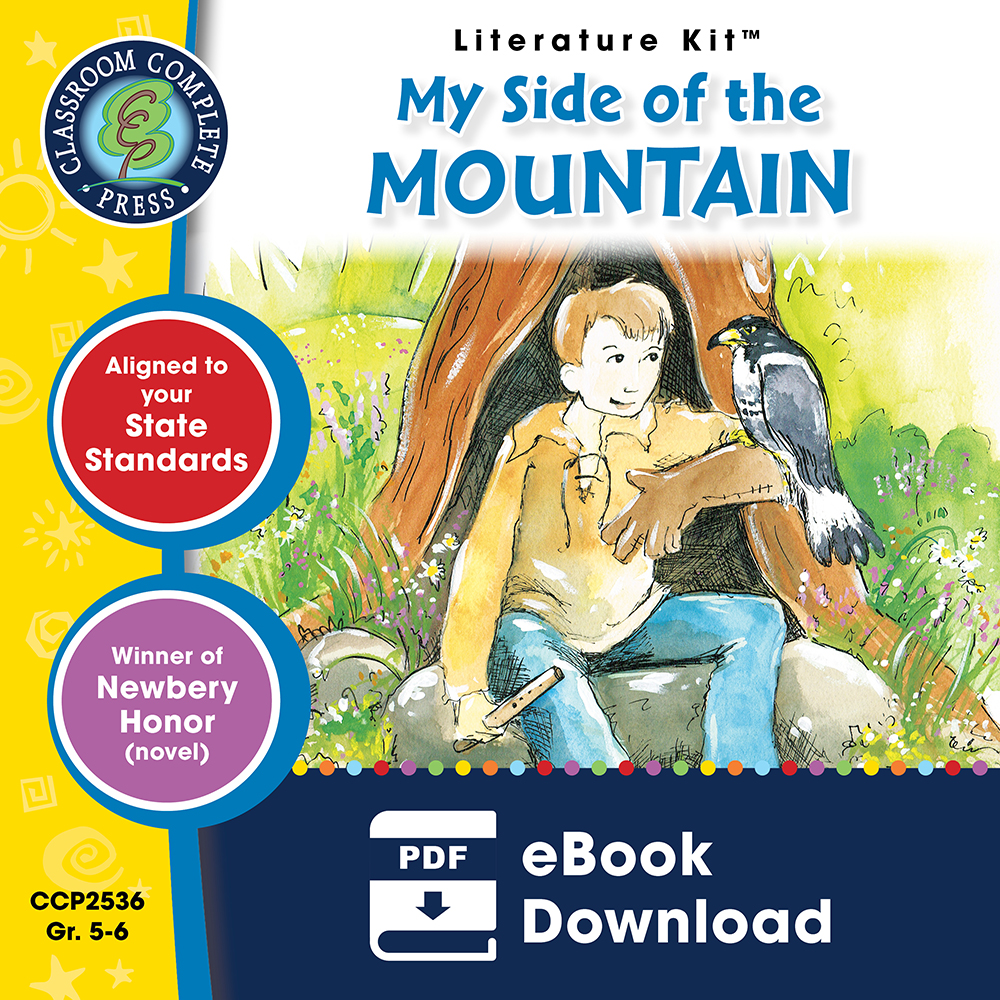
A Classroom Complete Press literature kit / novel study companion for 'My Side of the Mountain' by Jean Craighead George, for Grades 5-6.
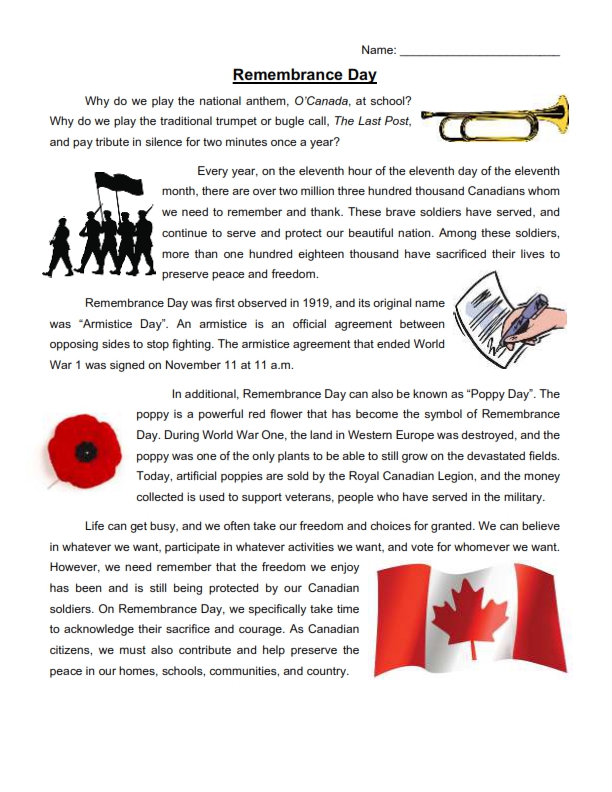
A Remembrance Day informational reading passage paired with pre/post discussion questions, comprehension questions, vocabulary matching, a crossword, and a word search.
Builds on basic map-reading skills (map elements, drawing/labeling maps) to teach a specific mapping topic ("Mapping Geographical Features") through a reading passage with embedded Google Earth activities, per the resource's teacher guide; the series overall covers weather maps, choropleth maps, and physical/cultural features of country, continent and world.
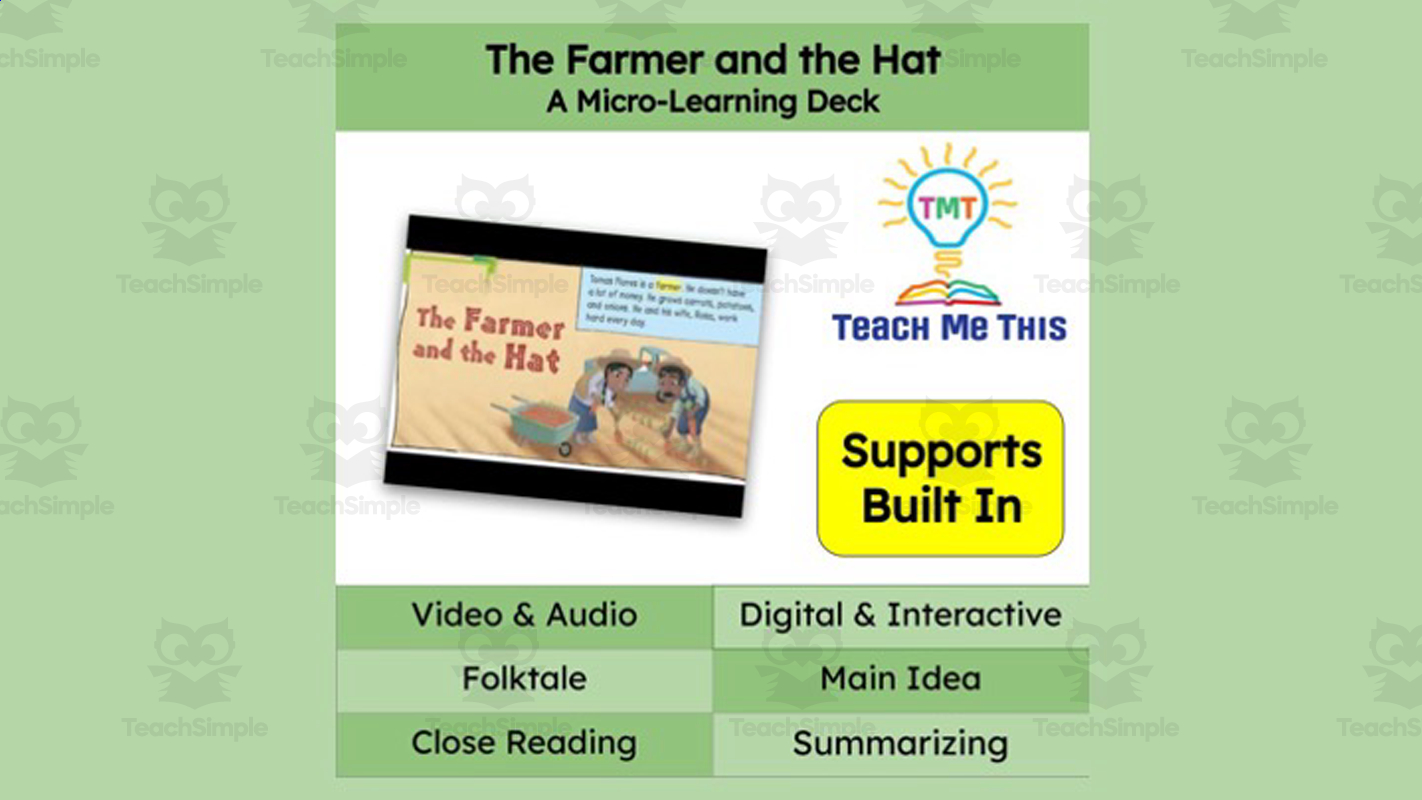
A micro-learning digital deck teaching reading comprehension (close reading, vocabulary, main idea, summarizing) using the folktale 'The Farmer and the Hat'.