



3,951 products added recently
Page 2 - Science Activities For Kindergarten
Introduce young learners to the world of science with activities designed for kindergarten students. This collection includes simple experiments, nature observations, and sensory experiences that encourage curiosity. By integrating these science activities into your teaching, you can lay the groundwork for scientific thinking and a lifelong love of learning.

 Show filters


Lesson Plan on Plant Life Cycle for Kindergarten
Biology, Life Sciences, Science, Nature & Plants, Kindergarten, Grade 1, Lesson Plans, Teacher Tools, Worksheets & Printables, Activities
With a playful, participatory approach, this captivating Kindergarten lesson plan teaches young students about the plant life cycle. The 90-minute lesson, which is based around the instructive movie "Plant Life Cycle," walks students through the four main phases of plant growth: seed, sprout, seedling, and flower. Children will investigate how plants grow and what they require—sunlight, water, soil, and air—through a combination of pictures, storytelling, hands-on activities, and movement. A dynamic group conversation, a video watching with narrated explanations, and a straightforward tale reenactment to aid understanding are all included in the session. After that, students will finish a vibrant worksheet that includes matching, coloring, sequencing, and drawing exercises. The idea of development and renewal is reinforced through a unique craft project that uses paper plates to help kids picture the plant life cycle in a circular fashion. By the end of the lesson, children will be able to identify and describe each stage in the plant life cycle. The included worksheet and answer key support independent learning and review. This lesson promotes curiosity, fine motor skills, and a love of nature in young learners.
Author Bright Classroom Ideas Marketplace
Rating
Tags Plant, Life, Cycle, Biology, Earth, Nature, Kindergarten, Lesson, Plan
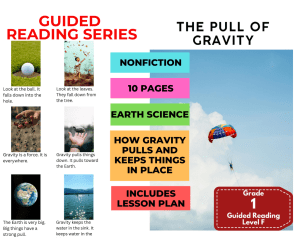
The Pull of Gravity: Guided Reading Level F with Lesson Plan
ELA, Resources for Teachers, Reading Comprehension, Reading, Science, Language Development, Vocabulary, Physics, Earth and Environmental Sciences, Pre-Reading, Kindergarten, Grade 1, 2, Worksheets & Printables, Worksheets, Teacher Tools, Centers, Activities, Literacy Readers, Quizzes, Quizzes and Tests, Assessments, Lesson Plans
This The Pull of Gravity (level f) guided reading book with lesson plan includes: Guided Reading Color Label (front cover x1) This is a quick way to match the book’s demands to what students can generally handle.. The overall goal is to use the level/color to pick books for several smaller groups. To qualify for a certain level, a student is expected to read a book from that level with about 90–94% accuracy. If a student is consistently accurate and understands, move up a level. If the student is struggling at that level, drop down and add more support. Each student will improve at completely different rates, but it is generally one of the best ways to check progress across the class. DOWNLOAD THE CATALOG TO VIEW ALL GUIDED READING BOOKS AVAILABLE (SORTED LEVELS A-Z) COMPANION VIDEO NOW AVAILABLE (EMBEDDED AFTER PREVIEW PICTURES IN PRODUCT DESCRIPTION) Pre-Reading Question (x1) The teacher says the question aloud, either while showing the cover or the first page. Students share what they already know or make sensible guesses based on the cover. Encourage them to use the target vocabulary where possible. Write a few of their ideas on the board so you can return to them during or after the reading. Vocabulary Words (x5) Introduce the five words one at a time. Say each word aloud, have students repeat it, and then ask if anyone already knows what it means. Read the meaning together and briefly connect each word to a picture, action, or gesture so it feels more memorable. Ask students to flip through the book and point to any pages where they spot the vocabulary words. While reading, pause when one of the words appears, or reread the sentence so students clearly notice and understand it in context. Optional: Ask students to raise their hands whenever they see or hear one of the new words. Guided Reading Pages (x10) Check the book snapshot below for: Primary topic — decide whether students need a quick introduction or extra background first. What this lesson teaches best — choose 1–2 key points to focus on during the session. Learning goals — keep in mind what students should be able to understand or say by the end. Key vocabulary — review and reinforce these throughout the lesson. Questions overview — look ahead so you know what students will be asked and whether any extra support is needed. Run the lesson You may already have looked at a few pages together, but it can help to revisit some of the pictures first to build meaning. Depending on your time and how confident the group is with guided reading, you may want to read the whole book aloud to them first. Students can then whisper-read or partner-read while you listen in. If time allows, you can also read as a group, with each student taking a page. Use the guided reading prompts to support them, such as: “Check the picture—does it make sense?” “Point under the words.” “Try the first sound.” “Reread the sentence smoothly.” It can be helpful to focus more closely on one student each session, rotating over time, so you can better judge whether they are ready to move up or may need more support at their current level. Comprehension Questions (back cover x3) This is where you check that students understood the text, not just the words on the page. Start by letting students answer by pointing to a page or picture and saying a short sentence. After they respond, follow up with: “Show me where you found that in the text.” In larger groups, let partners discuss their answer first for 10–20 seconds, then invite 2–3 students to share. Differentiation tips Emerging speakers / struggling readers: oral response + pointing On-level: oral response in a full sentence Higher: one written sentence or a drawing with labels Lesson Snapshot Title: The Pull of Gravity Genre: Nonfiction (informational) Subject: Science (Physical Science) Primary Topic: How gravity pulls things and helps keep them in place Estimated Guided Reading Level (A–Z): F What This Lesson Teaches Best Explains that gravity is a force and that it is all around us. Shows that gravity pulls things down and toward the Earth. Uses simple, everyday examples like a ball, leaves, water, rocks, sand, and air to show gravity in action. Helps students understand that larger objects, like Earth, have a stronger pull. Introduces the idea that gravity is also in space and helps pull the moon. Learning Goals Students will identify that gravity is a force found everywhere. Students will describe how gravity pulls things down and toward the Earth. Students will give examples from the text of things gravity pulls or keeps in place. Students will explain what the text says about Earth’s strong pull. Students will answer questions about gravity using details from the book. Key Vocabulary From the Text gravity — a pull that makes things go down force — a push or a pull toward — moving closer to something space — the place above Earth mountain — a very high hill of land Discussion Prompts Pre-reading question: What do you think makes things fall down to the ground? Comprehension question: What does the book say gravity is? Comprehension question: What does gravity pull things toward? Comprehension question: Name one thing the book says gravity keeps in place. 1. Best Printing Method (Recommended) Booklet printing is the best option if your printer or PDF viewer supports it. This method usually places the pages in the correct order automatically and makes folding much easier. Settings to use: Print mode: Booklet Paper size: Letter or A4 Orientation: Landscape Print on both sides: Yes Flip on: Short edge Scaling: Fit to printable area Booklet subset: First, print front sides only Then, print back sides only This will automatically: Pair the pages correctly Place the cover on the outside Help everything line up properly for folding After printing, fold the pages in half and staple along the spine. 2. If “Booklet” Printing Is Not Available You can still print the book correctly by using manual duplex printing . Step-by-step: Open the PDF. Click Print . Use these settings: Orientation: Landscape Pages per sheet: 1 Print on both sides: Yes Flip on: Short edge Print all pages. Since each PDF page already contains two facing book pages, the pages should still fold neatly into a book. Thousands of Cored Education products are included with your TeachSimple membership. Download links and encyclopedia index available here.
Author Cored Education
Rating
Tags Reading Comprehension, Reading Passages, Reading, Guided Reading, Guided Reading Lesson Plan, Guided Reading Activity, Pre-reading, Science Lesson Plans, Earth Science, Physics
Let's Learn About Wild Animals Audio Book
Science, Life Sciences, Animals, Kindergarten, Preschool, Grade 1, 2, Read Alouds, Activities
Kids learn about bears, zebras, elephants, tigers, koalas, gorillas, and crocodiles as they take a walk in the wild! Kids will learn that the average elephant eats up to 16 hours a day, sleeps about 5 hours a day, drinks up to 80 gallons of water each day, and poops up to eighty pounds a day! Authentic sound effects and lively music will keep kids engaged and learning about a variety of different wild animals. Young animal lovers will learn the difference between a crocodile and an alligator, that koalas are not bears, that the most ferocious big cat is the tiger, and that gorillas live in close-knit bands, and are strong, intelligent animals.
Author Twin Sisters Digital Media
Tags Bear, Zebra, Elephant, Tiger, Lion

Guided Reading Level H - Clean Hands, Healthy Bodies
ELA, Resources for Teachers, Reading Comprehension, Reading, Health, P.E. & Health, Social Emotional Learning (SEL), Special Resources, Life Skills, Science, Kindergarten, Grade 1, 2, Worksheets & Printables, Worksheets, Teacher Tools, Centers, Activities, Literacy Readers, Quizzes, Quizzes and Tests, Assessments
This Guided Reading Book - Clean Hands, Healthy Bodies (Level H) includes: Guided Reading Color Label (front cover x1) This is a quick way to match the book’s demands to what students can generally handle.. The overall goal is to use the level/color to pick books for several smaller groups. To qualify for a certain level, a student is expected to read a book from that level with about 90–94% accuracy. If a student is consistently accurate and understands, move up a level. If the student is struggling at that level, drop down and add more support. Each student will improve at completely different rates, but it is generally one of the best ways to check progress across the class. DOWNLOAD THE CATALOG TO VIEW ALL GUIDED READING BOOKS AVAILABLE (SORTED LEVELS A-Z) Pre-Reading Question (x1) Teacher asks the prompt aloud, can be while showing the cover or first page. Students share what they already know, or make educated guesses from the cover. Prompt them to use the target vocabulary. Write some of their responses on the board to look back at during the reading. Vocabulary Words (x5) Introduce the five words, best doing it one at a time. Start by saying it, while students repeat and then see if anyone knows what it means before reading further. Read through the meaning and try to briefly connect each word to a picture or gesture so it’s meaningful. Ask students to flip through the book pages and point to where they see each of the vocabulary words. While reading the book pause upon coming across one of the vocab words or read the sentence twice to make sure students understand the word has appeared. Optional: Ask students to raise hands whenever they see/hear one of the new words. Guided Reading Pages (x10) Check the book snapshot (below) for: primary topic - do you need to prep extra reading or intro materials on this? what is taught best - decide on 1-2 bullets to focus on, use the prompt or words provided here for best results. learning goals - what you are checking for students to be able to do after the session, elicit answers using prompts or words provided. key vocabulary (see section above). questions overview - so you know what is coming up and if you need to prep extra materials to assist understanding. Run the lesson You may have already looked at a few of the pages together, but you can show them some of the pictures again first to set meaning. Depending on how much time you have and how familiar your students are with guided reading class, you may want to read the book aloud first with the group first. Students whisper or partner read, while you listen in. If time, do it as a group, one student reading a page each. Use the guided page’s prompts to coach: “Check the picture / does it make sense?” “Point under the words / try the first sound” “Reread the sentence smoothly”. Try to focus more on one student per session (rotating every time), so you can work out if they are ready to move up or need to move down a level. Comprehension Questions (back cover x3) This is your way to check that students didn’t just say the words, but actually understood the text. First, let students answer by pointing to the page/picture and saying a short sentence. After any answer, follow with: “Show me where you found that in the text.” In bigger groups, have partners answer first (10–20 seconds), then call on 2–3 students to share. Differentiation tips: Emerging speakers/struggling readers: oral + pointing On-level: oral in a full sentence Higher: one written sentence or draw + label Book Snapshot Title: Clean Hands, Healthy Bodies Genre: Nonfiction (informational) Subject: Health & Safety / Science Primary Topic: When and how to wash hands to stop germs Estimated Guided Reading Level (A–Z): H What This Book Teaches Best Why washing hands matters: it “keeps germs away” and helps prevent germs from spreading to other people. When to wash hands (before eating, after outdoor play, after using the toilet, after playing with a pet). How to wash hands step-by-step (wet with clean running water, use soap, scrub all areas, rinse, dry). A key procedure detail: scrubbing should last “twenty seconds” to remove germs. The idea of healthy habits: making handwashing a regular habit “protects everyone.” Learning Goals Students will explain one reason the book gives for washing hands, using a detail from the text. Students will identify at least two times the book says hands should be washed. Students will describe the steps for washing hands in order, based on the text. Students will state how long scrubbing should last, according to the book. Students will describe how handwashing helps other people, using the book’s words about spreading germs/protecting everyone. Key Vocabulary From the Text germs — tiny living things that can make you sick. contact — touching something. invisible — cannot be seen. scrub — rub hard to get something clean. protects — keeps safe from harm. Discussion Prompts Pre-reading question: When do you think it is most important to wash your hands? Comprehension questions: Name one time the book says you should wash your hands. How long should scrubbing last when you wash your hands? Why does washing your hands help other people? Printing Tips 1. Best Printing Method (Recommended) “Booklet” Printing (Best if Available) If your printer or PDF viewer supports Booklet Printing , use this. Settings to use: Print mode: Booklet Paper size: Letter or A4 (either works) Orientation: Landscape Print on both sides: Yes Flip on: Short edge Scaling: Fit to printable area Booklet subset: First test: Front sides only Then: Back sides only This will automatically: Pair pages correctly Put the cover on the outside Align everything for folding After printing, fold in half and staple along the spine . 2. If “Booklet” Printing Is NOT Available You can still print this correctly with manual duplex printing . Step-by-step: Open the PDF. Choose Print . Set: Orientation: Landscape Pages per sheet: 1 Print on both sides: Yes Flip on: Short edge Print all pages . Because each PDF page already contains two facing book pages, the result will still fold cleanly into a book. Thousands of Cored Education products are included with your TeachSimple membership. Download links and encyclopedia index available here.
Author Cored Education
Rating
Tags Vocabulary, Reading Comprehension, Reading Passages, Leveled Reading, Nonfiction, Reading, Guided Reading, Health, SEL, Life Skills

Winter Woodland Watercolour Activity
Science, Life Sciences, Animals, Preschool, Kindergarten, Grade 1, 2, 3, Activities
A beautiful nature journaling set for children. Youngsters can combine pre-painted characters (a deer, fox, robin, stoat, holly & ivy) with stunningly illustrated background scenes that can be used separately or to create a double-page spread. The scene has plenty of space for children to add their own drawings and writing to create wonderful journal pages to treasure. This set ideally lends itself to the study of animals and woodlands in winter, record observations of nature around you, or combine with study from books and objects. The sheet of illustrations makes ideal additions to winter displays. To create a tactile finished item I highly recommend printing onto high-quality paper, I like to use watercolor paper as this also allows the children to add their own paintings to the pages they create and means that every piece looks and feels like an original painting.
Author Fiddleticks Education
Tags Winter Woodland , Winter Forest, Snow Woodland Set, Holiday, Watercolour
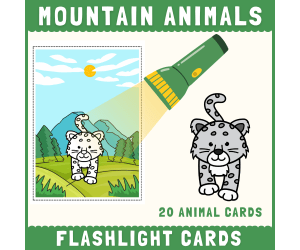
Mountain Habitat animals flashlight cards hidden picture activity
Animals, Life Sciences, Science, Environmental Science, Earth and Environmental Sciences, Kindergarten, Preschool, Toddler, Grade 1, 2, Flashcards, Worksheets & Printables, Centers, Activities, Games
Make learning about mountain animals fun and interactive with these Mountain Animals Flashlight Cards! Students will use a flashlight to reveal hidden animal pictures while practicing animal recognition and building science vocabulary through an exciting hands-on science center activity. I like using these flashlight cards during mountain habitat units, animal science lessons, wildlife studies, nature-themed activities, preschool and kindergarten science centers, and homeschool learning. It’s an engaging, low-prep activity that adds a fun element of discovery to animal learning. What You Will Get This printable Mountain Animals Flashlight Cards resource gives students an exciting way to discover hidden mountain animals and review animal and habitat vocabulary. What’s Included in this Resource? • Printable mountain animal flashlight cards • Hidden picture reveal activity • Mountain animal vocabulary • Hands-on flashlight discovery activity • Student-friendly science center format • Easy-to-use printable cards • Great for independent or small-group learning This resource is perfect for: • Mountain habitat science units • Mountain animal studies • Wildlife and animal lessons • Life science activities • Preschool and kindergarten science centers • Nature-themed learning • Small-group activities • Homeschool learning Why you will love this? • Easy to prepare and use • Creates an exciting hands-on learning experience • Builds observation and visual recognition skills • Reinforces mountain animal vocabulary • Encourages curiosity and independent discovery • Great for science centers and habitat-themed units These Mountain Animals Flashlight Cards are a fun way for young learners to discover hidden mountain animals, practice animal recognition, and build observation skills through an interactive science center activity.
Author Perfect_Printables
Rating
Tags Animal Science, Science Center Activities, Hidden Picture Activities, Flashlight Cards, Animal Vocabulary, Wildlife Activities, Mountain Animals, Mountain Animals Activity, Animal Adaptation, Animal Habitat Activity

Need or Wants Worksheet 1st 2nd Grade Social Studies Activities
ELA, Language Development, Vocabulary, Classroom Management, Resources for Teachers, Basic Science, Science, Earth and Environmental Sciences, Environmental Science, Geology, Kindergarten, Preschool, Infant, Toddler, Activities, Classroom Decor, Teacher Tools, Worksheets & Printables
Students will find, recognize Wants or Needs Worksheets. These Wants or Needs Worksheets are aligned with the science of reading Wants or Needs Worksheets Activities for Special Education identity practices worksheet and in fact your prescript and kinderrain needs to master the Wants or Needs Worksheets Activities for Special Education names, Wants or Needs Worksheets seem that I have designed these Wants or Needs Worksheets Activities for Special Education, which have designed these Wants or Needs Worksheets Activities works, which is a Wants or Needs Worksheets Activities for Special Education about a paper about the practice of the practice of guide practices, which is a Wants or Needs Worksheets Activities for Special Education and plants about the practice To create a Wants or Needs Worksheets Activities to create, which helps find different Wants or Needs Worksheets , ensures a fun and structured approach to learning the Wants or Needs Worksheets Activities . This worksheet provides a fun activities to identify the sounds of any pre -PR -Lafabet Wants or Needs Worksheets Activities for Special Education, the formation of Wants or Needs Worksheets Activities for Special Education, including a series of small activities on each page, including a series of students to involve a series of skills for Wants or Needs Worksheets Activities for Special Education reviews. for Special Education. Wants or Needs Worksheets are aligned with the science of reading Wants or Needs Worksheets Activities for Special Education identity practices worksheet and in fact your prescript and kinderrain needs to master the Wants or Needs Worksheets Activities for Special Education names, Wants or Needs Worksheets seem that I have designed these Wants or Needs Worksheets Activities for Special Education, which have designed these Wants or Needs Worksheets Activities works, which is a Wants or Needs Worksheets Activities for Special Education about a paper about the practice of the practice of guide practices, which is a Wants or Needs Worksheets Activities for Special Education and plants about the practice To create a TWants or Needs Worksheets Activities to create, which helps find different Wants or Needs Worksheets, ensures a fun and structured approach to learning the Wants or Needs Worksheets Activities . This worksheet provides a fun activities to identify the sounds of any pre -PR -Lafabet Wants or Needs Worksheets Activities for Special Education, the formation of Wants or Needs Worksheets Activities for Special Education, including a series of small activities on each page, including a series of students to involve a series of skills for CTurn Around Wants or Needs Worksheets Activities for Special Education reviews.
Author LAMO
Rating
Tags Basic Principles, English Language Arts, Economics, Activities, Worksheets, Homeschool, Printables

I See An Elephant In The Sky Audio Book
Science, Earth and Environmental Sciences, Environmental Science, Preschool, Kindergarten, Grade 1, 2, 3, Read Alouds, Activities
Have you ever laid on the grass to look up into the sky at the clouds? Did you know that clouds are made up of tiny droplets of water?
Author Twin Sisters Digital Media
Tags Formations, Clouds, Sky, Elephant, Weather
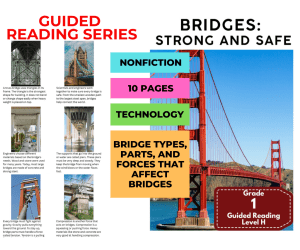
Guided Reading Level H - Bridges Strong and Safe
ELA, Resources for Teachers, Reading Comprehension, Reading, Language Development, Pre-Reading, Vocabulary, Science, Technology, Engineering, Kindergarten, Grade 1, 2, Worksheets & Printables, Worksheets, Teacher Tools, Centers, Activities, Literacy Readers, Quizzes, Quizzes and Tests, Assessments
This Guided Reading Book - Bridges Strong and Safe (Level H) includes: Guided Reading Color Label (front cover x1) This is a quick way to match the book’s demands to what students can generally handle.. The overall goal is to use the level/color to pick books for several smaller groups. To qualify for a certain level, a student is expected to read a book from that level with about 90–94% accuracy. If a student is consistently accurate and understands, move up a level. If the student is struggling at that level, drop down and add more support. Each student will improve at completely different rates, but it is generally one of the best ways to check progress across the class. DOWNLOAD THE CATALOG TO VIEW ALL GUIDED READING BOOKS AVAILABLE (SORTED LEVELS A-Z) Pre-Reading Question (x1) Teacher asks the prompt aloud, can be while showing the cover or first page. Students share what they already know, or make educated guesses from the cover. Prompt them to use the target vocabulary. Write some of their responses on the board to look back at during the reading. Vocabulary Words (x5) Introduce the five words, best doing it one at a time. Start by saying it, while students repeat and then see if anyone knows what it means before reading further. Read through the meaning and try to briefly connect each word to a picture or gesture so it’s meaningful. Ask students to flip through the book pages and point to where they see each of the vocabulary words. While reading the book pause upon coming across one of the vocab words or read the sentence twice to make sure students understand the word has appeared. Optional: Ask students to raise hands whenever they see/hear one of the new words. Guided Reading Pages (x10) Check the book snapshot (below) for: primary topic - do you need to prep extra reading or intro materials on this? what is taught best - decide on 1-2 bullets to focus on, use the prompt or words provided here for best results. learning goals - what you are checking for students to be able to do after the session, elicit answers using prompts or words provided. key vocabulary (see section above). questions overview - so you know what is coming up and if you need to prep extra materials to assist understanding. Run the lesson You may have already looked at a few of the pages together, but you can show them some of the pictures again first to set meaning. Depending on how much time you have and how familiar your students are with guided reading class, you may want to read the book aloud first with the group first. Students whisper or partner read, while you listen in. If time, do it as a group, one student reading a page each. Use the guided page’s prompts to coach: “Check the picture / does it make sense?” “Point under the words / try the first sound” “Reread the sentence smoothly”. Try to focus more on one student per session (rotating every time), so you can work out if they are ready to move up or need to move down a level. Comprehension Questions (back cover x3) This is your way to check that students didn’t just say the words, but actually understood the text. First, let students answer by pointing to the page/picture and saying a short sentence. After any answer, follow with: “Show me where you found that in the text.” In bigger groups, have partners answer first (10–20 seconds), then call on 2–3 students to share. Differentiation tips: Emerging speakers/struggling readers: oral + pointing On-level: oral in a full sentence Higher: one written sentence or draw + label Book Snapshot Title: Bridges: Strong and Safe Genre: Nonfiction (informational) Subject: Science (Engineering) Primary Topic: Bridge types, parts, and forces that affect bridges Estimated Guided Reading Level (A–Z): H What This Book Teaches Best Explains what bridges do: connect two places and help people and vehicles cross obstacles. Introduces several bridge types and what makes each one work (beam, arch, suspension, truss). Teaches key bridge parts and supports (deck, abutments, piers) using clear definitions in context. Builds science/engineering understanding of forces that act on bridges (gravity, tension, compression). Shows that scientists and engineers work together to keep bridges safe. Learning Goals Students will explain how bridges help people, cars, and trains travel using text details. Students will identify and describe at least two types of bridges named in the book. Students will use the book’s words to tell what a bridge deck is and what it does. Students will describe how gravity, tension, and compression affect bridges, based on the text. Students will explain what piers do and why they must be deep and steady. Key Vocabulary From the Text deck — the flat top part of a bridge. abutments — the ends an arch bridge pushes against. tension — a pulling force that stretches materials. compression — a pushing or squeezing force. piers — supports that go into ground or water. Discussion Prompts Pre-reading question: How do you think bridges help people get from one place to another? Comprehension questions: What do bridges help cars, trains, and people do? What is the flat top of a beam bridge called? What do piers keep a bridge from doing when wind blows or water flows fast? Printing Tips 1. Best Printing Method (Recommended) “Booklet” Printing (Best if Available) If your printer or PDF viewer supports Booklet Printing , use this. Settings to use: Print mode: Booklet Paper size: Letter or A4 (either works) Orientation: Landscape Print on both sides: Yes Flip on: Short edge Scaling: Fit to printable area Booklet subset: First test: Front sides only Then: Back sides only This will automatically: Pair pages correctly Put the cover on the outside Align everything for folding After printing, fold in half and staple along the spine . 2. If “Booklet” Printing Is NOT Available You can still print this correctly with manual duplex printing . Step-by-step: Open the PDF. Choose Print . Set: Orientation: Landscape Pages per sheet: 1 Print on both sides: Yes Flip on: Short edge Print all pages . Because each PDF page already contains two facing book pages, the result will still fold cleanly into a book. Thousands of Cored Education products are included with your TeachSimple membership. Download links and encyclopedia index available here.
Author Cored Education
Rating
Tags Vocabulary, Reading Comprehension, Reading Passages, Leveled Reading, Nonfiction, Reading, Guided Reading, Bridges, Technology, Engineering
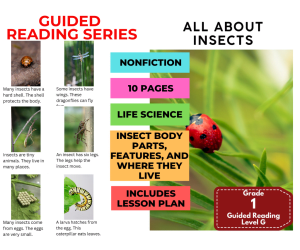
All About Insects: Guided Reading Level G with Lesson Plan
ELA, Resources for Teachers, Reading Comprehension, Reading, Science, Language Development, Vocabulary, Pre-Reading, Insects, Life Sciences, Kindergarten, Grade 1, 2, Worksheets & Printables, Worksheets, Teacher Tools, Centers, Activities, Literacy Readers, Quizzes, Quizzes and Tests, Assessments, Lesson Plans
This All About Insects (level g) guided reading book with lesson plan includes: Guided Reading Color Label (front cover x1) This is a quick way to match the book’s demands to what students can generally handle.. The overall goal is to use the level/color to pick books for several smaller groups. To qualify for a certain level, a student is expected to read a book from that level with about 90–94% accuracy. If a student is consistently accurate and understands, move up a level. If the student is struggling at that level, drop down and add more support. Each student will improve at completely different rates, but it is generally one of the best ways to check progress across the class. DOWNLOAD THE CATALOG TO VIEW ALL GUIDED READING BOOKS AVAILABLE (SORTED LEVELS A-Z) Pre-Reading Question (x1) Teacher asks the prompt aloud, can be while showing the cover or first page. Students share what they already know, or make educated guesses from the cover. Prompt them to use the target vocabulary. Write some of their responses on the board to look back at during the reading. Vocabulary Words (x5) Introduce the five words, best doing it one at a time. Start by saying it, while students repeat and then see if anyone knows what it means before reading further. Read through the meaning and try to briefly connect each word to a picture or gesture so it’s meaningful. Ask students to flip through the book pages and point to where they see each of the vocabulary words. While reading the book pause upon coming across one of the vocab words or read the sentence twice to make sure students understand the word has appeared. Optional: Ask students to raise hands whenever they see/hear one of the new words. Guided Reading Pages (x10) Check the book snapshot (below) for: primary topic - do you need to prep extra reading or intro materials on this? what is taught best - decide on 1-2 bullets to focus on, use the prompt or words provided here for best results. learning goals - what you are checking for students to be able to do after the session, elicit answers using prompts or words provided. key vocabulary (see section above). questions overview - so you know what is coming up and if you need to prep extra materials to assist understanding. Run the lesson You may have already looked at a few of the pages together, but you can show them some of the pictures again first to set meaning. Depending on how much time you have and how familiar your students are with guided reading class, you may want to read the book aloud first with the group first. Students whisper or partner read, while you listen in. If time, do it as a group, one student reading a page each. Use the guided page’s prompts to coach: “Check the picture / does it make sense?” “Point under the words / try the first sound” “Reread the sentence smoothly”. Try to focus more on one student per session (rotating every time), so you can work out if they are ready to move up or need to move down a level. Comprehension Questions (back cover x3) This is your way to check that students didn’t just say the words, but actually understood the text. First, let students answer by pointing to the page/picture and saying a short sentence. After any answer, follow with: “Show me where you found that in the text.” In bigger groups, have partners answer first (10–20 seconds), then call on 2–3 students to share. Differentiation tips: Emerging speakers/struggling readers: oral + pointing On-level: oral in a full sentence Higher: one written sentence or draw + label Book Snapshot Title: All About Insects Genre: Nonfiction (informational) Subject: Science (Life Science) Primary Topic: Insect body parts, features, and where they live Estimated Guided Reading Level (A–Z): G What This Book Teaches Best Explains what insects are by stating they are tiny animals that live in many places . Teaches basic insect anatomy: insects have six legs and three body parts (head, thorax, abdomen). Connects structures to functions: legs help the insect move and antennae are used to smell things . Describes common insect features: some have a hard shell that protects the body , and some have wings (dragonflies can fly fast ). Introduces early life stages: many insects come from eggs , and a larva hatches from an egg. Learning Goals Students will describe insects as tiny animals that live in many places. Students will identify that an insect has six legs that help it move. Students will name the three body parts of an insect: head, thorax, and abdomen. Students will explain that most insects have two antennae used to smell things. Students will describe details from the text about insect features (shells, wings) and how insects begin life (eggs, larva). Key Vocabulary From the Text thorax — the middle part of an insect’s body. abdomen — the back part of an insect’s body. antennae — body parts insects use to smell things. larva — a young insect that hatches from an egg. dragonflies — insects that can fly fast. Discussion Prompts Pre-reading question: Where have you seen insects living before? Comprehension questions: What does the book say insects are? Comprehension questions: How many legs does an insect have? Comprehension questions: Where does the book tell you to look to find an insect? Printing Tips 1. Best Printing Method (Recommended) “Booklet” Printing (Best if Available) If your printer or PDF viewer supports Booklet Printing , use this. Settings to use: Print mode: Booklet Paper size: Letter or A4 (either works) Orientation: Landscape Print on both sides: Yes Flip on: Short edge Scaling: Fit to printable area Booklet subset: First test: Front sides only Then: Back sides only This will automatically: Pair pages correctly Put the cover on the outside Align everything for folding After printing, fold in half and staple along the spine . 2. If “Booklet” Printing Is NOT Available You can still print this correctly with manual duplex printing . Step-by-step: Open the PDF. Choose Print . Set: Orientation: Landscape Pages per sheet: 1 Print on both sides: Yes Flip on: Short edge Print all pages . Because each PDF page already contains two facing book pages, the result will still fold cleanly into a book. Thousands of Cored Education products are included with your TeachSimple membership. Download links and encyclopedia index available here.
Author Cored Education
Rating
Tags Reading Comprehension, Reading Passages, Reading, Guided Reading, Guided Reading Lesson Plan, Guided Reading Activity, Pre-reading, Science Lesson Plans, Life Science, Insects

Plants Science Center
ELA, Language Development, Vocabulary, Science, Basic Science, Kindergarten, Preschool, Grade 1, 2, 3, Centers, Activities
Plants Science Center The Plants Science Center is a teaching resource designed specifically to enhance the learning experience of preschool through 3rd grade students. This tool focuses on key areas such as visual discrimination, sorting observations, nonstandard measurement, and expressing thoughts through writing and drawing. The kit is centered around understanding plants in a fun and engaging manner. This ready-to-use center includes seven different activities: Build a Garden encourages learners to visualize roots below the soil by placing magnet plants onto a garden template. Plant Observation: students classify plants by various features or select one vegetable for detailed examination and documentation. Not Like the Others: makes children identify differences in pictorial representations. Seed Journal: invites them to chart their plant's growth over time. Vegetable Measurement: introduces nonstandard units of measurements with life-sized vegetable cards that learners can measure using connecting cubes or other items. Plant Parts Sorting Cards: kids categorize food items according to which part of the plant we eat (e.g., potatoes as root or celery as stem). The set also comes with relevant supplements like "Plants We Eat" bulletin board title, five food accent circles etc. This teaching resources revolves around topics like: - Weather - Animal Habitats during Winter months; - Exploring Outer Space;- Study of Magnets plus more. Please note: The content provided here comes in PDF format requiring access suitable app/programs displaying digital documents correctly
Author The Proactive Classroom
Tags Plant Science, Hands-on Learning, Nature Education, Science Kit, Classroom Resources
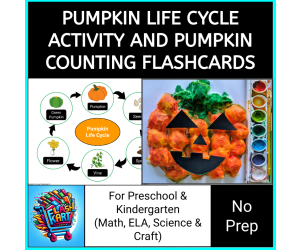
Pumpkin Life Cycle, Flashcards, Rhyming Words, Craft, and Coloring
Holiday & Seasonal, Fall, Seasons, Montessori, Science, Nature & Plants, Life Sciences, Kindergarten, Preschool, Toddler, Grade 1, Centers, Activities, Crafts, Flashcards, Worksheets & Printables
Pumpkin Life Cycle, Pumpkin Counting Flashcards, Rhyming Words, Craft, Coloring Page & Bookmark Making for Preschool, Montessori, & Kindergarten Pumpkin-Themed Fall Activity Pack for Preschool & Kindergarten What’s Inside? I created this engaging resource to celebrate the fall season with pumpkin-themed activities that are fun, hands-on, and educational for young learners. Inside, you’ll find: A Pumpkin Life Cycle Anchor Chart A Pumpkin Life Cycle Bookmark-Making Activity A Pumpkin Craft Activity A Rhyming Words Activity Worksheet Pumpkin Counting Flashcards (large and small sets) A Pumpkin Coloring Page All the activities come in both color and grayscale versions. I have included all the answer keys in this resource for ease of use. Resource features: Life Cycle Focus: The pumpkin life cycle chart and bookmark activity will help students understand each stage of growth. This resource is ideal for fall science lessons. Creative Pumpkin Craft: A hands-on craft to spark imagination, using materials commonly found at home or school is also inside this pack. Rhyming Fun: The rhyming words activity supports early literacy and phonics development . Counting Flashcards: Large and small sets of flashcards are also there for practicing numbers, counting, and memory games. Pumpkin Coloring Page: A Pumpkin Coloring page is also there for tiny tots to enjoy. It may act as a calm and creative activity that reinforces seasonal learning. Ways to use it for teaching different subjects: Science & Nature: Introduce the pumpkin life cycle chart during science lessons. Craft Time: Use the pumpkin craft activity for art projects or take-home fun. Literacy Centers: Encourage reading and phonics skills with the rhyming words worksheet . Math Centers: Use the counting flashcards to practice numbers, counting, or play matching games. Free Choice Centers: Offer the coloring page during free time or give it as a reward to early finishers. Benefits for everyone: Teachers: This resource is perfect for classroom centers, fall-themed lessons, and independent practice. Homeschoolers: For homeschoolers, this set provides a variety of activities for creative and academic learning at home. Parents: It may help parents reinforce classroom learning or add seasonal fun to home education. fall, autumn, pumpkin, seasonal, preschool, kindergarten, counting, phonics, rhyming, pumpkin life cycle, bookmark, preschool activity, kindergarten activity, pumpkin craft, pumpkin coloring, pumpkin counting flashcards, fall worksheets, science, math, literacy, craft, Montessori, October, hands-on learning
Author FlashKart
Rating
Tags Pumpkin Life Cycle, Fall Resource, Bookmark Making Activity, Pumpkin Craft, Pumpkin Coloring Page, Early Childhood Learning, Scissors Skills, Montessori, First Grade, Kindergarten
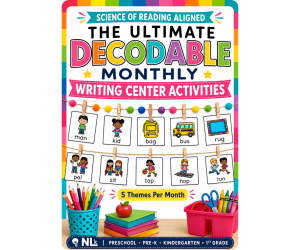
Themed Phonics Writing Center Activities Preschool Pre-K Kindergarten
Science, Holiday & Seasonal, Kindergarten, Preschool, Grade 1, 2, Worksheets & Printables, Activities
Looking for a Science of Reading aligned literacy resource that combines phonics, writing, decoding, and hands-on learning? This Ultimate Decodable Monthly Writing Center Activities pack is designed to help preschool, Pre-K, kindergarten, and first-grade students develop foundational reading skills through engaging center-based activities. Perfect for literacy stations, morning work, intervention groups, small-group instruction, homeschool learning, and independent practice. What's Included 30 printable activity pages Beginning sounds activities CVC word practice Decodable sentence building Rhyming activities Word family practice Sound boxes Vowel sorting Matching activities Cut-and-paste centers Scissor skill activities Reading fluency pages Mini-book assembly Monthly progress tracker Full-color cover page Full-color thank you page Skills Developed Students will strengthen: Phonemic awareness Decoding skills Letter-sound correspondence CVC word reading Vocabulary development Writing readiness Fine motor skills Reading fluency Sentence construction Independent literacy practice Why This Product Sells Teachers love resources that are easy to prep, highly engaging, and aligned with current reading research. These activities support Science of Reading instruction while providing meaningful hands-on practice that students enjoy. The variety of activity types keeps learners engaged and supports multiple learning styles. Perfect For Literacy Centers Writing Centers Small Groups RTI Intervention Homeschool Programs Morning Work Early Finishers Reading Practice Independent Learning Classroom Rotations
Author petterbooka
Rating
Tags Printables, Centers, Back To School, Science Of Reading, Writing, Phonics & Phonological Awareness

Many Jobs To Choose From Audio Book
Science, Earth and Environmental Sciences, Space, Preschool, Kindergarten, Grade 1, 2, 3, Read Alouds, Activities
Did you know that there are two kinds of shuttle astronauts? One is a pilot astronaut and the other is a mission specialist.
Author Twin Sisters Digital Media
Tags Study, Career, Payload, Scientist, Research

Fall autumn animals flashlight cards hidden picture activity
Animals, Life Sciences, Science, Environmental Science, Earth and Environmental Sciences, Fall, Seasons, Holiday & Seasonal, Kindergarten, Preschool, Toddler, Grade 1, 2, Flashcards, Worksheets & Printables, Centers, Activities, Games
Make learning about fall and autumn animals fun and interactive with these Fall Autumn Animals Flashlight Cards! Students will use a flashlight to reveal hidden animal pictures while practicing animal recognition and building science vocabulary through an exciting hands-on activity. I like using these flashlight cards during fall science units, autumn animal studies, woodland habitat lessons, nature-themed activities, preschool and kindergarten science centers, and seasonal learning. It’s an engaging, low-prep activity that adds a fun element of discovery to animal learning. What You Will Get This printable Fall Autumn Animals Flashlight Cards resource gives students an exciting way to discover hidden animals and review seasonal animal vocabulary. What’s Included in this Resource? • Printable fall and autumn animal flashlight cards • Hidden picture reveal activity • Fall animal vocabulary • Hands-on flashlight discovery activity • Student-friendly science center format • Easy-to-use printable cards • Great for independent or small-group learning This resource is perfect for: • Fall science units • Autumn animal studies • Woodland and forest habitat lessons • Seasonal science activities • Preschool and kindergarten science centers • Nature-themed learning • Small-group activities • Homeschool learning Why you will love this? • Easy to prepare and use • Creates an exciting hands-on learning experience • Builds observation and visual recognition skills • Reinforces animal vocabulary • Connects science learning with a seasonal fall theme • Encourages curiosity and independent discovery These Fall Autumn Animals Flashlight Cards are a fun way for young learners to discover hidden animals, practice animal recognition, and build observation skills through an interactive seasonal science activity.
Author Perfect_Printables
Rating
Tags Animal Science, Science Center Activities, Hidden Picture Activities, Flashlight Cards, Animal Vocabulary, Forest Animals Activities, Fall Animals, Fall Activities, Autumn Activities, Fall Flashcards

Zoo Animal Research Writing Project on MONKEYS for K-2nd Grade
Life Studies, ELA, Writing, Creative Writing, Reading, Science, Life Sciences, Animals, Research, Kindergarten, Grade 1, 2, Activities, Teacher Tools, Lesson Plans, Worksheets & Printables, Worksheets, Coloring Pages, Writing Prompts
Animal Research Writing Project on Monkeys for K-2nd Grade. Engage young learners in reading, writing, and science with this 19-page informational writing project on monkeys. Students will examine real-life photos, read age-appropriate facts, color images, draw habitat scenes, and organize information using writing organizers. Differentiated writing pages allow kids to write at their level. When finished, students and the entire classroom can bind everything together into a customized book. This monkey-themed unit promotes creativity, reading comprehension, and nonfiction writing skills. Implement as whole class, small group, centers, or individual work. Suitable for homeschools or grades Kindergarten, first grade classrooms., and for second graders. Click the links below to view similar units on other zoo animals and to do research on zoo animals. Teachers appreciate the ready-to-use animal units covering reading, note-taking, drafting, illustrating, and publishing. Engage your class in meaningful informational writing with this standards-based project on monkeys. Plus, there are many more zoo animals to research as well in my store: K-5 Treasures! For additional Zoo Animal reports, click on the following links below: Animal Research Writing Project on TIGERS for K-2nd Grade Animal Research Writing Project on MONKEYS for K-2nd Grade Animal Research Writing Project on PANDAS for K-2nd Grade Animal Research Writing Project on HIPPOS for K-2nd Grade Animal Research Writing Project on ELEPHANTS for K-2nd Grade Animal Research Writing Project on GIRAFFES for K-2nd Grade Here are even more informational resources on report writing for OCEAN ANIMALS. Click on the links below: Animal Research Writing Project on WHALES for K-2nd Grade Animal Research Writing Project on the OCTOPUS for K-2nd Grade Animal Research Writing Project on SEA TURTLES for K-2nd Grade Animal Research Writing Project on ORCAS for K-2nd Grade Animal Research Writing Project on the SHELLFISH for K-2nd Grade Animal Research Writing Project on DOLPHINS for K-2nd Grade Animal Research Writing Project on SEALS for K-2nd Grade
Author K-5 Treasures
Tags Animal Research, Informational Writing, Writing Report, Zoo Animals, Report On Animals, Report On Zoo Animals, 1st Grade Writing, 2nd Grade Writing, Monkeys, Report On Monkeys

Guided Reading Level F - Planets in Our Solar System
ELA, Resources for Teachers, Reading Comprehension, Reading, Language Development, Pre-Reading, Vocabulary, Science, Earth and Environmental Sciences, Space, Kindergarten, Grade 1, 2, Worksheets & Printables, Worksheets, Teacher Tools, Centers, Activities, Literacy Readers, Quizzes, Quizzes and Tests, Assessments
This Guided Reading Book - Planets in Our Solar System (Level F) includes: Guided Reading Color Label (front cover x1) This is a quick way to match the book’s demands to what students can generally handle.. The overall goal is to use the level/color to pick books for several smaller groups. To qualify for a certain level, a student is expected to read a book from that level with about 90–94% accuracy. If a student is consistently accurate and understands, move up a level. If the student is struggling at that level, drop down and add more support. Each student will improve at completely different rates, but it is generally one of the best ways to check progress across the class. DOWNLOAD THE CATALOG TO VIEW ALL GUIDED READING BOOKS AVAILABLE (SORTED LEVELS A-Z) COMPANION VIDEO NOW AVAILABLE (EMBEDDED AFTER PREVIEW PICTURES IN PRODUCT DESCRIPTION) Pre-Reading Question (x1) The teacher says the question aloud, either while showing the cover or the first page. Students share what they already know or make sensible guesses based on the cover. Encourage them to use the target vocabulary where possible. Write a few of their ideas on the board so you can return to them during or after the reading. Vocabulary Words (x5) Introduce the five words one at a time. Say each word aloud, have students repeat it, and then ask if anyone already knows what it means. Read the meaning together and briefly connect each word to a picture, action, or gesture so it feels more memorable. Ask students to flip through the book and point to any pages where they spot the vocabulary words. While reading, pause when one of the words appears, or reread the sentence so students clearly notice and understand it in context. Optional: Ask students to raise their hands whenever they see or hear one of the new words. Guided Reading Pages (x10) Check the book snapshot below for: Primary topic — decide whether students need a quick introduction or extra background first. What this lesson teaches best — choose 1–2 key points to focus on during the session. Learning goals — keep in mind what students should be able to understand or say by the end. Key vocabulary — review and reinforce these throughout the lesson. Questions overview — look ahead so you know what students will be asked and whether any extra support is needed. Run the lesson You may already have looked at a few pages together, but it can help to revisit some of the pictures first to build meaning. Depending on your time and how confident the group is with guided reading, you may want to read the whole book aloud to them first. Students can then whisper-read or partner-read while you listen in. If time allows, you can also read as a group, with each student taking a page. Use the guided reading prompts to support them, such as: “Check the picture—does it make sense?” “Point under the words.” “Try the first sound.” “Reread the sentence smoothly.” It can be helpful to focus more closely on one student each session, rotating over time, so you can better judge whether they are ready to move up or may need more support at their current level. Comprehension Questions (back cover x3) This is where you check that students understood the text, not just the words on the page. Start by letting students answer by pointing to a page or picture and saying a short sentence. After they respond, follow up with: “Show me where you found that in the text.” In larger groups, let partners discuss their answer first for 10–20 seconds, then invite 2–3 students to share. Differentiation tips Emerging speakers / struggling readers: oral response + pointing On-level: oral response in a full sentence Higher: one written sentence or a drawing with labels Book Snapshot Title: Planets in Our Solar System Genre: Nonfiction (informational) Subject: Science Primary Topic: Basic facts about the Sun, the planets, and the Moon Estimated Guided Reading Level (A–Z): F What This Book Teaches Best Introduces the Sun as a star at the center of the solar system that gives light and heat to the planets. Teaches the order of the planets, from Mercury to Neptune, with one main fact about each one. Builds science vocabulary naturally through the text, including words like craters , surface , giant , unique , and reflects . Helps students compare planets using simple details such as color, temperature, rings, winds, and clouds. Learning Goals Students will identify the Sun’s job in the solar system using details from the text. Students will name the planets in order from Mercury to Neptune as shown in the book. Students will describe at least three planets using facts from the text. Students will explain what makes one planet “unique” in the book. Students will tell what the Moon does at night, according to the text. Key Vocabulary From the Text craters — deep holes in the ground surface — the outside layer of something giant — very, very big unique — special and different from others reflects — bounces light back Discussion Prompts Pre-reading question: What do you already know about the Sun, the Moon, and the planets? Comprehension question: Which planet does the book say is the smallest? Comprehension question: What is Saturn famous for? Comprehension question: What does the Moon reflect at night? 1. Best Printing Method (Recommended) Booklet printing is the best option if your printer or PDF viewer supports it. This method usually places the pages in the correct order automatically and makes folding much easier. Settings to use: Print mode: Booklet Paper size: Letter or A4 Orientation: Landscape Print on both sides: Yes Flip on: Short edge Scaling: Fit to printable area Booklet subset: First, print front sides only Then, print back sides only This will automatically: Pair the pages correctly Place the cover on the outside Help everything line up properly for folding After printing, fold the pages in half and staple along the spine. 2. If “Booklet” Printing Is Not Available You can still print the book correctly by using manual duplex printing . Step-by-step: Open the PDF. Click Print . Use these settings: Orientation: Landscape Pages per sheet: 1 Print on both sides: Yes Flip on: Short edge Print all pages. Since each PDF page already contains two facing book pages, the pages should still fold neatly into a book. Thousands of Cored Education products are included with your TeachSimple membership. Download links and encyclopedia index available here.
Author Cored Education
Rating
Tags Vocabulary, Reading Comprehension, Reading Passages, Leveled Reading, Nonfiction, Reading, Guided Reading, Earth Science, Space, Planets
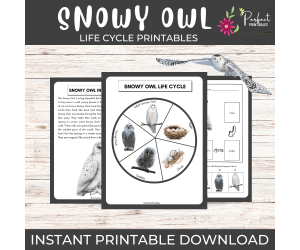
Life Cycle of a Snowy Owl Worksheet- Winter Animal Science Unit Study
Animals, Life Sciences, Science, Biology, Winter, Seasons, Holiday & Seasonal, Preschool, Kindergarten, Grade 1, 2, 3, 4, Coloring Pages, Worksheets, Worksheets & Printables, Parts of and Anatomy of, Workbooks, Projects, Activities
Introduce your students to the wonders of the Arctic with this Life Cycle of a Snowy Owl Worksheet – Winter Animal Science Unit Study . This engaging, no-prep activity is designed to help learners explore the unique life stages of the snowy owl while building key science and vocabulary skills. What’s Included In This Winter Bird Science Unit Pack? Life Cycle of the Snowy Owl diagram worksheet Cut-and-paste activity for sequencing the life cycle Snowy Owl in a nutshel Fun Facts Coloring Page Flashcard Why Teachers Love It: • Integrates seamlessly into life science and seasonal studies • Strengthens sequencing and vocabulary skills • Easy to adapt across grade levels • No prep required – just print and use Perfect For: • Winter animal and Arctic ecosystem unit studies • Bird life cycle lessons • Science centers or interactive notebooks • Homeschool, small group, or whole-class learning Bring science and nature together with this hands-on snowy owl life cycle worksheet —a fun way to explore Arctic wildlife during your winter lessons!
Author Perfect_Printables
Rating
Tags Snowy Owl Life Cycle, Winter Animal Science Unit, Life Cycle Of Snowy Owl, Arctic Bird Life Cycle, Owl Life Cycle Cut And Paste, Winter Animal Life Science, Snowy Owl Fact, Snowy Owl Adaptations, Winter Bird Life Cycle

Let's Learn About Lions Audio Book
Science, Life Sciences, Animals, Kindergarten, Preschool, Grade 1, 2, Read Alouds, Activities
Kids will learn why the ferocious, meat-eating lion is called “king of the beasts,” as well as learn about other wild cats like the “sports car” of cats—the speedy cheetah, the tree-climbing leopard, and the biggest cat of all—the Siberian tiger. What wild cat lives high in the mountains, is seldom seen, can live in freezing temperatures, and cannot roar? Kids will learn about the “ghost of the mountain,” the beautiful, Snow leopard. Authentic sound effects will engage listeners of all ages, while learning about these amazing mammals—Wild Cats!
Author Twin Sisters Digital Media
Tags Lion, Tiger, Cheetah, Snow Leopard, Children
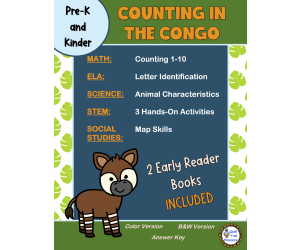
Congo Rainforest Worksheets & Activities | Cross-Curriculum
ELA, Reading, Reading Comprehension, STEM, Animals, Life Sciences, Science, Math, Counting, Early Math, Kindergarten, Activities, Worksheets & Printables, Worksheets, Read Alouds, Writing Prompts
Take your young learners on a journey through the Congo rainforest with these fun and engaging activities. Designed for learners in Pre-K and kindergarten, this product will give them the opportunity to strengthen skills across several learning domains. They’ll begin their journey travelling through the pages of “Counting in the Congo” all while practicing their reading and math skills. Next, they will complete a personalized version of the early reader book, helping to provide motivation for continued reading. Through the process of completing each of the 15 worksheets, your learners will focus on a variety of math, ELA, science, social studies, and STEM concepts . This product is a sure hit for all types of learners as it is filled with colorful, kid-friendly graphics, easy to understand instructions, and the opportunity to write, cut, glue, draw, build, and think outside the box. There are also several benefits for you in that both books and most worksheets are available in both color and black & white versions. Not only that, but the worksheets are print and go, allowing you to spend more time with your learners rather than prepping materials. Each worksheet and activity can be used independently or with various group sizes. They also make for a great last-minute fill-in for substitute teachers or changes in daily plans/routines. What’s more is that many of the worksheets can be laminated and used as a write-on/wipe-off activity in a small group setting. Whatever the situation, you can’t go wrong with this product. Take a look below at the details for each worksheet/activity. “COUNTING THE IN THE CONGO” Book 1 Learners will use the repetitive words to read through the 14 pages. They’ll practice number identification, counting 1-10, and 1-to-1 correspondence using a variety of animals found in the Congo rainforest. “COUNTING THE IN THE CONGO” Book 2 This interactive version will allow your learners to personalize the book. They’ll practice the aforementioned skills, while also writing numerals 1-10, reading color words, and following 1-step instructions. WORKSHEETS 1 & 2 : learners will identify numbers 0-10, write the numbers on the line, and count the corresponding markings on each rainforest snake. WORKSHEET 3 : learners will identify numbers and color names, then color the corresponding number of rainforest animals in each column. WORKSHEET 4: learners will count the groups of rainforest animals and write the corresponding number on the line. WORKSHEET 5: learners will identify numbers and cross out the group of rainforest fruits that do not match the numbers. INSTRUCTION PAGE: directions for 3 STEM activities focusing on estimating, measuring, problem solving, and fine motor skills (with a monkey theme). WORKSHEETS 6-8: learners will record data and reflect on the process of each STEM activity. WORKSHEET 9: learners will use cutting and gluing skills to sort rainforest animals in 3 categories (feathers, fur, scales) WORKSHEET 10: learners will practice reading comprehension skills by circling the animal that matches the sentence from the book. WORKSHEET 11: learners will practice identifying uppercase letters and their corresponding sounds, as well as writing uppercase and lowercase letters. WORKSHEET 12: learners will complete the writing prompt and draw a corresponding illustration. WORKSHEET 13: using the map of Africa, learners will practice color identification, writing uppercase and lowercase letters, measurement, and drawing. WORKSHEET 14: learners will strengthen visual discrimination skills by matching rainforest animals to their respective shadows. WORKSHEET 15: learners will draw a picture of their Congo rainforest family and write the number of members in said family. ANSWER KEY FOR ALL WORKSHEETS
Author Quail Trail Products
Rating
Tags Rainforest, Congo, Math, Ela, Science, STEM, Early Readers, Writing, Map Skills, Reading Comprehension

Guided Reading Level H - All About Hiking (with Lesson Plan)
ELA, Resources for Teachers, Reading Comprehension, Reading, Science, Earth and Environmental Sciences, Geography, Social Studies, Health, P.E. & Health, Kindergarten, Grade 1, 2, Worksheets & Printables, Worksheets, Teacher Tools, Centers, Activities, Literacy Readers, Quizzes, Quizzes and Tests, Assessments
This Guided Reading Book - All About Hiking (Level H) with lesson plan includes: Guided Reading Color Label (front cover x1) This is a quick way to match the book’s demands to what students can generally handle.. The overall goal is to use the level/color to pick books for several smaller groups. To qualify for a certain level, a student is expected to read a book from that level with about 90–94% accuracy. If a student is consistently accurate and understands, move up a level. If the student is struggling at that level, drop down and add more support. Each student will improve at completely different rates, but it is generally one of the best ways to check progress across the class. DOWNLOAD THE CATALOG TO VIEW ALL GUIDED READING BOOKS AVAILABLE (SORTED LEVELS A-Z) Pre-Reading Question (x1) Teacher asks the prompt aloud, can be while showing the cover or first page. Students share what they already know, or make educated guesses from the cover. Prompt them to use the target vocabulary. Write some of their responses on the board to look back at during the reading. Vocabulary Words (x5) Introduce the five words, best doing it one at a time. Start by saying it, while students repeat and then see if anyone knows what it means before reading further. Read through the meaning and try to briefly connect each word to a picture or gesture so it’s meaningful. Ask students to flip through the book pages and point to where they see each of the vocabulary words. While reading the book pause upon coming across one of the vocab words or read the sentence twice to make sure students understand the word has appeared. Optional: Ask students to raise hands whenever they see/hear one of the new words. Guided Reading Pages (x10) Check the book snapshot (below) for: primary topic - do you need to prep extra reading or intro materials on this? what is taught best - decide on 1-2 bullets to focus on, use the prompt or words provided here for best results. learning goals - what you are checking for students to be able to do after the session, elicit answers using prompts or words provided. key vocabulary (see section above). questions overview - so you know what is coming up and if you need to prep extra materials to assist understanding. Run the lesson You may have already looked at a few of the pages together, but you can show them some of the pictures again first to set meaning. Depending on how much time you have and how familiar your students are with guided reading class, you may want to read the book aloud first with the group first. Students whisper or partner read, while you listen in. If time, do it as a group, one student reading a page each. Use the guided page’s prompts to coach: “Check the picture / does it make sense?” “Point under the words / try the first sound” “Reread the sentence smoothly”. Try to focus more on one student per session (rotating every time), so you can work out if they are ready to move up or need to move down a level. Comprehension Questions (back cover x3) This is your way to check that students didn’t just say the words, but actually understood the text. First, let students answer by pointing to the page/picture and saying a short sentence. After any answer, follow with: “Show me where you found that in the text.” In bigger groups, have partners answer first (10–20 seconds), then call on 2–3 students to share. Differentiation tips: Emerging speakers/struggling readers: oral + pointing On-level: oral in a full sentence Higher: one written sentence or draw + label Book Snapshot Title: All About Hiking Genre: Nonfiction (informational) Subject: Health / Outdoor Safety Primary Topic: Hiking basics: trails, gear, nature, and care Estimated Guided Reading Level (A–Z): H What This Book Teaches Best Defines hiking as “a long walk in nature” and a sport done on trails. Describes that trails exist in different environments (forests and rocky ground). Explains essential hiking items and why they help (footwear with treads, backpack, water, snacks). Introduces navigation support on trails by explaining what trail markers and signs do. Emphasizes caring for nature by not leaving litter so the trail stays clean. Learning Goals Students can describe what hiking is using details from the text. Students can identify different trail environments mentioned in the book. Students can explain how specific hiking items help hikers (boots, backpack, water, snacks). Students can explain how trail markers and signs help hikers follow the correct path. Students can describe how hikers can protect the environment by leaving no litter behind. Key Vocabulary From the Text footwear — shoes or boots you wear on your feet. treads — bumpy lines on shoes that help you not slip. essential — very important; you really need it. reusable — can be used again instead of thrown away. landscape — the land you can see in an area. Discussion Prompts Pre-reading question: What supplies do you think people might bring when they go hiking? Comprehension questions: What does the book say hiking is? What do trail markers and signs help hikers do? What happens to the trail when no litter is left behind? Printing Tips 1. Best Printing Method (Recommended) “Booklet” Printing (Best if Available) If your printer or PDF viewer supports Booklet Printing , use this. Settings to use: Print mode: Booklet Paper size: Letter or A4 (either works) Orientation: Landscape Print on both sides: Yes Flip on: Short edge Scaling: Fit to printable area Booklet subset: First test: Front sides only Then: Back sides only This will automatically: Pair pages correctly Put the cover on the outside Align everything for folding After printing, fold in half and staple along the spine . 2. If “Booklet” Printing Is NOT Available You can still print this correctly with manual duplex printing . Step-by-step: Open the PDF. Choose Print . Set: Orientation: Landscape Pages per sheet: 1 Print on both sides: Yes Flip on: Short edge Print all pages . Because each PDF page already contains two facing book pages, the result will still fold cleanly into a book. Thousands of Cored Education products are included with your TeachSimple membership. Download links and encyclopedia index available here.
Author Cored Education
Rating
Tags Reading Comprehension, Reading Passages, Reading, Guided Reading, Guided Reading Lesson Plan, Guided Reading Activity, Pre-reading, Vocabulary, Science Lesson Plans, Geography Lesson Plans

Guided Reading Level H - The Story of the Wheel
ELA, Resources for Teachers, Reading Comprehension, Reading, Language Development, Vocabulary, Engineering, Technology, Science, Physics, Kindergarten, Grade 1, 2, Worksheets & Printables, Worksheets, Teacher Tools, Centers, Activities, Literacy Readers, Quizzes, Quizzes and Tests, Assessments
This Guided Reading Book - The Story of the Wheel (Level H) includes: Guided Reading Color Label (front cover x1) This is a quick way to match the book’s demands to what students can generally handle.. The overall goal is to use the level/color to pick books for several smaller groups. To qualify for a certain level, a student is expected to read a book from that level with about 90–94% accuracy. If a student is consistently accurate and understands, move up a level. If the student is struggling at that level, drop down and add more support. Each student will improve at completely different rates, but it is generally one of the best ways to check progress across the class. DOWNLOAD THE CATALOG TO VIEW ALL GUIDED READING BOOKS AVAILABLE (SORTED LEVELS A-Z) Pre-Reading Question (x1) Teacher asks the prompt aloud, can be while showing the cover or first page. Students share what they already know, or make educated guesses from the cover. Prompt them to use the target vocabulary. Write some of their responses on the board to look back at during the reading. Vocabulary Words (x5) Introduce the five words, best doing it one at a time. Start by saying it, while students repeat and then see if anyone knows what it means before reading further. Read through the meaning and try to briefly connect each word to a picture or gesture so it’s meaningful. Ask students to flip through the book pages and point to where they see each of the vocabulary words. While reading the book pause upon coming across one of the vocab words or read the sentence twice to make sure students understand the word has appeared. Optional: Ask students to raise hands whenever they see/hear one of the new words. Guided Reading Pages (x10) Check the book snapshot (below) for: primary topic - do you need to prep extra reading or intro materials on this? what is taught best - decide on 1-2 bullets to focus on, use the prompt or words provided here for best results. learning goals - what you are checking for students to be able to do after the session, elicit answers using prompts or words provided. key vocabulary (see section above). questions overview - so you know what is coming up and if you need to prep extra materials to assist understanding. Run the lesson You may have already looked at a few of the pages together, but you can show them some of the pictures again first to set meaning. Depending on how much time you have and how familiar your students are with guided reading class, you may want to read the book aloud first with the group first. Students whisper or partner read, while you listen in. If time, do it as a group, one student reading a page each. Use the guided page’s prompts to coach: “Check the picture / does it make sense?” “Point under the words / try the first sound” “Reread the sentence smoothly”. Try to focus more on one student per session (rotating every time), so you can work out if they are ready to move up or need to move down a level. Comprehension Questions (back cover x3) This is your way to check that students didn’t just say the words, but actually understood the text. First, let students answer by pointing to the page/picture and saying a short sentence. After any answer, follow with: “Show me where you found that in the text.” In bigger groups, have partners answer first (10–20 seconds), then call on 2–3 students to share. Differentiation tips: Emerging speakers/struggling readers: oral + pointing On-level: oral in a full sentence Higher: one written sentence or draw + label Book Snapshot Title: The Story of the Wheel Genre: Nonfiction (informational) Subject: Science (Engineering / Simple Machines) Primary Topic: How wheels changed over time and how they work Estimated Guided Reading Level (A–Z): H What This Book Teaches Best What wheels are and what they help people do: move heavy things with less effort. How wheels changed over time (from heavy stone/wood wheels to spoked wheels to modern rubber tires). Why different wheels are designed differently for different jobs (tractor treads for mud; thin bicycle wheels for speed; small wheels for gliding). That not all wheels are for travel—gears are wheels with teeth that help machines move. Learning Goals Students will explain what wheels are used for using a detail from the text. Students will describe how the first wheels were made long ago, according to the book. Students will explain why spoked wheels helped carts move faster using the book’s comparison. Students will describe how treads help tractor wheels move through thick, wet mud. Students will identify one way gears are different from travel wheels and tell what gears do in machines. Key Vocabulary From the Text spokes — thin parts connecting the center to the outside. oxen — strong animals that pull heavy loads. rubber — stretchy material used to make tires. treads — deep grooves that help a tire grip ground. gears — wheels with teeth that help machines move. Discussion Prompts Pre-reading question: How do you think wheels help people move things more easily? Comprehension questions: What does the book say wheels are used for? What were the very first wheels made from long ago? What are gears, and what do they help machines do? Printing Tips 1. Best Printing Method (Recommended) “Booklet” Printing (Best if Available) If your printer or PDF viewer supports Booklet Printing , use this. Settings to use: Print mode: Booklet Paper size: Letter or A4 (either works) Orientation: Landscape Print on both sides: Yes Flip on: Short edge Scaling: Fit to printable area Booklet subset: First test: Front sides only Then: Back sides only This will automatically: Pair pages correctly Put the cover on the outside Align everything for folding After printing, fold in half and staple along the spine . 2. If “Booklet” Printing Is NOT Available You can still print this correctly with manual duplex printing . Step-by-step: Open the PDF. Choose Print . Set: Orientation: Landscape Pages per sheet: 1 Print on both sides: Yes Flip on: Short edge Print all pages . Because each PDF page already contains two facing book pages, the result will still fold cleanly into a book. Thousands of Cored Education products are included with your TeachSimple membership. Download links and encyclopedia index available here.
Author Cored Education
Rating
Tags Vocabulary, Reading Comprehension, Reading Passages, Leveled Reading, Nonfiction, Reading, Guided Reading, Physics, Engineering, Technology

When I Grow Up I Want To Be A Meteorologist Audio Book
Science, Earth and Environmental Sciences, Environmental Science, Preschool, Kindergarten, Grade 1, 2, 3, Read Alouds, Activities
If you are fascinated with thunderstorms, cloud formations, tornados, and windy weather, you might be interested in becoming a meteorologist.
Author Twin Sisters Digital Media
Tags Discover, Weather, Storms, Rain, Sun

Walk In The Wild Audio Book
Science, Life Sciences, Animals, Kindergarten, Preschool, Grade 1, 2, Read Alouds, Activities
The Walk In The Wild Audio Book serves as an excellent teaching resource for educators and parents who are keen on offering a fun-filled, informative means of learning about wildlife to preschoolers, kindergarteners, and first & second graders. This interactive audio book dives into Zoology as children uncover exciting facts about wild beasts such as bears, zebras, elephants, giraffes, gorillas, lions, tigers and crocodiles. This Science-focused resource incorporates authentic sound effects coupled with engaging music that will keep young learners intrigued while they grasp remarkable realities such as an elephant's eating appetite of up to 16 hours daily or its amazing hydration needs demanding up to 80 gallons of water each day. Figments like these will not only enlighten learners but will also draw their attention deeper into the world of animals through significant facts that duly represent the wonder in wildlife. Whether teachers choose to disseminate this audio learning tool during whole class sessions or divide it amongst smaller groups for focused discussions depends on their pedagogical objectives. It also offers homeschooling parents a standalone product with flexibility in usage; it can fill quiet study hours or serve as exciting material during group co-op sessions stimulating lively conversation starters among kids. Contained within this educational resource is a single MP3 file titled ‘Walk In The Wild.' It suffices elegantly for Jim Trelease's concept whereby he acknowledges audiobooks' ability to introduce students at varying reading levels to books above their reading age; thus fostering exposure towards complex language pattern development and vocabulary growth. The Walk In The Wild Audio Book embellishes learning with both vivid imagery through storytelling sonics alongside factual precision—a unique blend of pleasure-reads captivated by numerous elements embodying curiosity and merriment in one package!
Author Twin Sisters Digital Media
Tags Wildlife, Zoology, Interactive Learning, Audio Book, Educational Resource