



3,952 products added recently
Page 5 - Science Activities For Kindergarten
Introduce young learners to the world of science with activities designed for kindergarten students. This collection includes simple experiments, nature observations, and sensory experiences that encourage curiosity. By integrating these science activities into your teaching, you can lay the groundwork for scientific thinking and a lifelong love of learning.

 Show filters

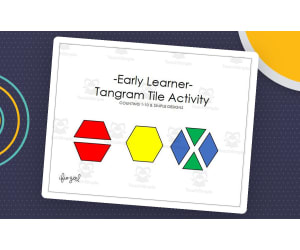
Tangram Tile Activity
Special Resources, Special Education Needs (SEN), Math, Patterns, Early Math, Geometry, Science, Basic Science, Kindergarten, Preschool, Grade 2, 3, 4, 5, 6, Activities
The Tangram Tile Activity : An Effective Teaching Resource The Tangram Tile Activity is a robust educational tool aimed at learners from Preschool to Grade 6. Designed for both public school and homeschooling environments, this activity uses tangram puzzles to engage learners in interactive learning. Main Objectives Spatial reasoning: By working with various shapes, students gain an understanding of the interplay between spaces and shapes. Problem-solving: Assembling the tiles into specified designs challenges learner's logical thinking and creativity. Creativity: Tiles arrange into unique patterns enhancing students' imaginative thinking and self-expression skills. Critical Thinking Skills: Understanding each shape's relationship with other pieces requires analytical skills and promotes critical thought process. Add-on Benefits Tangram activities help improve hand-eye coordination as they require precise motor skills for arranging them correctly. They are valuable aids when teaching geometry, basic science, and promoting creativity within learning groups. Specially Designed for Early Learners This particular set escalates from simple compositions to more complex ones introducing beginner-level participants smoothly into these creations’ engaging world. Tiles are well-spaced making it easier for students facing challenges related to motor functions or visual interpretation issues. Besides having a counting exercise which allows enumeration practice from one through ten, there also 19 patterned-design cards ranging levels catering perfectly across different abilities ensuring progress at every step. These printable activities in PDF format can be used flexibly as individual homework assignments, small group workshops or as a comprehensive classroom resource.
Author IFIO girl - I'll Figure It Out
Tags Tangram Puzzles, Spatial Reasoning, Problem-solving, Creativity, Critical Thinking
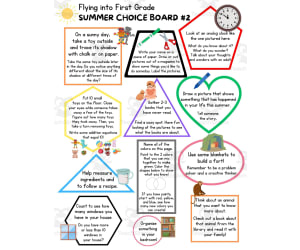
Low-Prep Summer Activities: Flying into First Grade Choice Boards
Creative Arts, ELA, Life Studies, Math, Montessori, P.E. & Health, Resources for Teachers, Science, STEM, Kindergarten, Grade 1, Activities, Task Cards, Worksheets & Printables
Low-Prep Summer Activities: Flying into First Grade Choice Boards Help young learners stay engaged and excited about learning with these Low-Prep Summer Activities: Flying into First Grade Choice Boards ! Designed for children completing kindergarten and getting ready for first grade , these engaging summer bridge choice boards provide fun, hands-on learning experiences that build confidence and reinforce important academic and life skills throughout the summer. About This Product This resource includes three printable Flying into First Grade Choice Boards filled with cross-curricular activities that encourage creativity, critical thinking, independence, and school readiness. After completing an activity, children color in a matching shape to celebrate their progress and create a visual record of their summer learning. Families can revisit favorite activities throughout the season for even more practice and fun. Don't forget to explore the companion choice boards designed for family members of all ages! Learning Objectives These choice boards help students: Build confidence and independence. Strengthen skills learned in kindergarten. Prepare for a successful transition into first grade. Encourage creativity, problem-solving, and communication. Foster meaningful family engagement. Keep learning fun with low-prep summer activities. What's Included 3 printable Flying into First Grade Choice Boards Student-friendly completion tracker Cross-curricular learning activities Low-prep, family-friendly summer experiences Grades/Ages Kindergarten First Grade (summer bridge and back-to-school readiness) Subject Cross-Curricular Skills Perfect For Summer learning at home Summer bridge programs Family engagement Kindergarten take-home packets First grade readiness Homeschool enrichment Independent summer practice Estimated Time Activities vary in length. Some can be completed in under 10 minutes , while others can be extended into projects that last multiple days. Supplies Needed Most activities use simple household or classroom materials and require very little preparation, making this resource perfect for busy families and teachers. Answer Key Answer key not provided. Activities are open-ended and designed to promote exploration, creativity, and real-world learning. File Information File Type: PDF Pages: 3 Make summer learning meaningful with these engaging summer activities that help children transition confidently from kindergarten to first grade . Whether you're looking for a summer bridge , low-prep learning resource, or a fun way to get ready for first grade , these choice boards provide flexible, hands-on learning opportunities the whole family can enjoy.
Author Sprout & Inspire
Rating
Tags First Grade, Summer Activities, Bridge Activities, Kindergarten, Summer Fun, Activity Choice Board
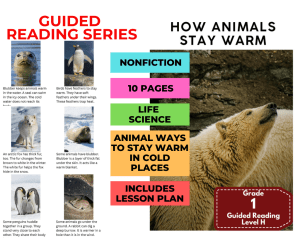
Guided Reading Level H - How Animals Stay Warm (with Lesson Plan)
ELA, Resources for Teachers, Reading Comprehension, Reading, Animals, Life Sciences, Science, Pre-Reading, Language Development, Vocabulary, Kindergarten, Grade 1, 2, Worksheets & Printables, Worksheets, Teacher Tools, Centers, Activities, Literacy Readers, Quizzes, Quizzes and Tests, Assessments
This Guided Reading Book - How Animals Stay Warm (Level H) with lesson plan includes: Guided Reading Color Label (front cover x1) This is a quick way to match the book’s demands to what students can generally handle.. The overall goal is to use the level/color to pick books for several smaller groups. To qualify for a certain level, a student is expected to read a book from that level with about 90–94% accuracy. If a student is consistently accurate and understands, move up a level. If the student is struggling at that level, drop down and add more support. Each student will improve at completely different rates, but it is generally one of the best ways to check progress across the class. DOWNLOAD THE CATALOG TO VIEW ALL GUIDED READING BOOKS AVAILABLE (SORTED LEVELS A-Z) Pre-Reading Question (x1) Teacher asks the prompt aloud, can be while showing the cover or first page. Students share what they already know, or make educated guesses from the cover. Prompt them to use the target vocabulary. Write some of their responses on the board to look back at during the reading. Vocabulary Words (x5) Introduce the five words, best doing it one at a time. Start by saying it, while students repeat and then see if anyone knows what it means before reading further. Read through the meaning and try to briefly connect each word to a picture or gesture so it’s meaningful. Ask students to flip through the book pages and point to where they see each of the vocabulary words. While reading the book pause upon coming across one of the vocab words or read the sentence twice to make sure students understand the word has appeared. Optional: Ask students to raise hands whenever they see/hear one of the new words. Guided Reading Pages (x10) Check the book snapshot (below) for: primary topic - do you need to prep extra reading or intro materials on this? what is taught best - decide on 1-2 bullets to focus on, use the prompt or words provided here for best results. learning goals - what you are checking for students to be able to do after the session, elicit answers using prompts or words provided. key vocabulary (see section above). questions overview - so you know what is coming up and if you need to prep extra materials to assist understanding. Run the lesson You may have already looked at a few of the pages together, but you can show them some of the pictures again first to set meaning. Depending on how much time you have and how familiar your students are with guided reading class, you may want to read the book aloud first with the group first. Students whisper or partner read, while you listen in. If time, do it as a group, one student reading a page each. Use the guided page’s prompts to coach: “Check the picture / does it make sense?” “Point under the words / try the first sound” “Reread the sentence smoothly”. Try to focus more on one student per session (rotating every time), so you can work out if they are ready to move up or need to move down a level. Comprehension Questions (back cover x3) This is your way to check that students didn’t just say the words, but actually understood the text. First, let students answer by pointing to the page/picture and saying a short sentence. After any answer, follow with: “Show me where you found that in the text.” In bigger groups, have partners answer first (10–20 seconds), then call on 2–3 students to share. Differentiation tips: Emerging speakers/struggling readers: oral + pointing On-level: oral in a full sentence Higher: one written sentence or draw + label Book Snapshot Title: How Animals Stay Warm Genre: Nonfiction (informational) Subject: Life Science Primary Topic: Animal ways to stay warm in cold places Estimated Guided Reading Level (A–Z): H What This Book Teaches Best Animals must stay warm to live in places with snow and ice. Body coverings can help animals stay warm (thick fur and feathers that trap heat). Some animals use body fat for warmth (blubber acts like a “warm blanket” and keeps cold water from reaching the body). Animals can use behaviors to stay warm (penguins huddle close and share body heat; some animals go underground; some sit in the sun). Learning Goals Explain why animals must stay warm to live in snow and ice. Describe how thick fur helps keep warm air near an animal’s skin. Describe how blubber helps animals stay warm, including in icy water. Describe how feathers help birds stay warm by trapping heat. Identify actions animals take to stay warm (huddling, going into a burrow, sitting in the sun). Key Vocabulary From the Text arctic — very cold, snowy place. blubber — thick fat under skin that helps keep warm. feathers — soft bird covering that helps trap heat. huddle — stand very close together in a group. burrow — a deep hole an animal digs to go underground. Discussion Prompts Pre-reading question: What are some ways animals might stay warm when it is very cold? Comprehension questions: Why must animals stay warm to live in snow and ice? Comprehension questions: How does blubber help a seal swim in the icy ocean? Comprehension questions: What do penguins do in a group to stay warm? Printing Tips 1. Best Printing Method (Recommended) “Booklet” Printing (Best if Available) If your printer or PDF viewer supports Booklet Printing , use this. Settings to use: Print mode: Booklet Paper size: Letter or A4 (either works) Orientation: Landscape Print on both sides: Yes Flip on: Short edge Scaling: Fit to printable area Booklet subset: First test: Front sides only Then: Back sides only This will automatically: Pair pages correctly Put the cover on the outside Align everything for folding After printing, fold in half and staple along the spine . 2. If “Booklet” Printing Is NOT Available You can still print this correctly with manual duplex printing . Step-by-step: Open the PDF. Choose Print . Set: Orientation: Landscape Pages per sheet: 1 Print on both sides: Yes Flip on: Short edge Print all pages . Because each PDF page already contains two facing book pages, the result will still fold cleanly into a book. Thousands of Cored Education products are included with your TeachSimple membership. Download links and encyclopedia index available here.
Author Cored Education
Rating
Tags Reading Comprehension, Reading Passages, Reading, Guided Reading, Guided Reading Lesson Plan, Guided Reading Activity, Pre-reading, Vocabulary, Animals, Life Science

What Does A Meteorologist Do? Audio Book
Science, Earth and Environmental Sciences, Environmental Science, Preschool, Kindergarten, Grade 1, 2, 3, Read Alouds, Activities
Introduction What Does A Meteorologist Do? Audio Book is a valuable teaching resource aimed to educate students from Kindergarten to Grade 3 about the intriguing profession of meteorologists. This uncomplicated audio book explains how these specialized scientists predict weather patterns by monitoring variables like wind speed and humidity, and deciphering warm and cold fronts in the atmosphere. Purpose If you wish to incorporate engaging content about Environmental Science in your lesson plan, this is the tool for you! The audio format provides diverse innovative options for usage. You can choose to use it during: Whole group instruction Small group activities Homeschooling lessons Independent study periods. Made Accessible for Young Learners! This educational tool simplifies potentially complex concepts making them more comprehensible for young learners. It employs auditory learning strategies and simple language that aligns with Grade 7-8 reading levels, enhancing understanding while encouraging an interest in Science subjects. The easy-to-use MP3 format makes What Does A Meteorologist Do? Audio Book a versatile and convenient option due to its portability - play it across various platforms according to your needs. Suitable Learning Anywhere! Frequently appreciated in our modern world is flexibility. Learn at home or at school; location doesn't restrict education when using this handy resource! This tailored primer invites those just beginning their journey into environmental science. Discover what meteorologists do everyday; unlocking crucial knowledge that shapes our responses towards fluctuating weather conditions. Note:Bear in mind, early interest can create potential future scientists who may one day discover the secrets behind our diverse climate phenomena themselves. With What Does A Meteorologist Do? Audio Book , make introducing science not only informative but also stimulating.
Author Twin Sisters Digital Media
Tags Meteorology, Weather Patterns, Scientist, Climate Phenomena, Auditory Learning
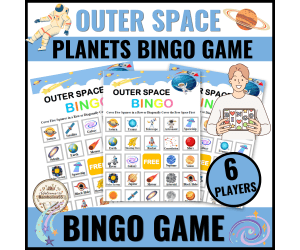
Outer Space Bingo Game Planets Stars Rockets Fun activity for PreK, Ki
Basic Science, Science, Earth Sciences, Earth and Environmental Sciences, Geology, Kindergarten, Grade 1, Games, Activities
Launch your classroom into a fun adventure in Outer Space. Are you looking for a way to teach Outer Space vocabulary without a lot of preparation? This Astronaut and Galaxy Bingo Game is a resource to help students learn new words and improve their reading skills in a really fun way. Whether you are teaching a Science Unit on Astronomy or just want a fun activity for Friday this Bingo set will get your students excited about learning. 🌟 What is in this Cosmic Bingo Pack? There are six player boards with great pictures of the cosmos. There are also twenty four cards with words and pictures like Astronaut, Rocket Ship, Telescope and Moon. The Teacher Calling Cards are easy to cut out and use. This game is good for all students because it has both pictures and words. 🧠 What are the benefits of this game for students? Students will learn vocabulary words in a fun way. They will practice listening to the teacher. They will get better at finding pictures on their boards. They will also practice sounding out words and reading. 🛸 There are ways to play this game: You can play the regular way and get five in a row. You can play Blackout Bingo and try to cover the whole board. You can also play The Plus Sign. Cover the middle row and column. You can play Four Corners and see who can get all four corners first. ✂️ It is easy to get ready to play: Just print out the boards and cards on paper. Cut out the calling cards. You can also laminate them so they will last longer. 🪐 This game is great for: Science class. Whole class rewards. Small group activities. Homeschooling. Class parties with a Space theme. 📌 Here are the details about this product: It is for students in PreK, Kindergarten, 1st Grade, 2nd Grade and 3rd Grade. It is for teaching Science, Vocabulary, Reading and ESL/ELL. It is, about Outer Space and the Solar System. You can download it. Print it out right away. Get ready to have fun learning about Outer Space. Add this Outer Space Bingo game to your teacher tools today. Your students will love it.
Author Bambolina55
Rating
Tags Outer Space Bingo, Outer Space Bingo Game, Outer Space Game, Outer Space Kindergarten Game, Outer Space Kindergarten Activities, Outer Space Galaxy Kindergarten

Desert Habitat animals flashlight cards hidden picture activity
Animals, Life Sciences, Science, Environmental Science, Earth and Environmental Sciences, Kindergarten, Preschool, Toddler, Grade 1, 2, Flashcards, Worksheets & Printables, Centers, Activities, Games
Make learning about desert habitats and animals fun and interactive with these Desert Habitat Animals Flashlight Cards! Students will use a flashlight to reveal hidden desert animal pictures while practicing animal recognition and building science vocabulary through an exciting hands-on activity. I like using these flashlight cards during desert habitat units, animal science lessons, wildlife studies, preschool and kindergarten science centers, nature-themed activities, and homeschool learning. It’s an engaging, low-prep activity that adds a fun element of discovery to habitat and animal learning. What You Will Get This printable Desert Habitat Animals Flashlight Cards resource gives students an exciting way to discover hidden desert animals and review habitat and wildlife vocabulary. What’s Included in this Resource? • Printable desert animal flashlight cards • Hidden picture reveal activity • Desert animal and habitat vocabulary • Hands-on flashlight discovery activity • Student-friendly science center format • Easy-to-use printable cards • Great for independent or small-group learning This resource is perfect for: • Desert habitat science units • Desert animal studies • Animal science lessons • Wildlife activities • Preschool and kindergarten science centers • Life science activities • Small-group activities • Homeschool learning Why you will love this? • Easy to prepare and use • Creates an exciting hands-on learning experience • Builds observation and visual recognition skills • Reinforces desert animal vocabulary • Encourages curiosity and independent discovery • Great for science centers and habitat-themed units These Desert Habitat Animals Flashlight Cards are a fun way for young learners to discover hidden desert animals, practice animal recognition, and build observation skills through an interactive habitat science activity.
Author Perfect_Printables
Rating
Tags Animal Science, Science Center Activities, Hidden Picture Activities, Flashlight Cards, Animal Vocabulary, Forest Animals Activities, Desert Aninals, Desert Habitat, Desert Animals Activities, Desert
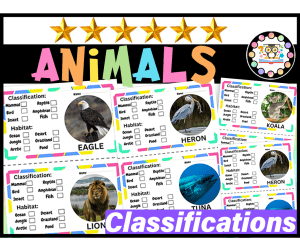
Animal Habitats Classification Mammals,Birds,Fish,Reptile & Amphibian
Science, Life Sciences, Animals, Kindergarten, Preschool, Grade 1, 2, 3, 4, 5, Activities, Classroom Decor, Teacher Tools, Worksheets & Printables
This interactive and attractive set Animal Habitats Classification 16Pages learners develop their original Animal Habitats Classification Mammals,Birds,Fish,Reptile & Amphibian this set contains 16 pages in this set, each in each a different Digraphs Animal Habitats Classification Mammals,Birds,Fish,Reptile & Amphibian to ensure a fun and structured approach to using a fun and type of work that useful; Each card is fun this edited set of Animal Habitats Classification Mammals,Birds,Fish,Reptile & Amphibian is built in an elegant style that attracts attention this interactive and attractive set of Animal Habitats Classification Mammals,Birds,Fish,Reptile & Amphibian designed to help young learners develop their original Animal Habitats Classification skills through Animal Habitats Classification This set contains. these printable offer useful courses, this provides a useful course-rich practice, it is designed to help using resource grade 2 easily to learn about Animal Habitats Classification Mammals,Birds,Fish,Reptile & Amphibian fun and interactive manner. A collaborative learning activity added students. PDF format
Author LAMO
Rating
Tags Environment, Science, General Science, Activities, Printables, Centers, Homeschool
Butterfly Song (MP3)
Science, Life Sciences, Insects, Preschool, Kindergarten, Grade 1, 2, 3, Songs, Activities
The Butterfly Song is a great way for students to learn about butterflies! They'll learn about the life cycle, body parts, habitat, diet, and more through this catchy song ! This is a great resource for teachers who want to help their students learn more about these amazing creatures!
Author Have Fun Teaching
Tags Have Fun Teaching

Let's Learn About Frogs Audio Book
Science, Life Sciences, Animals, Preschool, Kindergarten, Grade 1, 2, 3, Read Alouds, Activities
Hop in and explore the wonderful world of FROGS! Do you know why frogs are so slimy? What they like to eat? How this amazing creature changes from a tiny tadpole into an adult frog? There are so many fun facts to learn about frogs. Kids will learn about this incredible amphibian as they explore with a fact-filled story and an adorable sing-along song! From learning about the poisonous Golden Dart Frog, or the Goliath Bullfrog, engaging sound effects and a captivating story, is the perfect combination of education and entertainment!
Author Twin Sisters Digital Media
Tags Frogs, Amphibians, Tadpole, Metamorphosis, Learn About Frogs

Life Cycle of a Polar Bear | Arctic Animal Unit Study with Fun Facts!
Winter, Seasons, Holiday & Seasonal, Montessori, Geology, Earth and Environmental Sciences, Science, Animals, Life Sciences, Biology, Kindergarten, Preschool, Grade 1, 2, 3, Projects, Activities, Bulletin Boards, Classroom Decor, Posters, Flashcards, Worksheets & Printables, Parts of and Anatomy of, Coloring Pages, Worksheets
Have you ever wondered how a tiny polar bear cub grows into a strong, powerful bear? In this exciting Arctic animal unit, we will explore the incredible life cycle of a polar bear and discover how these amazing creatures survive in the icy Arctic. Get ready to learn, cut, paste, and color! What’s Inside Your Polar Bear Life Cycle Worksheet? Polar Bear Fun Facts – Learn where polar bears live, what they eat, and how they survive in freezing temperatures! Life Cycle Diagram – A simple and clear chart showing each stage of a polar bear’s life, from cub to adult. Cut-and-Paste Activity – Arrange the life cycle in order by cutting and pasting the stages correctly. Flashcards – Use these picture cards to remember the different stages of a polar bear’s journey. Bonus Coloring Page – Have fun coloring a playful polar bear in its icy home! Why This Worksheet is Perfect for You! It makes learning about polar bears fun and interactive. You’ll practice sequencing skills with a hands-on cut-and-paste activity. It helps you understand how polar bears grow and adapt to the Arctic. You can show your creativity with a special coloring page! What Will You Learn? The four stages of a polar bear’s life—from newborn cub to mighty adult. How polar bears survive in the freezing Arctic. Why polar bears are important to the environment and how we can help protect them. How to use problem-solving and sequencing skills in a fun way! Let’s dive into the icy world of polar bears and explore their incredible life cycle together!
Author Perfect_Printables
Tags Polar Bear Life Cycle, Life Cycle Of A Polar Bear, Arctic Animal Life Cycle, Life Cycle Activities, Unit Study , Bear Coloring Page, Bear Cut And Paste Activities

Can We Live In Space Audio Book
Science, Earth and Environmental Sciences, Space, Preschool, Kindergarten, Grade 1, 2, 3, Read Alouds, Activities
Do you think it’s possible for people to live in space someday? Kids will learn about Skylab, a 118-foot long laboratory that was launched into space on May 14, 1973.
Author Twin Sisters Digital Media
Tags Science, Space, Pilot, Astronaut, Skylab
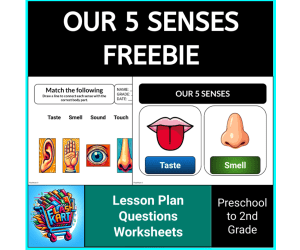
FREE: Our 5 Senses Lesson Plan & Conversation For Kindergarten & 1st
Montessori, Science, ESL, Language Development, ELA, Kindergarten, Grade 1, 2, Centers, Activities, Lesson Plans, Teacher Tools
Exploring Our Five Senses No-Prep Lesson Plan, Worksheets, Anchor Charts, & Conversation Cards Kindergarten to Grade 2 Make learning about the five senses simple, engaging, and stress-free with this no-prep Five Senses resource designed for Kindergarten to Grade 2 learners. Everything inside is ready to use - just print and teach. I created this resource to help young students explore how they use their senses to understand the world around them, while also encouraging discussion, observation, and language development. What’s inside? This Five Senses pack includes: A clear and easy to follow Five Senses lesson plan Printable worksheets for hands-on practice Anchor charts to support visual learning Conversation starter cards to encourage speaking and sharing ideas I have designed all the activities with young learners in mind and they work well for whole-group lessons, small groups, or independent practice. Resource features: No Prep - Print and use right away Visual & Interactive - Anchor charts, cards, and kid-friendly visuals may keep your students engaged for a long time Skill-Building - This resource supports observation skills, vocabulary, and oral language development Flexible - This resource is a great tool for classrooms, homeschool settings, or at-home practice How to use it? Introduce the Five Senses Start with the anchor charts and poem to help students understand each sense in a simple yet memorable way. Build Conversation Skills Use the conversation cards to encourage students to talk about their own experiences. The prompts inside help children express ideas, listen to others, and build confidence in English. This Five Senses resource is ideal for preschool, Montessori, kindergarten, first grade, and second grade classrooms. It’s a great addition to early science lessons, language development activities, and seasonal or thematic units. It is perfect for teachers and parents looking for an engaging, low-stress way to teach the five senses while encouraging curiosity, discussion, and real-world connections.
Author FlashKart
Rating
Tags Our 5 Senses, Sense Organs, Kindergarten, 1st Grade, 2nd Grade, Conversation, Esl, Efl, Science Lesson Plan, Centers

Butterfly Song (Animated Music Video)
Science, Life Sciences, Insects, Kindergarten, Preschool, Grade 1, 2, 3, Songs, Activities
The Butterfly Song (Animated Music Video) is a great resource for teaching students about butterflies! It's catchy song makes it fun and easy to learn all about butterflies, including their life cycle, body parts, habitat, diet, and more!
Author Have Fun Teaching
Tags Have Fun Teaching, Song, Butterfly, Spring, Music Video
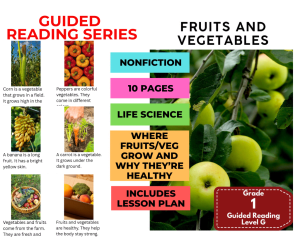
Fruits and Vegetables: Guided Reading Level G with Lesson Plan
ELA, Resources for Teachers, Reading Comprehension, Reading, Science, Language Development, Life Sciences, Health, P.E. & Health, Vocabulary, Kindergarten, Grade 1, 2, Worksheets & Printables, Worksheets, Teacher Tools, Centers, Activities, Literacy Readers, Quizzes, Quizzes and Tests, Assessments, Lesson Plans
This Fruits and Vegetables (level g) guided reading book with lesson plan includes: Guided Reading Color Label (front cover x1) This is a quick way to match the book’s demands to what students can generally handle.. The overall goal is to use the level/color to pick books for several smaller groups. To qualify for a certain level, a student is expected to read a book from that level with about 90–94% accuracy. If a student is consistently accurate and understands, move up a level. If the student is struggling at that level, drop down and add more support. Each student will improve at completely different rates, but it is generally one of the best ways to check progress across the class. DOWNLOAD THE CATALOG TO VIEW ALL GUIDED READING BOOKS AVAILABLE (SORTED LEVELS A-Z) Pre-Reading Question (x1) Teacher asks the prompt aloud, can be while showing the cover or first page. Students share what they already know, or make educated guesses from the cover. Prompt them to use the target vocabulary. Write some of their responses on the board to look back at during the reading. Vocabulary Words (x5) Introduce the five words, best doing it one at a time. Start by saying it, while students repeat and then see if anyone knows what it means before reading further. Read through the meaning and try to briefly connect each word to a picture or gesture so it’s meaningful. Ask students to flip through the book pages and point to where they see each of the vocabulary words. While reading the book pause upon coming across one of the vocab words or read the sentence twice to make sure students understand the word has appeared. Optional: Ask students to raise hands whenever they see/hear one of the new words. Guided Reading Pages (x10) Check the book snapshot (below) for: primary topic - do you need to prep extra reading or intro materials on this? what is taught best - decide on 1-2 bullets to focus on, use the prompt or words provided here for best results. learning goals - what you are checking for students to be able to do after the session, elicit answers using prompts or words provided. key vocabulary (see section above). questions overview - so you know what is coming up and if you need to prep extra materials to assist understanding. Run the lesson You may have already looked at a few of the pages together, but you can show them some of the pictures again first to set meaning. Depending on how much time you have and how familiar your students are with guided reading class, you may want to read the book aloud first with the group first. Students whisper or partner read, while you listen in. If time, do it as a group, one student reading a page each. Use the guided page’s prompts to coach: “Check the picture / does it make sense?” “Point under the words / try the first sound” “Reread the sentence smoothly”. Try to focus more on one student per session (rotating every time), so you can work out if they are ready to move up or need to move down a level. Comprehension Questions (back cover x3) This is your way to check that students didn’t just say the words, but actually understood the text. First, let students answer by pointing to the page/picture and saying a short sentence. After any answer, follow with: “Show me where you found that in the text.” In bigger groups, have partners answer first (10–20 seconds), then call on 2–3 students to share. Differentiation tips: Emerging speakers/struggling readers: oral + pointing On-level: oral in a full sentence Higher: one written sentence or draw + label Book Snapshot Title: Fruits and Vegetables Genre: Nonfiction Subject: Life Science (Plants and food) Primary Topic: Where fruits/vegetables grow and why they’re healthy Estimated Guided Reading Level (A–Z): G What This Book Teaches Best Many foods come from plants , and plants grow in the sun. Examples of fruits and where they grow (apple on a tall tree; banana with bright yellow skin). Examples of vegetables and where they grow (carrot under the ground; corn in a field; peppers in different colors; broccoli looks like a tiny tree). A simple fruit feature: most fruits have seeds inside (watermelon has many small seeds). Health connection: fruits and vegetables are healthy and help the body stay strong. Learning Goals Students will identify what the book says many foods come from. Students will describe where at least one fruit grows (example from the text). Students will describe where at least one vegetable grows (example from the text). Students will explain what the book says about seeds in fruits. Students will explain how fruits and vegetables help the body, using the book’s words. Key Vocabulary From the Text plants — living things that grow in the sun. fruit — food that can grow on a tree. vegetable — food that can grow in the ground. seeds — small parts inside fruits. healthy — good for your body. Discussion Prompts Pre-reading question: What fruits and vegetables do you already know, and where do you think they grow? Comprehension questions: What does the book say many foods come from? Comprehension questions: Where does the book say a carrot grows? Comprehension questions: How do fruits and vegetables help the body, according to the book? Printing Tips 1. Best Printing Method (Recommended) “Booklet” Printing (Best if Available) If your printer or PDF viewer supports Booklet Printing , use this. Settings to use: Print mode: Booklet Paper size: Letter or A4 (either works) Orientation: Landscape Print on both sides: Yes Flip on: Short edge Scaling: Fit to printable area Booklet subset: First test: Front sides only Then: Back sides only This will automatically: Pair pages correctly Put the cover on the outside Align everything for folding After printing, fold in half and staple along the spine . 2. If “Booklet” Printing Is NOT Available You can still print this correctly with manual duplex printing . Step-by-step: Open the PDF. Choose Print . Set: Orientation: Landscape Pages per sheet: 1 Print on both sides: Yes Flip on: Short edge Print all pages . Because each PDF page already contains two facing book pages, the result will still fold cleanly into a book. Thousands of Cored Education products are included with your TeachSimple membership. Download links and encyclopedia index available here.
Author Cored Education
Rating
Tags Reading Comprehension, Reading Passages, Reading, Guided Reading, Guided Reading Lesson Plan, Guided Reading Activity, Pre-reading, Science Lesson Plans, Life Science, Health

Sorting Bugs Activity – Ladybugs vs. Butterflies
Special Resources, Special Education Needs (SEN), Math, Early Math, Science, Life Sciences, Insects, Earth and Environmental Sciences, Earth Sciences, Kindergarten, Preschool, Grade 1, 2, 3, 4, 5, 6, 7, Activities
BUGS BUGS BUGS - sorting bugs Beware this activity could make your skin crawl! To begin the activity, the learner is presented with two sorting cards each featuring an image of a specific type of bug, such as a ladybug and a butterfly. The learner is then given 12 cards, each of which features an image of a ladybug or a butterfly, but with some slight differences between them and asked to sort or group them by insect. This activity can be made more difficult by asking the learner to sort bees and wasps or beetles and cockroaches - Yes, I said cockroaches. YUCK. - however they do elicit a response of gross and giggles from many. Keeping it fun! By engaging in this fun and interactive activity, learners can improve their observation skills, critical thinking, and problem-solving abilities, all while learning about the fascinating world of insects. The pages are clear of visual distractions which helps the learner focus on the task and also helpful for those learners who struggle with visual attention. This activity is easy to create and to assemble - Print and laminate all cards, cut out the individual sorting cards, and velcro them to the corresponding activity place card - and please, try not to touch the bugs! Enjoy teaching and have fun learning I'll Figure It Out IFIO girl
Author IFIO girl - I'll Figure It Out
Rating
Tags Insects, Sorting, Non-identicals, Bugs, Grouping, Abbls-r B8, Autism, Occupational Therapy, Esl, Behavioral Therapy, Sorting Insects

Apple Science Experiment - Observing Apples
Fall, Seasons, Holiday & Seasonal, Basic Science, Science, Nature & Plants, Life Sciences, Kindergarten, Preschool, Grade 1, 2, Experiments, Activities
Make learning about apples fun with this apple science experiment. Students will practice making predictions, conducting an experiment, and recording their results with this apple observation experiment. What is Included: There is a detailed instructional page that provides detailed instructions for the experiment, a materials list needed, and any special tips or optional activities to complete with this experiment. There is a recording page with easy to follow directions for students to draw or color their predictions and record the results of the experiment. There are two journaling pages students can use to record their results and write about what they observed during the experiment. One journal page includes picture clues to guide students in their responses, while the other is a simple journal page for students to draw whatever they wish and then write their responses. What is the Experiment? This experiment is an apple observation. An apple will be cut into fourths and placed in different environments for students to observe what happens to the apple slices after a set period of time. This experiment allows students to observe the oxidation process in an apple. How to Use: Students can work in small groups of 2 or 3 to complete this experiment. The teacher may also choose to lead the experiment with the whole group of students. Each method allows students to make predictions and record results on their own. This science experiment is perfect for young learners. The easy to follow instructions and scaffolded recording and journaling pages help students through completing the experiment. While setting up the experiment does take material and time to do, the recording pages and journaling pages are no-prep, making this an easy activity to prepare for students. The low prep experiment is a great addition to any busy classroom or home school environment.
Author The Connett Connection
Rating
Tags Apple Science, Apple Science Experiments, Science Experiment, Elementary Science, 1st Grade Science Experiments, Kindergarten Experiments, Kindergarten Science Projects, Science Experiments For Kids
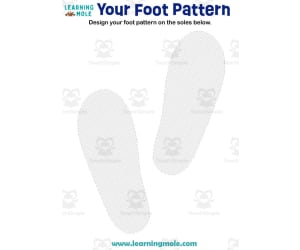
Your Foot Pattern Activity
Science, Life Sciences, Biology, Human Body, Preschool, Kindergarten, Grade 1, 2, 3, 4, 5, 6, 7, 8, Activities
Activity Overview The human body is full of fascinating wonders to learn. This activity is created to help the students recognize the anatomy and the job of the human body. Your Foot Pattern Every part and organ in our human body is vital so let's see how important they are. Have you ever imagined how we look like if we didn't have a skeleton? Did you know that because we have our amazing muscles we can stand! Do you know how many teeth do we have? Have you ever wondered about the food journey inside our body? Can you name all the glands in our body? Why do we have skin? Our nervous system is really good at sending signals. Can you tell us more about it? Are you really good at Mathematics, painting, or any other thing? You should really thank your brain about it! The famous five senses are really doing a great work? Can you explain how every sense works? Your Foot Pattern Activity The activity is perfect for encouraging the researching skills for the students, while learning more about our fantastic human body. Your Foot Pattern This friendly designed worksheet is suitable for students at school, homeschooling, and as a group activity. Instruction Design your foot pattern on the soles below. Format Available in a PDF format.
Author Educational Voice
Tags Your Foot Pattern Activity, Your Foot Pattern, Foot Pattern, Foot, Foot Facts, Foot Facts For Kids, Feet, Feet Facts For Kids, Feet Facts, Human Body

Shark Week Audio Book
Science, Life Sciences, Animals, Kindergarten, Preschool, Grade 1, 2, 3, Read Alouds, Activities
Kids will learn fascinating facts about a variety of different sharks and why these magnificent creatures of the deep are often misunderstood. Young shark enthusiasts will learn that sharks play an important role in helping to balance our ecosystem by feeding off dead or dying fish. Kids are encouraged to learn more about these awesome creatures so they can better understand how human behavior can hurt sharks—like littering and not reusing, reducing, and recycling plastic bottles. Sharks are awe-inspiring fish that need to be protected so that they will be around for millions of more years!
Author Twin Sisters Digital Media
Tags Sharks, Shark Week, Ocean, Teeth, Cartilage

Animal Habitats Sorting Activity Worksheets| Animal Habitat
Science, Animals, Life Sciences, Kindergarten, Preschool, Grade 1, 2, Worksheets & Printables, Teacher Tools, Classroom Decor, Activities, Centers, Word Walls, Worksheets, Word Problems, Workbooks
Students will find, recognize, recognize, recognize, recognize tAnimal Habitat Activities for Special Education. These Animal Habitat are aligned with the science of reading Animal Habitat Activities for Special Education identity practices worksheet and in fact your prescript and kinderrain needs to master the Animal Habitat Activities for Special Education names, Animal Habitat seem that I have designed these Animal Habitat Activities for Special Education, which have designed these Animal Habitat Activities works, which is a Animal Habitat Activities for Special Education about a paper about the practice of the practice of guide practices, which is a Animal Habitat Activities for Special Education and plants about the practice To create a Animal Habitat Activities to create, which helps find different Animal Habitat , ensures a fun and structured approach to learning the Animal Habitat Activities . This worksheet provides a fun activities to identify the sounds of any pre -PR -LafabetAnimal Habitat Activities for Special Education, the formation of lAnimal Habitat Activities for Special Education, including a series of small activities on each page, including a series of students to involve a series of skills for Animal Habitat Activities for Special Education reviews.
Author LAMO
Rating
Tags Biology, Vocabulary, Environment, General Science, Science, Printables, Activities, Worksheets
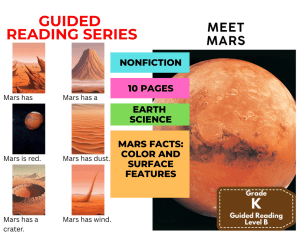
Guided Reading Level B: Meet Mars
ELA, Resources for Teachers, Reading Comprehension, Reading, Science, Language Development, Pre-Reading, Vocabulary, Earth and Environmental Sciences, Space, Kindergarten, Preschool, Grade 1, Worksheets & Printables, Worksheets, Teacher Tools, Centers, Activities, Literacy Readers, Quizzes, Quizzes and Tests, Assessments
This Guided Reading Book - Meet Mars (Level B) includes: Guided Reading Color Label (front cover x1) This is a quick way to match the book’s demands to what students can generally handle.. The overall goal is to use the level/color to pick books for several smaller groups. To qualify for a certain level, a student is expected to read a book from that level with about 90–94% accuracy. If a student is consistently accurate and understands, move up a level. If the student is struggling at that level, drop down and add more support. Each student will improve at completely different rates, but it is generally one of the best ways to check progress across the class. DOWNLOAD THE CATALOG TO VIEW ALL GUIDED READING BOOKS AVAILABLE (SORTED LEVELS A-Z) COMPANION VIDEO NOW AVAILABLE (EMBEDDED AFTER PREVIEW PICTURES IN PRODUCT DESCRIPTION) Pre-Reading Question (x1) Teacher asks the prompt aloud, can be while showing the cover or first page. Students share what they already know, or make educated guesses from the cover. Prompt them to use the target vocabulary. Write some of their responses on the board to look back at during the reading. Vocabulary Words (x5) Introduce the five words, best doing it one at a time. Start by saying it, while students repeat and then see if anyone knows what it means before reading further. Read through the meaning and try to briefly connect each word to a picture or gesture so it’s meaningful. Ask students to flip through the book pages and point to where they see each of the vocabulary words. While reading the book pause upon coming across one of the vocab words or read the sentence twice to make sure students understand the word has appeared. Optional: Ask students to raise hands whenever they see/hear one of the new words. Guided Reading Pages (x10) Check the book snapshot (below) for: primary topic - do you need to prep extra reading or intro materials on this? what is taught best - decide on 1-2 bullets to focus on, use the prompt or words provided here for best results. learning goals - what you are checking for students to be able to do after the session, elicit answers using prompts or words provided. key vocabulary (see section above). questions overview - so you know what is coming up and if you need to prep extra materials to assist understanding. Run the lesson You may have already looked at a few of the pages together, but you can show them some of the pictures again first to set meaning. Depending on how much time you have and how familiar your students are with guided reading class, you may want to read the book aloud first with the group first. Students whisper or partner read, while you listen in. If time, do it as a group, one student reading a page each. Use the guided page’s prompts to coach: “Check the picture / does it make sense?” “Point under the words / try the first sound” “Reread the sentence smoothly”. Try to focus more on one student per session (rotating every time), so you can work out if they are ready to move up or need to move down a level. Comprehension Questions (back cover x3) This is your way to check that students didn’t just say the words, but actually understood the text. First, let students answer by pointing to the page/picture and saying a short sentence. After any answer, follow with: “Show me where you found that in the text.” In bigger groups, have partners answer first (10–20 seconds), then call on 2–3 students to share. Differentiation tips: Emerging speakers/struggling readers: oral + pointing On-level: oral in a full sentence Higher: one written sentence or draw + label Book Snapshot Title: Meet Mars Genre: Nonfiction (simple informational) Subject: Science Primary Topic: Mars facts: color and surface features Estimated Guided Reading Level (A–Z): B What This Book Teaches Best Identifying basic facts about Mars (e.g., “Mars is red.” and “Mars is in space.”). Naming features Mars “has” (dust, rocks, a mountain, a crater, wind, ice, moons, the sun). Using repeated sentence patterns (“Mars is…” / “Mars has…”) to support early fluency. Connecting key science words to meaning through simple, concrete statements. Learning Goals Students will state one fact about Mars using evidence from the text. Students will name at least three things Mars has, as described in the book. Students will answer simple who/what/where questions using the book’s sentences. Students will use the repeated sentence frame “Mars has ___” to retell information from the text. Students will explain the meaning of selected Mars words using the context of the sentences. Key Vocabulary From the Text dust — tiny bits of dirt. mountain — a very tall hill. crater — a big round hole. moons — round objects near Mars. space — far above Earth. Discussion Prompts Pre-reading question: What do you think you will learn about Mars in this book? Comprehension questions: What color is Mars? Name one thing Mars has. Where is Mars? Printing Tips 1. Best Printing Method (Recommended) “Booklet” Printing (Best if Available) If your printer or PDF viewer supports Booklet Printing , use this. Settings to use: Print mode: Booklet Paper size: Letter or A4 (either works) Orientation: Landscape Print on both sides: Yes Flip on: Short edge Scaling: Fit to printable area Booklet subset: First test: Front sides only Then: Back sides only This will automatically: Pair pages correctly Put the cover on the outside Align everything for folding After printing, fold in half and staple along the spine . 2. If “Booklet” Printing Is NOT Available You can still print this correctly with manual duplex printing . Step-by-step: Open the PDF. Choose Print . Set: Orientation: Landscape Pages per sheet: 1 Print on both sides: Yes Flip on: Short edge Print all pages . Because each PDF page already contains two facing book pages, the result will still fold cleanly into a book. Thousands of Cored Education products are included with your TeachSimple membership. Download links and encyclopedia index available here.
Author Cored Education
Rating
Tags Vocabulary, Reading Comprehension, Reading Passages, Leveled Reading, Nonfiction, Reading, Guided Reading, Earth Science, Space, Mars
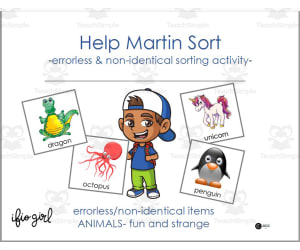
Help Martin Sort ANIMALS -COMMON, FUN & STRANGE - Errorless & non-identical Activity
Special Resources, Special Education Needs (SEN), Science, Life Sciences, Animals, Math, Early Math, Kindergarten, Preschool, Grade 1, 2, 3, 4, 5, 6, Activities
Help Students Categorize Animals with this Engaging Sorting Activity This 24-page printable allows students to sort various animals, including common pets, fun ocean creatures, and even fantasy animals like dragons and unicorns. Learners will be presented with 12 individual non-identical picture cards for each animal set. Their task is to observe details, compare similarities and differences, and group each set of animals accordingly. An additional identical picture sort is also included for errorless practice if needed. As students progress, the sorting becomes more challenging with additional animal categories introduced. This activity develops visual discrimination, categorization, and critical thinking in a hands-on, engaging format. It can be easily assembled for independent or small group work and adapted for various ages and abilities. The large, clear animal graphics help students focus on sorting rather than reading. With two sort options included, this versatile resource allows teachers to differentiate to meet each learner's needs.
Author IFIO girl - I'll Figure It Out
Tags Sort By Item, Sort By Function, Sort By Feature, Visual Discrimination, Early Learning, Dragons, Unicorns, ABLLS-R B, Autism, Discrete Trial, Non Identical Clothing

Predators Audio Book
Science, Life Sciences, Animals, Kindergarten, Preschool, Grade 1, 2, 3, 4, Read Alouds, Activities
Did you know that a predator is any wild animal that hunts and kills other animals for food? Kids will learn about the black panther, tiger, great white shark, sea otter, and lion, as well as smaller predators like spiders, scorpions, and praying mantises. Fact-filled, sing-along songs like, “I’m A Fierce Hunter,” “What Is A Spider?” and “King Of The Beasts,” will provide a fun way for children to learn about amazing predators. Fun facts and amazing sounds effects will engage listeners while they learn that animal predators need to hunt and kill their prey to survive in the wild.
Author Twin Sisters Digital Media
Tags Predators, Hunt, Prey, Kill, Eat
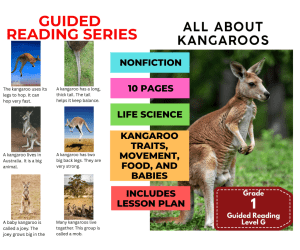
All About Kangaroos: Guided Reading Level G with Lesson Plan
ELA, Resources for Teachers, Reading Comprehension, Reading, Science, Language Development, Vocabulary, Life Sciences, Geography, Social Studies, Kindergarten, Grade 1, 2, Worksheets & Printables, Worksheets, Teacher Tools, Centers, Activities, Literacy Readers, Quizzes, Quizzes and Tests, Assessments, Lesson Plans
This All About Kangaroos (level g) guided reading book with lesson plan includes: Guided Reading Color Label (front cover x1) This is a quick way to match the book’s demands to what students can generally handle.. The overall goal is to use the level/color to pick books for several smaller groups. To qualify for a certain level, a student is expected to read a book from that level with about 90–94% accuracy. If a student is consistently accurate and understands, move up a level. If the student is struggling at that level, drop down and add more support. Each student will improve at completely different rates, but it is generally one of the best ways to check progress across the class. DOWNLOAD THE CATALOG TO VIEW ALL GUIDED READING BOOKS AVAILABLE (SORTED LEVELS A-Z) Pre-Reading Question (x1) Teacher asks the prompt aloud, can be while showing the cover or first page. Students share what they already know, or make educated guesses from the cover. Prompt them to use the target vocabulary. Write some of their responses on the board to look back at during the reading. Vocabulary Words (x5) Introduce the five words, best doing it one at a time. Start by saying it, while students repeat and then see if anyone knows what it means before reading further. Read through the meaning and try to briefly connect each word to a picture or gesture so it’s meaningful. Ask students to flip through the book pages and point to where they see each of the vocabulary words. While reading the book pause upon coming across one of the vocab words or read the sentence twice to make sure students understand the word has appeared. Optional: Ask students to raise hands whenever they see/hear one of the new words. Guided Reading Pages (x10) Check the book snapshot (below) for: primary topic - do you need to prep extra reading or intro materials on this? what is taught best - decide on 1-2 bullets to focus on, use the prompt or words provided here for best results. learning goals - what you are checking for students to be able to do after the session, elicit answers using prompts or words provided. key vocabulary (see section above). questions overview - so you know what is coming up and if you need to prep extra materials to assist understanding. Run the lesson You may have already looked at a few of the pages together, but you can show them some of the pictures again first to set meaning. Depending on how much time you have and how familiar your students are with guided reading class, you may want to read the book aloud first with the group first. Students whisper or partner read, while you listen in. If time, do it as a group, one student reading a page each. Use the guided page’s prompts to coach: “Check the picture / does it make sense?” “Point under the words / try the first sound” “Reread the sentence smoothly”. Try to focus more on one student per session (rotating every time), so you can work out if they are ready to move up or need to move down a level. Comprehension Questions (back cover x3) This is your way to check that students didn’t just say the words, but actually understood the text. First, let students answer by pointing to the page/picture and saying a short sentence. After any answer, follow with: “Show me where you found that in the text.” In bigger groups, have partners answer first (10–20 seconds), then call on 2–3 students to share. Differentiation tips: Emerging speakers/struggling readers: oral + pointing On-level: oral in a full sentence Higher: one written sentence or draw + label Book Snapshot Title: All About Kangaroos Genre: Nonfiction (informational) Subject: Science (Life Science) Primary Topic: Kangaroo traits, movement, food, and babies Estimated Guided Reading Level (A–Z): G What This Book Teaches Best Identifies a kangaroo’s habitat by stating it lives in Australia . Describes how kangaroos move: they have two big back legs , and they hop very fast. Explains how a kangaroo’s tail helps it by keeping balance . Shares what kangaroos eat by stating they like green grass and find food on the ground. Teaches family/group terms: a baby is a joey that grows in the pouch , and a group is a mob . Learning Goals Students will identify where a kangaroo lives using details from the text. Students will describe how kangaroos move, using the book’s words and examples. Students will explain how a kangaroo’s tail helps it keep balance. Students will describe what kangaroos eat and where they find food. Students will name what a baby kangaroo is called and where it grows. Students will identify what a group of kangaroos is called. Key Vocabulary From the Text Australia — a country where kangaroos live. balance — staying steady and not falling over. pouch — a pocket where a mother carries her baby. joey — a baby kangaroo. mob — a group of kangaroos that live together. Discussion Prompts Pre-reading question: What do you already know about kangaroos? Comprehension questions: Where does the book say a kangaroo lives? Comprehension questions: How does a kangaroo move in this book? Comprehension questions: What is a group of kangaroos called? Printing Tips 1. Best Printing Method (Recommended) “Booklet” Printing (Best if Available) If your printer or PDF viewer supports Booklet Printing , use this. Settings to use: Print mode: Booklet Paper size: Letter or A4 (either works) Orientation: Landscape Print on both sides: Yes Flip on: Short edge Scaling: Fit to printable area Booklet subset: First test: Front sides only Then: Back sides only This will automatically: Pair pages correctly Put the cover on the outside Align everything for folding After printing, fold in half and staple along the spine . 2. If “Booklet” Printing Is NOT Available You can still print this correctly with manual duplex printing . Step-by-step: Open the PDF. Choose Print . Set: Orientation: Landscape Pages per sheet: 1 Print on both sides: Yes Flip on: Short edge Print all pages . Because each PDF page already contains two facing book pages, the result will still fold cleanly into a book. Thousands of Cored Education products are included with your TeachSimple membership. Download links and encyclopedia index available here.
Author Cored Education
Rating
Tags Reading Comprehension, Reading Passages, Reading, Guided Reading, Guided Reading Lesson Plan, Guided Reading Activity, Pre-reading, Science Lesson Plans, Life Science, Geography
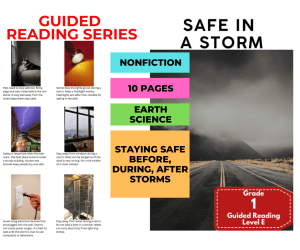
Guided Reading Level E - Safe in a Storm
ELA, Resources for Teachers, Reading Comprehension, Reading, Language Development, Pre-Reading, Vocabulary, Science, Earth and Environmental Sciences, Physics, Kindergarten, Grade 1, 2, Worksheets & Printables, Worksheets, Teacher Tools, Centers, Activities, Literacy Readers, Quizzes, Quizzes and Tests, Assessments
This Guided Reading Book - Safe in a Storm (Level E) includes: Guided Reading Color Label (front cover x1) This is a quick way to match the book’s demands to what students can generally handle.. The overall goal is to use the level/color to pick books for several smaller groups. To qualify for a certain level, a student is expected to read a book from that level with about 90–94% accuracy. If a student is consistently accurate and understands, move up a level. If the student is struggling at that level, drop down and add more support. Each student will improve at completely different rates, but it is generally one of the best ways to check progress across the class. DOWNLOAD THE CATALOG TO VIEW ALL GUIDED READING BOOKS AVAILABLE (SORTED LEVELS A-Z) Pre-Reading Question (x1) Teacher asks the prompt aloud, can be while showing the cover or first page. Students share what they already know, or make educated guesses from the cover. Prompt them to use the target vocabulary. Write some of their responses on the board to look back at during the reading. Vocabulary Words (x5) Introduce the five words, best doing it one at a time. Start by saying it, while students repeat and then see if anyone knows what it means before reading further. Read through the meaning and try to briefly connect each word to a picture or gesture so it’s meaningful. Ask students to flip through the book pages and point to where they see each of the vocabulary words. While reading the book pause upon coming across one of the vocab words or read the sentence twice to make sure students understand the word has appeared. Optional: Ask students to raise hands whenever they see/hear one of the new words. Guided Reading Pages (x10) Check the book snapshot (below) for: primary topic - do you need to prep extra reading or intro materials on this? what is taught best - decide on 1-2 bullets to focus on, use the prompt or words provided here for best results. learning goals - what you are checking for students to be able to do after the session, elicit answers using prompts or words provided. key vocabulary (see section above). questions overview - so you know what is coming up and if you need to prep extra materials to assist understanding. Run the lesson You may have already looked at a few of the pages together, but you can show them some of the pictures again first to set meaning. Depending on how much time you have and how familiar your students are with guided reading class, you may want to read the book aloud first with the group first. Students whisper or partner read, while you listen in. If time, do it as a group, one student reading a page each. Use the guided page’s prompts to coach: “Check the picture / does it make sense?” “Point under the words / try the first sound” “Reread the sentence smoothly”. Try to focus more on one student per session (rotating every time), so you can work out if they are ready to move up or need to move down a level. Comprehension Questions (back cover x3) This is your way to check that students didn’t just say the words, but actually understood the text. First, let students answer by pointing to the page/picture and saying a short sentence. After any answer, follow with: “Show me where you found that in the text.” In bigger groups, have partners answer first (10–20 seconds), then call on 2–3 students to share. Differentiation tips: Emerging speakers/struggling readers: oral + pointing On-level: oral in a full sentence Higher: one written sentence or draw + label Book Snapshot Title: Safe in a Storm Genre: Nonfiction (informational safety) Subject: Science / Health & Safety Primary Topic: Staying safe before, during, after storms Estimated Guided Reading Level (A–Z): E What This Book Teaches Best Recognizing signs that a storm is near (dark clouds, wind, lightning, thunder). Knowing the safest place to be when thunder roars (inside a sturdy building). Following indoor safety steps during storms (stay away from windows; sit in the middle of a room). Making safe choices when power goes out and after storms (use a flashlight; avoid floodwater; return outside when it is safe). Understanding storm-related dangers involving electricity and water (avoid plugged-in devices; stay away from water). Learning Goals Students will identify at least two signs that a storm is near using details from the text. Students will explain where the book says to be when thunder roars. Students will describe two ways to stay safe inside during a storm, based on the text. Students will explain why the book says to stay away from water during a storm. Students will retell safety steps from the book in order (before/during/after the storm). Key Vocabulary From the Text lightning — a bright flash in the sky. sturdy — strong and not easy to break. flashlight — a small light you can hold. electricity — power that runs lights and devices. floodwater — water covering land after heavy rain. Discussion Prompts Pre-reading question: What do you do at home to stay safe when a storm is coming? Comprehension questions: What are two signs the book says can tell you a storm is near? Where does the book say is the best place to be when thunder roars? Why does the book say to stay away from water during a storm? Printing Tips 1. Best Printing Method (Recommended) “Booklet” Printing (Best if Available) If your printer or PDF viewer supports Booklet Printing , use this. Settings to use: Print mode: Booklet Paper size: Letter or A4 (either works) Orientation: Landscape Print on both sides: Yes Flip on: Short edge Scaling: Fit to printable area Booklet subset: First test: Front sides only Then: Back sides only This will automatically: Pair pages correctly Put the cover on the outside Align everything for folding After printing, fold in half and staple along the spine . 2. If “Booklet” Printing Is NOT Available You can still print this correctly with manual duplex printing . Step-by-step: Open the PDF. Choose Print . Set: Orientation: Landscape Pages per sheet: 1 Print on both sides: Yes Flip on: Short edge Print all pages . Because each PDF page already contains two facing book pages, the result will still fold cleanly into a book. Thousands of Cored Education products are included with your TeachSimple membership. Download links and encyclopedia index available here.
Author Cored Education
Rating
Tags Vocabulary, Reading Comprehension, Reading Passages, Leveled Reading, Nonfiction, Reading, Guided Reading, Earth Science, Storms, Physics