



3,952 products added recently
Page 4 - Science Activities For Kindergarten
Introduce young learners to the world of science with activities designed for kindergarten students. This collection includes simple experiments, nature observations, and sensory experiences that encourage curiosity. By integrating these science activities into your teaching, you can lay the groundwork for scientific thinking and a lifelong love of learning.

 Show filters


Out Of The Deep Audio Book
Science, Life Sciences, Animals, Kindergarten, Preschool, Grade 1, 2, Read Alouds, Activities
Kids love animals that live in the ocean! With authentic sound effects and lively music, kids will learn interesting facts about whales, sea turtles, Harbor seals, jellyfish, dolphins, fish, and seahorses. Did you know that Humpback whales are known as “singing whales” because they like to communicate by singing songs ? These songs can be heard over 20 miles away. Interesting facts will have young animal enthusiasts learning about these amazing ocean animals while being happily entertained .
Author Twin Sisters Digital Media
Tags Animals, Ocean, Humpback Whale, Seahorses, Fun

Temperature: Hot or Cold?
Science, Basic Science, Preschool, Kindergarten, Grade 1, Activities
Understanding temperature is crucial for staying safe. In this learning material, children will identify various items and determine if they are hot or cold to the touch. They will fill in sentences, recognize different kitchen and home appliances, and indicate whether they are hot or cold. Additionally, they'll have the opportunity to draw pictures illustrating what one wears on a hot or cold day and list three hot and three cold things. The package includes: 6 practice pages Answer key Thank you! Temperature: Hot or Cold? | Temperature: Hot or Cold? | Temperature: Hot or Cold? | Temperature: Hot or Cold? | Temperature: Hot or Cold? | Temperature: Hot or Cold? | Temperature: Hot or Cold? | Temperature: Hot or Cold? | Temperature: Hot or Cold? | Temperature: Hot or Cold? | Temperature: Hot or Cold? | Temperature: Hot or Cold? | Temperature: Hot or Cold? | Temperature: Hot or Cold? | Temperature: Hot or Cold? | Temperature: Hot or Cold? | Temperature: Hot or Cold? | Temperature: Hot or Cold? | Temperature: Hot or Cold? | Temperature: Hot or Cold? | Temperature: Hot or Cold? | Temperature: Hot or Cold? | Temperature: Hot or Cold? | Temperature: Hot or Cold? |
Author Soumara Siddiqui
Tags Temperature, Hot Or Cold, Hot, Hot Items, Cold Items, Temperature For Little Kids

Animal Habitats| Animal Habitat Activities for Special Education
ELA, Animals, Life Sciences, Science, Kindergarten, Preschool, Grade 1, 2, 3, Worksheets & Printables, Worksheets, Workbooks, Activities, Centers
Students will find, recognize, recognize, recognize, recognize tAnimal Habitat Activities for Special Education. These Animal Habitat are aligned with the science of reading Animal Habitat Activities for Special Education identity practices worksheet and in fact your prescript and kinderrain needs to master the Animal Habitat Activities for Special Education names, Animal Habitat seem that I have designed these Animal Habitat Activities for Special Education, which have designed these Animal Habitat Activities works, which is a Animal Habitat Activities for Special Education about a paper about the practice of the practice of guide practices, which is a Animal Habitat Activities for Special Education and plants about the practice To create a Animal Habitat Activities to create, which helps find different Animal Habitat , ensures a fun and structured approach to learning the Animal Habitat Activities . This worksheet provides a fun activities to identify the sounds of any pre -PR -LafabetAnimal Habitat Activities for Special Education, the formation of lAnimal Habitat Activities for Special Education, including a series of small activities on each page, including a series of students to involve a series of skills for Animal Habitat Activities for Special Education reviews.
Author LAMO
Rating
Tags Gamess, Special Education, Thematic Unit Plans, Worksheets, General Science, Science, Environment, Printables
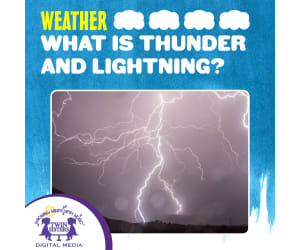
What Is Thunder And Lightning? Audio Book
Science, Earth and Environmental Sciences, Environmental Science, Preschool, Kindergarten, Grade 1, 2, 3, Read Alouds, Activities
What Is Thunder And Lightning? Audio Book The product, named What Is Thunder And Lightning? Audio Book , is a noteworthy teaching resource targeted at improving the knowledge and understanding of environmental science among young learners. Specifically designed for Kindergarten to Grade 3 levels, this audio book focuses on making scientific concepts easy to grasp in an engaging manner. Diving Right Into The Core Of Natural Phenomenons The What Is Thunder And Lightning? audio book elucidates why one sees lightning before hearing thunder even though they happen simultaneously. This MP3 file holds valuable scientific information that not only satisfies children's curiosity but also fuels their thirst for knowledge further. Versatility of the Resource The beauty of this resource lies in its versatility. The audio format makes it convenient for educators to use it in various settings according to their pedagogical needs. In whole group sessions: It could be played where students can actively participate and share their thoughts with peers after listening. In smaller groups or personal tutor sessions: Educators can pause intermittently to discuss points mentioned or clarify any doubts that might surface. Pupils could listen individually or as homework assignment: Learners are able listen at home and jot down what they have learned or note down questions arising from their curiosities about thunder and lightning. Crafted with Simplicity and Depth What Is Thunder And Lightning? Audio Book , stands as a great addition to educator’s science curriculum arsenal; optimal for broadening young minds’ horizon about intriguing environmental science concepts through auditory learning experiences. Fulfilling many educational needs without requiring physical storage space is indeed an advantage characteristic of digital resources like these audiobooks. Advantage: By incorporating them into lesson plans regularly teachers can reinforce principles learned in class while captivating interest using another sensory tool - sound - thus facilitating comprehensive understanding among students regardless of varied learning styles within classrooms. Aiming Beyond Being Merely Informative This product provides learners with enriching content packaged engagingly enough so as not just increase retentiveness but also instill love towards the subject. Ultimately, this audio book 's primary aim and achievement are in making science learning an enjoyable journey for children as they embark on a path of knowledge acquisition and exploration.
Author Twin Sisters Digital Media
Tags Thunder, Lightning, Environmental Science, Auditory Learning, Educational Resource

Alphabet Tracing Worksheets | Letter Recognition & Beginning Sounds
ELA, Reading, Writing, Phonics, Language Development, Spelling, ESL, Handwriting, Life Sciences, Science, Kindergarten, Preschool, Grade 1, 2, Worksheets & Printables, Teacher Tools, Classroom Decor, Activities, Centers, Worksheets, Workbooks
The alphabet worksheet sets are designed to help young learners develop basic reading and writing skills through tracing, writing, and coloring. This interactive and engaging set of alphabet worksheets is designed to help young learners develop basic letter skills through tracing, writing, finding letters, and coloring. Children can learn letters by enjoying a combination of tradition and hands-on learning fun. These printable worksheets offer useful lessons and provide rich practice in a fun and interactive way. They are designed to help students easily use this second grade resource to learn about alphabet worksheet activities. A collaborative learning activity added by students. Alphabet worksheet sets are designed to help young children develop basic reading and writing skills through tracing, writing, and tracing. This alphabet resource is perfect for kindergarten students and is great as a letter of the week activity. The alphabet worksheet sets are designed to help young children develop basic reading and writing skills through tracing, writing, and tracing.
Author LAMO
Rating
Tags English Language Arts, Phonics , Phonics & Phonological Awareness, Back To School, Worksheets, Printables, Homeschool, Centers, Letter , Alphabet

Famous Astronauts Audio Book
Science, Earth and Environmental Sciences, Space, Preschool, Kindergarten, Grade 1, 2, 3, Read Alouds, Activities
Did you know that the first space traveler was a dog named Laika? The Russians sent Laika into space in 1957. It wasn’t until April 12, 1961 that a human being traveled in space. Kids will learn interesting facts about famous astronauts.
Author Twin Sisters Digital Media
Tags Cosmonauts, Traveler, Famous, Apollo, Career

Owl Watercolor Journaling Set
Science, Life Sciences, Animals, Preschool, Kindergarten, Grade 1, 2, 3, 4, Activities
This beautiful nature journaling set allows youngsters to combine pre-painted characters (a barn owl, baby tawny owl, vole, moon, and oak leaves) with their own drawings, annotations, and observations on a lovely illustrated background page featuring a hollow tree. The page has plenty of space for children to add their own drawings and writing to create wonderful journal entries to treasure.
Author Fiddleticks Education
Tags Owl, Watercolor, Journal, Printables

North American Birds Bingo Backyard Bird Activities & Nature Education
Earth Sciences, Earth and Environmental Sciences, Science, Animals, Life Sciences, Kindergarten, Preschool, Grade 1, 2, 3, 4, 5, Games, Activities
Bring nature learning into your classroom or home with this North American Birds Bingo Game , a fun way to explore backyard birdwatching and nature education. Kids will enjoy recognizing common birds while building observation skills and learning more about the natural world. This activity makes bird study interactive, engaging, and perfect for students of all ages. What’s Included • 40 Bingo Unique Boards • 30 Calling cards with bird names and images • 1 bingo marker • How to guide for easy understand Why Teachers Love It • Encourages outdoor observation and nature awareness • Builds science and vocabulary skills in a playful way • Supports STEM, life science, and environmental education • No prep – just print and play • Versatile for group learning, centers, or homeschool activities Great For • Nature study and environmental lessons • Backyard birdwatching units • Science centers and STEM classrooms • Homeschool activities and family game nights • Celebrating spring, Earth Day, or outdoor education This bingo game is a perfect blend of fun and learning, helping kids connect with the amazing birds of North America while sparking curiosity about the natural world.
Author Perfect_Printables
Rating
Tags North American Birds, Backyard Birds Game, Bird Bingo Printable, Nature Bingo Game, Bird Species Activity, Homeschool Bird Study, Birdwatching Activity, Bird Identification Game, Kids Nature Activity, Bird Bingo For Kids

All About Animal Research and Writing | Animal Informational Writing
Science, Life Sciences, Animals, Kindergarten, Preschool, Grade 1, 2, 3, Worksheets, Worksheets & Printables, Workbooks, Activities, Centers, Classroom Decor, Teacher Tools
This interactive and attractive set All About Animal Research and Writing Pages learners develop their original All About Animal Research and Writing, this set contains 54 pages in this set, each in each a different All About Animal Research and Writing of dedicated Winter Snowman Coloring Pagesto ensure a fun and structured approach to using a fun and type of work that useful; Each card is fun this edited set of All About Animal Research and Writing is built in an elegant style that attracts attention this interactive and attractive set of All About Animal Research and Writing designed to help young learners develop their original All About Animal Research and Writing skills through All About Animal Research and Writing sexercises This set contains 54 pages. these printable Worksheets offer useful courses, this provides a useful course-rich practice, it is designed to help using resource grade 2 easily to learn about activities All About Animal Research and Writing a fun and interactive manner. A collaborative learning activity added students. PDF format
Author LAMO
Rating
Tags Writing, Printables , Activities, Research, Science, Reading Strategies, Balanced Literacy

Honey Bee July | Kindergarten Unplugged / Digital Coding
Science, Technology, Computer Science, Preschool, Kindergarten, Grade 1, Activities
Honey Bee July | Kindergarten Unplugged / Digital Coding The Honey Bee July | Kindergarten Unplugged/Digital Coding resource has been thoughtfully developed for educators seeking to introduce their kindergarten students to the concepts of programming and coding. Designed for accessibility, it can be used regardless of whether you have computer access or not. This resource transforms coding into a fun and engaging STEM activity that is both simplified yet effective. Based on a honey bee theme, perfect for July lessons, this resource leads children into the world of basic logic puzzles. By actively solving these puzzles, students implicitly train in strategies they can later apply to actual coding applications and websites. These hands-on activities make learning interactive and also support the Hour of Code initiative. The resources include: Convenient printable activities Cuttable command pieces that allow children to physically manipulate code sections Worksheets dedicated specifically to mapping and cracking codes along with colorful map pieces which enhance the visual learning process. In addition, educators are provided with PDF files that include guidelines on how best to use this resource in their classroom. There is also an instructional sheet designed for pupils which explains how exactly they should play with these puzzles. In recognition of today's increasingly digital classrooms, this packet comes as an editable Google Slide alongside its standard 8.5 x 11 printable PDF format so you can tweak the content according your needs or remove any unnecessary elements before sharing it digitally inside Google Classrooms enabling drag-and-drop interaction—making it perfectly suitable even for distance learning situations! Possibilities are endless! Whether used as a whole group activity or in smaller groups or perhaps even assigned as engaging homework tasks—the possibilities are broad and each implementation guarantees informative fun while furnishing practical skills crucial in today's tech-fired era—not just limited within computer science study but penetrating universally across all future-leaning academic fields!
Author Roombop
Tags Coding, Programming, STEM, Logic Puzzles, Interactive_learning
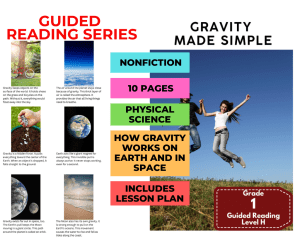
Guided Reading Level H - Gravity Made Simple
ELA, Resources for Teachers, Reading Comprehension, Reading, Science, Pre-Reading, Language Development, Vocabulary, Physics, Earth and Environmental Sciences, Kindergarten, Grade 1, 2, Worksheets & Printables, Worksheets, Teacher Tools, Centers, Activities, Literacy Readers, Quizzes, Quizzes and Tests, Assessments
This Guided Reading Book - Gravity Made Simple (Level H) includes: Guided Reading Color Label (front cover x1) This is a quick way to match the book’s demands to what students can generally handle.. The overall goal is to use the level/color to pick books for several smaller groups. To qualify for a certain level, a student is expected to read a book from that level with about 90–94% accuracy. If a student is consistently accurate and understands, move up a level. If the student is struggling at that level, drop down and add more support. Each student will improve at completely different rates, but it is generally one of the best ways to check progress across the class. DOWNLOAD THE CATALOG TO VIEW ALL GUIDED READING BOOKS AVAILABLE (SORTED LEVELS A-Z) Pre-Reading Question (x1) Teacher asks the prompt aloud, can be while showing the cover or first page. Students share what they already know, or make educated guesses from the cover. Prompt them to use the target vocabulary. Write some of their responses on the board to look back at during the reading. Vocabulary Words (x5) Introduce the five words, best doing it one at a time. Start by saying it, while students repeat and then see if anyone knows what it means before reading further. Read through the meaning and try to briefly connect each word to a picture or gesture so it’s meaningful. Ask students to flip through the book pages and point to where they see each of the vocabulary words. While reading the book pause upon coming across one of the vocab words or read the sentence twice to make sure students understand the word has appeared. Optional: Ask students to raise hands whenever they see/hear one of the new words. Guided Reading Pages (x10) Check the book snapshot (below) for: primary topic - do you need to prep extra reading or intro materials on this? what is taught best - decide on 1-2 bullets to focus on, use the prompt or words provided here for best results. learning goals - what you are checking for students to be able to do after the session, elicit answers using prompts or words provided. key vocabulary (see section above). questions overview - so you know what is coming up and if you need to prep extra materials to assist understanding. Run the lesson You may have already looked at a few of the pages together, but you can show them some of the pictures again first to set meaning. Depending on how much time you have and how familiar your students are with guided reading class, you may want to read the book aloud first with the group first. Students whisper or partner read, while you listen in. If time, do it as a group, one student reading a page each. Use the guided page’s prompts to coach: “Check the picture / does it make sense?” “Point under the words / try the first sound” “Reread the sentence smoothly”. Try to focus more on one student per session (rotating every time), so you can work out if they are ready to move up or need to move down a level. Comprehension Questions (back cover x3) This is your way to check that students didn’t just say the words, but actually understood the text. First, let students answer by pointing to the page/picture and saying a short sentence. After any answer, follow with: “Show me where you found that in the text.” In bigger groups, have partners answer first (10–20 seconds), then call on 2–3 students to share. Differentiation tips: Emerging speakers/struggling readers: oral + pointing On-level: oral in a full sentence Higher: one written sentence or draw + label Book Snapshot Title: Gravity Made Simple Genre: Nonfiction (informational) Subject: Science (Physical Science / Earth & Space Science) Primary Topic: How gravity works on Earth and in space Estimated Guided Reading Level (A–Z): H What This Book Teaches Best Gravity is a hidden, always-active force that pulls things toward Earth’s center. Gravity keeps objects on Earth’s surface—without it, things would float away. Gravity keeps the air close to Earth, forming the atmosphere that living things need to breathe. Gravity works in space too: Earth’s pull keeps the Moon in an orbit, and the Moon’s gravity affects ocean tides. Mass and gravity connect: more mass means a stronger gravitational pull, and weight measures gravity’s pull. Learning Goals Explain what gravity is and what it does to objects on Earth. Describe what happens when an object is dropped, according to the text. Tell how gravity helps keep objects (and air) close to Earth. Describe how Earth’s gravity affects the Moon’s orbit. Explain how the Moon’s gravity is connected to tides along the coast. Use the text to explain how mass relates to gravitational pull. Key Vocabulary From the Text gravity — a force that pulls things toward Earth. atmosphere — the thick layer of air around Earth. orbit — the path something takes around a planet. mass — how much matter is inside an object. tides — ocean water rising and falling along the coast. Discussion Prompts Pre-reading question: What do you think happens when you drop an object? Comprehension questions: What does the book say happens when an object is dropped? Comprehension questions: What does Earth’s pull do for the Moon’s path around Earth? Comprehension questions: What does the book say causes tides along the coast? Printing Tips 1. Best Printing Method (Recommended) “Booklet” Printing (Best if Available) If your printer or PDF viewer supports Booklet Printing , use this. Settings to use: Print mode: Booklet Paper size: Letter or A4 (either works) Orientation: Landscape Print on both sides: Yes Flip on: Short edge Scaling: Fit to printable area Booklet subset: First test: Front sides only Then: Back sides only This will automatically: Pair pages correctly Put the cover on the outside Align everything for folding After printing, fold in half and staple along the spine . 2. If “Booklet” Printing Is NOT Available You can still print this correctly with manual duplex printing . Step-by-step: Open the PDF. Choose Print . Set: Orientation: Landscape Pages per sheet: 1 Print on both sides: Yes Flip on: Short edge Print all pages . Because each PDF page already contains two facing book pages, the result will still fold cleanly into a book. Thousands of Cored Education products are included with your TeachSimple membership. Download links and encyclopedia index available here.
Author Cored Education
Rating
Tags Vocabulary, Reading Comprehension, Reading Passages, Leveled Reading, Nonfiction, Reading, Guided Reading, Gravity, Physics, Earth Science

Weather: Kindergarten Science Project
Science, Earth and Environmental Sciences, Earth Sciences, Kindergarten, Preschool, Grade 1, 2, Activities, Projects
Weather: Kindergarten Science Project Product Overview: Weather Topic for Kindergarten A comprehensive resource designed to educate young minds on weather phenomena is here. This 50-page bundle of differentiated activities and worksheets provides educators with a collection of ideas for effective learning in Pre-kindergarten, Kindergarten and Grade 1. Mainly adhering to the UK's National Curriculum guidelines on Science and Geography, it serves as an excellent teaching aid. Yet, its use isn't restricted to just the UK; teachers globally can use this resource fruitfully. Adaptability The product offers adaptability regardless of group sizes—from whole classroom sessions to one-on-one - and even makes intriguing homework assignments. It is equally intended for single or mixed-age group classes, containing general introductions to diverse weather subtopics. Added Features of the Weather: Kindergarten Science Project Weather charts: Includes symbology with innovative symbol designs. Puzzles: Mystery themed puzzles around "What is the weather like today?" theme. Weahter Diary templates: Designed to cultivate pupils' curiosity about their environment. Fostering Creativity & Reinforcement Learning Drawing exercises embedded with information about Beaufort Scale measurements & relevant windspeeds foster creativity. Nature-themed activities are paired with well-chosen popular sayings based on Weather stimulate learners' participation & interest Cross-curricular activity suggestions have been included throughout these sheets that reinforce learning across subjects This package signifies reliable strategies tested over several years in the classroom, which prove its practical utility— an exciting mix of engaging activities and thoughtful resources. In conclusion, Weather: Kindergarten Science Project successfully caters as a sturdy guide for any educator passionate about teaching this naturally fascinating subject. What is included? 1 PDF file See also: A matching set of fully differentiated weather puzzles https://teachsimple.com/product/weather-wordsearches-and-other-puzzles Clouds: A presentation for kindergarten Weather Vocabulary Flashcards: suitable for creating a word wall! https://teachsimple.com/product/weather-vocabulary-flashcards-phonetically-coded Clouds: Kindergarten Science Project - great for a mini project as part of a weather project! https://teachsimple.com/product/clouds-mini-project-resource-pack
Author Lilibette's Resources
Rating
Tags Weather, Curriculum, Activities, Science, Geography, Kindergarten Science Project

Colour a Hedgehog
Creative Arts, Art, Holiday & Seasonal, Seasons, Summer, Science, Life Sciences, Nature & Plants, Kindergarten, Preschool, Grade 1, 2, Activities
Here is a picture of a Hedgehog for children to colour. Hedgehogs are popular in autumn especially when we think of animals that hibernate, so here is a lovely way to add interest and fun to your sutum project! Who is this colouring picture of a hedgehog for? Anybody. Older children will extend the activity further than younger ones, Uses for this colouring sheet Use to help children learn about hedgehogs - to name their body parts and learn about their ways and their habits. Use as part of a science lesson Paint or colour. Studying the natural world is the foundation for the later study of science. The colouring of pictures of natural things, be it plants or animals is more than a pastime activity. It is a means of familiarising young children with these commonly known subjects. The colouring of this hedgehog picture can be used as a pastime, or even as part of a creative lesson, but it can teach much more. The Curriculum for Science expects children to be taught to use the local environment to study plants and animals, throughout the year. What better way than to use animals that children love and around which many stories are written - find a hedgehog story to read while the children colour, or let them write their own hedgehog story! Colouring can help children to become familiar with the parts of the hedgehog - help children to label the snout, legs and spines. Colouring a picture of a hedgehog emerging from a pile of leaves can stimulate a discussion on hibernation: why does the hedgehog hibernate and how? It is best if children colour the hedgehog picture using our colour version or from reference books. The coloured version can also be used as a A4 poster to pin up! What is included in the pack? 1 sheet to be coloured 1 sheet giving an example of how the picture could be coloured.
Author Lilibette's Resources
Tags Mammals, Colouring Pictures, Science, Nature, Natural World, Animals, Autumn, Hibernation, Hedgehogs, Hedgehog To Colour

Help Sara Sort Animals - non-identical sorting/grouping activity
Special Resources, Special Education Needs (SEN), Math, Early Math, Science, Basic Science, Kindergarten, Preschool, Grade 1, 2, 3, 4, 5, 6, Activities
Help Sara Sort Animals: A Comprehensive Skill-Enhancer Help Sara Sort Animals is a dynamic activity developed to instill vital life and academic skills in children. An essential tool for Grade 6 down to Preschool, this downloadable PDF is suitable for traditional classrooms as well as homeschoolers. Primarily a foundational tool for Math and Basic Science Education,, this resource aims to improve children's understanding of the world through attributes-based categorization such as colour, size, or function. This strategy fosters critical thinking abilities along with visual discrimination. An Interactive Journey towards Skill Development: The journey begins with an introduction of two animals – a cat and a dog which form the first animal categories. The same concept is gradually complicated by introducing visually similar beings like cows or horses, honing differentiation skills at each step. A Versatile and Adaptive Learning Tool: Variety of card illustrations (22 differently pictured animals) offer flexibility suiting individual needs. The resource can effectively be tailored making it a truly customizable tool appropriate for diverse learning requirements. This exercise also proffers significant benefits in terms of enhancing visual cognizance parameters among Special Education Needs (SEN). Note:In addition to being used in group sessions or personalized assignments—this material invites repeated interaction thereby ensuring better retention over time! A Wholesome Learning Experience Ensured: If you are seeking an engaging yet systematic approach to education, Help Sara Sort Animals promises just that! Observe as your pupils drastically improve their cognitive abilities while thoroughly enjoying the process.
Author IFIO girl - I'll Figure It Out
Tags Animals, Sorting, Categorization, Visual Discrimination, Attributes

What Is Wind? Audio Book
Science, Earth and Environmental Sciences, Environmental Science, Preschool, Kindergarten, Grade 1, 2, 3, Read Alouds, Activities
Title: What Is Wind? Audio Book For educators in need of versatile teaching resources, the What Is Wind? audio book is a valuable asset. This engaging educational tool introduces the concept of wind to learners from Kindergarten through Grade 3. Engrossed in different subjects like Science and Environmental Science, this resource provides an interactive educational experience that harnesses their auditory faculties to nurture their understanding and interest in these areas. The content employs scientific tools, such as anemometers and wind speed scales developed by Sir Francis Beaufort in the 1800s, to expound on meteorological principles. Educators thus have at their disposal a tool steeped not only educational depth but historical context as well. Printable worksheets: Curtail limitations of classroom size or setup — whether for whole group instruction or smaller learning clusters. Its ease of use makes it suitable for homework assignments too! Single MP3 file format: Offers flexible usage - can be implemented using conventional gadgets like computers and tablets as well as portable devices such iPads or even smartphones! As children explore the science behind winds through their headphones or speakers, they inadvertently strengthen their listening skills – an important part of learning overlooked by visual-heavy material. The audio book uses grade-appropriate language ensuring comprehension without overwhelming listeners while its duration (not specified) is crafted thoughtfully so young minds maintain attention throughout. Lend students' ears to its captivating narrative - demystifying what winds are with how they're measured historically up until today's methodologies - hence igniting early interest towards scientific knowledge acquisition which will carry them forward throughout succeeding educational stages. If you are seeking an innovative approach that blends historical mechanisms with modern methods for teaching meteorological concepts such as wind speed measurement in a way that optimizes auditory learning experiences, What Is Wind? Audio Book would make a rich addition your roster of learning materials.
Author Twin Sisters Digital Media
Tags Science Education, Wind Measurement, Audio Book, Meteorology, Historical Context

KS1 science - spring game
Science, Life Sciences, Biology, Preschool, Kindergarten, Grade 1, Activities, Games
Help children learn to recognise and name common spring flowers/animals etc… with our picture cards. Play Snap on two levels of difficulty: Start by matching like for like (cards with both pictures and words) for ages 3+ and progress to the harder version which involves matching without clues. The words are phonetically coded to help with decoding, though it is not necessary to be able to read the words - naming is the aim of the game . Other uses:** These cards can also be used: for sorting activities (e.g. frogspawn/tadpole/frog; flower (inc. catkins); young: lambs, chicks, tadpoles; etc…) To stimulate discussion To encourage children to look for these signs of spring!
Author Lilibette's Resources
Tags KS1 Plants Game, Ks1 Spring Game, Spring Flowers Game Ks1, Animals Game, Life Cycle

Taking Flight Audio Book
Science, Life Sciences, Animals, Preschool, Kindergarten, Grade 1, 2, 3, Read Alouds, Activities
Taking Flight Audio Book : A Teaching Resource The Taking Flight Audio Book , a resource targeted towards Kindergarten, Preschool, and Grades 1 through 3 students, focuses on eagles, hawks, owls, falcons and vultures. A Firm Handle on Fascinating Facts Did you realize that owls have adapted to become nocturnal hunters? How about the remarkable eyesight possessed by hawks that allows them to spot prey in daylight? This audio book stimulates auditory learning while also fostering an interest in zoology within young scholars. Moreover, it equips educators with robust content for teaching science subjects effectively. Versatile Learning Opportunities This tool can be incorporated into various learning scenarios: Dwhole-group instructions: Teachers can pause and discuss key points collectively; Dsmall group sessions: Students express their thoughts; Hhomework assignments:: Kids explore at their own pace at home. Your purchase includes one MP3 file for 'Taking Flight' ensuring easy accessibility across numerous devices. Also included is a fun song to aid with the learning process. An Adventure in Science! The ultimate purpose being getting children excited about exploring more facets of zoology beyond textbooks; turning a simple learning experience into an adventure with captivating narratives backed by scientific facts. Fostering Appreciation for Nature's Wonders Hence, it isn't just about teaching kids to identify these birds but also tapping into curiosity that helps them appreciate nature's myriad marvels.
Author Twin Sisters Digital Media
Tags Birds Of Prey, Zoology, Auditory Learning, Educational Resource, Lifecycles

Back To School September | Kindergarten Unplugged / Digital Coding
Science, Technology, Computer Science, Preschool, Kindergarten, Grade 1, Activities
Back To School September | Kindergarten Unplugged/Digital Coding Introducing a unique teaching resource designed to familiarize younger students with the fascinating world of coding and programming. This innovative approach reinforces core, foundational concepts like logic puzzles which are essential for later complex coding tasks. It provides a fresh start to a new school year by incorporating back-to-school themes relevant to the month of September. About The Resource: Designed for children in preschool through first grade. Aims at preparing students mainly for Hour of Code participation through basic logic puzzles. Incorporates diverse activities and worksheets including step-by-step guides, instructions on educational games, colorful printable map pieces, 'Crack-the-code' recording sheet & Smartboard chart . Adaptable & Convenient: A 11 x 8.5 PDF file available alongside an editable Google Slide for quick customization based on your teaching needs. Digital sharing possible via Google Classroom or direct printouts - adaptable even in remote learning scenarios.     This product fosters learning beyond just computer science by keeping young minds active and engaged through challenging resources. Suitable for both whole group learnings as well as small group interactions; Infuses variety into regular classroom activities or serves as intriguing homework assignments that spark child’s curiosity at home. Back To School September | Kindergarten Unplugged/Digital Coding provides young learners with an exciting hands-on experience into computer science.
Author Roombop
Tags Coding, Programming, Logic Puzzles, Back-to-school, Hands-on Experience

Fall And Winter Audio Book
Science, Earth and Environmental Sciences, Environmental Science, Preschool, Kindergarten, Grade 1, 2, 3, Read Alouds, Activities
Fall brings cooler weather and in autumn there are shorter days. The leaves change from green to orange, red, and purple, until they start falling to the ground.
Author Twin Sisters Digital Media
Tags Fall, Winter, Autumn, Seasons, Change

Dinosaur Dig Sensory Table
ELA, Writing, Science, Earth and Environmental Sciences, Math, Measurements, Kindergarten, Preschool, Grade 1, Activities
Dinosaur Dig Sensory Table Support your students’ learning with thisDinosaur Dig Sensory Table. This resource was specifically designed to sharpen writing, math, and vocabulary skills. What You Get: (included in color and black and white) A 27-page printable PDF. The PDF will include activity cards and a title cover option to use for the bin that you store the cards in. How to Use the Dinosaur Dig Sensory Table: This dinosaur dig sensory table is always a big hit! Students pretend to be paleontologists searching for fossils. There is a Paleontology Handbook that explains what paleontologists do and what tools they use. Students can use their notes sheet to write and draw about what they found in the sensory table. The note sheet even includes a measuring tape so that students can take measurements of the bones and fossils they find! The included dinosaur species cards will help students make judgments about what dinosaur fossils they unearthed. This is a great tool for integrating reading, writing, and math into your sensory table. I hope you enjoy!! Take A Look at Some of My Best Sellers: Carpet Time Songs: 5 Little Speckled Frogs Preschool Writing Center: All About Me Preschool Writing Center: My Body Carpet Time Songs: 10 Little Dinosaurs Carpet Time Songs: 5 Little Eggs Shape Intervention Bins: Polar Bear Popsicles You can find more resources at my storefront here: The Proactive Classroom
Author The Proactive Classroom
Tags Science Sensory Table, Dinosaur Dig, Dinosaur Vocabulary, Vocabulary Cards, Preschool Sensory Table, Measurement Cards, Writing Practice
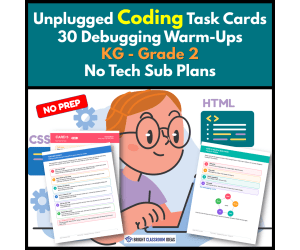
Unplugged Coding Task Cards | 30 Debugging WarmUps K-2 | No Tech
Computer Science, Technology, Science, Winter, Seasons, Holiday & Seasonal, Kindergarten, Grade 1, 2, Centers, Activities, Lesson Plans, Teacher Tools, Task Cards, Worksheets & Printables
Find the Bug: Picture Debugging Warm-Ups | Grades K–2 Picture debugging task cards make early computer science accessible to young learners with 30 visual bug-finding challenges that require no student reading and no devices . Students look closely, find what does not fit, explain their thinking to a partner, and draw the fix. What’s Included This resource includes six separate PDF files : Teacher Guide – 6 pages Teacher directions and implementation ideas Teacher script for guiding students without giving away the answer Standards alignment Scope and sequence Two-week pacing plan Student Reference – 2 pages Five-step picture debugging cycle Student-friendly debugging checklist LOOK → POINT → SAY → FIND → FIX routine Recording Pages – 2 pages Draw-the-fix response sheet Student debugging tracker Progress tracking by bug type Picture Cards 1–30 – 30 pages 30 visual debugging task cards 6 bug types 3 difficulty levels One card per page Answer Key – 8 pages Correct answer for every card Suggested fix Misconception behind each bug Notes for teacher conferencing Alternate correct fixes identified where appropriate Terms & Credits – 2 pages Six Bug Types Students practice six foundational types of picture debugging : Order — steps are in the wrong order Patterns — one piece breaks a repeating or growing pattern Robot Path — one arrow points the wrong way Count It — the number does not match the quantity Sort It — something is in the wrong category Match It — one pair does not go together How It Works in the Classroom ⭐ Bell-Ringers Project one picture debugging card and work through it together. Read the goal aloud twice. Let students turn and talk. Have students identify the bug. Ask them to explain why it is wrong. Finish by drawing the fix. The teacher guide recommends approximately 5–8 minutes per card , with one card per day providing about six weeks of warm-up practice. ⭐ Stations Print and laminate the cards and place them at a station with the recording page. Students: Look at the goal. Examine each picture. Find the box, arrow, or pair that does not fit. Explain their thinking. Draw the correction. Five cards make a comfortable 15-minute station rotation . ⭐ Whole Group These cards are especially effective for carpet time and partner discussion. Because the cards are visual, the teacher reads the goal aloud while students do the actual problem solving. The spoken explanation is part of the assessment , making this more than simply a "find the wrong picture" activity. ⭐ Sub Plans No login, devices, or previous computer science experience are required. Print the cards, student checklist, recording pages, and answer key, and you have a ready-to-use unplugged activity. Standards & Learning Goals Students practice early computational thinking through: Debugging errors in algorithms and programs Following and evaluating sequences Recognizing repeating and growing patterns Following precise sequences of directions Connecting numbers with quantities Sorting objects according to rules Matching objects by attributes Explaining their reasoning to a partner The resource is aligned to CSTA 1A-AP-14 and CSTA 1A-AP-08 , with additional connections to CSTA 1A-AP-09, 1A-AP-10, and 1A-AP-11 , as well as CCSS.MATH.K.CC.B.4, CCSS.MATH.K.MD.B.3, and CCSS.ELA-LITERACY.SL.K.1 . The six bug types intentionally move from familiar visual reasoning into more challenging concepts. For example, Card 24 asks students to determine whether 3 is less than 3 , introducing boundary testing, while Card 25 requires students to apply two rules at once . Why Teachers Love It ⭐ Misconception-focused answer key The answer key explains why children may make the mistake , not just which answer is correct. This gives teachers useful language for guiding students without simply revealing the solution. ⭐ No reading required Students do not need to read the cards independently. The teacher reads the goal aloud, making this accessible to pre-readers, emerging readers, and English learners . ⭐ Truly unplugged No computers, logins, coding platforms, or devices are needed. ⭐ Builds debugging habits early Students learn that debugging means searching for what does not fit—not simply waiting for an adult to point out the mistake. ⭐ Encourages mathematical reasoning Counting, sorting, patterns, quantities, size, shape, color, and comparison are naturally embedded throughout the cards. ⭐ Built-in progression Each bug type includes three levels of difficulty. One-dot cards have visible bugs, two-dot cards require a trace or test value, and three-dot cards look correct until students check them carefully against the goal. ⭐ Great for partner talk Every card asks students to explain their thinking, giving young learners practice with mathematical and computational reasoning. ⭐ Supports differentiation The scope and sequence makes it easy to pull a specific group of cards for targeted reteaching. ⭐ Original visual design Every picture is an original drawing, so the cards are designed specifically for this resource rather than relying on generic clipart. Make early computer science visual, accessible, and engaging with ready-to-use picture debugging task cards for Grades K–2 ! Use them for morning work, carpet time, computer science warm-ups, partner activities, stations, or unplugged coding practice. Students will build the habit of looking carefully, finding the problem, explaining their thinking, and trying a fix. Add Find the Bug to your classroom and give your youngest learners a fun way to start thinking like problem-solvers and debuggers! 💛
Author Bright Classroom Ideas Marketplace
Rating
Tags Code, Coding, Computer, Technology, Debug, Debugging, Unplugged, No Tech

Weather Do A Dot Art Packet
Science, Earth and Environmental Sciences, Earth Sciences, Kindergarten, Preschool, Activities
Weather Do A Dot Art Packet: An exceptional teaching resource Weather Do A Dot Art Packet is a comprehensive set of 18 printable worksheets (9 color; 9 b&w) deemed perfect for early learners, preschoolers, and kindergartners. This packet can be seamlessly integrated in various teaching scenarios such as morning work, substitute teacher plans or fast finisher tasks. Fine motor and visual perceptual skills development: This resource is structured to engage children in creative problem-solving while using do-a-dot markers. The activities foster skills like independent twisting (opening & closing the marker), applying the right amount of pressure to prevent ink leakage through paper, bilateral hand coordination, motor planning among others. Versatility: This art packet works wonderfully not only in traditional classroom settings or homeschooling but also shines in special education settings, therapy sessions or ABA environments. The activities encourage movement into learning as they can be carried out sitting at a desk or prone on the floor. Focused Learning: The design of these materials focuses on diverse elements related to weather such as rain boots, clouds, thunderstorms lightning bolts rains drops snowfalls etc making earth science an engaging subject! An innovative anxiety-free approach No technical setup required! . All files are available in easy-to-use PDF format - Simple just print get started class today using Weather Do Dot Art Packet catering learner curiosity about wonderful world weathers their very fingertips
Author mnorganizingmom
Tags Weather, Do-a-dot, Art Packet, Fine Motor Skills, Visual Perceptual Skills

Guided Reading Level B: Clouds You Can Spot
ELA, Resources for Teachers, Reading Comprehension, Reading, Science, Language Development, Pre-Reading, Vocabulary, Earth and Environmental Sciences, Earth Sciences, Kindergarten, Preschool, Grade 1, Worksheets & Printables, Worksheets, Teacher Tools, Centers, Activities, Literacy Readers, Quizzes, Quizzes and Tests, Assessments
This Guided Reading Book - Clouds You Can Spot (Level B) includes: Guided Reading Color Label (front cover x1) This is a quick way to match the book’s demands to what students can generally handle.. The overall goal is to use the level/color to pick books for several smaller groups. To qualify for a certain level, a student is expected to read a book from that level with about 90–94% accuracy. If a student is consistently accurate and understands, move up a level. If the student is struggling at that level, drop down and add more support. Each student will improve at completely different rates, but it is generally one of the best ways to check progress across the class. DOWNLOAD THE CATALOG TO VIEW ALL GUIDED READING BOOKS AVAILABLE (SORTED LEVELS A-Z) Pre-Reading Question (x1) Teacher asks the prompt aloud, can be while showing the cover or first page. Students share what they already know, or make educated guesses from the cover. Prompt them to use the target vocabulary. Write some of their responses on the board to look back at during the reading. Vocabulary Words (x5) Introduce the five words, best doing it one at a time. Start by saying it, while students repeat and then see if anyone knows what it means before reading further. Read through the meaning and try to briefly connect each word to a picture or gesture so it’s meaningful. Ask students to flip through the book pages and point to where they see each of the vocabulary words. While reading the book pause upon coming across one of the vocab words or read the sentence twice to make sure students understand the word has appeared. Optional: Ask students to raise hands whenever they see/hear one of the new words. Guided Reading Pages (x10) Check the book snapshot (below) for: primary topic - do you need to prep extra reading or intro materials on this? what is taught best - decide on 1-2 bullets to focus on, use the prompt or words provided here for best results. learning goals - what you are checking for students to be able to do after the session, elicit answers using prompts or words provided. key vocabulary (see section above). questions overview - so you know what is coming up and if you need to prep extra materials to assist understanding. Run the lesson You may have already looked at a few of the pages together, but you can show them some of the pictures again first to set meaning. Depending on how much time you have and how familiar your students are with guided reading class, you may want to read the book aloud first with the group first. Students whisper or partner read, while you listen in. If time, do it as a group, one student reading a page each. Use the guided page’s prompts to coach: “Check the picture / does it make sense?” “Point under the words / try the first sound” “Reread the sentence smoothly”. Try to focus more on one student per session (rotating every time), so you can work out if they are ready to move up or need to move down a level. Comprehension Questions (back cover x3) This is your way to check that students didn’t just say the words, but actually understood the text. First, let students answer by pointing to the page/picture and saying a short sentence. After any answer, follow with: “Show me where you found that in the text.” In bigger groups, have partners answer first (10–20 seconds), then call on 2–3 students to share. Differentiation tips: Emerging speakers/struggling readers: oral + pointing On-level: oral in a full sentence Higher: one written sentence or draw + label Book Snapshot Title: Clouds You Can Spot Genre: Nonfiction (informational) Subject: Earth Science (Weather) / Early Literacy Primary Topic: Observing clouds using simple describing words Estimated Guided Reading Level (A–Z): B What This Book Teaches Best Builds early nonfiction observation language by naming what you can see in the sky (sun, clouds, sky). Teaches describing words (adjectives) for clouds: big/small, white/grey, high/low, and “rain clouds.” Supports patterned reading and fluency through repeated sentence structure: “See the ____.” Encourages compare/contrast thinking using paired opposites (big vs. small; high vs. low; white vs. grey). Learning Goals Students will identify things the book says you can see (sun, clouds, sky). Students will describe clouds using words from the text (big, small, white, grey, high, low, rain). Students will retell the book’s sequence using the repeated pattern “See the ____.” Students will compare two cloud descriptions from the book (such as high/low or big/small). Students will answer simple questions about what the book tells the reader to see. Key Vocabulary From the Text clouds — white or grey puffs you see in the sky grey — a color between white and black high — up far above you low — down close to the ground rain — water that falls from clouds Discussion Prompts Pre-reading question: What do you think you might see when you look up at the sky? Comprehension questions: What is the first thing the book says to see? Comprehension questions: What are two different kinds of clouds the book tells you to see? Comprehension questions: What is the last thing the book says to see? Printing Tips 1. Best Printing Method (Recommended) “Booklet” Printing (Best if Available) If your printer or PDF viewer supports Booklet Printing , use this. Settings to use: Print mode: Booklet Paper size: Letter or A4 (either works) Orientation: Landscape Print on both sides: Yes Flip on: Short edge Scaling: Fit to printable area Booklet subset: First test: Front sides only Then: Back sides only This will automatically: Pair pages correctly Put the cover on the outside Align everything for folding After printing, fold in half and staple along the spine . 2. If “Booklet” Printing Is NOT Available You can still print this correctly with manual duplex printing . Step-by-step: Open the PDF. Choose Print . Set: Orientation: Landscape Pages per sheet: 1 Print on both sides: Yes Flip on: Short edge Print all pages . Because each PDF page already contains two facing book pages, the result will still fold cleanly into a book. Thousands of Cored Education products are included with your TeachSimple membership. Download links and encyclopedia index available here.
Author Cored Education
Rating
Tags Vocabulary, Reading Comprehension, Reading Passages, Literacy Readers, Leveled Reading, Nonfiction, Reading, Guided Reading, Earth Science, Clouds

I'm Feeling Light As A Feather Audio Book
Science, Earth and Environmental Sciences, Space, Preschool, Kindergarten, Grade 1, 2, 3, Read Alouds, Activities
Gravity is the force on Earth that keeps things from floating into space. If we drop a dish, it will fall to the ground. If we jump into the air, we will come back down.
Author Twin Sisters Digital Media
Tags Learn, Discover, Health, Pilot, Mission