



3,952 products added recently
Page 7 - Science Activities For Kindergarten
Introduce young learners to the world of science with activities designed for kindergarten students. This collection includes simple experiments, nature observations, and sensory experiences that encourage curiosity. By integrating these science activities into your teaching, you can lay the groundwork for scientific thinking and a lifelong love of learning.

 Show filters

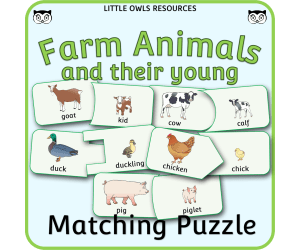
Farm Animals and their Young/Babies - Matching Puzzle Game
Science, Basic Science, Kindergarten, Preschool, Grade 1, 2, 3, Games, Activities
Our children absolutely love to play this highly engaging Farm Animals puzzle game! Cut each puzzle along the line in the middle and invite your children to match each farm animal with its offspring. These puzzles offer an extremely fun way to develop observational skills. Children may not know which animal matches with which young, however through looking closely at the characteristics of each animal, they will love to work out the similarities and differences between the different pictures and make educated guesses about which animals match together. Why not extend learning by discussing with your children the similarities and differences between older and younger animals and also between the different types of animals? Extend children’s vocabulary by describing animal body parts such as tail, hooves, paws, fur, snout, etc. Ask questions such as ‘Which animal has the longest/shortest tail?’ The 10 puzzles also each have a unique way of fitting together which enables self-checking. We hope you have as much fun with your children using these puzzles as we have!
Author Little Owls Resources
Tags Puzzle, Animals, Farm, Baby Animals, Matching Game, Young Farm Animal, Young Farm Animals, Baby Farm Games, Baby Matcher Game, Baby Animal Matching Game

Animals to Color - Book of 10: Science Coloring Pages
Creative Arts, Art, Science, Life Sciences, Animals, Kindergarten, Preschool, Grade 1, 2, Activities
Animals to Color - Book of 10: Science Coloring Pages Here is a super pack of 10, hand-drawn pictures of animals for children to color. The study of the natural world is the foundation for the later study of science. The colouring of pictures of natural things, be it plants or animals, is more than a pastime activity. It is a means of familiarising young children with these everyday subjects. The coloring of these animal pictures can of course, be used as a pastime, or even as part of a creative lesson - the pictures look super framed - but they have the potential to teach much more. The UK National Curriculum for Science expects children to be taught to use the local environment to study plants and animals throughout the year. What better than to use familiar subjects - such as bagers, moles, hedgehogs and more to teach much about the natural world? Coloring can help children to become familiar with the parts of the Robin: ask questions: How is a fox like a stoat? Can you liken them to any of the other creatures? How is a hedgehog different from the other animals? Coloring a picture of an animal can also help children to become familiar with the characteristics of those animals - shape, habits, size, color etc... It is best if children color the animal pictures with the use of reference books to get accurate colors. Who are these coloring pictures of animals for? Anybody. Older children will extend the activity further than younger ones, Uses for the coluring pictures of animals Use to help children learn the name of the frog and to recognise them. Use to make Seasonal Cards Use as part of a science lesson Use for a basis for collage work Paint or color. What is included in the pack? 1 sheet to be coloured 1 sheet giving an example of how the picture could be coloured.
Author Lilibette's Resources
Rating
Tags Animals, Animal Colouring Pictures, Animal Pictures To Colour, Colouring, Colouring Pictures, Natural World, Science, Art, Zooology, Science Coloring Pages

Nature Scavenger Hunts | Indoor Outdoor Seasonal Science Activity
Reading, ELA, Nature & Plants, Life Sciences, Science, Kindergarten, Preschool, Grade 1, 2, Activities, Teacher Tools, Worksheets & Printables
Turn nature exploration into an engaging literacy and science experience with this printable Nature Scavenger Hunts resource! Designed for PreK–2nd grade learners, these easy-to-use scavenger hunts encourage children to observe, identify, describe, and discuss the world around them while getting active and engaged. Use the hunts indoors, outdoors, at school, during nature walks, or as seasonal classroom activities. The black-and-white format is printer-friendly and easy to photocopy, while the clear layouts give young learners plenty of room to check, circle, draw, and record their discoveries. What's Included • A colorful cover page • Indoor observation scavenger hunt • Outdoor nature scavenger hunt • Spring exploration hunt • Summer exploration hunt • Fall exploration hunt • Winter exploration hunt • Picture-supported observation activities • Simple check-and-find activities • Nature observation recording page • Seasonal comparison activity • Final nature discovery reflection Skills Developed • Reading and word recognition • Science observation skills • Nature and seasonal awareness • Vocabulary development • Visual discrimination • Critical thinking • Oral language and discussion • Beginning recording and drawing skills Perfect For • Science centers • Literacy centers • Nature walks • Outdoor learning • Indoor recess • Seasonal classroom activities • Early finishers • Small-group instruction • Homeschool learning • Spring, summer, fall, and winter exploration Why Teachers Love It These low-prep scavenger hunts give young learners a meaningful reason to read, observe, move, and talk about what they discover. The simple visual structure makes the activities accessible for emerging readers while allowing teachers to use the same resource across different seasons and learning environments. Print the pages and go, or place reusable copies in protective sleeves for repeated classroom use. This flexible nature-themed resource makes an easy addition to elementary reading and science activities throughout the year.
Author TeachTrend Studio
Rating
Tags Activities; Printables; Student Practice; Worksheets; Spring; Winter
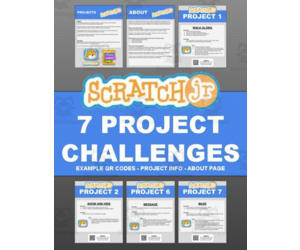
ScratchJr: 7 Project Challenges
Science, Technology, Computer Science, Preschool, Kindergarten, Grade 1, 2, 3, 4, 5, Projects, Activities
It isn't always necessary to remember syntax in programming, but it is extremely important to learn the concepts behind programming. This resource includes 7 project challenges for students working with Scratch Jr. They introduce the meanings of the different buttons through simple, interactive projects . All the project challenges are scaffold and build on each other, where the student learns different skills along the way. Each project consists of questions that you can ask the students, a challenge for them to complete and hints if they get stuck. Each project page includes a QR code that links the students to a animated gif showing what the final outcome of the project should look like. Scratch Jr is great for the 5-7 age range however it works for all ages. Scratch Jr is a great way to introduce programming to anyone.
Author Roombop
Tags Scratchjr, Scratch Jr Projects, Scratch Jr Work, Scratch Challanges
The "Name That Noise!" Game
Science, Life Sciences, Human Body, Kindergarten, Preschool, Grade 1, 2, 3, Games, Activities
A TV Game Show themed activity that challenges young children to call out the name of the thing that makes the sound they hear.
Author Ethics4Schools
Tags Sound Recognition, Noises, Hearing, Activity, Fun, Ethics4Schools

Robot Cut Outs
Science, Technology, Engineering, STEM, Creative Arts, Art, Preschool, Kindergarten, Grade 1, 2, 3, 4, 5, 6, Activities
Robot Cut Outs help you create templates that can be easily cut and applied for classroom decoration or student activities. They are perfect for adding a little fun to your classroom!
Author Have Fun Teaching
Tags Machines

Ribbit Rhymes Activity
ELA, Science, Life Sciences, Animals, Language Development, Pre-Reading, Spelling, Vocabulary, Preschool, Kindergarten, Grade 1, 2, Activities
Ribbit Rhymes is an activity where students play with rhyming words to demonstrate their rhyming ability. This is a great way for students to practice identifying and brainstorming rhyming words.
Author Have Fun Teaching
Tags Rhyming
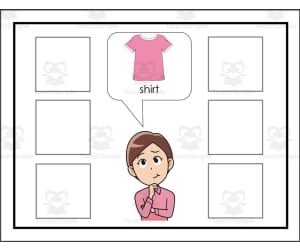
Help Sophia Find the Items: Things You Wear
Special Resources, Special Education Needs (SEN), Speech Therapy, Life Skills, Math, Early Math, Science, Basic Science, Kindergarten, Preschool, Grade 1, 2, Activities
Why we sort by FEATURE - FUNCTION - CLASS Teaching children to sort or group items by feature, function, and classification is important for several reasons: Cognitive development: Sorting and grouping require children to think critically and make connections between items based on their characteristics. This helps to develop their cognitive abilities and improve their problem-solving skills. Organization: Sorting and grouping items based on their features, function, or classification can help children to organize information and make sense of their environment. This can improve their memory and make it easier for them to retrieve information later. Language development: Sorting and grouping can also help to develop children's language skills by providing them with the vocabulary to describe different features, functions, and classifications. This can improve their ability to communicate effectively and express their ideas clearly. Mathematical skills: Sorting and grouping can also help to develop children's mathematical skills, such as counting, categorizing, and comparing. This can lay the foundation for more complex mathematical concepts later on. This activity involves sorting clothing items based on their features, functions, and classes - the items in this activity are commonly seen as "girl" clothes. The learners will be presented with a collection of various clothing items such as shirts, pants, jackets, sweaters, and so on. The objective of the activity is to categorize these items based on their unique features, functions, and classes. To begin the activity , the instructor will introduce the concept of feature, function, and class, providing examples and a brief description of each. The learners will then be given a set of clothing items and asked to sort them into categories based on FEATURE- describing something 'the shirt is red' 'things with zippers' FUNCTION - what it is used for 'wear a coat when it is cold' CLASS - a category 'all shirts' or 'all socks' *For example, the learners could sort clothing items based on the feature of long sleeves, the function of keeping warm, or the class of pants. Overall, teaching children to sort and group items by feature, function, and classification can provide them with a range of cognitive, organizational, language, and mathematical benefits that can support their development in various areas. This activity is easy to create - Print and laminate all cards, cut out the individual sorting cards and velcro to the corresponding activity mat. You can hole punch the mats and put them in a binder for many years of teaching and learning. Enjoy, IFIO girl I'll Figure It Out
Author IFIO girl - I'll Figure It Out
Tags Vocabulary, Clothes For Seasons, Visual Discrimination, Features, Sorting, Occupational Therapy, Tasked Based Teaching, Ablls-r, Feature, Function And Class
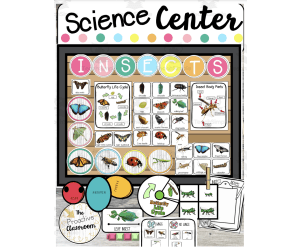
Insects Science Center
ELA, Language Development, Vocabulary, Science, Basic Science, Kindergarten, Preschool, Grade 1, 2, 3, Centers, Activities
Insects Science Center : An Exciting & Effective Teaching Resource This wonderful tool is perfect for educators in public schools or homeschool environments which seek to introduce young learners to the fascinating domain of entomology. Created with students from preschool through Grade 3 in mind, it offers an engaging, interactive exploration of critical science concepts. Skill Enhancement Focus Areas The Insects Science Center aims at boosting multiple abilities such as: Visual discrimination Nonstandard measurement understanding Distinguishing traits-based grouping sorts Lifespan comprehension of a butterfly Familiarization with insect body segments and more. This Insects Science Center : An Exciting & Effective Teaching Resource presents a comprehensive toolkit with six hands-on exercises designed with learning outcomes at heart. A Peek into the Interactive Exercises: Kids can trigger their creative instincts by assembling different insect parts into magnetic creations. A practical game that uses life-sized insect cards enhances comprehension about measurements.} A sorting game where children can classify photographs or toy figurines based on various attributes if insects.} Crafted as easy-to-access PDF format files; ready-to-implement activities await you! Enjoy teaching entomology! This Insects Science Center : An Exciting & Effective Teaching Resource is a ready to use resource to enhance your classroom hands-on learning! Just print and go!
Author The Proactive Classroom
Tags Insect Study, Entomology Resources, Science Activities, Interactive Learning, Homeschool Curriculum

Mothers Day May | Kindergarten Unplugged / Digital Coding
Science, Technology, Computer Science, Preschool, Kindergarten, Grade 1, Activities
Mothers Day May | Kindergarten Unplugged / Digital Coding Designed for kindergarten and preschool students, Mothers Day May | Kindergarten Unplugged / Digital Coding is a resource that offers an engaging introduction to the field of coding. Perfectly tailored for activities in the month of May, it allows students to engage in printable activities without needing computer access. Caters specifically to young learners by providing simple, enjoyable logic puzzles with cuttable commands. Aligns wonderfully with the Hour of Code program, preparing students for actual coding websites or apps in future. What do you get with this resource? This product provides both an easy-to-print standard-sized PDF (11 x 8.5) and an editable Google Slide format which allows quick customizations. Here’s what it includes: A 'how-to-use' guide intended for educators; makes teaching with this material much simpler. A student-friendly 'how-to-play' instruction set designed to encourage self-driven learning from an early age. - Plus: An engaging coding map and colorful map pieces that help improve cognition through visualization.', - And: 'Crack the code' recording sheet + smartboard-friendly charts - promotes active student participation during group learning sessions and supports documentation work too.', kindle This resource's impressive adaptability means whether class is in session physically or virtually, learning about coding shouldn't be compromised. The Mothers Day-themed coding activities, fun and educational material are simply a click or print away!
Author Roombop
Tags Mothers Day, Coding Activities, Kindergarten Unplugged, Digital Resource, Logical Thinking

Sun Cut Outs
Science, Physics, Earth and Environmental Sciences, Space, Creative Arts, Art, Preschool, Kindergarten, Grade 1, 2, 3, 4, 5, 6, Activities
These Sun Cut Outs are perfect for classroom decoration or student activities about the sun or space. They are quick and easy to cut and apply, and will brighten up any classroom!
Author Have Fun Teaching
Tags Solar System, Space, Light
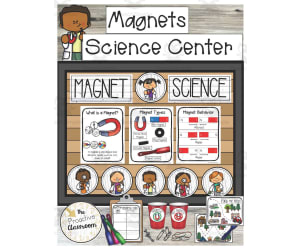
Magnet Science Center
ELA, Language Development, Vocabulary, Science, Basic Science, Kindergarten, Preschool, Grade 1, 2, 3, Centers, Activities
The Magnet Science Center: An Interactive Educational Tool The Magnet Science Center is an innovative teaching tool designed to provide preschool, kindergarten, and early elementary students with a hands-on engagement opportunity through the exciting world of magnets. Emphasizing an approachable science and language arts curriculum, this resource introduces fundamental magnetism concepts in a tangible manner. Interactive Activities: Magnet Sorting Activity : This allows students to actively test diverse items for magnetism which emphasizes observational skills while enabling them to group items based on their magnetic properties. Follow the Road: In this activity , learners guide a car via a concealed magnet navigating through various routes- making it an exciting way to understand how magnets can move objects without obvious push or pull motion! Anchored Chart Activities: Students visually discover differing aspects of magnets using charts such as "Magnet Types", "What Is a Magnet?" and "Magnet Behaviour". These charts help simplify abstract ideas especially for younger grade levels. Attract Or Repel: This furthers understanding on how different sides of magnets interact with each other - be it attraction or repulsion! This download-ready product comes in PDF format containing all necessary instructions & materials required including recording sheets for individual tracking after completion of each experiment. Educational Standards Compliance Designed keeping education standards across multiple grades (Preschool through Grade 3) in mind, the foundational objective remains consistent - cultivating early interest in science while fostering essential learning skills like observation & critical thinking! Homeschooling & Public School Teachers’ Friendly Navigating challenging times where attention needs to be focused towards keeping our youth engaged, this educative kit positions itself not merely as effective learning material but also perfectly apt for both public school teachers and homeschoolers seeking at imparting basic science knowledge innovatively yet enjoyable. Fostering Learning – The Fun Way! The Magnet Science Center strikes just right by being educational but also fun – proving that indeed ,learning unfolds everywhere when you make it engaging!
Author The Proactive Classroom
Tags Magnet Science, Interactive Learning, Hands-on Education, Basic Physics, Homeschool Resource
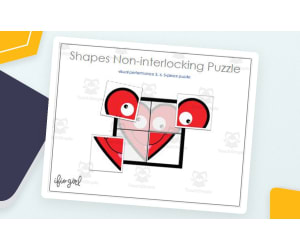
Puzzle: Shapes with non-interlocking pieces - ABLLS-R section B
Special Resources, Creative Arts, Art, Special Education Needs (SEN), Speech Therapy, Graphic Arts, Math, Patterns, Early Math, Geometry, Science, Basic Science, Kindergarten, Preschool, Grade 1, 2, Activities
Teaching young learners non-interlocking puzzles is important for a variety of reasons. Promotes problem-solving skills: Non-interlocking puzzles challenge young learners to use critical thinking and problem-solving skills. By figuring out how the pieces fit together, children develop their spatial awareness, logical reasoning, and attention to detail. Improves fine motor skills: As children manipulate the pieces of the puzzle, they develop their hand-eye coordination and fine motor skills. These skills are important for a range of activities, from writing and drawing to sports and other physical activities. Encourages persistence and resilience: Completing a puzzle requires persistence and resilience. Children learn that it takes time and effort to reach a goal, and that mistakes and setbacks are a natural part of the process. These skills can help them in other areas of their lives, such as academic work and extracurricular activities. Fosters a sense of accomplishment: Finishing a puzzle can give young learners a sense of accomplishment and pride. This can boost their self-esteem and confidence, and motivate them to take on other challenges. Provides a fun and engaging learning experience: Non-interlocking puzzles can be a fun and engaging way for young learners to learn new concepts and skills. They offer a hands-on, interactive experience that can capture children's attention and make learning more enjoyable. This resource can be used as teaching or assessment tool for the ABLLS-R Section B Visual Performance. Non-interlocking puzzle 3, 4, and 5 pieces. The puzzle image is fun silly shapes. Not complicated picture but enough design to work on visual discrimination and visual awareness. Print and laminate all pages. If a learner struggles with fine motor and clear velcro dot can be placed on the picture to hold the puzzle piece in place to reduce frustration for the learner. Store all pieces in a large clear plastic envelope for many years of teaching. Enjoy IFIO girl I'll Figure It Out
Author IFIO girl - I'll Figure It Out
Tags Fine Motor Skills, Visual Discrimination, ABLLS-R Section B Visual Performance, Shapes Puzzle, ABLLS-R Section B, Autism, Early Puzzle, 4 Piece Puzzle, Non Interlocking Puzzle, Occupational Therapy, Interlocking Pieces

Stingray Adapted Book
Science, Life Sciences, Animals, Preschool, Kindergarten, Grade 1, Activities
Stingray Adapted Book is an informative, 8-slide Google SlidesTM introduction to stingrays for a science lesson. Developed by educators, it teaches Pre-K to 1st-grade students key concepts and vocabulary about the ocean creature through an interactive adapted book format with wh- comprehension questions. Implementation ideas include whole-class instruction, small reading groups, a science center, or individal student exploration. The resource covers what stingrays eat, their physical features like tail stingers, how they move and breathe underwater, their habitats, life stages, and more. With a grade 1-2 reading level, this NO PREP resource allows flexibility for diverse learners and needs from public school classrooms to homeschools.
Author My Kind of Crazy
Tags Special Education, General Science, Stingray, Stingray Book

Animal Tails Match-Up – Animal & Tracing Activity
Science, Life Sciences, Animals, Preschool, Kindergarten, Activities
Animal Tails Match-Up Fun Sheets is a great way to each young learners about animals. This set also includes the names of the animals to trace, which enhances the learners' handwriting skills. The children will have fun matching the animals to their tails. Laminate each sheet, then cut out the animal heads Add Velcro dots
Author KD's Kids School Shop
Rating
Tags Zoo Animals, Activity Animals, Early Learners, Match Up, Early Science, What Animal Is Tails, Tails Printables, Match Animal, Tails That Teach, Types Of Animal Tails, Animals With Tails, What Kind Of Animal Is Tails, How To Make Animal Tails, What Type Of Animal Is Tails
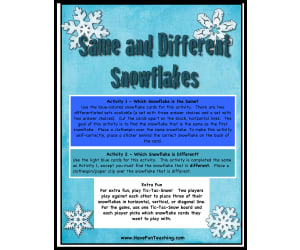
Same and Different Snowflakes Opposites Activity
ELA, Language Development, Pre-Reading, Science, Earth and Environmental Sciences, Earth Sciences, Preschool, Kindergarten, Grade 1, Activities
This game is a great way for students to practice identifying same and different opposite pairs. It's a fun activity that will help them learn and remember the concept.
Author Have Fun Teaching
Tags Opposites, Seasons, Weather

Energy - Interactive Fold & Read Notebook Notes
Science, Basic Science, Preschool, Kindergarten, Grade 1, 2, 3, Activities
Energy - Interactive Fold & Read Notebook Notes Diving right into the heart of our product, the Energy - Interactive Fold & Read Notebook Notes is a kinesthetic teaching resource which prompts students from Kindergarten to Grade 3 to engage actively with basic science. Compact and concise, these notes are comprised of three pages that offer an enriching learning experience about energy. This educational tool allows student interactivity by making it possible for them to contribute text to their notes whilst forming genuine connections with the content. More akin to an activity book than just regular study material, this interactive notebook is designed in black and white. Benefit of Monochrome Design Saves Ink: The monochrome design is printer-friendly, reducing extra ink costs. Fosters Creativity: It leaves room for children's creative instincts as they can color while studying. Potential Implementation Strategies Incorporate during large group discussions fostering collaborative learning. Instrumental during structured independent learning sessions where individual comprehension is upskilled. A handy reinforcement tool at home under parental supervision or during homework assignments. Neatly packed as a PDF file type these easily accessible notebook notes make for very eligible science instruction material regardless of classroom size or resources limitations. The Interactive Fold & Read Notebook Notes manifest simplicity focusing on immersive engagement leading students smoothly towards mastery in fundamental Science topics such as energy.
Author Rodriguez's Resources
Tags Interactive Learning, Foldable Notes, Science Education, Energy Concepts, Kinesthetic Activities

How Things Move - Foldable and Cut and Paste (English and Spanish)
Science, Basic Science, Preschool, Kindergarten, Grade 1, 2, Activities
How Things Move - Foldable and Cut-and-Paste (English and Spanish) The actionable resource 'How Things Move' is perfect for kindergarten, preschool, grade 1, and grade 2 students. It offers a hands-on approach to basic science through an engaging foldable activity plus a cut-and-paste task. Foldable Component This part of the resource enables students to leverage creativity while solidifying class-taught concepts. They engage conceptually with directions by drawing diagrams or arrows in their science journals- fostering visual learning. Cut-and-Paste Task This section caters both visual and kinesthetic learners. They get to experiment with arranging elements that embody movement principles underpinning elementary science curriculum . Note:This dualistic resource is available in both English and Spanish versions, making it adaptable for diverse classrooms or homeschooling scenarios where multiple languages might be spoken. The four-page layout makes the material compact yet potent. It can either stimulate intimate classroom discussions during dedicated science periods or work as an interactive homework assignment reinforcing lessons learnt during school hours at home as well. In conclusion,'How Things Move - Foldable and Cut-and-Paste (English and Spanish)' efficiently fosters multi-sensorial interaction between young minds' curiosity about their immediate world's workings based on established scientific precepts.This versatile functionality makes it ideal for front line educators needing effective resources ready to disseminate amongst enthusiastic young scientists!
Author Rodriguez's Resources
Tags Hands-on Learning, Science Education, Interactive Activities, Bilingual Teaching, Kinesthetic Learning
Single Digit Addition Smartboard Activity
Math, Addition and Subtraction, Addition, Science, Technology, Preschool, Kindergarten, Grade 1, Activities
Single Digit Addition Smartboard Activity
Author Have Fun Teaching
Tags Have Fun Teaching

Sort Clothing by Feature, Function and Class - Girl Version
Special Resources, Special Education Needs (SEN), Speech Therapy, Science, Basic Science, Kindergarten, Preschool, Grade 1, 2, 3, 4, 5, 6, 7, 8, 9, Activities
Girl version- The educational activity involves sorting clothing items based on their features, functions, and classes. The learners will be presented with a collection of various clothing items such as shirts, pants, jackets, sweaters, and so on. The objective of the activity is to categorize these items based on their unique features, functions, and classes. To begin the activity , the instructor will introduce the concept of feature, function, and class, providing examples and a brief description of each. The learners will then be given a set of clothing items and asked to sort them into categories based on these three criteria. For example, the learners could sort clothing items based on the feature of long sleeves, the function of keeping warm, or the class of pants. They could also be asked to sort clothes based on a combination of these criteria, such as sorting long sleeve shirts that are also suitable for cold weather. The instructor could also provide feedback and additional information about the clothing items and their features, functions, and classes. By completing this activity , the learners will improve their critical thinking and analytical skills as they learn to categorize and classify objects based on different criteria. They will also develop their knowledge and understanding of clothing items and their unique features, functions, and classes. The pages are clear of visual distractions which helps the learner focus on the task. This activity is easy to create - laminate all cards, cut out the individual sorting cards and velcro to the corresponding activity mat. You can hole punch the mats and put them in a binder or use binder clips for many years of teaching and learning. Enjoy, IFIO girl
Author IFIO girl - I'll Figure It Out
Tags Vocabulary, Clothes For Seasons, Visual Discrimination, Sorting, Features, Girl Clothes, Autism, Occupational Therapy, ABLLS-r, Feature Function Class, Sort Clothing

Cut and Paste: Animal Coverings -
Science, Life Sciences, Animals, Kindergarten, Preschool, Grade 1, 2, Activities
This resource includes beautiful cards showing the different animal coverings. Students can use this resource to learn to identify the animals as well as sorting according to their covering (feathers, scales, and fur). Available in black and white as well as colored.
Author Rodriguez's Resources
Tags Animal Coverings, Sorting Animals, Cut And Paste, Types Of Animal Coverings, Free Cut And Paste Animals, Cut And Paste Animals

Gingerbread December | Kindergarten Unplugged / Digital Coding
Science, Technology, Computer Science, Preschool, Kindergarten, Grade 1, Activities
Gingerbread December | Kindergarten Unplugged / Digital Coding A Comprehensive Teaching Resource for Programming Basics This resource has been meticulously designed to introduce kindergarten students to the intriguing world of coding, using an age-appropriate thematic framing around gingerbreads. Highlights: The resource integrates modern and traditional teaching methods to cater to a wide array of classroom environments. Creates a foundation for 'Hour of Code' understanding through logic puzzles Presents printable mind-stimulating yet simple activities featuring gingerbread-themed coding maps for easy grasp of programming/coding philosophy. Included Materials: Interactive tools and Printables 'How-to' guides suitable for both educators and young learners; Coding Map; Crack the Code Tracking Sheet; Illustrated Map Pieces; "Crack the Code" with Google Slides and Smartboard Chart; Diverse sizing options - PDFs sized 11 x 8.5, etc. Suitable for Whole-Class Instruction or Smaller Group Settings . *Special Mention:An interactive activity in Google Classroom format—functional within distance learning protocols too! Hone the Future Coders with Engaging & Playful Tactics: Unlock their Coding Skills NOW! Incorporate Gingerbread December | Kindergarten Unplugged / Digital Coding into your curriculum today. Facilitate early exploration in this essential 21st-century skill dealing-with fun-filled decoding of gingerbread puzzles! Initiate your kindergarten class into playful logical reasoning today!</p
Author Roombop
Tags Gingerbread, Coding, Programming, Logic Puzzles, Interactive Activities

Body Parts Flash Cards
P.E. & Health, Physical Education, Health, Science, Life Sciences, Biology, Special Resources, Life Skills, Preschool, Kindergarten, Grade 1, 2, 3, 4, Activities, Worksheets & Printables, Flashcards
Body Parts Flash Cards help students improve their vocabulary by describing the colorful flash cards. These cards are a great resource for teachers who want to help their students learn more about the human body.
Author Have Fun Teaching
Tags Human Body, Health And Nutrition

Colour a Robin
Creative Arts, Art, Science, Life Sciences, Animals, Kindergarten, Preschool, Activities
Here is an original drawing of a Robin for young children to colour. The study of the natural world is the foundation for the later study of science. The colouring of pictures of natural things, be it plants or animals is more than a pastime activity. It is a means of familiarising young children with these everyday subjects. The colouring of this Robin picture can of course be used as a pastime, or even as part of a creative lesson - the picture looks super framed or made into a seasonal card - but it has the potential to teach much more. The UK National Curriculum for Science expects children to be taught to use the local environment to study plants and animals, throughout the year. What better than to use familiar subjects - such as the Robin, which is a familiar subject throughout the year, to teach much about the natural world? Colouring can help children to become familiar with the parts of the Robin: ask questions: What colour are the wings? What does the Robin use to eat? How many legs does the Robin have? Colouring a picture of a Robin can also help children to become familiar with the characteristics of this bird - its beak shape and plumage colourings, for example. It is best if children colour the Robin picture either following a sighting of a Robin or from reference books. Who is this colouring picture of a Robin for? Anybody. Older children will extend the activity further than younger ones, Uses for the colouring picture of a Robin Use to help children learn the name of the frog and to recognise them. Use to make Seasonal Cards Use as part of a science lesson Use for a basis for collage work Paint or colour. What is included in the pack? 1 sheet to be coloured 1 sheet giving an example of how the picture could be coloured.
Author Lilibette's Resources
Tags Picture Of Robin, Robin Picture To Colour, Robin Colouring Picture For Young Children