



3,952 products added recently
Page 6 - Science Activities For Kindergarten
Introduce young learners to the world of science with activities designed for kindergarten students. This collection includes simple experiments, nature observations, and sensory experiences that encourage curiosity. By integrating these science activities into your teaching, you can lay the groundwork for scientific thinking and a lifelong love of learning.

 Show filters


Zoo Safari animals flashlight cards hidden picture activity
Animals, Life Sciences, Science, Environmental Science, Earth and Environmental Sciences, Kindergarten, Preschool, Toddler, Grade 1, 2, Flashcards, Worksheets & Printables, Centers, Activities, Games
Make learning about zoo and safari animals fun and interactive with these Zoo Safari Animals Flashlight Cards! Students will use a flashlight to reveal hidden animal pictures while practicing animal recognition and building science vocabulary through an exciting hands-on activity. I like using these flashlight cards during zoo animal units, safari animal studies, wildlife lessons, animal science activities, preschool and kindergarten science centers, and homeschool learning. It’s an engaging, low-prep activity that adds a fun element of discovery to animal learning. What You Will Get This printable Zoo Safari Animals Flashlight Cards resource gives students an exciting way to discover hidden zoo and safari animals and review animal vocabulary. What’s Included in this Resource? • Printable zoo and safari animal flashlight cards • Hidden picture reveal activity • Zoo and safari animal vocabulary • Hands-on flashlight discovery activity • Student-friendly science center format • Easy-to-use printable cards • Great for independent or small-group learning This resource is perfect for: • Zoo animal science units • Safari animal studies • Wildlife and animal lessons • Animal science activities • Preschool and kindergarten science centers • Life science learning • Small-group activities • Homeschool learning Why you will love this? • Easy to prepare and use • Creates an exciting hands-on learning experience • Builds observation and visual recognition skills • Reinforces zoo and safari animal vocabulary • Encourages curiosity and independent discovery • Great for science centers and animal-themed units These Zoo Safari Animals Flashlight Cards are a fun way for young learners to discover hidden animals, practice animal recognition, and build observation skills through an interactive animal science activity. Keywords: zoo animals,safari animals,animal science,science centers,flashlight cards,hidden picture activity,zoo animal activity,safari animal activity,animal vocabulary,discovery learning
Author Perfect_Printables
Rating
Tags Animal Science, Science Center Activities, Hidden Picture Activities, Flashlight Cards, Animal Vocabulary, Zoo Animals, Zoo Animals Activity, Wildlife Activities, Safari Animals, Zoo Animal Flashlight Cards

Earth Day Writing Craft
ELA, Writing, Creative Writing, Science, Kindergarten, Preschool, Grade 1, 2, 3, 4, 5, Worksheets & Printables, Writing Prompts, Activities, Centers, Crafts, Teacher Tools, Classroom Decor, Bulletin Boards, Worksheets, Coloring Pages
This Earth Day Writing Craft is a great mix of learning and creativity. Students cut out a smiling Earth and a writing space, where they’ll write about how they can help take care of the planet. After writing, they glue it all together and decorate it however they like, color it in, add stickers, give Earth a face, arms, or even a superhero cape if they’re feeling extra inspired! How You Can Use It: Earth Day Activity: A fun and meaningful way to celebrate Earth Day in the classroom. Writing Prompt: Get students thinking about everyday actions, like using less water, picking up trash, or turning off lights. Classroom Display: Hang their finished crafts on a wall or bulletin board for a colorful Earth Day display. Home Connection: Students can bring it home and start a conversation about taking care of the Earth with their families. Why It Works: No Fuss: Just print, cut, write, glue, and decorate. Creative Outlet: Lets kids be artistic while thinking about real-world issues. Meaningful Message: Encourages personal responsibility and care for the environment. Pdf file includes 8 pages.
Author Ponder Palette Plazza
Rating
Tags Earth Day, Earth Day Craft, Earth Day Activities, Earth Day Writing, Writing Prompt, Writing Craft, Earth Day Writing Craft, Spring Craft, Spring Activities
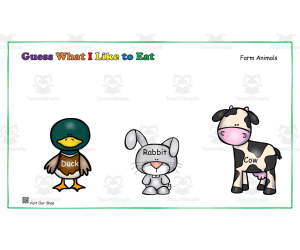
Guess What We like to Eat! Farm Animal Learning Activity
Science, Life Sciences, Animals, Kindergarten, Preschool, Grade 1, Activities
Guess What We like to Eat! Farm Animal learning Activity Spark your students' creativity and love for animals with our captivating Farm Animal eating habits resource. This comprehensive collection features 5 unique pages, each showcasing a different animal waiting to be matched to their favorite foods. Match the variety of foods to these exciting animals: · Duck · Rabbit · Cow · Pig · Mouse · Dog · Bird · Cat · Horse · Frog · Goat · Hen Let's explore the various ways students can benefit from and utilize this resource: Fine Motor Skills:Improve students' fine motor skills and hand-eye coordination as they carefully examine each animal and what they like to eat. Build writing skills by tracing the names of the animals. Relaxation and Mindfulness:Engage students in a calming and therapeutic activity that promotes relaxation and mindfulness, allowing them to focus on the present moment. Animal Education:Introduce students to a diverse range of animals and their unique characteristics, promoting curiosity and expanding their knowledge of the animal kingdom. Vocabulary Development:Enhance students' vocabulary by discussing the animals depicted on each page, introducing new terms and fostering language skills. Group Activities:Foster collaboration and social interaction by organizing group sessions where students can share ideas, techniques, and completed work. Ignite a sense of wonder and appreciation for animals through our Animal diet pages. Whether for relaxation, artistic expression, or educational purposes, these pages provide a delightful and engaging activity for students to explore the beauty of the animal kingdom. Start coloring and exploring with your students today! Included in this Guess What We like to Eat! is 1 PDF file includes 7 page
Author KD's Kids School Shop
Tags Animals, Farm Animals, Tracing Words, Writing Skills, Preschool, Kindergarten, Homeschool, Daycare

Guided Reading Level B: Simple Machines at Home
ELA, Resources for Teachers, Reading Comprehension, Reading, Science, Language Development, Pre-Reading, Vocabulary, Physics, Kindergarten, Preschool, Grade 1, Worksheets & Printables, Worksheets, Teacher Tools, Centers, Activities, Literacy Readers, Quizzes, Quizzes and Tests, Assessments
This Guided Reading Book - Simple Machines at Home (Level B) includes: Guided Reading Color Label (front cover x1) This is a quick way to match the book’s demands to what students can generally handle.. The overall goal is to use the level/color to pick books for several smaller groups. To qualify for a certain level, a student is expected to read a book from that level with about 90–94% accuracy. If a student is consistently accurate and understands, move up a level. If the student is struggling at that level, drop down and add more support. Each student will improve at completely different rates, but it is generally one of the best ways to check progress across the class. DOWNLOAD THE CATALOG TO VIEW ALL GUIDED READING BOOKS AVAILABLE (SORTED LEVELS A-Z) Pre-Reading Question (x1) Teacher asks the prompt aloud, can be while showing the cover or first page. Students share what they already know, or make educated guesses from the cover. Prompt them to use the target vocabulary. Write some of their responses on the board to look back at during the reading. Vocabulary Words (x5) Introduce the five words, best doing it one at a time. Start by saying it, while students repeat and then see if anyone knows what it means before reading further. Read through the meaning and try to briefly connect each word to a picture or gesture so it’s meaningful. Ask students to flip through the book pages and point to where they see each of the vocabulary words. While reading the book pause upon coming across one of the vocab words or read the sentence twice to make sure students understand the word has appeared. Optional: Ask students to raise hands whenever they see/hear one of the new words. Guided Reading Pages (x10) Check the book snapshot (below) for: primary topic - do you need to prep extra reading or intro materials on this? what is taught best - decide on 1-2 bullets to focus on, use the prompt or words provided here for best results. learning goals - what you are checking for students to be able to do after the session, elicit answers using prompts or words provided. key vocabulary (see section above). questions overview - so you know what is coming up and if you need to prep extra materials to assist understanding. Run the lesson You may have already looked at a few of the pages together, but you can show them some of the pictures again first to set meaning. Depending on how much time you have and how familiar your students are with guided reading class, you may want to read the book aloud first with the group first. Students whisper or partner read, while you listen in. If time, do it as a group, one student reading a page each. Use the guided page’s prompts to coach: “Check the picture / does it make sense?” “Point under the words / try the first sound” “Reread the sentence smoothly”. Try to focus more on one student per session (rotating every time), so you can work out if they are ready to move up or need to move down a level. Comprehension Questions (back cover x3) This is your way to check that students didn’t just say the words, but actually understood the text. First, let students answer by pointing to the page/picture and saying a short sentence. After any answer, follow with: “Show me where you found that in the text.” In bigger groups, have partners answer first (10–20 seconds), then call on 2–3 students to share. Differentiation tips: Emerging speakers/struggling readers: oral + pointing On-level: oral in a full sentence Higher: one written sentence or draw + label Book Snapshot Title: Simple Machines at Home Genre: Nonfiction Subject: Science Primary Topic: Simple machines at home and what they do Estimated Guided Reading Level (A–Z): B What This Book Teaches Best Recognizing that “machines are at home” and used in everyday life. Learning what specific simple machines can do (cut, stop, slice, help, hold, turn, roll, lift). Building early reading fluency with repeated sentence patterns (“The ___ can ___.”). Using text-and-picture support to connect tool names to actions (lever, wedge, ramp, screw, wheel, pulley). Learning Goals Students will identify the topic of the book as simple machines at home. Students will name at least three simple machines mentioned in the text. Students will describe what a lever, wedge, ramp, screw, wheel, or pulley can do using the book’s sentences. Students will answer who/what questions by pointing to or rereading a matching page. Students will use the sentence frame “The ___ can ___.” to retell information from the book. Key Vocabulary From the Text lever — a tool that helps you cut. wedge — a tool that can stop or slice. ramp — a slanted surface that can help. screw — a piece that can hold things together. pulley — a tool that can lift. Discussion Prompts Pre-reading question: What machines do you think you might find at home? Comprehension questions: What can the lever do? What are two things the wedge can do? What does the last page say about simple machines? Printing Tips 1. Best Printing Method (Recommended) “Booklet” Printing (Best if Available) If your printer or PDF viewer supports Booklet Printing , use this. Settings to use: Print mode: Booklet Paper size: Letter or A4 (either works) Orientation: Landscape Print on both sides: Yes Flip on: Short edge Scaling: Fit to printable area Booklet subset: First test: Front sides only Then: Back sides only This will automatically: Pair pages correctly Put the cover on the outside Align everything for folding After printing, fold in half and staple along the spine . 2. If “Booklet” Printing Is NOT Available You can still print this correctly with manual duplex printing . Step-by-step: Open the PDF. Choose Print . Set: Orientation: Landscape Pages per sheet: 1 Print on both sides: Yes Flip on: Short edge Print all pages . Because each PDF page already contains two facing book pages, the result will still fold cleanly into a book. Thousands of Cored Education products are included with your TeachSimple membership. Download links and encyclopedia index available here.
Author Cored Education
Rating
Tags Vocabulary, Reading Comprehension, Reading Passages, Leveled Reading, Nonfiction, Reading, Guided Reading, Physical Science, Simple Machines, Physics

The Beach August | Kindergarten Unplugged / Digital Coding
Science, Technology, Computer Science, Preschool, Kindergarten, Grade 1, Activities
The Beach August | Kindergarten Unplugged / Digital Coding An engaging teaching resource designed for kindergarten, preschool and Grade 1 students. It introduces them to a vital skill in the twenty-first century - coding! An adaptable resource that can function without computers, it enables children to grasp basic programming concepts through STEM activities. Theme and Focus The resources’ activities revolve around the beach theme, perfectly aligning with August lessons. Its main focus is on basic logic puzzles, making it an essential part of 'Hour of Code' initiatives. Included Materials Clear instructions on usage and gameplay for both educators and pupils Coding map Colorful map pieces 'Crack the code' recording sheet A Smartboard-ready chart . This aids in immersing students into learning how to solve problems using coding logic, which is instrumental in actual programming scenarios. Versatility The product comes in both PDF and editable Google Slide format, offering flexibility for teachers when presenting these materials. It’s also convenient during distance learning schedules where high levels of student involvement need to be maintained. "The Beach August | Kindergarten Unplugged / Digital Coding", with its printable puzzles featuring easily cuttable commands, serves as an efficient tool encouraging learners not only engage with coding basics but also stimulate their imaginations while tackling STEM-oriented challenges even at such early education stages.
Author Roombop
Tags Coding, STEM, Problem-solving, Logic Puzzles, Beach

The Weather Game
Science, Earth and Environmental Sciences, Earth Sciences, Kindergarten, Preschool, Grade 1, 2, 3, Activities, Games
The Weather Game - An Innovative Teaching Resource The Weather Game is a unique teaching tool crafted to make learning about weather both engaging and fun. This resource uses the exciting format of a Television Game Show, combining education with entertainment to provide an illuminating learning experience for students. It is primarily designed for preschoolers through to grade 3, mirroring Science curriculums that delve into Earth Sciences. A Blend of Instruction and Enjoyment Fusing instruction with enjoyment, The Weather Game aids children in understanding the different types of weather via a highly interactive video game show format. As each type of weather is visually presented along with related clues, students vie to identify them correctly. The competition offers a rich opportunity for young learners not only to apply but also expand their existing knowledge about varied climatic conditions. Versatile Design Characteristic This teaching resource boasts a versatile design that allows its use in numerous educational settings - from classrooms to homeschooling environments depending on your specific needs. It can augment whole group lessons by encouraging active participation from all students as they collectively identify various kinds of weather in real-time play. For situations requiring concentrated attention on smaller groups or individual learners who may be struggling with the topic or need reinforcement, The Weather Game proves particularly useful. In fact, it could easily be incorporated into homework assignments allowing kids not only play but also learn independently at home by linking images and clues given during gameplay. The Edge: Merging Education with Entertainment In essence, what distinguishes The Weather Game as a potent teaching resource is its ability – it merges Science education seamlessly with the thrill and challenge of game shows. The game sharpens critical thinking skills in young learners as they decipher clues related to each visual representation, thereby enhancing their understanding about a variety of weather patterns effectively.
Author Ethics4Schools
Tags Weather Education, Interactive Learning, Game Show Format, Science Curriculum, Critical Thinking
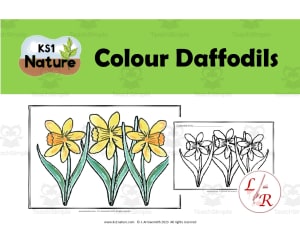
Science Coloring Pages: Daffodils
Creative Arts, Art, Science, Life Sciences, Nature & Plants, Kindergarten, Preschool, Activities
Science Coloring Pages: Daffodils Here is a picture of Daffodils for children to colour this spring! Who is this colouring picture of a Daffodil for? Anybody. Older children will extend the activity further than younger ones, Uses for these colouring sheets Use to help children learn the name of the Daffodil and to recognise them. Use as part of a science lesson Use for a basis for collage work Paint or colour. Use to make Mother's Day cards The study of the natural world is the foundation for the later study of science. The colouring of pictures of natural things, be it plants or animals is more than a pastime activity. It is a means of familiarising young children with these everyday subjects. The colouring of this Daffodil picture can of course be used as a pastime, or even as part of a creative lesson - the picture looks super made into a spring greeting card of all kinds. But it has the potential to teach much more. The UK National Curriculum for Science expects children to be taught to use the local environment to study plants and animals, throughout the year. What better than to use familiar subjects - such as the Daffodil, which are so common in springtime, to teach much about the natural world? Colouring can help children to become familiar with the parts of the Daffodil: ask questions: Where are the petals? What is this part called? Colouring a picture of Daffodils can also help children to become familiar with the particular characteristics of a flower - its shape, colour, and special features, for example. It is best if children colour the Daffoldil picture following close observation, or from reference books, or after having looked at Daffodils in real life. Why not take a bunch into the classroom and watch the buds unfold? Write a Daffodil diary. You could even use our Daffodil Lesson Resource Pack and PowerPoint to extend the lesson! What is included in the pack? 1 sheet to be coloured 1 sheet giving an example of how the picture could be coloured.
Author Lilibette's Resources
Rating
Tags Daffodils To Colour EYFS, Daffodils To Colour Y1, Picture Of Dafodils To Colour Young Chidlren, Picture Of Daffodils To Colour, Spring, Daffodils, Science Coloring Pages, Picture Of Daffodils To Color
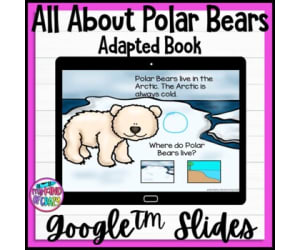
All About Polar Bear: Adapted Book
Science, Life Sciences, Animals, Preschool, Kindergarten, Grade 1, Activities
"All About Polar Bear: Adapted Book" is a science teaching resource primarily targeted at: Preschoolers Kindergartners First Graders This resource, with its 12 engaging and innovative slides, familiarizes young pupils with some fascinating aspects of polar bears. Its content encompasses both vocabulary and reading comprehension. The adapted book uses an interactive Google Slide format, making it a boon for traditional classroom teachers as well as homeschooling parents. Versatility in Use: The slide activities are designed to be incorporated: During whole group instruction to initiate class discussions. In small groups for detailed exploration. In one-on-one teaching sessions for personalized engagement levels. It can also be allocated efficiently as homework assignments, reinforcing classroom-taught concepts while promoting self-study skills. Purpose Beyond Science: Besides being an interesting science module on Polar Bears, this product helps in developing necessary language skills among young learners through their exposure to new vocabulary lists and reading comprehension questions. Zoological Concepts: The subject matter revolves around zoology - specifically introducing kids early into fundamental biological concepts using real-world examples like polar bears' adaptation nuances. Equipped with drag-and-drop elements within the Google Slide activities, children are likely to enjoy active participation in lessons - enhancing retention of information acquired. Motivate your kids towards learning with the ""All About Polar Bear: Adapted Book""! Get hold of this excellent tool for lesson planning, enabling you more time to do what teachers do best- TEACH!
Author My Kind of Crazy
Tags Polar Bear, Adapted Book, Interactive Learning, Zoology, Vocabulary
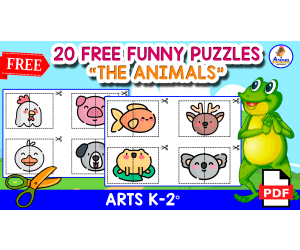
20 PUZZLES OF ANIMALS | Free Resource
Creative Arts, Art, Science, Life Sciences, Animals, Kindergarten, Preschool, Grade 1, 2, Activities, Crafts
Kids love puzzles or files where they have to cut, paste and use all their senses! That's why today we bring you this fantastic activity of 20 puzzles! DON'T HESITATE TO DOWNLOAD IT NOW! 1.THANK YOU FOR BEING PART OF EDITORIAL ARENAS EDUCATIVAS We are an educational corporation that is dedicated to the development of fabulous resources for mathematics, literacy, as well as resources for teaching Spanish and brain exercises. 2.WE ALSO HAVE OTHER FREE RESOURCES AVAILABLE To download this resource completely free, you just have to click on the shaded link and you can use it in class! TRACING LINES - MONKEY: https://teachsimple.com/product/free-minibook-tracing-lines-monkey-themed TRACING LINES - EMOJIS: https://teachsimple.com/product/5-free-worksheets-for-tracing-emojis-themed TRACING LINES - LEGO: https://teachsimple.com/product/5-free-tracing-worksheets-for-kids-lego-themed TRACING LINES - ANIMALS: https://teachsimple.com/product/5-tracing-worksheets-animals-theme ANIMATED SHAPES: https://teachsimple.com/product/10-free-flashcards-of-the-shapes-animated-shapes DINOSAUR CARDS: https://teachsimple.com/product/11-free-dino-numbers-flashcards-numbers-o-to-10 3. MAIN INFORMATION ABOUT THIS PRODUCT: Now please carefully read the following secondary information about this product that will help you decide to download it now and start using it with your students. A. You can apply this educational document in different contexts such as: - You can use it in the classroom if you are a preschool teacher, and you can also use it at home if you are a mother or father and want your children to productively enjoy their free or leisure moments. B. Is this document in black and white or color? Document designed in color, with colored drawings so that they are eye-catching for students. C. For what ages is this document recommended? It is recommended to use it in children from 3 to 7 years old who are already able to make cuts. D. At what point in class can I apply it? You can apply it during art class, as well as at the end as a relaxing or leisure activity . E. Should I apply it individually or in groups? You can apply it individually or perhaps in groups of 2 to 3 children so that they quickly complete the activity . F. Keywords that describe the product: cutouts, cutouts, cutouts for children, activities to cut out, figures to cut out. This file is for personal use only. It is not allowed to be resold or shared with others.
Author EDITORIAL LAURA EDUCA
Tags Puzzles, Puzzles For Kids, Free Puzzles, Free Printables, Printables, Free Resources
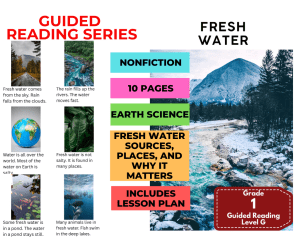
Fresh Water: Guided Reading Level G with Lesson Plan
ELA, Resources for Teachers, Reading Comprehension, Reading, Science, Language Development, Life Sciences, Geography, Social Studies, Earth and Environmental Sciences, Kindergarten, Grade 1, 2, Worksheets & Printables, Worksheets, Teacher Tools, Centers, Activities, Literacy Readers, Quizzes, Quizzes and Tests, Assessments, Lesson Plans
This Fresh Water (level g) guided reading book with lesson plan includes: Guided Reading Color Label (front cover x1) This is a quick way to match the book’s demands to what students can generally handle.. The overall goal is to use the level/color to pick books for several smaller groups. To qualify for a certain level, a student is expected to read a book from that level with about 90–94% accuracy. If a student is consistently accurate and understands, move up a level. If the student is struggling at that level, drop down and add more support. Each student will improve at completely different rates, but it is generally one of the best ways to check progress across the class. DOWNLOAD THE CATALOG TO VIEW ALL GUIDED READING BOOKS AVAILABLE (SORTED LEVELS A-Z) Pre-Reading Question (x1) Teacher asks the prompt aloud, can be while showing the cover or first page. Students share what they already know, or make educated guesses from the cover. Prompt them to use the target vocabulary. Write some of their responses on the board to look back at during the reading. Vocabulary Words (x5) Introduce the five words, best doing it one at a time. Start by saying it, while students repeat and then see if anyone knows what it means before reading further. Read through the meaning and try to briefly connect each word to a picture or gesture so it’s meaningful. Ask students to flip through the book pages and point to where they see each of the vocabulary words. While reading the book pause upon coming across one of the vocab words or read the sentence twice to make sure students understand the word has appeared. Optional: Ask students to raise hands whenever they see/hear one of the new words. Guided Reading Pages (x10) Check the book snapshot (below) for: primary topic - do you need to prep extra reading or intro materials on this? what is taught best - decide on 1-2 bullets to focus on, use the prompt or words provided here for best results. learning goals - what you are checking for students to be able to do after the session, elicit answers using prompts or words provided. key vocabulary (see section above). questions overview - so you know what is coming up and if you need to prep extra materials to assist understanding. Run the lesson You may have already looked at a few of the pages together, but you can show them some of the pictures again first to set meaning. Depending on how much time you have and how familiar your students are with guided reading class, you may want to read the book aloud first with the group first. Students whisper or partner read, while you listen in. If time, do it as a group, one student reading a page each. Use the guided page’s prompts to coach: “Check the picture / does it make sense?” “Point under the words / try the first sound” “Reread the sentence smoothly”. Try to focus more on one student per session (rotating every time), so you can work out if they are ready to move up or need to move down a level. Comprehension Questions (back cover x3) This is your way to check that students didn’t just say the words, but actually understood the text. First, let students answer by pointing to the page/picture and saying a short sentence. After any answer, follow with: “Show me where you found that in the text.” In bigger groups, have partners answer first (10–20 seconds), then call on 2–3 students to share. Differentiation tips: Emerging speakers/struggling readers: oral + pointing On-level: oral in a full sentence Higher: one written sentence or draw + label Book Snapshot Title: Fresh Water Genre: Nonfiction Subject: Life Science (Earth science—water) Primary Topic: Fresh water sources, places, and why it matters Estimated Guided Reading Level (A–Z): G What This Book Teaches Best How fresh water differs from salty water (fresh water is not salty). Where fresh water comes from (rain from clouds; snow melting on mountains). Places fresh water is found (rivers, a stream, a pond, deep lakes). How water can move fast or stay still depending on where it is (rivers vs. pond). Why fresh water is important for living things , including plants taking in water through roots. Learning Goals Students can explain that most water on Earth is salty and fresh water is not salty. Students can describe two ways fresh water forms (rain from clouds; snow melting on mountains). Students can name places the book shows fresh water (rivers, stream, pond, lakes). Students can compare how water moves in different places (rivers move fast; pond water stays still). Students can tell why fresh water matters to living things, including plants and trees. Key Vocabulary From the Text salty — tasting like salt. rivers — long, moving water that flows across land. stream — a small river. pond — water that stays in one place. roots — parts under the ground that take in water. Discussion Prompts Pre-reading question: Where do you think fresh water comes from, and where might we find it? Comprehension questions: What does the book say fresh water is not ? Comprehension questions: What are two places the book shows fresh water can be found? Comprehension questions: Why is fresh water important for living things in the book? Printing Tips 1. Best Printing Method (Recommended) “Booklet” Printing (Best if Available) If your printer or PDF viewer supports Booklet Printing , use this. Settings to use: Print mode: Booklet Paper size: Letter or A4 (either works) Orientation: Landscape Print on both sides: Yes Flip on: Short edge Scaling: Fit to printable area Booklet subset: First test: Front sides only Then: Back sides only This will automatically: Pair pages correctly Put the cover on the outside Align everything for folding After printing, fold in half and staple along the spine . 2. If “Booklet” Printing Is NOT Available You can still print this correctly with manual duplex printing . Step-by-step: Open the PDF. Choose Print . Set: Orientation: Landscape Pages per sheet: 1 Print on both sides: Yes Flip on: Short edge Print all pages . Because each PDF page already contains two facing book pages, the result will still fold cleanly into a book. Thousands of Cored Education products are included with your TeachSimple membership. Download links and encyclopedia index available here.
Author Cored Education
Rating
Tags Reading Comprehension, Reading Passages, Reading, Guided Reading, Guided Reading Lesson Plan, Guided Reading Activity, Pre-reading, Science Lesson Plans, Life Science, Geography

Colour a Seal
Creative Arts, Art, Holiday & Seasonal, Seasons, Summer, Science, Life Sciences, Nature & Plants, Kindergarten, Preschool, Grade 1, 2, Activities
Here is a picture of a Common Seal for children to colour. Seals always draw attention at any time of year, but maybe in summer when we visit the seaside more often. Who is this colouring picture of a seal for? Anybody. Older children will extend the activity further than younger ones, Uses for this colouring sheets Use to help children learn about seals - to name their body parts and learn about their ways and their habit. Use as part of a science lesson Paint or colour. Studying the natural world is the foundation for the later study of science. The colouring of pictures of natural things, be it plants or animals is more than a pastime activity. It is a means of familiarising young children with these commonly known subjects. The colouring of this seal picture can be used as a pastime, or even as part of a creative lesson, but it can teach much more. The UK National Curriculum for Science expects children to be taught to use the local environment to study plants and animals, throughout the year. What better than to use subjects that are slightly mysterious to children as they do not see them so often? Colouring can help children to become familiar with the parts and habits of the Seal: ask, what are these called? (e.g. flippers), why is the Seal on the rock? What might the Seal do next? Colouring a picture of Seal can also help children to launch into a project on sealife - or even be a fun part of such a project! See how you can use it! It is best if children colour the Seal picture using our colour version or from reference books. The coloured version can also be used as a A4 poster to pin up! What is included in the pack? 1 sheet to be coloured 1 sheet giving an example of how the picture could be coloured.
Author Lilibette's Resources
Tags Seals, Mammals, Sealife, Colouring Pictures, Seal Colouring, Seal To Colour, Seal Colouring Picture, Science, Nature, Natural World
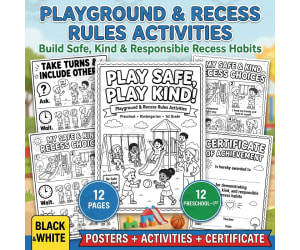
Playground Rules Activities | Recess Safety Book, Posters & Certificat
Social Emotional Learning (SEL), Special Resources, Physics, Science, Kindergarten, Preschool, Grade 1, Activities, Classroom Decor, Worksheets & Printables, Teacher Tools
Make playground expectations clear, positive, and easy for young learners to remember! This Playground Rules Activities resource gives Preschool, Kindergarten, and 1st grade students simple visual supports for learning how to play safely, treat others kindly, and make responsible choices during recess. The resource includes an original class discussion book, focused playground rules posters, a student practice page, scenario-based decision making, and certificates to celebrate successful learning. The short, age-appropriate language and clear black-and-white visuals make it easy to introduce expectations at the beginning of the school year or revisit routines whenever your class needs a reset. What's Included 1 premium resource cover 1 teacher introduction and discussion guide 1 class read-aloud: My Safe & Kind Recess Choices 4 individual playground and recess rules posters 1 playground choices sorting activity 1 “What Should I Do?” scenario page 1 student recess promise page 1 student certificate page 1 thank-you page Skills Developed Students practice: playground and recess safety awareness following shared rules and routines self-management responsible decision-making social skills and cooperation taking turns and respecting personal space asking an adult for help when needed Perfect For This resource is ideal for back-to-school routines, beginning-of-year SEL lessons, classroom community building, recess expectation reviews, behavior refreshers, preschool and elementary counseling lessons, and positive classroom management. Why Teachers Love It The consistent visual language helps young children connect each rule with a clear action. Pages are intentionally uncluttered, easy to explain, and designed for quick whole-group teaching followed by meaningful student practice. Simply print, teach, discuss, and display the rules that best support your school's playground expectations. This Preschool, Kindergarten, and 1st grade recess resource provides practical social emotional learning support for creating a safer, kinder, and more successful playground experience.
Author TeachTrend Studio
Rating
Tags Activities; Posters; Printables; Awards And Certificates; Classroom Management; Social Skills

Color Foxgloves: Science Coloring Pages
Creative Arts, Art, Science, Life Sciences, Nature & Plants, Kindergarten, Preschool, Grade 1, Activities
Color Foxgloves: Science Coloring Pages Here is a picture of Foxgloves for children to colour this spring/summer! Who is this colouring picture of Holly for? Anybody. Older children will extend the activity further than younger ones, Suitable fro class use Suitable fro homeschool botany or nature study lessons, Charlotte Mason style. Uses for these colouring sheets Use to help children learn the name of Foxgloves and to recognise them. Use as part of a science lesson on plants/flowers/pollinators (as bees love Foxgloves!) Paint or colour. Use to make greeting card The study of the natural world is the foundation for the later study of science. The colouring of pictures of natural things, be it plants or animals is more than a pastime activity. It is a means of familiarising young children with these everyday subjects. The colouring of this Foxglove picture can of course be used as a pastime, or even as part of a creative lesson - the picture looks super made into a greeting card of all kinds. But it has the potential to teach much more. The Curriculum for Science expects children to be taught to use the local environment to study plants and animals, throughout the year. What better than to use familiar subjects - such as Foxgloves which is sure to attract attention in summer with their large, bright pink flowers? The name alone gives cause for thought: fox-gloves? And insects, especially bees can be seen following the trail on the landing pad up into the 'bell' to find nectar. There's plenty to talk about! Colouring can help children to become familiar with the parts of the Foxglove plant and ask questions: What are the leaves like? Why is there a pattern on the flower? What is inside a berry? (the nectar). Why do the flowers need the insects to pollinate them? Colouring a picture of Foxgloves can also help children become familiar with the particular characteristics of a plant - its shape, colour, and special features, for example. It is best if children colour the Foxglove picture following close observation, from reference books, or after looking at Foxgloves in real life. see if you can find them growing in the vicinity of your home/school. What is included in the pack? 1 sheet to be coloured 1 sheet giving an example of how the picture could be coloured.
Author Lilibette's Resources
Rating
Tags Colcour, Plants, Foxgloves, Flower, Wild Flowers, Summer, Nature Study, Charlotte Mason, Science Coloring Pages, Nature

Science Coloring Pages: Common Frog
Creative Arts, Art, Science, Life Sciences, Animals, Kindergarten, Preschool, Activities
Science Coloring Pages: Common Frog Here is an original drawing of a Common Frog for young children to colour. The study of the natural world is the foundation for the later study of science. The colouring of pictures of natural things, be it plants or animals is more than a pastime activity. It is a means of familiarising young children with these everyday subjects. The colouring of this Common Frog picture can of course be used as a pastime, or even as part of a creative lesson - the picture looks super framed - but it has the potential to teach much more. The UK National Curriculum for Science expects children to be taught to use the local environment to study plants and animals, throughout the year. What better than to use familiar subjects, such as the Common Frog, which is a familiar subject in springtime, to teach much about the natural world? Colouring can help children to become familiar with the parts of the Common Frog: ask questions: What colour are the legs? Can you see the stripes? How many legs does the frog have? Colouring a picture of the Common Frog can also help children to become familiar with the particular characteristics of a frog - its shape, and special features, for example. It is best if children colour the Common Frog picture either following a sighting of a frog or from reference books - whenever their interest is aroused! Who is this colouring picture of a Common Frog for? Anybody. Older children will extend the activity further than younger ones, Uses for the colouring picture of a Common Frog Use to help children learn the name of the frog and to recognise them. Use as part of a science lesson Use for a basis for collage work Paint or colour. What is included in the pack? 1 sheet to be coloured 1 sheet giving an example of how the picture could be coloured. What is included? 1 PDF, 1 picture to colour, 1 for display/aid to colouring
Author Lilibette's Resources
Rating
Tags Frog Pic To Colour, Frog Colouring Picture, Frog To Colour, Frog Colouring For Young Children, Science Coloring Pages, Science, Frog To Color
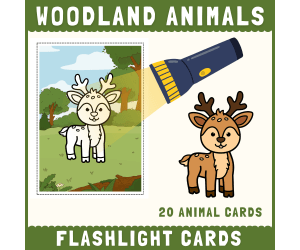
Woodland animals flashlight cards hidden picture science activity
Animals, Life Sciences, Science, Environmental Science, Earth and Environmental Sciences, Kindergarten, Preschool, Toddler, Grade 1, 2, Flashcards, Worksheets & Printables, Centers, Activities, Games
Make learning about woodland forest animals fun and interactive with these Woodland Forest Animals Flashlight Cards! Students will use a flashlight to reveal hidden forest animal pictures while practicing animal recognition and building science vocabulary through an exciting hands-on science center activity. I like using these flashlight cards during woodland animal units, forest habitat studies, animal science lessons, preschool and kindergarten science centers, nature-themed activities, and homeschool learning. It’s an engaging, low-prep activity that adds a fun element of discovery to animal learning. What You Will Get This printable Woodland Forest Animals Flashlight Cards resource gives students an exciting way to discover hidden forest animals and review woodland wildlife vocabulary. What’s Included in this Resource? • Printable woodland forest animal flashlight cards • Hidden picture reveal activity • Forest animal vocabulary • Hands-on flashlight discovery activity • Student-friendly science center format • Easy-to-use printable cards • Great for independent or small-group learning This resource is perfect for: • Woodland animal science units • Forest habitat studies • Animal science lessons • Nature-themed learning • Preschool and kindergarten science centers • Life science activities • Small-group activities • Homeschool learning Why you will love this? • Easy to prepare and use • Creates an exciting hands-on learning experience • Builds observation and visual recognition skills • Reinforces woodland animal vocabulary • Encourages curiosity and independent discovery • Great for science centers and habitat-themed units These Woodland Forest Animals Flashlight Cards are a fun way for young learners to discover hidden forest animals, practice animal recognition, and build observation skills through an interactive science center activity.
Author Perfect_Printables
Rating
Tags Farm Animals Flashlight, Animal Science, Science Center Activities, Hidden Picture Activities, Flashlight Cards, Animal Vocabulary, Woodland Habitat, Woodland Animals, Forest Animals Activities, Forest Animal

Animal Mom and Baby Matching Worksheet Vocabulary
Animals, Life Sciences, Science, Kindergarten, Preschool, Grade 1, 2, 3, Classroom Decor, Activities, Centers, Posters, Worksheets & Printables
This interactive and attractive set Animal Mom and Baby Matching Worksheet 10 Pages learners develop their original Animal Mom and Baby Matching Worksheetthis set contains 10 pages in this set, each in each a different Digraphs Animal Mom and Baby Matching Worksheet of dedicated Animal Mom and Baby Matching Worksheet Pagesto ensure a fun and structured approach to using a fun and type of work that useful; Each card is fun this edited set of Animal Mom and Baby Matching Worksheet is built in an elegant style that attracts attention this interactive and attractive set of Animal Mom and Baby Matching Worksheet designed to help young learners develop their original Animal Mom and Baby Matching Worksheet skills through Animal Mom and Baby Matching Worksheet sexercises This set contains 10 pages. these printable Worksheets offer useful courses, this provides a useful course-rich practice, it is designed to help using resource grade 2 easily to learn about activities Animal Mom and Baby Matching Worksheet worksheets a fun and interactive manner. A collaborative learning activity added students. PDF format
Author LAMO
Rating
Tags Biology, Speaking & Listening, Activities, Printables, Flash Cards, Centers, Other (ELA)

Rainforest Habitat animals flashlight cards hidden picture activity
Animals, Life Sciences, Science, Environmental Science, Earth and Environmental Sciences, Kindergarten, Preschool, Toddler, Grade 1, 2, Flashcards, Worksheets & Printables, Centers, Activities, Games
Make learning about rainforest habitats and animals fun and interactive with these Rainforest Habitat Animals Flashlight Cards! Students will use a flashlight to reveal hidden rainforest animal pictures while practicing animal recognition and building science vocabulary through an exciting hands-on activity. I like using these flashlight cards during rainforest habitat units, tropical animal studies, animal science lessons, wildlife activities, preschool and kindergarten science centers, and homeschool learning. It's an engaging, low-prep activity that adds a fun element of discovery to habitat and animal learning. What You Will Get This printable Rainforest Habitat Animals Flashlight Cards resource gives students an exciting way to discover hidden rainforest animals and review animal and habitat vocabulary. What's Included in this Resource? • Printable rainforest animal flashlight cards • Hidden picture reveal activity • Rainforest animal and habitat vocabulary • Hands-on flashlight discovery activity • Student-friendly science center format • Easy-to-use printable cards • Great for independent or small-group learning This resource is perfect for: • Rainforest habitat science units • Rainforest animal studies • Tropical habitat lessons • Animal science activities • Preschool and kindergarten science centers • Life science learning • Small-group activities • Homeschool learning Why you will love this? • Easy to prepare and use • Creates an exciting hands-on learning experience • Builds observation and visual recognition skills • Reinforces rainforest animal vocabulary • Encourages curiosity and independent discovery • Great for science centers and habitat-themed units These Rainforest Habitat Animals Flashlight Cards are a fun way for young learners to discover hidden rainforest animals, practice animal recognition, and build observation skills through an interactive habitat science activity.
Author Perfect_Printables
Rating
Tags Animal Science, Science Center Activities, Hidden Picture Activities, Flashlight Cards, Wildlife Activities, Animal Adaptation, Animal Habitat Activity, Rainforest Animals, Amazon Rainforest, Rainforest Animals Activity

Music at the Zoo Song – Animal Acting Activity
Science, Life Sciences, Animals, Preschool, Kindergarten, Grade 1, Songs, Activities
This resource is a Music: At the Zoo Song . The song is embedded in the presentation and lyrics are presented on the screen. Students will love acting out the animals at the zoo as they sing along.
Author The Music Suite
Rating
Tags At The Zoo, Zoo Animals, Music, Songs, Pretend Play, Preschool Zoo Song
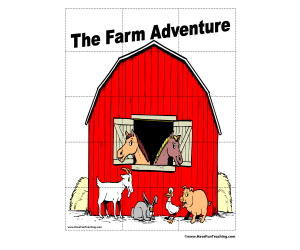
Farm Puzzle
Science, Life Sciences, Animals, Creative Arts, Art, Preschool, Kindergarten, Grade 1, Activities
This fifteen piece puzzle is a great way for students to practice their problem solving and logic skills. It's a great resource for teachers who want to help their students improve in these areas.
Author Have Fun Teaching
Tags Have Fun Teaching
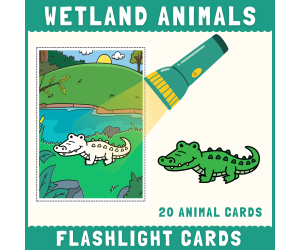
Wetland Habitat animals flashlight cards hidden picture activity
Animals, Life Sciences, Science, Environmental Science, Earth and Environmental Sciences, Kindergarten, Preschool, Toddler, Grade 1, 2, Flashcards, Worksheets & Printables, Centers, Activities, Games
Make learning about wetland habitats and animals fun and interactive with these Wetland Habitat Animals Flashlight Cards! Students will use a flashlight to reveal hidden animal pictures while practicing animal recognition and building science vocabulary through an exciting hands-on activity. I like using these flashlight cards during wetland habitat units, animal science lessons, wildlife studies, nature-themed activities, preschool and kindergarten science centers, and homeschool learning. It's an engaging, low-prep activity that adds a fun element of discovery to habitat and animal learning. What You Will Get This printable Wetland Habitat Animals Flashlight Cards resource gives students an exciting way to discover hidden wetland animals and review animal and habitat vocabulary. What's Included in this Resource? • Printable wetland animal flashlight cards • Hidden picture reveal activity • Wetland animal and habitat vocabulary • Hands-on flashlight discovery activity • Student-friendly science center format • Easy-to-use printable cards • Great for independent or small-group learning This resource is perfect for: • Wetland habitat science units • Wetland animal studies • Wildlife and nature lessons • Animal science activities • Preschool and kindergarten science centers • Life science learning • Small-group activities • Homeschool learning Why you will love this? • Easy to prepare and use • Creates an exciting hands-on learning experience • Builds observation and visual recognition skills • Reinforces wetland animal vocabulary • Encourages curiosity and independent discovery • Great for science centers and habitat-themed units These Wetland Habitat Animals Flashlight Cards are a fun way for young learners to discover hidden wetland animals, practice animal recognition, and build observation skills through an interactive habitat science activity.
Author Perfect_Printables
Rating
Tags Animal Science, Science Center Activities, Hidden Picture Activities, Flashlight Cards, Wildlife Activities, Animal Adaptation, Animal Habitat Activity, Wetland Animals, Wetland, Wetland Animals Activity

Snowman January | Kindergarten Unplugged / Digital Coding
Science, Technology, Computer Science, Preschool, Kindergarten, Grade 1, Activities
Snowman January | Kindergarten Unplugged / Digital Coding The Snowman January resource is a perfect blend of enjoyment and education, tailored for children in preschool, kindergarten, and grade 1. Integrating computer science concepts into learning platforms with a charming seasonal theme - an introduction to coding that compliments online apps. Designed around building a snowman gives it a seasonal relevance while focusing on developing the child's understanding of basic logic puzzles. Perfect for Hour of Code activities while also incorporating whole-group sessions, small-group instruction sets or as homework assignments. Detailed guides on 'How To Use' for educators and 'How To Play' aimed at students. The 'Coding Map' comes with color 'Map Pieces', offering visually rich tasks that enhance comprehension through applied practice. 'Crack the code recording sheet,' challenging students to employ problem-solving skills keeping them engrossed in fun-filled gameplay tinted by Digital Literacy nuances. 'Crack the code chart ,' designed for smartboards keeping touchpoint technology usage alive within instructive methodologies in classrooms. The flexibility of this task diversifies from being modifiable using Google Slide functionality allowing rejuvenation content according to student needs individually or collectively so no instructional situation remains unfulfilled! This product is an 11 x 8.5 standard size printable PDF file adaptable within any teaching setup whether traditional print-out sheets administered directly during classroom secessions or sending it digitally across Google Classroom platforms for students to interact through drag-and-drop. Ideal choicefor distance learning settings or even blended hybrid environments, opening avenues most appealingly.
Author Roombop
Tags Snowman, January, Digital Coding, Logic Puzzles, Educational Gameplay

Star Cut Outs
Math, Geometry, Science, Earth and Environmental Sciences, Space, Creative Arts, Art, Preschool, Kindergarten, Grade 1, 2, 3, 4, 5, 6, Activities
These Star Cut Outs are perfect for classroom decoration or student activities . They'll help you save time and add some pizzazz to your lessons.
Author Have Fun Teaching
Tags Solar System, Space, Shapes

Sorting Body Parts - Non-Identicals
Special Resources, Special Education Needs (SEN), Speech Therapy, Life Skills, Math, Early Math, Science, Life Sciences, Human Body, Kindergarten, Preschool, Grade 1, 2, 3, 4, 5, 6, 7, 8, 9, 10, 11, 12, Activities
"Sort the Body Parts" activity is designed to help learners develop their understanding of human anatomy by identifying and categorizing different body parts. In this activity, the learner is presented with a set of picture cards, each featuring a specific body part, such as hands, heads, feet, and so on. The learner is then given a set of non-identical pictures of each body part and asked to sort them into the correct picture card. For example, if the learner is presented with a card featuring a hand, they will be given several non-identical pictures of hands to sort onto that card. This activity is ideal for learners of all ages, as it helps to develop their observational and analytical skills, as well as their knowledge of human anatomy. It is also an engaging and interactive way for learners to practice and reinforce their understanding of different body parts. Parts of the body in this activity: head eye eyes nose ear lips mouth arm hand hand feet foot leg This activity can be adapted to suit learners at different levels, with more challenging variations featuring more complex body parts or additional categories for sorting. Overall, "Sort the Body Parts" is a fun and effective educational activity that can help learners to build their understanding of the human body. The pictures are clear and recognizable with various ethnicity represented. The pages are clear of visual distractions which helps the learner focus on the task. This activity is easy to create and assemble - Print and laminate all cards, cut out the individual sorting cards, and velcro them to the corresponding activity place. You can coil bind the activity or three hole punch and place it in a binder or use book rings to hold the activity together. Happy teacher and fun learning I'll Figure it Out IFIO girl
Author IFIO girl - I'll Figure It Out
Tags Body Parts, Non-identicals, Sorting, Anatomy, Critical Thinking, Problem Solving, Abbls-r B, Abbls Sorting Non Identical, Autism, Early Learning

Weather Words Activity
ELA, Language Development, Vocabulary, Science, Earth and Environmental Sciences, Earth Sciences, Preschool, Kindergarten, Grade 1, 2, Activities
This activity is great for helping students build their weather condition vocabulary. With this activity , students will look at pictures and describe what they see to help them learn the different words associated with different weather conditions.
Author Have Fun Teaching
Tags Weather