



3,991 products added recently
Page 67 - Science Activities
Ignite your students' interest in science with activities that make learning interactive and exciting. This collection offers experiments, demonstrations, and inquiry-based projects covering various scientific fields. By integrating these science activities into your lessons, you can encourage critical thinking, foster curiosity, and deepen understanding of scientific concepts.

 Show filters

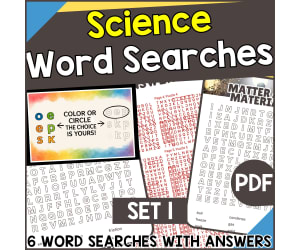
Science Word Searches - Set 1 (PDF)
ELA, Language Development, Vocabulary, Spelling, ESL, Resources for Teachers, Science, Physics, Earth and Environmental Sciences, Life Sciences, Grade 2, 3, 4, 5, Worksheets & Printables, Worksheets, Teacher Tools, Centers, Activities, Word Searches
Wordsearch Series This wordsearch series is designed for students in grades 2–5. Each set of wordsearches is built around a clear vocabulary theme, helping students develop word recognition, improve spelling, and boost topic-related understanding through engaging visual puzzles. Every wordsearch also includes a fun hidden shape for students to guess—adding an interactive twist to traditional vocabulary practice. These wordsearches are student-friendly, classroom-ready, and perfect for integrating into literacy warmups, seasonal units, fast-finisher tasks, or home learning extensions. Each puzzle reinforces themed vocabulary in a playful, structured format that keeps learners motivated. Science Word Search Set 1 Word List 1. Forces and Motion Gravity, Friction, Push, Pull, Speed, Force, Ramp, Energy 2. Matter and Materials Solid, Liquid, Gas, Melt, Freeze, Boil, Evaporate, Condense 3. The Solar System Planet, Orbit, Moon, Sun, Star, Asteroid, Comet, Telescope 4. The Human Body Brain, Heart, Lungs, Bones, Muscle, Veins, Digest, Nerves 5. Ecosystems and Habitats Ecosystem, Habitat, Food Chain, Predator, Prey, Adapt, Forest, Ocean 6. Weather and Climate Temperature, Clouds, Precipitation, Hurricane, Tornado, Forecast, Climate, Drought PDF Version Other versions will appear here when available. Follow the store for the lastest on new products. How to Use These Wordsearches These wordsearches are ideal for: Morning work or early finisher bins Vocabulary centers or anchor activities Holiday or seasonal review lessons Independent literacy stations or take-home enrichment Each puzzle includes a themed word list and a shaped grid for students to complete. Word directions may vary (horizontal, vertical, diagonal), and answer keys are included for easy checking. Optional vocabulary challenges or writing tasks can be added to extend the learning experience. Whether you're reviewing key vocabulary, exploring a seasonal topic, or offering fun literacy practice, these wordsearches provide a flexible and engaging tool to support vocabulary growth in grades 2–5. More Science Themed Products Science Crosswords (Set 1) PDF Science Crosswords (Set 2) PDF Science Crosswords (Set 3) PDF Science Word Searches (Set 2) PDF Science Word Searches (Set 3) PDF FULL CATALOG OF DOWNLOAD LINKS HERE Themed Word Search Links Addition PDF Animals PDF Around the Home PDF Birthday PDF Candy PDF Christmas PDF Cinco de Mayo PDF Clothes PDF Colors PDF Days and Months PDF Division PDF Earth Day PDF Easter PDF Easy Word Searches PDF Fall PDF Father's Day PDF Food PDF Geography (Set 1) PDF Geography (Set 2) PDF Geography (Set 3) PDF Graduation PDF Health PDF History (Set 1) PDF History (Set 2) PDF History (Set 3) PDF Human Body PDF Kindness PDF Life Skills PDF Mother's Day PDF Multiplication PDF Science Word Searches (Set 1) PDF Science Word Searches (Set 2) PDF Science Word Searches (Set 3) PDF Shapes PDF Social Skills PDF Spring PDF Sports PDF St. Patrick's Day PDF Subtraction PDF Summer PDF Thanksgiving PDF Transport PDF Valentine's Day PDF Winter PDF Wordsearches in Depth Structure Each wordsearch is crafted around a focused sub-theme and includes a visual puzzle shaped like a related object (e.g., balloon, gift, snowman). Students complete each puzzle using the provided themed word list, strengthening both content knowledge and spelling skills in a highly engaging format. Each completed set includes: A shaped wordsearch puzzle with 10 vocabulary words A student instruction guide with search directions (horizontal, vertical, diagonal) An answer key for teacher support or student self-checking A Did You Know? fact connected to the theme for enrichment or discussion Themes Included The wordsearches cover a wide range of fun, age-appropriate themes, including: Seasons & Holidays (e.g., Halloween, Easter, Valentine’s Day) Math Concepts (e.g., Addition, Number Words) Everyday Topics (e.g., Animals, Weather, School) Special Units (e.g., Health, Earth Day, Sports, Kindness) Each topic is selected to reflect students’ real-life experiences and interests while reinforcing literacy skills and content understanding in a playful, visual way. For similar downloads and other frees, do check out Cored Group on TeachSimple.
Author Cored Education
Rating
Tags Vocabulary, Spelling, Forces And Motion, Matter And Materials, The Solar System, The Human Body, Weather And Climate, Science, Science Word Searches, Word Searches

Interactions within ecosystems – Lab Station Activity
Science, Life Sciences, Biology, Grade 7, 8, 9, 10, Labs, Experiments, Activities
Interactions within Ecosystems – Lab Station Activity This science lab station activity enables students to explore biotic and abiotic factors that interact within an ecosystem. Learners will investigate concepts like symbiosis, limiting factors, exponential population growth, and predator-prey dynamics. The engaging lab stations feature creative hands-on tasks, research questions, opinion writing, applicability readings, knowledge checks, and video analysis. Students use a passport worksheet to record answers as they rotate through the self-guided stations at their own pace. This content can be used for in-class ecosystem labs or as a review before exams. Two bonus vocabulary building activities are also included to engage students. This activity covers core ecology standards and requires almost no teacher prep. Simply print and distribute the cards. An answer key is provided for applicable stations.
Author Teach With Fergy
Tags Ecosystems, Symbiosis, Predator, Lab Station, Activity

Space Literacy and Math Activity Packet
Science, Earth and Environmental Sciences, Space, Grade 1, 2, 3, Activities
Space Literacy and Math Activity Packet This comprehensive packet provides various scientific and mathematical concepts for teaching purposes. With 50 pages of no-prep required activities, it perfectly blends with current science curricula. Ideally designed to reinforce a literacy or math unit. The packet uses differentiated learning approaches, serving students ranging from Grades 1 through 3. It may not cover all individual class needs because of the broad array of learners' abilities, but a suitable distribution of resources will certainly cater to each student's capabilities. Educational content: Non-fiction reading about space Reading response exercises linked with space Astronaut-focused language activities Creative writing assignments related to astronauts and space adventures Educational Math content: Astronomical Color By Number tasks Astronaut codes decoding games Celestial patterns identification activity The cosmic fun isn't left behind! Students get to fill out simulation application forms after diving into exciting fictional space adventures. This Space Literacy and Math Activity Packet sparks curiosity in young minds about the mysteries of our universe!
Author KP Classroom
Tags Space, Literacy, Math, Activities, Teaching
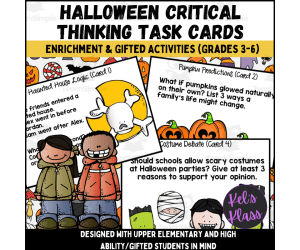
Halloween Critical Thinking Task Cards (Math, Science, Language)
ELA, Math, Science, Grade 3, 4, 5, Activities, Projects, Worksheets & Printables, Task Cards
Challenge your students with Halloween Critical Thinking Task Cards . This set is perfect for enrichment, gifted learners, fast finishers, or class challenges! Seasonal fun meets rigorous creative thinking for grades 3–6. These Halloween Critical Thinking Task Cards were designed with gifted and advanced learners in mind , each card combines seasonal fun with higher-order thinking skills! Skills Covered: Logic puzzles Problem-solving Math reasoning & multi-step word problems Debate, analogy, and open-ended writing prompts STEM connections and real-world application What’s Included: 12 print and cut Halloween Critical Thinking Task Cards Answer Key: solutions and discussion prompts Teacher Talk Page : tips for setup and classroom use Student Directions Page : independent or small-group work Ways to Use These Task Cards: Morning work Enrichment for gifted and advanced students Early finisher activities Math/ Literacy centers Socratic seminar discussion starters Journal prompts Halloween centers or stations Why Teachers Love These: Low-prep : print, cut, and use immediately Flexible for independent, partner, or whole-class use Encourages multiple solutions and deeper thinking Easy differentiation in mixed-ability classrooms Typically used in grades 3rd, 4th, 5th, and 6th , these task cards bring Halloween fun + academic rigor to your classroom. Use them year after year to compare the creativity as your classes change! Keywords: halloween critical thinking task cards, fall enrichment activities, gifted student halloween activities, upper elementary fall logic puzzles, fall early finisher activities, fall STEM and critical thinking, halloween classroom activities upper elementary
Author Kel's Klass
Rating
Tags Gifted Enrichment, Autumn Critical Thinking Task Cards, Fall Classroom Activities, Upper Elementary Logic Puzzles, Early Finishers, Critical Thinking, Enrichment For Gifted Students, Halloween Critical Thinking Task Cards, Halloween Gifted Enrichment, Halloween Classroom Activities
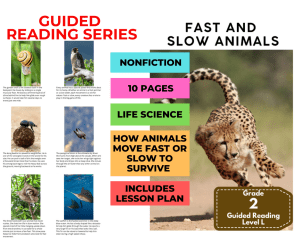
Guided Reading Level L - Fast and Slow Animals (with Lesson Plan)
ELA, Resources for Teachers, Reading Comprehension, Reading, Pre-Reading, Language Development, Life Sciences, Science, Vocabulary, Animals, Grade 1, 2, 3, Worksheets & Printables, Worksheets, Teacher Tools, Centers, Activities, Literacy Readers, Quizzes, Quizzes and Tests, Assessments
This Guided Reading Book - Fast and Slow Animals (Level L) with lesson plan includes: Guided Reading Color Label (front cover x1) This is a quick way to match the book’s demands to what students can generally handle.. The overall goal is to use the level/color to pick books for several smaller groups. To qualify for a certain level, a student is expected to read a book from that level with about 90–94% accuracy. If a student is consistently accurate and understands, move up a level. If the student is struggling at that level, drop down and add more support. Each student will improve at completely different rates, but it is generally one of the best ways to check progress across the class. DOWNLOAD THE CATALOG TO VIEW ALL GUIDED READING BOOKS AVAILABLE (SORTED LEVELS A-Z) Pre-Reading Question (x1) Teacher asks the prompt aloud, can be while showing the cover or first page. Students share what they already know, or make educated guesses from the cover. Prompt them to use the target vocabulary. Write some of their responses on the board to look back at during the reading. Vocabulary Words (x5) Introduce the five words, best doing it one at a time. Start by saying it, while students repeat and then see if anyone knows what it means before reading further. Read through the meaning and try to briefly connect each word to a picture or gesture so it’s meaningful. Ask students to flip through the book pages and point to where they see each of the vocabulary words. While reading the book pause upon coming across one of the vocab words or read the sentence twice to make sure students understand the word has appeared. Optional: Ask students to raise hands whenever they see/hear one of the new words. Guided Reading Pages (x10) Check the book snapshot (below) for: primary topic - do you need to prep extra reading or intro materials on this? what is taught best - decide on 1-2 bullets to focus on, use the prompt or words provided here for best results. learning goals - what you are checking for students to be able to do after the session, elicit answers using prompts or words provided. key vocabulary (see section above). questions overview - so you know what is coming up and if you need to prep extra materials to assist understanding. Run the lesson You may have already looked at a few of the pages together, but you can show them some of the pictures again first to set meaning. Depending on how much time you have and how familiar your students are with guided reading class, you may want to read the book aloud first with the group first. Students whisper or partner read, while you listen in. If time, do it as a group, one student reading a page each. Use the guided page’s prompts to coach: “Check the picture / does it make sense?” “Point under the words / try the first sound” “Reread the sentence smoothly”. Try to focus more on one student per session (rotating every time), so you can work out if they are ready to move up or need to move down a level. Comprehension Questions (back cover x3) This is your way to check that students didn’t just say the words, but actually understood the text. First, let students answer by pointing to the page/picture and saying a short sentence. After any answer, follow with: “Show me where you found that in the text.” In bigger groups, have partners answer first (10–20 seconds), then call on 2–3 students to share. Differentiation tips: Emerging speakers/struggling readers: oral + pointing On-level: oral in a full sentence Higher: one written sentence or draw + label Book Snapshot Title: Fast and Slow Animals Genre: Nonfiction (informational) Subject: Science (Animals) / Reading Primary Topic: How animals move fast or slow to survive Estimated Guided Reading Level (A–Z): L What This Book Teaches Best Fast and slow movement are both important for survival in the wild. Animals have body parts that help them move in special ways (like a cheetah’s tail helping with balance on sharp turns). Animals move fast or slow depending on what works best in their homes and habitats. Readers learn examples of different kinds of movement (running, jumping, swimming, flying/diving, sliding). The text uses comparisons to help readers understand animal abilities (like jumping “over a whole house”). Learning Goals Students will explain why both fast and slow movement can help animals survive. Students will describe how the cheetah uses its tail while running and turning. Students will identify how different animals move (run, jump, swim, dive, slide) using details from the text. Students will explain how an animal’s body parts support its movement (legs, feet, fin, wings, foot). Students will compare two animals from the book and tell how their movement helps them. Key Vocabulary From the Text participate — take part in something. record-breaking — faster or better than before. muscular — having strong muscles. predators — animals that hunt other animals for food. shimmering — shining with a soft, flickering light. Discussion Prompts Pre-reading question: How could moving fast or moving slowly help an animal survive where it lives? Comprehension questions: Why does the book say both fast and slow ways of moving are important in the wild? What helps the garden snail glide over rough surfaces? Which animal in the book is “the fastest swimmer,” and what helps it glide through the water? Printing Tips 1. Best Printing Method (Recommended) “Booklet” Printing (Best if Available) If your printer or PDF viewer supports Booklet Printing , use this. Settings to use: Print mode: Booklet Paper size: Letter or A4 (either works) Orientation: Landscape Print on both sides: Yes Flip on: Short edge Scaling: Fit to printable area Booklet subset: First test: Front sides only Then: Back sides only This will automatically: Pair pages correctly Put the cover on the outside Align everything for folding After printing, fold in half and staple along the spine . 2. If “Booklet” Printing Is NOT Available You can still print this correctly with manual duplex printing . Step-by-step: Open the PDF. Choose Print . Set: Orientation: Landscape Pages per sheet: 1 Print on both sides: Yes Flip on: Short edge Print all pages . Because each PDF page already contains two facing book pages, the result will still fold cleanly into a book. Thousands of Cored Education products are included with your TeachSimple membership. Download links and encyclopedia index available here.
Author Cored Education
Rating
Tags Reading Comprehension, Reading Passages, Reading, Guided Reading, Guided Reading Lesson Plan, Guided Reading Activity, Pre-reading, Vocabulary, Life Science, Animals

Snowman January | Kindergarten Unplugged / Digital Coding
Science, Technology, Computer Science, Preschool, Kindergarten, Grade 1, Activities
Snowman January | Kindergarten Unplugged / Digital Coding The Snowman January resource is a perfect blend of enjoyment and education, tailored for children in preschool, kindergarten, and grade 1. Integrating computer science concepts into learning platforms with a charming seasonal theme - an introduction to coding that compliments online apps. Designed around building a snowman gives it a seasonal relevance while focusing on developing the child's understanding of basic logic puzzles. Perfect for Hour of Code activities while also incorporating whole-group sessions, small-group instruction sets or as homework assignments. Detailed guides on 'How To Use' for educators and 'How To Play' aimed at students. The 'Coding Map' comes with color 'Map Pieces', offering visually rich tasks that enhance comprehension through applied practice. 'Crack the code recording sheet,' challenging students to employ problem-solving skills keeping them engrossed in fun-filled gameplay tinted by Digital Literacy nuances. 'Crack the code chart ,' designed for smartboards keeping touchpoint technology usage alive within instructive methodologies in classrooms. The flexibility of this task diversifies from being modifiable using Google Slide functionality allowing rejuvenation content according to student needs individually or collectively so no instructional situation remains unfulfilled! This product is an 11 x 8.5 standard size printable PDF file adaptable within any teaching setup whether traditional print-out sheets administered directly during classroom secessions or sending it digitally across Google Classroom platforms for students to interact through drag-and-drop. Ideal choicefor distance learning settings or even blended hybrid environments, opening avenues most appealingly.
Author Roombop
Tags Snowman, January, Digital Coding, Logic Puzzles, Educational Gameplay

Volcanoes, Rocks, & Mountains: Reading Comprehension Passages (Word)
Science, Earth and Environmental Sciences, ELA, Reading, Reading Comprehension, Strategies, Resources for Teachers, Geology, Earth Sciences, Grade 6, 7, 8, 9, Writing Prompts, Worksheets & Printables, Centers, Activities, Teacher Tools, Assessments, Quizzes and Tests, Quizzes, Tests
Volcanoes, Rocks, & Mountains: Reading Comprehension Passages (Word) This engaging collection of earth science reading passages about Mountains, Volcanoes, and Igneous Rocks is designed to bridge the gap between science and literacy through strengthening reading comprehension and sparking scientific curiosity in middle school students. Each passage blends English Language Arts skills with accurate science content that supports NGSS classroom practice. Ideal for interdisciplinary learning in ELA and Science. Suitable for Grade 9 review, too! What Is Included? There are (3) informational passages: Mountains: From Plates to Peaks See how plate collisions fold rock, faults lift blocks, and volcanism builds peaks. Learn how rivers, glaciers, and gravity continue to reshape ranges over time. How Volcanoes Shape Our World Examine hazards such as ash, gases, lahars, and pyroclastic flows, along with benefits like fertile soils, mineral resources, geothermal energy, and new land. Learn how monitoring and planning reduce risk. Igneous Rocks: From Fire to Everyday Life Compare intrusive and extrusive rocks, link cooling rates to crystal size and texture, and connect granite, basalt, pumice, and obsidian to everyday uses in buildings, roads, tools, and art. Student Tasks for Each Passage: 5 multiple-choice questions targeting main idea, key details, inference, vocabulary in context, and use of evidence 5 vocabulary matching items with clear, student-friendly definitions 5 text-based questions that require citing specific lines or facts 1 summary prompt that asks students to condense central ideas accurately Full answer key for every section Available Formats for this Resource PDF Google Docs FULL CATALOG OF DOWNLOADING LINKS HERE Other Science Reading Collections you May find in the store: 1. Astronomy & Space Science 2. Volcanoes, Rocks, & Mountains 3. Rock Cycle, Soil, & Sinkholes 4. Mars, Glaciers, & Antarctica 5. Water Cycle, Acid Rain, & Wastewater 6. Insects, Animals, & Ecosystems 7. Bioluminescence & Insects 8. Animal Skin, Cats, & T. Rex 9. Human Body and Senses 10. Health & Applied Bioscience 11. Waves, Light, & Imaging 12. Electricity & Energy 13. Motion & Materials 14. Chemistry and Materials Science Product Details Length: 13 pages total Grades: 6–8, also suitable for Grade 9 review Use cases: close reading, stations, homework, intervention, test prep, and sub plans Standards support: reinforces informational-text skills and supports NGSS-style sense making through observation, modeling, and clear use of claim, evidence, and reasoning Why Teachers Choose This Set Authentic science content paired with rigorous literacy practice Consistent task structure across all passages for easier planning and smoother student routines Clear, age-appropriate writing that builds confidence without oversimplifying Use this set to reinforce ELA skills in science, to add literacy to your lessons, or to support independent work. The passages strengthen main idea, evidence use, vocabulary in context, inference, cause and effect, and summary writing. With ready-to-use assessments and complete answer keys, you can provide focused practice that is simple to run and fast to review.
Author Middle & High School - CORED Education
Rating
Tags Middle School, Reading Comprehension, Reading Strategies, Reading Passages, ELA, Centers, Reading Passage, Assessments, Vocabulary, Earth Science
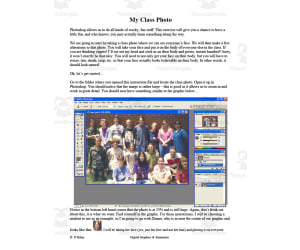
My Class Photo Photoshop Activity
Science, Technology, Grade 7, 8, 9, 10, Activities
Students will work with digital tools in the My Class Photo Photoshop Activity . Students will take a class photo and make alterations to it. Step by step directions are included.
Author OK Products
Tags Science, Technology, Computer Science, Class Photo, Graphic Design, Design Concepts, Clip Art, Photoshop, Photopea

Science Research: Surface Friction
Science, Physics, Grade 3, 4, 5, 6, Activities
Product Description: Surface Friction Science Research A unique teaching resource, Surface Friction Science Research is designed to keep students engaged while they explore the fundamental concept of friction. This comprehensive 4-page booklet presents a great opportunity for students aged between 7 and 11 years old to easily understand forces and friction. Educators Use: Educators can use this valuable material as part of their physical science module in third, fourth, fifth or sixth-grade classrooms. It includes various components such as: Aim Method Surfaces to Test Prediction Equipment (for fair testing) Results Conclusion sections station on each page This resource can facilitate interactive discussions during whole group instruction. In Small Learning Clusters & Homeschooling: Tutors who prefer smaller learning clusters may divide their class into multiple groups assigning them different surface types from the Surfaces to Test section. Similarly, homeschooling parents seeking ways to introduce practical at-home experiments into their curriculum; this resource serves well beyond its average use in school settings providing hands-on learning experiences right at home! Fully Editable Feature: This product is also commendably fully editable allowing facilitators to modify content per specific instructional needs within diverse classroom environments. The analysis-driven 'Conclusion' section allows time for reflection on experiment outcomes—this constant review method not only strengthens topic comprehension but also encourages progressive scientific thought processes among young learners. All files are conveniently provided in PDF format making printing or sharing digital versions easy. Ensure that with Surface Friction Science Research, your teaching sessions will be dynamic yet organized while your students thoroughly enjoy their venture into the world of physical science. Summary: Overall, Surface Friction Science Research provides educators a valuable tool to make the subject of friction less theoretical and more practical; allowing learners to visualize, experiment and understand this concept in a much better way.
Author Elementary Resources 4 U
Tags Surface Friction, Science Research, Teaching Resource, Interactive Experiments, Hands-on Learning

Atomic Trends Practice
Science, Chemistry, Grade 8, 9, 10, 11, 12, Activities
This set of 14 practice problems allows students to practice the atomic trends of the periodic table. Radius, ionization energy, electronegativity, reactivity, etc. are included in this practice. Comparison and ranking of elements using their atomic trend are included in this practice. Additionally, students will justify their answers in some questions. This set can be edited to meet the lessons provided. Korean and Spanish versions available!
Author Schrim's Chem
Tags Anatomic Trends, Ionization Energy, Electronegativity, Reactivity, Practice

Guided Reading Level B: Simple Machines at Home
ELA, Resources for Teachers, Reading Comprehension, Reading, Science, Language Development, Pre-Reading, Vocabulary, Physics, Kindergarten, Preschool, Grade 1, Worksheets & Printables, Worksheets, Teacher Tools, Centers, Activities, Literacy Readers, Quizzes, Quizzes and Tests, Assessments
This Guided Reading Book - Simple Machines at Home (Level B) includes: Guided Reading Color Label (front cover x1) This is a quick way to match the book’s demands to what students can generally handle.. The overall goal is to use the level/color to pick books for several smaller groups. To qualify for a certain level, a student is expected to read a book from that level with about 90–94% accuracy. If a student is consistently accurate and understands, move up a level. If the student is struggling at that level, drop down and add more support. Each student will improve at completely different rates, but it is generally one of the best ways to check progress across the class. DOWNLOAD THE CATALOG TO VIEW ALL GUIDED READING BOOKS AVAILABLE (SORTED LEVELS A-Z) Pre-Reading Question (x1) Teacher asks the prompt aloud, can be while showing the cover or first page. Students share what they already know, or make educated guesses from the cover. Prompt them to use the target vocabulary. Write some of their responses on the board to look back at during the reading. Vocabulary Words (x5) Introduce the five words, best doing it one at a time. Start by saying it, while students repeat and then see if anyone knows what it means before reading further. Read through the meaning and try to briefly connect each word to a picture or gesture so it’s meaningful. Ask students to flip through the book pages and point to where they see each of the vocabulary words. While reading the book pause upon coming across one of the vocab words or read the sentence twice to make sure students understand the word has appeared. Optional: Ask students to raise hands whenever they see/hear one of the new words. Guided Reading Pages (x10) Check the book snapshot (below) for: primary topic - do you need to prep extra reading or intro materials on this? what is taught best - decide on 1-2 bullets to focus on, use the prompt or words provided here for best results. learning goals - what you are checking for students to be able to do after the session, elicit answers using prompts or words provided. key vocabulary (see section above). questions overview - so you know what is coming up and if you need to prep extra materials to assist understanding. Run the lesson You may have already looked at a few of the pages together, but you can show them some of the pictures again first to set meaning. Depending on how much time you have and how familiar your students are with guided reading class, you may want to read the book aloud first with the group first. Students whisper or partner read, while you listen in. If time, do it as a group, one student reading a page each. Use the guided page’s prompts to coach: “Check the picture / does it make sense?” “Point under the words / try the first sound” “Reread the sentence smoothly”. Try to focus more on one student per session (rotating every time), so you can work out if they are ready to move up or need to move down a level. Comprehension Questions (back cover x3) This is your way to check that students didn’t just say the words, but actually understood the text. First, let students answer by pointing to the page/picture and saying a short sentence. After any answer, follow with: “Show me where you found that in the text.” In bigger groups, have partners answer first (10–20 seconds), then call on 2–3 students to share. Differentiation tips: Emerging speakers/struggling readers: oral + pointing On-level: oral in a full sentence Higher: one written sentence or draw + label Book Snapshot Title: Simple Machines at Home Genre: Nonfiction Subject: Science Primary Topic: Simple machines at home and what they do Estimated Guided Reading Level (A–Z): B What This Book Teaches Best Recognizing that “machines are at home” and used in everyday life. Learning what specific simple machines can do (cut, stop, slice, help, hold, turn, roll, lift). Building early reading fluency with repeated sentence patterns (“The ___ can ___.”). Using text-and-picture support to connect tool names to actions (lever, wedge, ramp, screw, wheel, pulley). Learning Goals Students will identify the topic of the book as simple machines at home. Students will name at least three simple machines mentioned in the text. Students will describe what a lever, wedge, ramp, screw, wheel, or pulley can do using the book’s sentences. Students will answer who/what questions by pointing to or rereading a matching page. Students will use the sentence frame “The ___ can ___.” to retell information from the book. Key Vocabulary From the Text lever — a tool that helps you cut. wedge — a tool that can stop or slice. ramp — a slanted surface that can help. screw — a piece that can hold things together. pulley — a tool that can lift. Discussion Prompts Pre-reading question: What machines do you think you might find at home? Comprehension questions: What can the lever do? What are two things the wedge can do? What does the last page say about simple machines? Printing Tips 1. Best Printing Method (Recommended) “Booklet” Printing (Best if Available) If your printer or PDF viewer supports Booklet Printing , use this. Settings to use: Print mode: Booklet Paper size: Letter or A4 (either works) Orientation: Landscape Print on both sides: Yes Flip on: Short edge Scaling: Fit to printable area Booklet subset: First test: Front sides only Then: Back sides only This will automatically: Pair pages correctly Put the cover on the outside Align everything for folding After printing, fold in half and staple along the spine . 2. If “Booklet” Printing Is NOT Available You can still print this correctly with manual duplex printing . Step-by-step: Open the PDF. Choose Print . Set: Orientation: Landscape Pages per sheet: 1 Print on both sides: Yes Flip on: Short edge Print all pages . Because each PDF page already contains two facing book pages, the result will still fold cleanly into a book. Thousands of Cored Education products are included with your TeachSimple membership. Download links and encyclopedia index available here.
Author Cored Education
Rating
Tags Vocabulary, Reading Comprehension, Reading Passages, Leveled Reading, Nonfiction, Reading, Guided Reading, Physical Science, Simple Machines, Physics
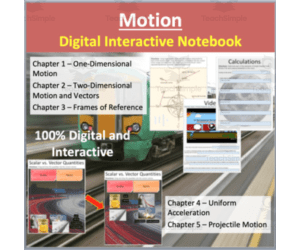
Motion – Digital Interactive Notebook
Science, Physics, Grade 8, 9, 10, Activities
The Motion - Digital Interactive Notebook The Motion - Digital Interactive Notebook is a comprehensive teaching resource designed to aid the process of educating students about motion physics. This high school level tool offers an interactive, digital approach, adopting new-age methods of classroom engagement and learning. Accessibility and Design Catering specifically to classes with 1:1 student-device ratios, this digital notebook can be accessed via any electronic device ranging from Chromebooks and Cellphones to Tablets. The resource includes 18 engaging activities spread across 27 highly interactive pages that covers various aspects of motion. Tech-friendly Traditional Layout with Customizability Using cloud services like Google Drive or OneDrive, this Digital Interactive Notebook combines tradition with technology by sporting a design akin to traditional notebooks yet leveraging the capabilities offered by digital platforms. With customization being key, the majority of components in this resource are editable; moreover, slides can be easily added or removed as per the learning requirements in your classroom. Inclusive Content "One-Dimensional Motion" "Two-dimensional motion & vectors" "Frames of Reference" \ \ "Uniform Acceleration"\endlistitem>\ \\ "Projectile Motion"\end listitem> Digital Advantages No physical storage space required and personal device suffices perfectly well—making it accessible anywhere at any time.. Once purchased allows you access your own copy conveniently stored in your Google Drive folder which you then distribute among students without worrying about physical materials or their misplacement. Variety Of Activities And Security Measures Interactive drag-and-drop exercises, videos with learning questions, calculation questions, fill-in-the-blanks and auditory answer exercises diversify the learning methods. Room for personal note-making is possible through extra slides. Plagiarism checks in place RETURN Carriage ReturnDespite the transition from physically engaging with paper-and-pen notebooks to digital ones, students do not lose hands-on experience but gain technological fluency. Customisable Per Grade And Curriculum The Motion - Digital Interactive Notebook can be adapted according to your curriculum requirements aiding easy understanding and better retention of physics concepts around 'Motion.'
Author Teach With Fergy
Tags Interactive Learning, Physics Education, Digital Notebooks, Motion Physics, Hands-on Experience

Life Cycle of a Frog Coloring Page and Activities
Montessori, Science, Life Sciences, Animals, Kindergarten, Grade 1, 2, Centers, Activities, Coloring Pages, Worksheets, Worksheets & Printables
Life Cycle of a Frog Coloring Page and Activities Preschool to 3rd Grade Are you looking for a simple yet engaging way to teach the life cycle of a frog? This Frog Life Cycle Activity Pack makes science fun and easy for young learners! I have designed it for preschool through third grade. This resource includes both color and black and white options so you can choose what works best for your classroom or homeschool. With hands-on activities, coloring pages, crafts, and easy to understand explanations, students will explore each stage of a frog’s life in an interactive and memorable way. What’s inside? Frog Life Cycle Anchor Chart Frog Life Cycle Coloring Page Bookmark Making Activity (Cut and Paste) Simple Frog Life Cycle Description (Kindergarten & 1st Grade) More Detailed Frog Life Cycle Description (2nd & 3rd Grade) Home Craft Project: Decorate Your Own Frog A Frog Coloring Page DIY “Cut and Go” Flashcards It is perfect for: Preschool, Kindergarten, 1st, 2nd, and 3rd Grade Homeschool families Spring science units Science centers Early finishers Homework or take-home projects Animal and life cycle themes This pack offers a variety of activities to meet different learning styles. Students can color, cut, paste, craft, and sequence the life cycle stages while building fine motor skills. The ready to print format will save you valuable prep time, and the simple explanations make it easy to teach at different grade levels without extra planning. Children love learning through hands-on activities! They will enjoy creating bookmarks, flashcards, and frog crafts while developing a clear understanding of the frog’s life cycle. These activities help strengthen sequencing skills, creativity, and early science knowledge in a fun and age-appropriate way. It is great for: Frog life cycle for kindergarten Frog coloring activities Life cycle science worksheets Preschool spring activities First grade science centers Cut and paste science activities Homeschool science curriculum Frog crafts for kids Spring life cycle projects DIY animal life cycle cards Frog life cycle printables Kindergarten science activities Frog theme classroom resources
Author FlashKart
Rating
Tags Life Cycle, Frog Life Cycle, Science, Life Sciences, Biology, No Prep, Coloring Pages, Bookmark, Hands-on, Life Cycle Of A Frog
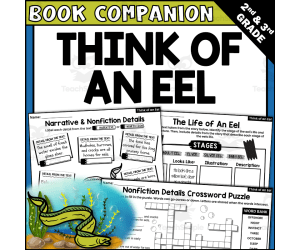
Think of an Eel Read Aloud Book Companion Activities for IRA
ELA, Reading, Reading Comprehension, Science, Earth and Environmental Sciences, Earth Sciences, Grade 2, 3, 4, Read Alouds, Activities
This picture book companion is a complete supplemental resource for the book Thinking of an Eel by Karen Wallace. With 17 print-and-go reading activities to choose from, this resource is ideal for customizing learning to your student's specific needs and academic abilities. Students will investigate elements of narrative nonfiction texts, sequence story events, compare & contrast, make predictions & connections, infer, answer questions that require them to think beyond the text, and much more! Students will love the engaging and fun activities, and you will appreciate the time saved hunting for high-level resources to teach reading concepts that students frequently struggle with. The activities provided are designed to enable students to apply higher-level thinking skills, encourage them to provide text evidence to support their thinking, and challenge them to express their own thoughts and/or perspectives. ⭐️This Resource Includes:⭐️ Making Predictions : Before reading the book, students will make predictions about the text. Story Elements: Students fill in the boxes with words & pictures to represent the story elements. Sequencing: Students will retell & illustrate the important parts of the story. Making Inferences: Students use clues & schema to make inferences while reading the story. Making Connections: Students make connections to an event from the story. Sketch a Scene From the Story: Students will draw a scene from the story and explain why it's important to the plot. Setting Influences the Plot: Students will draw a scene from the story that takes place in one of the settings and write about what happened there and why it was important to the plot. Narrative & Nonfiction Details: Students will read the text from the story and label the details as either narrative or nonfiction. The Life of an Eel: Students will identify the stage of the eel's life, draw a picture, and include details from the story that describe each stage of the eel's life. Author's Message: Students will describe four important events from the story in chronological order in the boxes on the timeline below. Then answer the questions about the author's message. Thinking About the Text: Students will answer the questions about the story & include examples from the text to support their answers. Before & After: Students will draw before and after pictures of the eel and explain their illustrations. Life Cycle: Students will illustrate each stage of the life cycle of the eel. Wait... There's More!: Students write and illustrate two more pages to add to the end of the book. Text-to-Text Connections: Students will compare the books, Think of an Eel and Salmon Stream. Nonfiction Details Crossword Puzzle: Students use the clues and the word bank to fill in the crossword puzzle (ANSWER KEY INCLUDED). Narrative Details Word Search Puzzle: Students use the clues and the word bank to find the hidden words in the word search puzzle (ANSWER KEY INCLUDED). ✨Be sure to check out my storefront here: https://teachsimple.com/contributor/creatively-gifted 💡Need ideas for different ways you can implement these activities? Focus on different reading skills each day for targeted instruction, and have students complete a corresponding printable to check for understanding. During centers, students can independently read the story again and complete an activity that reviews a previously taught concept. Work with students on a reading concept they struggle with during guided reading or strategy groups. Students work with a partner or in literature circles to complete additional reading activities. This resource is for extension read-aloud activities only. The book is not included. Give children a simple way to order story events with this first, next, then, last worksheet .
Author Creatively Gifted
Tags IRA, ESL, Learning A New Language, Moving To A New Place, Family, Picture Book Activities, Interactive Read Aloud Activities, Reading Comprehension, Elementary Reading, Read Aloud Lessons, Think Aloud Crossword Clue, Think Of An Eel
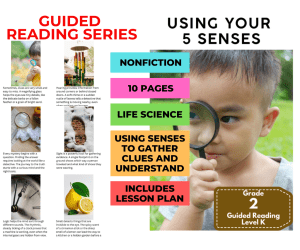
Guided Reading Level K - Using Your 5 Senses (with Lesson Plan)
ELA, Resources for Teachers, Reading Comprehension, Reading, Pre-Reading, Language Development, Human Body, Life Sciences, Science, Vocabulary, Grade 1, 2, 3, Worksheets & Printables, Worksheets, Teacher Tools, Centers, Activities, Literacy Readers, Quizzes, Quizzes and Tests, Assessments
This Guided Reading Book - Using Your 5 Senses (Level K) with lesson plan includes: Guided Reading Color Label (front cover x1) This is a quick way to match the book’s demands to what students can generally handle.. The overall goal is to use the level/color to pick books for several smaller groups. To qualify for a certain level, a student is expected to read a book from that level with about 90–94% accuracy. If a student is consistently accurate and understands, move up a level. If the student is struggling at that level, drop down and add more support. Each student will improve at completely different rates, but it is generally one of the best ways to check progress across the class. DOWNLOAD THE CATALOG TO VIEW ALL GUIDED READING BOOKS AVAILABLE (SORTED LEVELS A-Z) Pre-Reading Question (x1) Teacher asks the prompt aloud, can be while showing the cover or first page. Students share what they already know, or make educated guesses from the cover. Prompt them to use the target vocabulary. Write some of their responses on the board to look back at during the reading. Vocabulary Words (x5) Introduce the five words, best doing it one at a time. Start by saying it, while students repeat and then see if anyone knows what it means before reading further. Read through the meaning and try to briefly connect each word to a picture or gesture so it’s meaningful. Ask students to flip through the book pages and point to where they see each of the vocabulary words. While reading the book pause upon coming across one of the vocab words or read the sentence twice to make sure students understand the word has appeared. Optional: Ask students to raise hands whenever they see/hear one of the new words. Guided Reading Pages (x10) Check the book snapshot (below) for: primary topic - do you need to prep extra reading or intro materials on this? what is taught best - decide on 1-2 bullets to focus on, use the prompt or words provided here for best results. learning goals - what you are checking for students to be able to do after the session, elicit answers using prompts or words provided. key vocabulary (see section above). questions overview - so you know what is coming up and if you need to prep extra materials to assist understanding. Run the lesson You may have already looked at a few of the pages together, but you can show them some of the pictures again first to set meaning. Depending on how much time you have and how familiar your students are with guided reading class, you may want to read the book aloud first with the group first. Students whisper or partner read, while you listen in. If time, do it as a group, one student reading a page each. Use the guided page’s prompts to coach: “Check the picture / does it make sense?” “Point under the words / try the first sound” “Reread the sentence smoothly”. Try to focus more on one student per session (rotating every time), so you can work out if they are ready to move up or need to move down a level. Comprehension Questions (back cover x3) This is your way to check that students didn’t just say the words, but actually understood the text. First, let students answer by pointing to the page/picture and saying a short sentence. After any answer, follow with: “Show me where you found that in the text.” In bigger groups, have partners answer first (10–20 seconds), then call on 2–3 students to share. Differentiation tips: Emerging speakers/struggling readers: oral + pointing On-level: oral in a full sentence Higher: one written sentence or draw + label Book Snapshot Title: Using Your 5 Senses Genre: Nonfiction (informational) Subject: Science (Human Body) / Reading Primary Topic: Using senses to gather clues and understand Estimated Guided Reading Level (A–Z): K What This Book Teaches Best How to observe like a detective by starting with a question and looking for an answer. How sight can gather evidence by noticing details like footprints and tiny clues. How hearing can provide information (like movement nearby) even when you can’t see. How smell, touch, and taste each give different kinds of information about the world. How thinking and logic connect clues “like pieces of a puzzle” to understand what happened. Learning Goals Students will explain how asking questions helps begin solving a mystery. Students will identify what sight, hearing, smell, touch, and taste can tell a person, using details from the text. Students will describe how a magnifying glass helps the eyes see “tiny details.” Students will explain how hearing can give information about something moving nearby. Students will describe how logic helps connect clues to make a clear picture of what happened. Key Vocabulary From the Text detective — a person who looks for clues to solve. evidence — facts or clues that show what happened. magnifying — making something look bigger to see details. rhythmic — having a steady, repeating beat or pattern. observation — watching carefully and noticing details. Discussion Prompts Pre-reading question: How can your senses help you find clues about the world? Comprehension questions: What does the book say sight helps you learn from a single footprint? How can hearing tell a detective something is moving nearby? According to the book, why are the five senses “keys to understanding the world”? Printing Tips 1. Best Printing Method (Recommended) “Booklet” Printing (Best if Available) If your printer or PDF viewer supports Booklet Printing , use this. Settings to use: Print mode: Booklet Paper size: Letter or A4 (either works) Orientation: Landscape Print on both sides: Yes Flip on: Short edge Scaling: Fit to printable area Booklet subset: First test: Front sides only Then: Back sides only This will automatically: Pair pages correctly Put the cover on the outside Align everything for folding After printing, fold in half and staple along the spine . 2. If “Booklet” Printing Is NOT Available You can still print this correctly with manual duplex printing . Step-by-step: Open the PDF. Choose Print . Set: Orientation: Landscape Pages per sheet: 1 Print on both sides: Yes Flip on: Short edge Print all pages . Because each PDF page already contains two facing book pages, the result will still fold cleanly into a book. Thousands of Cored Education products are included with your TeachSimple membership. Download links and encyclopedia index available here.
Author Cored Education
Rating
Tags Reading Comprehension, Reading Passages, Reading, Guided Reading, Guided Reading Lesson Plan, Guided Reading Activity, Pre-reading, Vocabulary, Life Science, Human Body

Research Organizer & Essay Assignment: Nikola Tesla
Social Studies, History, History: World, Science, Technology, Grade 7, 8, 9, 10, 11, 12, Activities, Projects, Worksheets & Printables, Worksheets
There are few inventors and scientist more significant to the modern world than Nikola Tesla. This resource provides your students with the opportunity to independently learn about and summarize the life of the enigmatic and ingenious electrical engineer with this engaging research planner and essay assignment. This carefully scaffolded and easy-to-assign-AND-assess resource has been designed to guide student learning from Nikola Tesla fact-collection to the careful development of a five-paragraph research essay. Teaching this resource could not be easier! Start by handing out the background research and note-taking worksheet (you could also ONLY hand this out if you want a shorter lesson!). Once students have found their facts and sources, provide them with the essay outline activity, which guides them step-by-step through the requirements of a short research essay. From there, drafting their essay, using the provided peer review checklist, and submitting their final draft will be no problem at all. And then you can assess their work with the provided Common Core rubric! Use this entire resource as a complete research lesson or just part of it as a short research activity or sub plan! This TeachSimple download includes: - A Nikola Tesla essay writing assignment with directions, requirements, research essay writing tips, a peer review checklist, and Common Core-tied grading rubric - An editable rubric, provided as a link, that lets you make adjustments to the grade values and guidelines. This link is provided as as Google Sheet specifically built for integration into Google Classroom, although you can also modify it for use in other Learning Management Systems (LMSs) - A Nikola Tesla biography and note-taking worksheet that will guide your students through information gathering. This straightforward two-page handout includes instructions for background research, a fun drawing section, and an area to cite quality sources and organize conducted research - A research essay outlining worksheet, so students build on their Nikola Tesla notes in a clear and simple manner as they build their work towards a draft and final paper - All 6-pages of this lesson are provided in full-color and B&W versions Although this resource can be fitted for any secondary Language Arts classroom, it has been carefully designed to work best in grades 8 through 11. The included rubric is subtly but specifically tied to Common Core ELA Standards for Language (3) and Writing (2 and 7). This resource is provided as a print-ready, bookmarked, and adjustable PDF file. The rubric is also included as an editable Google Sheet. This resource contains 6 pages and 1 Google Sheet.
Author The Language of Educational Art, LLC
Tags Essay, Rubric, Research, Notetaking, Outlining, Nikola Tesla

Let’s Build a Boat Activity
Science, Technology, Engineering, Grade 3, 4, 5, 6, 7, 8, 9, Activities
Activity Introduction An amazing activity designed for the students to learn more about STEM. Let’s Build a Boat Do you like STEM subjects? what is your favorite one? Have you ever tried to plant a seed? If yes, tell us more about it. Or have you ever tried to invent something? If yes, tell us more about it. And how do you think it will help us? Have you ever seen a microorganism under a microscope? What was it? And how it looked like? Mathematics is a marvelous subject. Let' sharpen our brains and solve some equations. Do you like timetable tricks? What is your favorite one? Do you know how to code? Have you ever created an app or a game before? If yes, how was it like? Let’s Build a Boat Activity The activity is perfect for encouraging the researching skills for the students, while learning more about this fantastic topic. Let’s Build a Boat This friendly designed worksheet is suitable for students at school, homeschooling, and as a group activity. Instructions Look for items around your house or yard to build your boat, then write them down on the list. Next place the boat in water to see if it floats. Did it float? If yes, why do you think it did? If not, why didn't it? Format Available in a PDF format.
Author Educational Voice
Tags Let’s Build A Boat Activity, Let’s Build A Boat, Boat, Boats, Boats Facts , Boats Facts For Kids, Engineering, Engineering Facts, Engineering Facts For Kids, STEM

Science Mazes - Set 3 (PDF)
ELA, Language Development, Vocabulary, Spelling, ESL, Resources for Teachers, Science, Physics, Earth and Environmental Sciences, Life Sciences, Grade 2, 3, 4, 5, Worksheets & Printables, Worksheets, Teacher Tools, Centers, Activities, Mazes
Maze Series This maze series is designed for students in grades 2–5. Each set features a clear, kid-friendly theme with scene-based mazes that students first navigate, then complete by drawing a few target words from a simple word list. Pages come in varied styles and graduated difficulty, with an optional “color it in” step—and some themes invite quick calculations to match the task. These mazes are student-friendly, classroom-ready, and perfect for literacy warmups, seasonal units, fast-finisher bins, centers, sub plans, or home learning extensions. The playful, structured format builds problem-solving, attention to detail, and fine-motor control while reinforcing themed content in a motivating way. Note: Unlike many themed products, not all word-list words appear on the maze pages. To support full vocabulary coverage, we’ve released a companion word list you can find in the links section. Science Set 3 Word List 1. Human Body Systems Brain, Heart, Lungs, Muscles, Bones, Veins, Digest, Nerves 2. Ecosystems and Food Chains Ecosystem, Habitat, Producer, Consumer, Decomposer, Food Chain, Predator, Prey 3. States of Matter Matter, Solid, Liquid, Gas, Melt, Freeze, Evaporate, Condense 4. Space and the Universe Galaxy, Milky Way, Orbit, Gravity, Black Hole, Meteor, Astronomer, Telescope 5. Plants and Photosynthesis Roots, Stem, Leaf, Flower, Seed, Sunlight, Oxygen, Chlorophyll 6. Simple Machines and Engineering Lever, Pulley, Ramp, Wheel, Axle, Screw, Gears, Invent PDF Version Other versions will appear here when available. Follow the store for the lastest on new products. How to Use These Mazes Perfect for: Morning work or early-finisher bins Literacy or STEM centers Holiday/seasonal review lessons Independent stations, sub plans, or take-home enrichment More Science Themed Products Science Crosswords (Set 1) PDF Science Crosswords (Set 2) PDF Science Crosswords (Set 3) PDF Science Word Searches (Set 1) PDF Science Word Searches (Set 2) PDF Science Word Searches (Set 3) PDF Science Mazes (Set 1) PDF Science Mazes (Set 2) PDF FULL CATALOG OF DOWNLOAD LINKS HERE Themed Mazes Links Addition PDF Animals PDF Around the Home PDF Birthday PDF Candy PDF Christmas PDF Cinco de Mayo PDF Clothes PDF Colors PDF Days and Months PDF Division PDF Earth Day PDF Easter PDF Easy Mazes PDF Fall PDF Father's Day PDF Food PDF Geography (Set 1) PDF Geography (Set 2) PDF Geography (Set 3) PDF Graduation PDF Health PDF History (Set 1) PDF History (Set 2) PDF History (Set 3) PDF Human Body PDF Kindness PDF Life Skills PDF Mother's Day PDF Multiplication PDF Science (Set 1) PDF Science (Set 2) PDF Science (Set 3) PDF Shapes PDF Social Skills PDF Spring PDF Sports PDF St. Patrick's Day PDF Subtraction PDF Summer PDF Thanksgiving PDF Transport PDF Valentine's Day PDF Winter PDF Mazes in Depth Structure Each maze is crafted around a focused sub-theme. Students navigate the maze, encountering branches and cul-de-sacs that build attention and planning. Most pages include a tiny follow-up box—students draw or label 2–3 target words from a small word box, add a quick count, or color in the scene—so the activity reinforces both content and skills in a highly engaging format. Each completed set includes: A themed maze page. A simple student instruction strip. An answer key showing the solved path for teacher support or self-checking Themes Included These mazes cover a wide range of fun, age-appropriate themes, including: Seasons & Holidays (e.g., Halloween, Easter, Valentine’s Day) Math-Lite Connections (e.g., quick counts, number words) Everyday Topics (e.g., Animals, Weather, School) Special Units (e.g., Health, Earth Day, Sports, Kindness) Each topic reflects students’ real-life experiences and interests while strengthening problem-solving, visual scanning, and fine-motor control in a playful, highly visual way. Easy extensions (optional): Time it: solve once in pencil, then try to beat the time in pen Retell the route using sequence words (first, next, then, finally) Count intersections or turns and graph the results Write a 1–2 sentence mini-story about the scene using the target words Design a tiny maze in the corner for a partner to solve Differentiation tips: Offer a finger-trace pass before pencils for emerging learners Highlight the borders of the correct region on first attempts Use thicker-line versions or simpler pages to build confidence Pair roles: “navigator” gives directions; “driver” traces the path For similar downloads and other frees, do check out Cored Group on TeachSimple.
Author Cored Education
Rating
Tags Vocabulary, Spelling, Science, Human Body Systems, Ecosystems, Food Chains, States Of Matter, Plants And Photosynthesis, Mazes, Science Mazes
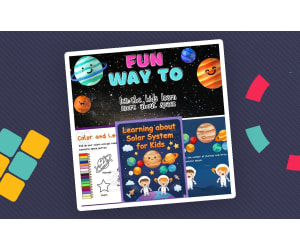
Solar System Activity Pack Space Coloring Tracing Counting
Science, Social Studies, Pre-K, Early Learning, Elementary, Activities, Worksheets & Printables
Blast your students into learning with this fun Solar System Activity Pack! This pack brings together science, math and literacy in one space-themed bundle. Perfect for young learners in Preschool, Pre-K, Kindergarten, 1st Grade, 2nd Grade and 3rd Grade. Little astronauts will explore all eight planets while practicing tracing, counting, coloring and vocabulary building through hands-on worksheets. You can use it for a space unit, science centers or morning work. This pack is ready to use the moment you download it. Here's whats included: * Planet Tracing & Vocabulary Pages. Students trace planet names like Jupiter, Saturn and Mars; builds motor skills and early science vocabulary * Space Counting Math Worksheets. Count rockets, stars and planets to practice number recognition; covers numbers 1–10 * Color & Learn Coloring Sheets. Creative coloring pages featuring the Sun, Moon and the full solar system; encourages creativity * Tablet-Friendly Format. Formatted for digital markup on iPad and tablet screens or prints perfectly for classroom use Its perfect for: * Space & planets science units * Preschool & kindergarten morning work * Science. Literacy centers * Homeschool curriculum. Solar system theme * Digital learning. IPad & tablet compatible * Sub tub & emergency lesson plans * Early finishers & extension activities * Earth & Space science introduction Skills practiced: Fine Motor Skills. Builds pencil control ✓ Number Recognition. Practices counting numbers 1–10 ✓ Solar System. Students learn planet names like Jupiter and Mars ✓ Letter Formation. Guided tracing ✓ Science Concepts. Introduction to the solar system Product details: Format: PDF It's digital download. It's print-ready and tablet/digital-ready. No prep required. Print and go. Great, for Preschool, Pre-K, Kindergarten, 1st Grade, 2nd Grade, 3rd Grade. Enjoyed this? Leave a review. Follow for more science activity packs!
Author Kids Activity Lab
Rating
Tags Solar System Worksheets, Planets Activity Pack, Space Coloring Pages, Planet Tracing, Space Math, Space, Counting Worksheets, Preschool Science, Kindergarten Space Unit

Microscopes - Reading Comprehension Article - Grade 8 and Up
Science, Basic Science, Grade 7, 8, 9, 10, Activities
Microscopes. This resource is suitable for students in grades 8 and up. Here's the first few paragraphs for your review. Microscopes History: The microscope has a long and storied history dating back centuries. Early microscope technology arose in the late 16th century with the invention of spectacles for vision correction. These simple magnifying glasses laid the groundwork for more complex microscopy instruments. In 1590, two Dutch spectacle makers named Hans Lippershey and Zacharias Janssen, created the first compound microscopes, which use two or more lenses to produce an enlarged image of tiny objects. This allowed a closer examination of materials like insects, fabrics, and animal and plant tissues. However, early microscopes distorted and blurred images. Over the next 150 years, microscope design slowly improved through the work of scientists like Robert Hooke and Antonie van Leeuwenhoek. In 1665, Hooke first coined the term “cell” after observing the cell structures in cork using a primitive compound microscope. Leeuwenhoek perfected the single lens microscope in the 1670s, enabling the discovery of microorganisms. By the 1830s, innovations in lens grinding and fabrication drove rapid advancement in microscope development. Engineers like Joseph Jackson Lister created achromatic lenses that reduced optical aberrations and enabled higher magnification with clearer images. Staining techniques also emerged, using dyes to enhance contrast in microscopic samples.
Author Teach With Fergy
Tags Microscopes, Readings, Science Reading, Microscope Parts
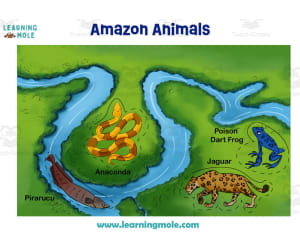
Amazon River Animals Activity
Social Studies, Science, Life Sciences, Animals, Geography, Grade 2, 3, 4, 5, 6, 7, 8, 9, 10, Activities
Activity Introduction An amazing activity designed for the students to learn more about animals in different countries. Amazon River Animals Do you like animals? what is your favorite one? Do you own a pet? If yes, tell us more about it, like what its name? And what do you like most about it? What are the animal kingdoms? Can you write down the characteristics of each animal class like mammals, birds, reptiles, amphibian, fish and mollusks. Do you know that some animals can sing, can you name any of them? What is the largest and the smallest mammal in the world? What is the largest and the smallest bird in the world? What is the largest and the smallest fish in the world? Amazon River Animals Activity The activity is perfect for encouraging the researching skills for the students, while learning more about this fantastic animal. Amazon River Animals This friendly designed worksheet is suitable for students at school, homeschooling, and as a group activity. Instructions Cut along the dashed lines then glue page on top of page 2. Open what you cut gently, hen write what you know about each animal. Format Available in a PDF format.
Author Educational Voice
Tags Amazon River Animals Activity, Amazon River Animals, Amazon River, Amazon River Facts, Amazon River Facts For Kids, Animals, Animals Facts For Kids, Animals Facts

Science Revision for Grade 8
Science, Grade 8, Activities, Worksheets & Printables, Assessments, Teacher Tools
This Grade 8 Science Worksheet Ebook is perfect for busy teachers. It includes 30 ready-to-use activities that cover key topics like cells, matter, energy, forces, the periodic table, ecosystems, and scientific inquiry. All tasks are worksheet-based—no experiments or extra tools needed. Students label diagrams, match items, fill in blanks, solve problems, and choose correct answers. Each activity helps review important concepts in a fun and clear way. The worksheet is easy to print and use in class or for homework. It works well for quick revision, group work, or tests. Every question comes with a clear answer at the end, saving you time. This ebook helps students practice and build confidence in science. It also helps teachers check understanding quickly. Whether you’re teaching in class or online, this resource fits your needs. Simple format. No prep. High value. Download and use it today to make your science lessons easier and more effective! Teachers love it—and students enjoy it too!
Author Bright Classroom Ideas Marketplace
Rating
Tags Science, Revision, Grade 8
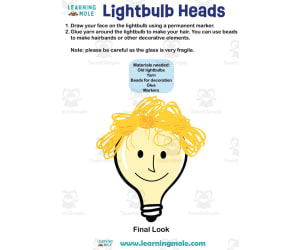
Lightbulb Heads Activity
Science, Basic Science, Physics, Grade 3, 4, 5, 6, 7, 8, 9, Activities
Activity Introduction An amazing activity designed for the students to learn more about famous places in different countries. The Lightbulb Heads Do you like STEM subjects? what is your favorite one? Have you ever tried to plant a seed? If yes, tell us more about it. Or have you ever tried to invent something? If yes, tell us more about it. And how do you think it will help us? Have you ever seen a microorganism under a microscope? What was it? And how it looked like? Mathematics is a marvelous subject. Let' sharpen our brains and solve some equations. Do you like timetable tricks? What is your favorite one? Do you know how to code? Have you ever created an app or a game before? If yes, how was it like? Lightbulb Heads Activity The activity is perfect for encouraging the researching skills for the students, while learning more about this fantastic place. Lightbulb Heads This friendly designed worksheet is suitable for students at school, homeschooling, and as a group activity. Instructions Draw your face on the lightbulb using a permanent marker. Glue yarn around the lightbulb to make your hair. You can use beads to make hairbands or other decorative elements. Note: Please be careful as the glass is very fragile. Materials Needed Old lightbulbs Yarn Beads for decoration Glue Markers Format Available in a PDF format.
Author Educational Voice
Tags Lightbulb Heads Activity, Lightbulb Heads, Lightbulb, Lightbulbs, Lightbulb Facts, Lightbulb Activity For Kids, Lightbulb Facts For Kids

Clothespin Giraffe Activity
Science, Life Sciences, Biology, Animals, Grade 2, 3, 4, 5, 6, 7, Activities
Activity Introduction An amazing activity designed for the students to learn more about famous places in different countries. The Giraffes Do you like animals? what is your favorite one? Do you own a pet? If yes, tell us more about it, like what its name? And what do you like most about it? What are the animal kingdoms? Can you write down the characteristics of each animal class like mammals, birds, reptiles, amphibian, fish and mollusks. Do you know that some animals can sing, can you name any of them? What is the largest and the smallest mammal in the world? What is the largest and the smallest bird in the world? What is the largest and the smallest fish in the world? Clothespin Giraffe Activity The activity is perfect for encouraging the researching skills for the students, while learning more about this fantastic place. Giraffes This friendly designed worksheet is suitable for students at school, homeschooling, and as a group activity. Instructions Cut everything out, then color them. Draw the pattern of the giraffe on the oval. Glue the ears and the horns to the head. Glue the head on top of a clothespin to make the neck. Clip the neck to the oval (the body), then clip the other clothespins to the body from the bottom to make the legs. Place the giraffe on a flat surface. Materials Needed 3 Clothespins Scissors Colors Glue Format Available in a PDF format.
Author Educational Voice
Tags Clothespin Giraffe Activity, Giraffe Activity, Giraffe, Giraffes, Giraffes Facts, Giraffes Facts For Kids, Animal, Animals, Animals Facts, Animals Facts For Kids