3,947 products added recently
Page 5 - Labs
Cell Membrane and Transport – Lab Station Activity
Science, Life Sciences, Biology, Grade 8, 9, 10, 11, Labs, Experiments, Activities
Cell Membrane and Transport - Lab Station Activity Dive deep into the world of cell biology with this interactive Cell Membrane and Transport lab activity . Specifically designed to engage students, it involves movement, interaction, and in-depth understanding of cell membrane function and diverse transport mechanisms. The Activity Components The module comprises seven unique stations, each testing student knowledge in different ways while ensuring comprehensive learning. Students might be answering questions related to a video or content piece at one station while sketching diagrams at another. This active-learning setup aids experiential knowledge gain through innovative tasks. Detailed station instructions: Some even include further readings or details for creating drawings. A recording sheet: Also referred to as a 'passport', it helps students log their answers methodically. A minimal preparation time is required by teachers who would only need to print out the cards and spread them around the room for access during activities. Lesson planning becomes more streamlined using this lab-based method of teaching complex biology topics like cell membrane structures and corresponding transportation processes across them . Succeeding in Classrooms This engaging product has been successfully implemented by many educators who have confirmed its effectiveness in biology classrooms. It provides flexibility allowing you to tailor-fit your lesson plans – whether it's modifying based on grade-level alterations or class strengths/weaknesses. Bonus activities: Included are also word scrambles along with word searches complete with answer keys ensuring no downtime between each station activity . These can serve as part of overall grading point systems or potentially act as bonus points without making them obligatory exercises thereby fostering student interest under guidance rather than compulsion. Rest stations: Two rest stations are included that give pupils a break before delving into another exercise. Here they can enhance their research skills via internet fact-finding, express personal opinions about biological issues, tie classroom theories with real-world applications through readings and even create questions of their own after answering multiple-choice ones. This resource has proven to be more versatile than being confined to a laboratory setup; From such fun-filled class activities or reviews before tests or quizzes - the possibilities are endless, only limited by your educational creativity! Embark on an exciting journey where students eagerly anticipate learning about the cell membrane and transport processes thanks to this delightful teaching aid. Product Details Grade Levels: Grade 8-11 Subject: Biology (Science) Type: Activities File Type:Mulitple File Types </ul
Author Teach With Fergy
Tags Interactive Learning, Cell Biology, Cell Membrane, Transport Mechanisms, Lab Activity
Climate Change – Lab Station Activity
Science, Earth and Environmental Sciences, Environmental Science, Grade 8, 9, 10, 11, Labs, Experiments, Activities
Climate Change Lab Station Activity Dive deep into climate change with this engaging lab station activity . Students will rotate through 9 stations, each offering a unique hands-on opportunity to learn about topics like greenhouse gases, global warming, and the greenhouse effect. Activities range from drawing models to conducting research, watching videos, and even creating their own questions. The self-guided format promotes inquiry-based learning, while the recording sheets let students document their progress. This versatile resource works for whole groups, small groups, or independent work. Modify it to fit your class's needs. An answer key is included for applicable stations. This activity covers core climate change concepts, connects them to real-world impacts, and gets students out of their seats. Use it to inspire curiosity about this urgent topic.
Author Teach With Fergy
Tags Climate, Change, Global Warming, Scientist, Lab Station
Muscular and Skeletal System – Lab Station Activity
Science, Life Sciences, Human Body, Grade 7, 8, 9, 10, 11, 12, Labs, Experiments, Activities
Muscular and Skeletal System Lab Station Activity Dive deep into the muscular and skeletal system with this engaging lab station activity . Specifically designed for middle and high school students, it gets learners up and active while assessing knowledge. The 9 unique stations offer a variety of learning modalities, including building models, conducting research, answering discussion questions, and more. Questions and activities focus on key concepts like muscle growth, bone structure and function, homeostasis, and real-world connections. With minimal prep required and an included answer key, this resource is teacher-approved and student-tested. Use it to complement your unit on body systems or as a review before exams. Modify it to fit any schedule and customize it to various ability levels. This interactive approach keeps students engaged as they learn about this essential bodily system.
Author Teach With Fergy
Tags Muscular, Skeletal, System, Joints, Lab Station, Activities For Skeletal System, Skeletal System Activities For High School Students, Skeletal System Lesson Plans High School, Skeletal System Lab, Skeletal System Activity, Skeletal System Activities
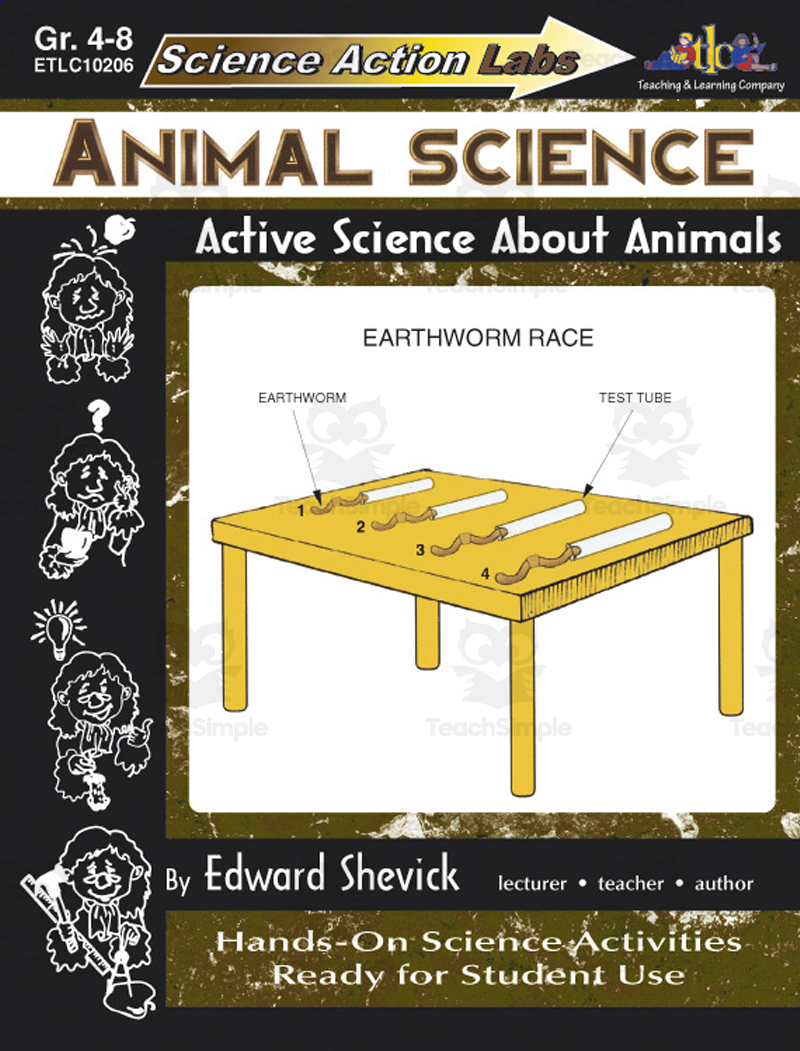
Science Action Labs Health Science: Active Health Investigations
, Grade 4, 5, 6, 7, 8, Labs, Experiments, Activities
Science Action Labs Health Science: Active Health Investigations Manifesting as a practical teaching resource, 'Science Action Labs Health Science: Active Health Investigations' is expertly crafted to inculcate a living perspective on health science. It caters diligently to the pedagogical needs of students from 4th to 8th grades and presents itself as an accessible PDF resource furnished with 64 printable pages. Action Laboratories for Engaging Pedagogy The intricacy of these active laboratories lies in their ability to draw interest and provoke active participation, thereby unveiling diverse facets of health science. The enigmatic scientific principles associated with human health are transformed into relatable concepts, allowing students to examine physiological aspects such as breathing and digestion practically and enjoyably. This unique form of assimilating information opens avenues not only into understanding the brain's functionality but also applying acquired knowledge about one's physical wellbeing proactively. The multi-facet studies incorporated herein induce learners into researching all five senses actively. This initiates them onto paths of better comprehending their bodies physiologically while undergoing sensory experiences in their surroundings mindfully. Fostering Curiosity through Adaptability 'Science Action Labs Health Science: Active Health Investigations' additionally accords flexibility margined towards instructors: Easily adaptable for group explorations within classrooms or smaller group-based personalized teachings. Homeschool curriculums seeking structured pedagogical activities delving into health science could find it beneficial too! This laboratory tool can be leveraged by students seeking independent assignments or even preparing homework that revolves around health science. The underlining objective here isn't merely instruction but nurturing the curiosity that eventually leads children towards making scientific discoveries about themselves. This would in turn, work on improving their critical thinking skills. Bridging Engagement and Learning No matter if your aim is to supplement existing lesson plans or introduce new ones hinging around health science topics—the detailed organization present within Science Action Labs Health Science: Active Health Investigations provides a magnificent bridge connecting learning objectives with student engagement.
Author Classroom Complete Press
Tags Science Labs, Your Senses At Work, Health Superstitions, Protecting Your Body, Animal Kingdom
Cell Lab Activity
Science, Life Sciences, Human Body, Grade 9, 10, 11, 12, Labs, Experiments, Activities
Cell Lab Activity: An Engaging Teaching Resource for Science Educators Enhance your science curriculum with the interactive Cell Lab Activity focused on differentiating between animal and plant cells. This adaptable lab suits a wide demographic of students, emphasizing a hands-on learning approach. The Activity Process In this hands-on experiment, students: Observe cells from sources such as tomato pulp and skin, potato, and human cheek cells. Analyze biological material under scientific scrutiny. Gain insightful knowledge about the functions of various cell parts. Depending upon your classroom's pace, this activity spans approximately 1½ to 2 days—optimizing time towards understanding complex concepts. What Else is Included? The kit includes: A Variation in Cell Structure Lab worksheet with an answer key for students to verify their findings- reinforcing self-evaluation techniques. A helpful materials list and general guidelines that assist educators in organizing resources smoothly. Inclusive sample pictures which support descriptions of cellular concepts accessible to all learners—including visual-learners—for better comprehension! The inclusion of practical thinking into teaching methodologies widens horizons: Leveraging education beyond textbooks boundaries preparing our future scientific pioneers—to drive societal goals—from just simple thinkers to thought leaders! Note: It’s important teachers know that every lab activity must always be performed under supervision!
Author The Teacher Team
Tags Cell Structure, Lab Activity, Plant Cells, Animal Cells, Hands-on Learning
Fossils and Geologic Time – Lab Station Activity
Science, Earth and Environmental Sciences, Grade 8, 9, 10, 11, 12, Labs, Experiments, Activities
Fossils and the Geologic Time Scale - Lab Station Activity Bring the fossil record to life in your middle or high school science classroom with this engaging lab activity. Students will rotate through 9 stations to analyze fossils, date rocks, explore timescales, and more. The self-guided format allows them to work at their own pace while answering questions, watching videos, doing research, and getting creative. Topics span fossilization, radiometric dating, rock strata, the La Brea Tar Pits, and major boundaries in Earth's history. This customizable resource includes reading passages, comprehension questions, creative prompts, and bonus vocabulary builders to maximize the learning potential. Students will love moving freely around the classroom as they dive into hands-on archaeology.
Author Teach With Fergy
Tags Fossils, Fossilization, Rock, Strata, Lab Station, Photosynthesis And Cellular Respiration Word Search Answer Key, Geological Timeline Activity Answer Key, Geologic Time Word Search Answer Key, Geologic Time Activity, Geologic Time Scale Activity Middle School, Geologic Time Scale Activity High School, Geologic Time Line Activity
Cardiovascular System ~ The Effects of Exercise Lab Activity
Science, Life Sciences, Human Body, Grade 9, 10, 11, 12, Labs, Experiments, Activities
Need to get your students up and moving? Maybe even take them outside when the weather is good? This lab can be used during any unit on the heart or Cardiovascular System. This lab is very flexible as it will work for any level student from English Learner - EL - to more advanced students.
Author The Teacher Team
Tags Cardiovascular System, Anatomy, Physiology, Biology, ELL
Hearing and the Human Ear – Lab Station Activity
Science, Life Sciences, Human Body, Grade 7, 8, 9, 10, Labs, Experiments, Activities
Hearing and the Human Ear – Lab Station Activity : An Engaging Teaching Resource 📌Interactive resource: This activity offers interactive lab stations that keep students engaged and involved in their learning process. It's a refreshing shift from traditional methods of instruction. 📌Versatile application: This station-based activity can be used for classroom sessions, homeschooling, small study groups, individual assignments or even as supplemental homework tasks. Suitable for Grades 7 to 10. 📌Multifaceted learning approaches: Students get involved in varied tasks at each station such as conducting research using devices, writing their opinions or answering questions related to short videos. Leveraging Creativity & Understanding Real-Life Applications Drawing activities nurture creativity amongst learners. Crafting multiple-choice questions makes learning an interactive exchange. "Apply reading" sections help understand real-life situations around hearing loss and vertigo. Bonus Activities & Answer Keys For seamless Transitions In between transitions, bonus activities provide consistent engagement. Stronger classes can enjoy word scramble games whereas weaker ones can stay productive with a simple word search game. All Cards come with comprehensive answer keys easing educators' evaluation process! No Prep Required! Just Print & Place The Cards' Apart from core content around human hearing - educators also have the freedom to introduce additional biology related themes as broad as Energy Flow In Ecosystems and as specialized topics like Mitosis or Cancer Cell Division making it an infinite source of knowledge extension paths. The Hearing and the Human Ear – Lab Station Activity not only provides factual content on a central theme but ensures fun learning experience akin to mini field trips while in a classroom or at home.
Author Teach With Fergy
Tags Interactive Learning, Human Ear, Lab Activity, Station-based, Biology
Introduction to Evolution – Lab Station Activity
Science, Life Sciences, Biology, Grade 7, 8, 9, 10, Labs, Experiments, Activities
Introduction to Evolution - A digital, device-based resource that will get your kids out of their seats, engaged, utilizing technology, and collaborating to solve real problems and test their knowledge. This activity works well across grades as a means of assessment , review, and/or instruction. This hunt was designed for middle/high school biological science students. This activity is the coolest thing I've created and your kids are going to love it; mine do. Think of a scavenger hunt, then add devices (Smartphones, Chromebooks, Laptops, or Tablets), engaged students, and learning through assessment and you have this resource. Quick Disclaimer. In order to use this activity, your classroom must have at least 1 device per 3 students. Smartphones, Chromebooks, Laptops, and Tablets will all work perfectly. The wording and delivery make this resource perfect for a wide range of grade levels. If for some reason you feel this hunt isn't perfect for your classroom, I'm happy to refund your purchase no questions asked. The Content Includes: • Evidence for evolution • Vestigial traits • Biogeography • Comparative anatomy • Scientific theory • Natural selection • Microevolution and Macroevolution • Diversity • Darwin's finches • Adaptation ********************************* I've created a video that walks you through the entire activity. I did it using screen capture software on my phone so you can see exactly what your students will see. CLICK HERE to have a look . ******************************** Here's how you implement them: • Print the QR codes and place them around the room • Place your students into groups • Let them loose! They move from Location to Location as they complete their tasks. Each Task is assigned by scanning the QR code and there are 5 Tasks per Scavenger Hunt Activity. • Have them submit their answers directly to your email via a form on my website. This activity: • Lets your students utilize their devices • Cuts down on wasted paper • Combines learning with assessment • Is a lot of fun • Comes in both Word and PDF formats Each Hunt is different and offers a unique way for your students to explore the topic. From Hunt-to-Hunt, possible tasks your students will face include: • Video analysis • Simulations • Fully automated and marked Quiz • Finish the story • Start the story • Calculations • News article • Opinion • Word Scramble • Short answer • Web research --------------------------------------------------------------------------------------------- There are other Hunts as well and I'm continually adding more. Currently, the Hunts I have available include: Biology: • Cell Organelles • The Digestive System • The Circulatory System • Biochemistry - Macromolecules • Photosynthesis and Cellular Respiration • Mitosis and Cell Division • Cells and the Cell Theory • Cancer • Plant Reproduction • Cell Membrane and Transport • Genetic Material - DNA and RNA • Hearing and the Human Ear • Genotype and Phenotype • Genetic Disorders • Classification of Living Things • Reproductive Technologies • Muscular and Skeletal System • Introduction to Evolution Coming Soon: - Cell Membrane and Transport - The Nervous System - Excretory system - Endocrine system Physics: • Friction • Energy Transfer • Average Speed, Velocity, and Displacement • Mass, Volume, Density, and Buoyancy • Work and Energy • How Planes Fly • Refraction • Acceleration • Power Coming Soon: - Sound, Sound Energy, and the Speed of Sound - Newton's Three Laws of Motion - Kinetic and Gravitation Potential Energy - Light and the EM Spectrum - One and Two-Dimensional Motion Space and Earth Science: • The Seasons • Our Solar System • The Moon • The International Space Station - Meeting Our Needs • Climate Change • Eclipse - Solar and Lunar • The Rock Cycle Coming Soon: - Stars - Asteroids, Comets, and Meteors - Exoplanets Chemistry: • Atoms: Atomic Theory and Structure • Physical and Chemical Changes • Elements and the Periodic Table • Chemical Reactions • Types of Chemical Reactions and Balancing • Acids, Bases and pH • Isotopes • The Particle Theory • Types of Chemical Bonds • Solutions and Mechanical Mixtures Coming Soon: - The Mole - Molecular and Ionic Compounds Electricity: • Static Electricity • Electricity Generation • Fossil Fuel and Nuclear Energy Production • Renewable Electricity Production Ecology: • Energy Flow in Ecosystems • Invasive Species • Photosynthesis and Cellular Respiration • Cycling of Matter in Ecosystems • Ecosystems and Ecological Succession • Interactions within Ecosystems • Plant Reproduction • Biodiversity --------------------------------------------------------------------------------------------- Also, please visit my website Teach With Fergy for my thoughts on teaching, learning and everything in between.
Author Teach With Fergy
Tags Evolution, Adaptations, Charles Darwin, Natural Selection, Lab Station, Fun Evolution Activities, Evolution Activity High School, Evolution Activity For High School, Evolution Lab Biology In Motion
Fats – Lab Station Activity
Science, Life Sciences, Biology, Grade 7, 8, 9, 10, Labs, Experiments, Activities
Fats – Lab Station Activity : An Innovative Learning Experience An immersive and interactive learning product for High School Biology students, Fats – Lab Station Activity offers a unique platform that advocates active learning about fats. This classroom resource stimulates pupil movement around the room fostering informed participation. The All-Inclusive Pedagogic Tool Caters to diverse learning needs: The resource employs varied strategies, posing exercises that require reading or viewing content ('visual/auditory learners'), answering from a thoughtful perspective ('creative thinkers'), etc. End-to-end understanding of fats: Our activity stations challenge pupils while acting as potent teaching instruments. Areas explored include types, uses & health impacts of fats and their properties. User-friendly for educators too: While richly detailed in its construct (hands-on projects at 'Station 1', research tasks at 'Station 2', application-oriented reading activities at 'Station 5', etc.), the product is easy to deploy - needing just printed cards arranged aptly! A practical boon included is an 'answer key', handy for cross-checks and effective student guidance. And yes - this isn't a rigid instrument but an editable one, capable of bespoke adaptations basis class dynamics! Bonus Task & Varied Instructional Scopes A bonus task is provisioned to entertain quick-finishing classes - an interplay with words relevant to the topic (like scramble/word search), aiding in knowledge reinforcement! The comprehensive format makes this material apt not just during whole group instruction but also during small group breakouts or even personalized home assignments! In conclusion: If you are on a lookout for tools linking high schoolers closely with biology fundamentals whilst stirring vibrancy in your classroom, Fats – Lab Station Activity could be your pick! Studying 'fats' needn't be boring - let interaction anchor knowledge!
Author Teach With Fergy
Tags Interactive Learning, Lab Activity, Biology, Fats, Critical Thinking
Science Action Labs Insects: Hands-On Science Activities Ready for Student Use
Science, Life Sciences, Insects, Grade 1, 2, 3, Labs, Experiments, Activities
Science Action Labs Insects: Hands-On Science Activities Ready for Student Use This interactive science activity kit offers a riveting method of teaching elementary students, specifically those in grades 1 through 3, about the fascinating world of insects. This comprehensive resource unravels various aspects about different insects and their life cycles under a simple yet informative light. Dynamic Learning Experience The unique experience integrates demonstrations and experiments into lessons. Activites include: Writing poetry about bugs Holding grasshopper jumping contests Constructing honeycombs from scratch Guide characters C.D., Allie, and Orbit are presented throughout for systematic knowledge acquisition that renders comprehension easier for young learners. A Teacher-Friendly Resource with Different Implementations This rich-resource comes packed with 64 printable pages tailored to beginner scientists' needs. It's an excellent tool for educators introducing insects at primary grade level either through individual study or group studies within classrooms. The buzzing environment at our feet opens up wonders beyond any storybook ever could relay about mother nature's intricate designs. Truly, the learning journey into the insect kingdom ties closely with fun for enhanced learner engagement together with Science Action Labs Insects teachings on these vital players in nature's ecological dance.</p
Author Classroom Complete Press
Tags Science Action Lab, Insects, Hands-on, Science Activities
How Planes Fly – Lab Station Activity
Science, Technology, Engineering, Grade 7, 8, 9, 10, Labs, Experiments, Activities
The How Planes Fly - Lab Station Activity An interactive teaching resource designed to engage students in a hands-on exploration of aeronautics. This activity is tailored for Grade 7-10 students, covering critical aspects of how airplanes achieve flight. Features: Exploration of the four forces of flight. Understanding why planes travel at such heights. Distinguishing visual differences between airplanes and helicopters. Ease of Use for Educators: This fuss-free activity requires minimal preparation. Simply print the provided station cards, strategically distribute them around the classroom,and guide the students to embark on their discovery journey through seven engaging lab stations. An answer key is also conveniently provided where necessary. Each lab station provides unique learning opportunities while testing student knowledge in different ways: from drawing conclusions based on videos or readings to active participation with independent research tasks or hands-on creative projects and question-answer scenarios positioning student as an expert opinion-holder; it packages engagement with learning seamlessly! Versatility: A standout feature - this resource's flexibility regarding implementation methods can smoothly adapt into any classroom setup allowing whole group participation or be broken down for smaller groups or even assigned as individual homeworks. Bonus Features: To foster continuous engagement even during transitions from one station to another, bonus activities have been included: Word scrambles . /> In summary, Whether you're planning your next science class about aeronautics, or need an interactive tool that engrosses each student while ensuring they grasp key concepts about flight — this product acts as your valuable educational enhancement tool. It’s not just us assuring you, countless educators have experienced it before –once implemented in class–your students will undoubtedly enjoy learning through these stimulating hands-on activities.
Author Teach With Fergy
Tags Planes, Flight, Aeronautics, Lab Activity, Education
Photosynthesis – Lab Station Activity
Science, Chemistry, Grade 9, 10, 11, 12, Labs, Experiments, Activities
Photosynthesis Lab Station Activity Bring photosynthesis to life in your classroom! This interactive lab station activity engages students as they move through 9 stations to explore concepts like photosynthesis, the light reaction and Calvin cycle. At each station, students test their knowledge by answering multiple choice questions, researching, drawing conclusions from a video, and more. The stations work for all ability levels with built-in challenge activities to keep advanced students engaged. With recording sheets and answer keys included for students and teachers, this resource is an engaging way to build key photosynthesis skills with minimal prep work for you. Use it to introduce a tricky topic or as a review to reinforce learning. For grades 9-12.
Author Teach With Fergy
Tags Photosynthesis, Chloroplasts, Pigments, Plants, Lab Station, Photosynthesis Lab Activity
Power – Lab Station Activity
Science, Physics, Grade 8, 9, 10, 11, Labs, Experiments, Activities
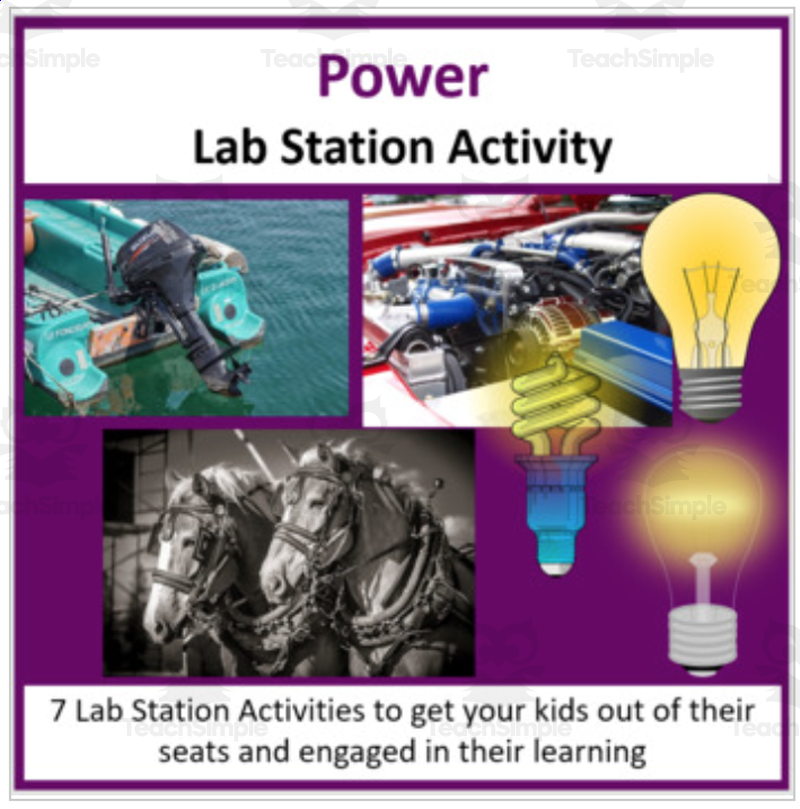
The Power-Lab Station Activity : An all-inclusive teaching resource designed specifically for passionate middle and high school educators. The ultimate goal is to facilitate a profound understanding of power physics through an engaging, interactive learning ecosystem presented via multiple activity stations, each comprising unique student engagement modes. Key Teaching Focus: Primarily focuses: On key physics concepts such as: Power Horsepower Energy efficiency Work and energy. Bonus Activities: The riveting word scrambles and searches related to the topic prevent idle-time between sessions. Diverse Stations: The Power-Lab Station Activity incorporates nine different stations. A station encourages students to "release their creativity". A station that uses technology for research purposes - enhancing their analytical skills. Incorporates writing tasks :This encourages learners' critical thinking abilities whilst getting them involved in reflective writing processes. Solely dedicated rest stations: Gives diligent learners time off or those with some extra work can catch up on unfinished tasks. Note: Last but not least another station motivates pupils creating multi-format questions stimulating strategic thought processes behind question framing consequential in collaborative educational environments. Advantageous features: One of the benefits is short readings that check comprehension by connecting the instruction with real-life applications and also testing knowledge through multiple-choice questions that require written explanations from learners. In line with today’s digital age, one of the stations compels students to watch a related video clip and dissect its aspects through inquiry-based learning techniques Ease of use: Teachers of grades 8-11 will find this package easy to use – simply print out or upload digitally! The resource is also editable and comes along with an answer key for easy assessments. The Power-Lab Station Activity : Conclusively, it meshes knowledge and creativity perfectly, making it an indispensable educational tool.
Author Teach With Fergy
Tags Power Physics, Interactive Learning, Student Engagement, Real-life Applications, Critical Thinking
Ecological Succession – Lab Station Activity
Science, Life Sciences, Biology, Grade 6, 7, 8, 9, 10, Labs, Experiments, Activities
This fully editable Lab Station on Ecological Succession is meant to get your students out of their seats and engaged in the content. Each station not only offers a unique opportunity to test your students' knowledge (offer an opinion, answer questions based on a video or reading, draw, etc.), but also provides a fantastic learning opportunity where your kids are learning through assessment. Each station comes with a description card while some also contain more detailed instructions, a reading, questions to answer, etc. Students are equipped with a recording sheet (passport) to write their answers. There is almost no prep for you. Simply print the cards, lay them out around the room and you're all set. An answer key is also provided where applicable. This lab activity covers: - Primary Succession - Secondary Succession - The Role of Forest Fires in an Ecosystem - Pond Succession ---------------------------------------------- Bonus Activities: To ensure your students don’t have any downtime between stations, your lab also includes a 10-word word scramble and word search, both with an answer key. You can use them as part of their mark, as a bonus so it’s not mandatory, etc. However you choose to use it, it will ensure that your students are always busy and never idle. Note: For stronger classes, I give the word scramble and for weaker ones, the word search. ---------------------------------------------- How do the Lab Stations work? Each station is specially designed to be a unique complement to the material while at the same time, provide a valuable learning experience. Below is an overview of how each station works. In your activity , each will be tailored to the specific content. Station 1: Get Hands-On – using their creative skills, students are required to draw or build. Station 2: Research – using a classroom computer or their own device, students must research a specific question/issue surrounding the topic. Station 3: Explain yourself – students write down an opinion to a question in paragraph form. Station 4: Rest Station - students can use this time to catch up on work they didn't have time to complete at a previous station or prepare themselves for an upcoming one. Station 5 - Applicability reading – students read a short passage from an article, website, etc. which directly connects the classroom content to a real life application. Station 6: Test your knowledge – students answer 5 multiple choice questions then provide a written explanation for how/why they came to their conclusions. Station 7: Learn from the expert – using a classroom computer or their own device, students must watch a short video clip and answer the associated questions. They may stop, rewind and restart as often as they like during the time frame. Station 8 - Rest Station. Station 9: Become the question master – Students must create 2 multiple-choice questions, 2 true/false questions and 1 short answer question. Students must also supply the answers. ------------------------------- You might also be interested in my other lab station activities Ecology and the Environment: • Ecosystems • The Classification of Living Things • Biodiversity and Invasive Species • The Carbon and Water Cycle • Climate Change • Photosynthesis • Cellular Respiration and Photosynthesis • Ecological Succession • Plant Sexual and Asexual Reproduction • Earth's Seasons • Interactions Within Ecosystems Biology: • Cell and the Cell Theory • The Human Digestive System • The Circulatory System • The Human Respiratory System • Mitosis and the Cell Cycle • Cellular Respiration and Photosynthesis • Photosynthesis • Cancer: Cell Division Gone Wrong - Volume I • Cancer: Cell Division Gone Wrong - Volume II • Cell Membrane and Transport • Hearing and the Human Ear • The Human Eye • Genetic Material: DNA and RNA • The Nervous System • Energy Flow In Ecosystems Physics: • Newton's Three Laws of Motion • Kinetic and Gravitational Potential Energy • Current Electricity and Circuit Diagrams • Static Electricity • Light Optics and the Production of Light • Sound, Sound Energy and Speed • One and Two-Dimensional Motion • Uniform Acceleration • How Planes Fly • Refraction • Friction • Energy and Its Forms • Density and Buoyancy Space Science: • The Life and Death of Stars • The Moon and its Phases • Life In Space • Our Solar System • Solar and Lunar Eclipse • Earth's Seasons • Asteroids, Comets and Meteors Chemistry: • Atomic Model, Notation and Atoms • Chemical Reactions and Balancing Equations • Molecular and Ionic Compounds • Physical and Chemical Properties & Changes • Acids, Bases, and Neutralization Reactions • The Periodic Table • Single and Double Displacement Reactions • Balancing Chemical Equations • Synthesis, Decomposition and Combustion Reactions • Atomic Theory, Atomic Structure and Isotopes • Types of Bonds and Intermolecular Forces • The Mole/Avogadro's Number • Density and Buoyancy These station cards are meant to be used as a lab activity but can also be utilized in a review task before a test or a quiz. Used either way, your students will love it! I know mine do and I'm telling you from first-hand experience as I've used this activity in my own class. Thank you for your interest in my products. If you have any questions, please send me an email - devon@teachwithfergy.com
Author Teach With Fergy
Tags Forest, Fire, Ecosystem, Soil, Ecology, Ecological Succession Lesson Plan
Life In Space – Lab Station Activity
Science, Earth and Environmental Sciences, Space, Grade 7, 8, 9, 10, Labs, Experiments, Activities
Life In Space Lab Station Activity Presenting an exclusive and innovative teaching tool, the Life In Space Lab Station Activity . Exploring the areas of space science and Astronomy,, it is tailored for active learning within Grades 7-10. A Multidimensional Learning Platform Unlike others This resource boasts of seven independent yet interconnected learning stations allowing students to engage in comprehensive space-themed activities. The activity styles include but are not limited to: Drawing or constructing Forming opinions on topics Multiple choice questions Video-based learning The flexibility is extended to include enriching research tasks that solidify their learning experience. Navigating Through the Stations The journey begins with understanding historic human space travel, delving deeper into International Space Station (ISS), appreciating the effects of microgravity on health and investigating sustainable long-term solutions for life in space. Note About The Exercise Cards at Each station: "Cards carry instructions about various exercises which range from simple Q&Ato advanced assignments digging deeper into each topic.” The Guided Self-Assessment Passport Sheet Students record their progress through lab stations on a sheet where they answer questions, enabling constant self-evaluation, goal-setting,mapping progressrate both for students themselves and teachers. Bonus Material – Fun With Vocabulary! Bonus content includes word scrambles & searches that extend vocabulary related lessons; ensuring student engagement soars high during every class. This highly interactive program accomodates different strength levels across a mixed ability group. Cooperation during group tasks coexists with independence for solo homework/assignments. WhyChoose "Life In Space - Lab Station Activity ?" "This program stands out for transforming passive lectures into hands-on exploration of the fascinating topic of life beyond Earth's atmosphere." Experience an education resource like no other; placed light years ahead in terms of learning effectiveness.
Author Teach With Fergy
Tags Space Science, Active Learning, Astronomy, Lab Activity, Engagement
Genotype and Phenotype – Lab Station Activity
Science, Life Sciences, Biology, Grade 8, 9, 10, 11, Labs, Experiments, Activities
Genotype and Phenotype Lab Station Activity This fully editable teaching resource for high school biology students focuses on concepts related to Genotypes and Phenotypes. These include: Dominance Co-dominance Incomplete dominance Single gene inheritance Punnett squares Sex linkage. The lab station activity comprises engaging reading assignments and questions that stimulate critical thinking. These can be performed individually or in small groups. The real-world relevance of the hands-on stations enhances the understanding of these biological concepts. The Eight Unique Stations: The teaching resource includes eight distinct stations that involve various tasks aimed at promoting independent thinking over mere memorization. To give an example, "The Get Hands-On station" requires students to draw or build something based on their knowledge, while "The Research" station has them using digital tools for further study. Other stations entail articulating opinions in writing on subject-related issues or developing multiple-choice and short-answer questions. Bonus Activities: Apart from the main tasks, we also provide two bonus activities: a word scramble and a word search. These serve as fillers during downtime between station transitions. Ease of Preparation for Instructors: All it takes is printing out cards and arranging them around your classroom. Where necessary, an answer key is provided making it easy for educators to assess student's performance. In Summary, The Genotype and Phenotype Lab Station Activity promotes immersive exploration of essential biological concepts. It nurtures skills such as critical thinking and creativity while promoting active student participation. This resource is aptly designed for grades 8 through 11 biology lessons.
Author Teach With Fergy
Tags Genotype, Phenotype, Lab Activity, Biology, Genetics
Interactions within ecosystems – Lab Station Activity
Science, Life Sciences, Biology, Grade 7, 8, 9, 10, Labs, Experiments, Activities
Interactions within Ecosystems – Lab Station Activity This science lab station activity enables students to explore biotic and abiotic factors that interact within an ecosystem. Learners will investigate concepts like symbiosis, limiting factors, exponential population growth, and predator-prey dynamics. The engaging lab stations feature creative hands-on tasks, research questions, opinion writing, applicability readings, knowledge checks, and video analysis. Students use a passport worksheet to record answers as they rotate through the self-guided stations at their own pace. This content can be used for in-class ecosystem labs or as a review before exams. Two bonus vocabulary building activities are also included to engage students. This activity covers core ecology standards and requires almost no teacher prep. Simply print and distribute the cards. An answer key is provided for applicable stations.
Author Teach With Fergy
Tags Ecosystems, Symbiosis, Predator, Lab Station, Activity
Integumentary System – Lab Station Activity
Science, Life Sciences, Human Body, Grade 7, 8, 9, 10, 11, 12, Labs, Experiments, Activities
This fully editable Lab Station Activity on the Integumentary System is meant to get your students out of their seats and engaged in the content. This activity was designed for middle and high school biology students. Each station not only offers a unique opportunity to test your students' knowledge (offer an opinion, answer questions based on a video or reading, draw, etc.) but also provides a fantastic learning opportunity where your kids are learning through assessment. Each station comes with a description card while some also contain more detailed instructions, a reading, questions to answer, etc. Students are equipped with a recording sheet (passport) to write their answers. There is almost no prep for you. Simply print the cards, lay them out around the room and you're all set. An answer key is also provided where applicable. This resource covers the following topics: - Skin layers - Hair - Sweat - Skin color - Sunburn and tanning - Nails Bonus Activities: To ensure your students don't have any downtime between stations, your lab also includes a 10-word word scramble and word search, both with an answer key. You can use them as part of their mark, as a bonus so it's not mandatory, etc. However you choose to use it, it will ensure that your students are always busy and never idle. Note: For stronger classes, I give the word scramble and for weaker ones, the word search. How do the Lab Stations work? Each station is specially designed to be a unique complement to the material while at the same time, provide a valuable learning experience. Below is an overview of how each station works. In your activity , each will be tailored to the specific content. Station 1: Get Hands-On – using their creative skills, students are required to draw or build. Station 2: Research – using a classroom computer or their own device, students must research a specific question/issue surrounding the topic. Station 3: Explain yourself – students write down an opinion to a question in paragraph form. Station 4: Rest Station - students can use this time to catch up on work they didn't have time to complete at a previous station or prepare themselves for an upcoming one. Station 5 - Applicability reading – students read a short passage from an article, website, etc. which directly connects the classroom content to a real-life application. Station 6: Test your knowledge – students answer 5 multiple choice questions than provide a written explanation for how/why they came to their conclusions. Station 7: Learn from the expert – using a classroom computer or their own device, students must watch a short video clip and answer the associated questions. They may stop, rewind and restart as often as they like during the time frame. Station 8 - Rest Station. Station 9: Become the question master – Students must create 2 multiple-choice questions, 2 true/false questions and 1 short answer question. Students must also supply the answers. ------------------------------- You might also be interested in my other lab station activities Biology: • Cell and the Cell Theory • The Human Digestive System • The Circulatory System • The Human Respiratory System • Mitosis and the Cell Cycle • Cellular Respiration and Photosynthesis • Photosynthesis • Cancer: Cell Division Gone Wrong - Volume I • Cancer: Cell Division Gone Wrong - Volume II • Cell Membrane and Transport • Hearing and the Human Ear • The Human Eye • Genetic Material: DNA and RNA • The Nervous System • Energy Flow In Ecosystems • DNA Manipulation and GMOs • Transcription and Translation • Cellular Respiration • Thermoregulation • Proteins and Nucleic Acids • Mutations • Meiosis • DNA, Genes, Chromosomes, and Alleles • Genetic Disorders • Fats • Reproductive Technologies • Muscular and Skeletal System • Integumentary System Coming Soon: - Excretory system - Endocrine system - Carbohydrates and Lipids Physics: • Newton's Three Laws of Motion • Kinetic and Gravitational Potential Energy • Current Electricity and Circuit Diagrams • Static Electricity • Light Optics and the Production of Light • Sound, Sound Energy and Speed • One and Two-Dimensional Motion • Uniform Acceleration • How Planes Fly • Refraction • Friction • Energy and Its Forms • Density and Buoyancy • Electricity Production • Calculating Average Speed, Velocity, and Displacement • Mass, Volume, Density, & Buoyancy • Work and Energy • Renewable Energy • Plate Tectonics • The Rock Cycle • Natural Disasters • Pressure, Volume, and Temperature Coming Soon: - Work = F x d - Nonrenewable energy sources - Projectile Motion - Momentum, Conservation of Momentum and Impulse - Power - The Doppler Effect and Supersonic Travel Chemistry: • Atomic Model, Notation and Atoms • Chemical Reactions and Balancing Equations • Molecular and Ionic Compounds • Physical and Chemical Properties & Changes • Acids, Bases, and Neutralization Reactions • The Periodic Table • Single and Double Displacement Reactions • Balancing Chemical Equations • Synthesis, Decomposition and Combustion Reactions • Atomic Theory, Atomic Structure and Isotopes • Types of Bonds and Intermolecular Forces • The Mole/Avogadro's Number • Density and Buoyancy • The Particle Theory and the Classification of Matter • Pure Substances and Mixtures • Solutions and Mechanical Mixtures Coming Soon: - Periodic table group properties General Science: • The Scientific Method and Science Skills • The Different Types of Clouds Ecology and the Environment: • Ecosystems • The Classification of Living Things • Biodiversity and Invasive Species • The Carbon and Water Cycle • Climate Change • Photosynthesis • Cellular Respiration and Photosynthesis • Ecological Succession • Plant Sexual and Asexual Reproduction • Earth's Seasons • Interactions Within Ecosystems • Physical and Behavioral Adaptations Space Science: • The Life and Death of Stars • The Moon and its Phases • Life In Space • Our Solar System • Solar and Lunar Eclipse • Earth's Seasons • Asteroids, Comets and Meteors These station cards are meant to be used as a lab activity but can also be utilized in a review task before a test or a quiz. Used either way, your students will love it! I know mine do and I'm telling you from first-hand experience as I've used this activity in my own class. Thank you for your interest in my products. If you have any questions, please send me an email - devon@teachwithfergy.com
Author Teach With Fergy
Tags Integumentary, System, Functions, Structure, Lab Station, Lab 8 Integumentary System Answers, Excretory System Labs