



3,885 products added recently
Page 7 - Hands On Activities
Engage your students with hands-on activities that make learning tangible and interactive. This collection includes experiments, building projects, and real-world problem-solving tasks. By integrating these activities into your lessons, you can enhance understanding and retention through experiential learning.

 Show filters


Mixed Numbers Recipe Doubling – Real-World Math
Math, Fractions, Grade 4, 5, 6, 7, Worksheets & Printables, Word Problems, Activities
Butter Tart Recipe (based on my grandma's actual delicious family recipe!) Here is a real-life example to help students practice adding and multiplying mixed numbers and improper fractions. When students ask, "When will we ever use this in real-life?!" you can show them this lesson and say that working with fractions is so common in baking. This delicious activity will allow students to practice using fractions with a realistic everyday example: baking! Students will take a recipe that has several fractions in it and double it. Half a cup of something becomes a cup and 3/4 of a cup becomes 1 and a half cups. After that, they need to figure out how much of each ingredient would be needed if the recipe was made five times bigger (perhaps in a bakery setting or for a large event). I encourage my students to use different strategies to complete this task: drawing pictures with squares, repeated addition, or multiplication. Boxes for diagrams and math calculations are included to encourage students to show their work. You could even have different students come up to show their personal strategies to the rest of the class. As an extension, students can bring in their own recipes from home in the next class and double them or multiply them by five as well. You might even want to actually make something tasty to eat too! What's Included: A total of 5 pages in PDF: Title Page 2 page assignment 2 page answer key Check out some of my other hands-on math activities. Search for my store: Grace Under Pressure Whole Class Decimal Place Value Game: Tenths to Millionths Math Representation: Percent, Ratio, Fractions, Decimals Posters (Culminating Activity) Algebra: Modelling Equations: Visual Balance Scale Sheet Geometry Project: Transformation Design Project with Rubric Math Project: Circle Graphs and Pie Charts
Author Grace Under Pressure
Rating
Tags Applied Math, Mixed Numbers, Improper Fractions, Doubling A Recipe, Hands-on Math, Real Life, Word Problem, Elementary Math, Fractions

Musical Instrument Design Challenge
Science, Physics, Not Grade Specific, Songs, Activities
Musical Instrument Design Challenge This innovative teaching resource has been carefully crafted to engage the creative minds of students. The challenge entails designing and building a new musical instrument, contemplating its functionality, its potential to create unique sounds, and identifying the core elements required for sound production. Unlike typical classroom tasks, this hands-on experience extends learning beyond textbooks and can be incorporated in a variety of educational contexts such as Genius Hour projects or Makerspace activities. Components Context: Clarity on why this task is important. The Task: A well-defined design challenge is laid out for students. Specifications: Clear instructions on what needs to be accomplished are presented. Constraints: The limitations of the project are defined. Materials Needed:List of required materials and corresponding tools. -liBahySteps:vhnbcniFollowing steps must be completed ThisIsStudents will receive tips that may prove helpful in accomplishing their task. /href"http:// www.com" target="_blank". Find out more... /p " This design challenge brings a real-life scenario focus into learning which not only improves practical understanding but also encourages creative solutions exploration by students. Thirdly, primarily aimed at Physical Science studies in school or homeschool settings , it also enhances Social Emotional Learning (SEL) opportunities by fostering collaboration abilities accompanied with problem-solving skills among students. Fourthly, Fifthly, Finally,
Author WhyMaker
Tags Musical Instrument Design, Creativity, Hands-on Learning, STEAM Education, Problem-solving

Snowman Patterns Math Center
Math, Patterns, Early Math, Kindergarten, Preschool, Centers, Activities
Snowman Patterns Math Center: An Overview Snowman Patterns Math Center is a comprehensive, engaging educational resource specifically designed to aid early learners in honing their mathematical abilities. Covering patterns with snowman themes, this 21-page PDF document offers fun-filled ways to strengthen learners' grasp of patterns. Variety and Flexibility The material provides both color and black-and-white options available. This provides flexibility for educators and versatility in meeting students’ diverse needs. Target Audience This teaching tool is primarily intended for early learning stages such as preschool and kindergarten. Key Focus Areas The focus lies on subtopics like patterns and early math concepts—crucial stepping stones for developing cognitive skills related to logic and reasoning. Purposeful Implementation This vibrant learning tool brings joy into the practice of finishing AB, ABB, AAB, and ABC patterns under different circumstances or settings. For instance: The material can be used as a primary resource during math center interactions or alternately implemented in small group work scenarios. Due to its activity -based nature it can also be used as a homework assignment while keeping education enjoyable. Preparation Guide: The preparation requires minimum effort: The game boards are conveniently formatted one per page in the downloadable PDF file – just print them out! If you want more durability (and several rounds of fun learning), consider cutting out cards from each sheet after printing then laminating them. Set Up Technique: Upon setup completion using diverse color unifix cubes alongside card sets within a tub ready for use: Your students will have an interactive environment that fosters exploration of math patterns. They can improve their fine motor skills by handling small objects like unifix connecting cubes. Additional Features Snowman Patterns Math Center package also includes blank cards on which users can craft their unique colors. These colors blend with the available cube shades—imparting additional creativity and enabling unique pattern building extensions. In Conclusion: This dynamic teaching resource strikes as a realistic approach to mathematics comprehension, offering practical engagement that both delights and instructs. It's an effective, individualized solution for educators seeking time-adaptable resources enabling students to pique curiosity and construct knowledge through guided pattern-building activities.
Author The Proactive Classroom
Tags Math Patterns, Snowman Theme, Interactive Learning, Hands-on Activities, Early Learners
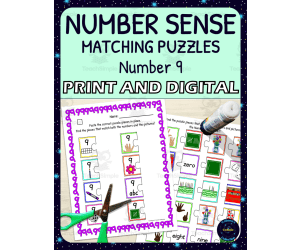
Number Sense Matching Puzzles for Number 9
Math, Early Math, Numbers, Kindergarten, Preschool, Grade 1, Activities
Number Sense Matching Puzzles for Number 9 A resource designed to nurture number sense skills, this product focuses on combining ease of use with complexity levels tailored to the needs of each student. Its aim is elevating learning experience and ensuring challenge appropriateness. Printable Worksheets The kit includes printable worksheets concentrating on the digit '9'. It encourages students to correctly arrange puzzle pieces, a task that bolsters hands-on skills as well as mathematical comprehension. Difficulty Levels In order to accommodate a wide range of learners, puzzles come in two difficulty levels: Level One: Features self-correcting puzzles. Here students will discover if they've successfully matched numbers based on how well their puzzle pieces fit together. Level Two: Promotes direct counting and accurate reckoning techniques." Variety & Adaptability This tool is highly adaptable and can be used in various methods according to curriculum planning or individual academic progress pace. Areas of implementation include introducing number recognition, reinforcement during small group activities or extra practice work dedicated towards children who are still trying to grasp Number Recognition concepts. Note: This teaching resource is also available in vibrant colour schemes & black-white alternatives - easy preparation with efficient printing options! (All set for both classrooms stretching out into homeschooling spaces ) . Dive into making maths more fun... "… one puzzle piece at a time!"
Author Colleen's Cosmic Collection
Tags Number Sense, Matching Puzzles, Hands-on Learning, Number Recognition, Differentiated Instruction

Play Dough Mats
ELA, Writing, Handwriting, Kindergarten, Preschool, Activities
Developing fine motor skills is an important part of early childhood development. Strong fine motor skills provide the foundation for activities like writing and cutting . This set of 23 play dough mats offers a fun way for children to build dexterity and hand strength. With engaging themes like shapes, spring, and transportation, these mats provide guided play dough play. As children pinch, roll, and flatten dough to complete the activities, they will be improving their fine motor control. The process of molding and manipulating dough builds finger and hand muscles. Young learners will be delighted as they create colorful dough designs. The open-ended mats allow for creativity and imagination. Children can develop cognitive skills like shape and color recognition as they engage with the different mats. The mats feature large pictures and minimal text - perfect for pre-readers. Made for repeated use, simply laminate these educational mats for durability. This resource offers an entertaining way to build key fine motor abilities. Children will build hand eye coordination and dexterity as they play with dough on these skill-building mats. This set includes 23 different play dough mats relating to shapes, spring and transport. Clipart images courtesy of Kari Bolt Children’s Illustrator
Author SEN Resource Source
Tags Fine Motor, Hand Control, Play Dough, Play Doh, Sensory Play, Creative Expression, Hands-On Learning, Imagination Play, Preschool Activities, Sensory Development
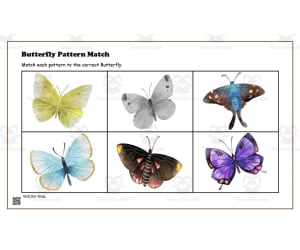
Butterfly Pattern Match Activity #2
Math, Patterns, Kindergarten, Preschool, Activities
Butterfly Pattern Match Activity #2 The Butterfly Pattern Match Activity #2 is incredibly engaging and provides an exceptional learning experience. Specially designed for infants in early academic stages like preschool or kindergarten, this activity promotes understanding Math, more specifically patterns. Flexibility and Sustainability This 4-page PDF butterfly-themed activity can be customized based on your teaching approach. For instance, print individual copies for each student to work independently. Or, save resources by creating a few laminated copies; use of Velcro dots enables reuse - perfect for small group activities or as interactive center tasks. A Fascinating Blend of Fun and Learning The first two pages feature vibrant butterfly images with unique patterns that promote pattern recognition development. The last two pages have requisite butterfly cut-outs students can match after identifying the corresponding patterns. In conclusion, the Butterfly Pattern Match Activity #2, pairs hands-on interaction with learning—introducing or reinforcing pattern skills among preschoolers while ensuring they remain intrigued throughout!
Author KD's Kids School Shop
Tags Butterfly Patterns, Preschool Activity, Kindergarten Math, Hands-on Learning, Pattern Recognition

Cupid February | Kindergarten Unplugged / Digital Coding
Science, Technology, Computer Science, Preschool, Kindergarten, Grade 1, Activities
Cupid February | Kindergarten Unplugged/Digital Coding is a unique teaching resource designed to introduce early-grade and kindergarten learners into the world of computer programming. This is a STEM-centred educational tool, which can be adopted with or without computers. Main Highlights: Based around "honey bees" , an engaging theme perfect for July learning activities. Packed with elementary logic puzzles reinforcing problem-solving skills, vital for "Hour of Code" initiatives. Inclusive of hands-on, printable puzzles with ‘snip-and-paste’ commands – making it action-orientated and captivating! Packaged Content: Broad Guidelines In-depth instructions guiding both teachers as well as students on using this resource effectively. Coding materials A colourful coding navigation chart & matching pieces planned to make children explore this tool more enthusiastically! Deregulation Sheet A fun-filled 'overcome the code worksheet' along with smartboard charts bringing collective pleasure into the system. All resources are conveniently packaged for printing (PDFs) or digital sharing (Google Slides). Tailoring To Your Teaching Plans: Easily adaptable materials allow you to make alterations in the code or remove unnecessary slides prior sharing them on platforms like Google Classroom. Students can either use physical printed out sheets or enjoy performing drag-and-drop exercises digitally! No Barriers With Distance Learning: This digitized operation makes Cupid February | Kindergarten Unplugged / Digital coding an effective tool even for remote classrooms! Resourceful For Varied Learners: Ideal for those looking for quality teaching material in traditional classroom settings, or homeschooling parents aiming to incorporate STEM education early in their curriculum. This well-thought-out educational resource turns complex concepts like computer programming into manageable, game-based exercises - making the journey into digital world more friendly and approachable! About Product Target Audience: Preschoolers through Grade 1 Supplementary Topic Coverage: Science; sub-subjects include Computer Science Type of Product: Activity toolkit Files Included: PDF format standardly sized at 11 x 8.5 inches or customizable Google Slides.
Author Roombop
Tags Educational Tool, Computer Programming, Coding, Logic Puzzles, Hands-on Activities
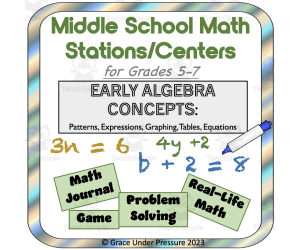
Middle School Math Stations or Centers: Early Algebra: Patterns, Expressions, Tables, Graphing, and Equations
Math, Patterns, Algebra, Graphing, Grade 5, 6, 7, 8, Centers, Activities
Math stations are a great way to get students engaged as they move about the room and work collaboratively with their peers. But they are a lot of work to prepare! This ready-to-go set of 5 stations will supplement a unit about early algebra concepts: patterns, expressions, tables, graphing & equations. Ways to Use: You can break your class into 5 groups and have them rotate one at a time through the centres, giving them 10-20 minutes at each one. Or, start students at certain centres and then allow them to move around at their own pace as long as no one centre gets too full. I find these are a great resource as you are finishing your unit and preparing for the unit test. Station 1: Word problems (Optional: set out white boards for students to use): These four word problems are about realistic situations involving money, memberships, and patterns. There is also a question that gets students thinking about how to solve equations using very simple numbers. Station 2: Partner game to practice evaluating expressions. Students play an "input/output machine" game with a partner. They will mentally evaluate simple expressions until their partner can guess which expression they are using from the chart. Then they switch roles. Station 3: Students create a growing pattern and write an expression to represent it. (Supplies needed: some kind of counters or cubes to make the pattern) I find my students often struggle to figure out the expression for a pattern in a table. One trick I use is to teach them to "Mind the Gap!" Look for the "gap" in the second column of the pattern. In this case it is increasing by 4. Always multiply that number by the variable, therefore 4n. Then see what you have to add or subtract to make it true for all of the inputs (in this case +2). Station 4: Practice solving one-step equations and graphing simple patterns. Students can use multiple methods to solve the one-step equations. Then they graph the growth of two plants and notice when one grows taller and why. Station 5: Students explain their thinking about equations in words in response to a journal prompt. Optional extension: online game to practice solving equations in a step-by-step manner. Grades to Use With: These stations could work with grades 5-8 or high school special education classes. Standards: CCSS5.OA.A.2 CCSS5.OA.B.3 CCSS6.EE.A.2 CCSS6.EE.B.5 CCSS6.EE.B.6 CCSS7.EE.B.4 If you like these stations, check out my other sets: Integer Stations Area, Perimeter, and Volume Stations Factors and Multiples Stations Decimals and Percent Stations
Author Grace Under Pressure
Tags Math Stations, Algebra, Math Games, Hands-on Math, Intermediate Math, Middle School Math, Patterns, Expressions, Graphing, Equations
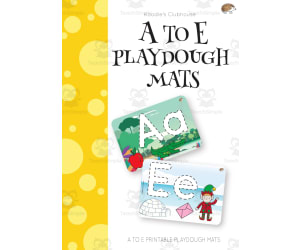
A to Z Playdough Mats
ELA, Language Development, Phonics, Preschool, Kindergarten, Grade 1, Activities
A to Z Playdough Mats Designed with educators in mind, A to Z Playdough Mats are an engaging resource to make learning the alphabet a fun-filled experience. This highly adaptable product features: A comprehensive set of 26 Alphabet Playdough Mats: One for each letter from Aa to Zz. Hands-on approach: This resource aids students' mastery of phonics and language arts effectively. Vivid images: All mats have vivid images showcasing initial sounds, and both upper and lower case versions of each letter. Versatility in Use The A to Z Playdough mats provide educators with versatility for different teaching methods. These can be used as: Mats during playtime—kids can roll dough into strips and place over the letters on each mat, aiding language absorption through kinesthetic technique. Drawing guide—a tool for children's drawing practice using board markers, enhancing their dexterity and familiarizing them with letter shapes. Clean Up and Maintenance Cleaning up after is simple; wipe it off with a moist cloth. Be cautious not to use permanent markers. If this happens, they can still be removed using rubbing alcohol. Ease of Usage No complicated preparation needed! A to Z Playdough mats are ready-to-use items that need only printing and lamination for longevity—ideal additions for your classroom resources without needing extra time or energy! Offered on every modern classroom worldwide, this resource introduces an interactive and vibrant element to routine learning. Objective The A to Z Playdough Mats is a remarkable tool that effortlessly combines fun with learning. Education whether at home or in schools becomes a captivating and lasting experience for our young learners.
Author Koodles Clubhouse
Tags Playdough Mats, Alphabet Learning, Hands-on, Kinesthetic Learning, Language Arts

Easter Egg Size Sorting Activity
Math, Measurements, Preschool, Kindergarten, Grade 1, Activities
Easter Egg Size Sorting Activity The Easter Egg Size Sorting Activity is an engaging and multi-faceted educational resource, specially designed for kindergarten, preschool, and grade 1 students. It offers a fresh take on bringing math lessons to life through an immersive thematic approach. Bearing the joyous Easter spirit in mind, this product uncovers opportunities for children to expand their understanding of measurements, data sorting skills, number value knowledge, and gross motor skills. Main Contents: A detailed instruction page that guides educators every step of the way in making the most out of this activity – from preparation to execution. Three pages representing basket mats with varying sizes (small to large). Six creative pages filled with Easter egg counters also available in different size scales. Learning Environments: This activity can be flexibly adapted across various learning environments: Homeschooling individual learners. Tackling the subject during whole group discussions. Involving small groups during interactive sessions Durability: All these resources have been crafted keeping durability in mind – print them out as many times as necessary according to your classroom size! After all preparations are done following precise instructions provided--cutting out and laminating materials--these can be constantly reused throughout different academic sessions. Incorporation into Lessons: The product can seamlessly integrate within your existing teaching plans whether it's a dedicated math center or part of daily math lessons. While celebrating Easter with a festive theme-based measurement game might appeal various classrooms; using it as an active learning exercise aids students' understanding about slotting items based on sizes. Apart from its primary purpose, this kit encapsulates mathematical ideas into an enjoyable artsy-crafty venture where problem-solving meets creativity; thus stimulating both logical reasoning ability alongside artistic expression among young minds. Final Words: In essence, the Easter Egg Size Sorting Activity equips educators with a well-rounded, interactive tool to make learning an engaging, hands-on experience for students. So this Easter season, celebrate not just the festivities but also your little ones' growing understanding of mathematics and beyond.
Author Koodles Clubhouse
Tags Easter, Size Sorting, Math Activity, Measurement, Hands-on Learning
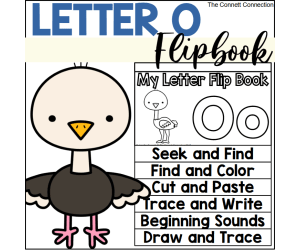
Letter O Flip Book
ELA, Language Development, Phonics, Kindergarten, Preschool, Activities
This letter O flipbook is the perfect tool to help preschoolers and kindergarteners learn all about the letter O! The different pages in this flip book allow students to practice recognizing the letter, writing the letter, and identifying words that begin with the letter. What is Included: This flip book has a cover page for students to simply color. The seek and find page practices letter recognition by having students identify capital and lowercase forms of the letter. The find and color page practices letter recognition of the target letter from other letters of the alphabet. Students can use dot markers to mark the letters, they can color in the letter or use stickers to cover the letters. The cut and paste page allows students to work with scissor skills to cut out examples of the letter from either printed materials, like magazines or newspapers, or students can use the letters provided at the bottom of the page. The trace and write page allows students to practice tracing and writing the capital and lowercase forms of the letter. The beginnings sound page has students coloring the pictures that begin with the letter. The trace and draw page has students tracing a word that begins with the letter, then drawing a picture to represent that word. When to Use: Literacy Centers - This flip book can be placed in a literacy center for students to work on identifying the letter. Morning Work - This flip book is a perfect morning work activity. Doing one or two pages each morning, students can finish one flip book a week. Homework - These flip books can be sent home for parents to work with letter recognition with their children. Small Group Activity - Students who need extra help with identifying letters and sounds can work with the teacher in a small group setting.
Author The Connett Connection
Tags Flip Book, Hands-on Learning, Phonics, Literacy Centers, Letter O, Letter O Activity

Number Sense Matching Puzzles for Number 8
Math, Early Math, Numbers, Kindergarten, Preschool, Grade 1, Activities
Number Sense Matching Puzzles for Number 8 The Number Sense Matching Puzzles for Number 8 is a printable teaching resource designed to enhance your student's understanding of number sense, particularly the number 8. It offers a hands-on activity that complements varied learning styles for improved engagement and retention. Utilization To use this resource, one has to simply print out two pages per student - the main worksheet and the page containing puzzle pieces. Students are then expected to cut these pieces and affix them onto their worksheets in order to solve the puzzles. Variations in Difficulty Levels This product features two levels of difficulty: Easy version: In which each puzzle piece only fits together with its corresponding spot on the worksheet. Difficult version: Where all shapes are identical regardless of their associated number value, thereby encouraging critical thinking skills alongside counting and matching. Purposeful Utilization Scenarios This tool can be expertly employed during scheduled lessons on Number Recognition or Number Sense. Possibilities extend beyond these sessions too; it can serve as homework assignments, Maths centers activities during indoor recess or extra practice for those who may be struggling a bit with number recognition. Evaluation with Answer Key An answer key provided explicitly for teachers facilitates checking students' completed tasks. This not only instills confidence in learners but also holds them accountable by benchmarking their progress against set standards - replicating real-world scenarios such as tests. Note:The students who stand to benefit most from this teaching aid range from early learners up till first-grade level across homeschooling settings. Printing Options and Curriculum Alignment These resources support both colour and black-and-white printing options. They closely align with Early Math curriculum standards, specifically within Numbers subtopics - enhancing foundational math skills effectively.
Author Colleen's Cosmic Collection
Tags Number Recognition, Number Sense, Matching Puzzles, Hands-on Activity, Early Math

Mathematicians in the Making: Comparing Numbers to 10 000
Math, Early Math, Grade 3, 4, Activities, Games
Mathematicians in the Making: Comparing Numbers to 10,000 An interactive tool designed to impart third-grade students with knowledge about number comparison. This learning-enhancing resource is packed with exciting activities shaping the understanding of essential mathematical concepts. The Unique Features: An engaging way for learners to study numbers from units up until ten thousands Activities such as sorting ice cream scoops add a hands-on element to learning Caters to a diverse set of learners - those needing extra support, learners with IEPs and math-savvy pupils in search of additional challenges Learning Outcomes: Aims at strengthening foundation knowledge by teaching greater than, less than, and equal-to comparisons. Promotes critical thinking by encouraging analysis and comparisons between different numbers. Ease-of-use: This user-friendly resource can be effortlessly printed out and laminated for longevity. Suitable for various classroom settings such as whole group instruction or small group work during various times throughout the academic year. Create-While-Learn Approach: The tools' innovative approach involves amusing ice cream scoop illustrations introduces an enjoyable factor into learning without compromising on informational content. The Tools Included: Base cones labeled with numbers ranging from tens till ten thousand - enhancing visualization of numerical values. An array of ice cream scoops for recognizing correct and incorrect number comparisons - these are available as backline masters. Overarching Goal: Mathematicians in the Making: comparing numbers to 10,000 aims not just at boosting mathematical prowess but also at infusing fun into learning. This is a great resource for teachers who aim to foster strong mathematical skills across varying ability levels amongst Grade 3 and Grade 4 pupils.
Author I Heart Grade 3
Tags Number Comparison, Hands-on Learning, Critical Thinking, Interactive Activities, Mathematical Concepts

Candy Cane Patterns Game
Holiday & Seasonal, Holidays, Christmas, Math, Patterns, Kindergarten, Preschool, Grade 1, 2, 3, Games, Activities
The Candy Cane Patterns Game An imaginative resource combining education and fun into a Christmas-themed activity suited for preschool, kindergarten, and grades 1-3 students learning patterns in their math lessons. Ideal for your winter or holiday unit activities. Main Feature: This game not only aids in children's learning but also enhances their fine motor skills. Assembling beads and pipe cleaners to form patterns provides a hands-on experience that kids will enjoy. They end up with cute candy cane shaped creations! Materials Needed: A set of printed pattern cards (AB, AAB, ABB, ABC patterns) provided A tub filled with pony beads in different colors Half-cut pipe cleaners Instructions: Pick a card from the set. String the beads onto the pipe cleaner following the pattern on the selected card. Bend one end of the finished bead-patterned pipe cleaner into a curve to create candy cane shape. Show off your creation! Note: You can explore more Christmas-related math activities included in this PDF bundle. Simple to print out as it comes in PDF format - suitable for any device capable of opening this file type. In Learning, Sometimes its not textbooks alone that aid effective learning - Smiles too can help grasp knowledge better!
Author The Proactive Classroom
Tags Candy Cane Patterns, Christmas-themed Game, Math Activity, Hands-on Learning, Fine Motor Skills

Amusement Park Ride Design Challenge
Science, Physics, Not Grade Specific, Activities
Amusement Park Ride Design Challenge Amusement Park Ride Design Challenge is a teaching aid ideal for educators looking to instill creativity, innovation, and critical thinking in their students. Designed for use across different grades, this activity-based resource has no grade-specific restrictions. This pack presents ready-to-use design challenges meant to stimulate students’ innovative skills while engaging them in the learning process. Suitable as an instructional tool during makerspace lessons, genius hours, independent study sessions, STEM subjects learning time or afterschool camps—these design challenges are versatile. Description of Challenges Context: Provides clarity around the theme of challenge. Design Challenge: Explains what tasks need to be accomplished. Specifications:The requirements that must be adhered to are listed here. Constraints:The limitations posed by this assignment are enclosed here. Materials essential:A list of equipment needed for completing the task is supplied here. Tools: A detailed description of tools needed for implementing solutions of tasks assigned is provided here. Tips and Highlights Beyond these guidelines are tips offering helpful information that can impact how students approach problem-solving through these assignments. The challenges foster learner autonomy while requiring them to contemplate real-world situations tied directly with content standards. A highlight about these Challenges remains its alignment with physical science subject indicating its adaptability across STEAM classes or technology-oriented teaching sessions. The actual implementation uses multiple file types catering towards maintaining creative flexibility in condensing complex concepts into ingenious solutions. In essence, this bundle keeps your students inspired whilst harnessing their energy into developing innovative designs while still meeting educational objectives. Experience immersive hands-on learning with the 'Amusement Park Ride Design Challenge' Immerse your young learners in enriching hands-on experiences that utilize a learn-by-doing approach by incorporating this value-packed addition into your curriculum today!
Author WhyMaker
Tags Amusement Park, Design Challenge, Hands-on Learning, Critical Thinking, STEM
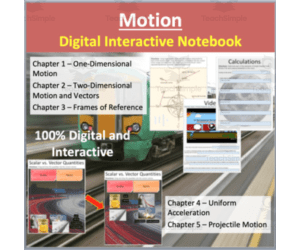
Motion – Digital Interactive Notebook
Science, Physics, Grade 8, 9, 10, Activities
The Motion - Digital Interactive Notebook The Motion - Digital Interactive Notebook is a comprehensive teaching resource designed to aid the process of educating students about motion physics. This high school level tool offers an interactive, digital approach, adopting new-age methods of classroom engagement and learning. Accessibility and Design Catering specifically to classes with 1:1 student-device ratios, this digital notebook can be accessed via any electronic device ranging from Chromebooks and Cellphones to Tablets. The resource includes 18 engaging activities spread across 27 highly interactive pages that covers various aspects of motion. Tech-friendly Traditional Layout with Customizability Using cloud services like Google Drive or OneDrive, this Digital Interactive Notebook combines tradition with technology by sporting a design akin to traditional notebooks yet leveraging the capabilities offered by digital platforms. With customization being key, the majority of components in this resource are editable; moreover, slides can be easily added or removed as per the learning requirements in your classroom. Inclusive Content "One-Dimensional Motion" "Two-dimensional motion & vectors" "Frames of Reference" \ \ "Uniform Acceleration"\endlistitem>\ \\ "Projectile Motion"\end listitem> Digital Advantages No physical storage space required and personal device suffices perfectly well—making it accessible anywhere at any time.. Once purchased allows you access your own copy conveniently stored in your Google Drive folder which you then distribute among students without worrying about physical materials or their misplacement. Variety Of Activities And Security Measures Interactive drag-and-drop exercises, videos with learning questions, calculation questions, fill-in-the-blanks and auditory answer exercises diversify the learning methods. Room for personal note-making is possible through extra slides. Plagiarism checks in place RETURN Carriage ReturnDespite the transition from physically engaging with paper-and-pen notebooks to digital ones, students do not lose hands-on experience but gain technological fluency. Customisable Per Grade And Curriculum The Motion - Digital Interactive Notebook can be adapted according to your curriculum requirements aiding easy understanding and better retention of physics concepts around 'Motion.'
Author Teach With Fergy
Tags Interactive Learning, Physics Education, Digital Notebooks, Motion Physics, Hands-on Experience

95 Nouns Sight Words, Playdough Mats
ELA, Reading, Language Development, Spelling, Vocabulary, Grade 1, 2, 3, Activities
Introducing: 95 Nouns Sight Words Playdough Mats The 95 Nouns Sight Words Playdough Mats is an engaging educational resource suitable for teachers and parents alike. With a clear focus on common nouns sight words, this set of playdough mats offers a hands-on learning experience that can enhance literacy skills and contribute to successful early reading and spelling. List of Features Covers 95 sight words including simple ones like 'apple', 'boat', 'cat' as well as complex terms such as ‘Christmas’, ‘Santa Claus’. Tactile play for enjoyable learning which boosts fine motor skills, word recognition, and reading fluency. Clear bold lettering for each word with an added blank space underneath for writing practice. Versatile design that can be incorporated into existing lesson plans or used independently. Educational Benefits and Uses This resource provides several benefits in both classroom settings and at home: Ideal for whole group instructions,suitable also for smaller groups or individual workstations. Promotes learning continuity at home—parents can utilize these mats to support their child’s developing literacy skills during out-of-school hours or summer breaks, making homeschooling more interactive and effective. The PDF file includes 48 pages (US Letter Size) aimed primarily at Grade 1-3 students focusing on Language Arts subjects including Reading, Spelling, Vocabulary integrated into exciting activities. In Summary... If you're seeking a combination of fun-filled yet factual teaching method aiming immense linguistic development –whether you are in traditional classrooms or at home - the 95 Nouns Sight Words Playdough Mats are a comprehensive, practical, and enjoyable tool to boost young learners' competence in reading and writing.
Author TeacherYouWant
Tags Nouns Sight Words, Playdough Mats, Early Literacy, Hands-on Learning, Vocabulary Development
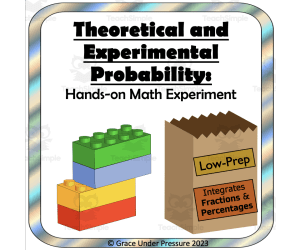
Theoretical vs Experimental Probability – 2-Page Task
Math, Percentages, Fractions, Statistics, Grade 4, 5, 6, 7, Worksheets & Printables, Word Problems, Activities
Theoretical and Experimental Probability: A Hands-On Math Exercise (with Fractions and Percentages) This is a ready-to-use, engaging, two-page math activity designed for intermediate students in grade levels 4 through 7. The product lets your students easily conduct a simple probability experiment that will help them grasp the concepts of theoretical and experimental probabilities. They will also tie this learning into other math topics by converting fraction results into percentages. Items Needed: Paper bags filled with items that are red, yellow blue, and green. Ideal items can be Legos, blocks or counters. Bags should contain amounts of items that will easily convert from fractions to percentages- so 5 items, 10 items, 20 items, or 25 items are ideal. Features: Fits seamlessly into any probability or percentage unit Serves as excellent practice for reinforcing equivalent fraction and percentage concepts How to Use: Split students into small groups. Give each group a bag of items and a worksheet (double-sided) for each member. Students will explore their bag: count the total number of items, count how many there are of each colour, write each colour as a fraction, and convert that to a percentage. This is the theoretical probability of each event. Then they perform the experiment: pulling one item from the bag and replacing it twenty times. They will use a tally chart to record the colours pulled. They will turn their results (fractions out of 20) into percentages. This is the experimental probability. Finally, students reflect on if the theoretical and experimental probabilities matched or did not and why that could be. Grades to Use With: This activity is designed for students in grades 4-7 who are learning about equivalent fractions, percentages, and probability experiments. What's Included: 3 page PDF: Title Page and 2-page handout. Copy double sided and you are ready to go!
Author Grace Under Pressure
Rating
Tags Probability Experiment, Theoretical Probability, Experimental Probability, Fractions, Percentages, Math Experiment, Hands-on Math, Probability, Math Activity, 7th Grade Math

Activities To Help Kids Read Words With Initial & Final Consonant Blends
ELA, Language Development, Phonics, Preschool, Kindergarten, Grade 1, 2, Activities
Activities To Help Kids Read Words With Initial & Final Consonant Blends is an educational resource designed for young learners aged three and up. This pack offers a range of exercises that utilize a phonics-based teaching approach, suitable for individual students, small group instruction, or larger classroom activities. The activities focus primarily on the recognition and application of initial and final consonant blends. A sentence maker tool allows children to exercise their word-building skills with words ranging from two to five letters in length. The inclusion of a short story about 'Tom' provides real-world context for practicing reading skills. This resource is also user-friendly for homeschooling parents due to its clear instructions. Indeed, it encourages independent learning through hands-on exercises like word building activities and phonic sounds-based sentence creation activities. Additionally, it integrates interactive games like Snap and Bingo to add fun and enjoyment in learning. Leveraging Phonics For Reading Proficiency In providing an early introduction to phonics, the product effectively prepares Preschoolers through Grade 2 pupils in Language Arts. These are achieved while progressively developing their abilities to sound out words accurately using alphabetic sounds introduced in this material, Creativity In Learning Besides cultivating reading skills, this collection also engages children's creativity by encouraging personalization on related drawings thus adding depth based on their ideas. Moreover, its structured layout where each new sound concept builds upon its predecessor makes progression easy-to-follow yet comprehensive at heart targeting full understanding over rote mastery. On Repetitive Practice Potential:This resource's repetitive nature helps cement new concepts into memory thus enhancing learner retention over time — making them capable readers — particularly maximizing its use not only as an introductory guide but also as a tool for consistently reinforcing linguistic skills among young learners.
Author Guinea Pig Education
Tags Phonics-based Teaching, Reading Skills, Initial Blends, Final Blends, Hands-on Engagement

The Wind Powered Car: Cross Curricular STEM Project (Grades 3-5)
Science, Earth and Environmental Sciences, Environmental Science, STEM, Grade 3, 4, 5, Activities
The Wind Powered Car is an engaging cross-curricular STEM project for grades 3-5 that spans several days. Students will read about alternative energy, design and construct a prototype of a wind-powered car, collect and analyze data, create line plot graphs, and write an informational "how-to" piece. This project integrates reading, writing, math, and science standards with hands-on learning. Detailed lesson plans are included covering key concepts like asking questions, measurement, data collection, and engineering design. Students will be actively engaged as they learn about wind power, build and test their car designs, record performance data, and document the process. This project can flexibly fit a 2-day mini-unit or extended for a full week. It's a dynamic way to launch the school year or celebrate Earth Day while embedding mathematical practices and inspiring a love of STEM.
Author Beyond Traditional Math
Tags Wind Power, STEM Project, Cross-curricular, Hands-on, Earth Day

Measurements: Height
Math, Measurements, Grade 1, 2, 3, 4, Activities
Measurements: Height This Measurements: Height resource is a tool designed for Grades 1-4, which provides an interactive way to help students understand measurements. The activity can be incorporated into your Math curriculum, where the emphasis is on Measurements. Interactive and Engaging Learning The Measurements: Height resource creates opportunities for learners to create visual representation comprising their actual heights. It includes comprehensive tables that allow students to note down their heights, facilitating an understanding of real-life applications of measurements. Multifaceted Usage Two-page product contained in a zip-file that's perfect for hands-on learning in class or assigning as homework. A flexible tool suitable for whole group instruction, one-on-one sessions, or small group activities. All contents are editable allowing educators to adapt activities based on individual student needs hence promoting differentiated instruction. Doubles as an excellent tracking tool as it affords ample space to monitor individual height changes throughout term periods. Measurements: Height offers more than just increased proficiency in mathematics. The product instills practical skills by enabling learners connect educational material with personal physical growth – something children this age absolutely love! This Measurements: Height is ready to use! Just print and go! For similar and other resources, visit my store!
Author Elementary Resources 4 U
Tags Measurements, Height, Interactive, Hands-on, Visual Representation
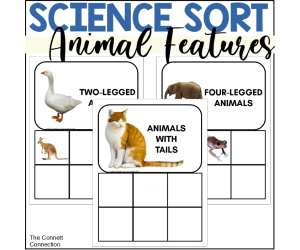
Animal Features Sort
Science, Life Sciences, Biology, Grade 1, 2, 3, Activities, Centers, Assessments, Teacher Tools
Allow students to sort animals by their various features. What is Included: There are sorting card headers for each animal feature. There are sorting mats for each animal feature. There are six picture cards for each of the sets of sorting activities. The animal features included in this set include: No legs, two legs, four legs, more than 4 legs, animals with fur, animals with scales, animals with feathers, animals with wings, animals with tails, animals that can fly, animals that can swim, animals that live in groups, animals that live alone, animals with tusks, animals with horns, animals that jump, animals with hooves, animals that lay eggs, animals with claws, animals with shells, animals with spots, and animals with stripes. Each sorting mat includes a real life example of an animal that belongs in that animal group. All of the picture cards also include real photographs of each animal. What Questions are Asked: To use these, students will lay out either the header cards or the sorting mats. They will then sort the animal images beneath or on top of the correct sorting mat. When to Use: Science Center - The sorting mats can be placed in a science center for students to learn about living things and what they eat. Morning Work - These animal sorts can allow teachers to create quick and easy morning activities for students while they wait on their classmates to arrive to class. Independent Practice - These animal sorts are great for students to independently work on living things. Emergency Sub Plans - The low prep nature and easy to set up activity , makes these worksheets a great activity to leave with subs to assign to students. Small Group Activity - These animal sorts can be used in small groups so teachers can target the students who need extra practice with living things. Writing Review Activity - These animal sorts work well as a review to reinforce student's learning of living things. These sorting activities are easy to create. The mats just need to be printed out. The picture cards need to be printed and cut apart. Once made, the sort can be used over and over.
Author The Connett Connection
Rating
Tags Science Sort, Hands On Assessment, Animal Features, Animal Adaptations

Cut Out And Write The Story Of Goldilocks And The Three Bears (6-9 years)
ELA, Writing, Creative Writing, Grade 1, 2, 3, 4, Activities
Product Description Crafted especially for educators focused on building comprehension and fostering creativity, the 'Cut Out And Write The Story Of Goldilocks And The Three Bears' is a necessary asset. Catering to ages 6-9, or between Grades 1 to 4, this product is specifically designed around the principles of Language Arts and Creative Writing. Based on the classic story of 'Goldilocks and The Three Bears,' this teaching resource provides a unique twist. Instead of sticking to conventional script reading, students are encouraged to physically interact with the story using cut-out pages. These pages are meant to be arranged according to their place in the narrative - beginning, middle, or end - offering a hands-on approach for understanding plot structure. The Unique Twist However, that's only part of what makes this teaching aide valuable. Once students have sorted out pages and read through their version of 'Goldilocks And The Three Bears', they're encouraged further—to re-write their own edition. This encourages children not just in grasping information but also promotes imaginative writing—boosting creativity while sealing core concepts. Brainstorming stories: Jumpstarting children’s ventures into brainstorming stories couldn't be more exciting than with recognizable fairy tales like ‘The Three Billy Goats Gruff’. Narrative planning: These fables provide clear examples that exhibit key storytelling components: characters setting, plot development along with structuring narratives effectively. The Product Details This product comes packed as Activities type PDF file format with interactive writing challenges which double up as prompts for unit tests or creative homework assignments. Irrespective of whether it's used one-on-one or in group settings— small study groups or whole-class participation— its demonstrated effectiveness remains constant offering flexible utilization across diverse educational scenarios. If you're an educator who believes in integrating multi-sensory learning into your classroom environment while simultaneously cultivating creative thinking skills among young learners – ‘Cut Out And Write: The Story Of Goldilocks’ is just what you need! For an added sprinkle of magic, each pack features charming silhouette images to illustrate the work, making learning all the more enchanting for young minds.
Author Guinea Pig Education
Tags Comprehension, Creativity, Hands-on Learning, Storytelling, Interactive

St. Patrick's Day Number Seek and Find Mats with Clovers
Holiday & Seasonal, Holidays, St. Patrick's Day, Math, Early Math, Numbers, Kindergarten, Preschool, Activities
St. Patrick's Day Number Seek and Find Mats with Clovers Designed with the preschool and kindergarten teaching professional in mind, these clover themed mats offer a refreshing approach to teaching number recognition while fostering handwriting skills as well. Covering numbers from 1-20 , these versatile tools will help young learners enjoy the process of finding numbers and tracing them onto the provided mats. A unique feature of this resource is its adaptability for various usage scenarios: As a hands-on math center activity It becomes a write-and-wipe activity when laminated or inserted into page protectors Inspires fun sensory bin experiences by placing letter cards amid sensory materials Use it for 'Write the Room' activities where young explorers find hidden cards around their environment and then trace or write them onto their mats. 'Find & Cover' sessions elevate excitement when students draw a card then use magnets or bingo chips to cover corresponding numbers on their sheets! Dotting exercises are also doable if coupled with bingo markers. This resource serves not only as an efficient way to keep young minds engaged during lessons but also offers endless possibilities regarding ways students can seek out each number featured on our charmingly designed Number Seek & Find Mats! The worksheets demand minimal preparation: simply print out and distribute as needed - whether it's homework assignments or small group exercises you envision, we've got you covered! Within your digital kit you'll discover: The range mat encompasses 0-5; The wider range mat covers 0-10; The broad horizon mats span from 0-20. Number cards from 0-20 complete your teaching kit. Finally, St. Patrick's Day Number Seek and Find Mats with Clovers were crafted with the intent to reduce both stress and preparation time faced by educators of today - sit back and engage in fun maths activities along with your students! This could be implemented in public school learning areas or versatile spaces within home-school setups alike. This resource supports early mathematics development across an age range suitable for both preschoolers and kindergartners.
Author The Connett Connection
Tags St Patrick's Day, Number Recognition, Math Center Activity, Hands-on Learning, Sensory Bin