



3,904 products added recently
Page 4 - Middle School Science Projects
Support your middle school students with science projects that encourage deeper exploration of scientific concepts. Activities include advanced experiments in chemistry, physics demonstrations, and ecological studies. By incorporating these projects into your teaching, you can enhance understanding and inspire a passion for science.

 Show filters

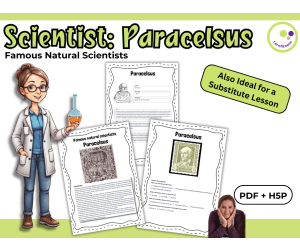
Paracelsus – Scientist Profile and Reading Activities - PDF + H5P
Life Sciences, Science, STEM, Social Studies, Biographies, Inventors, Basic Science, Physics, Chemistry, Human Body, Grade 6, 7, 8, 9, 10, 11, Worksheets, Worksheets & Printables, Quizzes, Quizzes and Tests, Teacher Tools, Projects, Activities
Paracelsus – Scientist Profile and Reading Activities Informational Text, Quiz & Interactive Version (PDF + H5P) ⚗️📄 This resource introduces students to Paracelsus (Philippus Aureolus Theophrastus Bombastus von Hohenheim), a groundbreaking figure in the history of medicine and chemistry. Known for his belief that chemical substances could be used as treatments and for challenging traditional medical thinking in the 16th century, Paracelsus remains a fascinating figure for students exploring early scientific ideas. Designed for secondary classrooms (grades 7–10), this resource supports both content-based science instruction and interdisciplinary work, such as lessons on the history of science, alchemy, or early medicine. What’s included: Informational text on the life and work of Paracelsus Student profile worksheet to summarize key facts Quiz questions with answer key Extension activities: – Write your own questions about the text – Exchange questions with a classmate and answer theirs Formats: – Printable PDF – Editable DOCX (text only) – H5P (text-based interactive version for LMS use) How it works in class: Students begin by reading the short text, either independently or in pairs. They then complete a profile with guided prompts to help structure what they’ve learned. The included quiz questions check reading comprehension and can be done in writing or as a group discussion. For early finishers or more advanced learners, the extension tasks allow for critical thinking and peer interaction. The material is especially practical for substitute teaching since everything is self-contained and doesn’t require subject-specific knowledge. It also works well in blended or digital learning contexts thanks to the H5P version, which students can complete online with automatic feedback. Minimal prep – just print or upload and you're ready to go. Have fun exploring the world of science with your students! Warmly, Lernfitness Did You Know? I teach with a certified therapy dog, and together we focus on creating a positive and inspiring learning environment.
Author Lernfitness
Rating
Tags Science, Famous Scientists Lesson, H5P, Interactive Science Exercises, STEM, History, Scientists, Chemistry, Scientific Concepts
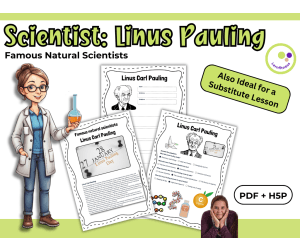
Linus Pauling – Scientist Profile and Reading Tasks
Life Sciences, Science, STEM, Social Studies, Biographies, Inventors, Basic Science, Physics, Chemistry, Technology, Grade 6, 7, 8, 9, 10, 11, Worksheets, Worksheets & Printables, Quizzes, Quizzes and Tests, Teacher Tools, Projects, Activities
Linus Pauling – Scientist Profile and Reading Tasks Comprehension Activities A short reading and activity set (PDF + H5P) ⚗️📘 A printable and digital resource for grades 7–10 science and cross-curricular teaching 🧪🧠 This ready-to-use resource introduces students to Linus Carl Pauling – a groundbreaking chemist and one of only two people to receive two unshared Nobel Prizes. His work on chemical bonding, molecular structures, and vitamin research shaped modern chemistry and continues to influence science education today. He’s also remembered for his outspoken views on peace and social responsibility, which makes him an interesting figure across subject areas. The material is designed to help students understand both the scientific and personal contributions of Pauling. It includes a short reading text, a guided profile worksheet, and a short quiz. Two extension tasks allow students to engage more deeply with the text by creating their own questions and discussing them with a partner. What’s included: Informational text on Linus Pauling (student-friendly language) Printable worksheet for creating a profile Quiz questions with solutions Two optional tasks for independent or pair work Formats: – PDF for print and digital use – Editable DOCX (text only, without images) – Interactive H5P version (suitable for most learning platforms) How it can be used: I’ve used materials like this during units on chemical bonding, scientific biographies, or even in interdisciplinary lessons that connect science with ethics or activism. It’s also worked well for cover lessons, as the structure is simple and students can work independently. The H5P version allows students to complete the quiz digitally and get instant feedback, which is helpful in blended learning environments or for homework. The tasks are flexible: they can be used as a full lesson, a review activity, or a meaningful extension when you want to slow down and connect content to real people. Minimal prep. Easy to adapt. A great way to make science a little more human. Have fun exploring the world of science with your students! Warmly, Lernfitness Did You Know? I teach with a certified therapy dog, and together we focus on creating a positive and inspiring learning environment.
Author Lernfitness
Rating
Tags Science, Famous Scientists Lesson, H5P, Interactive Science Exercises, STEM, Scientists, Chemistry, Linus Pauling, Nobel Prize Winner, Chemical Bonding

Research: World of Mammals: Lagomorphs
Science, Life Sciences, Biology, Grade 8, 9, 10, Activities, Projects, Worksheets & Printables, Worksheets
This Research: World of Mammals: Lagomorphs book contains science and literary activities. It has a mixture of activities including a cartooning component. There are anatomical activities,essay, data worksheets on a variety of 13 rabbits, and additonal literary segments. There is a quiz on content knowledge. It is a fun learning independent work book. This Research: World of Mammals: Lagomorphs includes the following topics to be researched to complete the booklet: 1 Essay: What really is a rabbit? 2 Terminology 3 Anatomy of a Rabbit 4 Life Cycle of a Rabbit: Art/ Drawing Activity 5 Pygmy Rabbit 6 Antelope Jackrabbit 7 Snowshoe Hare 8 Arctic Hare 9 Black-tailed Jackrabbit 10 European Hare 11 Alaskan Hare 12 Swamp Rabbit 13 Desert Cottontail 14 Brush Rabbit 15 Eastern Cottontail 16 Mountain Cottontail 17 Marsh Rabbit 18 Science Acrostic Activity : A literary/ stem activity combination 19 Create a Limerick: A literary activity 20 Word Search 21 Cartoon Activity 22 Science Vocabulary Jumble Puzzle 23 Answer key: Science Jumble Puzzle 24 Quiz: Stem/ Science Content Knowledge 25 Answer key: Quiz This Research: World of Mammals: Lagomorphs is designed to be completed either individually, in groups, or pairs of students. It can also be assigned all together or in parts.
Author THE LANTERN OF KNOWLEDGE
Tags Rabbits, World Of Mammals, Lagomorphs, Independent Research, Science Research

Terrestrial and Aquatic Biomes Research Project 4th 5th 6th 7th Grade
Research, ELA, Writing, Formal Writing, Science, Earth and Environmental Sciences, Environmental Science, Grade 4, 5, 6, 7, Worksheets & Printables, Worksheets, Writing Prompts, Drawing Templates & Outlines, Teacher Tools, Rubrics, Activities, Projects
Here is a ready-to-go terrestrial and aquatic biomes science research project for your students in 4th, 5th, 6th or 7th grade. Each student will choose a terrestrial or aquatic biome, complete focused research about it, and create an organized project with paragraphs and visuals to share their learning. How to Use: •Print pages 2-13 for each student. •Page 2 has clear instructions for the project including a website students can use to select their biome, places to write due dates, and a checklist to keep students on track. •Page 3 has seven different prompts for students to research. Each student needs to pick at least four prompts to include in their unique project. •Pages 4-6 are graphic organizers for your students to use as they take notes and record their research sources (page 6 is optional). •Pages 7-9 are templates for students to use to write at least four paragraphs about their biome (page 9 is optional). They could also type and print these paragraphs instead. •Page 10 is for students to draw plants that are found in their biome. •Page 11 is for students to draw animals that are found in their biome. •Page 12 is a title page for the project. •Page 13 is a rubric you can use to assess the project. Let students see it at the beginning of the project so they know what the expectations are. Over several weeks, your students can complete research on their biome, write and proofread their paragraphs, and draw the visual components of their project. They can present their projects to each other, and you can use the rubric to assess them. Grades to Use With: This project is designed for middle grades students in 4th, 5th, 6th or 7th grade who are learning about biodiversity and biomes, library research skills and expository writing- specifically expository paragraphs. It could also be used in high school special education classes where appropriate. What's Included: 13-Page PDF: Ready to Print and Use! Complete Teacher Instructions 2 Pages of Student Instructions & Writing Topics 6 Student Graphic Organizers for Note-Taking & Paragraph Writing 2 Student Templates for Biome Plant and Animal Drawings Project Title Page Marking Rubric
Author Grace Under Pressure
Rating
Tags Biomes, Terrestrial Biomes, Aquatic Biomes, Biome Project, Biome Research Project, Terrestrial Biome Research Project, Aquatic Biome Project, 5th Grade Research Project, 6th Grade Project

Robert Wilhelm Bunsen – A Scientist Behind the Flame
Life Sciences, Science, STEM, Social Studies, Biographies, Inventors, Basic Science, Physics, Chemistry, Technology, Grade 6, 7, 8, 9, 10, 11, Worksheets, Worksheets & Printables, Quizzes, Quizzes and Tests, Teacher Tools, Projects, Activities
Robert Wilhelm Bunsen – A Scientist Behind the Flame Comprehension Activities A reading and activity set for chemistry lessons (grades 7–10) 🔥🔬 (PDF + H5P) ⚛️📘 A printable and digital resource for grades 7–10 science and cross-curricular teaching 🧪🧠 This resource introduces students to Robert Wilhelm Bunsen, a chemist best known for developing the Bunsen burner – a piece of lab equipment many students first encounter in middle or high school science. But Bunsen’s work went far beyond that: his research on spectroscopy and chemical elements helped lay the foundation for modern analytical chemistry. This material offers a straightforward and accessible way to bring scientific history into your classroom. The short informational text is written in student-friendly language and is paired with activities that help learners understand and retain what they’ve read. It’s also well suited for substitute lessons, since the tasks are self-explanatory and don’t require prior knowledge. What’s included: Informational text about Robert Bunsen’s life and scientific contributions Student worksheet for creating a profile based on the reading Quiz questions to review content, with full solution sheet Two optional follow-up tasks: – Write your own questions about the text – Exchange and answer partner questions File formats: – PDF for easy printing or sharing – Editable DOCX (text only) – H5P version for use in digital classrooms (without images) How it can be used in class: You can use this material to introduce Bunsen during a unit on lab safety, spectroscopy, or chemical elements. I’ve also used it as a quick addition to practical lessons that involve Bunsen burners, giving students historical context for a tool they use regularly. The H5P format supports digital learning environments, offering students the chance to complete the quiz interactively. No complex setup is needed – just print, project, or upload, and the lesson is ready. A simple way to bring a historical figure into a modern classroom context. Have fun exploring the world of science with your students! Warmly, Lernfitness Did You Know? I teach with a certified therapy dog, and together we focus on creating a positive and inspiring learning environment.
Author Lernfitness
Rating
Tags Science, Famous Scientists Lesson, H5P, Interactive Science Exercises, STEM, Scientists, Chemistry, Robert Wilhelm Bunsen, Bunsen Burner, Lab Equipment
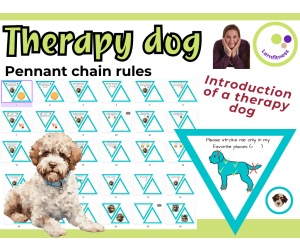
Therapy Dog Classroom Rules – Create, Discuss & Decorate! 🐶🏫 Banner
Social Emotional Learning (SEL), Special Resources, Social Skills, Special Education Needs (SEN), Life Skills, Animals, Life Sciences, Science, Classroom Management, Resources for Teachers, High School, Middle School, Elementary, Early Learning, Pre-K, Classroom Decor, Banners, Bulletin Boards, Projects, Activities, Drawing Templates & Outlines, Worksheets & Printables, Coloring Pages, Worksheets
Therapy Dog Classroom Rules Create, Discuss & Decorate! 🐶🏫 Bringing a therapy dog into the classroom is an exciting and rewarding experience, but it also requires clear expectations and structure. This Therapy Dog Rules Pennant Banner is a creative and engaging way to introduce, reinforce, and display important guidelines for students when interacting with a school therapy dog. Whether your school already has a therapy dog or you’re just starting to introduce the idea, these pennants help students understand respectful behavior, responsibilities, and boundaries in a fun and visual way. 🐾 Why This Resource is Perfect for Your Classroom ✔ Encourages Respectful Interactions – Helps students learn how to behave around a therapy dog. ✔ Interactive & Creative – Students can draw, write, or collage their own pennants to personalize the display. ✔ Supports Classroom Discussions – Use as a conversation starter about animal care, empathy, and safety. ✔ A Fun Visual Reminder – Display the banner in the classroom or on the door so rules are always visible. ✔ Perfect for Any Therapy Dog Setting – Ideal for schools, counseling offices, and special education programs. 📌 What’s Included? 📜 Printable Therapy Dog Rules Pennants, featuring: ✔ Ready-made rule templates ✔ Blank versions for students to create their own rules ✔ Simple, clear visuals for all ages ✔ pre-colored for quick use 🎨 How to Use This Resource 1️⃣ Print the pennants and the door sign. 2️⃣ Let students illustrate, decorate, or collage the rules in their own creative way. 3️⃣ Cut out and string the pennants together to create a classroom banner. 4️⃣ Hang the banner somewhere visible to reinforce positive interactions with the therapy dog. 🏆 Classroom Tip: Involve students in writing the rules together before decorating their pennants. This makes them feel more responsible for following the guidelines! 🐶 Why Teachers Love It ✔ “A great way to help kids understand boundaries around therapy dogs.” ✔ “The perfect mix of creativity and structure—students loved making their own rules!” ✔ “Looks great on the classroom wall and actually helps reinforce good behavior!” 🏫 Make Your Therapy Dog Program a Success! Having a therapy dog in the classroom can be an incredible learning experience—but students need guidance to make sure it’s a safe and positive environment. This banner set makes it easy, interactive, and fun to set those expectations! 📥 Download now and start creating your therapy dog-friendly classroom today! 🐾✨ 📍 Best, Heike from Lernfitness Did You Know? I teach with a certified therapy dog, and together we create a positive and inspiring learning environment. 🐶✨
Author Lernfitness
Tags Therapy Dog, Animal-assisted Learning, Inclusive Education Tools, Therapy Dog Rules, Classroom Pet Guidelines, Therapy Dog In School, Social-emotional Learning, SEL, Dog Classroom Rules

Justus von Liebig – Chemistry Pioneer and Science Reformer
Life Sciences, Science, STEM, Social Studies, Biographies, Inventors, Basic Science, Physics, Chemistry, Biology, Grade 6, 7, 8, 9, 10, 11, Worksheets, Worksheets & Printables, Quizzes, Quizzes and Tests, Teacher Tools, Projects, Activities
Justus von Liebig – Chemistry Pioneer and Science Reformer A ready-to-use reading and activity set for grades 7–10 (PDF + H5P) ⚗️📄 A printable and digital resource for grades 7–10 science and cross-curricular teaching 🧪🧠 This resource introduces students to Justus von Liebig, one of the most influential chemists of the 19th century. Known for his work on agricultural chemistry, food science, and lab-based teaching, Liebig helped shape the way chemistry is studied and taught even today. His contributions go beyond formulas – they reach into education, nutrition, and everyday life. The resource includes a concise, accessible text paired with simple, structured tasks. It can be used in a chemistry unit, during a lesson on the history of science, or as part of a substitute plan where no specialized background is required. Included in this resource: Informational text on Justus von Liebig’s life and achievements Student worksheet for creating a scientist profile Quiz questions with a complete answer key Two extension tasks: – Students write their own questions based on the reading – Peer activity to exchange and answer each other’s questions File formats: – PDF for print or digital use – Editable DOCX (text only) – H5P version for use in digital classrooms (no images) How it’s used in the classroom: This kind of material works well as a quiet reading activity, a springboard for science-history discussions, or a way to highlight lesser-known scientists who had a big impact. I’ve used it during lessons on food chemistry and nutrient cycles to provide real-world context. The H5P version supports independent and self-paced work, especially in hybrid or online classrooms. With minimal prep and clear instructions, the material can be used flexibly across settings. A thoughtful and low-prep resource to bring historical depth and personal stories into science class. Have fun exploring the world of science with your students! Warmly, Lernfitness Did You Know? I teach with a certified therapy dog, and together we focus on creating a positive and inspiring learning environment.
Author Lernfitness
Rating
Tags Science, Famous Scientists Lesson, H5P, Interactive Science Exercises, STEM, Scientists, Chemistry, Justus Von Liebig, Biology, Plants

Dog Breeds Coloring Domino – Fun and Educational Game
ELA, Language Development, ESL, Special Resources, Science, Basic Science, Life Sciences, Animals, Biology, STEM, Grade 6, Projects, Activities, Classroom Decor, Drawing Templates & Outlines, Worksheets & Printables, Coloring Pages, Worksheets, Word Walls, Games
Dog Breeds Domino – A Calm Coloring & Matching Game for Elementary Students This printable domino game is a quiet and creative way for students to explore different dog breeds while practicing matching skills and early reading. The cards are all black and white, so students can color them themselves – something my third graders always look forward to. It gives them a sense of ownership over the material and creates a nice break from more structured tasks. The idea is simple: each domino shows either a dog breed name or a drawing, and students have to find the correct pairs. The illustrations are clear and recognizable, even without color, so they work well for younger learners or students still developing their vocabulary. The breed names are printed in an easy-to-read font, which helps build confidence in early readers. I’ve used this activity in a few different contexts: – as a quiet task for early finishers – in small group centers – during indoor recess on rainy days – or as part of a broader unit on animals and pets It also opens up room for short, low-pressure conversations – for example, “Which one do you think is the fastest?” or “Would you want a dog like that at home?” If you work with a therapy or school dog, like I do, it’s a great way to bring that connection into the classroom without needing a full lesson plan. The file includes 20 domino cards that you can print and cut out. I recommend using heavier paper or laminating the cards if you plan to reuse them. Depending on the group, you can let students color all the cards first or wait until they’ve completed a match. This is one of those activities that feels more like a calm puzzle than a “game” – which is exactly what some students need in a busy school day. 💛 Warmest wishes, Heike from Lernfitness & Happy Joe 🐶✨ Did You Know? I teach with my certified therapy dog Happy Joe, and together we focus on creating a positive and inspiring learning environment.
Author Lernfitness
Tags Dog, Therapy Dog, Coloring Cards, School Dog, Biology, Dog Breeds, Animal Domino Game, Dog Breeds Activity, Animal Vocabulary Game, Coloring And Learning Game

UEFA European Championship 2024 - Football Jerseys Euro 2024
P.E. & Health, Sports, Science, Earth and Environmental Sciences, Earth Sciences, Grade 2, 3, 4, 5, 6, Activities, Projects
UEFA European Championship 2024 -Football Jerseys Euro 2024 This material includes jerseys featuring national flags in the shape of hearts for all 24 participants of the UEFA European Football Championship 2024. Each jersey comes in both color and black-and-white versions for coloring. Euro 2024 - Decoration: Themed Wall or Board Material: Decorate your themed wall for Euro 24 with the jerseys. You can use them, for example, to visualize the current match schedule or the current rankings of the countries. Simply cut off the flap at the neckline. Pennant Banner: Hang the jerseys as a pennant banner in the classroom. Fold the small flap at the neckline over the string and attach it to the bottom edge. Euro 2024 - Creating Profiles: Attach the front sides of the jerseys with flags to the back of profile templates using the neckline flap to create foldable cards. Football Team: Students can select their favorite team or introduce the team opponents in the tournament groups. Favorite Player: Students choose their favorite football player from Euro 2024, select the corresponding national jersey, and complete the profile about their favorite player. Country Profile: Assign each student one of the participants of Euro 2024. Students research their assigned country and fill out the corresponding country profile. Compilation of Country Books: All three profile templates with the front side of the jersey can be glued together to form a small book. The blank template can be supplemented with additional information about the participant country, such as games and victories of the participants or the significance and history of football in the country. To create the book, layer the individual jersey pages on top of each other (flag side up) and staple them together after design completion.
Author Die Relitante
Tags Soccer, Euro 2024, UEFA European Championship 2024, Soccer Player Profiles, Soccer Crafts, Soccer Flag Banners, Soccer EM Decorations, Europea, Countries
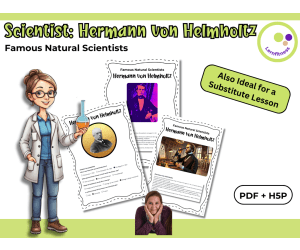
Hermann von Helmholtz – Fact Sheet, Quiz & Interactive PDF (incl. H5P)
Life Sciences, Science, STEM, History, Social Studies, Biographies, Inventors, Basic Science, Physics, Human Body, Grade 6, 7, 8, 9, Worksheets, Worksheets & Printables, Quizzes, Quizzes and Tests, Teacher Tools, Projects, Activities
Hermann von Helmholtz - Fact Sheet, Quiz & Interactive Version (PDF & H5P) Hermann von Helmholtz – Sensory Physiology Made Understandable Fact Sheet, Quiz & Interactive Exercises (PDF + H5P) This material introduces students in grades 7–10 to the life and research of Hermann von Helmholtz – one of the key figures behind our scientific understanding of vision, hearing, and nerve conduction. Even if students already know a bit about how our senses work, most are surprised to learn how long ago these topics were explored in depth – and by whom. Helmholtz’s work at the intersection of biology, physics, and medicine still shapes modern neuroscience today. To make this complex content more accessible, I put together a compact set of resources you can easily use in a 45-minute lesson. It includes a short text, a fact sheet, quiz questions (with answers), and a few creative tasks to get students thinking and interacting. You’ll find both color and black-and-white versions – great for printing or digital use. There’s also an H5P version for those who prefer an interactive format. What’s included: A short, student-friendly text on Hermann von Helmholtz and his key discoveries A fact sheet activity to help students organize the main ideas Quiz questions (with solutions) to check understanding An open-ended task where students come up with their own questions and exchange them with a partner Ready-to-print or use digitally (PDF + H5P) Answer key included for quick correction I’ve used this in biology class as part of a unit on the nervous system, but it also fits well in lessons on sensory organs, neuroscience, or even the history of science. The material works for independent work, partner activities, or as a simple introduction to one of the most influential scientists of the 19th century. No extra prep needed – just pick the version that suits your classroom best. 🚀 Download now and bring the legacy of Hermann von Helmholtz into your biology lessons today! 📍 Best wishes, Heike from Lernfitness Did You Know? I teach with a certified therapy dog, and together we create a positive and inspiring learning environment. 🐶✨
Author Lernfitness
Tags Science, Biology, Famous Scientists Lesson, H5P, Interactive Science Exercises, STEM, History, Scientists, Hermann Von Helmholtz, Physiology
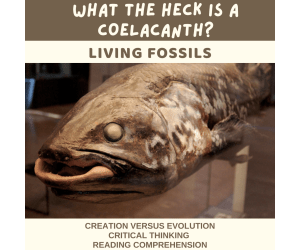
Reading Comprehension Quizzes - Coelacanth Ancient or Not?
Reading Comprehension, Reading, ELA, Life Sciences, Science, Vocabulary, Language Development, Writing, Theories, Basic Science, Grade 3, 4, 5, 6, Projects, Activities, Centers, Literacy Readers, Teacher Tools
Coelacanth is one of the most popular pieces of evidence that evolutionary scientists use to prove their theory about the age of the earth. But Coelacanth was discovered living in the early 20th century. Not only was this “extinct” fish discovered alive and well, but it was also apparently the same with no major changes compared to the original fossil discovered and dated 65 million years. So, if macroevolution is true, should the coelacanth still be used as evidence of evolution or old age. If so, why are there no apparent changes in this specific animal? These are questions to be pondered by students who read the short article and answer the questions included in the activity. This reading comprehension activity includes the link to the article discussing the discovery and what this might mean to the overall picture painted for the public regarding the evidence. This activity can be used for guided reading as well as increasing vocabulary and practice critically evaluating both sides of a controversial topic: Creation vs Evolution. The answer key is included. Teachers can easily use this as a starting point for deeper research on the subject. Total usable pages: 3 Downloadable pdf file Link to article included #Guided Reading #Reading Comprehension #Vocabulary Test
Author Homeschooling Dietitian Mom
Tags Reading Comprehension, Reading Comprehension Quizzes, Vocabulary, Vocabulary Quizzes, Guided Reading Activity, Guided Reading Lesson Plan, Biology Projects, Science Projects By Grade
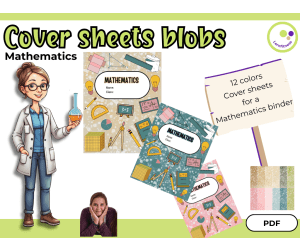
Mathematics Binder Covers – Templates for Classroom Use
Science, STEM, Basic Science, Special Resources, Montessori, Classroom Management, Resources for Teachers, Math, Physics, Technology, Homeschool Templates, Grade 6, 7, 8, 9, Worksheets, Worksheets & Printables, Teacher Tools, Projects, Activities, Workbooks, Drawing Templates & Outlines, Templates, Graphic Organizers, Classroom Decor
Mathematics Binder Covers – Templates for Classroom Use Organize your Math handouts, notes, and units with visual clarity Simple and flexible templates to help organize your Mathematics materials In my math classes, it can be a challenge to keep things organized - especially when it comes to multiple units, lab notes, worksheets and review materials. To make it easier for my students and myself, I designed these simple binder sleeves. There are 12 different pages. The covers have a clean, colorful blob layout that is friendly but not distracting. I usually print them out and use them as cover sheets or as dividers in folders for students or teachers. They also work well for digital learning environments, e.g. as section covers in PDF files or on classroom platforms. I like that the color scheme allows students to quickly find what they are looking for, and it brings a little more structure to a subject that is often riddled with formulas and technical terms. When used as cover sheets, students can choose their favorite color for their cover sheet. This resource is handy - and has saved me a lot of time in lesson preparation and follow-up. What’s included: 12 math-themed cover pages different colors zu choose as a cover sheet as a divider between the individual Mathematics topics I've printed these on colored paper for my own binder and also used them digitally in student notebooks. Works well for both teacher organization and student-facing materials. 📍 Best wishes, Heike from Lernfitness Math teacher (Chemistry teacher, Biology teacher) in Germany Did You Know? I teach with a certified therapy dog, and together we create a positive and inspiring learning environment. 🐶✨
Author Lernfitness
Rating
Tags Science, STEM, Binder, Cover Sheet, Template, Organizer, Organize, GoodNotes, Mathematics, Math

Galileo Galilei Research Organizer & Essay Assignment
Social Studies, ELA, Biographies, History, History: World, History: Ancient, Science, Earth and Environmental Sciences, Space, Grade 7, 8, 9, 10, Activities, Projects, Worksheets & Printables, Worksheets
Without Galileo Galilei, the fields of astronomy, physics, and general science might not exist. This resource provides your students with the opportunity to independently learn about and summarize the life of the "father of modern science" with this engaging research planner and essay assignment. This carefully scaffolded and easy-to-assign-AND-assess resource has been designed to guide student learning from Galileo Galilei fact-collection to the careful development of a five-paragraph research essay. Teaching this resource could not be easier! Start by handing out the background research and note-taking worksheet (you could also ONLY hand this out if you want a shorter lesson!). Once students have found their facts and sources, provide them with the essay outline activity, which guides them step-by-step through the requirements of a short research essay. From there, drafting their essay, using the provided peer review checklist, and submitting their final draft will be no problem at all. And then you can assess their work with the provided Common Core rubric! Use this entire resource as a complete research lesson or just part of it as a short research activity or sub plan! This TeachSimple download includes: - A Galileo Galilei essay writing assignment with directions, requirements, research essay writing tips, a peer review checklist, and Common Core-tied grading rubric - An editable rubric, provided as a link, that lets you make adjustments to the grade values and guidelines. This link is provided as as Google Sheet specifically built for integration into Google Classroom, although you can also modify it for use in other Learning Management Systems (LMSs) - A Galileo Galilei biography and note-taking worksheet that will guide your students through information gathering. This straightforward two-page handout includes instructions for background research, a fun drawing section, and an area to cite quality sources and organize conducted research - A research essay outlining worksheet, so students build on their Galileo Galilei notes in a clear and simple manner as they build their work towards a draft and final paper - All 6-pages of this lesson are provided in full-color and B&W versions Although this resource can be fitted for any secondary Language Arts classroom, it has been carefully designed to work best in grades 8 through 11. The included rubric is subtly but specifically tied to Common Core ELA Standards for Language (3) and Writing (2 and 7). This resource is provided as a print-ready, bookmarked, and adjustable PDF file. The rubric is also included as an editable Google Sheet. This resource contains 6 pages and 1 Google Sheet.
Author The Language of Educational Art, LLC
Tags Essay, Rubric, Research, Notetaking, Outlining
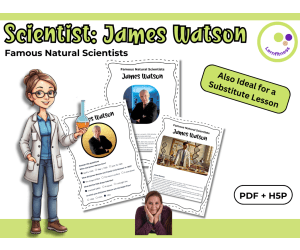
Scientist James Watson – Fact Sheet, Quiz & Interactive PDF incl. H5P
Life Sciences, Science, STEM, History, Social Studies, Biographies, Inventors, Basic Science, Physics, Biology, Grade 6, 7, 8, 9, 10, 11, Worksheets, Worksheets & Printables, Quizzes, Quizzes and Tests, Teacher Tools, Projects, Activities
Scientist James Watson - Fact Sheet, Quiz & Interactive Version (PDF & H5P) James Watson – Discovering the DNA Double Helix Fact Sheet, Quiz & Interactive Exercises (PDF + H5P) This 45-minute resource introduces students in grades 7–10 to James Watson and his role in one of the most important scientific discoveries of the 20th century: the structure of DNA. Most students have heard of DNA, but they often don’t know much about how its double helix structure was uncovered – or who was involved in the process. Together with Francis Crick, and building on key work by Rosalind Franklin, Watson helped lay the groundwork for modern genetics. To make this big topic more manageable in class, I’ve put together a short, ready-to-use lesson. It includes an informational text, a fact sheet, quiz questions with answers, and a few creative tasks that get students thinking and engaging with the content. All materials are included in both color and black-and-white versions for flexible use – whether printed or on-screen. What’s included: A short, accessible text on James Watson and the discovery of DNA A fact sheet to help students organize and reflect on the key ideas Quiz questions (with solutions) to check understanding A creative task where students come up with their own questions and discuss them in pairs Formats: PDF for printing or digital use, plus an H5P version for interactive learning Answer key included I’ve used this in biology lessons as part of a genetics unit, but it also works well when exploring the history of science or how scientific discoveries are made. It’s especially helpful when time is short and you want something that’s both informative and easy to implement – no extra prep needed. 🚀 Download now and bring the legacy of James Watson into your biology lessons today! 📍 Best wishes, Heike from Lernfitness Did You Know? I teach with a certified therapy dog, and together we create a positive and inspiring learning environment. 🐶✨
Author Lernfitness
Tags Science, Biology, Famous Scientists Lesson, H5P, Interactive Science Exercises, STEM, History, Scientists, Physiology, James Watson

Therapy Dog - Helping Students Reflect with Therapy Dogs 🐶💭
Social Emotional Learning (SEL), Special Resources, Social Skills, Special Education Needs (SEN), Life Skills, Animals, Life Sciences, Science, Classroom Management, Resources for Teachers, High School, Middle School, Elementary, Early Learning, Pre-K, Homeschool Resources, Classroom Decor, Bulletin Boards, Projects, Activities, Drawing Templates & Outlines, Worksheets & Printables, Worksheets, Posters, Door Decor, Task Cards
Helping Students Reflect with Therapy Dogs 🐶💭 There’s something special about the presence of a therapy dog in the classroom. Even the most restless students seem to relax. Some kids who rarely speak up suddenly open up. And for many, it’s the first time they’ve had a chance to experience the unconditional support that a dog offers. But what if we took that experience and turned it into a learning moment? That’s exactly what this reflection activity does. It helps students think about what kindness means, why responsibility matters, and how their actions affect others—whether those others have two legs or four. Why This Activity Feels Different ✔ It gets students thinking, not just answering. It’s not about memorizing facts. It’s about pausing for a moment and reflecting on simple but meaningful questions. ✔ It connects emotions with actions. Why do therapy dogs have rules? Why does kindness matter? These questions lead to unexpectedly deep discussions. ✔ It’s easy for any grade level. Younger kids can draw their answers, while older students might write or discuss. No one feels left out. ✔ It works with or without a therapy dog. Even if your school doesn’t have one, this still sparks conversations about empathy and responsibility. ✔ No prep required. Just print it out, hand it to students, and let them think. How I Use It in My Classroom 📌 First, we talk. I ask, “How do animals teach us about kindness?” or “What do therapy dogs need from us?” The answers are never what I expect—and that’s the best part. 📌 Then, students reflect. They complete a few simple but thoughtful prompts about their own behavior, their emotions, and what they’ve learned. 📌 Next, we share (if they want to). I never make sharing mandatory. But I’m always surprised by how many students want to. 📌 Finally, we put up the poster. It’s a small reminder that kindness and responsibility go beyond the classroom. 🐶 One more idea: If you have a therapy dog visit your class, have students read their reflections to the dog. You’d be amazed at how much more open and engaged they become! What Other Teachers Have Said ✔ “I used this before our first therapy dog visit, and it made a huge difference in how students behaved around the dog.” ✔ “It’s simple but powerful. The class discussions that came from this were amazing.” ✔ “Perfect for social-emotional learning, even without a therapy dog!” Why This Activity Sticks with Students At the end of the day, this isn’t just another worksheet. It’s a way to help students slow down, think about their actions, and reflect on what really matters—whether that’s how they interact with a therapy dog, a classmate, or the world around them. 📥 Give it a try—you might be surprised by what your students come up with. 🐶✨ 📍 Warmly, Heike from Lernfitness Did You Know? I teach with a certified therapy dog, and together we create a positive and inspiring learning environment. 🐶✨
Author Lernfitness
Tags Therapy Dog, Animal-assisted Learning, Inclusive Education Tools, Therapy Dog Rules, Classroom Pet Guidelines, Therapy Dog In School, Social-emotional Learning, SEL, Dog, Reflection Activity

Exploring the Solar System Project - Middle School Space
Science, Earth and Environmental Sciences, Space, Grade 6, 7, 8, Activities, Projects
Blast off on an exciting expedition through our cosmic neighborhood with this immersive 6-part solar system project! Students will embark on a journey of discovery to expand their knowledge of the planets that orbit our sun. The adventure begins by surveying key characteristics of the planets. Students will compare and contrast attributes like composition, size, moons, and more using interactive charts . These activities will build a foundation of knowledge about our stellar surroundings. Each student will then adopt an alien identity from one of the planets. Their mission is to gather intelligence about their new home world to create an engaging planetary fact file. This top-secret document will contain maps of unique features, details about survival in extreme conditions, and the planet's orbital path. Students will encrypt their findings in informative infographics. The quest continues as student aliens form contacts with beings from other worlds. In their teams, they will decipher similarities and differences between their planets using techniques like Venn diagrams. Patterns between planetary traits will become clearer. The students will then band together to design hidden settlements tailored to their adopted planet's environment. Infrastructure, culture, geography, and survival needs will dictate the layout of these extraterrestrial cities. Teams will create coded maps, diagrams, and written records to conceal their covert communities. Immersing themselves in alien personas, students will log journal entries chronicling daily life on their assigned planets. By pretending to inhabit these cosmic spheres, perspectives will be broadened. Finally, the project concludes by welcoming visitors to an intergalactic Planets Fair. Student aliens will showcase their classified findings by hosting creative exhibits about the celestial bodies we call neighbors. This galactic get-together celebrates exploration of the wonders in our solar system and beyond!
Author Teach With Fergy
Tags Space, Solar System, Astronomy, Planets, Sun, Space Project

The Electric Home - Electricity PBL Project
Science, Physics, Grade 8, 9, 10, Activities, Projects
I created this unit because I wanted to inject some real-life information into our electricity unit which is usually just filled with notes, worksheets, and other activities. I decided instead to do a flipped unit whereby I'd provide my students with all their notes ahead of time then use our class time to work on our project. This project will work very well for a wide range of grades as it can be easily tailored to fit your class. It's fully editable so you can add, remove, or change anything that you don't think will fit well with your class. To ensure it meets your classroom needs, I've included two different submission and marking criteria. One pair for lower levels and one for higher-level learners. Furthermore, this project can be given to different grade levels and all that needs to be altered are the teacher's expectations and standards while marking. Myinspirationfor this unit is the company, Tesla. I'm a self-proclaimed fanboy of the company and love their innovations and their desire for a greener future. However, as your students progress through this unit, they will discover other means of energy production, storage, and use. The project is broken down into two parts. The first part has the students researching the creation, use, and storage of solar energy. This should take between 8-12 days. The second part involves them putting that knowledge to use as they create a tangible representation of what they've learned. For this portion of the project, I gave them 3 class periods plus 10 days at home for a total of 11-15 class periods plus 10 additional days at home. This project covers the following NGSS: • MS-PS3-2 • MS-PS3-3 • HS-PS3-1 • HS-PS3-2 • HS-PS3-3 • HS-PS3-5 • MS-ESS3-3 • HS-ESS3-4 I also require that they share their Google Drive Project folder with me so that I could periodically check in on their progress. You may want to assign a grade for this as well. Their Unit This electricity unit is a mix of content and project-based learning (PBL) with an emphasis on PBL. Students will get the majority of class time to work on their project. During this time, you will have access to Chromebooks (netbooks,ipads, etc.) and will be given time to design and think about their model. You may also build during this time as well. Project Marks: - Poster - Model Research Component - ONE component will be looked at every 2 to 3 days. - If they finish before the allocated time ends, encourage them to keep working - Dive deeper into their research - Find pictures and paste them into their Doc - Find relevant videos and include them in their Doc I hosted this project on myGoogle Classroom site. If you're not familiar with Google Classroom, check out my post where I show you how to get your Google Classroom set up in 3 minutes . I highly recommend Google Classroom plus, it's free! For this project, I have my students working in groups of 2. If they miss a day, it's very easy to stay up-to-date via our Google Classroom site. To ensure students weren't rushing ahead, I would only upload the files below when we were ready to move on. I allocated between 2-3 days per "Day" below depending on the speed my students were working. • The Electric Home - Overview and Day 1 • The Electric Home - Day 2 • The Electric Home - Day 3 • The Electric Home - Day 4 • The Electric Home - Final Submission • The Electric Home - Rubric Each file is fully editable and is included in your download. This project will provide your students with a real-life example of green electricity use that they will keep with them after they leave your class.
Author Teach With Fergy
Tags Electric House, PBL Project, Electricity Project, Physical Science, Group Projects, Electric House Project, Electricity Project Ideas, Teach Electricity, Project On Electricity, Teaching Electricity, 4th Grade Electricity Projects, Electric House Project Ideas

Therapy Dog Rules Poster – School Dog Guidelines
Social Emotional Learning (SEL), Special Resources, Social Skills, Special Education Needs (SEN), Life Skills, Animals, Life Sciences, Science, Classroom Management, Resources for Teachers, High School, Middle School, Elementary, Early Learning, Pre-K, Homeschool Resources, Not Grade Specific, Classroom Decor, Bulletin Boards, Projects, Activities, Worksheets & Printables, Posters, Door Decor, Banners, Word Walls
Therapy Dog Rules Poster Helping Students & Dogs Feel Safe and Happy! 🐶✨ Having a therapy dog in school is a wonderful experience. There’s something truly special about how dogs help students feel calmer, more focused, and even more motivated to learn. But to make sure that both students and the dog feel safe and comfortable, we need clear and easy-to-understand rules. That’s why I created this Therapy Dog Rules Poster—so that everyone knows how to interact respectfully and kindly with the school dog. 🐾 Why This Poster is a Must-Have for Your Classroom or School ✔ Gives students clear expectations – Kids need to know how to behave around a therapy dog, and this poster makes it easy to remember! ✔ Reduces stress for the dog – When students understand the rules, therapy dogs feel more relaxed and happy in their school environment. ✔ Supports social-emotional learning – Encourages empathy, patience, and responsibility—great lessons that go beyond just interacting with a dog. ✔ Works in any classroom setting – Whether you’re welcoming a therapy dog regularly or just preparing for a visit, these guidelines help create a smooth and positive experience for everyone. 📌 What’s Inside? 📜 A Printable Therapy Dog Rules Poster ✔ Simple, easy-to-follow rules that students can understand at a glance ✔ Friendly, inviting design to make the message clear and approachable ✔ Available in multiple formats for flexible printing and display 💡 How to Use This Poster in Your Classroom or School 📍 Introduce the rules before the first therapy dog visit. Go over the rules together and talk about why they’re important. Encourage students to share how they think dogs might feel in different situations. 📍 Keep it in a visible spot. Hang it up in the classroom, hallway, or near the therapy dog’s resting area. The more students see it, the easier it will be for them to remember! 📍 Use it as a discussion starter. Talk about respect, kindness, and responsibility—not just toward therapy dogs, but in everyday interactions with people too. 📍 Encourage positive behavior. When students follow the rules, acknowledge their effort! You can even let them read a story to the therapy dog as a reward. Why Teachers & Schools Love This Poster ✔ “The perfect way to set clear expectations before our therapy dog visits!” ✔ “The visuals make it easy for younger students to understand.” ✔ “Students now remind each other of the rules, which makes everything so much smoother!” 🐶 A Small Change That Makes a Big Difference Therapy dogs bring so much joy into schools, but a well-prepared environment makes all the difference. This friendly and easy-to-read poster helps students understand exactly how to interact with a school dog in a safe and kind way. 📥 Print it today and help create a positive, stress-free experience for your school’s therapy dog! 🐾✨ 📍 Warmly, Heike from Lernfitness Did You Know? I teach with a certified therapy dog, and together we create a positive and inspiring learning environment. 🐶✨
Author Lernfitness
Rating
Tags Therapy Dog, Animal-assisted Learning, Inclusive Education Tools, Therapy Dog Rules, Classroom Pet Guidelines, Therapy Dog In School, Social-emotional Learning, SEL, Dog, Dog Guidelines

Jacques Monod – Fact Sheet, Quiz & Interactive PDF incl. H5P
Life Sciences, Science, STEM, History, Social Studies, Biographies, Inventors, Basic Science, Physics, Biology, Grade 6, 7, 8, 9, 10, 11, 12, Worksheets, Worksheets & Printables, Quizzes, Quizzes and Tests, Teacher Tools, Projects, Activities
Scientist Jacques Monod - Fact Sheet, Quiz & Interactive Version (PDF & H5P) Jacques Monod – Gene Regulation and the Logic of Life Fact Sheet, Quiz & Interactive Exercises (PDF + H5P) 🧬⚙️ This 45-minute resource introduces students in grades 9–11 to Jacques Monod – a French molecular biologist whose work helped uncover how genes are turned on and off. In many biology classes, students learn what DNA is and how proteins are made. But the question of how cells know which genes to activate – and when – often stays abstract. Monod, together with François Jacob, studied this in bacteria and developed the model of the lac operon. It’s a great example of how cells respond to their environment, and it laid the groundwork for much of what we know about gene regulation today. To make this topic more tangible, I’ve created a compact, ready-to-use lesson that breaks it down into manageable parts. It includes an informational text, a fact sheet, quiz questions with answers, and a creative partner task. The material comes in color and black-and-white versions, plus there’s a digital H5P version. What’s included: A clear, student-friendly text about Jacques Monod and the lac operon A fact sheet to help students sort and retain key information Quiz questions with an answer key – good for review or independent work A task where students design and exchange their own questions in pairs Printable PDF and interactive H5P formats for flexible use 💻 Answer key included ✅ I’ve used this resource during our genetics unit, especially when moving from DNA basics to regulation and gene expression. It also fits well in discussions about how scientific models are developed and tested. The partner task works well in small groups or for homework – depending on your setup. 🚀 Download now and bring the legacy of Jacques Monod into your biology lessons today! 📍 Best wishes, Heike from Lernfitness Did You Know? I teach with a certified therapy dog, and together we create a positive and inspiring learning environment. 🐶✨
Author Lernfitness
Tags Science, Biology, Famous Scientists Lesson, H5P, Interactive Science Exercises, STEM, History, Scientists, Jacques Monod, Molecular Biology
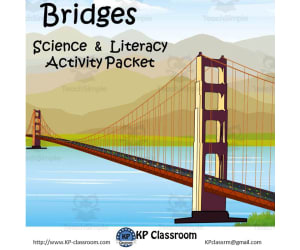
Bridges Activity Packet with Popsicle Stick Bridge Project
Science, Technology, Engineering, Grade 2, 3, 4, 5, 6, Projects, Activities
This " Bridges Activity Packet with Popsicle Stick Bridge Project " teaches students about bridges and engineering in a fun and interactive way, with many reading, drawing and puzzle activities. These activities are designed for kids at all levels between Grades 2 and 6. Please note that not all activities in this packet will meet your class' particular levels, but there should be enough variation in the resources from your high flyers to those that are more challenged. The packet also includes a Popsicle Bridge Project for students.
Author KP Classroom
Tags Bridge, Engineer, Truss, Beam, Cabtilever, Popsicle Stick Suspension Bridge, Stick Bridge Project, Stick Bridges, Popsicle Bridges, Suspension Bridges Made Out Of Popsicle Sticks, Popsicle Stick Truss Bridge, Popsicle Bridge Ideas, Popsicle Stick Bridges Truss, Popsicle Arch Bridges, Popsicle Truss Bridge, Popsicle Stick Arch Bridges, Popsicle Stick Bridge Projects, Simple Popsicle Stick Bridges, Popsicle Stick Bridges For Kids

Biology Binder Covers – Templates for Classroom Use
Life Sciences, Science, STEM, Basic Science, Special Resources, Montessori, Classroom Management, Resources for Teachers, Biology, Human Body, Homeschool Templates, Grade 7, 8, 9, 10, 11, 12, Worksheets, Worksheets & Printables, Teacher Tools, Projects, Activities, Workbooks, Drawing Templates & Outlines, Templates, Graphic Organizers, Experiments
Biology Binder Covers – Templates for Classroom Use Organize your biology handouts, notes, and units with visual clarity Simple and flexible templates to help organize your biology materials In my biology classes, it can be a challenge to keep things organized - especially when it comes to multiple units, lab notes, worksheets and review materials. To make it easier for my students and myself, I designed these simple binder sleeves. There are 12 different pages. The covers have a clean, colorful blob layout that is friendly but not distracting. I usually print them out and use them as cover sheets or as dividers in folders for students or teachers. They also work well for digital learning environments, e.g. as section covers in PDF files or on classroom platforms. I like that the color scheme allows students to quickly find what they are looking for, and it brings a little more structure to a subject that is often riddled with formulas and technical terms. When used as cover sheets, students can choose their favorite color for their cover sheet. This resource is handy - and has saved me a lot of time in lesson preparation and follow-up. What’s included: 12 biology-themed cover pages different colors zu choose as a cover sheet as a divider between the individual biology topics I've printed these on colored paper for my own binder and also used them digitally in student notebooks. Works well for both teacher organization and student-facing materials. 📍 Best wishes, Heike from Lernfitness Biology teacher (Chemistry teacher, Math teacher) in Germany Did You Know? I teach with a certified therapy dog, and together we create a positive and inspiring learning environment. 🐶✨
Author Lernfitness
Rating
Tags Science, Biology, STEM, Binder, Cover Sheet, Template, Organizer, Organize, GoodNotes, PDF
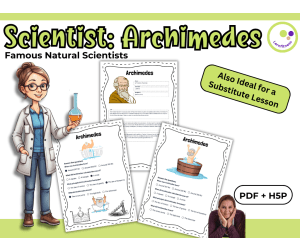
Archimedes – Scientist Profile and Comprehension Activities PDF + H5P
Life Sciences, Science, STEM, Social Studies, Biographies, Inventors, Basic Science, Physics, Chemistry, Math, Grade 6, 7, 8, 9, Worksheets, Worksheets & Printables, Quizzes, Quizzes and Tests, Teacher Tools, Projects, Activities
Archimedes – Scientist Profile and Comprehension Activities Informational Text, Student Tasks & Quiz (PDF, DOCX, H5P) ⚖️🧠 This resource introduces students in grades 7–10 to Archimedes, one of the most influential figures in early science. Best known for his work on buoyancy and the principle of density determination for irregular objects, Archimedes connects classical thought with key scientific concepts still taught today. The material combines factual reading with structured tasks. It can be used flexibly: in science lessons, for cross-curricular units, or as an easy-to-run activity in substitute teaching. Students read a short informational text, fill in a profile worksheet, complete quiz questions, and – if time allows – create their own questions to exchange with a partner. What’s included: Informational text about Archimedes Profile worksheet for comprehension and reflection Answer key for the profile Quiz questions with solutions Two extension tasks: – Create your own questions – Exchange and answer a partner’s questions File formats: – Printable PDF – Editable DOCX (text only) – Interactive H5P version (text-based, no images) In the classroom: I’ve used this kind of resource in regular science lessons as well as in non-specialist cover lessons. The tasks are clear enough for independent work and provide a good balance between reading, writing, and critical thinking. The H5P version allows for easy digital use on learning platforms, especially when students work from home or on devices in class. It’s also great for differentiation: stronger students can work on their own questions, while others use the glossary or reread sections to complete the basics. Whether you use it to introduce Archimedes in physics or to practice nonfiction reading strategies, this is a flexible resource that’s ready to go with little prep. Have fun exploring the world of science with your students! Warmly, Lernfitness Did You Know? I teach with a certified therapy dog, and together we focus on creating a positive and inspiring learning environment.
Author Lernfitness
Rating
Tags Science, Famous Scientists Lesson, H5P, Interactive Science Exercises, STEM, History, Scientists, Chemistry, Archimedes, Scientific Concepts

Hans Krebs – Fact Sheet, Quiz & Interactive PDF incl. H5P
Life Sciences, Science, STEM, History, Social Studies, Biographies, Inventors, Basic Science, Biology, Chemistry, Grade 6, 7, 8, 9, 10, 11, 12, Worksheets, Worksheets & Printables, Quizzes, Quizzes and Tests, Teacher Tools, Projects, Activities
Scientist Hans Krebs - Fact Sheet, Quiz & Interactive Version (PDF & H5P) Hans Krebs – Cellular Respiration and the Discovery of the Krebs Cycle Fact Sheet, Quiz & Interactive Exercises (PDF + H5P) 🔁🧬 This 45-minute resource introduces students in grades 10–12 to Hans Krebs – the scientist who uncovered one of the most important metabolic pathways in our cells: the citric acid cycle, also known as the Krebs cycle. When teaching cellular respiration, many students can follow the basics of glucose breakdown and ATP production – but the details of what happens in the mitochondria often feel abstract. Krebs' discovery in the 1930s helped explain how cells extract energy efficiently from food molecules through a cycle of chemical reactions. It’s a key part of understanding aerobic respiration and metabolism. To make this complex process more accessible, I’ve created a structured lesson that includes a short informational text, a fact sheet, quiz questions with answers, and a creative partner task. All materials are available in color and black-and-white, plus there’s a digital H5P version for interactive learning. What’s included: A student-friendly text about Hans Krebs and the citric acid cycle A fact sheet to help visualize and summarize the steps of the cycle Quiz questions (with answer key) for quick review or comprehension checks A creative task where students develop and exchange their own questions in pairs Formats: Printable PDF and interactive H5P 💻 Answer key included ✅ I’ve used this resource during our unit on cellular respiration, often right after glycolysis and before moving on to the electron transport chain. It’s especially helpful for students who benefit from breaking down complex processes into steps. The partner activity works well for revision or as preparation for assessments. 🚀 Download now and bring the legacy of Hans Krebs into your biology lessons today! 📍 Best wishes, Heike from Lernfitness Did You Know? I teach with a certified therapy dog, and together we create a positive and inspiring learning environment. 🐶✨
Author Lernfitness
Tags Science, Biology, Famous Scientists Lesson, H5P, Interactive Science Exercises, STEM, History, Scientists, Hans Krebs, Citric Acid Cycle

Mission to Space Rocket Straws Project
Science, Earth and Environmental Sciences, Space, Grade 4, 5, 6, Activities, Projects
This resource is a Mission to Space Rocket Straws Project. Student groups will choose a planet to travel to. The project spends a few days covering the research of their planet. After they have completed their planets they will create rockets from straws and soap bottles. They will attempt to land on their planets with straw rockets in a relay type fashion.
Author Hey Teacher Shoppe
Tags General Science, Planets, Astronomy, Mission To Space, Project, Straw Rockets Lesson Plan