


9,402 products added recently
Page 1047 - Newest Teaching Resources

 Show filters


Conflict 1914-1945: Global 10 Stimulus-Based M-C
Social Studies, History, History: World, Grade 9, 10, 11, Teacher Tools, Assessments
Conflict 1914-1945: Global 10 Stimulus-Based Multiple Choice Questions This social studies resource provides 50 stimulus-based multiple choice questions aligned to the New York State Global History and Geography II curriculum standards. Students analyze documents, maps, and images to evaluate historical context and point of view. This develops critical document analysis skills assessed on state exams. These questions can be used at the end of units starting in October to help students gradually build analysis skills. A standardized scoring adjustment procedure is recommended initially so grades reflect growth. Useful for whole class instruction, small groups, homework, or individual review. Detailed answer key included for easy scoring. Questions are provided in a printable format along with online access options. Applicable for public school teachers or homeschoolers in grade 10.
Author Innovation Assessments LLC
Tags New York State Regents, Global History And Geography, Conflict 1914-1945
Imperialism: Global 10 Stimulus-Based Multiple-Choice
Social Studies, History, History: World, Grade 9, 10, 11, Teacher Tools, Assessments
Imperialism: Global 10 Stimulus-Based Multiple-Choice This social studies resource helps high school educators teach imperialism using the New York State Regents exam format. It includes 51 stimulus-based multiple-choice questions where students analyze maps, images, and documents. Using these questions allows teachers to assess a student's ability to evaluate sources, identify bias, determine purpose and context, and apply background knowledge. Assigning these complex tasks helps students build analysis skills. The product contains an answer key for easy grading and a test bank to import questions. By standardizing the scoring, teachers can challenge students with difficult material without harming GPAs early on. This resource works for whole-class instruction, small groups, homework, or independent review.
Author Innovation Assessments LLC
Tags New York State Regents, Global History And Geography, Imperialism
Industrial Revolution: Global 10 Stimulus-Based M-C
Social Studies, History, History: World, Grade 9, 10, 11, Teacher Tools, Assessments
Industrial Revolution: Global History Regents Exam Prep This 51-question stimulus-based multiple-choice assessment aligns to the New York State Regents Global History and Geography II exam. Students analyze documents, maps, and images to evaluate historical concepts and apply context from the Industrial Revolution unit. The varying question types build skills in identifying point of view, purpose, bias, source format, chronology, geography, audience, and more. Use these as unit exams or daily test prep. Adjust scores as needed while students practice this rigorous task model. Assign individually or import questions into your LMS with the included passcode. Stimulus analysis develops the higher-order thinking skills students need for college readiness.
Author Innovation Assessments LLC
Tags New York State Regents, Global History And Geography, Industrial Revolution

Enlightenment, Revolution, Nationalism: Global 10 Stimulus-Based M-C
Social Studies, History, History: World, Grade 9, 10, 11, Teacher Tools, Assessments
Enlightenment, Revolution, Nationalism: Global 10 Stimulus-Based Multiple-Choice Questions This 54-question assessment for high school Global History students tests analysis skills and knowledge of the Enlightenment, Revolution, and Nationalism time periods. Modeled on the New York State Regents exam, each multiple-choice question directs students to respond to a document, map, or image. For example, students may be asked to identify point of view, purpose, context, bias, format, location, audience, and more. Use these assessments at the end of relevant units to prepare students for stimulus-based tasks on standardized tests. Assignments build in difficulty so consider adjusting scores to avoid penalizing developing skills. Questions, an answer key, a test bank, and online access are included. Files must be unzipped before use or images will not display.
Author Innovation Assessments LLC
Tags New York State Regents, Global History And Geography, Nationalism, Enlightenment, Revolution

World in 1750: Global 10 Stimulus-Based Mult.-Choice
Social Studies, History, History: World, Grade 9, 10, 11, Teacher Tools, Assessments
New York State Regents Global 10 Stimulus-Based Multiple-Choice, World in 1750 + Online Access In a stimulus-based task, the student is directed to respond to a document, map, or image using their ability to analyze and their knowledge of historical context. In the case of the New York State exams, there are eighteen “task models” used when designing questions. For example, a student may be asked to evaluate and classify (identify) best use of a source or to respond based on knowledge of historical context. Principles of reliability assessment are applied here, such as when students are asked to identify point of view, purpose, context, bias, format of source, location of source in time and/or place, and/or intended audience of sources using background knowledge. [Read More at the Blog] My custom was to assign a stimulus-based multiple-choice at the end of every unit starting in October. At first, students find these very difficult. I use a z-score standardization procedure to adjust the scores so as not to bomb out their GPA while they are just learning. It is a great way to score students in tasks they are not yet proficient at. Use the free Innovation standardized scoring calculator here. This product is a stimulus-based multiple-choice assessments in the format of the new New York State Regents examination in Global History and Geography II. 9 questions Each Product includes: _key = answer key _test = test for print passcode.pdf = for online access and subscriber test bank import Documents are in image format in the folders. These files are viewed from a browser and you need to unzip the product before viewing or the images will not show.
Author Innovation Assessments LLC
Tags NYS Regents, Global History And Geography

Human Rights Violations: Global 10 Stimulus-Based M-C + Online Access
Social Studies, History, History: World, Grade 9, 10, 11, Teacher Tools, Assessments
Human Rights Violations: Global 10 Stimulus-Based Multiple-Choice Assessments with Online Access This teaching resource contains 22 stimulus-based multiple-choice questions formatted like those on the New York State Regents examination in Global History and Geography II. Using historical documents, maps, and images, students must analyze sources and apply context clues to demonstrate understanding. Assign these as unit reviews to prepare 9th-11th graders for the Regents exam. The materials can be imported into the Innovation online assessment platform for easy distribution and scoring. Files include an answer key, a test bank to copy/paste questions, and a passcode for online access. Images are in zipped folders and must be unzipped before use. Subscribe to Innovation at no cost to access additional test banks and resources.
Author Innovation Assessments LLC
Tags New York State Regents, Global History And Geography, Human Rights

Global 10 Stimulus-based Multiple-Choice, Globalization +Online Access
Social Studies, History, History: World, Grade 9, 10, 11, Teacher Tools, Assessments
Globalization and a Changing Global Environment Regents Exam Prep This regulatory-aligned resource prepares students for the New York State Global History and Geography II Regents exam. It includes 27 stimulus-based multiple-choice questions modeled after the format of the new Regents exam. Students analyze documents, maps, images, and other sources, then use their analysis skills and knowledge of historical context to respond. This resource builds analysis skills starting in October. Use the standardized scoring calculator to adjust scores as students learn this complex skill. Assign at the end of Global History units to assess student mastery. Contents: answer key, test bank for copying into assessments, and passcode for online access and importing questions into your test bank. Files are images in folders - unzip before viewing.
Author Innovation Assessments LLC
Tags New York State Regents, Global History And Geography
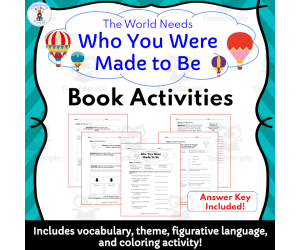
Book Activities for "The World Needs Who You Were Made to Be"
ELA, Writing, Grade 3, 4, 5, Activities
Kickstart the school year by fostering a sense of community within your classroom and developing a visually appealing bulletin board display using this PRINTABLE resource, which supplements the book "The World Needs Who You Were Made to Be" by Joanna Gaines. Your students will get to engage in important ELA skills while having fun decorating a hot air balloon that features their preferred learning style. You can even personalize the "basket" of the hot air balloon with the students' pictures! This colorful display is perfect for events like open houses or back-to-school nights. During this activity, students will: Enrich their vocabulary Determine and back up the text's theme with textual evidence Recognize and interpret figurative language Establish connections between the text and themselves The resource provides: Helpful tips for teachers for each skill/activity 8 vibrant vocabulary word cards (available in both color and black/white) Worksheet activities targeting vocabulary, theme, figurative language, and reflection questions Answer keys to guide you Outlines for hot air balloons for the concluding activity Examples to inspire your students In the final activity, two options are provided: Students can pen 4-5 adjectives that best describe their working style on the hot air balloon OR Students can craft a full sentence or phrase that encapsulates their optimal working style The adaptable nature of this resource allows for easy differentiation based on student writing abilities (e.g., ELLs) or to cater to various grade levels. Once you have a copy of the book, simply print out this activity and you're ready to go! This resource is ideal for the start of the academic year, to kick off a new project or collaborative work, or to foster community spirit at any point throughout the year. It's an excellent way to encourage self-awareness among students and respect for diverse learning styles. We would be grateful if you could leave a comment or rating to share how useful this product was to you, or to provide any feedback or questions you might have. Please follow us to stay updated on new resources that could be beneficial for your classroom. Thank you! Copyright © Creatively Mrs. B
Author Creatively Mrs. B
Tags Figurative Language, Writing, Book Companion, Coloring Activity, Vocabulary

5th Grade ELA Vocabulary Bilingual Word Wall Cards
ELA, Language Development, Vocabulary, Grade 5, Word Walls, Classroom Decor
Assist your ESL and ELL learners in expanding their vocabulary in both reading and writing with the use of these educational word wall cards. They are ideal for the back-to-school season and serve as a valuable instructional resource throughout the academic year. Teaching Spanish-speaking ELL learners in your class can be challenging when trying to present grade-level content in an accessible way. This bilingual ELA vocabulary resource aims to solve this issue, facilitating comprehension and reinforcing key concepts, thus saving valuable time. The resource incorporates 62 words from the Common Core Reading and Writing Standards for 5th grade. Each card displays a vocabulary term in both English and Spanish, accompanied by a visual explanation (with one exception). The included Spanish translations and images aid students in drawing on their existing knowledge, forming associations, and deriving meaning. The cards are conveniently grouped by topic and color-coded for easy navigation. The areas covered include: Verbs found in questions (e.g., determine, describe, explain) Essential reading skills (e.g., summarize, point of view, theme) Figurative language Poetry Story Elements Types of Writing The resource comes with: Guidance for Teachers A comprehensive list of words with their definitions in English A colorful and a b/w 'ELA Word Wall' sign Print and editable bilingual word wall cards for each word, available in color and black and white Blank templates for personalized creation A vocabulary worksheet A sample answer key for the vocabulary worksheet The vocabulary worksheet allows students to define words, draw a related picture, and identify synonyms & antonyms. This is an excellent way to extend learning and can be used with any word. Visualize its Application in Your Classroom: This versatile resource can be deployed in numerous ways over the academic year: Introduce new vocabulary using the cards in whole-class or small-group lessons. Utilize the cards to review terms before an assessment or activity by engaging in "heads up" or other enjoyable review games. Establish a word wall in your classroom. The word wall can be a constant reference point during activities, fostering connections. Having words readily available encourages student independence and familiarity, increasing their confidence. Encourage students to form a personal dictionary in their notebooks using the included vocabulary worksheet. This can be used as a morning work task or an end-of-lesson activity, providing additional vocabulary practice. To accommodate your unique needs, all cards are EDITABLE, and blank templates are included, allowing you to tailor them to your specific classroom requirements. __________________________________ Copyright © Creatively Mrs B
Author Creatively Mrs. B
Tags Back To School, Word Wall, Vocabulary, Extension Activity, Bilingual
Analyzing Details Through Pop Music Song Lessons
ELA, Reading, Reading Comprehension, Grade 9, 10, 11, 12, Songs, Activities
Introduce students to the art of literary analysis with these captivating music-based activities! Taking inspiration from Nancy Dean's Voice Lessons, our Song Lessons module employs various genres of pop music (including country, rock, and folk) to demonstrate the power of literary devices in literature. This segment, which serves as an ideal warm-up or end-of-week exercise, invites students to scrutinize song lyrics through the lens of detailed literary devices. This activity is so easy and fun to implement with your students! Simply start by introducing the literary device with the provided definition, then use the copy/paste directions to create and then print any of the five provided song discussion activities. When students walk into their next class and hear a song playing over your speakers, they will be so excited to get started analyzing the lyrics with each worksheets questions and annotation activity. Once students are comfortable with song discussions, you can provide them with the opportunity to create their own! They will have a blast sharing the literary power of their favorite song! Each Song Lesson section contains the following: - An introduction with lesson planning advice and the definitions of 5 literary devices (Detail, Diction, Imagery, Point of View, and Tone) - 5 short song lessons. Each lesson includes a pop song (music and lyrics available via included web link), an annotation activity, and three close reading analysis questions that ask students to examine the selected song through the lens of the literary concept of details - An answer key for each included song - A Create Your Own Song Lesson Assignment that allows students to share their favorite music while also demonstrating their understanding of the literary device of details. This assignment worksheet includes a rubric tied to the ELA Common Core Standards CCRA.W.4 and CCRA.SL.2 LYRICS ANALYZED IN SONG LESSONS: DETAILS: "In Lonesome Dove," by Garth Brooks; "Six Blocks Away," by Lucinda Williams; "Traveling Soldier," by The Dixie Chicks; "Racing in the Streets," by Bruce Springsteen; "Lido Shuffle," by BOZ SCAGGS. Although this resource can be fitted for any secondary Language Arts classroom, it has been carefully designed to work best in grades 9, 10, 11, and 12. The included activities and rubric are subtly but specifically tied to Common Core ELA Standards for Language (3, 4, and 5), Speaking and Listening (2), and Writing (4). This resource is provided as a Microsoft PowerPoint template file. This resource contains 11 pages.
Author The Language of Educational Art, LLC
Tags Bell Ringer, Music, Literary Analysis, Literary Devices

Introduction Lesson for Multiplication of Fractions
Math, Fractions, Grade 5, Lesson Plans, Teacher Tools
This a twenty eight page PowerPoint lesson for teaching multiplication of fractions both conceptually and with the standard algorithm. The first slides explain the meaning of the parts of a fraction. Next multiplication of fractions is compare to "of" and "use". Four multiplication problems are shown and explained using circle fraction models. Next students are asked to look at these 4 problems and see a pattern. The algorithm for multiplying fractions is revealed. Students are shown a problem using the algorithm and then are asked to complete 3 problems on their own. Finally a summary of the lesson is given and an exit problem is given to the students. All answers are given withing the lesson. This lesson corresponds to Common Core 5th grade math standard: This PowerPoint can be edited to meet the needs of your students. 5.NF.B.4 Apply and extend previous understandings of multiplication to multiply a fraction by a fraction. a. Interpret the product (a/b) x q as a parts of a partition of q into b equal parts; equivalently, as the result of a sequence of operations a x q / b. For example, use a visual fraction model to show (2/3) x (4/5) = 8/15. (In general,(a/b) x (c/d) = ac/bd.)
Author Math Resources With Rigor
Tags Multiply Fractions, Circle Fraction Models, Lesson Plan
Metric Conversions Puzzle for Student Practice
Math, Measurements, Grade 5, Activities
A fun activity for students to practice metric conversions. The puzzle is a 4 by 4 grid of squares. Each side of the square has a number in metric form. Students will match sides with equivalent numbers that use a different unit of metric measure. The skill students will use to solve the puzzle correspond to Common Core Standards: Each square has a letter in the middle and the teacher answer key shows the letters only. This makes for a quick check of student's accuracy. Have students to cut out the puzzle. Assign them each a unique number to place on the back of every puzzle piece. (this is for pieces found on the floor, you will know to which bag they belong). They will then mix the pieces and place them in a plastic bag. Have students to exchange baggies and then complete the puzzle. As you walk around to monitor your unique answer key allows you to tell quickly if students are correct as they work. This is a PDF file. 5.MD.A.1 Convert among different-sized standard measurement units within a given measurement system (e.g., convert 5 cm to 0.05 m) 6.RP.3d. Use ratio reasoning to convert measurement units; manipulate and transform units appropriately when multiplying or dividing quantities.
Author Math Resources With Rigor
Tags Metric Conversion, Puzzle, Activity, 5th Grade Math, 6th Grade Math

Patterns of Zeros and Decimals when Multiplying and Dividing
Math, Decimals, Grade 5,
This Patterns of Zeros and Decimals when Multiplying and Dividing resource is a twenty four question practice sheet for the 5th grade math Common Core Standard The first 8 questions are multiplication, the second 8 questions are division, and the final 8 questions are a mixture of multiplication and division. The problems contain both whole numbers and decimal numbers and use the powers of 10: 10, 100, 1000, and 10,000. Students should not use a calculator but use what they have learned about the patterns of zeros and the placement of a decimal point when multiplying and dividing by powers of 10. The sheet should be used after the skill is taught and is a way for the concept to be reinforced. An answer key is included. Since the students will complete the problems mentally, all 24 products and quotients are contained on one page with a one page answer key. The file is a PDF. Example problems are 34 x 100 and 596.2 divided by 1000. 5.NBT.2. Explain patterns in the number of zeros of the product when multiplying a number by powers of 10, and explain patterns in the placement of the decimal point when a decimal is multiplied or divided by a power of 10.
Author Math Resources With Rigor
Tags Patterns Of Zeros, Patterns Of Decimals, 5th Grade Math
Introduction to the Coordinate Plane and Graphing Points
Math, Graphing, Grade 5, Presentations
This 42 page PowerPoint on Introduction to the Coordinate Plane and Graphing Points is a great introduction for your 5th grade students to the coordinate plane and graphing points in the coordinate plane. The lesson begins with the parts of the coordinate plane - horizontal or x-axis, vertical or y-axis and the origin. Students are next shown how to read the coordinates of a point in the coordinate plane. They are given several examples of points in the coordinate plane and asked to name its coordinates. They are then given several examples of a points and its coordinates and to graph the point in the coordinate plane. The final slides are 10 review questions for students to answer about the lesson. This PowerPoint on Introduction to the Coordinate Plane and Graphing Points can be edited to meet your student's needs. All answers are imbedded in the presentation. This lesson corresponds to Common Core Standard 5.G.1 - Use a pair of perpendicular number lines, called axes, to define a coordinate system, with the intersection of the lines (the origin) arranged to coincide with the 0 on each line and a given point in the plane located by using an ordered pair of numbers, called its coordinates. Understand that the first number indicates how far to travel from the origin in the direction of one axis, and the second number indicates how far to travel in the direction of the second axis, with the convention that the names of the two axes and the coordinates correspond (e.g., x-axis and x-coordinate, y-axis and y-coordinate).
Author Math Resources With Rigor
Tags Coordinate Plane, Coordinates Of Points, Graphing Points

Analyzing Tone Through Pop Music Song Lessons
ELA, Reading, Reading Comprehension, Grade 9, 10, 11, 12, Songs, Activities
Teach students how to analyze literature with these engaging music activities! Inspired by Nancy Dean’s Voice Lessons , Song Lessons uses pop music (country, rock, pop, and folk) to teach the impact of literary devices in literature. A perfect bell ringer or Friday afternoon activity, this section asks students to analyze music lyrics through the literary device of tone. This activity is so easy and fun to implement with your students! Simply start by introducing the literary device with the provided definition, then use the copy/paste directions to create and then print any of the five provided song discussion activities. When students walk into their next class and hear a song playing over your speakers, they will be so excited to get started analyzing the lyrics with each worksheets questions and annotation activity. Once students are comfortable with song discussions, you can provide them with the opportunity to create their own! They will have a blast sharing the literary power of their favorite song! Each Song Lesson section contains the following: - An introduction with lesson planning advice and the definitions of 5 literary devices (Detail, Diction, Imagery, Point of View, and Tone) - 5 short song lessons. Each lesson includes a pop song (music and lyrics available via included web link), an annotation activity, and three close reading analysis questions that ask students to examine the selected song through the lens of the literary concept of tone - An answer key for each included song A Create Your Own Song Lesson Assignment that allows students to share their favorite music while also demonstrating their understanding of the literary device of tone. This assignment worksheet includes a rubric tied to the ELA Common Core Standards CCRA.W.4 and CCRA.SL.2 LYRICS ANALYZED IN SONG LESSONS: TONE: "Jenny Was a Friend of Mine," by The Killers; "Popular," by Nada Surf; "Burning Photographs," by Ryan Adams; "Sweetest Decline," by Beth Orton; "Twin Falls," by Ben Folds Five. Although this resource can be fitted for any secondary Language Arts classroom, it has been carefully designed to work best in grades 9, 10, 11, and 12. The included activities and rubric are subtly but specifically tied to Common Core ELA Standards for Language (3, 4, and 5), Speaking and Listening (2), and Writing (4). This resource is provided as a Microsoft PowerPoint template file. This resource contains 11 pages.
Author The Language of Educational Art, LLC
Tags Bell Ringer, Literary Analysis, Music, Literary Devices, How To Analyze Tone, Teaching Tone

Analyzing Point of View Through Pop Music Song Lessons
ELA, Reading, Reading Comprehension, Grade 9, 10, 11, 12, Songs, Activities
Teach students how to analyze literature with these engaging music activities! Inspired by Nancy Dean’s Voice Lessons , Song Lessons uses pop music (country, rock, pop, and folk) to teach the impact of literary devices in literature. A perfect bell ringer or Friday afternoon activity, this section asks students to analyze music lyrics through the literary device of Point of View. This activity is so easy and fun to implement with your students! Simply start by introducing the literary device with the provided definition, then use the copy/paste directions to create and then print any of the five provided song discussion activities. When students walk into their next class and hear a song playing over your speakers, they will be so excited to get started analyzing the lyrics with each worksheets questions and annotation activity. Once students are comfortable with song discussions, you can provide them with the opportunity to create their own! They will have a blast sharing the literary power of their favorite song! Each Song Lesson section contains the following: - An introduction with lesson planning advice and the definitions of 5 literary devices (Detail, Diction, Imagery, Point of View, and Tone) - 5 short song lessons. Each lesson includes a pop song (music and lyrics available via included web link), an annotation activity, and three close reading analysis questions that ask students to examine the selected song through the lens of the literary concept of Point of View - An answer key for each included song A Create Your Own Song Lesson Assignment that allows students to share their favorite music while also demonstrating their understanding of the literary device of Point of View. This assignment worksheet includes a rubric tied to the ELA Common Core Standards CCRA.W.4 and CCRA.SL.2 LYRICS ANALYZED IN SONG LESSONS: POINT OF VIEW: "Birdhouse in Your Soul," by They Might Be Giants; "Hide and Seek," by Imogen Heap; "Hand Me Down," by The Wallflowers; "How to Save a Life," by The Fray; "Viva la Vida," by Coldplay. Although this resource can be fitted for any secondary Language Arts classroom, it has been carefully designed to work best in grades 9, 10, 11, and 12. The included activities and rubric are subtly but specifically tied to Common Core ELA Standards for Language (3, 4, and 5), Speaking and Listening (2), and Writing (4). This resource is provided as a Microsoft PowerPoint template file. This resource contains 11 pages.
Author The Language of Educational Art, LLC
Tags Bell Ringer, Music, Literary Analysis, Literary Devices, Analyze Songs, Analyzing Point Of View, Song Lessons, Analyzing Music, Songs With Lessons
Analyzing Imagery Through Pop Music Song Lessons
ELA, Reading, Reading Comprehension, Grade 9, 10, 11, 12, Songs, Activities
Teach students how to analyze literature with these engaging music activities! Inspired by Nancy Dean’s Voice Lessons , Song Lessons uses pop music (country, rock, pop, and folk) to teach the impact of literary devices in literature. A perfect bell ringer or Friday afternoon activity, this section asks students to analyze music lyrics through the literary device of imagery. This activity is so easy and fun to implement with your students! Simply start by introducing the literary device with the provided definition, then use the copy/paste directions to create and then print any of the five provided song discussion activities. When students walk into their next class and hear a song playing over your speakers, they will be so excited to get started analyzing the lyrics with each worksheets questions and annotation activity. Once students are comfortable with song discussions, you can provide them with the opportunity to create their own! They will have a blast sharing the literary power of their favorite song! Each Song Lesson section contains the following: - An introduction with lesson planning advice and the definitions of 5 literary devices (Detail, Diction, Imagery, Point of View, and Tone) - 5 short song lessons. Each lesson includes a pop song (music and lyrics available via included web link), an annotation activity, and three close reading analysis questions that ask students to examine the selected song through the lens of the literary concept of imagery - An answer key for each included song A Create Your Own Song Lesson Assignment that allows students to share their favorite music while also demonstrating their understanding of the literary device of imagery. This assignment worksheet includes a rubric tied to the ELA Common Core Standards CCRA.W.4 and CCRA.SL.2 LYRICS ANALYZED IN SONG LESSONS: IMAGERY: "Always in Love," by Wilco; "Everyday is Like Sunday," by Morrissey; "Silver Springs," by Fleetwood Mac; "Fake Plastic Trees," by Radiohead; "Nightswimming," by R.E.M. Although this resource can be fitted for any secondary Language Arts classroom, it has been carefully designed to work best in grades 9, 10, 11, and 12. The included activities and rubric are subtly but specifically tied to Common Core ELA Standards for Language (3, 4, and 5), Speaking and Listening (2), and Writing (4). This resource is provided as a Microsoft PowerPoint template file. This resource contains 11 pages.
Author The Language of Educational Art, LLC
Tags Bell Ringer, Literary Analysis, Literary Devices, Music, Song Lyrics Imagery, Songs With Imagery, Imagery Song Lyrics, Imagery In Song, Imagery Music Lyrics, Song With Imagery, Imagery In A Song, Song Lyrics With Imagery, Imagery In Song Lyrics, Imagery In Songs

Analyzing Diction Through Pop Music Song Lessons
ELA, Reading, Reading Comprehension, Grade 9, 10, 11, 12, Songs, Activities
Teach students how to analyze literature with these engaging music activities! Inspired by Nancy Dean’s Voice Lessons , Song Lessons uses pop music (country, rock, pop, and folk) to teach the impact of literary devices in literature. A perfect bell ringer or Friday afternoon activity, this section asks students to analyze music lyrics through the literary device of diction. This activity is so easy and fun to implement with your students! Simply start by introducing the literary device with the provided definition, then use the copy/paste directions to create and then print any of the five provided song discussion activities. When students walk into their next class and hear a song playing over your speakers, they will be so excited to get started analyzing the lyrics with each worksheets questions and annotation activity. Once students are comfortable with song discussions, you can provide them with the opportunity to create their own! They will have a blast sharing the literary power of their favorite song! Each Song Lesson section contains the following: - An introduction with lesson planning advice and the definitions of 5 literary devices (Detail, Diction, Imagery, Point of View, and Tone) - 5 short song lessons. Each lesson includes a pop song (music and lyrics available via included web link), an annotation activity, and three close reading analysis questions that ask students to examine the selected song through the lens of the literary concept of diction - An answer key for each included song A Create Your Own Song Lesson Assignment that allows students to share their favorite music while also demonstrating their understanding of the literary device of diction. This assignment worksheet includes a rubric tied to the ELA Common Core Standards CCRA.W.4 and CCRA.SL.2 LYRICS ANALYZED IN SONG LESSONS: DICTION: "Romeo and Juliet," by Dire Straits; "Directions," by Josh Rouse; "Look at Miss Ohio," by Gillian Welch; "Rock Hard Times," by The Eels, "Lost in the Supermarket," by The Clash. Although this resource can be fitted for any secondary Language Arts classroom, it has been carefully designed to work best in grades 9, 10, 11, and 12. The included activities and rubric are subtly but specifically tied to Common Core ELA Standards for Language (3, 4, and 5), Speaking and Listening (2), and Writing (4). This resource is provided as a Microsoft PowerPoint template file. This resource contains 11 pages.
Author The Language of Educational Art, LLC
Tags Bell Ringer, Literary Analysis, Literary Devices, Music, Analyze Diction, Diction In Songs, Diction Lessons

Literary Devices Creative Writing Worksheets
ELA, Writing, Creative Writing, Grade 6, 7, 8, 9, 10, 11, 12, Worksheets & Printables, Worksheets
Crafting literature is hard, and these short literary devices worksheets allow students to explore the individual components of good creative writing before they begin drafting their own original work. Included in this packet are 3 unique worksheets, each based around a key literary device (Details, Diction, and Tone). In these individual assignments, students will learn about each literary device, see examples of them, and get a straightforward task that will build on their learning and prepare them for their own original writing. Simple, engaging, and a great building block to the development of sound creative writing skills, these activities naturally build towards our Song Lesson activities and Literary Devices: Creative Writing Workshop products - links below. Administering and guiding your students through these three dynamic and fun worksheets could not be easier! Simply figure out when you desire to teach each of the three literary devices and hand out the corresponding worksheet. The directions, expert scaffolding, and your students creativity will take care of the rest! This packet of worksheets includes: - An activity that addresses the literary device of DETAILS and then asks students to complete several prompted multiple choice and short answer activities - Another activity that addresses the literary device of DICTION and then asks students to complete several prompted multiple choice and short answer activities - A third activity that addresses the literary device of TONE and then asks students to complete several prompted multiple choice and short answer activities Although this resource can be fitted for any secondary Language Arts classroom, it has been carefully designed to work best in grades 6 through 12. The included activities are subtly but specifically tied to Common Core ELA Standards for Language (3 and 5). This resource is provided in print-ready, bookmarked, and adjustable PDF files and PowerPoint Show files. This resource contains 7 pages.
Author The Language of Educational Art, LLC
Tags Literary Devices, Worksheets, Creative Writing, Pre-writing

Personal Finance: Teaching Econ is Fun!
Social Studies, Economics, Grade 5, 6, 7, 8, 9, 10, 11, 12, Teacher Tools, Lesson Plans, Activities
Introduction to Personal Finance: Dive into MONEY! This lesson serves as the kickstart to my personal finance module. While it's primarily an introductory session, it can seamlessly fit into any personal finance curriculum. The core theme explores the complexities of a barter-based economy and delves into the reasons we pivot to using money, accompanied by a precise definition of money. It's a dynamic and captivating lesson. It includes a light-hearted skit, where students, and optionally the teacher, illustrate the pitfalls of bartering. Following the skit, the spotlight shifts to understanding the essence of money and its significance. With hands-on demonstrations, students get a chance to actively participate, ensuring they remain engrossed and involved throughout the session. What is included? -The Goat Farmer and Chicken Farmer skit (props not included :-) -a power point that will define money and the challenges of a barter economy -a Federal Reserve bank publication titled: "MONEY", this is a must have resource when teaching about money! I use this resource in my 7th grade classroom, but it could be used in almost any middle or high school class. This has been a successful lesson in my economics class for almost 20 years. Teaching economics is fun!
Author BCM Creations
Tags Bartering, Money, Economics, Personal Finance

Letter O Games
ELA, Language Development, Phonics, Kindergarten, Preschool, Activities, Games
This letter O beginning sound game is an interactive way for students to work on words that begin with the letter O. This alphabet game provides students with a fun way to practice identifying words the initial sound of the letter O. The game focuses on the short and long sound of the letter O. What do you need to play: * One of the gameboards * A die * Something to mark the inner spaces with * A player piece to move around the edge of the board This game can be a single player or a two player game. To play, students will need one gameboard, one die, 20 objects to mark the inner part of the game board, and a game piece for each student playing. First, a student will roll the die and move his game piece around the outside of the board. The student will then cover the corresponding picture in the middle of the game board. The winner or end of game can be determined by one of the following rules below, depending on if the student is playing alone or with a partner. This can be a single player game using the following rules: * Player tries to connect 4 to win * Player tries to cover all the spaces in a set time limit This can be a two player game by using the following rules: * Who can cover the most spaces in a specific time limit * Who can cover half (10 spaces) of the board first When to Use: * Literacy Center * Small Group Activity * Individual Activity * Early Finisher Game * File Folder Game * Partner Activity Skills Assessed: * Beginning Sound of the Letter O * Short and Long sound of O * Counting * Following Directions
Author The Connett Connection
Tags Alphabet Activities, Alphabet Center, Alphabet Game, Letter Game, Phonics Game, Beginning Sounds, Initial Sounds, Letter Of The Week, Letter O, Letter O Activities
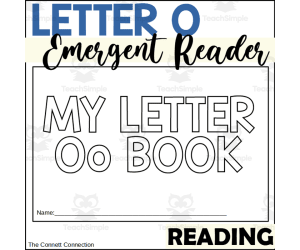
Letter O Emergent Reader
ELA, Language Development, Phonics, Reading, Kindergarten, Preschool, Activities
This letter O emergent reader is a great book for practicing beginning sounds. This book is a low prep activity for students to make and take home to practice the initial sound of the letter O. These beginning readers are perfect for any preschool or kindergarten classroom where students are learning about letters and letter sounds. Students will color each picture and then cut the pages apart. The pages will then be stapled together in a book for students to read over and over to practice the letter O sound. There are pictures that focus on the short O sound. This emergent reader includes a cover page and seven different "O is for..." pages that all focus on the short sound of the letter O in the initial position of the word. For each page, excluding the first one, it includes two letter O things. What Is Included: * O Cover Page - My Letter O Book * O is for octopus. * O is for ostrich. * O is for otter. * O is for octagon. * O is for ox. * O is for olive. When to Use: * Literacy Center * Reading Center * Small Group Activity * Independent Activity * Emergency Sub Plans * Use as mini books in a class library These alphabet emergent readers make great student made books for them to take home and read with their families or for placing in a class library for students to read again and again during center time. Skills Assessed: * Letter Recognition * initial Sound of the Letter O * Short of the Letter O * Reading simple sight words * Reading simple repetitive sentences The pages themselves are no prep. The teacher just needs to print out the pages and hand them to students to complete. The students are able to place the pages of this book in any order they wish.
Author The Connett Connection
Tags Alphabet Activity, Alphabet Book, Beginning Reader, Emergent Reader, Beginning Sounds, Initial Sounds, Letter Of The Week, Letter Book, Letter O, Letter O Activities

Create Your Own Song Analysis Activities
ELA, Reading, Reading Comprehension, Grade 9, 10, 11, 12, Songs, Activities
Empower your students with the skills to analyze literature through engaging song analysis discussions, student activities, and presentations! With this comprehensive resource, all you need to do is select a song and let my template, tasks, and teacher resources pages handle the rest! Drawing inspiration from Nancy Dean's acclaimed work, " Voice Lessons ," these Song Lessons activities leverage the power of popular music genres such as country, rock, pop, and folk to illuminate the impact of literary devices in literature. This resource effectively employs 5 key literary devices—Details, Diction, Imagery, Point of View, and Tone—to facilitate insightful discussions and in-depth analysis. Immerse your students in a dynamic learning experience where they explore the synergy between music and literature. This resource equips you with the tools and frameworks to seamlessly integrate these activities into your curriculum. Foster critical thinking and literary analysis while tapping into the universal language of music. Included with this resource download: - An introduction with lesson planning advice and the definitions of 5 literary devices (Detail, Diction, Imagery, Point of View, and Tone) - A song lessons template file. This file includes a fill-in-the-blank song lesson activity and 4 teacher resources pages that include "template-ready" literary devices terms and 50 (!) sample analysis questions. You'll be able to create a song analysis lesson for any song in minutes! - 5 Create Your Own Song Lesson Assignments that allows students to share their favorite music while also demonstrating their understanding of 5 different literary devices. Each assignment worksheet includes a rubric tied to 2 ELA Common Core standards - A Song Analysis Presentation assignment that invites students to share their favorite music with their classmates while keeping an academic focus. This presentation project is tied to 3 ELA Common Core standards Although this resource can be fitted for any secondary Language Arts classroom, it has been carefully designed to work best in grades 9, 10, 11, and 12. The included resources are subtly but specifically tied to Common Core ELA Standards for Speaking and Listening (2, 4, and 5), Reading Literature (1, 2, 4, and 6), and Writing (4). This resource is provided in print-ready, bookmarked, and adjustable PDF files and a PowerPoint template file. This resource contains 22 pages and 1 editable template tile
Author The Language of Educational Art, LLC
Tags Music, Rubric, Student Choice, Literary Analysis

Letter O Dab It Worksheets
ELA, Language Development, Phonics, Kindergarten, Preschool, Worksheets & Printables, Worksheets
These dab it worksheets for the letter O are great for practice letter recognition for both the capital and lowercase letter O. Students use bingo dabbers or dot markers to complete this quick and easy activity which gives students practice with recognizing the letter O from amongst other letters or for those students who need extra practice distinguishing between the capital and lowercase letter O. These alphabet worksheets are suitable for preschool and kindergarten students who are learning their letters. There are 3 different worksheets for students to use to practice the letter O * One capital letter O page to mark all the capital letter Is. * One lowercase letter O page to mark all the lowercase letter Is. * One letter I page where students must distinguish between the capital and lowercase letter Os. There are several ways students can complete these sheets. They can use bingo dabbers, dot markers, mini erasers, stickers, markers or crayons, stamps or small manipulatives to mark the correct letter. The pages can be laminated to create a reusable activity with dry erase markers. Teachers can provide a variety of methods for students to choose how they wish to complete the alphabet pages. These alphabet worksheets can be used in the following ways * Literacy centers * Fine motor centers * Independent practice * Small group activities * Homework * Morning work * Emergency sub plans Skills assessed with these letter O worksheets * Letter O Recognition * Distinguishing between the capital letter O and the lowercase letter O * Distinguishing the letter O from amongst other letters * Fine Motor Skills * Hand-Eye Coordination These dot marker worksheets are print and go. Teachers only need to add the desired method of marking the correct letter to have a fun, engaging way for students to practice letter recognition.
Author The Connett Connection
Tags Alphabet Activities, Alphabet Worksheets, Letter Of The Week, Letter Recognition, Dab It Worksheets, Do A Dot, Dot Markers, Letter O, Letter O Activities, Letter O Worksheets