



8,447 products added recently
Page 276 - Newest Teaching Resources

 Show filters
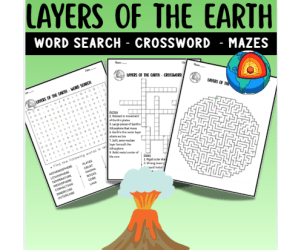
LAYERS OF THE EARTH - Word Search & Crossword & Puzzle
Earth Sciences, Earth and Environmental Sciences, Science, Grade 6, 7, 8, Word Searches, Worksheets, Worksheets & Printables, Crosswords Puzzles, Mazes
Make earth science fun and engaging with this interactive Layers of the Earth activity pack. Designed to reinforce key vocabulary and concepts, this resource helps students explore the structure of the Earth through enjoyable and meaningful practice. Students will review important terms such as crust, mantle, core, inner core, outer core, and more while completing a variety of puzzles. These activities support vocabulary development, spelling, and concept recognition in a hands-on way that keeps learners motivated. This resource includes word search puzzles, crosswords, and other engaging activities that encourage students to think critically while reinforcing science content. It’s perfect for introducing or reviewing the layers of the Earth in a fun and low-pressure format. Ideal for upper elementary students, this no-prep resource works well for science lessons, centers, early finishers, or homework. What’s Included: Layers of the Earth word search puzzles Crossword puzzle with key vocabulary Additional puzzle activities for reinforcement Answer keys for easy checking Clear, student-friendly layouts
Author Bright Education
Rating
Tags Earth Sience, Layers Of The Earth, Puzzles, Crossword, Word Search, Mazes

Limerick Poem Lesson Plan, Template, Examples & Rubric Poetry Writing
ELA, Poetry, Literature, Homeschool Templates, Grade 3, 4, 5, 6, Centers, Activities, Graphic Organizers, Teacher Tools, Lesson Plans, Rubrics, Worksheets & Printables
Ever tried teaching a limerick poem and found your students either stuck on rhyming… or going completely off track? This resource was created to make teaching limericks much more manageable. It gives your students a clear structure to follow, while still leaving room for the fun and creativity that limerick poetry is known for. Instead of guessing what to write next, students are guided through the process step by step, using examples and templates that help everything “click”. What's Included A detailed lesson plan you can pick up and use A Limerick poem example to model expectations (color and blackline posters) Interactive notebook templates to support each stage A clear explanation of the AABBA rhyme pattern An assessment rubric to keep marking simple A publishing sheet that would make the perfect bulletin board display to celebrate National Poetry Month Perfect For Grades 3-6 Poetry lessons Writing units Literacy rotations Homeschool learning Small group or whole-class teaching How You Might Use It Start by reading a few limericks together (your students will love the humor), then break down the structure as a class. From there, they can use the templates to plan and write their own poems before sharing. Skills Covered Poetry writing Rhyme and rhythm (AABBA pattern) Vocabulary development Sentence structure Creative expression Limericks can be tricky—especially when students are trying to juggle rhyme, rhythm, and structure all at once. Having a template in front of them makes a big difference. I’ve found that once students understand the pattern, they actually enjoy the process (and the silly results that come with it!). It’s also a great way to build confidence in students who usually struggle to get started with writing. So, if you’re looking for a way to teach limerick poetry that gives your students enough structure to succeed—but still lets them have fun with it—this is an easy addition to your writing lessons. Before writing a whole poem, complete the rhymes in this limerick worksheet .
Author Teach2Tell
Rating
Tags Poetry Lesson Plan, Poetry Writing Activity, Elementary Poetry, National Poetry Month , Writing Rubric, Creative Writing Lesson, Poetry Examples, Limerick Poem, Limerick, How To Write A Limerick
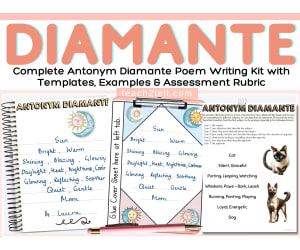
Antonym Diamante Poem Example, Lesson Plan, Templates, Poetry Writing
Writing, ELA, Creative Writing, Poetry, Literature, Vocabulary, Language Development, Grade 3, 4, 5, 6, Bulletin Boards, Classroom Decor, Worksheets & Printables, Worksheets
Are you looking for a clear and structured way to teach antonym diamante poems? This resource will guide students step-by-step through writing a diamante poem using antonyms. It will help students understand both the 7-line poem structure and how opposites connect within their writing. With a combination of examples, interactive notebook templates, and guided support, your students will be able to move from brainstorming ideas to completing their own diamante poems with confidence. Items Included A lesson plan to introduce and model diamante poetry Antonym diamante poem example for student reference (color and blackline) Structured interactive writing notebook templates to scaffold poem writing A clear breakdown of the 7-line diamante format (posters) A simple assessment rubric for marking Publishing sheet Perfect for This product may be used with students in grades 3-6, in your poetry and writing units, literacy rotations, small group or whole-class lessons and as an independent writing task How You Can Use It First, introduce the structure using the example poem provided, then model a poem together as a class, and finally guide students through the templates before moving into independent writing. Skills Covered The following skills are covered: Poetry writing, antonyms practice, using parts of speech, building vocabulary and sentence structure. If you're looking for a resource that will give your students the structure they need as they write their diamante poems, this is a practical and easy-to-use poetry writing resource for your classroom.
Author Teach2Tell
Rating
Tags Antonym Diamante Poem, Diamante Poem Template, Diamante Poem Lesson, Poetry Writing Activity, Diamante Poem Examples, Creative Writing Templates, Vocabulary Antonyms Activity

ESL Reading Comprehension + Writing Activity - Slavic Mythology
ELA, Language Development, ESL, Vocabulary, Reading, Reading Comprehension, Writing, Creative Writing, Formal Writing, Grade 7, 8, 9, 10, 11, 12, Worksheets & Printables, Worksheets, Writing Prompts
ESL Reading Comprehension + Writing Activity Worksheets on Slavic Mythology This ESL EFL Teaching Resource on "Slavic Mythology" (3 PDF Worksheets Slides; Reading Comprehension + Writing Activity) can be ideal to improve Language skills in English. Ideal students for this ESL EFL TESOL Reading + Writing Activity are Foreign Students at middle and High School (7th - 12th Grade; teens) . Newcomers or any ESL Learner is also more than suitable for this ESL - EFL - TESOL - TEFL (English as a Second or Foreign Language) Activity on "Slavic Mythology" (origins, background and history of Slavic mythology + gods + myths + influences and legacy). This Teaching Educational Resource Product can also be ideal for ESL EFL TESOL Centers worldwide or any English second language tutor. Intermediate Advanced English as a Second or Foreign Language (ESL - EFL - TESOL - TEFL) learners are suitable for this ESL EFL TESOL Teaching Resource on "Slavic Mythology" (Worksheet; 3 PDF Printable slides) In this English Second or Foreign Language (ESL - EFL - TESOL - TEFL) Reading Comprehension + Essay Writing Activity Worksheet on "Slavic Mythology" (origins, background and history of Slavic mythology + gods + myths + influences and legacy), the following ESL - EFL - TESOL - TEFL (English Second or Foreign Language) activities are included: 1 text on "Slavic Mythology" (origins, background and history of Slavic mythology + gods + myths + influences and legacy) 26 Comprehension Questions related to the previous text on "Slavic Mythology" (with related space where students can answer to this text's comprehension questions) 2 essay prompts for a writing activity on "Slavic Mythology" (writing an essay on your own personal opinion on Slavic Mythology; whether you new it or not and who is your favourite god or goddess + writing an essay on another mythology; describing it and comparing it to Slavic Mythology) This ESL - EFL - TESOL - TEFL (English Second or Foreign Language) Teaching Resource Reading + Writing Activity (essay prompts) on "Slavic Mythology" (origins, background and history of Slavic mythology + gods + myths + influences and legacy) is great for Intermediate Advanced English as a second or foreign language learners (ESL- EFL - TESOL - TEFL). This English Second Language Worksheet on "Slavic Mythology" (origins, background and history of Slavic mythology + gods + myths + influences and legacy) aims to train and Reading Comprehension + Writing Skills. "Learning with Alan" is a teaching resources store that aims to provide high quality teaching resources and educational materials for ESL EFL TESOL (English Second or Foreign Language) teachers, tutors and educators. It aims to support teachers, educators, and tutors in both online and offline environments, helping them achieve their teaching goals while creating a fun, stimulating atmosphere for learning English. Always remember: learning is fun, and so is English! If you want to find more ESL - EFL - TESOL - TEFL (English Second or Foreign Language) Teaching Resources and Educational Material click here Learning with Alan!
Author Learning with Alan
Rating
Tags ESL, English Second Language, English, Reading Comprehension, Writing Activity, Eastern Europe, Mythology, Folklore, Baba Yaga, Activity

TEST BANK For Introductory Maternity & Pediatric Nursing 5th edition N
Special Resources, Not Grade Specific, Worksheets & Printables
Comprehensive Study Resource and Exam Preparation for Maternal and Pediatric Nursing The Test Bank for Introductory Maternity & Pediatric Nursing, 5th Edition by Nancy Hatfield will prepare nursing students for success in maternal and pediatric nursing. This test bank will help nursing students learn the important concepts of maternity, newborn, and pediatric nursing by providing test questions that focus on key areas of maternal and child nursing related to each topic found in the textbook. The test questions are completely aligned with the 5th edition of the textbook. The Test Bank has many different kinds of questions that will help develop critical thinking skills, clinical judgement, and the ability to apply nursing concepts to real life situations. This test bank has the following valuable features to help nursing students be successful: • A large number of questions including multiple choice, true/false and case based questions. • All chapters of the textbook are represented in the test bank. • Maternal and Child Health topics, including pregnancy, childbirth, newborn care and pediatric nursing, are highlighted. • Detailed explanations for each test question's answer help with understanding and retention of material. • Questions are formatted in a similar manner to the NCLEX exam to assist students in preparing for both exams and licensing tests. • The test bank is organized in a manner that allows students to study easily and quickly. Topics covered in the Test Bank include: • Prenatal care and gestion de la grossesse • Labour, Delivery, and Postpartum Care • Newborn Assessment and Care • Development and Growth of Infants and Young Children • Nursing Care of Children with Pediatric Disease • Family-Centered Care if you have any Question dm me
Author dealhube
Rating
Tags TEST BANK For Introductory Maternity & Pediatric Nursing 5th Edition Nancy Hatfield

Test Bank Phillips's Manual of I.V. Therapeutics Evidence-Based 7th ED
Special Resources, Not Grade Specific, Worksheets & Printables
The Test Bank for Phillips's Manual of Intravenous (IV) Therapy: Evidence Based Practice, Seventh Edition provides the opportunity to strengthen your knowledge of IV therapy as well as your ability to successfully perform IV therapy in real-life settings and on nursing exams. The test bank is designed specifically to meet the needs of nursing students and healthcare professionals who wish to create mastery of the principles of IV therapy through structured and exam-focused practice. The test bank is a direct extension of the established clinical reference that you have used throughout your educational career. It contains a comprehensive variety of questions that reinforce the principles of evidence-based practice, patient safety, and decision making principles. 💉 Key Features: Extensive Question Bank: Multiple-choice, true/false and case-based questions Chapter-by-Chapter Coverage: Fully represents Phillips’s Manual of IV Therapy, Seventh Edition Evidence Based Focus: Provides emphasis on best practices in both IV Therapy and patient care. Detailed Answer Rationales: Contains clear explanations to enhance understanding and retention. Clinical Application Questions: Reflect real-world clinical scenarios that demonstrate how to apply IV therapy skills. Organized for Easy Study: Designed in a structured format to allow for the most efficient review at each chance. 📘 Topics Covered: Fundamental principles of IV therapy Intravenous vascular access devices and insertion techniques Fluid and electrolyte balance Administration of medications via IV Infection control and maintaining patient safety if you have any question dm me
Author dealhube
Rating
Tags Test Bank Phillips's Manual Of I.V. Therapeutics Evidence-Based Practice 7th ED

Generative AI Ethics, Deepfakes & Responsible Use Case Studies
Science, Technology, Computer Science, Engineering, Research, Resources for Teachers, Classroom Management, STEM, ELA, Language Development, Grade 6, 7, 8, 9, 10, 11, 12, Worksheets & Printables, Workbooks, Worksheets, Word Searches, Writing Prompts, Teacher Tools, Lesson Plans, Presentations, Outlines, Quizzes and Tests
The complete high school curriculum is prepared and provides an interactive exploration of the topic of ethics in generative AI; deepfakes; responsible use of synthetic media; and provides a thorough introduction to how synthetic media works (to be used by all of our student participants in grades 9-12). The curriculum includes an academic overview of Synthetic Media architecture; multiple chapters for deepfake discussion/analysis; Copyright/Author status; algorithmic bias and epistemic security/provability protocols regarding the use of synthetic media. In addition, there are ten practical, complete, and interactive worksheets for active, individual student participation that have real examples, such as "the Synthesized Senator," "Med-Synthetica Diagnostic Bias," "Voice Cloning," "Influencer Avatars," etc. The students have to complete fill-in-the-blank terminology exercises, scenario analyses, and ethical synthesis prompts that promote critical thinking, media literacy, and digital citizenship skill acquisition. There is also the following in the resource book: (conceptual visual diagrams [mind maps, escalation matrices, process flows], a comprehensive answer key with notes for teachers and benchmarks for mastery) and a detailed teacher guide with pedagogical strategies, assessment tools (rubrics) and teaching protocols. This curriculum is also perfect for English/Language Arts, Social Studies, Computer Science, Digital Literacy, or elective Technology & Ethics classes. This resource is an instant digital download and requires no prep time. Give your students the information they need to be responsible in their use of AI and the topics related to ethics regarding the generative technology called "deepfake." Parents/Schools Appreciate It Because: Essential 21st century skills are being taught through critical thinking, verifying media sources & making ethical choices in dealing with misinformation & threats from deep-fakes and counterfeit media, thereby counteracting those very problems. Students remain engaged while staying motivated to learn by using real-world examples of ethical & responsible use of technology through use of case studies/workheets. The format requires zero preparation & can be easily implemented by teachers; includes lesson plans, case studies, worksheets, visuals, answer keys, teacher’s implementation guide (in pdf format). Responsible use of artificial intelligence & digital stewardship is promoted through use of technology in an aligned manner with modern school standards regarding digital citizenship/social-emotional learning. Materials are flexible in nature so can be used across multiple curriculum areas & for hybrid & remote learning situations. Based on a complete analysis of the submitted PDF, the target audience for this document are Students in grades 9-12 (age 14-18). This project is most suited for high school students enrolled in the following classes: - English/Language Arts or Media Literacy - Social Studies/Civics/Government - Computer Science/Digital Citizenship/Technology and Society - Ethics/Philosophy/STEM/STEAM The majority of the content is age appropriate for students and offers academically challenging material using fictional case studies that are relatable to a student's experience (there are no graphic illustrations or inappropriate material) on real-world current events such as misinformation, bias, copyright, and consent regarding the use of generative AI technology. "Terms & Copyright of Use": This resource has been copyrighted by Syed Hammad Rizvi. Personal use/Single-use in a classroom only. You may NOT change, share or sell this resource. i.e You may NOT post this on the Internet for others to search for/download. If you want to share this resource with other people in your school or district purchase additional copies through Teachsimple. Thank you for your cooperation. This product is provided to you by Syed Hammad Rizvi
Author Creative Book Store
Rating
Tags AIEthics, Deepfakes, GenerativeAI, SyntheticMedia, AI Ethics, DeepfakeAwareness, AIEthicsCurriculum, DeepfakesLessonPlans, GenerativeAIEthics, SyntheticMediaEthics
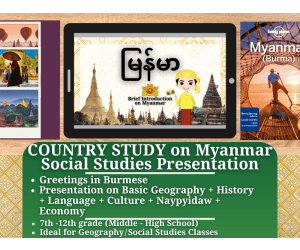
Country Study Presentation - Myanmar - Geography - Southeast Asia
Social Studies, Economics, Geography, History: Asian, History, Grade 7, 8, 9, 10, 11, 12, Teacher Tools, Presentations
Country Study Presentation - Myanmar - Geography + Social Studies - Southeast Asia Try this Digital Teaching Resource on Myanmar (Introductory Presentation Lesson), designed for Geography, Asian History (Southeast Asia - Burma), and Social Studies lessons. Perfect for Grades 7–12 (Middle school and High School students), this Introductory PDF Presentation offers a fun, informative, and ready-to-use lesson that requires little to no preparation. Students will explore Myanmar ’s geography, history, culture, language and economy — making it perfect for classroom instruction, homeschooling, or online learning. 📘 Within this Social Studies and Geograhy Teaching resource, teachers and educators can find the following topics dealt: ✅ Greetings in Burmese ✅ Geography of Myanmar (Southeast Asia - Burma) – Key facts, borders, and an interactive Google Maps link to its location. ✅ Quick Facts – Population, capital city, currency, flag, and other essential details. ✅ History Overview – A concise summary of Myanmar' s most significant historical events. (Southeast Asia - Burma) ✅ Geography & Environment – Details about the country’s land area, regions, and climate zones. ✅ Myanmar's Economy – Insight into Myanmar ’s industries, exports, and economic strengths. (Southeast Asia - Burma) ✅ Naypyidaw – Explore the capital city, its famous landmarks, and cultural highlights. ✅ Other Major Cities – A map showcasing additional important urban centers. ✅ Myanmar's Culture & Traditions – A look at the customs and values that define Myanmar (Southeast Asia - Burma) ✅ Farewell in Burmese 🎯 Perfect For: Geography classes Social Studies World cultures units Country study projects Substitute teacher lessons Digital learning In-class or online teaching 📂 Resource Details Format: PDF Digital Presentation Grade Levels: 7th–12th Grade (Middle School & High School) Prep Time: Low to no preparation required If you want to browse more of my Teaching Resources, click here Learning with Alan!
Author Learning with Alan
Rating
Tags Country Study, Social Studies, Presentation, Myanmar, Burmese, Asia, Southeast Asia, Introduction, Lesson, Geography
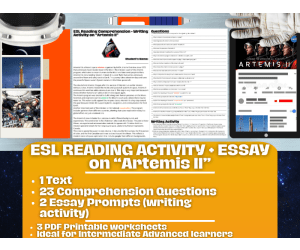
Artemis II Reading Comprehension – ESL Worksheets
ELA, Language Development, ESL, Vocabulary, Reading, Reading Comprehension, Creative Writing, Writing, Formal Writing, Grade 7, 8, 9, 10, 11, 12, Worksheets & Printables, Worksheets, Writing Prompts
ESL Reading Comprehension + Writing Activity Worksheets - Artemis II This ESL EFL Teaching Resource on "Artemis II - Space Mission" (3 PDF Worksheets Slides; Reading Comprehension + Writing Activity) can be ideal to improve Language skills in English. Ideal students for this ESL EFL TESOL Reading + Writing Activity are Foreign Students at middle and High School (7th - 12th Grade; teens) . Newcomers or any ESL Learner is also more than suitable for this ESL - EFL - TESOL - TEFL (English as a Second or Foreign Language) Activity on "Artemis II - Space Mission" (origins and background + historical importance + crew members + goals and future space missions after Artemis II). This Teaching Educational Resource Product can also be ideal for ESL EFL TESOL Centers worldwide or any English second language tutor. Intermediate Advanced English as a Second or Foreign Language (ESL - EFL - TESOL - TEFL) learners are suitable for this ESL EFL TESOL Teaching Resource on "Artemis II - Space Mission" (Worksheet; 3 PDF Printable slides) In this English Second or Foreign Language (ESL - EFL - TESOL - TEFL) Reading Comprehension + Essay Writing Activity Worksheet on "Artemis II - Space Mission" (origins and background + historical importance + crew members + goals and future space missions after Artemis II), the following ESL - EFL - TESOL - TEFL (English Second or Foreign Language) activities are included: 1 text on "Artemis II - Space Mission" (origins and background + historical importance + crew members + goals and future space missions after Artemis II) 23 Comprehension Questions related to the previous text on "Artemis II - Space Mission" (with related space where students can answer to this text's comprehension questions) 2 essay prompts for a writing activity on "Artemis II - Space Mission" (pretending to write an essay for a time capsule in which you describe to the people of the future the importance of this space mission + writing an essay on your own personal opinion on the future space events after Artemis II; man returning to the Moon and man on Mars) This ESL - EFL - TESOL - TEFL (English Second or Foreign Language) Teaching Resource Reading + Writing Activity (essay prompts) on "Artemis II - Space Mission" (origins and background + historical importance + crew members + goals and future space missions after Artemis II) is great for Intermediate Advanced English as a second or foreign language learners (ESL- EFL - TESOL - TEFL). This English Second Language Worksheet on "Artemis II - Space Mission" (origins and background + historical importance + crew members + goals and future space missions after Artemis II) aims to train and Reading Comprehension + Writing Skills. "Learning with Alan" is a teaching resources store that aims to provide high quality teaching resources and educational materials for ESL EFL TESOL (English Second or Foreign Language) teachers, tutors and educators. It aims to support teachers, educators, and tutors in both online and offline environments, helping them achieve their teaching goals while creating a fun, stimulating atmosphere for learning English. Always remember: learning is fun, and so is English! If you want to find more ESL - EFL - TESOL - TEFL (English Second or Foreign Language) Teaching Resources and Educational Material click here Learning with Alan!
Author Learning with Alan
Rating
Tags ESL, English, Reading Comprehension, English Second Language, Moon, Space, Astronaut, NASA, Worksheets, Printable

ESL Reading Comprehension + Writing Activity - Polynesian Mythology
ELA, Language Development, ESL, Vocabulary, Reading Comprehension, Reading, Creative Writing, Writing, Formal Writing, Grade 7, 8, 9, 10, 11, 12, Worksheets, Worksheets & Printables, Writing Prompts
ESL Reading Comprehension + Writing Activity Worksheets - Polynesian Mythology This ESL EFL Teaching Resource on "Polynesian Mythology" (3 PDF Worksheets Slides; Reading Comprehension + Writing Activity) can be ideal to improve Language skills in English. Ideal students for this ESL EFL TESOL Reading + Writing Activity are Foreign Students at middle and High School (7th - 12th Grade; teens) . Newcomers or any ESL Learner is also more than suitable for this ESL - EFL - TESOL - TEFL (English as a Second or Foreign Language) Activity on "Polynesian Mythology" (origins, background and history of Polynesian mythology + gods + myths + influences and legacy). This Teaching Educational Resource Product can also be ideal for ESL EFL TESOL Centers worldwide or any English second language tutor. Intermediate Advanced English as a Second or Foreign Language (ESL - EFL - TESOL - TEFL) learners are suitable for this ESL EFL TESOL Teaching Resource on "Polynesian Mythology" (Worksheet; 3 PDF Printable slides) In this English Second or Foreign Language (ESL - EFL - TESOL - TEFL) Reading Comprehension + Essay Writing Activity Worksheet on "Polynesian Mythology" (origins, background and history of Polynesian mythology + gods + myths + influences and legacy), the following ESL - EFL - TESOL - TEFL (English Second or Foreign Language) activities are included: 1 text on "Polynesian Mythology" (origins, background and history of Polynesian mythology + gods + myths + influences and legacy) 23 Comprehension Questions related to the previous text on "Polynesian Mythology" (with related space where students can answer to this text's comprehension questions) 2 essay prompts for a writing activity on "Polynesian Mythology" (writing an essay on your own personal opinion on Polynesian Mythology; whether you new it or not and who is your favourite god or goddess + writing an essay on another mythology; describing it and comparing it to Polynesian Mythology) This ESL - EFL - TESOL - TEFL (English Second or Foreign Language) Teaching Resource Reading + Writing Activity (essay prompts) on "Polynesian Mythology" (origins, background and history of Polynesian mythology + gods + myths + influences and legacy) is great for Intermediate Advanced English as a second or foreign language learners (ESL- EFL - TESOL - TEFL). This English Second Language Worksheet on "Polynesian Mythology" (origins, background and history of Polynesian mythology + gods + myths + influences and legacy) aims to train and Reading Comprehension + Writing Skills. "Learning with Alan" is a teaching resources store that aims to provide high quality teaching resources and educational materials for ESL EFL TESOL (English Second or Foreign Language) teachers, tutors and educators. It aims to support teachers, educators, and tutors in both online and offline environments, helping them achieve their teaching goals while creating a fun, stimulating atmosphere for learning English. Always remember: learning is fun, and so is English! If you want to find more ESL - EFL - TESOL - TEFL (English Second or Foreign Language) Teaching Resources and Educational Material click here Learning with Alan!
Author Learning with Alan
Rating
Tags ESL, English Second Language, English, Polynesia, Mythology, Worksheets, Reading Comprehension, Printable, Activity
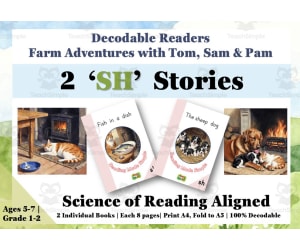
2 SH Decodable readers | Science of Reading | Fully Systematic
Special Resources, ELA, Special Education Needs (SEN), Language Development, Pre-Reading, Phonics, Reading, Kindergarten, Preschool, Grade 1, Teacher Tools, Literacy Readers
2 SH Decodable Readers: Farm Adventures - FREE 2 Stories for Practising SH Practice SH with 2 FREE decodable readers! The farm stories will engage your pupils and provide the systematic phonics practice students need to master OO in context. What's Included 2 structured decodable readers focusing on SH Word lists for pre-reading practice on each page 100% decodable text with carefully controlled vocabulary Science of reading aligned stories Beloved characters: Tom, Sam, Pam, Gran, and the farm animals Beautiful watercolour illustrations that support decoding Clear formatting is perfect for developing readers Why Download These FREE Decodable Readers? They are real stories, not phonics drills! Each decodable book practices SH while maintaining natural language flow. Students encounter genuine narratives—farm adventures, problem-solving, and family stories—that motivate them to decode rather than guess. These FREE decodable books are perfect for science of reading instruction, providing systematic phonics practice in engaging story contexts. Controlled vocabulary design: SH words are introduced systematically with previously learned words recycling throughout stories, building automaticity and fluency. Perfect For Students who are ready to learn SH Science of reading and structured literacy instruction Small group or independent reading practice Supplementing your phonics programme with FREE decodable texts Home reading practice Preventing guessing habits with fully decodable stories Ages 5-7 or Grade 1-2 Skills Addressed Decoding SH in text Reading fluency through vocabulary repetition Phonics is applied in real story settings Reading comprehension Sight word practice How to Use These FREE Decodable Readers Read the lesson notes Practice the word list in each book before reading Have students read the stories, pointing to each word Stop whenever errors occur and prompt: "Sound it out again" Give genuine praise for accurate decoding Reread stories to build fluency and confidence Want More Practice? The complete paid pack includes differentiated worksheets, comprehension activities, and supporting activities, including reading passages, comprehension exercises and phonemic awareness activities to accompany these stories! This pack is part of a Sequential Programme: These FREE readers focus on SH and follow the CK books, EE and OO books . Start with CVC words, then progress through phonics patterns systematically. Download other FREE sound pattern books or purchase complete packs with worksheets and video lessons! Try these FREE decodable readers and see how they can help your pupil today – this reading programme is designed to help even those with severe processing difficulties. No curveballs to throw them off course!
Author Lilibette's Resources
Rating
Tags Science Of Reading, Decodable Books, Decodable Readers, Phonics, Consonant Digraphs, Literacy Reacers, Guided Reading, Guided Reading Sh, Dyslexia, Dyslexic Friendly

High School Decoding the Shadows: The Evolution of Criminal Profiling
Reading, ELA, Writing, Research, Resources for Teachers, Science, Technology, Homeschool Resources, High School, Teacher Tools, Assessments, Quizzes and Tests, Lesson Plans, Worksheets & Printables, Writing Prompts
As a homeschool mom of a high schooler, you know the struggle of finding that unique and engaging resource. As both a homeschool mom and a resource creator, I designed this study into the history of criminal profiling to move past dry textbooks and get into the real "human truth" of how justice works, tracing the path from Victorian-era "gut feelings" to the sophisticated forensic discipline used today. It is a wild journey that shows our students/homeschoolers how investigators transitioned from looking only at physical clues to decoding the actual psychology of a suspect. By the time they finish, your student/homeschooler will understand how a crime scene is often just a mirror of a killer’s internal state; I have kept the content rigorous enough for high school credit, but paced it like a story they will actually want to keep reading. INCLUDED IN THIS RESOURCE: A narrative tracing profiling from its 19th-century roots to modern FBI methods. A clear breakdown of "organized" vs. "disorganized" offender profiles. Real-world looks at Jack the Ripper, the "Mad Bomber," and even the profiling of Hitler. A full bibliography featuring foundational works by John Douglas and Robert Ressler. TOPICS COVERED: Moving from physical evidence to decoding a suspect's motivations. How clinical expertise first entered active police investigations. The formalization of evidence-based profiling at the FBI Academy. Using behavioral tracking for cold cases and modern cybercrime. I hope this resource helps your student/homeschooler see that profiling is a living, breathing field that is constantly evolving—using everything from data analytics to modern forensic psychology to crack even the toughest cold cases. As a fellow homeschool mom, I know how important it is to show our students/homeschoolers that even though profiling has faced its fair share of critics, it remains an essential tool for investigators when they hit a wall. As technology advances, our ability to get inside a criminal's head only gets more precise. This journey from "armchair" theories to the high-tech halls of the FBI's Behavioral Science Unit is really a story about our human drive to understand the unthinkable; it is a great reminder that while science handles the hard facts, profiling is what actually helps us uncover the "human truth" behind the crime. If you and your students/homeschoolers enjoyed this resources, please leave a review. Thank you for your support! Tina - Big Easy Homeschooling Mom
Author Homeschool with Big Easy Homeschooling Mom
Rating
Tags Criminal Profiling Evolution, Behavioral Science Unit History, Forensic Psychology For Teens, Profiling Serial Killers, Criminal Psyche Study, BSU Quantico History, Investigative Psychology, Forensic Behavioral Analysis, History Of Forensic Science, FBI Profiling Techniques
Test Bank Talaro's Foundations in Microbiology 11th Edition
Special Resources, Not Grade Specific, Worksheets & Printables
Talaro's Foundations in Microbiology, 11th Edition provides a Resource for Comprehensive Exam Prep and Study to Maximize Examination Performance and Master Microbiology through a variety of Structured Exam Focused Practice Opportunities - This Testing Resource is organized for Microbiology, Nursing, and Allied Health Students who want to build on and reinforce their foundational Microbiology Concepts. The Test Bank is aligned with the latest 11th edition (April 24, 2018) of the widely used Textbook Talaro's Foundations in Microbiology and includes many different Question Types that will help to foster the development of Critical Thinking skills, Concept Mastery, and Application in the field of Microbiology. 🔬 Key Components √ Extensive Test Bank that utilizes; Multiple Choice, True/False Questions, and Application-based Question Types √ Covers Each Chapter of the Textbook Talaro's Foundations in Microbiology, 11th Edition √ Detailed Answer Explanations (Rationales) that provide a clear understanding of the correct and incorrect answer choices; creating retention difficulties √ An Excellent Study Aid for Utilizing Quizzing, Midterms, Finals, and Standardized Testing √ Provides Reinforcement of the Foundations of Microbiology Concepts through Practice and Review Opportunities √ Organized and Easy to Use; Structured for Efficient Study Sessions 📘 Topics Included Microbial Cell Structure and Function Microbial Metabolism and Growth Molecular Genetics and Molecular Microbiology Bacteria; Viral; Fungal; and Parasitic Organisms Infection; Immunity; and Host Defenses Disease Control and Transmission Applied and Clinical Microbiology if you have any question dm me
Author dealhube
Rating
Tags Test Bank Talaro's Foundations In Microbiology 11th Edition
Test Bank for Kozier & Erbs Fundamentals of Nursing 11th Edition
Special Resources, Not Grade Specific, Worksheets & Printables
Complete Exam Preparation and Study Resource from Kozier and Erb’s Fundamentals of Nursing. (11th Edition Edition) For all students pursuing nursing, the Complete Exam Preparation and Study Resource from Kozier and Erb’s Fundamentals of Nursing (11th Edition) will help you succeed in your program by providing you with a resource you can rely on to learn key nursing concepts and prepare for examination success. This Test Bank has been successfully used by thousands of nursing students worldwide, and because it is closely aligned to the Kozier and Erb textbook, it will provide additional structure and reinforcement of your learning through practice. This Test Bank contains a wide variety of sample questions designed to help develop critical thinking, clinical judgment as well as real-world application—all essential components for academic success and successful professional nursing practice. Key Features of This Test Bank Include: Comprehensive Question Bank—containing a large number of multiple choice, true/false, and scenario-based questions. All Questions are arranged in chapter order, to correspond directly with Kozier and Erb’s Fundamentals of Nursing (11th Edition) Textbook. Detailed answer rationales for each question/explanation are provided to enhance your understanding and retention of the subject matter. Includes NCLEX style questions that will prepare you for both actual exams as well as licensure examinations. The primary emphasis of this Test Bank is developing core nursing competencies such as: Patient Care; Patient Safety; and Clinical Reasoning/Decision Making. Format of Test bank allows you to efficiently use it as an aid in preparing for exams by providing a Structured way to review material. Topics included in this Test Bank Fundamentals of Nursing practice. Patient Centered Care; Patient Safety Health Assessment and Vital Signs Infection Control/Hygiene Communication /Documentation Ethical /Legal Issues if you have any question dm me
Author dealhube
Rating
Tags Test Bank For Kozier & Erbs Fundamentals Of Nursing 11th Edition

Summer Story Graphic Organizer & Activities for 1st and 2nd Grades
ELA, Vocabulary, Language Development, Reading, Reading Comprehension, ESL, Grade 1, 2, Centers, Activities, Worksheets, Worksheets & Printables, Coloring Pages
Summer Story Graphic Organizer & Activities Beginning, Middle, and End | Sequencing & Retelling for 1st & 2nd Grade Are you looking for an easy way to teach story structure and sequencing ? This summer-themed no-prep resource helps young learners understand beginning, middle, and end while building confidence in reading comprehension and writing. With a simple and engaging story and a variety of follow-up activities, students practice retelling, organizing ideas, and strengthening early literacy skills-all in a fun summer context. What’s inside? Short Summer Story A kid-friendly story about Mia and Leena and their summer day, clearly organized into beginning, middle, and end (with a simple summary included). Comprehension Questions Multiple-choice questions focusing on characters, setting, problem, and solution . Story Map Template Students will write the title, identify characters and setting , and organize events into beginning, middle, and end. Story Summary Writing Students will rewrite or complete the story summary in their own words. Short Answer Questions 2 questions that will encourage students to write answers in complete sentences. Fun Lemonade Coloring Page + Questions Count the ice cubes Answer simple questions (adjectives & CVC words) Creative Summer Drink Activity Students will design, color, and name their own drink. Summer CVC Riddle Quest Activity Example: “I shine bright in the sky and keep you warm.” → sun Summer CVC Word Jumble Example: toh → hot Grade Level Best for: 1st Grade & 2nd Grade Also works for: Kindergarten (advanced learners) 3rd Grade (review/intervention) ESL/EFL learners Resource Features: No Prep - Just print and go Colored and black & white options Engaging summer theme Combines reading, writing, and phonics practice Supports early literacy development Ways to use it: Whole group lessons Small group instruction Independent practice Homework or at-home learning Review or assessment Summer school or end of year activities Why it is perfect for teachers and homeschoolers? It helps to build comprehension skills step by step It also helps students clearly understand story structure It encourages sentence writing and organization It reinforces CVC words and phonics skills Includes fun and hands-on activities to keep kids engaged It is perfect for: Literacy centers Differentiation Early finishers ESL/EFL classrooms Standards Alignment This resource supports: RL.1.1 / RL.2.1 – Ask and answer questions about key details RL.1.2 / RL.2.2 – Retell stories RL.1.3 / RL.2.3 – Describe characters, setting, and events W.1.2 / W.2.2 – Informational writing RF.1.3 / RF.2.3 – Phonics (CVC words) SL.1.1 / SL.2.1 – Speaking and listening Apply the same story structure to another book with this beginning, middle, and end organizer .
Author FlashKart
Rating
Tags Summer Story, Graphic Organizers, ELA, 1st Grade, 2nd Grade, ESL, EFL, Reading, Comprehension, English
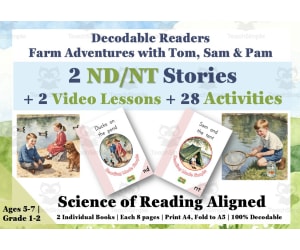
ND/NT: 2 Decodable Reading Books + 2 Video Lessons + 28 Worksheets SOR
Special Resources, ELA, Special Education Needs (SEN), Language Development, Pre-Reading, Phonics, Spelling, Kindergarten, Preschool, Homeschool Curriculum, Grade 1, 2, Literacy Readers, Teacher Tools, Lesson Plans, Presentations
2 ND/NT Blends Decodable Readers, 2 Video Lessons & 28 Supporting Worksheets to Develop Reading Fluency! Complete Teaching Pack | Part of Advanced Phonics Reading Programme Master ND/NT with 2 decodable readers, 2 optional video lessons, and 28 differentiated practice worksheets! This extensive teaching pack features farm stories that children will love, along with targeted phonics activities that reinforce learning. This is part of the Reading Made Simple programme of systematic phonics instruction that can help your struggling readers succeed. Designed and tested on real children of all abilities, from none to severe, every step of the way. These books presume that a child can already decode words with a CK ending, OO (moon/look), EE, SH, CH, What's Included 2 systematic/levelled decodable readers focusing on ND/NT words 2 carefully taught optional video lessons - no distracting music - these are serious lessons and can be used by home educators and teachers alike - to give extra support to struggling readers Word lists for pre-reading practice at the beginning of each book 28 Differentiated worksheets for phonics reinforcement: Word sorting activities Sound isolation exercises Reading comprehension exercises Sentence writing practice Phonics pattern recognition tasks 100% decodable text with carefully controlled vocabulary Science of reading-aligned instruction Beloved characters: Tom, Sam, Pam, Gran, and the farm animals Beautiful watercolour illustrations Print-and-go format for easy classroom use Why Teachers Love This Complete Pack Real stories PLUS targeted practice! These aren't just decodable readers—you get everything you need to teach ND/NT systematically. The differentiated worksheets provide multiple opportunities for students to apply their learning, while the engaging farm stories provide ample practice of decoding, word recognition and reading comprehension. They help you to target a child's precise needs to ensure progress. The optional video lessons give even nervous parents the help they need to teach! Designed With Carefully Controlled vocabulary: The ND/NT sound is introduced systematically across the stories, with previously taught words revisited throughout. Worksheets reinforce the same vocabulary, providing an opportunity for mastery. Perfect For Explicit phonics instruction following the science of reading principles All students who are ready to learn ND/NT and have already learned CK, OO, EE, SH, CH Children who need a slower pace, or not Small group intervention or whole class instruction Literacy centres and independent practice Homework assignments that reinforce classroom learning Structured literacy programmes Ages 5-7 or Grade 1-2 Skills Addressed Decoding ND/NT in isolation and context Reading fluency with controlled decodable text Phonics, pattern recognition and application Phonemic awareness through targeted activities Reading comprehension with engaging stories Writing practice using the taught phonics pattern Sight word introduction and practice How to Use This Complete Pack Introduce the sound ND/NT comprehensively Use worksheets for guided practice and skill reinforcement Practice word lists before reading stories Have students read the decodable stories, pointing to each word Return to the worksheets for independent practice or assessment Reread the stories to build fluency This complete pack provides everything you need to teach ND/NT effectively—no additional materials required!
Author Lilibette's Resources
Rating
Tags Fluency, Struggling Readers, Dyslexia, Special Needs, Phonics, Decodable Reading Books, Reading Fluency, Consonant Digraphs, Learn To Read, ND NT

2 _ND/_NT Decodable readers | Science of Reading | Fully Systematic
Special Resources, ELA, Special Education Needs (SEN), Language Development, Pre-Reading, Phonics, Reading, Kindergarten, Preschool, Grade 1, Teacher Tools, Literacy Readers
2 ND/NT Decodable Readers: Farm Adventures - FREE 2 Stories for Practising ND/NT The farm stories will engage your pupils and provide the systematic phonics practice students need to master ND/NT in context. What's Included 2 structured decodable readers focusing on ND/NT Word lists for pre-reading practice on each page 100% decodable text with carefully controlled vocabulary Science of reading aligned stories Beloved characters: Tom, Sam, Pam, Gran, and the farm animals Beautiful watercolour illustrations that support decoding Clear formatting is perfect for developing readers Why Download These FREE Decodable Readers? They are real stories, not phonics drills! Each decodable book practices ND/NT while maintaining natural-language flow. Students encounter genuine narratives—farm adventures, problem-solving, and family stories—that motivate them to decode rather than guess. These FREE decodable books are perfect for science of reading instruction, providing systematic phonics practice in engaging story contexts. Controlled vocabulary design: ND/NTwords are introduced systematically, with previously learned words recycled throughout stories, building automaticity and fluency. Perfect For Students who are ready to learn ND/NT Science of reading and structured literacy instruction Small group or independent reading practice Supplementing your phonics programme with FREE decodable texts Home reading practice Preventing guessing habits with fully decodable stories Ages 5-7 or Grade 1-2 Skills Addressed Decoding ND/NT in text Reading fluency through vocabulary repetition Phonics is applied in real story settings Reading comprehension Sight word practice How to Use These FREE Decodable Readers Practice the word list in each book before reading Have students read the stories, pointing to each word Stop whenever errors occur and prompt: "Sound it out again" Give genuine praise for accurate decoding Reread stories to build fluency and confidence Want More Practice? The complete paid pack includes differentiated worksheets, comprehension activities, and supporting activities, including reading passages, comprehension exercises and phonemic awareness activities to accompany these stories! This pack is part of a Sequential Programme: These FREE readers focus on ND/NT and follow the previous books in the series. Please see the Reading Made Simple website for details Start with CVC words, then progress through phonics patterns systematically. Download other FREE sound pattern books or purchase complete packs with worksheets and video lessons! Try these FREE decodable readers and see how they can help your pupil today – this reading programme is designed to help even those with severe processing difficulties. No curveballs to throw them off course!
Author Lilibette's Resources
Rating
Tags Decodable Books, Decodable Readers, Science Of Reading, Phonics Readers, Decodable Text, Structured Literacy, Consonant Blends, N Blends

2 CH Decodable readers | Science of Reading | Fully Systematic
Special Resources, ELA, Special Education Needs (SEN), Language Development, Pre-Reading, Phonics, Reading, Kindergarten, Preschool, Grade 1, Teacher Tools, Literacy Readers
2 CH Decodable Readers: Farm Adventures - FREE 2 Stories for Practising CH The farm stories will engage your pupils and provide the systematic phonics practice students need to master CH in context. What's Included 2 structured decodable readers focusing on CH Word lists for pre-reading practice on each page 100% decodable text with carefully controlled vocabulary Science of reading aligned stories Beloved characters: Tom, Sam, Pam, Gran, and the farm animals Beautiful watercolour illustrations that support decoding Clear formatting is perfect for developing readers Why Download These FREE Decodable Readers? They are real stories, not phonics drills! Each decodable book practices CH while maintaining natural language flow. Students encounter genuine narratives—farm adventures, problem-solving, and family stories—that motivate them to decode rather than guess. These FREE decodable books are perfect for science of reading instruction, providing systematic phonics practice in engaging story contexts. Controlled vocabulary design: CH words are introduced systematically with previously learned words recycling throughout stories, building automaticity and fluency. Perfect For Students who are ready to learn CH Science of reading and structured literacy instruction Small group or independent reading practice Supplementing your phonics programme with FREE decodable texts Home reading practice Preventing guessing habits with fully decodable stories Ages 5-7 or Grade 1-2 Skills Addressed Decoding CH in text Reading fluency through vocabulary repetition Phonics is applied in real story settings Reading comprehension Sight word practice How to Use These FREE Decodable Readers Practice the word list in each book before reading Have students read the stories, pointing to each word Stop whenever errors occur and prompt: "Sound it out again" Give genuine praise for accurate decoding Reread stories to build fluency and confidence Want More Practice? The complete paid pack includes differentiated worksheets, comprehension activities, and supporting activities, including reading passages, comprehension exercises and phonemic awareness activities to accompany these stories! This pack is part of a Sequential Programme: These FREE readers focus on CH and follow the CK books , OO books , EE books , SH books. Start with CVC words, Consonant Blends , then progress through phonics patterns systematically. Download other FREE sound pattern books or purchase complete packs with worksheets and video lessons! Try these FREE decodable readers and see how they can help your pupil today – this reading programme is designed to help even those with severe processing difficulties. No curveballs to throw them off course!
Author Lilibette's Resources
Rating
Tags Decodable Books, Decodable Readers, Science Of Reading, Phonics Readers, Decodable Text, Structured Literacy, Consonant Digraphs, Phonics, Phonics Ch, Guided Reading

Claude Monet | Artist Biography + Activities | Elementary Art Lesson
ESL, Language Development, ELA, Biographies, Social Studies, Social Emotional Learning (SEL), Special Resources, Art, Creative Arts, Art History, Elementary, Lesson Plans, Teacher Tools, Presentations, Coloring Pages, Worksheets, Worksheets & Printables
This resource offers your students the opportunity to independently explore and summarize the life of the famous French Impressionist artist Claude Monet, thanks to this engaging discovery and learning tool. This resource is designed to guide students through the artist's biography: from his early childhood passions to his first experiments, from his encounters with other Impressionist artists (Pissarro, Renoire, Degas) to his artistic maturity. Teaching with this resource is simple! Start by showing the biography slides: through illustrations created in Monet's unmistakable style and the first-person narrative, students will approach him empathetically, seeing him first as a friend and playmate. Once the story is complete, you will find the proposed activities. "Monet's Artist" section: - Color recognition activity based on the series of paintings "The Rouen Cathedral"; - Coloring: Theory of color and color contrasts; - Redrawing and coloring a still life by Monet "The Artist's Qualities" section. In this section, students will describe the "human" qualities that made Monet famous: passion, love of nature, perseverance, and determination. "Chat with the Artist" section. In this final phase, students will have the opportunity to chat with Monet through a specially designed AI experience to stimulate interest and engagement. The resource is structured to answer questions and provide new conversation starters. The resource is available in four languages: English, French, German, and Italian.
Author TeachFizz
Rating
Tags Claude Monet, Impressionism, Artist Biography, Art History Lesson, Famous Artist, No-prep Art Lesson, Elementary Art, Artist Study, Homeschool Art

AI Tools for Research – Fact-Checking & Bias Detection Worksheets
Science, Technology, Computer Science, Engineering, Special Resources, Social Emotional Learning (SEL), Social Skills, Life Skills, STEM, Research, Grade 6, 7, 8, 9, 10, 11, 12, Worksheets & Printables, Workbooks, Worksheets, Word Searches, Writing Prompts, Teacher Tools, Lesson Plans, Assessments, Diagrams, Presentations
This 41-page PDF is a fully prepared to print middle school Digital Literacy Curriculum called "Advanced Digital Tools for Research: Fact-Checking and Detecting Bias Worksheets" designed for students in grades 6-8 to be able to use the V.E.R.I.F.Y. Framework (Validate, Extract, Read Lateral, Interrogate Bias, Find Primary Evidence, Yield Conclusion) to critically evaluate content generated by AI, identify hallucinatory or fabricated information, detect algorithmic bias, and utilize lateral reading skills. This resource is ideal for the AI era and includes: - Four theoretical chapters with practical real-world examples (e.g., Titanic, Great Wall of China, Space Race, Paleo-Diet). - Ten hands-on student worksheets (e.g., Anatomy of a Digital Claim, Spotting Plausible Falsities, Lateral Reading Protocol, Unmasking Structural Bias, The Phantom Citation Mystery, Chronological Confusion, etc.). - Three full-color visual frameworks/diagrams (Fact-Checking Workflow, Algorithmic Bias Triad, Source Credibility Spectrum). - A complete answer key with rubrics and high proficiency examples. - A complete Teacher Implementation Guide including pacing (4-6 class periods), differentiation for ELLs/developing readers and gifted students, formative assessment examples, and examples of exit tickets. - A ready-to-teach PDF requiring no preparation that increases research skills, media literacy, and critical thinking through an alignment to both the CCSS, ISTE, and Digital Citizenship Standards, making it appropriate for use in English Language Arts, Social Studies, Science, and Technology classes. Why Schools/Parents Find It To Be Effective: Develops Real World Skills that Kids Need to Survive in an AI World. Kids will learn how to identify when they are being deceived by hallucinations, bias, and fake citations before they copy and paste into their papers or projects. No Preparation or Planning Time Required - Teachers get full theory, worksheets, visuals, answers and pacing guide when using this product. Parents appreciate the independent critical thinking experience provided to their children. Fun Way to Increase Student Engagement - Kids enjoy using the detective-style worksheets (Tree Octopus Hoax, Phantom Biologist, Brooklyn Bridge Hoax, etc.) to develop critical thinking skills through the use of skepticism as a game. Differentiated, Inclusive, and Fully Accessible - Students are able to access the materials because of the built in supports provided for ELL/Developing Readers, and extension challenges for Gifted Students. Ensures Academic Integrity Now and in the Future - Aligns well with the local school districts expanding policies regarding the appropriate use of AI, as well as standards for digital citizenship. Intended Audience of Book (As per complete PDF analysis): This resource is specifically created for students in Grades 6 to 8 (Middle School). There are examples throughout the resource, as can be seen in the seven (7) and eight (8) examples referenced. Answer keys and teacher guides both have "Grade 6 to 8 Student Workbook" clearly labeled on them. Best Fit: ELA, Social Studies/History, Research projects in Science, Digital Literacy/Media Literacy, or Technology courses Excellent for Homeschoolers, Gifted Programs, or Educators Teaching AI Ethics and Responsible Research. Copyright & Terms of Use This Book is copyrighted by Syed Hammad Rizvi. This resource is solely for personal and individual classroom use. You may not modify, redistribute or sell any part of this resource (including putting it online for others to back or download). In order to share this resource with your coworkers please buy more licenses from Teachsimple. Thank you for following these terms of use. -------------------------------------------------------------------* This product was created by Syed Hammad Rizvi to be enjoyed!
Author Creative Book Store
Rating
Tags AIFactChecking, BiasDetection, DigitalLiteracy, MiddleSchoolWorksheets, AIFactCheck, VERIFyFramework, CriticalThinking, MediaLiteracy, AIforTeachers, DigitalLiteracyWorksheets

Country Study Presentation - Panama - Geography - Central America
Social Studies, Economics, Geography, History, Grade 7, 8, 9, 10, 11, 12, Teacher Tools, Presentations
Country Study Presentation - Panama - Geography + Social Studies - Central America Try this Digital Teaching Resource on Panama (Introductory Presentation Lesson), designed for Geography, Central American History (Hispanic and Latino Studies), and Social Studies lessons. Perfect for Grades 7–12 (Middle school and High School students), this Introductory PDF Presentation offers a fun, informative, and ready-to-use lesson that requires little to no preparation. Students will explore Panama ’s geography, history, culture, language and economy — making it perfect for classroom instruction, homeschooling, or online learning. 📘 Within this Social Studies and Geograhy Teaching resource, teachers and educators can find the following topics dealt: ✅ Greetings in Spanish ✅ Geography of Panama (Hispanic and Latino Studies - Central America) – Key facts, borders, and an interactive Google Maps link to its location. ✅ Quick Facts – Population, capital city, currency, flag, and other essential details. ✅ History Overview – A concise summary of Panama' s most significant historical events. (Hispanic and Latino Studies - Central America) ✅ Geography & Environment – Details about the country’s land area, regions, and climate zones. ✅ Panama's Economy – Insight into Panama ’s industries, exports, and economic strengths. (Hispanic and Latino Studies - Central America) ✅ Panama City – Explore the capital city, its famous landmarks, and cultural highlights. ✅ Other Major Cities – A map showcasing additional important urban centers. ✅ Panama's Culture & Traditions – A look at the customs and values that define Panama (Hispanic and Latino Studies - Central America) ✅ Farewell in Spanish 🎯 Perfect For: Geography classes Social Studies World cultures units Country study projects Substitute teacher lessons Digital learning In-class or online teaching 📂 Resource Details Format: PDF Digital Presentation Grade Levels: 7th–12th Grade (Middle School & High School) Prep Time: Low to no preparation required If you want to browse more of my Teaching Resources, click here Learning with Alan!
Author Learning with Alan
Rating
Tags Country Study, Social Studies, Presentation, Geography, Central America, Panama, Spanish, Introduction, Lesson, History

Present Simple vs. Present Continuous Tenses – ESL Grammar
Grammar, Language Development, ELA, ESL, Grade 2, 3, 4, Quizzes and Tests, Teacher Tools
Help students master the difference between present simple and present continuous tenses with this engaging ESL grammar resource. Designed to build accuracy and confidence, this activity pack provides structured practice that makes verb tense usage clear and meaningful. Students will learn when to use present simple for routines, habits, and general facts, and present continuous for actions happening now or temporary situations. Through a variety of exercises, learners will practice forming sentences, identifying correct verb tenses, and correcting common mistakes. This resource supports both grammar development and real-life language use, helping students apply what they learn in everyday communication. The activities are easy to follow and suitable for independent work or guided instruction. Ideal for ESL learners and upper elementary to middle school students, this no-prep resource is perfect for classroom lessons, homework, review, or test preparation. What’s Included: Clear practice activities for both tenses Sentence completion and verb conjugation exercises Error correction and mixed tense practice Real-life context sentences Student-friendly, organized layouts
Author Bright Education
Rating
Tags Grammar, Verb Tenses, ESL Grammar, Present Simple Tense, Present Continuous Tense

ESL Reading Comprehension + Essay - Ancient Chinese Mythology
ELA, Language Development, ESL, Vocabulary, Reading, Reading Comprehension, Writing, Creative Writing, Formal Writing, Grade 7, 8, 9, 10, 11, 12, Writing Prompts, Worksheets & Printables, Worksheets
ESL Reading Comprehension + Writing Activity Worksheets - Ancient Chinese Mythology - China This ESL EFL Teaching Resource on "Ancient Chinese Mythology - China" (3 PDF Worksheets Slides; Reading Comprehension + Writing Activity) can be ideal to improve Language skills in English. Ideal students for this ESL EFL TESOL Reading + Writing Activity are Foreign Students at middle and High School (7th - 12th Grade; teens) . Newcomers or any ESL Learner is also more than suitable for this ESL - EFL - TESOL - TEFL (English as a Second or Foreign Language) Activity on "Ancient Chinese Mythology - China" (origins, background and history of Ancient Chinese mythology + gods + myths + influences and legacy). This Teaching Educational Resource Product can also be ideal for ESL EFL TESOL Centers worldwide or any English second language tutor. Intermediate Advanced English as a Second or Foreign Language (ESL - EFL - TESOL - TEFL) learners are suitable for this ESL EFL TESOL Teaching Resource on "Ancient Chinese Mythology - China" (Worksheet; 3 PDF Printable slides) In this English Second or Foreign Language (ESL - EFL - TESOL - TEFL) Reading Comprehension + Essay Writing Activity Worksheet on "Ancient Chinese Mythology - China" (origins, background and history of Ancient Chinese mythology + gods + myths + influences and legacy), the following ESL - EFL - TESOL - TEFL (English Second or Foreign Language) activities are included: 1 text on "Ancient Chinese Mythology - China" (origins, background and history of Ancient Chinese mythology + gods + myths + influences and legacy) 23 Comprehension Questions related to the previous text on "Ancient Chinese Mythology - China" (with related space where students can answer to this text's comprehension questions) 2 essay prompts for a writing activity on "Ancient Chinese Mythology - China" (writing an essay on your own personal opinion on Ancient Chinese Mythology; whether you new it or not and who is your favourite god or goddess + writing an essay on another mythology; describing it and comparing it to Ancient Chinese Mythology in Ancient China) This ESL - EFL - TESOL - TEFL (English Second or Foreign Language) Teaching Resource Reading + Writing Activity (essay prompts) on "Ancient Chinese Mythology - China" (origins, background and history of Ancient Chinese mythology + gods + myths + influences and legacy) is great for Intermediate Advanced English as a second or foreign language learners (ESL- EFL - TESOL - TEFL). This English Second Language Worksheet on "Ancient Chinese Mythology - China" (origins, background and history of Ancient Chinese mythology + gods + myths + influences and legacy) aims to train and Reading Comprehension + Writing Skills. "Learning with Alan" is a teaching resources store that aims to provide high quality teaching resources and educational materials for ESL EFL TESOL (English Second or Foreign Language) teachers, tutors and educators. It aims to support teachers, educators, and tutors in both online and offline environments, helping them achieve their teaching goals while creating a fun, stimulating atmosphere for learning English. Always remember: learning is fun, and so is English! If you want to find more ESL - EFL - TESOL - TEFL (English Second or Foreign Language) Teaching Resources and Educational Material click here Learning with Alan!
Author Learning with Alan
Rating
Tags ESL, English Second Language, English, Reading Comprehension, Writing Activity, China, Chinese, Ancient China, Mythology, Essay

26 Alphabet Coloring Pages | Printable Worksheets for Kids
Language Development, ELA, Pre-Reading, Elementary, Pre-K, Coloring Pages, Worksheets, Worksheets & Printables
What makes these coloring pages different from standard worksheets? Standard coloring pages often just show a big block letter and a connected image. This resource takes a more creative approach by turning the letters themselves into "living" characters. As you can see in the preview, the letter 'S' isn't just a static shape; it is a smiling character interacting directly with a snowman. This "personification" of the letters makes the alphabet friendlier and more memorable for young children. How does this resource support early literacy skills? These pages are designed to reinforce letter-sound correspondence through visual storytelling. Phonics Anchors : Each page includes a primary image that reinforces the beginning sound (e.g., 'T' standing next to a Table). Narrative Connection : Because the letter is "hanging out" with the object, it creates a mental story for the student. When is the best time to use these sheets? These are highly versatile and work well in several "transition" moments of your school day: Fine Motor Centers : Coloring the detailed backgrounds requires focus and helps strengthen the hand muscles needed for handwriting. "Letter of the Week" Wrap-up : Use these as a fun Friday activity to celebrate mastering a specific letter. Class Alphabet Book : Have each student color one page, then bind them together to create a unique classroom library book that they can read themselves. Who is this designed for? The illustrations are playful yet clear, making them ideal for preschool, kindergarten and first grade students. They are also ideal for ESL/ELL students, as the pictures help to explain the vocabulary (for example, the image of the 'Z' and the zebra).
Author English with Rita
Rating
Tags Abc, Alphabet, Coloring Pages, Printables, Coloring, Alphabet Activities, Alphabet Coloring Pages, Montessori, Abc Coloring Pages