



5,126 products added recently
Page 94 - Newest Teaching Resources

 Show filters
Bioluminescence & Insects: SAMPLE Reading Comprehension passage (PDF)
Science, ELA, Reading, Reading Comprehension, Strategies, Resources for Teachers, Life Sciences, Animals, Insects, Nature & Plants, Grade 6, 7, 8, 9, Writing Prompts, Worksheets & Printables, Centers, Activities, Teacher Tools, Assessments, Quizzes and Tests, Quizzes, Tests
This is a ONE PASSAGE SAMPLE. The following is the description of the FULL resource and the downloading links: Bioluminescence & Insects: Reading Comprehension Passages (PDF) This very engaging collection of life science reading passages about Bioluminescence & Insects is designed to bridge the gap between science and literacy through strengthening reading comprehension and sparking scientific curiosity in middle school students. Each passage blends English Language Arts skills with accurate science content that supports NGSS classroom practice. Ideal for interdisciplinary learning in ELA and Science. Suitable for Grade 9 review, too! What Is Included? There are (3) informational passages: Living Lights: The Science of Bioluminescence Explains how organisms produce “cold light” with luciferin and luciferase, and shows why they glow for signaling, hunting, and protection. Cicadas: The Long Wait Underground Covers the long underground nymph stage, synchronized emergence, molting, loud calls, and how this life cycle supports survival and reproduction. Masters of Disguise: How Insects Hide and Imitate Distinguishes camouflage from mimicry with clear examples, highlighting how color, shape, and behavior help insects avoid predators and capture prey. Student Tasks for Each Passage: 5 multiple-choice questions targeting main idea, key details, inference, vocabulary in context, and use of evidence 5 vocabulary matching items with clear, student-friendly definitions 5 text-based questions that require citing specific lines or facts 1 summary prompt that asks students to condense central ideas accurately Full answer key for every section Available Formats for this Resource Word Docs Google Docs Other Science Reading Collections and Topics You May Find in the Store: 1. Astronomy & Space Science 2. Volcanoes, Rocks, & Mountains 3. Rock Cycle, Soil, & Sinkholes 4. Mars, Glaciers, & Antarctica 5. Water Cycle, Acid Rain, & Wastewater 6. Insects, Animals, & Ecosystems 7. Bioluminescence & Insects 8. Animal Skin, Cats, & T. Rex 9. Human Body and Senses 10. Health & Applied Bioscience 11. Waves, Light, & Imaging 12. Electricity & Energy 13. Motion & Materials 14. Chemistry and Materials Science 15. Electromagnetism 16. Acids and Bases 17. Gas Laws 18. Biotechnology 19. Periodic Trends 20. Protists and Fungi 21. Microevolution 22. Blood 23. Chemical Bonding 24. Magnets 25. Muscles 26. Nuclear Chemistry 27. Electromagnetic Devices 28. Epigenetics 29. The Law of Conservation of Mass 30. Atomic Models 31. Isotopes and Ions 32. Light 33. Human-Environment Interaction 34. Theory of Evolution 35. Photosynthesis 36. Origins of Life and Early Earth 37. Gene Expression and Regulation 38. Thermochemistry 39. Allergies 40. Coevolution 41. Birth to Adulthood 42. Cells 43. Entropy and Free Energy 44. The Human Brain 45. Mixtures and Solutions 46. Invertebrates 47. Zoo Animals 48. Biochemistry 49. Animal Behavior 50. Population Ecology ...and many more engaging science reading passages that cover intriguing and important topics designed to spark curiosity and support student learning. Product Details Length: 14 pages total Grades: 6–8, also suitable for Grade 9 review Use cases: close reading, stations, homework, intervention, test prep, and sub plans Standards support: reinforces informational-text skills and supports NGSS-style sense making through observation, modeling, and clear use of claim, evidence, and reasoning Why Teachers Choose This Set Authentic science content paired with rigorous literacy practice Consistent task structure across all passages for easier planning and smoother student routines Clear, age-appropriate writing that builds confidence without oversimplifying Use this set to reinforce ELA skills in science, to add literacy to your lessons, or to support independent work. The passages strengthen main idea, evidence use, vocabulary in context, inference, cause and effect, and summary writing. With ready-to-use assessments and complete answer keys, you can provide focused practice that is simple to run and fast to review.
Author EduNation Creative Store
Rating
Tags Middle School, Reading Comprehension, Reading Strategies, ELA, Centers, Reading Passage, Assessments, Vocabulary, Life Science, Insects
Insects, Animals, & Ecosystems: SAMPLE Reading passage (Word)
Science, ELA, Reading, Reading Comprehension, Strategies, Resources for Teachers, Life Sciences, Animals, Insects, Nature & Plants, Grade 6, 7, 8, 9, Writing Prompts, Worksheets & Printables, Centers, Activities, Teacher Tools, Assessments, Quizzes and Tests, Quizzes, Tests
This is a ONE PASSAGE SAMPLE. The following is the description of the FULL resource and the downloading links: Insects, Animals, & Ecosystems: Reading Comprehension Passages (Word) This very engaging collection of life science reading passages about Insects, Animals, & Ecosystems is designed to bridge the gap between science and literacy through strengthening reading comprehension and sparking scientific curiosity in middle school students. Each passage blends English Language Arts skills with accurate science content that supports NGSS classroom practice. Ideal for interdisciplinary learning in ELA and Science. Suitable for Grade 9 review, too! What Is Included? There are (3) informational passages: Ecosystems: Webs of Life and Change See how living things and their surroundings fit together. Follow energy from producers to consumers to decomposers, and notice how fires, floods, or people can disturb a system and how it can recover. Insects: Small Creatures, Giant Impact Meet the helpers that pollinate, recycle waste, and feed countless animals. Learn how simple body parts and smart behaviors let insects thrive almost everywhere. Unique Animals of the Rainforest Visit a forest bursting with life, from Hyacinth Macaws and pink river dolphins to golden lion tamarins and poison dart frogs. Understand why protecting habitats keeps these remarkable species alive. Student Tasks for Each Passage: 5 multiple-choice questions targeting main idea, key details, inference, vocabulary in context, and use of evidence 5 vocabulary matching items with clear, student-friendly definitions 5 text-based questions that require citing specific lines or facts 1 summary prompt that asks students to condense central ideas accurately Full answer key for every section Available Formats for this Resource PDF Google Docs Other Science Reading Collections and Topics You May Find in the Store: 1. Astronomy & Space Science 2. Volcanoes, Rocks, & Mountains 3. Rock Cycle, Soil, & Sinkholes 4. Mars, Glaciers, & Antarctica 5. Water Cycle, Acid Rain, & Wastewater 6. Insects, Animals, & Ecosystems 7. Bioluminescence & Insects 8. Animal Skin, Cats, & T. Rex 9. Human Body and Senses 10. Health & Applied Bioscience 11. Waves, Light, & Imaging 12. Electricity & Energy 13. Motion & Materials 14. Chemistry and Materials Science 15. Electromagnetism 16. Acids and Bases 17. Gas Laws 18. Biotechnology 19. Periodic Trends 20. Protists and Fungi 21. Microevolution 22. Blood 23. Chemical Bonding 24. Magnets 25. Muscles 26. Nuclear Chemistry 27. Electromagnetic Devices 28. Epigenetics 29. The Law of Conservation of Mass 30. Atomic Models 31. Isotopes and Ions 32. Light 33. Human-Environment Interaction 34. Theory of Evolution 35. Photosynthesis 36. Origins of Life and Early Earth 37. Gene Expression and Regulation 38. Thermochemistry 39. Allergies 40. Coevolution 41. Birth to Adulthood 42. Cells 43. Entropy and Free Energy 44. The Human Brain 45. Mixtures and Solutions 46. Invertebrates 47. Zoo Animals 48. Biochemistry 49. Animal Behavior 50. Population Ecology ...and many more engaging science reading passages that cover intriguing and important topics designed to spark curiosity and support student learning. Product Details Length: 14 pages total Grades: 6–8, also suitable for Grade 9 review Use cases: close reading, stations, homework, intervention, test prep, and sub plans Standards support: reinforces informational-text skills and supports NGSS-style sense making through observation, modeling, and clear use of claim, evidence, and reasoning Why Teachers Choose This Set Authentic science content paired with rigorous literacy practice Consistent task structure across all passages for easier planning and smoother student routines Clear, age-appropriate writing that builds confidence without oversimplifying Use this set to reinforce ELA skills in science, to add literacy to your lessons, or to support independent work. The passages strengthen main idea, evidence use, vocabulary in context, inference, cause and effect, and summary writing. With ready-to-use assessments and complete answer keys, you can provide focused practice that is simple to run and fast to review.
Author EduNation Creative Store
Rating
Tags Middle School, Reading Comprehension, Reading Strategies, ELA, Centers, Reading Passage, Assessments, Vocabulary, Life Science, Insects

Insects, Animals, & Ecosystems: SAMPLE Reading passage (PDF)
Science, ELA, Reading, Reading Comprehension, Strategies, Resources for Teachers, Life Sciences, Animals, Insects, Nature & Plants, Grade 6, 7, 8, 9, Writing Prompts, Worksheets & Printables, Centers, Activities, Teacher Tools, Assessments, Quizzes and Tests, Quizzes, Tests
This is a ONE PASSAGE SAMPLE. The following is the description of the FULL resource and the downloading links:- Insects, Animals, & Ecosystems: Reading Comprehension Passages (PDF) This very engaging collection of life science reading passages about Insects, Animals, & Ecosystems is designed to bridge the gap between science and literacy through strengthening reading comprehension and sparking scientific curiosity in middle school students. Each passage blends English Language Arts skills with accurate science content that supports NGSS classroom practice. Ideal for interdisciplinary learning in ELA and Science. Suitable for Grade 9 review, too! What Is Included? There are (3) informational passages: Ecosystems: Webs of Life and Change See how living things and their surroundings fit together. Follow energy from producers to consumers to decomposers, and notice how fires, floods, or people can disturb a system and how it can recover. Insects: Small Creatures, Giant Impact Meet the helpers that pollinate, recycle waste, and feed countless animals. Learn how simple body parts and smart behaviors let insects thrive almost everywhere. Unique Animals of the Rainforest Visit a forest bursting with life, from Hyacinth Macaws and pink river dolphins to golden lion tamarins and poison dart frogs. Understand why protecting habitats keeps these remarkable species alive. Student Tasks for Each Passage: 5 multiple-choice questions targeting main idea, key details, inference, vocabulary in context, and use of evidence 5 vocabulary matching items with clear, student-friendly definitions 5 text-based questions that require citing specific lines or facts 1 summary prompt that asks students to condense central ideas accurately Full answer key for every section Available Formats for this Resource Word Docs Google Docs Other Science Reading Collections and Topics You May Find in the Store: 1. Astronomy & Space Science 2. Volcanoes, Rocks, & Mountains 3. Rock Cycle, Soil, & Sinkholes 4. Mars, Glaciers, & Antarctica 5. Water Cycle, Acid Rain, & Wastewater 6. Insects, Animals, & Ecosystems 7. Bioluminescence & Insects 8. Animal Skin, Cats, & T. Rex 9. Human Body and Senses 10. Health & Applied Bioscience 11. Waves, Light, & Imaging 12. Electricity & Energy 13. Motion & Materials 14. Chemistry and Materials Science 15. Electromagnetism 16. Acids and Bases 17. Gas Laws 18. Biotechnology 19. Periodic Trends 20. Protists and Fungi 21. Microevolution 22. Blood 23. Chemical Bonding 24. Magnets 25. Muscles 26. Nuclear Chemistry 27. Electromagnetic Devices 28. Epigenetics 29. The Law of Conservation of Mass 30. Atomic Models 31. Isotopes and Ions 32. Light 33. Human-Environment Interaction 34. Theory of Evolution 35. Photosynthesis 36. Origins of Life and Early Earth 37. Gene Expression and Regulation 38. Thermochemistry 39. Allergies 40. Coevolution 41. Birth to Adulthood 42. Cells 43. Entropy and Free Energy 44. The Human Brain 45. Mixtures and Solutions 46. Invertebrates 47. Zoo Animals 48. Biochemistry 49. Animal Behavior 50. Population Ecology ...and many more engaging science reading passages that cover intriguing and important topics designed to spark curiosity and support student learning. Product Details Length: 14 pages total Grades: 6–8, also suitable for Grade 9 review Use cases: close reading, stations, homework, intervention, test prep, and sub plans Standards support: reinforces informational-text skills and supports NGSS-style sense making through observation, modeling, and clear use of claim, evidence, and reasoning Why Teachers Choose This Set Authentic science content paired with rigorous literacy practice Consistent task structure across all passages for easier planning and smoother student routines Clear, age-appropriate writing that builds confidence without oversimplifying Use this set to reinforce ELA skills in science, to add literacy to your lessons, or to support independent work. The passages strengthen main idea, evidence use, vocabulary in context, inference, cause and effect, and summary writing. With ready-to-use assessments and complete answer keys, you can provide focused practice that is simple to run and fast to review.
Author EduNation Creative Store
Rating
Tags Middle School, Reading Comprehension, Reading Strategies, ELA, Centers, Reading Passage, Assessments, Vocabulary, Life Science, Insects
Water Cycle, Acid Rain, & Wastewater: SAMPLE Reading Passage (Word)
Science, Earth and Environmental Sciences, ELA, Reading, Reading Comprehension, Strategies, Resources for Teachers, Environmental Science, Grade 6, 7, 8, 9, Writing Prompts, Worksheets & Printables, Centers, Activities, Teacher Tools, Assessments, Quizzes and Tests, Quizzes, Tests
This is a ONE PASSAGE SAMPLE. The following is the description of the FULL resource and the downloading links: Water Cycle, Acid Rain, & Wastewater: Reading Comprehension Passages (Word) This very engaging collection of environmental science reading passages about Water Cycle, Acid Rain, & Wastewater is designed to bridge the gap between science and literacy through strengthening reading comprehension and sparking scientific curiosity in middle school students. Each passage blends English Language Arts skills with accurate science content that supports NGSS classroom practice. Ideal for interdisciplinary learning in ELA and Science. Suitable for Grade 9 review, too! What Is Included? There are (3) informational passages: Wastewater: From Drain to Clean Follow water from your sink to the treatment plant as screens pull out debris, grit settles, microbes break down leftovers, and disinfection makes the water safe to release or reuse. The Water Cycle: The Engine of Our Planet Watch water move through evaporation, condensation, precipitation, and runoff, with plants and soils helping store and move it. See how this cycle powers weather and refills rivers and aquifers. Acid Rain: Causes, Impacts, and Solutions Learn how certain air pollutants turn rain more acidic, what that means for lakes, forests, and buildings, and how cleaner energy and emission controls help damaged ecosystems recover. Student Tasks for Each Passage: 5 multiple-choice questions targeting main idea, key details, inference, vocabulary in context, and use of evidence 5 vocabulary matching items with clear, student-friendly definitions 5 text-based questions that require citing specific lines or facts 1 summary prompt that asks students to condense central ideas accurately Full answer key for every section Available Formats for this Resource PDF Google Docs Other Science Reading Collections and Topics You May Find in the Store: 1. Astronomy & Space Science 2. Volcanoes, Rocks, & Mountains 3. Rock Cycle, Soil, & Sinkholes 4. Mars, Glaciers, & Antarctica 5. Water Cycle, Acid Rain, & Wastewater 6. Insects, Animals, & Ecosystems 7. Bioluminescence & Insects 8. Animal Skin, Cats, & T. Rex 9. Human Body and Senses 10. Health & Applied Bioscience 11. Waves, Light, & Imaging 12. Electricity & Energy 13. Motion & Materials 14. Chemistry and Materials Science 15. Electromagnetism 16. Acids and Bases 17. Gas Laws 18. Biotechnology 19. Periodic Trends 20. Protists and Fungi 21. Microevolution 22. Blood 23. Chemical Bonding 24. Magnets 25. Muscles 26. Nuclear Chemistry 27. Electromagnetic Devices 28. Epigenetics 29. The Law of Conservation of Mass 30. Atomic Models 31. Isotopes and Ions 32. Light 33. Human-Environment Interaction 34. Theory of Evolution 35. Photosynthesis 36. Origins of Life and Early Earth 37. Gene Expression and Regulation 38. Thermochemistry 39. Allergies 40. Coevolution 41. Birth to Adulthood 42. Cells 43. Entropy and Free Energy 44. The Human Brain 45. Mixtures and Solutions 46. Invertebrates 47. Zoo Animals 48. Biochemistry 49. Animal Behavior 50. Population Ecology ...and many more engaging science reading passages that cover intriguing and important topics designed to spark curiosity and support student learning. Product Details Length: 15 pages total Grades: 6–8, also suitable for Grade 9 review Use cases: close reading, stations, homework, intervention, test prep, and sub plans Standards support: reinforces informational-text skills and supports NGSS-style sense making through observation, modeling, and clear use of claim, evidence, and reasoning Why Teachers Choose This Set Authentic science content paired with rigorous literacy practice Consistent task structure across all passages for easier planning and smoother student routines Clear, age-appropriate writing that builds confidence without oversimplifying Use this set to reinforce ELA skills in science, to add literacy to your lessons, or to support independent work. The passages strengthen main idea, evidence use, vocabulary in context, inference, cause and effect, and summary writing. With ready-to-use assessments and complete answer keys, you can provide focused practice that is simple to run and fast to review.
Author EduNation Creative Store
Rating
Tags Middle School, Reading Comprehension, Reading Strategies, Reading Passages, ELA, Centers, Reading Passage, Assessments, Vocabulary, Environmental Science

Water Cycle, Acid Rain, & Wastewater: SAMPLE Reading Passage (PDF)
Science, Earth and Environmental Sciences, ELA, Reading, Reading Comprehension, Strategies, Resources for Teachers, Environmental Science, Grade 6, 7, 8, 9, Writing Prompts, Worksheets & Printables, Centers, Activities, Teacher Tools, Assessments, Quizzes and Tests, Quizzes, Tests
This is a ONE PASSAGE SAMPLE. The following is the description of the FULL resource and the downloading links: Water Cycle, Acid Rain, & Wastewater: Reading Comprehension Passages (PDF) This very engaging collection of environmental science reading passages about Water Cycle, Acid Rain, & Wastewater is designed to bridge the gap between science and literacy through strengthening reading comprehension and sparking scientific curiosity in middle school students. Each passage blends English Language Arts skills with accurate science content that supports NGSS classroom practice. Ideal for interdisciplinary learning in ELA and Science. Suitable for Grade 9 review, too! What Is Included? There are (3) informational passages: Wastewater: From Drain to Clean Follow water from your sink to the treatment plant as screens pull out debris, grit settles, microbes break down leftovers, and disinfection makes the water safe to release or reuse. The Water Cycle: The Engine of Our Planet Watch water move through evaporation, condensation, precipitation, and runoff, with plants and soils helping store and move it. See how this cycle powers weather and refills rivers and aquifers. Acid Rain: Causes, Impacts, and Solutions Learn how certain air pollutants turn rain more acidic, what that means for lakes, forests, and buildings, and how cleaner energy and emission controls help damaged ecosystems recover. Student Tasks for Each Passage: 5 multiple-choice questions targeting main idea, key details, inference, vocabulary in context, and use of evidence 5 vocabulary matching items with clear, student-friendly definitions 5 text-based questions that require citing specific lines or facts 1 summary prompt that asks students to condense central ideas accurately Full answer key for every section Available Formats for this Resource Word Docs Google Docs Other Science Reading Collections and Topics You May Find in the Store: 1. Astronomy & Space Science 2. Volcanoes, Rocks, & Mountains 3. Rock Cycle, Soil, & Sinkholes 4. Mars, Glaciers, & Antarctica 5. Water Cycle, Acid Rain, & Wastewater 6. Insects, Animals, & Ecosystems 7. Bioluminescence & Insects 8. Animal Skin, Cats, & T. Rex 9. Human Body and Senses 10. Health & Applied Bioscience 11. Waves, Light, & Imaging 12. Electricity & Energy 13. Motion & Materials 14. Chemistry and Materials Science 15. Electromagnetism 16. Acids and Bases 17. Gas Laws 18. Biotechnology 19. Periodic Trends 20. Protists and Fungi 21. Microevolution 22. Blood 23. Chemical Bonding 24. Magnets 25. Muscles 26. Nuclear Chemistry 27. Electromagnetic Devices 28. Epigenetics 29. The Law of Conservation of Mass 30. Atomic Models 31. Isotopes and Ions 32. Light 33. Human-Environment Interaction 34. Theory of Evolution 35. Photosynthesis 36. Origins of Life and Early Earth 37. Gene Expression and Regulation 38. Thermochemistry 39. Allergies 40. Coevolution 41. Birth to Adulthood 42. Cells 43. Entropy and Free Energy 44. The Human Brain 45. Mixtures and Solutions 46. Invertebrates 47. Zoo Animals 48. Biochemistry 49. Animal Behavior 50. Population Ecology ...and many more engaging science reading passages that cover intriguing and important topics designed to spark curiosity and support student learning. Product Details Length: 15 pages total Grades: 6–8, also suitable for Grade 9 review Use cases: close reading, stations, homework, intervention, test prep, and sub plans Standards support: reinforces informational-text skills and supports NGSS-style sense making through observation, modeling, and clear use of claim, evidence, and reasoning Why Teachers Choose This Set Authentic science content paired with rigorous literacy practice Consistent task structure across all passages for easier planning and smoother student routines Clear, age-appropriate writing that builds confidence without oversimplifying Use this set to reinforce ELA skills in science, to add literacy to your lessons, or to support independent work. The passages strengthen main idea, evidence use, vocabulary in context, inference, cause and effect, and summary writing. With ready-to-use assessments and complete answer keys, you can provide focused practice that is simple to run and fast to review.
Author EduNation Creative Store
Rating
Tags Middle School, Reading Comprehension, Reading Strategies, Reading Passages, ELA, Centers, Reading Passage, Assessments, Vocabulary, Environmental Science
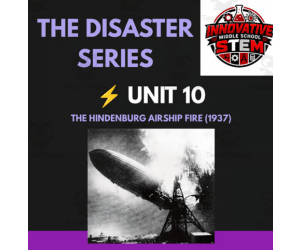
The Hindenburg Airship Fire STEM Case Study
STEM, Science, Social Studies, History, High School, Middle School, Worksheets & Printables
Investigate one of the most iconic turning points in aviation history with this comprehensive, no-prep 6-page printable STEM Case Study Packet! Designed specifically for middle and high school classrooms, this multi-day unit provides an immersive, highly informative look at the tragic 1937 Hindenburg Airship Disaster. By combining atmospheric physics, gas chemistry, forensic electrical inspection, applied mathematics, and international trade ethics, this resource transforms a landmark aviation disaster into a rich, interactive learning experience. Throughout this unit, students explore critical secondary STEM concepts—including buoyancy physics, hydrogen flammability limits, electrostatic spark discharge, doped cotton fabric combustion, and aviation safety regulations—in an accessible, highly engaging format. What’s Included in this 6-Page Deep-Dive Packet: Page 1: Historical Case Study & Technical Breakdown Features a detailed historical narrative of the May 6, 1937 docking disaster at Lakehurst, New Jersey. Students examine rigid duralumin airship mechanics, helium versus hydrogen lift politics, static charge buildup during thunderstorm approaches, and wet landing line ground loops before answering targeted comprehension check questions. Page 2: Day in the Life Scenario Challenge Students step into the shoes of a Chief Airship Electrical Inspector at Naval Air Station Lakehurst on the day of the landing. In this realistic roleplay assignment, they analyze atmospheric voltage potential gradients, evaluate fabric skin resistance, and trace gas cell leakage diagnostics. Page 3: Hands-On Unplugged Simulation & Applied Math Brings aerospace physics and chemistry math into the classroom with clear, step-by-step calculations. Students compute hydrogen versus helium buoyant payload lifting capacities in pounds, calculate electrostatic voltage potential discharge thresholds in volts per meter, and analyze rapid fire combustion expansion rates. Page 4: Engineering Ethics & Workplace Dilemma Explores geopolitical trade regulations and passenger safety trade-offs. Students analyze the impact of the US Helium Act of 1925, the choice to design massive passenger airships utilizing explosive hydrogen gas due to helium export bans, publicity pressures, and resulting aviation safety reforms. Page 5: Redesign Brief & Innovation Lab A creative blueprinting challenge where students act as aerospace engineers designing "LZ-129 Hindenburg V-2." Applying fail-safe aircraft principles, they incorporate an inert non-flammable helium lifting gas system, conductive carbon-mesh anti-static skin coatings, automated gas cell pressure valves, and fire-retardant structural framing. Page 6: Teacher Answer Key & Scoring Rubric Includes complete, step-by-step solutions for all narrative comprehension questions and mathematical calculations, along with a clear 10-point grading rubric to streamline assessment for the design blueprint assignment. Teacher Benefits: 100% Unplugged & Copy-Paste Friendly: Clean layout with zero dark background boxes or awkward formatting, ensuring seamless editing in Google Docs, Word, or Canva. Multi-Day Classroom Value: Designed to cover 3 to 5 full class periods. Perfect for Physics, Physical Science, Chemistry, Materials Science, Aerospace Engineering, History electives, or emergency sub plans. High-Interest Real-World Content: Combines buoyant force math, static electricity chemistry, airship flight diagnostics, trade embargo ethics, and aerospace redesign into one high-impact unit.
Author Innovative Middle School STEM
Rating
Tags STEM, Engineer, Engineering, Disasters

Mars, Glaciers, & Antarctica: SAMPLE Reading Passage (Word)
Science, Space, Earth and Environmental Sciences, ELA, Reading, Reading Comprehension, Strategies, Resources for Teachers, Environmental Science, Grade 6, 7, 8, 9, Writing Prompts, Worksheets & Printables, Centers, Activities, Teacher Tools, Assessments, Quizzes and Tests, Quizzes, Tests
This is a ONE PASSAGE SAMPLE. The following is the description of the FULL resource and the downloading links: Mars, Glaciers, and Antarctica: Reading Comprehension Passages (Word) This very engaging collection of science reading passages about Mars, Glaciers, and Antarctica (Earth and Space Environments) is designed to bridge the gap between science and literacy through strengthening reading comprehension and sparking scientific curiosity in middle school students. Each passage blends English Language Arts skills with accurate science content that supports NGSS classroom practice. Ideal for interdisciplinary learning in ELA and Science. Suitable for Grade 9 review, too! What Is Included? There are (3) informational passages: Antarctica: Science at the End of the Earth Explore a protected polar laboratory where clear air, ancient ice, and unique wildlife let scientists study climate change, ocean circulation, and even space signals with high precision. From Earth to Mars: What Life Would Require Contrast Earth and Mars, then outline what settlers would need: breathable air, liquid water, radiation shielding, steady energy, food production, and closed-loop systems for waste and resources. Ice Age Leftovers: From Glaciers to Sea Ice Differentiate glaciers, ice shelves, sea ice, and icebergs, and see how they shape coasts, reflect sunlight, steer ocean temperatures, and preserve clues to past climates. Student Tasks for Each Passage: 5 multiple-choice questions targeting main idea, key details, inference, vocabulary in context, and use of evidence 5 vocabulary matching items with clear, student-friendly definitions 5 text-based questions that require citing specific lines or facts 1 summary prompt that asks students to condense central ideas accurately Full answer key for every section Available Formats for this Resource PDF Google Docs Other Science Reading Collections and Topics You May Find in the Store: 1. Astronomy & Space Science 2. Volcanoes, Rocks, & Mountains 3. Rock Cycle, Soil, & Sinkholes 4. Mars, Glaciers, & Antarctica 5. Water Cycle, Acid Rain, & Wastewater 6. Insects, Animals, & Ecosystems 7. Bioluminescence & Insects 8. Animal Skin, Cats, & T. Rex 9. Human Body and Senses 10. Health & Applied Bioscience 11. Waves, Light, & Imaging 12. Electricity & Energy 13. Motion & Materials 14. Chemistry and Materials Science 15. Electromagnetism 16. Acids and Bases 17. Gas Laws 18. Biotechnology 19. Periodic Trends 20. Protists and Fungi 21. Microevolution 22. Blood 23. Chemical Bonding 24. Magnets 25. Muscles 26. Nuclear Chemistry 27. Electromagnetic Devices 28. Epigenetics 29. The Law of Conservation of Mass 30. Atomic Models 31. Isotopes and Ions 32. Light 33. Human-Environment Interaction 34. Theory of Evolution 35. Photosynthesis 36. Origins of Life and Early Earth 37. Gene Expression and Regulation 38. Thermochemistry 39. Allergies 40. Coevolution 41. Birth to Adulthood 42. Cells 43. Entropy and Free Energy 44. The Human Brain 45. Mixtures and Solutions 46. Invertebrates 47. Zoo Animals 48. Biochemistry 49. Animal Behavior 50. Population Ecology ...and many more engaging science reading passages that cover intriguing and important topics designed to spark curiosity and support student learning. Product Details Length: 15 pages total Grades: 6–8, also suitable for Grade 9 review Use cases: close reading, stations, homework, intervention, test prep, and sub plans Standards support: reinforces informational-text skills and supports NGSS-style sense making through observation, modeling, and clear use of claim, evidence, and reasoning Why Teachers Choose This Set Authentic science content paired with rigorous literacy practice Consistent task structure across all passages for easier planning and smoother student routines Clear, age-appropriate writing that builds confidence without oversimplifying Use this set to reinforce ELA skills in science, to add literacy to your lessons, or to support independent work. The passages strengthen main idea, evidence use, vocabulary in context, inference, cause and effect, and summary writing. With ready-to-use assessments and complete answer keys, you can provide focused practice that is simple to run and fast to review.
Author EduNation Creative Store
Rating
Tags Middle School, Reading Comprehension, Reading Strategies, Reading Passages, ELA, Centers, Reading Passage, Assessments, Vocabulary, Earth Science

Mars, Glaciers, & Antarctica: SAMPLE Reading Passage (PDF)
Science, Space, Earth and Environmental Sciences, ELA, Reading, Reading Comprehension, Strategies, Resources for Teachers, Environmental Science, Grade 6, 7, 8, 9, Writing Prompts, Worksheets & Printables, Centers, Activities, Teacher Tools, Assessments, Quizzes and Tests, Quizzes, Tests
This is a ONE PASSAGE SAMPLE. The following is the description of the FULL resource and the downloading links: Mars, Glaciers, and Antarctica: Reading Comprehension Passages (PDF) This very engaging collection of science reading passages about Mars, Glaciers, and Antarctica (Earth and Space Environments) is designed to bridge the gap between science and literacy through strengthening reading comprehension and sparking scientific curiosity in middle school students. Each passage blends English Language Arts skills with accurate science content that supports NGSS classroom practice. Ideal for interdisciplinary learning in ELA and Science. Suitable for Grade 9 review, too! What Is Included? There are (3) informational passages: Antarctica: Science at the End of the Earth Explore a protected polar laboratory where clear air, ancient ice, and unique wildlife let scientists study climate change, ocean circulation, and even space signals with high precision. From Earth to Mars: What Life Would Require Contrast Earth and Mars, then outline what settlers would need: breathable air, liquid water, radiation shielding, steady energy, food production, and closed-loop systems for waste and resources. Ice Age Leftovers: From Glaciers to Sea Ice Differentiate glaciers, ice shelves, sea ice, and icebergs, and see how they shape coasts, reflect sunlight, steer ocean temperatures, and preserve clues to past climates. Student Tasks for Each Passage: 5 multiple-choice questions targeting main idea, key details, inference, vocabulary in context, and use of evidence 5 vocabulary matching items with clear, student-friendly definitions 5 text-based questions that require citing specific lines or facts 1 summary prompt that asks students to condense central ideas accurately Full answer key for every section Available Formats for this Resource Word Docs Google Docs Other Science Reading Collections and Topics You May Find in the Store: 1. Astronomy & Space Science 2. Volcanoes, Rocks, & Mountains 3. Rock Cycle, Soil, & Sinkholes 4. Mars, Glaciers, & Antarctica 5. Water Cycle, Acid Rain, & Wastewater 6. Insects, Animals, & Ecosystems 7. Bioluminescence & Insects 8. Animal Skin, Cats, & T. Rex 9. Human Body and Senses 10. Health & Applied Bioscience 11. Waves, Light, & Imaging 12. Electricity & Energy 13. Motion & Materials 14. Chemistry and Materials Science 15. Electromagnetism 16. Acids and Bases 17. Gas Laws 18. Biotechnology 19. Periodic Trends 20. Protists and Fungi 21. Microevolution 22. Blood 23. Chemical Bonding 24. Magnets 25. Muscles 26. Nuclear Chemistry 27. Electromagnetic Devices 28. Epigenetics 29. The Law of Conservation of Mass 30. Atomic Models 31. Isotopes and Ions 32. Light 33. Human-Environment Interaction 34. Theory of Evolution 35. Photosynthesis 36. Origins of Life and Early Earth 37. Gene Expression and Regulation 38. Thermochemistry 39. Allergies 40. Coevolution 41. Birth to Adulthood 42. Cells 43. Entropy and Free Energy 44. The Human Brain 45. Mixtures and Solutions 46. Invertebrates 47. Zoo Animals 48. Biochemistry 49. Animal Behavior 50. Population Ecology ...and many more engaging science reading passages that cover intriguing and important topics designed to spark curiosity and support student learning. Product Details Length: 15 pages total Grades: 6–8, also suitable for Grade 9 review Use cases: close reading, stations, homework, intervention, test prep, and sub plans Standards support: reinforces informational-text skills and supports NGSS-style sense making through observation, modeling, and clear use of claim, evidence, and reasoning Why Teachers Choose This Set Authentic science content paired with rigorous literacy practice Consistent task structure across all passages for easier planning and smoother student routines Clear, age-appropriate writing that builds confidence without oversimplifying Use this set to reinforce ELA skills in science, to add literacy to your lessons, or to support independent work. The passages strengthen main idea, evidence use, vocabulary in context, inference, cause and effect, and summary writing. With ready-to-use assessments and complete answer keys, you can provide focused practice that is simple to run and fast to review.
Author EduNation Creative Store
Rating
Tags Middle School, Reading Comprehension, Reading Strategies, Reading Passages, ELA, Centers, Reading Passage, Assessments, Vocabulary, Earth Science
Volcanoes, Rocks, & Mountains: SAMPLE Reading Passage (Word)
Science, Earth and Environmental Sciences, ELA, Reading, Reading Comprehension, Strategies, Resources for Teachers, Geology, Earth Sciences, Grade 6, 7, 8, 9, Writing Prompts, Worksheets & Printables, Centers, Activities, Teacher Tools, Assessments, Quizzes and Tests, Quizzes, Tests
This is a ONE PASSAGE SAMPLE. The following is the description of the FULL resource and the downloading links: Volcanoes, Rocks, & Mountains: Reading Comprehension Passages (Word) This very engaging collection of earth science reading passages about Mountains, Volcanoes, and Igneous Rocks is designed to bridge the gap between science and literacy through strengthening reading comprehension and sparking scientific curiosity in middle school students. Each passage blends English Language Arts skills with accurate science content that supports NGSS classroom practice. Ideal for interdisciplinary learning in ELA and Science. Suitable for Grade 9 review, too! What Is Included? There are (3) informational passages: Mountains: From Plates to Peaks See how plate collisions fold rock, faults lift blocks, and volcanism builds peaks. Learn how rivers, glaciers, and gravity continue to reshape ranges over time. How Volcanoes Shape Our World Examine hazards such as ash, gases, lahars, and pyroclastic flows, along with benefits like fertile soils, mineral resources, geothermal energy, and new land. Learn how monitoring and planning reduce risk. Igneous Rocks: From Fire to Everyday Life Compare intrusive and extrusive rocks, link cooling rates to crystal size and texture, and connect granite, basalt, pumice, and obsidian to everyday uses in buildings, roads, tools, and art. Student Tasks for Each Passage: 5 multiple-choice questions targeting main idea, key details, inference, vocabulary in context, and use of evidence 5 vocabulary matching items with clear, student-friendly definitions 5 text-based questions that require citing specific lines or facts 1 summary prompt that asks students to condense central ideas accurately Full answer key for every section Available Formats for this Resource PDF Google Docs Other Science Reading Collections and Topics You May Find in the Store: 1. Astronomy & Space Science 2. Volcanoes, Rocks, & Mountains 3. Rock Cycle, Soil, & Sinkholes 4. Mars, Glaciers, & Antarctica 5. Water Cycle, Acid Rain, & Wastewater 6. Insects, Animals, & Ecosystems 7. Bioluminescence & Insects 8. Animal Skin, Cats, & T. Rex 9. Human Body and Senses 10. Health & Applied Bioscience 11. Waves, Light, & Imaging 12. Electricity & Energy 13. Motion & Materials 14. Chemistry and Materials Science 15. Electromagnetism 16. Acids and Bases 17. Gas Laws 18. Biotechnology 19. Periodic Trends 20. Protists and Fungi 21. Microevolution 22. Blood 23. Chemical Bonding 24. Magnets 25. Muscles 26. Nuclear Chemistry 27. Electromagnetic Devices 28. Epigenetics 29. The Law of Conservation of Mass 30. Atomic Models 31. Isotopes and Ions 32. Light 33. Human-Environment Interaction 34. Theory of Evolution 35. Photosynthesis 36. Origins of Life and Early Earth 37. Gene Expression and Regulation 38. Thermochemistry 39. Allergies 40. Coevolution 41. Birth to Adulthood 42. Cells 43. Entropy and Free Energy 44. The Human Brain 45. Mixtures and Solutions 46. Invertebrates 47. Zoo Animals 48. Biochemistry 49. Animal Behavior 50. Population Ecology ...and many more engaging science reading passages that cover intriguing and important topics designed to spark curiosity and support student learning.. Product Details Length: 13 pages total Grades: 6–8, also suitable for Grade 9 review Use cases: close reading, stations, homework, intervention, test prep, and sub plans Standards support: reinforces informational-text skills and supports NGSS-style sense making through observation, modeling, and clear use of claim, evidence, and reasoning Why Teachers Choose This Set Authentic science content paired with rigorous literacy practice Consistent task structure across all passages for easier planning and smoother student routines Clear, age-appropriate writing that builds confidence without oversimplifying Use this set to reinforce ELA skills in science, to add literacy to your lessons, or to support independent work. The passages strengthen main idea, evidence use, vocabulary in context, inference, cause and effect, and summary writing. With ready-to-use assessments and complete answer keys, you can provide focused practice that is simple to run and fast to review.
Author EduNation Creative Store
Rating
Tags Middle School, Reading Comprehension, Reading Strategies, Reading Passages, ELA, Centers, Reading Passage, Assessments, Vocabulary, Earth Science
Volcanoes, Rocks, & Mountains: SAMPLE Reading Passage (PDF)
Science, Earth and Environmental Sciences, ELA, Reading, Reading Comprehension, Strategies, Resources for Teachers, Earth Sciences, Geology, Grade 6, 7, 8, 9, Writing Prompts, Worksheets & Printables, Centers, Activities, Teacher Tools, Assessments, Quizzes and Tests, Quizzes, Tests
This is a ONE PASSAGE SAMPLE. The following is the description of the FULL resource and the downloading links: Volcanoes, Rocks, & Mountains: Reading Comprehension Passages (PDF) This very engaging collection of earth science reading passages about Mountains, Volcanoes, and Igneous Rocks is designed to bridge the gap between science and literacy through strengthening reading comprehension and sparking scientific curiosity in middle school students. Each passage blends English Language Arts skills with accurate science content that supports NGSS classroom practice. Ideal for interdisciplinary learning in ELA and Science. Suitable for Grade 9 review, too! What Is Included? There are (3) informational passages: Mountains: From Plates to Peaks See how plate collisions fold rock, faults lift blocks, and volcanism builds peaks. Learn how rivers, glaciers, and gravity continue to reshape ranges over time. How Volcanoes Shape Our World Examine hazards such as ash, gases, lahars, and pyroclastic flows, along with benefits like fertile soils, mineral resources, geothermal energy, and new land. Learn how monitoring and planning reduce risk. Igneous Rocks: From Fire to Everyday Life Compare intrusive and extrusive rocks, link cooling rates to crystal size and texture, and connect granite, basalt, pumice, and obsidian to everyday uses in buildings, roads, tools, and art. Student Tasks for Each Passage: 5 multiple-choice questions targeting main idea, key details, inference, vocabulary in context, and use of evidence 5 vocabulary matching items with clear, student-friendly definitions 5 text-based questions that require citing specific lines or facts 1 summary prompt that asks students to condense central ideas accurately Full answer key for every section Available Formats for this Resource Word Docs Google Docs Other Science Reading Collections and Topics You May Find in the Store: 1. Astronomy & Space Science 2. Volcanoes, Rocks, & Mountains 3. Rock Cycle, Soil, & Sinkholes 4. Mars, Glaciers, & Antarctica 5. Water Cycle, Acid Rain, & Wastewater 6. Insects, Animals, & Ecosystems 7. Bioluminescence & Insects 8. Animal Skin, Cats, & T. Rex 9. Human Body and Senses 10. Health & Applied Bioscience 11. Waves, Light, & Imaging 12. Electricity & Energy 13. Motion & Materials 14. Chemistry and Materials Science 15. Electromagnetism 16. Acids and Bases 17. Gas Laws 18. Biotechnology 19. Periodic Trends 20. Protists and Fungi 21. Microevolution 22. Blood 23. Chemical Bonding 24. Magnets 25. Muscles 26. Nuclear Chemistry 27. Electromagnetic Devices 28. Epigenetics 29. The Law of Conservation of Mass 30. Atomic Models 31. Isotopes and Ions 32. Light 33. Human-Environment Interaction 34. Theory of Evolution 35. Photosynthesis 36. Origins of Life and Early Earth 37. Gene Expression and Regulation 38. Thermochemistry 39. Allergies 40. Coevolution 41. Birth to Adulthood 42. Cells 43. Entropy and Free Energy 44. The Human Brain 45. Mixtures and Solutions 46. Invertebrates 47. Zoo Animals 48. Biochemistry 49. Animal Behavior 50. Population Ecology ...and many more engaging science reading passages that cover intriguing and important topics designed to spark curiosity and support student learning. Product Details Length: 13 pages total Grades: 6–8, also suitable for Grade 9 review Use cases: close reading, stations, homework, intervention, test prep, and sub plans Standards support: reinforces informational-text skills and supports NGSS-style sense making through observation, modeling, and clear use of claim, evidence, and reasoning Why Teachers Choose This Set Authentic science content paired with rigorous literacy practice Consistent task structure across all passages for easier planning and smoother student routines Clear, age-appropriate writing that builds confidence without oversimplifying Use this set to reinforce ELA skills in science, to add literacy to your lessons, or to support independent work. The passages strengthen main idea, evidence use, vocabulary in context, inference, cause and effect, and summary writing. With ready-to-use assessments and complete answer keys, you can provide focused practice that is simple to run and fast to review.
Author EduNation Creative Store
Rating 5
Tags Middle School, Reading Comprehension, Reading Strategies, Reading Passages, ELA, Centers, Reading Passage, Assessments, Vocabulary, Earth Science

Astronomy & Space Science: SAMPLE Reading Comprehension Passage (Word)
Science, Space, Earth and Environmental Sciences, ELA, Reading, Reading Comprehension, Strategies, Resources for Teachers, Grade 6, 7, 8, 9, Writing Prompts, Worksheets & Printables, Centers, Activities, Teacher Tools, Assessments, Quizzes and Tests, Quizzes, Tests
This is a ONE PASSAGE SAMPLE. The following is the description of the FULL resource and the downloading links: Astronomy & Space Science: Reading Comprehension Passages & Questions (Word) - Editable and Fillable This very engaging collection of science reading passages about Astronomy and Space Science is designed to bridge the gap between science and literacy through strengthening reading comprehension and sparking scientific curiosity in middle school students. Each passage blends English Language Arts skills with accurate science content that supports NGSS classroom practice. Ideal for interdisciplinary learning in ELA and Science. Suitable for Grade 9 review, too! What Is Included? There are (3) informational passages: The Solar System: A Neighborhood in Motion Understand orbits, the Sun’s role, the differences between inner and outer planets, and where asteroids and comets fit in the system. The Story of Space Science Trace the path from early skywatching to telescopes, satellites, exploration missions, and the ISS, with practical links to GPS, communications, and weather forecasting. Stars of Many Sizes: Dwarfs, Giants, and Neutrons Explore stellar types and life cycles, including our Sun, red giants, supernovas, neutron stars, and pulsars. Student Tasks for Each Passage 5 multiple-choice questions targeting main idea, key details, inference, vocabulary in context, and use of evidence 5 vocabulary matching items with clear, student-friendly definitions 5 text-based questions that require citing specific lines or facts 1 summary prompt that asks students to condense central ideas accurately Full answer key for every section Available Formats for this Resource: PDF Google Docs Other Science Reading Collections and Topics You May Find in the Store: 1. Astronomy & Space Science 2. Volcanoes, Rocks, & Mountains 3. Rock Cycle, Soil, & Sinkholes 4. Mars, Glaciers, & Antarctica 5. Water Cycle, Acid Rain, & Wastewater 6. Insects, Animals, & Ecosystems 7. Bioluminescence & Insects 8. Animal Skin, Cats, & T. Rex 9. Human Body and Senses 10. Health & Applied Bioscience 11. Waves, Light, & Imaging 12. Electricity & Energy 13. Motion & Materials 14. Chemistry and Materials Science 15. Electromagnetism 16. Acids and Bases 17. Gas Laws 18. Biotechnology 19. Periodic Trends 20. Protists and Fungi 21. Microevolution 22. Blood 23. Chemical Bonding 24. Magnets 25. Muscles 26. Nuclear Chemistry 27. Electromagnetic Devices 28. Epigenetics 29. The Law of Conservation of Mass 30. Atomic Models 31. Isotopes and Ions 32. Light 33. Human-Environment Interaction 34. Theory of Evolution 35. Photosynthesis 36. Origins of Life and Early Earth 37. Gene Expression and Regulation 38. Thermochemistry 39. Allergies 40. Coevolution 41. Birth to Adulthood 42. Cells 43. Entropy and Free Energy 44. The Human Brain 45. Mixtures and Solutions 46. Invertebrates 47. Zoo Animals 48. Biochemistry 49. Animal Behavior 50. Population Ecology ...and many more engaging science reading passages that cover intriguing and important topics designed to spark curiosity and support student learning. Product Details Length: 14 pages total Grades: 6–8, also suitable for Grade 9 review Use cases: close reading, stations, homework, intervention, test prep, and sub plans Standards support: reinforces informational-text skills and supports NGSS-style sense making through observation, modeling, and clear use of claim, evidence, and reasoning Why Teachers Choose This Set Authentic science content paired with rigorous literacy practice Consistent task structure across all passages for easier planning and smoother student routines Clear, age-appropriate writing that builds confidence without oversimplifying Use this set to reinforce ELA skills in science, to add literacy to your lessons, or to support independent work. The passages strengthen main idea, evidence use, vocabulary in context, inference, cause and effect, and summary writing. With ready-to-use assessments and complete answer keys, you can provide focused practice that is simple to run and fast to review.
Author EduNation Creative Store
Rating
Tags Middle School, Reading Comprehension, Reading Strategies, Reading Passages, ELA, Centers, Reading Passage, Assessments, Vocabulary, Earth Science

Astronomy & Space Science: SAMPLE Reading Comprehension Passage (PDF)
Science, Space, Earth and Environmental Sciences, ELA, Reading, Reading Comprehension, Strategies, Resources for Teachers, Grade 6, 7, 8, 9, Writing Prompts, Worksheets & Printables, Centers, Activities, Teacher Tools, Assessments, Quizzes and Tests, Quizzes, Tests
This is a ONE PASSAGE SAMPLE. The following is the description of the FULL resource and the downloading links: Astronomy & Space Science: Reading Comprehension Passages & Questions (PDF) This very engaging collection of science reading passages about Astronomy and Space Science is designed to bridge the gap between science and literacy through strengthening reading comprehension and sparking scientific curiosity in middle school students. Each passage blends English Language Arts skills with accurate science content that supports NGSS classroom practice. Ideal for interdisciplinary learning in ELA and Science. Suitable for Grade 9 review, too! What Is Included? There are (3) informational passages: The Solar System: A Neighborhood in Motion: Understand orbits, the Sun’s role, the differences between inner and outer planets, and where asteroids and comets fit in the system. The Story of Space Science: Trace the path from early skywatching to telescopes, satellites, exploration missions, and the ISS, with practical links to GPS, communications, and weather forecasting. Stars of Many Sizes: Dwarfs, Giants, and Neutrons: Explore stellar types and life cycles, including our Sun, red giants, supernovas, neutron stars, and pulsars. Student Tasks for Each Passage 5 multiple-choice questions targeting main idea, key details, inference, vocabulary in context, and use of evidence 5 vocabulary matching items with clear, student-friendly definitions 5 text-based questions that require citing specific lines or facts 1 summary prompt that asks students to condense central ideas accurately Full answer key for every section Available Formats for this Resource: Word Docs Google Docs Other Science Reading Collections and Topics You May Find in the Store: 1. Astronomy & Space Science 2. Volcanoes, Rocks, & Mountains 3. Rock Cycle, Soil, & Sinkholes 4. Mars, Glaciers, & Antarctica 5. Water Cycle, Acid Rain, & Wastewater 6. Insects, Animals, & Ecosystems 7. Bioluminescence & Insects 8. Animal Skin, Cats, & T. Rex 9. Human Body and Senses 10. Health & Applied Bioscience 11. Waves, Light, & Imaging 12. Electricity & Energy 13. Motion & Materials 14. Chemistry and Materials Science 15. Electromagnetism 16. Acids and Bases 17. Gas Laws 18. Biotechnology 19. Periodic Trends 20. Protists and Fungi 21. Microevolution 22. Blood 23. Chemical Bonding 24. Magnets 25. Muscles 26. Nuclear Chemistry 27. Electromagnetic Devices 28. Epigenetics 29. The Law of Conservation of Mass 30. Atomic Models 31. Isotopes and Ions 32. Light 33. Human-Environment Interaction 34. Theory of Evolution 35. Photosynthesis 36. Origins of Life and Early Earth 37. Gene Expression and Regulation 38. Thermochemistry 39. Allergies 40. Coevolution 41. Birth to Adulthood 42. Cells 43. Entropy and Free Energy 44. The Human Brain 45. Mixtures and Solutions 46. Invertebrates 47. Zoo Animals 48. Biochemistry 49. Animal Behavior 50. Population Ecology ...and many more engaging science reading passages that cover intriguing and important topics designed to spark curiosity and support student learning. Product Details Length: 14 pages total Grades: 6–8, also suitable for Grade 9 review Use cases: close reading, stations, homework, intervention, test prep, and sub plans Standards support: reinforces informational-text skills and supports NGSS-style sense making through observation, modeling, and clear use of claim, evidence, and reasoning Why Teachers Choose This Set Authentic science content paired with rigorous literacy practice Consistent task structure across all passages for easier planning and smoother student routines Clear, age-appropriate writing that builds confidence without oversimplifying Use this set to reinforce ELA skills in science, to add literacy to your lessons, or to support independent work. The passages strengthen main idea, evidence use, vocabulary in context, inference, cause and effect, and summary writing. With ready-to-use assessments and complete answer keys, you can provide focused practice that is simple to run and fast to review.
Author EduNation Creative Store
Rating
Tags Middle School, Reading Comprehension, Reading Strategies, Reading Passages, ELA, Centers, Reading Passage, Assessments, Vocabulary, Earth Science

RMS Titanic Sinking STEM Case Study
STEM, Science, Social Studies, Basic Science, Technology, Elementary, Middle School, Worksheets & Printables
Investigate the world's most famous maritime disaster with this comprehensive, no-prep 6-page printable STEM Case Study Packet! Designed specifically for middle and high school classrooms, this multi-day unit provides an immersive, highly informative look at the tragic 1912 Sinking of the RMS Titanic. By combining fluid mechanics, metallurgy, forensic engineering, applied mathematics, and regulatory ethics, this resource transforms a landmark ocean catastrophe into a rich, interactive learning experience. Throughout this unit, students explore critical secondary STEM concepts—including Archimedes' principle of buoyancy, low-temperature steel ductile-to-brittle transitions, slag-heavy wrought iron rivet shear failures, uncapped watertight bulkhead fluid dynamics, and maritime safety regulations—in an accessible, highly engaging format. What’s Included in this 6-Page Deep-Dive Packet: Page 1: Historical Case Study & Technical Breakdown Features a detailed historical narrative of the April 14, 1912 collision. Students examine "unsinkable" hull myths, freezing 28°F water metallurgy, high-sulfur steel plate embrittlement, slag-filled wrought iron rivets, and uncapped bulkhead spillover dynamics before answering targeted comprehension check questions. Page 2: Day in the Life Scenario Challenge Students step into the shoes of Lead Naval Architect Thomas Andrews on the night of the disaster. In this realistic roleplay assignment, they analyze seawater flooding rates in tons per second, evaluate compartment breach telemetry, and calculate ship survival timelines. Page 3: Hands-On Unplugged Simulation & Applied Math Brings naval architecture math into the classroom with clear, step-by-step calculations. Students compute seawater ingress volume rates against bilge pump capacities, calculate downward displacement mass in tons, and model progressive bulkhead spillover timelines. Page 4: Engineering Ethics & Workplace Dilemma Explores safety regulations and corporate trade-offs. Students analyze outdated British Board of Trade laws, the choice to carry 20 lifeboats instead of 64 to preserve promenade aesthetics, ignoring 6 iceberg warnings to maintain speed, and eventual maritime safety reforms. Page 5: Redesign Brief & Innovation Lab A creative blueprinting challenge where students act as naval architects designing "RMS Titanic V-2." Applying fail-safe engineering principles, they incorporate a complete double hull, ceiling-sealed watertight bulkheads, high-tensile nickel-steel alloy rivets, wireless distress alarms, and 100% lifeboat capacity. Page 6: Teacher Answer Key & Scoring Rubric Includes complete, step-by-step solutions for all narrative comprehension questions and mathematical calculations, along with a clear 10-point grading rubric to streamline assessment for the design blueprint assignment. Teacher Benefits: 100% Unplugged & Copy-Paste Friendly: Clean layout with zero dark background boxes or awkward formatting, ensuring seamless editing in Google Docs, Word, or Canva. Multi-Day Classroom Value: Designed to cover 3 to 5 full class periods. Perfect for Physics, Physical Science, Earth/Ocean Science, Materials Science, Civil/Naval Engineering, History electives, or emergency sub plans. High-Interest Real-World Content: Combines buoyancy math, metallurgy chemistry, emergency shipboard diagnostics, maritime ethics, and naval architecture redesign into one high-impact unit.
Author Innovative Middle School STEM
Rating
Tags STEM, Engineering, Disasters

Rock Cycle, Soil, & Sinkholes: SAMPLE Reading Passage (Word)
Science, Earth and Environmental Sciences, ELA, Reading, Reading Comprehension, Strategies, Resources for Teachers, Geology, Earth Sciences, Grade 6, 7, 8, 9, Writing Prompts, Worksheets & Printables, Centers, Activities, Teacher Tools, Assessments, Quizzes and Tests, Quizzes, Tests
This is a ONE PASSAGE SAMPLE. The following is the description of the FULL resource and the downloading links: Rock Cycle, Soil, & Sinkholes: Reading Comprehension Passages (Word) This very engaging collection of earth science reading passages about Rock Cycle, Soil, and Sinkholes is designed to bridge the gap between science and literacy through strengthening reading comprehension and sparking scientific curiosity in middle school students. Each passage blends English Language Arts skills with accurate science content that supports NGSS classroom practice. Ideal for interdisciplinary learning in ELA and Science. Suitable for Grade 9 review, too! What Is Included? There are (3) informational passages: Soil: The Life Beneath Our Feet Explore how minerals, organic matter, water, and air build layered soil, and see how texture and structure affect roots, drainage, clean water, and healthy habitats. The Science of Sinkholes Understand how dissolving rock creates underground voids, what can trigger subsidence or collapse, and how mapping and prevention reduce risk in vulnerable areas. The Rock Cycle: How Rocks Form and Change Follow rock material as it melts, crystallizes, weathers, compacts, and transforms under heat and pressure, then connect these processes to examples in nature and everyday life. Student Tasks for Each Passage: 5 multiple-choice questions targeting main idea, key details, inference, vocabulary in context, and use of evidence 5 vocabulary matching items with clear, student-friendly definitions 5 text-based questions that require citing specific lines or facts 1 summary prompt that asks students to condense central ideas accurately Full answer key for every section Available Formats for this Resource PDF Google Docs Other Science Reading Collections and Topics You May Find in the Store: 1. Astronomy & Space Science 2. Volcanoes, Rocks, & Mountains 3. Rock Cycle, Soil, & Sinkholes 4. Mars, Glaciers, & Antarctica 5. Water Cycle, Acid Rain, & Wastewater 6. Insects, Animals, & Ecosystems 7. Bioluminescence & Insects 8. Animal Skin, Cats, & T. Rex 9. Human Body and Senses 10. Health & Applied Bioscience 11. Waves, Light, & Imaging 12. Electricity & Energy 13. Motion & Materials 14. Chemistry and Materials Science 15. Electromagnetism 16. Acids and Bases 17. Gas Laws 18. Biotechnology 19. Periodic Trends 20. Protists and Fungi 21. Microevolution 22. Blood 23. Chemical Bonding 24. Magnets 25. Muscles 26. Nuclear Chemistry 27. Electromagnetic Devices 28. Epigenetics 29. The Law of Conservation of Mass 30. Atomic Models 31. Isotopes and Ions 32. Light 33. Human-Environment Interaction 34. Theory of Evolution 35. Photosynthesis 36. Origins of Life and Early Earth 37. Gene Expression and Regulation 38. Thermochemistry 39. Allergies 40. Coevolution 41. Birth to Adulthood 42. Cells 43. Entropy and Free Energy 44. The Human Brain 45. Mixtures and Solutions 46. Invertebrates 47. Zoo Animals 48. Biochemistry 49. Animal Behavior 50. Population Ecology ...and many more engaging science reading passages that cover intriguing and important topics designed to spark curiosity and support student learning. Product Details Length: 15 pages total Grades: 6–8, also suitable for Grade 9 review Use cases: close reading, stations, homework, intervention, test prep, and sub plans Standards support: reinforces informational-text skills and supports NGSS-style sense making through observation, modeling, and clear use of claim, evidence, and reasoning Why Teachers Choose This Set Authentic science content paired with rigorous literacy practice Consistent task structure across all passages for easier planning and smoother student routines Clear, age-appropriate writing that builds confidence without oversimplifying Use this set to reinforce ELA skills in science, to add literacy to your lessons, or to support independent work. The passages strengthen main idea, evidence use, vocabulary in context, inference, cause and effect, and summary writing. With ready-to-use assessments and complete answer keys, you can provide focused practice that is simple to run and fast to review.
Author EduNation Creative Store
Rating 5
Tags Middle School, Reading Comprehension, Reading Strategies, Reading Passages, ELA, Centers, Reading Passage, Assessments, Vocabulary, Earth Science
Rock Cycle, Soil, & Sinkholes: SAMPLE Reading Passage (PDF)
Science, Earth and Environmental Sciences, ELA, Reading, Reading Comprehension, Strategies, Resources for Teachers, Geology, Earth Sciences, Grade 6, 7, 8, 9, Writing Prompts, Worksheets & Printables, Centers, Activities, Teacher Tools, Assessments, Quizzes and Tests, Quizzes, Tests
This is a ONE PASSAGE SAMPLE. The following is the description of the FULL resource and the downloading links: Rock Cycle, Soil, & Sinkholes: Reading Comprehension Passages (PDF) This very engaging collection of earth science reading passages about Rock Cycle, Soil, and Sinkholes is designed to bridge the gap between science and literacy through strengthening reading comprehension and sparking scientific curiosity in middle school students. Each passage blends English Language Arts skills with accurate science content that supports NGSS classroom practice. Ideal for interdisciplinary learning in ELA and Science. Suitable for Grade 9 review, too! What Is Included? There are (3) informational passages: Soil: The Life Beneath Our Feet Explore how minerals, organic matter, water, and air build layered soil, and see how texture and structure affect roots, drainage, clean water, and healthy habitats. The Science of Sinkholes Understand how dissolving rock creates underground voids, what can trigger subsidence or collapse, and how mapping and prevention reduce risk in vulnerable areas. The Rock Cycle: How Rocks Form and Change Follow rock material as it melts, crystallizes, weathers, compacts, and transforms under heat and pressure, then connect these processes to examples in nature and everyday life. Student Tasks for Each Passage: 5 multiple-choice questions targeting main idea, key details, inference, vocabulary in context, and use of evidence 5 vocabulary matching items with clear, student-friendly definitions 5 text-based questions that require citing specific lines or facts 1 summary prompt that asks students to condense central ideas accurately Full answer key for every section Available Formats for this Resource Word Docs Google Docs Other Science Reading Collections and Topics You May Find in the Store: 1. Astronomy & Space Science 2. Volcanoes, Rocks, & Mountains 3. Rock Cycle, Soil, & Sinkholes 4. Mars, Glaciers, & Antarctica 5. Water Cycle, Acid Rain, & Wastewater 6. Insects, Animals, & Ecosystems 7. Bioluminescence & Insects 8. Animal Skin, Cats, & T. Rex 9. Human Body and Senses 10. Health & Applied Bioscience 11. Waves, Light, & Imaging 12. Electricity & Energy 13. Motion & Materials 14. Chemistry and Materials Science 15. Electromagnetism 16. Acids and Bases 17. Gas Laws 18. Biotechnology 19. Periodic Trends 20. Protists and Fungi 21. Microevolution 22. Blood 23. Chemical Bonding 24. Magnets 25. Muscles 26. Nuclear Chemistry 27. Electromagnetic Devices 28. Epigenetics 29. The Law of Conservation of Mass 30. Atomic Models 31. Isotopes and Ions 32. Light 33. Human-Environment Interaction 34. Theory of Evolution 35. Photosynthesis 36. Origins of Life and Early Earth 37. Gene Expression and Regulation 38. Thermochemistry 39. Allergies 40. Coevolution 41. Birth to Adulthood 42. Cells 43. Entropy and Free Energy 44. The Human Brain 45. Mixtures and Solutions 46. Invertebrates 47. Zoo Animals 48. Biochemistry 49. Animal Behavior 50. Population Ecology ...and many more engaging science reading passages that cover intriguing and important topics designed to spark curiosity and support student learning. Product Details Length: 15 pages total Grades: 6–8, also suitable for Grade 9 review Use cases: close reading, stations, homework, intervention, test prep, and sub plans Standards support: reinforces informational-text skills and supports NGSS-style sense making through observation, modeling, and clear use of claim, evidence, and reasoning Why Teachers Choose This Set Authentic science content paired with rigorous literacy practice Consistent task structure across all passages for easier planning and smoother student routines Clear, age-appropriate writing that builds confidence without oversimplifying Use this set to reinforce ELA skills in science, to add literacy to your lessons, or to support independent work. The passages strengthen main idea, evidence use, vocabulary in context, inference, cause and effect, and summary writing. With ready-to-use assessments and complete answer keys, you can provide focused practice that is simple to run and fast to review.
Author EduNation Creative Store
Rating
Tags Middle School, Reading Comprehension, Reading Strategies, Reading Passages, ELA, Centers, Reading Passage, Assessments, Vocabulary, Earth Science

Columbia Shuttle Disaster STEM Case Study
STEM, Science, Social Studies, High School, Middle School, Worksheets & Printables
Investigate one of the most critical thermal protection and organizational risk management failures in modern spaceflight with this comprehensive, no-prep 6-page printable STEM Case Study Packet! Designed specifically for middle and high school classrooms, this multi-day unit provides an immersive, highly informative look at the tragic 2003 Space Shuttle Columbia Re-Entry Breakup (STS-107). By combining plasma physics, orbital mechanics, forensic engineering, applied mathematics, and management ethics, this resource transforms a landmark aerospace tragedy into a rich, interactive learning experience. Throughout this unit, students explore critical secondary STEM concepts—including superheated atmospheric plasma thermodynamics, foam impact kinetic energy, Reinforced Carbon-Carbon (RCC) thermal shield degradation, re-entry aerodynamics, and organizational normalization of deviance—in an accessible, highly engaging format. What’s Included in this 6-Page Deep-Dive Packet: Page 1: Historical Case Study & Technical Breakdown Features a detailed historical narrative of the February 1, 2003 disaster. Students examine launch foam shed kinetics at T+81.9 seconds, Reinforced Carbon-Carbon (RCC) wing panel mechanics, 3,000°F re-entry superheated plasma penetration, and internal aluminum frame melting before answering targeted comprehension check questions. Page 2: Day in the Life Scenario Challenge Students step into the shoes of a NASA Mission Evaluation Room (MER) Thermal Engineer during the 16-day orbital mission. In this realistic roleplay assignment, they analyze foam impact video telemetry, evaluate rejected requests for Department of Defense satellite imaging, and trace wing temperature sensor failures during re-entry. Page 3: Hands-On Unplugged Simulation & Applied Math Brings aerospace physics math into the classroom with clear, step-by-step calculations. Students compute foam strike kinetic energy using KE = 1/2mv^2, calculate thermal tile heat dissipation ratios, and analyze asymmetric drag yaw moments acting on the damaged left wing. Page 4: Engineering Ethics & Workplace Dilemma Explores corporate risk management and workplace psychological safety. Students analyze the "normalization of deviance"—why foam shedding was downplayed from a safety hazard to an accepted maintenance issue—and evaluate the ethical impact of management overriding technical engineer requests. Page 5: Redesign Brief & Innovation Lab A creative blueprinting challenge where students act as aerospace engineers designing "Space Shuttle TPS & Wing Leading Edge V-2." Applying fail-safe spacecraft principles, they incorporate impact-resistant titanium-matrix RCC panels, camera-equipped boom inspection sensors, repairable thermal putty, and automated wing temperature alarms. Page 6: Teacher Answer Key & Scoring Rubric Includes complete, step-by-step solutions for all narrative comprehension questions and mathematical calculations, along with a clear 10-point grading rubric to streamline assessment for the design blueprint assignment. Teacher Benefits: 100% Unplugged & Copy-Paste Friendly: Clean layout with zero dark background boxes or awkward formatting, ensuring seamless editing in Google Docs, Word, or Canva. Multi-Day Classroom Value: Designed to cover 3 to 5 full class periods. Perfect for Physics, Physical Science, Aerospace Science, Materials Science, Engineering Ethics, CTE electives, or emergency sub plans. High-Interest Real-World Content: Combines kinetic energy math, plasma thermodynamics, NASA management ethics roleplay, telemetry diagnostics, and thermal shield engineering redesign into one high-impact unit.
Author Innovative Middle School STEM
Rating
Tags STEM, Engineering, Disasters

Challenger Disaster STEM Case Study
STEM, Science, High School, Middle School, Worksheets & Printables
Investigate one of the most pivotal engineering and managerial failures in modern aerospace history with this comprehensive, no-prep 6-page printable STEM Case Study Packet! Designed specifically for middle and high school classrooms, this multi-day unit provides an immersive, highly informative look at the tragic 1986 Space Shuttle Challenger Disaster (STS-51-L). By combining polymer chemistry, rocket physics, forensic investigation, applied mathematics, and organizational ethics, this resource transforms a monumental spaceflight tragedy into a rich, interactive learning experience. Throughout this unit, students explore critical secondary STEM concepts—including elastomer thermal glass transition temperature, solid rocket booster field joint physics, hot gas blow-by erosion, launch decision protocols, and workplace safety culture—in an accessible, highly engaging format. What’s Included in this 6-Page Deep-Dive Packet: Page 1: Historical Case Study & Technical Breakdown Features a detailed historical narrative of the January 28, 1986 launch. Students examine solid rocket booster (SRB) field joint mechanics, synthetic rubber O-ring elasticity loss in 36°F weather, joint rotation dynamics, and flame plume ignition of the liquid hydrogen/oxygen external fuel tank before answering targeted comprehension check questions. Page 2: Day in the Life Scenario Challenge Students step into the shoes of a NASA Mission Director at Kennedy Space Center on launch morning. In this realistic roleplay assignment, they analyze pre-launch freezing temperature telemetry, evaluate emergency teleconference warnings from Morton Thiokol engineers, and navigate high-stakes go/no-go launch decision protocols. Page 3: Hands-On Unplugged Simulation & Applied Math Brings materials physics math into the classroom with clear, step-by-step calculations. Students compute O-ring resilience recovery times (comparing milliseconds vs. seconds) across varying ambient temperatures, calculate joint gap expansion pressure (PSI), and analyze gas blow-by leakage rates. Page 4: Engineering Ethics & Workplace Dilemma Explores corporate pressure and whistleblower ethics. Students analyze the famous pre-launch teleconference, Roger Boisjoly's urgent engineering warnings, schedule pressure driven by media launch delays, and management overriding technical advice by asking engineers to "take off your engineering hat and put on your management hat." Page 5: Redesign Brief & Innovation Lab A creative blueprinting challenge where students act as aerospace engineers designing "Space Shuttle SRB Field Joint V-2." Applying fail-safe rocket design principles, they incorporate an overarching capture latch flange, dynamic heated seal channels, a third redundant O-ring, and automated thermal sensors. Page 6: Teacher Answer Key & Scoring Rubric Includes complete, step-by-step solutions for all narrative comprehension questions and mathematical calculations, along with a clear 10-point grading rubric to streamline assessment for the design blueprint assignment. Teacher Benefits: 100% Unplugged & Copy-Paste Friendly: Clean layout with zero dark background boxes or awkward formatting, ensuring seamless editing in Google Docs, Word, or Canva. Multi-Day Classroom Value: Designed to cover 3 to 5 full class periods. Perfect for Physics, Physical Science, Aerospace Science, Chemistry, Materials Science, CTE electives, or emergency sub plans. High-Interest Real-World Content: Combines polymer chemistry, fluid pressure math, teleconference ethics roleplay, launch decision telemetry, and rocket engineering redesign into one high-impact unit.
Author Innovative Middle School STEM
Rating
Tags STEM, Engineering, Disasters

Apollo 13 Oxygen Tank Explosion STEM Case Study
STEM, Science, Social Studies, High School, Middle School, Worksheets & Printables
Investigate the most famous "successful failure" in human spaceflight history with this comprehensive, no-prep 6-page printable STEM Case Study Packet! Designed specifically for middle and high school classrooms, this multi-day unit provides an immersive, highly informative look at the miraculous 1970 Apollo 13 space crisis. By combining real NASA telemetry, aerospace engineering, life-support chemistry, applied mathematics, and regulatory ethics, this resource transforms a deep-space emergency into a rich, interactive learning unit. Throughout this unit, students explore critical secondary STEM concepts—including supercritical cryogenic thermodynamics, Teflon wire insulation combustion, fuel cell power generation, lithium hydroxide CO2 scrubber geometry, and emergency orbital trajectory mechanics—in an accessible, highly engaging format. What’s Included in this 6-Page Deep-Dive Packet: Page 1: Historical Case Study & Technical Breakdown Features a detailed historical narrative of the April 13, 1970 explosion 200,000 miles from Earth. Students examine cryogenic liquid oxygen tank architecture, electric fan stir short-circuits, and fuel cell power shutdowns before answering targeted comprehension check questions. Page 2: Day in the Life Scenario Challenge Students step into the shoes of an EECOM (Electrical, Environmental, and Communications) Flight Controller at NASA Mission Control in Houston. In this realistic roleplay assignment, they analyze real-time telemetry logs, evaluate pressure drops, and execute emergency Lunar Module lifeboat activation protocols. Page 3: Hands-On Unplugged Simulation & Applied Math Brings spacecraft resource management math into the classroom with clear, step-by-step calculations. Students compute oxygen depletion rates, manage electrical power consumption amp-hour budgets, and calculate square versus round Lithium Hydroxide (LiOH) canister carbon dioxide scrubbing capacities. Page 4: Engineering Ethics & Workplace Dilemma Explores quality control standards and pre-flight sign-off protocols. Students analyze a 1968 factory tank dropping incident, the thermal breakdown of thermostatic switches caused by 65-volt ground testing, and the ethical responsibility of addressing testing anomalies prior to launch. Page 5: Redesign Brief & Innovation Lab A creative blueprinting challenge where students act as aerospace engineers designing "Apollo Service Module Cryo System V-2." Applying fail-safe spacecraft design principles, they incorporate an isolated third oxygen tank, stainless steel conduit wire routing, universal CO2 canister adapters, and emergency auxiliary battery buses. Page 6: Teacher Answer Key & Scoring Rubric Includes complete, step-by-step solutions for all narrative comprehension questions and mathematical calculations, along with a clear 10-point grading rubric to streamline assessment for the design blueprint assignment. Teacher Benefits: 100% Unplugged & Copy-Paste Friendly: Clean layout with zero dark background boxes or awkward formatting, ensuring seamless editing in Google Docs, Word, or Canva. Multi-Day Classroom Value: Designed to cover 3 to 5 full class periods. Perfect for Physics, Physical Science, Aerospace Science, Chemistry, CTE electives, or emergency sub plans. High-Interest Real-World Content: Combines real NASA telemetry data, electrical short-circuit math, life-support chemistry, space ethics, and spacecraft engineering redesign into one high-impact unit.
Author Innovative Middle School STEM
Rating
Tags STEM, Engineering, Disasters

St. Francis Dam Failure STEM Case Study
STEM, Science, History, Social Studies, Middle School, High School, Worksheets & Printables
Investigate one of the worst civil engineering disasters in American history with this comprehensive, no-prep 6-page printable STEM Case Study Packet! Designed specifically for middle and high school classrooms, this multi-day unit provides an immersive, highly informative look at the catastrophic 1928 St. Francis Dam Failure. By combining fluid mechanics, geology, forensic investigation, applied mathematics, and regulatory ethics, this resource transforms a landmark civil failure into a rich, interactive learning experience. Throughout this unit, students explore critical secondary STEM concepts—including hydrostatic water pressure physics, geological uplift, pore-pressure piping erosion, concrete gravity dam mechanics, and civil safety regulation—in an accessible, highly engaging format. What’s Included in this 6-Page Deep-Dive Packet: Page 1: Historical Case Study & Technical Breakdown Features a detailed historical narrative of the March 12, 1928 disaster and William Mulholland's aqueduct expansion project. Students examine concrete gravity dam mechanics, fault-line piping erosion, and Sespe conglomerate rock dissolution before answering targeted comprehension check questions. Page 2: Day in the Life Scenario Challenge Students step into the shoes of a Lead Forensic Hydraulic Engineer on the morning after the collapse, March 13, 1928. In this realistic roleplay assignment, they analyze flood telemetry logs, investigate abutment leakage diagnostics, and trace emergency dam failure indicators. Page 3: Hands-On Unplugged Simulation & Applied Math Brings hydraulic engineering math into the classroom with clear, step-by-step problem sets. Students compute total hydrostatic water force against dam gravity sliding resistance, calculate uplift pressure ratios, and evaluate reservoir water volume discharge rates. Page 4: Engineering Ethics & Workplace Dilemma Explores professional liability and regulatory oversight. Students evaluate the consequences of dismissing warning leaks, relying solely on visual inspections without geological core testing, hubris in engineering authority, and the eventual creation of independent state dam safety laws. Page 5: Redesign Brief & Innovation Lab A creative blueprinting challenge where students act as modern civil engineers designing "St. Francis Dam Replacement V-2." Applying hydro-structural principles, they incorporate deep foundation cut-off walls, internal drainage galleries, grout curtain seals, and real-time piezometer pressure sensors. Page 6: Teacher Answer Key & Scoring Rubric Includes complete, step-by-step solutions for all narrative comprehension questions and mathematical calculations, along with a clear 10-point grading rubric to streamline assessment for the design blueprint assignment. Teacher Benefits: 100% Unplugged & Copy-Paste Friendly: Clean layout with zero dark background boxes or awkward formatting, ensuring seamless editing in Google Docs, Word, or Canva. Multi-Day Classroom Value: Designed to cover 3 to 5 full class periods. Perfect for Physics, Physical Science, Earth Science, Geology, Civil Engineering, CTE electives, or emergency sub plans. High-Interest Real-World Content: Combines real hydraulic fluid math, forensic geological inspection, engineering ethics, and civil dam redesign into one high-impact unit.
Author Innovative Middle School STEM
Rating
Tags STEM, Engineering, Disasters

Bay Bridge Earthquake STEM Case Study
STEM, Science, Physics, Middle School, High School, Worksheets & Printables
Investigate the famous infrastructure failure during the 1989 Loma Prieta Earthquake with this comprehensive, no-prep 6-page printable STEM Case Study Packet! Designed specifically for middle and high school classrooms, this multi-day unit provides an immersive, highly informative look at the iconic 1989 San Francisco-Oakland Bay Bridge Deck Collapse. By combining real-world geophysics, forensic engineering, applied mathematics, and public policy, this resource transforms a major natural disaster into a rich, interactive learning experience. Throughout this unit, students explore critical secondary STEM concepts—including seismic ground acceleration, out-of-phase truss movement, anchor bolt shear forces, expansion joint bearing seat limits, and modern seismic retrofitting physics—in an accessible, highly engaging format. What’s Included in this 6-Page Deep-Dive Packet: Page 1: Historical Case Study & Technical Breakdown Features a detailed historical narrative of the October 17, 1989 disaster during the World Series, detailing the double-deck cantilever truss design. Students learn about seismic S-wave propagation, anchor bolt shear mechanics, and bearing seat overhang limits before answering targeted comprehension check questions. Page 2: Day in the Life Scenario Challenge Students step into the shoes of a Lead Forensic Seismic Engineer on the morning after the collapse, October 18, 1989. In this realistic roleplay assignment, they analyze real-time earthquake telemetry, evaluate Peak Ground Acceleration (PGA) logs, and trace bridge span displacement diagnostics. Page 3: Hands-On Unplugged Simulation & Applied Math Brings earthquake engineering math into the classroom with clear, step-by-step problem sets. Students compute anchor bolt shear resistance capacities versus lateral seismic forces, calculate expansion joint seat lengths against ground displacement, and determine safety factor ratios. Page 4: Engineering Ethics & Workplace Dilemma Explores the trade-offs involved in public infrastructure planning. Students analyze the impact of deferring costly retrofits prior to 1989, balancing multi-million dollar budgets, evaluating earthquake probabilities, and prioritizing public transit safety. Page 5: Redesign Brief & Innovation Lab A creative blueprinting challenge where students act as modern structural engineers designing "Bay Bridge Seismic Retrofit V-2." Applying seismic design principles, they incorporate longitudinal tie-bars, hydraulic friction dampers, 30-inch seat extension ledges, and real-time accelerometers. Page 6: Teacher Answer Key & Scoring Rubric Includes complete, step-by-step solutions for all narrative comprehension questions and math calculations, along with a clear 10-point grading rubric to streamline assessment for the design blueprint assignment. Teacher Benefits: 100% Unplugged & Copy-Paste Friendly: Clean layout with zero dark background boxes or awkward formatting, ensuring seamless editing in Google Docs, Word, or Canva. Multi-Day Classroom Value: Designed to cover 3 to 5 full class periods. Perfect for Physics, Physical Science, Earth Science, Civil Engineering, Architecture, CTE electives, or emergency sub plans. High-Interest Real-World Content: Combines real earthquake physics, structural shear math, forensic bridge inspection, state transportation policy, and seismic engineering redesign into one high-impact unit.
Author Innovative Middle School STEM
Rating
Tags STEM, Engineering, Disasters

Sampoong Store Collapse STEM Case Study
STEM, Science, Physics, Middle School, High School, Worksheets & Printables
Investigate the deadliest non-deliberate building collapse in modern history with this comprehensive, no-prep 6-page printable STEM Case Study Packet! Designed specifically for middle and high school classrooms, this multi-day unit provides an immersive, highly informative look at the tragic 1995 Sampoong Department Store Collapse in Seoul, South Korea. By combining real-world physics, forensic engineering, applied mathematics, and corporate ethics, this resource transforms a complex structural failure into a rich, interactive learning experience. Throughout this unit, students explore critical secondary STEM concepts—including flat-slab punching shear physics, reinforced concrete column rebar degradation, rooftop equipment load forces, safety factors, and construction ethics—in an accessible, highly engaging format. What’s Included in this 6-Page Deep-Dive Packet: Page 1: Historical Case Study & Technical Breakdown Features a detailed historical narrative of the June 29, 1995 disaster, tracing the building's risky conversion from an office building to a retail department store. Students examine flat-slab construction physics, punching shear dynamics, and rooftop air conditioning unit drag damage before answering targeted comprehension check questions. Page 2: Day in the Life Scenario Challenge Students step into the shoes of a Lead Forensic Structural Engineer on the morning of June 29, 1995. In this immersive roleplay assignment, they analyze real-time building telemetry, investigate column cracking diagnostics, and evaluate crucial emergency evacuation protocols. Page 3: Hands-On Unplugged Simulation & Applied Math Brings structural engineering math into the classroom with clear, step-by-step calculations. Students compute column shear perimeter areas, evaluate punching shear stress thresholds (PSI), calculate heavy rooftop load distributions, and determine overall concrete safety factors. Page 4: Engineering Ethics & Workplace Dilemma Explores corporate greed versus public safety. Students analyze the impact of illegal floor additions, the removal of load-bearing support columns to fit escalators, ignored warning signs hours prior to collapse, and regulatory inspector corruption. Page 5: Redesign Brief & Innovation Lab A creative blueprinting challenge where students act as civil engineers designing "Sampoong Plaza V-2." Applying structural design principles, they incorporate drop panels, column capitals, reinforced shear wall cores, and modern structural health monitoring sensors. Page 6: Teacher Answer Key & Scoring Rubric Includes complete, step-by-step solutions for all narrative comprehension questions and math calculations, along with a clear 10-point grading rubric to streamline assessment for the design blueprint assignment. Teacher Benefits: 100% Unplugged & Copy-Paste Friendly: Clean layout with zero dark background boxes or awkward formatting, ensuring seamless editing in Google Docs, Word, or Canva. Multi-Day Classroom Value: Designed to cover 3 to 5 full class periods. Perfect for Physics, Physical Science, Civil Engineering, Architecture, CTE electives, or emergency sub plans. High-Interest Real-World Content: Combines structural shear math, forensic building inspection, corporate ethics, and architectural redesign into one high-impact unit.
Author Innovative Middle School STEM
Rating
Tags STEM, Engineering, Disasters

Kansas City Hyatt Walkway STEM Case Study
Science, Technology, STEM, Middle School, Worksheets & Printables
Investigate the deadliest structural collapse in U.S. history prior to 2001 with this comprehensive, no-prep 6-page printable STEM Case Study Packet! Designed specifically for middle and high school classrooms, this multi-day unit provides an immersive, highly informative look at the catastrophic 1981 Kansas City Hyatt Regency Walkway Collapse. By integrating real-world physics, forensic investigation techniques, applied mathematics, and professional ethics, this resource transforms a tragic architectural failure into a rich, interactive learning unit. Throughout this unit, students explore critical secondary STEM concepts—including load distribution physics, box beam shear failure, safety factors, double-nut hanger rod modifications, and structural engineering ethics—in an accessible and engaging format. What’s Included in this 6-Page Deep-Dive Packet: Page 1: Historical Case Study & Technical Breakdown Features a detailed historical narrative of the July 17, 1981 disaster, detailing the architectural layout of the suspended atrium walkways. Students examine the technical differences between continuous and interrupted hanger rod designs, box beam weld failure, and answer targeted comprehension check questions that reinforce key engineering concepts. Page 2: Day in the Life Scenario Challenge Students step into the shoes of a Lead Forensic Investigator for the National Bureau of Standards (NBS) on the morning after the tragedy, July 18, 1981. In this realistic roleplay assignment, they analyze wreckage telemetry, observe box beam deformation patterns, and trace critical errors back to shop drawing modifications. Page 3: Hands-On Unplugged Simulation & Applied Math Brings engineering calculations into the classroom with clear, step-by-step problem sets. Students calculate dead and live load distributions while directly comparing the weight capacity requirements of a single continuous rod load ($P$) against the fatal doubled-load burden ($2P$) caused by the contractor's double-nut modification. Page 4: Engineering Ethics & Workplace Dilemma Explores the serious ethical breakdowns between design engineers and steel fabricators. Students evaluate informal telephone approvals made without proper load recalculations, analyzing the professional responsibilities tied to engineering seal stamps, corporate liability, and public safety. Page 5: Redesign Brief & Innovation Lab A creative blueprinting challenge where students act as civil engineers tasked with designing "Hyatt Walkway V-2." Applying structural principles, they incorporate solid steel I-beams, independent ceiling-anchored support rods, and digital load-monitoring strain gauges to ensure structural integrity. Page 6: Teacher Answer Key & Scoring Rubric Includes complete, step-by-step answer keys for all narrative comprehension questions and mathematical calculations, along with a clear 10-point grading rubric to streamline assessment for the design blueprint activity. Teacher Benefits: 100% Unplugged & Copy-Paste Friendly: Clean layout with zero dark background boxes or awkward formatting, ensuring seamless editing in Google Docs, Word, or Canva. Multi-Day Classroom Value: Designed to cover 3 to 5 full class periods. Perfect for Physics, Physical Science, Civil Engineering, Architecture, CTE electives, or emergency sub plans. High-Interest Real-World Content: Combines practical structural math, forensic investigation, communication ethics, and architectural redesign into one high-impact unit.
Author Innovative Middle School STEM
Rating
Tags STEM, Engineering, Disasters

August Reading Comprehension Worksheets | Back to School ELA Passages
ELA, High School, Activities
Make August reading practice meaningful and engaging with these August Reading Comprehension Worksheets for Back to School ELA ! This no-prep printable resource includes 10 kid-friendly reading passages with 5 comprehension questions for each passage , giving students 50 opportunities to practice essential reading skills at the beginning of the school year. Designed for elementary learners, these back-to-school reading worksheets are ideal for 2nd, 3rd, and 4th grade students. The familiar school-themed stories help students build reading confidence while practicing comprehension in an enjoyable and approachable format. WHAT'S INCLUDED • 10 August & Back to School Reading Passages • 5 Comprehension Questions per Passage • 50 Comprehension Questions Total • Student-Friendly School-Themed Stories • Printable Reading Worksheets • No-Prep ELA Practice READING PASSAGE TOPICS The First Day Back A New Classmate Our Classroom Library The Missing Lunchbox The School Garden The August Reading Challenge A Surprise in the Backpack Recess Teamwork The New Class Pet The Library Adventure SKILLS PRACTICED Students will practice important reading comprehension skills, including: • Finding key details • Main idea and understanding • Making simple inferences • Sequencing events • Cause and effect • Character understanding • Problem and solution • Reading for information • Written comprehension responses GRADES Recommended for 2nd Grade, 3rd Grade, and 4th Grade , depending on individual student reading levels. HOW TO USE These worksheets are flexible and easy to add to your August lesson plans. Use them for: • Back-to-school activities • Morning work • Reading centers • Literacy centers • Independent practice • Small-group reading • Homework • Early finishers • Reading intervention • Review activities • Substitute teacher plans • Homeschool practice Students can read each passage independently or with teacher support and then answer the five questions using information from the text. OBJECTIVE The goal of this resource is to help students strengthen reading comprehension, locate important information in a text, think about what they read, and respond to comprehension questions while becoming more confident readers. IMPLEMENTATION Simply print the worksheets and choose the passages that best fit your lesson. Use one passage per day for two weeks of reading practice, assign them during literacy centers, or add them to your August and first-weeks-of-school ELA routine. FORMAT • Printable resource • Black-and-white, printer-friendly pages • Easy-to-use worksheet format • No preparation required This August Reading Comprehension Back to School ELA resource provides teachers with an easy way to introduce meaningful reading practice during the busy first weeks of school while giving students engaging, school-related passages they can connect with.
Author Learning Path Line
Rating
Tags August Reading Comprehension, Back To School Reading, Reading Comprehension Worksheets, August ELA Worksheets, Back To School ELA, Reading Passages, Comprehension Questions

6 Digit Addition and Subtraction Story Problems worksheets
Math, Not Grade Specific, Worksheets & Printables
6-Digit Addition and Subtraction Story Problems with Regrouping – Answer Key Resource Make checking student work easier with this focused 6-Digit Addition and Subtraction Story Problems with Regrouping digital resource. This resource includes answer keys for the 48 exercises specifically provided across the 6 worksheets. Students practice solving real-world 6-digit addition and subtraction story problems , identifying the correct operation, finding missing numbers, solving two-step problems, comparing 6-digit amounts, and working with money. The answer keys provide the correct operation and final answer where appropriate, along with step-by-step calculations for the two-step problems. This resource is designed to support accurate grading, independent practice, review, and classroom assessment. It is especially useful for teachers who want a clear reference when checking student work involving regrouping, addition, subtraction, multi-step reasoning, and mathematical word problems . What’s Included: 48 answer-key entries for the requested exercises 6-digit addition and subtraction answers Operation identification answers Missing-number solutions Two-step problem solutions Comparison problem answers Money problem answers 48 separate answer key pages — one for each requested exercise A practical companion for elementary and upper-elementary math instruction, homework review, independent practice, and assessment.
Author Smart Learning Press
Rating
Tags 6 Digit Addition And Subtraction , 6 Digit Addition And Subtraction Story Problems Worksheets With Regrouping