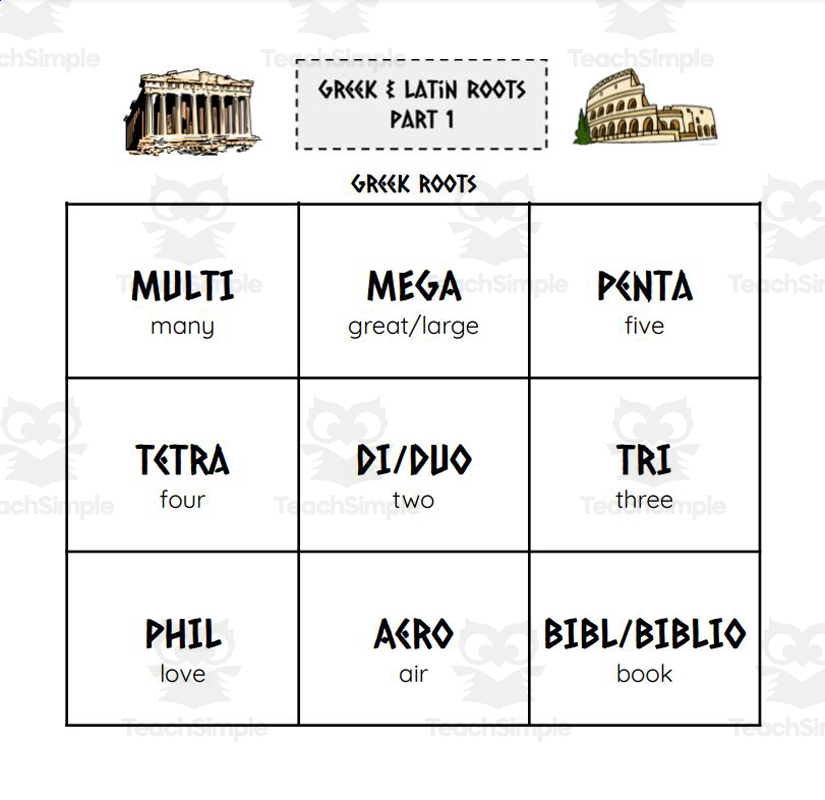
Affix Lists: Greek - Latin - Anglo
Reference resource listing Greek, Latin, and Anglo-Saxon word roots, prefixes, and suffixes for vocabulary/etymology study.




674 resources
Explore sub-categories
1 sub-categories · 674 resources
Reference resource listing Greek, Latin, and Anglo-Saxon word roots, prefixes, and suffixes for vocabulary/etymology study.
 Free download
 These affixes charts serve as a great reference guide for teachers to use when teaching students about prefixes and suffixes. There is one chart for prefixes and one chart for suffixes Each chart includes the affix, its meaning and one or…

Figurative Language: An Engaging Resource For Understanding Idioms Suitable for students in grade 4 through 7, this teaching tool brings value to any Language Arts course, including Reading, Writing, and Poetry.

Choose the note page your group is learning and display it during recorder practice, or print selected pages for reference. The chromatic set gives note names and fingering diagrams across about one and a half octaves. Separate German-fingering pages for A-sharp/B-flat help you select the reference appropriate to the instrument in use.
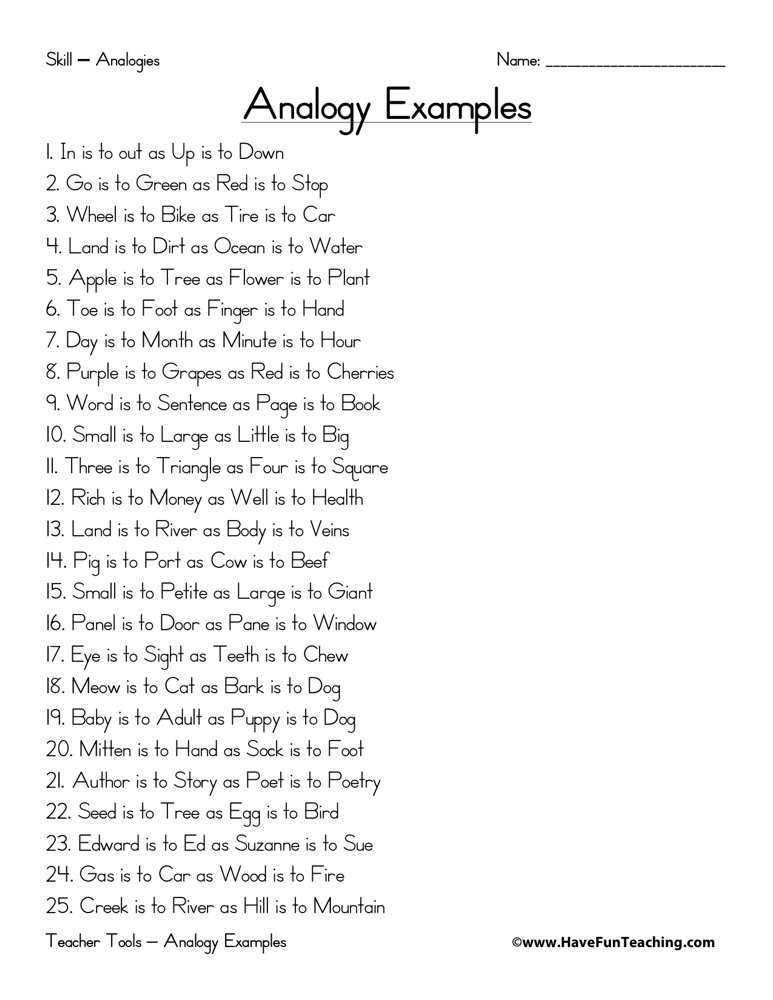
This Analogy Type List can help students find relationships between pairs of words by referencing different types of analogies. This is a great tool for teachers who want to help their students improve their vocabulary and analogy skills.

Introduce students to classifying animals as vertebrates or invertebrates and their subgroups, as an introductory lesson for an animal unit.

A geometry formulas reference sheet lists eight shapes — rectangle, square, parallelogram, kite, rhombus, circle, triangle, and trapezoid — each with a labeled drawing, its area formula, and its perimeter formula (or circumference, for the circle). Alongside each formula, short usage notes flag common student errors: using perpendicular height rather than slant height for parallelograms, rhombi, triangles, and trapezoids, and correctly identifying the hypotenuse on a right triangle. The sheet is designed as a compact, single-page reference rather than a set of practice problems.
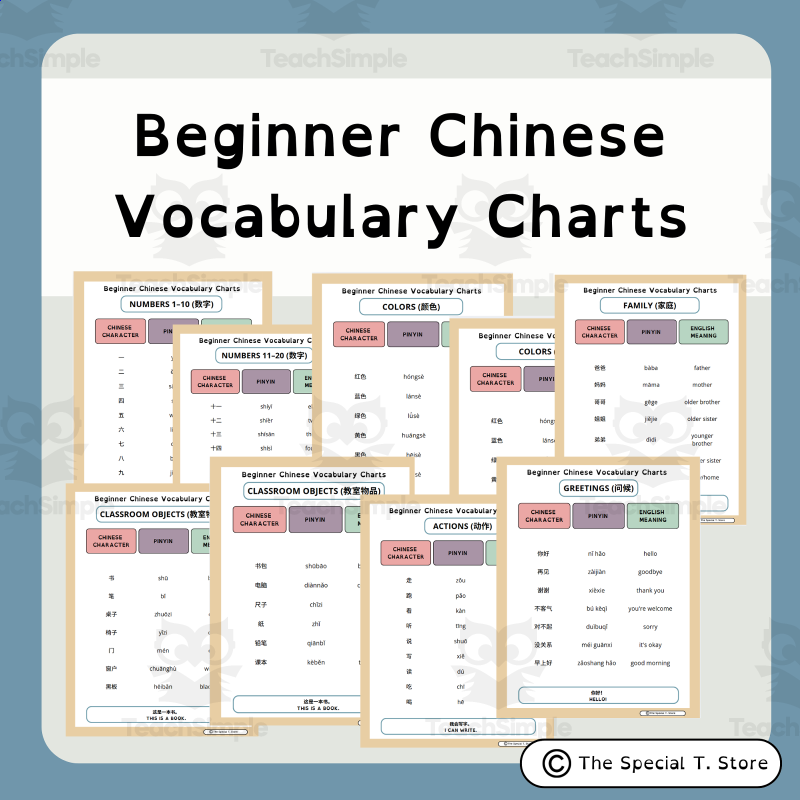
Bring Mandarin to life with these Beginner Chinese Vocabulary Charts, designed to help students build confidence in reading, recognizing, and understanding essential Chinese words.

Multiplication 1-10 x 1-12 A4 CARDS / MATS / POSTERS to use with your students, display during teaching or on the wall as decor / classroom decorations . Big size to work with snap cubes, bricks and other manipulatives on .

An anchor chart displaying consonant blends and digraphs for student reference, with QR codes linking to practice videos.
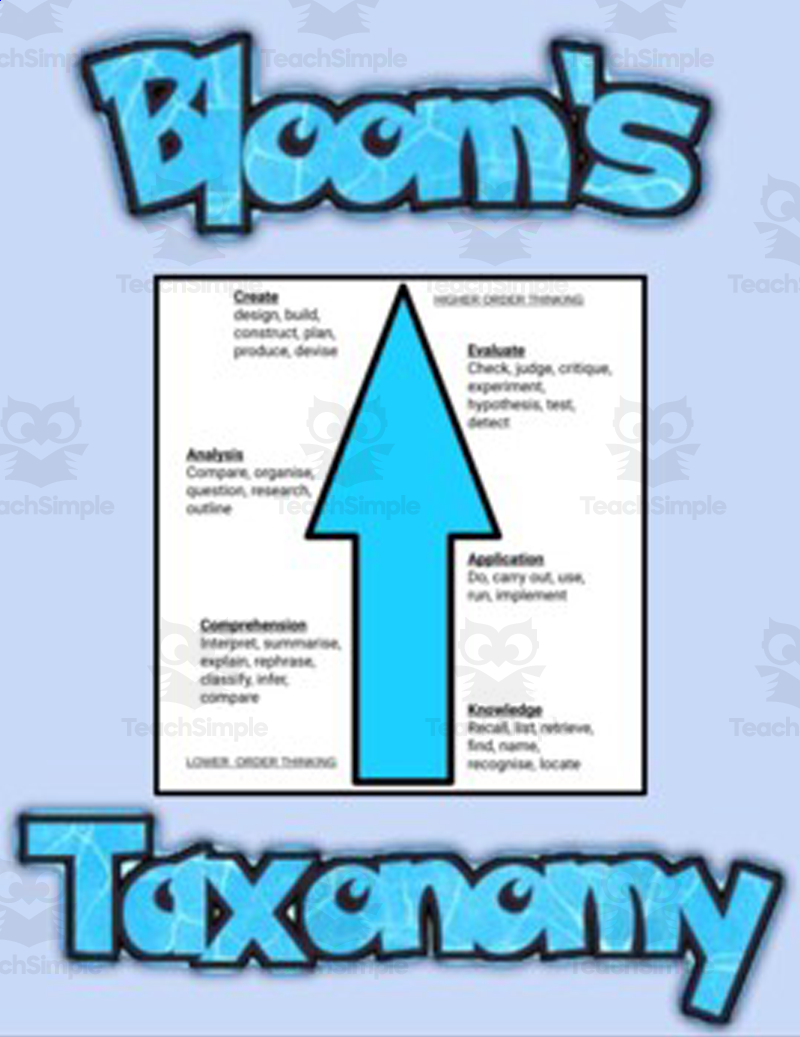
Teacher reference posters and keyring tags explaining Bloom's Taxonomy question levels to help compose questions at varying levels of cognitive thinking.
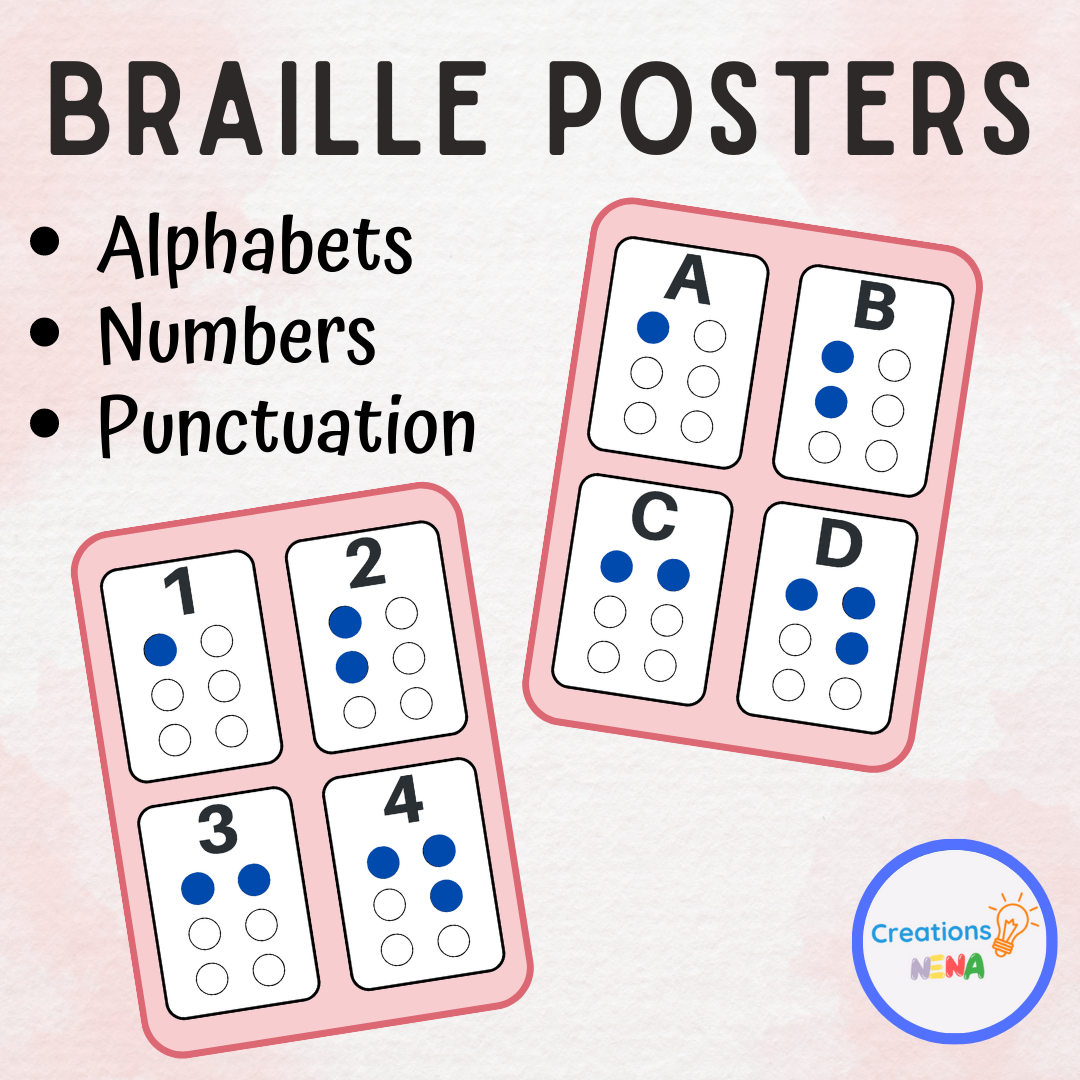
Introduce your students to the fascinating and meaningful world of Braille with these educational posters created specifically for sighted learners .
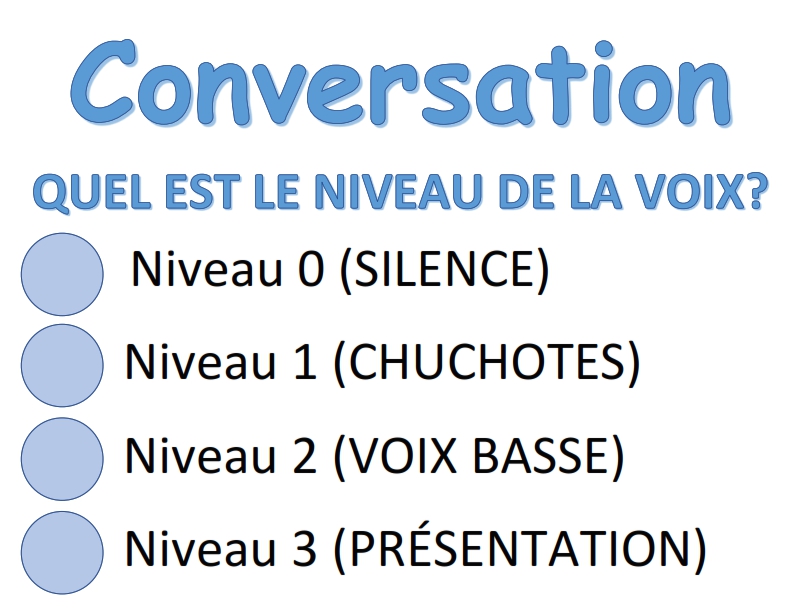
Communicate CHAMPS-style classroom behavior expectations (voice level, movement, participation, and help-seeking) to students, in French.

Two illustrated anchor charts teach how readers infer a story character's traits — through what characters say or think, do, feel, and how others describe them — each supplied in a completed poster version and a fill-in-the-blank interactive-notebook version. The chart pairs a four-category graphic organizer (thoughts/words, feelings, actions, and what others say) with a sentence frame, 'This character is (or has) ___. I know this because ___,' for students to justify a trait using text evidence. Teachers can print the completed posters for a bulletin board or hand out the blank versions for students to fill in as guided notes while reading a class novel or short story.
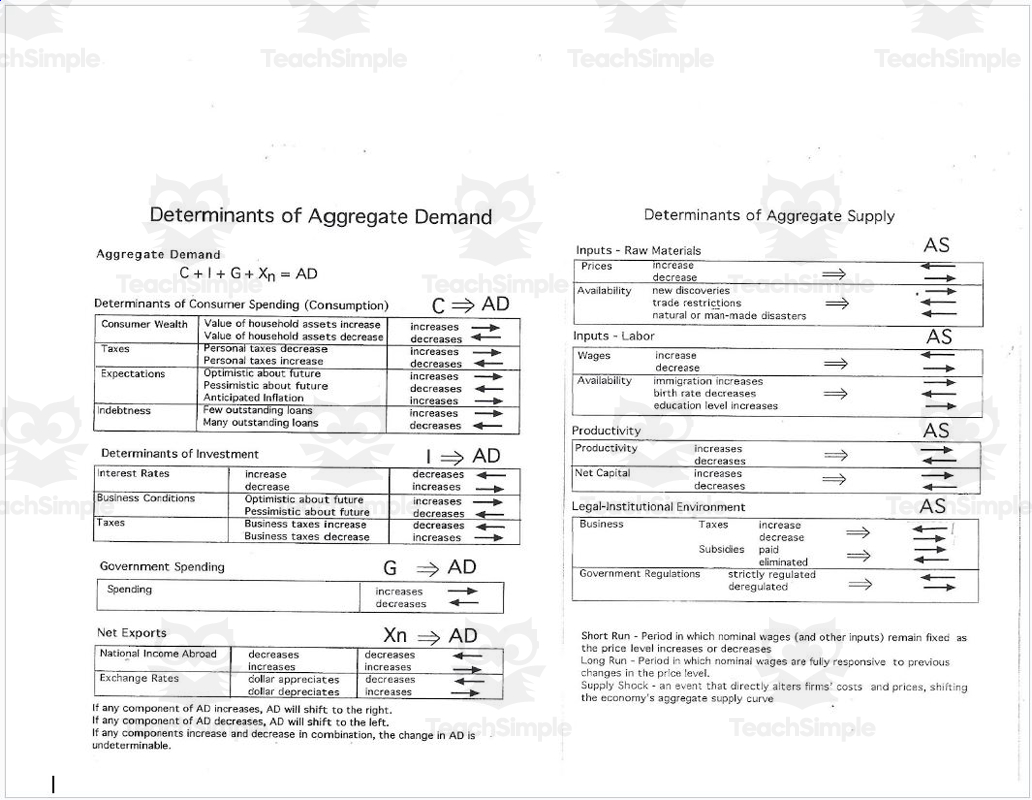
Cheat Sheet: Determinants of AS_AD-1 Target Audience: This resource is meticulously designed for high school students within the grades 9 to 12. It's optimal for subjects like Social Studies, with an emphasis on USA History and Economics.
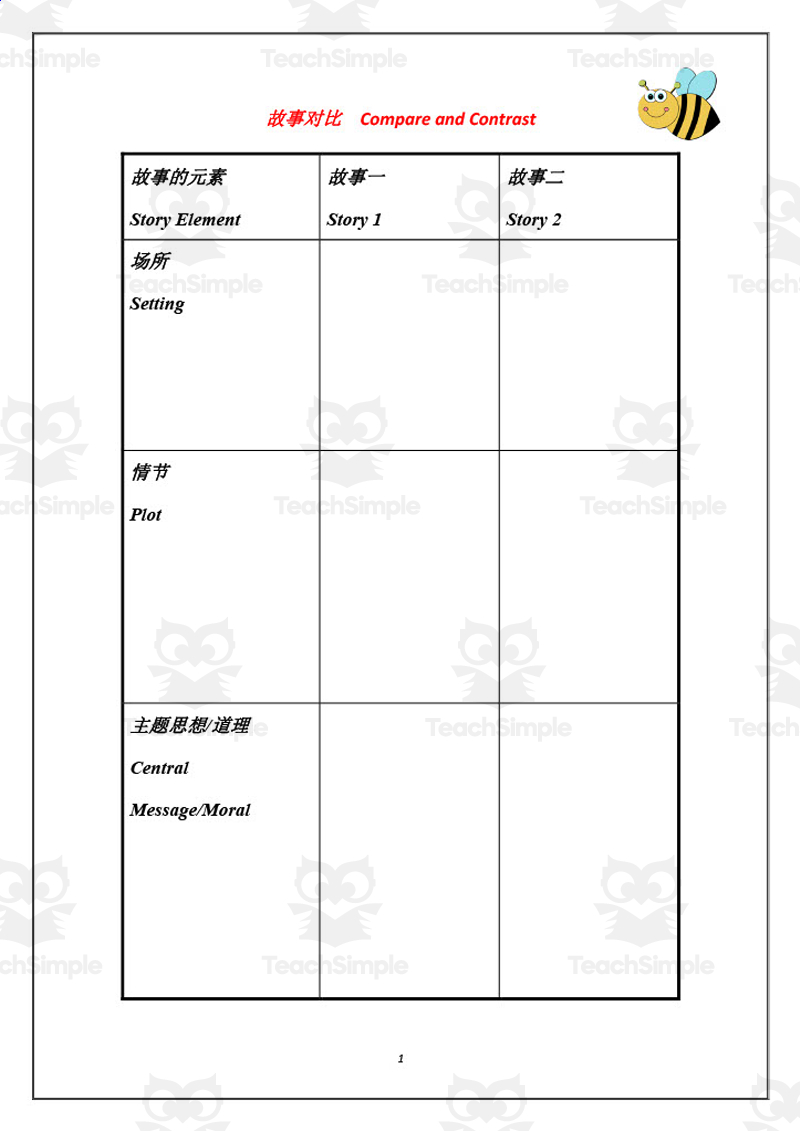
This resource is a Chinese: Reading and Writing Workshop Bundle. It comes with 6 integral resources to carry a workshop in language class. These are bilingual resources that have Chinese and English options.
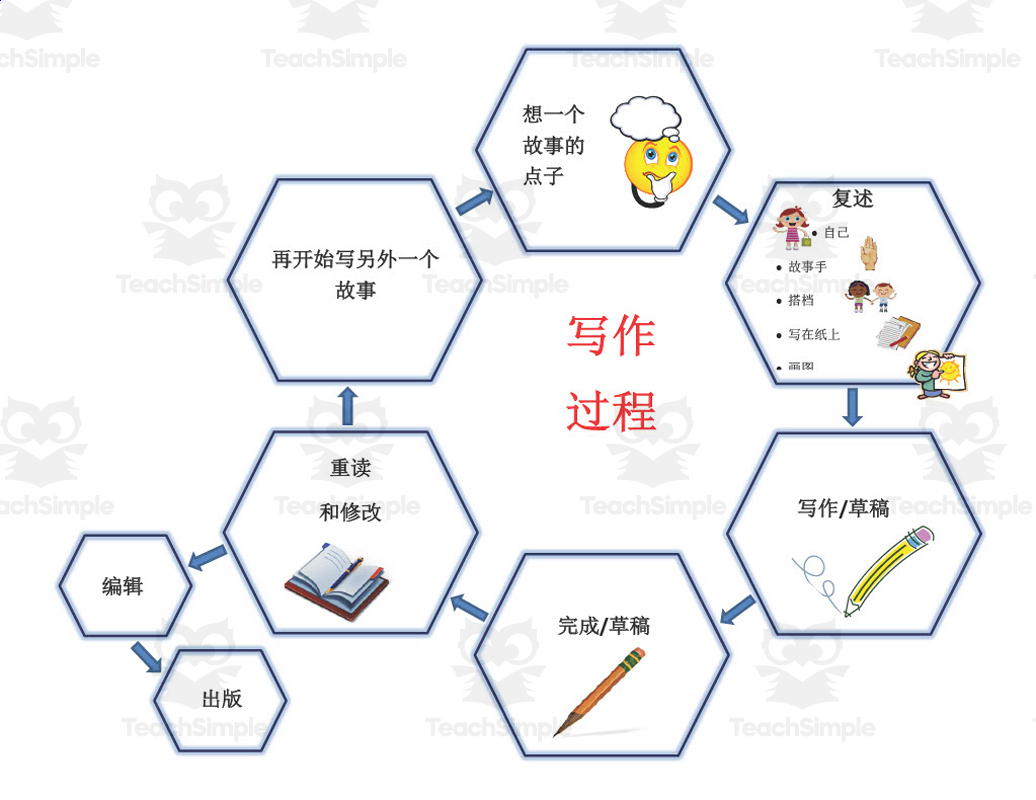
This resource is a Chinese: Writing Process Chart. It is an easily printable chart that shows the basic steps of writing for your students to follow along.

This reference pairs Roman-numeral chord labels with their component notes, from C–E–G through B–D–F. Most entries are triads, while G–B–D–F provides a four-note comparison. Use it alongside a music-making activity to help learners identify the notes they are combining and describe what changes between chords.
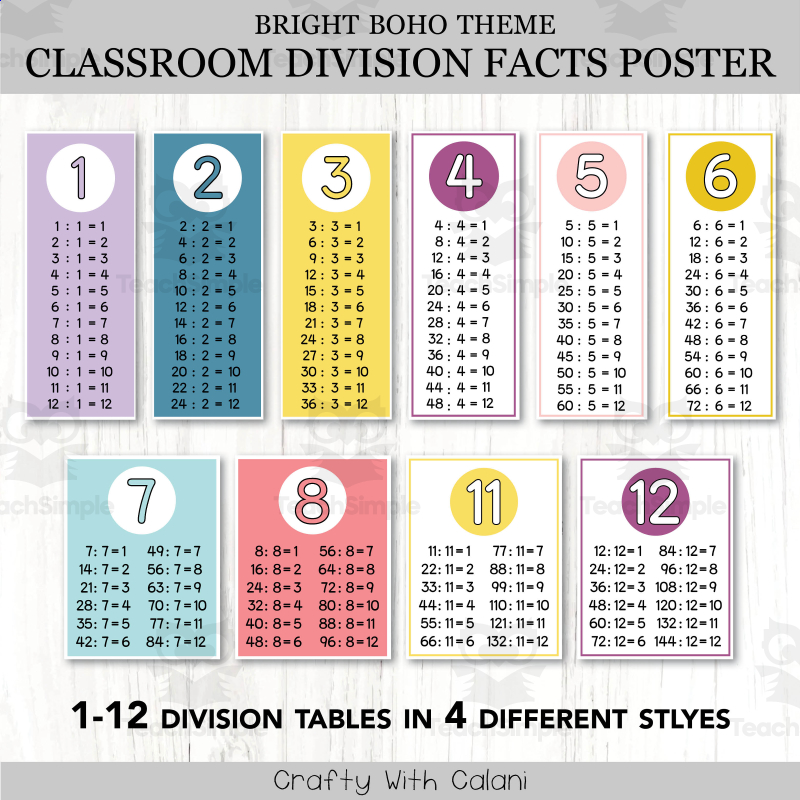
A set of classroom wall posters/charts displaying division facts from 1 to 12, used as visual reference decor to support memorization of division facts.
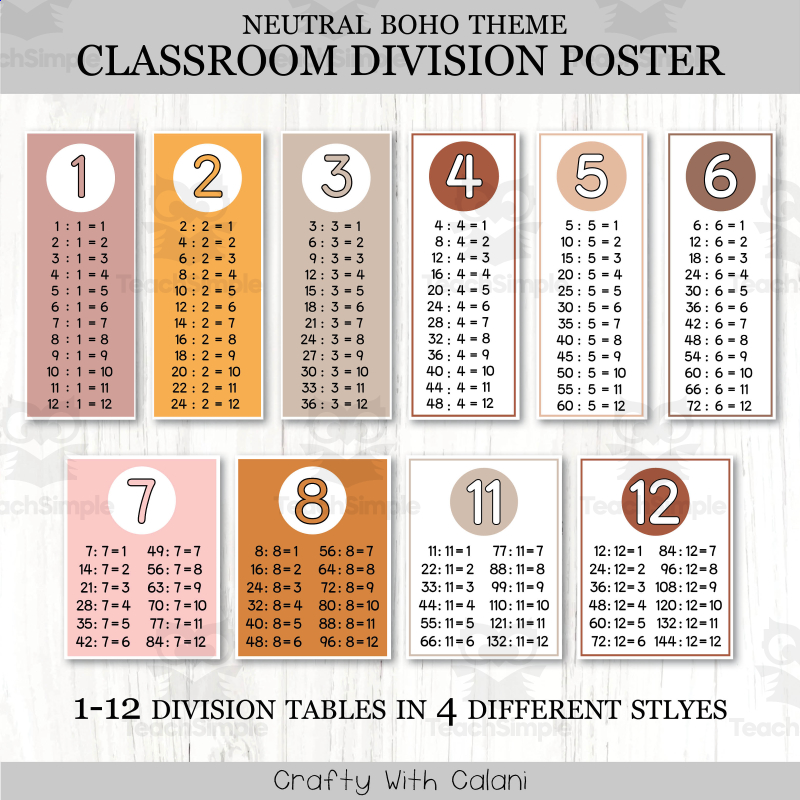
A set of classroom wall posters/charts displaying division facts from 1 to 12, used as visual reference decor to support memorization of division facts.
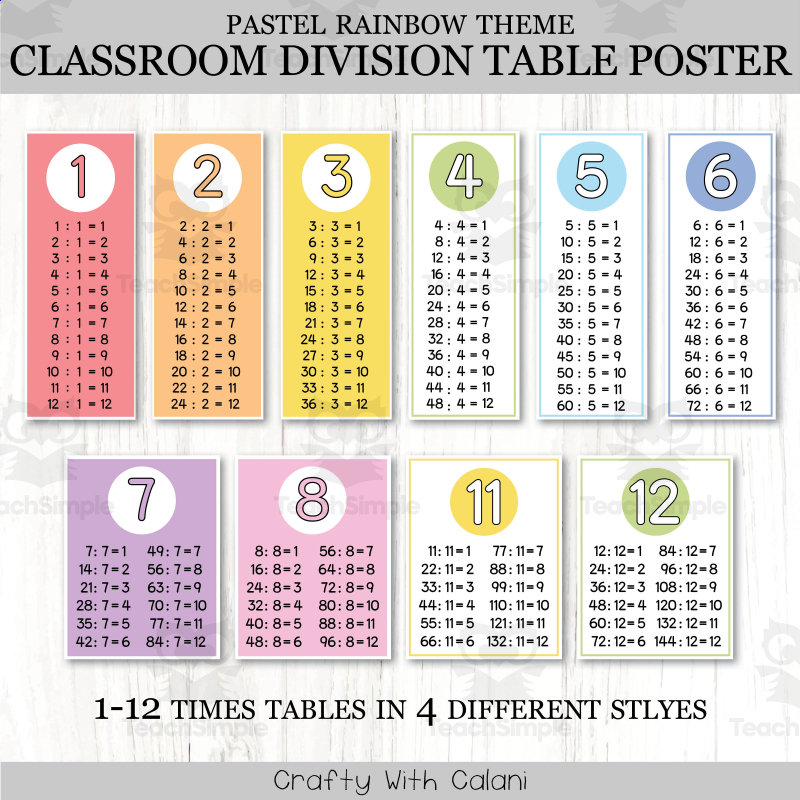
Wall-display posters showing division fact families (divisors 1-12) for classroom math decor and reference.

The Cold War Cheat Sheet is a 1-page printable graphic to distribute to students. This sheet serves as a great reference page, study guide or introduction chart. This gives students bullet points of information in a concise fashion.
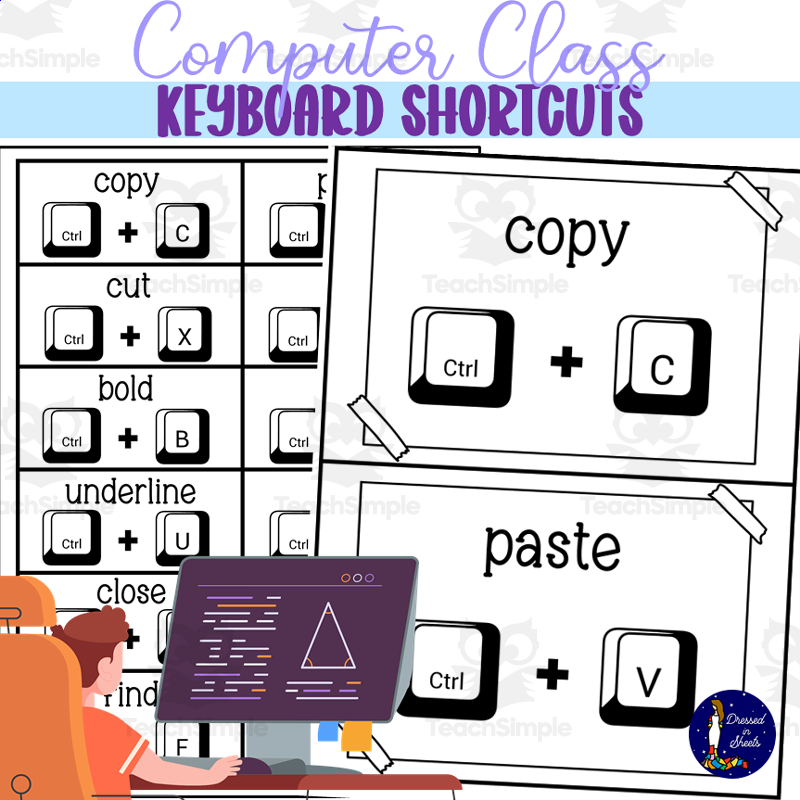
A set of classroom posters/reference cards teaching common computer keyboard shortcuts (copy, paste, cut, undo, bold, italic, underline, save, close, select all, find, replace) to build student efficiency with common software commands.

Two matching contraction charts show how pairs of words combine into one by dropping letters and adding an apostrophe — 'can not' becomes 'can't,' 'I will' becomes 'I'll,' 'would have' becomes 'would've.' The first chart is fully completed with all seventeen example pairs, ready to display or read as-is. The second repeats the identical seventeen contractions but leaves the definition's key words blank, so students fill in 'two,' 'one,' and 'apostrophe' themselves before using the chart as a reference. Grouped by base word — not, will, have, and am/is/are — the contractions move from the most common pattern to more irregular ones, giving students a structured reference for reading and writing.