



3,931 products added recently
Page 103 - Science Lesson Plans
Bring science to life with lesson plans that cover biology, chemistry, physics, and more. These resources offer experiments and interactive lessons to stimulate curiosity. Implement them to foster a deep understanding of scientific principles and a passion for discovery.

 Show filters


Energy Gr. 5-8
Science, Physics, Grade 5, 6, 7, 8, Teacher Tools, Lesson Plans
Energy Gr. 5-8: A Comprehensive Guide Energy Gr. 5-8 is a comprehensive teaching resource designed specifically for science educators, focusing on the vital subject of energy. This implicitly caters to both public school teachers and those overseeing homeschooling, helping them engage students from Grade 5 through Grade 8. Digging Deeper into Energy Types The resource follows a meticulous path through various types of energy, revealing hidden facets that build the learner's understanding gradually yet effectively. Mechanical Energy: Beginning with mechanical energy, it uses relatable scenarios like points on a roller coaster ride to differentiate between kinetic and potential energies. Thermal and Sound Energies: Subsequent sections delve into thermal and sound energies providing learners with clarity about their connection with kinetic energy as well as terminology such as amplitude, wavelength and frequency relating to sound waves. Light Energy:A segment dedicated to light energy exposes pupils to the dynamic spectrum of electromagnetic radiation. Natural Resources-derived Potential Energy:Informs pupils about potential energy derived from renewable and non-renewable resources. Educational Standards Alignment This guide is aligned with Next Generation Science Standards (NGSS), coupled with Bloom’s Taxonomy approach and STEAM initiatives—highlighting its commitment towards delivering engaging education while promoting critical thinking. Fostering Practical Learning & Assessment An Emphasis on Practical Learning: An unparalleled aspect of this guide is its emphasis on practical learning via hands-on experiments for visualizing concepts clearly in an interesting group activity format. Solidifying Concepts with Additional Activities: Additional activities such as crosswords puzzles & word searches are featured which further solidifies learned concepts in an entertaining way. Assessment Quizzes: Comprehension quizzes for assessing understanding along with an answer key for reference when required is a part of the guide. Fostering Convenient Use This comprehensive guide comes conveniently saved as a single PDF file—making organization easy & access quicker! By providing these tools at your disposal Energy Gr. 5-8 confidently serves as a splendid choice for educators aiming to enhance their students’ comprehension of energy in all its diverse forms.
Author Classroom Complete Press
Tags PDF

I WONDER - How Hot It Is On Mars | Animated Video Lesson
Space, Earth and Environmental Sciences, Science, Grade 6, 7, 8, 9, 10, 11, 12, Lesson Plans, Teacher Tools
Video Introduction An amazing video designed for the students to learn more about space facts. I WONDER - How Hot It Is On Mars | Animated Video Lesson Do you like reading about space? If yes, what is your favorite topic? What do you know about our solar system? What is the smallest planet in our solar system? What is the biggest planet in our solar system? What is the hottest planet in our solar system? And what is the coldest one? Do you think there are aliens? If yes, what do you think they look like? What do they eat and how they speak to each other? Where do they live? What is a galaxy? And what is a milky way? Have you recently saw a shooting star? If yes, tell us more about it, like when did it happen and where? What is a blackhole? Can a blackhole gets bigger by time? Do you like counting the stars? What do you think a star is made of? I WONDER - How Hot It Is On Mars | Animated Video Lesson The video is perfect for encouraging the researching skills for the students, while learning more about the fantastic space. I WONDER - How Hot It Is On Mars | Animated Video Lesson This friendly designed video is suitable for students at school, homeschooling, and as a group activity. Format Available in MP4 format.
Author Educational Voice
Tags How Hot It Is On Mars, How Hot It Is On Mars Video, Mars, Mars Facts, Mars Facts For Kids, Mars Videp, Mars Video For Kids, The Red Planet, Planets Video, Planets Video For Kids
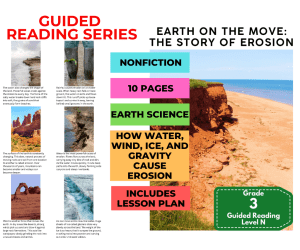
The Story of Erosion: Guided Reading Level N with Lesson Plan
ELA, Resources for Teachers, Reading Comprehension, Reading, Science, Language Development, Pre-Reading, Earth and Environmental Sciences, Geography, Social Studies, Grade 2, 3, 4, Worksheets & Printables, Worksheets, Teacher Tools, Centers, Activities, Literacy Readers, Quizzes, Quizzes and Tests, Assessments, Lesson Plans
This The Story of Erosion (level n) guided reading book with lesson plan includes: Guided Reading Color Label (front cover x1) This is a quick way to match the book’s demands to what students can generally handle.. The overall goal is to use the level/color to pick books for several smaller groups. To qualify for a certain level, a student is expected to read a book from that level with about 90–94% accuracy. If a student is consistently accurate and understands, move up a level. If the student is struggling at that level, drop down and add more support. Each student will improve at completely different rates, but it is generally one of the best ways to check progress across the class. DOWNLOAD THE CATALOG TO VIEW ALL GUIDED READING BOOKS AVAILABLE (SORTED LEVELS A-Z) Pre-Reading Question (x1) Teacher asks the prompt aloud, can be while showing the cover or first page. Students share what they already know, or make educated guesses from the cover. Prompt them to use the target vocabulary. Write some of their responses on the board to look back at during the reading. Vocabulary Words (x5) Introduce the five words, best doing it one at a time. Start by saying it, while students repeat and then see if anyone knows what it means before reading further. Read through the meaning and try to briefly connect each word to a picture or gesture so it’s meaningful. Ask students to flip through the book pages and point to where they see each of the vocabulary words. While reading the book pause upon coming across one of the vocab words or read the sentence twice to make sure students understand the word has appeared. Optional: Ask students to raise hands whenever they see/hear one of the new words. Guided Reading Pages (x10) Check the book snapshot (below) for: primary topic - do you need to prep extra reading or intro materials on this? what is taught best - decide on 1-2 bullets to focus on, use the prompt or words provided here for best results. learning goals - what you are checking for students to be able to do after the session, elicit answers using prompts or words provided. key vocabulary (see section above). questions overview - so you know what is coming up and if you need to prep extra materials to assist understanding. Run the lesson You may have already looked at a few of the pages together, but you can show them some of the pictures again first to set meaning. Depending on how much time you have and how familiar your students are with guided reading class, you may want to read the book aloud first with the group first. Students whisper or partner read, while you listen in. If time, do it as a group, one student reading a page each. Use the guided page’s prompts to coach: “Check the picture / does it make sense?” “Point under the words / try the first sound” “Reread the sentence smoothly”. Try to focus more on one student per session (rotating every time), so you can work out if they are ready to move up or need to move down a level. Comprehension Questions (back cover x3) This is your way to check that students didn’t just say the words, but actually understood the text. First, let students answer by pointing to the page/picture and saying a short sentence. After any answer, follow with: “Show me where you found that in the text.” In bigger groups, have partners answer first (10–20 seconds), then call on 2–3 students to share. Differentiation tips: Emerging speakers/struggling readers: oral + pointing On-level: oral in a full sentence Higher: one written sentence or draw + label Book Snapshot Title: Earth on the Move: The Story of Erosion Genre: Nonfiction (informational text) Subject: Life Science / Earth Science Primary Topic: How water, wind, ice, and gravity cause erosion Estimated Guided Reading Level (A–Z): N What This Book Teaches Best Defines erosion as a slow, natural process that moves rocks and soil from one place to another. Compares different forces of erosion (water, ocean waves, rainfall/runoff, wind, ice/glaciers, gravity) using clear examples. Explains cause and effect in Earth changes , such as rivers cutting deep paths that form canyons and riverbanks over time. Shows that erosion can break down land in one place and build new land in another , including how a river can form a delta where it meets the ocean. Highlights ways nature can slow erosion , including how plant roots hold soil in place. Learning Goals Students can define erosion using details from the text. Students can identify water as the most powerful cause of erosion described in the book. Students can explain how rivers, waves, and rainfall/runoff change land over time. Students can describe how wind, glaciers, and gravity move or reshape rock and soil. Students can explain how plants help prevent erosion from happening too quickly. Students can describe how a delta forms when a river drops sand and soil at the ocean. Key Vocabulary From the Text erosion — moving rock and soil from one place to another. shoreline — where land meets the ocean. runoff — rainwater that flows downhill over the ground. glaciers — huge sheets of ice moving slowly across land. delta — land formed when a river drops sand and soil. Discussion Prompts Pre-reading question: What are some ways land might change over a long time? Comprehension questions: How does the book describe erosion and what it moves? Comprehension questions: What does fast-moving river water do to the earth, according to the text? Comprehension questions: How do the roots of trees and grasses help stop erosion from happening too quickly? Printing Tips 1. Best Printing Method (Recommended) “Booklet” Printing (Best if Available) If your printer or PDF viewer supports Booklet Printing , use this. Settings to use: Print mode: Booklet Paper size: Letter or A4 (either works) Orientation: Landscape Print on both sides: Yes Flip on: Short edge Scaling: Fit to printable area Booklet subset: First test: Front sides only Then: Back sides only This will automatically: Pair pages correctly Put the cover on the outside Align everything for folding After printing, fold in half and staple along the spine . 2. If “Booklet” Printing Is NOT Available You can still print this correctly with manual duplex printing . Step-by-step: Open the PDF. Choose Print . Set: Orientation: Landscape Pages per sheet: 1 Print on both sides: Yes Flip on: Short edge Print all pages . Because each PDF page already contains two facing book pages, the result will still fold cleanly into a book. Thousands of Cored Education products are included with your TeachSimple membership. Download links and encyclopedia index available here.
Author Cored Education
Rating
Tags Reading Comprehension, Reading Passages, Reading, Guided Reading, Guided Reading Lesson Plan, Guided Reading Activity, Pre-reading, Science Lesson Plans, Earth Science, Geography
I WONDER - What Are The Seasons Like On Uranus | Animated Video
Space, Earth and Environmental Sciences, Science, Grade 3, 4, 5, 6, 7, 8, 9, Lesson Plans, Teacher Tools
Video Introduction An amazing video designed for the students to learn more about space facts. I WONDER - What Are The Seasons Like On Uranus | Animated Video Lesson Have you ever thought about travelling to space?! Join us with this amazing video about The Moon Ganymede. Can you name any three facts about The Moon Ganymede? How amazing is space! Let's discover some amazing facts about planets and moons! Do you know that we have two kinds of planets in our solar system? Can you name the planets based upon their core type? I WONDER - What Are The Seasons Like On Uranus | Animated Video Lesson The video is perfect for encouraging the researching skills for the students, while learning more about the fantastic space. I WONDER - What Are The Seasons Like On Uranus | Animated Video Lesson This friendly designed video is suitable for students at school, homeschooling, and as a group activity. Format Available in MP4 format.
Author Educational Voice
Rating
Tags What Are The Seasons Like On Uranus, Uranus, Uranus Facts, Uranus Video, Uranus Video For Kids, Uranus Facts For Kids, Uranus Seasons, Uranus Seasons Facts, Uranus Seasons Video
I WONDER - How Do Animals Use Their Tongues | Animated Video Lesson
STEM, Biology, Life Sciences, Science, Animals, Grade 1, 2, 3, 4, 5, 6, 7, 8, Lesson Plans, Teacher Tools
Video Introduction Animal kingdoms are full of fascinating wonders to learn. This video is designed for the students to learn more about animals in different countries. I WONDER - How Do Animals Use Their Tongues | Animated Video Lesson Do you like animals? what is your favorite one? Do you own a pet? If yes, tell us more about it, like what its name? And what do you like most about it? What are the animal kingdoms? Can you write down the characteristics of each animal class like mammals, birds, reptiles, amphibian, fish and mollusks. Do you know that some animals can sing, can you name any of them? What is the largest and the smallest mammal in the world? What is the largest and the smallest bird in the world? What is the largest and the smallest fish in the world? I WONDER - How Do Animals Use Their Tongues | Animated Video Lesson The video is perfect for encouraging the researching skills for the students, while learning more about these fantastic animals. I WONDER - How Do Animals Use Their Tongues | Animated Video Lesson This friendly designed video is suitable for students at school, homeschooling, and as a group activity. Format Available in MP4 format.
Author Educational Voice
Tags How Do Animals Use Their Tongues, How Do Animals Use Their Tongues Video, Animals Tongues, Animals' Tongues, Animals' Tongues Facts, Animals' Tongues Facts For Kids, Animals' Tongues Video

I WONDER - How Long Did The Brontosaurus Live | Animated Video Lesson
History: Ancient, History, Social Studies, History: World, Animals, Life Sciences, Science, Grade 4, 5, 6, 7, 8, 9, 10, Lesson Plans, Teacher Tools
Video Introduction An amazing video designed for the students to learn more about dinosaurs in different countries. I WONDER - How Long Did The Brontosaurus Live | Animated Video Lesson Do you like dinosaurs? what is your favorite one? Do you own a pet? If yes, tell us more about it, like what its name? And what do you like most about it? Do you think that your pet has been evolved from a dinosaur? Can you write down the characteristics of your favourite dinosaur like it's shape, their rivals, where did it use to live and what was their favourite food? What is the largest and the smallest dinosaur that ever found? Why is the T-rex is so famous? Have you ever read any interesting facts about it? Can you name any of the carnivores or herbivores dinosaurs? I WONDER - How Long Did The Brontosaurus Live | Animated Video Lesson The video is perfect for encouraging the researching skills for the students, while learning more about dinosaurs. I WONDER - How Long Did The Brontosaurus Live | Animated Video Lesson This friendly designed video is suitable for students at school, homeschooling, and as a group activity. Format Available in MP4 format.
Author Educational Voice
Rating
Tags How Long Did The Brontosaurus Live, How Long Did The Brontosaurus Live Video, Brontosaurus, Brontosaurus Facts, Brontosaurus Video, Brontosaurus Video For Kids, Brontosaurus Facts For Kids

Rhino | Interactive Science Lesson | Micro-Learning Deck
Science, Life Sciences, Animals, Grade 6, 7, 8, 9, Teacher Tools, Lesson Plans
Interactive Rhino Science Lesson Introduces the Endangered Species This informative science lesson gives educators a multimedia resource to engage middle school students in learning about the endangered rhinoceros species. The PowerPoint slide deck can be used in whole class instruction, small groups, or independent learning modules to build students' understanding of rhino conservation. The lesson begins with a short video to introduce key rhino facts like their habitat, diet, and modern threats driving them toward extinction. An accompanying reading passage with audio recording lets students dive deeper into behaviors, evolution, and human impacts on rhinos. Finally, a close reading activity and quick write prompt allow educators to assess retention and comprehension. Altogether, these varied components promote engaged learning using real-world connections to this important environmental issue. With versatile implementation options, this rhino conservation lesson integrates interactive media for memorable science instruction on endangered species. The blend of informal assessments and fascinating content makes for an impactful learning experience for 6th-9th grade students.
Author Teach Me This
Tags Rhinos, Mini Lesson, Interactive, Science, Zoology
I WONDER - What Group Do The Stegosaurus Belong To | Animated Video
History: Ancient, History, Social Studies, History: World, Animals, Life Sciences, Science, Grade 4, 5, 6, 7, 8, 9, 10, Lesson Plans, Teacher Tools
Video Introduction An amazing video designed for the students to learn more about dinosaurs in different countries. I WONDER - What Group Do The Stegosaurus Belong To | Animated Video Lesson Do you like dinosaurs? what is your favorite one? Do you own a pet? If yes, tell us more about it, like what its name? And what do you like most about it? Do you think that your pet has been evolved from a dinosaur? Can you write down the characteristics of your favourite dinosaur like it's shape, their rivals, where did it use to live and what was their favourite food? What is the largest and the smallest dinosaur that ever found? Why is the T-rex is so famous? Have you ever read any interesting facts about it? Can you name any of the carnivores or herbivores dinosaurs? I WONDER - What Group Do The Stegosaurus Belong To | Animated Video Lesson The video is perfect for encouraging the researching skills for the students, while learning more about dinosaurs. I WONDER - What Group Do The Stegosaurus Belong To | Animated Video Lesson This friendly designed video is suitable for students at school, homeschooling, and as a group activity. Format Available in MP4 format.
Author Educational Voice
Rating
Tags What Group Do The Stegosaurus Belong To, What Group Do The Stegosaurus Belong To Video, Stegosaurus, Stegosaurus Facts, Stegosaurus Video, Stegosaurus Facts For Kids, Stegosaurus Video For Kids

I WONDER - Which Constellation Is Easiest To See | Animated Video
Space, Earth and Environmental Sciences, Science, Grade 6, 7, 8, 9, 10, 11, 12, Lesson Plans, Teacher Tools
Video Introduction An amazing video designed for the students to learn more about space facts. I WONDER - Which Constellation Is Easiest To See | Animated Video Lesson Do you like reading about space? If yes, what is your favorite topic? What do you know about our solar system? What is the smallest planet in our solar system? What is the biggest planet in our solar system? What is the hottest planet in our solar system? And what is the coldest one? Do you think there are aliens? If yes, what do you think they look like? What do they eat and how they speak to each other? Where do they live? What is a galaxy? And what is a milky way? Have you recently saw a shooting star? If yes, tell us more about it, like when did it happen and where? What is a blackhole? Can a blackhole gets bigger by time? Do you like counting the stars? What do you think a star is made of? I WONDER - Which Constellation Is Easiest To See | Animated Video Lesson The video is perfect for encouraging the researching skills for the students, while learning more about the fantastic space. I WONDER - Which Constellation Is Easiest To See | Animated Video Lesson This friendly designed video is suitable for students at school, homeschooling, and as a group activity. Format Available in MP4 format.
Author Educational Voice
Tags Which Constellation Is Easiest To See, Which Constellation Is Easiest To See Video, Constellation, Constellations, Constellations Facts, Constellation Facts, Constellations Facts For Kids, Constellations Video For Kids
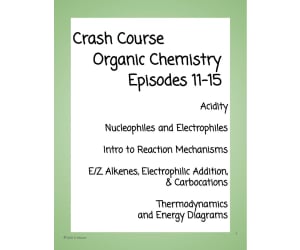
Crash Course Organic Chemistry: Episodes 11-15
Science, Chemistry, Grade 10, 11, 12, Teacher Tools, Lesson Plans
Crash Course Organic Chemistry: Episodes 11-15 This comprehensive teaching resource is ideal for both public school teachers and homeschoolers. It primarily focuses on the study of chemistry within science, employing a detailed approach to five main domains: Acidity Nucleophiles and Electrophiles Introduction to Reaction Mechanisms E/Z Alkenes (Electrophilic Addition & Carbocations) Thermodynamics and Energy Diagrams The structure of this product makes lesson planning an effortless process. Each domain includes: Timestamped and non-timestamped episode guides. A direct link within the material for rapid retrieval during lessons or self-study periods./le An answer key provided along with the episode guide in one complete-to-print PDF file of 22 pages./le This resource is suitable for higher-grade students, specifically Grades 10 through12. It offers a flexible yet structured approach that seeks to enhance student understanding at their pace. Ideal for whole-class instruction, group discussions, or individual homework assignments—this tool provides seamless integration into any teaching scenario. In Summary, The Crash Course Organic Chemistry: Episodes 11-15 product aids not just rote memorization but also bridges comprehension with effective application in the realm of chemistry learning.
Author Karen Maxson
Tags Acidity, Nucleophiles, Reaction Mechanisms, E/Z Alkenes, Thermodynamics

Flight Gr. 4-7
Science, Physics, Grade 4, 5, Teacher Tools, Lesson Plans
Flight Gr. 4-7 Teaching Resource Overview The Flight Gr. 4-7 teaching resource provides an engaging and comprehensive guide for students studying flight in a physical science context. Focusing mainly on Grades 4 to 5, this material brings a new dimension to the classroom through its variety of interactive activities and holistic lesson structure. Purpose and Structure of Flight Gr. 4-7 The purpose of Flight Gr. 4-7 is more than simply imparting facts; it seeks to foster comprehension through student participation from start to finish. Every activity is centered around the theme of each lesson, creating a streamline learning experience that builds on prior knowledge. This resource delves into various aspects of flight such as understanding the mechanics of wings, rockets, helicopters. In addition, hands-on experiences where students can construct their own kites and gliders are included. Different Ways to Implement Flight Gr. 4-7 in Classroom Activities This unit can be implemented across whole class discussions or smaller group tasks for independent and group learning experiences respectively. Additionally, it’s also suitable for homework assignments offering flexibility according to each educator's specific needs. Inclusion of Reading Passages & Puzzles Incorporating reading passages that provide valuable context alongside the hands-on activities helps reinforce concepts learned during each experiment or project undertaken by pupils during lessons. Crossword puzzles and word searches are included as complementary materials ensuring mental alertness while engendering fun within education; A readily available answer key makes educators work much easier when grading or providing instruction. Learner-oriented Digital Material This material comes in PDF form which accentuates ease-of-use, perfect for classroom settings or remote learning if required due to its adaptable design pertinent with current educational landscapes. Customizability & Efficiency With optional additional activities included coupled with evaluation metrics embedded within each section, customization (to fit departmental curriculum protocols), adjustments where necessary has never been easier. In summary, Flight Gr. 4-7 is an efficient courseware usable flexibly based on user's preference. Conclusion In summary, Flight Gr. 4-7, is an immersive step-by-step guide aiming toward enhancing both teaching experience and the student's overall academic accomplishment when it comes to grasping the science around flight.
Author Classroom Complete Press
Tags PDF
I WONDER - Are All Bacteria Harmful | Animated Video Lesson
Biology, Life Sciences, Science, Grade 4, 5, 6, 7, 8, 9, 10, Lesson Plans, Teacher Tools
Video Introduction An amazing activity designed for the students to learn more about STEM. I WONDER - Are All Bacteria Harmful | Animated Video Lesson Do you like STEM subjects? what is your favorite one? Have you ever tried to plant a seed? If yes, tell us more about it. Or have you ever tried to invent something? If yes, tell us more about it. And how do you think it will help us? Have you ever seen a microorganism under a microscope? What was it? And how it looked like? Mathematics is a marvelous subject. Let' sharpen our brains and solve some equations. Do you like timetable tricks? What is your favorite one? Do you know how to code? Have you ever created an app or a game before? If yes, how was it like? I WONDER - Are All Bacteria Harmful | Animated Video Lesson The video is perfect for encouraging the researching skills for the students, while learning more about this fantastic topic. I WONDER - Are All Bacteria Harmful | Animated Video Lesson This friendly designed video is suitable for students at school, homeschooling, and as a group activity. Format Available in MP4 format.
Author Educational Voice
Tags Are All Bacteria Harmful, Are All Bacteria Harmful Video, Bacteria, Bacteria Facts, Bacteria Video, Bacteria Video For Kids, Harmful Bacteria, Harmful Bacteria Facts, Harmful Bacteria Video
I WONDER - Can You See A Blackhole | Animated Video Lesson
Space, Earth and Environmental Sciences, Science, Grade 6, 7, 8, 9, 10, 11, 12, Lesson Plans, Teacher Tools
Video Introduction An amazing video designed for the students to learn more about space facts. I WONDER - Can You See A Blackhole | Animated Video Lesson Do you like reading about space? If yes, what is your favorite topic? What do you know about our solar system? What is the smallest planet in our solar system? What is the biggest planet in our solar system? What is the hottest planet in our solar system? And what is the coldest one? Do you think there are aliens? If yes, what do you think they look like? What do they eat and how they speak to each other? Where do they live? What is a galaxy? And what is a milky way? Have you recently saw a shooting star? If yes, tell us more about it, like when did it happen and where? What is a blackhole? Can a blackhole gets bigger by time? Do you like counting the stars? What do you think a star is made of? I WONDER - Can You See A Blackhole | Animated Video Lesson The video is perfect for encouraging the researching skills for the students, while learning more about the fantastic space. I WONDER - Can You See A Blackhole | Animated Video Lesson This friendly designed video is suitable for students at school, homeschooling, and as a group activity. Format Available in MP4 format.
Author Educational Voice
Tags Can You See A Blackhole, Can You See A Blackhole Video, See A Blackhole, Blackhole, Blackhole Facts, Blackhole Facts For Kids, Blackhole Video, Blackhole Video For Kids, Blackholes

I WONDER - What Fish Live In The Amazon River | Animated Video Lesson
STEM, Biology, Life Sciences, Science, Animals, Grade 1, 2, 3, 4, 5, 6, 7, 8, Lesson Plans, Teacher Tools
Video Introduction Animal kingdoms are full of fascinating wonders to learn. This video is designed for the students to learn more about animals in different countries. I WONDER - What Fish Live In The Amazon River | Animated Video Lesson Do you like animals? what is your favorite one? Do you own a pet? If yes, tell us more about it, like what its name? And what do you like most about it? What are the animal kingdoms? Can you write down the characteristics of each animal class like mammals, birds, reptiles, amphibian, fish and mollusks. Do you know that some animals can sing, can you name any of them? What is the largest and the smallest mammal in the world? What is the largest and the smallest bird in the world? What is the largest and the smallest fish in the world? I WONDER - What Fish Live In The Amazon River | Animated Video Lesson The video is perfect for encouraging the researching skills for the students, while learning more about these fantastic animals. I WONDER - What Fish Live In The Amazon River | Animated Video Lesson This friendly designed video is suitable for students at school, homeschooling, and as a group activity. Format Available in MP4 format.
Author Educational Voice
Tags What Fish Live In The Amazon River, What Fish Live In The Amazon River Video, Fish, Fish Facts, Fish Video, Fish Video For Kids, Amazon River, Amazon River Facts, Amazon River Video
I WONDER - How Fast Do Tectonic Plates Move | Animated Video Lesson
Geography, Social Studies, Geology, Earth and Environmental Sciences, Science, Grade 3, 4, 5, 6, 7, 8, 9, Lesson Plans, Teacher Tools
Video Introduction An amazing video designed for the students to learn more about famous places in different countries. I WONDER - How Fast Do Tectonic Plates Move | Animated Video Lesson Do you like geography?! Let's discover this amazing place and know more about its unique stories. Have you ever visited a unique place or a different country than yours? If yes, tell us about it! If no, tell us what kind of places you would like to visit in the future? Every country has it's own story tell us the story about your country: Where it is located? And when it has been established? I WONDER - How Fast Do Tectonic Plates Move | Animated Video Lesson The activity is perfect for encouraging the researching skills for the students, while learning more about this fantastic place. I WONDER - How Fast Do Tectonic Plates Move | Animated Video Lesson This friendly designed video is suitable for students at school, homeschooling, and as a group activity. Format Available in MP4 format.
Author Educational Voice
Rating
Tags How Fast Do Tectonic Plates Move, Tectonic Plates, Tectonic Plates Facts, Tectonic Plates Facts For Kids, Tectonic Plates Video, Tectonic Plates Video For Kids, Geology, Geology Facts , Geology Video

DINOSAURS Gr. 4-6
Science, Life Sciences, Animals, Grade 4, 5, Teacher Tools, Lesson Plans
DINOSAURS Gr. 4-6 Teaching Resource This expertly designed teaching resource is perfect for igniting your students' interest in the world of dinosaurs. The program covers a wide variety of dinosaur species such as: Brontosaurus Diplodocus Brachiosaurus Tyrannosaurus Rex Stegosaurus Tstationtriceratops and other interesting species.. The Package Includes: The DINOSAURS Gr. 4-6 contains 118 ready-to-print pages formatted in PDF with well organized resources in one file, offering easy access to all materials. Tutor's Flexibility: This unit allows tutors to adapt the extensive content for different class sizes and even homework assignments, facilitating versatile instruction methods. Creative Activities Integrated: Apart from factual knowledge on dinosaurs, there are thirty-four integrated research and creative activities which include fun elements like crossword puzzles, word finds etc.to reinforce learning. Reading Program Integration : Teachers can complement these resources with an established reading program about dinosaurs adding an interdisciplinary approach between science and language arts lessons. One distinguishing feature this tool provides is its alignment with Bloom's Taxonomy wherein each activity addresses different levels of cognitive development catering to a differentiated approach when instructing. The DINOSAURS Gr. 4-6 resource is applicable across grades four through six proving cost-effective whilst enriching teacher's classroom experience particularly beneficial when instructing Zoology as part of Science at elementary level.
Author Classroom Complete Press
Tags Dinosaurs, Science Printable, Discussion Questions, Crossword Puzzles, Dinosaur Activity

Global Warming CAUSES: Greenhouse Gases: Nitrous Oxide - FLASH-MAC
Science, Earth and Environmental Sciences, Environmental Science, Common Core, Grade 5, 6, 7, 8, Teacher Tools, Lesson Plans
Global Warming CAUSES: Greenhouse Gases: Nitrous Oxide - FLASH-MAC The Global Warming CAUSES teaching resource, focusing on Greenhouse Gases and specifically Nitrous Oxide, offers enriching and engaging educational material for students in grades 5 through 8. This comprehensive resource delivers insights into environmental science within the framework of science subjects. Taking a deep dive into the root causes behind global warming, it centres around one of the pivotal greenhouse gases - nitrous oxide. It aids in fostering a fundamental understanding of this critical subject among young minds as part of their essential science curriculum . Educational Resources: This informative chapter mini equips educators with curriculum -based content in diverse formats like reading passages that have questions for students to ponder before and after they read. These reading tasks can create lively group discussions or serve as comprehension exercises for individual learners. To boost learning retention and allow learners to interact with concepts more dynamically, various interactive activities are incorporated into this package. The provided material encourages users discover new concepts at their own pace either individually or collaboratively thereby enhancing their knowledge retention capacity multiple folds. For vocabulary development regarding this key topic, flash cards are also made available helping visualize complex terms easily making them perfect for classroom study or homework assignment alike. In addition to printables that provide tactile reinforcement of lessons learned digitally; multimedia resources such as video content and audio undertones further make it more comprehensive by bringing auditory learners onboard ensuring learning is holistic yet easy & fun-filled! Educational Standards: Upholding the highest education standards, all content aligns seamlessly with the Common Core State Standards equipping educators with quality educational tools ensuring no compromises on student's learning outcomes. The depth level has been carefully curated according to Bloom’s Taxonomy thus creating an integrated learning resource that supports deep pan-curricular connections. A must-have tool designed meticulously considering how today's digital native students learn best – a tool where conventional academic rigour meets modern delivery methods! Be it science classes in traditional classrooms, virtual classrooms, or homeschooling setups, the FLASH-MAC resources equips educators with quality content enabling them to nurture next-generation leaders. Please note that this teaching resource requires a Mac software file type for efficient operation. Note: Only one product file is contained within this purchase.
Author Classroom Complete Press
Tags Software (Mac)

Lesson 6.3 - Density
Science, Chemistry, Physics, Grade 6, 7, 8, 9, 10, 11, 12, Lesson Plans, Teacher Tools
Lesson 6.3 - Density A comprehensive teaching resource designed for educators to enhance students' understanding and application of density principles in real-world scenarios. Key Aspects: Calculating Density Determining if items sink or float Deepening understanding through practice exercises, literature-based learning, and interactive simulations. Educational Materials: The lesson includes essential notes with two variations - version A is participative with fillable blanks while version B comes pre-filled serving as an aid for absentees or special accommodations required cases. Practice Sheets: An integral part of this plan facilitating practical application of the learned theory. Two versions available catering to different learner needs.: Literature-Based Learning: An interesting article integrated within - discussing egg's buoyancy in fresh vs saltwater due to density differences prompts engaging classroom discussions and comprehension skills enhancement along science learning. Digital Integration: The package incorporates interactive object-density simulations. Students can conduct buoyancy experiments , collect data and answer relevant questions enhancing their digital learning experience. Presentation & Planning Aids h5 Includes PowerPoint formatted notes, objectives & starter questions offering readymade queries stimulating learners' curiosity right from the start. Educational Standards: Note: This package comes in editable formats - .docx, .pptx or .pdf allowing you maximum customization flexibility according to your unique classroom needs & specifications.
Author Integrated Chemistry and Physics
Tags Density, Calculating Density, Buoyancy, Interactive Simulation, Science Literacy
I WONDER - Have Chickens Always Lived On Farms | Animated Video Lesson
STEM, Animals, Life Sciences, Science, Biology, Grade 1, 2, 3, 4, 5, 6, 7, 8, Lesson Plans, Teacher Tools
Video Introduction Animal kingdoms are full of fascinating wonders to learn. This video is designed for the students to learn more about animals in different countries. I WONDER - Have Chickens Always Lived On Farms | Animated Video Lesson Do you like animals? what is your favorite one? Do you own a pet? If yes, tell us more about it, like what its name? And what do you like most about it? What are the animal kingdoms? Can you write down the characteristics of each animal class like mammals, birds, reptiles, amphibian, fish and mollusks. Do you know that some animals can sing, can you name any of them? What is the largest and the smallest mammal in the world? What is the largest and the smallest bird in the world? What is the largest and the smallest fish in the world? I WONDER - Have Chickens Always Lived On Farms | Animated Video Lesson The video is perfect for encouraging the researching skills for the students, while learning more about these fantastic animals. I WONDER - Have Chickens Always Lived On Farms | Animated Video Lesson This friendly designed video is suitable for students at school, homeschooling, and as a group activity. Format Available in MP4 format.
Author Educational Voice
Tags Have Chickens Always Lived On Farms, Have Chickens Always Lived On Farms Video, Chickens, Chicken, Chickens Facts, Chickens Facts For Kids, Chickens Video, Chickens Video For Kids, Chicken Video

Mr. Bones Gr. K-2
Science, Life Sciences, Animals, Grade 1, Teacher Tools, Lesson Plans
Engaging Dinosaur-Themed Stories: Mr. Bones Gr.K-2 This comprehensive teaching resource, particularly suited to Grade 1 students with a fondness for Science and Zoology, consists of fascinating dinosaur stories designed to pique children's interest and curiosity about these extinct creatures. A Wealth of Activities After delving into the intriguing tales of dinosaurs such as Megalosaurus, Triceratops, Mrs.Protoceratops, and Tyrannosaurus Tex, the children can partake in a variety of stimulating activities: Comprehension exercises: Follow-up questions allow students to better understand the story elements and aspects about these prehistoric beasts. Creative tasks: Prompts calling for drawings or opinion-based writing engages students' creativity after reading assertions or hypotheses related to dinosaurs. Scientific examinations: Students are encouraged to delve deeper into science by examining dinosaur traits scattered within each story. Poetry writing session:The resource kit includes opportunities for learners to create poetry inspired by their new dinosaur friends so as introduce an element of literature into the lesson plan. Glossary & Flexibility in Execution Included in Mr.Bones Gr.K-2 is a glossary that clarifies unfamiliar terminologies related to dinosaurs. This ensures an easier grasp on concepts being introduced within both stories and follow-up questions. Furthermore,this teaching tool allows versatility in delivery styles - it caters not only for whole classroom instruction but also works well with small-group discussions or individual assignments during school hours or as homework tasks at home. Diversity Creative Formats : The Fun Factor! All encapsulated within one product file in PDF format are the dynamic creative formats centered around fostering knowledge and building a love for science through fun and engaging narratives. Titles include interesting premises like 'Dinosaur Nonsense,' 'I Wish I Were A Dinosaur', 'If Dinosaurs Lived Today' further ensuring comprehension is deepened through a fun-play model integrated within scholastic learning. The Mr.Bones Advantage: Encouraging Multidimensional Development This unique resource doesn't only enhance students' understanding of zoology but also aims to foster their reading comprehension, creativity, critical thinking skills and poetry creating inspirations. All while taking them on an exciting exploration back to the Mesozoic era where dinosaurs were the kings of earth!
Author Classroom Complete Press
Tags PDF

Study Guide: State Electricity for 4th Graders
Science, Earth and Environmental Sciences, Earth Sciences, Grade 3, 4, 5, 6, Teacher Tools, Lesson Plans
Study Guide: Static Electricity for 4th Graders An engaging resource that can be utilised across different learning environments such as homeschools, public schools or virtual classrooms. The study guide consists of three pages, offering valuable insights about static electricity in a student-friendly manner. Developmental Compatibility This educational tool aligns with the developmental abilities of 4th graders who are at a stage characterized by increasing abstract thought and curiosity. The accessible text extends its usability to grade 3 through grade 6 students thereby making it an invaluable asset across diverse classes. Versatility and Usage Whole Group Instruction: Facilitates interactive discussions, infusing dynamic dialogue into classroom teaching. Small Group Activities: Assists in fostering team spirit while enabling collective learning experiences. Individual Homework Assignments: Sharpens self-study skills aiding individual comprehension abilities. Digital Integration & Subject Applicability The Study Guide: Static Electricity for 4th Graders is digitally versatile permitting seamless integration with modern technology enhancing traditional classroom methods. As PDF units of study, it presents itself as an essential teaching resource when discussing subjects under the banner of Science; most specifically Earth Sciences at this level. In summary, incorporate the use of this educational tool into your academic plan; let younger students take confident strides within complex scientific areas like static electricity while enabling educators to perform their task with an easy-to-use robust teaching aid at their disposal.
Author Reading in the Middle Grade
Tags Static Electricity, Study Guide, Science Curriculum, Educational Resource, Classroom Tool

I WONDER - What Did Velociraptors Eat | Animated Video Lesson
History: Ancient, History, Social Studies, History: World, Animals, Life Sciences, Science, Grade 4, 5, 6, 7, 8, 9, 10, Lesson Plans, Teacher Tools
Video Introduction An amazing video designed for the students to learn more about dinosaurs in different countries. I WONDER - What Did Velociraptors Eat | Animated Video Lesson Do you like dinosaurs? what is your favorite one? Do you own a pet? If yes, tell us more about it, like what its name? And what do you like most about it? Do you think that your pet has been evolved from a dinosaur? Can you write down the characteristics of your favourite dinosaur like it's shape, their rivals, where did it use to live and what was their favourite food? What is the largest and the smallest dinosaur that ever found? Why is the T-rex is so famous? Have you ever read any interesting facts about it? Can you name any of the carnivores or herbivores dinosaurs? I WONDER - What Did Velociraptors Eat | Animated Video Lesson The video is perfect for encouraging the researching skills for the students, while learning more about dinosaurs. I WONDER - What Did Velociraptors Eat | Animated Video Lesson This friendly designed video is suitable for students at school, homeschooling, and as a group activity. Format Available in MP4 format.
Author Educational Voice
Rating
Tags What Did Velociraptors Eat, What Did Velociraptors Eat Video, Velociraptors, Velociraptors Video, Velociraptors Facts, Velociraptors Video For Kids, Velociraptors Facts For Kids, Dinosaur, Dinosaurs

Recycling Plastics Part 2 | Interactive Science Lesson | Micro-Learning Deck
Science, Earth and Environmental Sciences, Environmental Science, Grade 6, 7, 8, Teacher Tools, Lesson Plans
Recycling Plastics Part 2 is an informative science lesson designed to engage middle school students. This interactive micro-learning deck focuses on the process and importance of properly recycling different types of plastics. Students will watch an engaging video lesson explaining the recycling process for the most common plastic polymers. Next, they will read an informational passage with audio support about the numbering system used to classify plastics and why this is important for recycling. Students will then analyze the reading passage to reinforce comprehension. Finally, they will complete a quick write assignment to reflect on what they learned. This micro-lesson hits key environmental science standards while keeping students interested through multiple modalities like video, reading, and writing. It can be used in whole-group instruction or assigned individually at students' own pace.
Author Teach Me This
Tags Recycling, Interactive, Science, Lesson Plan, Environment
I WONDER - How Does The Brain Work With The Body | Animated Video
Biology, Life Sciences, Science, Human Body, Grade 3, 4, 5, 6, 7, 8, 9, Lesson Plans, Teacher Tools
Video Overview The human body is full of fascinating wonders to learn. This video is created to help the students recognize the anatomy and the job of the human body. I WONDER - How Does The Brain Work With The Body | Animated Video Lesson Every part and organ in our human body is vital so let's see how important they are. Have you ever imagined how we look like if we didn't have a skeleton? Did you know that because we have our amazing muscles we can stand! Do you know how many teeth do we have? Have you ever wondered about the food journey inside our body? Can you name all the glands in our body? Why do we have skin? Our nervous system is really good at sending signals. Can you tell us more about it? Are you really good at Mathematics, painting, or any other thing? You should really thank your brain about it! The famous five senses are really doing a great work? Can you explain how every sense works? I WONDER - How Does The Brain Work With The Body | Animated Video Lesson The video is perfect for encouraging the researching skills for the students, while learning more about our fantastic human body. I WONDER - How Does The Brain Work With The Body | Animated Video Lesson This friendly designed video is suitable for students at school, homeschooling, and as a group activity. Format Available in MP4 format.
Author Educational Voice
Rating
Tags How Does The Brain Work With The Body, Brain, Brain Facts, Brain Video, Brain Video For Kids, Brain Facts For Kids, Human Body, Human Body Facts, Human Body Video, Human Body Video For Kids