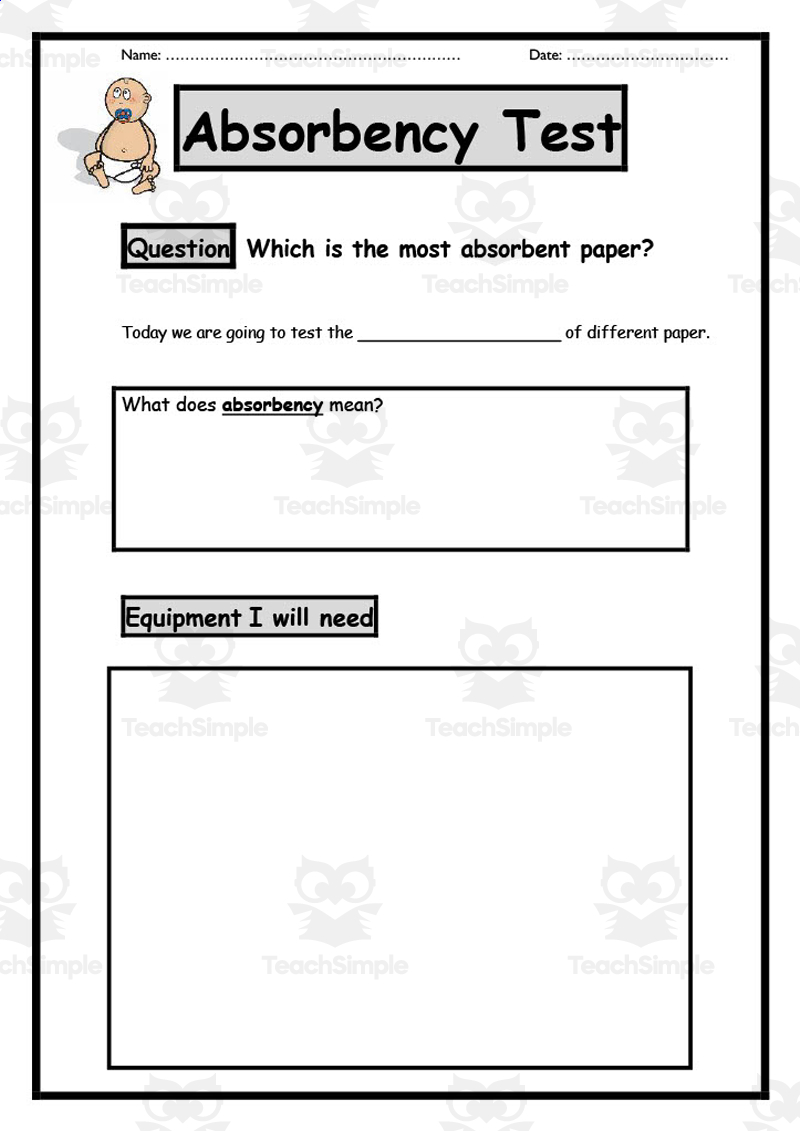
Absorbency Test
Guide students through a hands-on science experiment testing the absorbency of different types of paper, recording predictions, method, results, and a conclusion.




Classroom resources
Engage your ten-year-old students with science experiments that match their curiosity and capacity for understanding. This collection includes activities on electricity, ecosystems, and simple chemical reactions. By incorporating these experiments into your lessons, you can foster a love for science and support their educational growth.
Showing 1–24 of 38 resources

 Show filters
 Guide students through a hands-on science experiment testing the absorbency of different types of paper, recording predictions, method, results, and a conclusion.
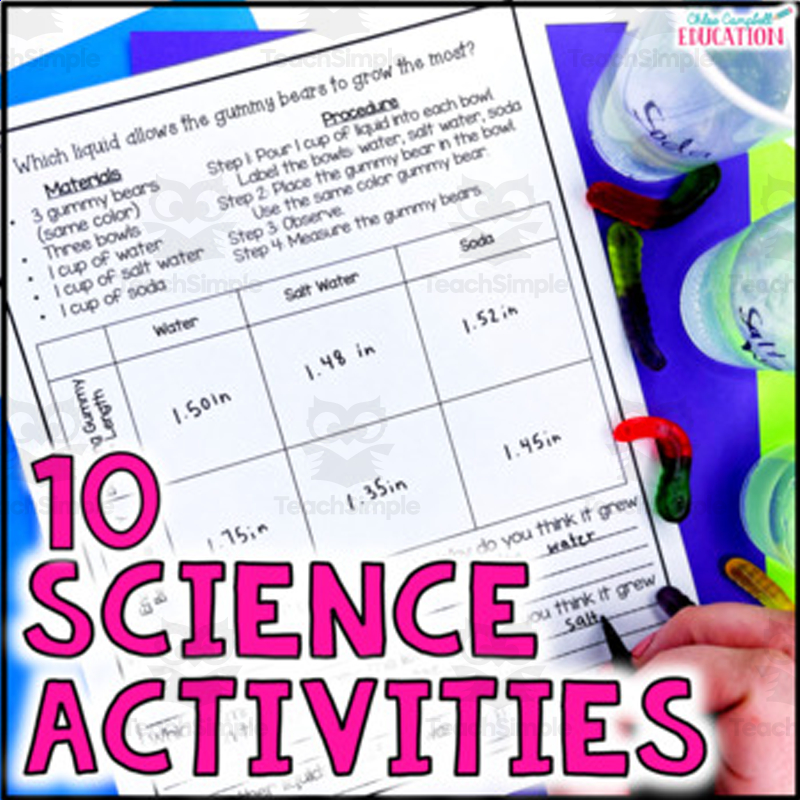
Teach scientific-method thinking through 10 hands-on science experiments using common household materials.

Students predict which balls will need the most and least blowing to begin rolling, then record observations for up to six balls on soft-to-vigorous scales. Two recording pages provide hypothesis, experiment, outcome and conclusion sections. Compare results with predictions and discuss the limits of the test: different balls vary in several properties, so these qualitative observations do not isolate the effect of weight, size or texture alone.
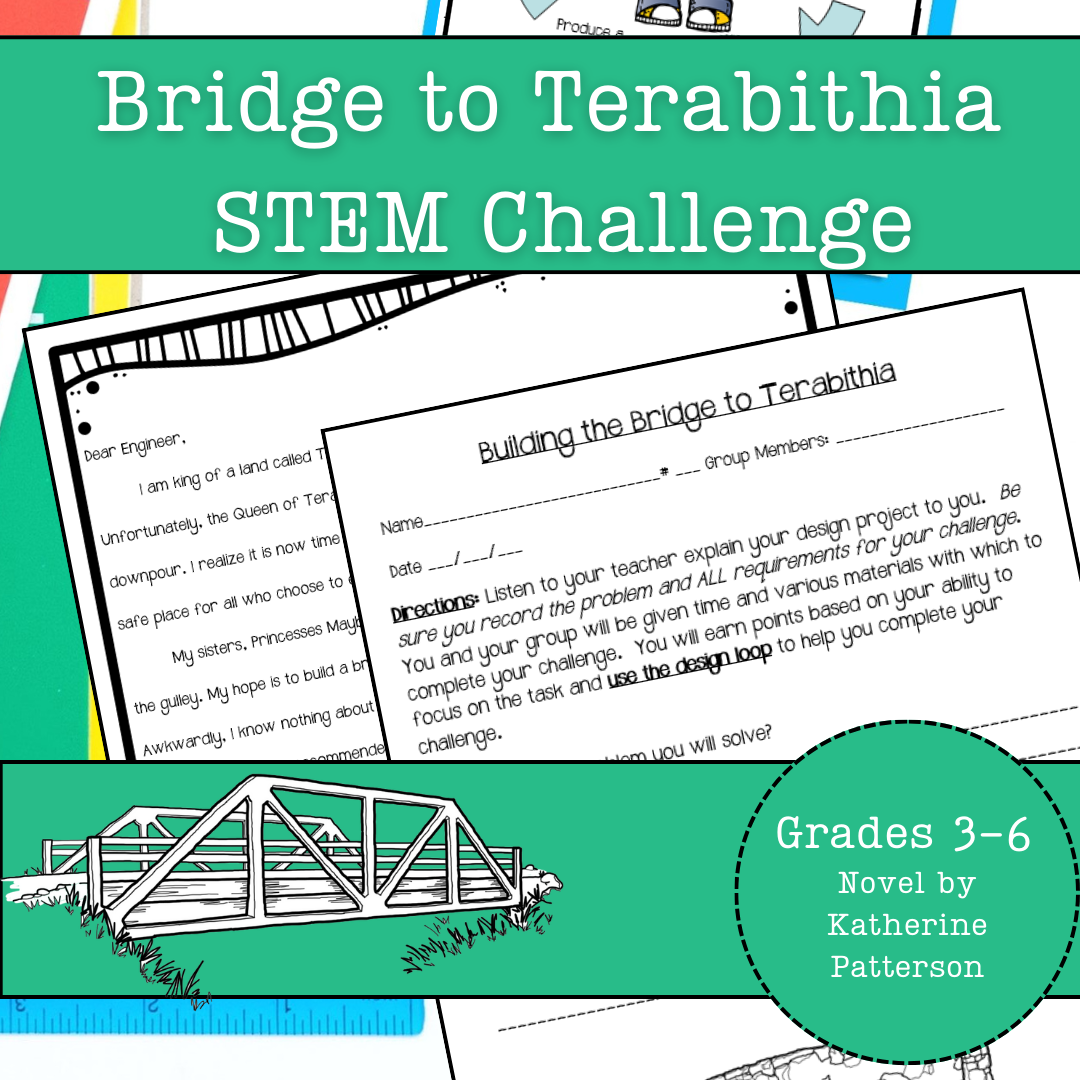
Bring literature to life with this exciting STEM activity inspired by Bridge to Terabithia! This challenge sparks creativity and problem-solving as students plan and construct a bridge for King Jesse as he plans to make entrance to…
With the Design and Technologies book, teachers will be able to explore a range of hands-on concepts and activities for students to complete.
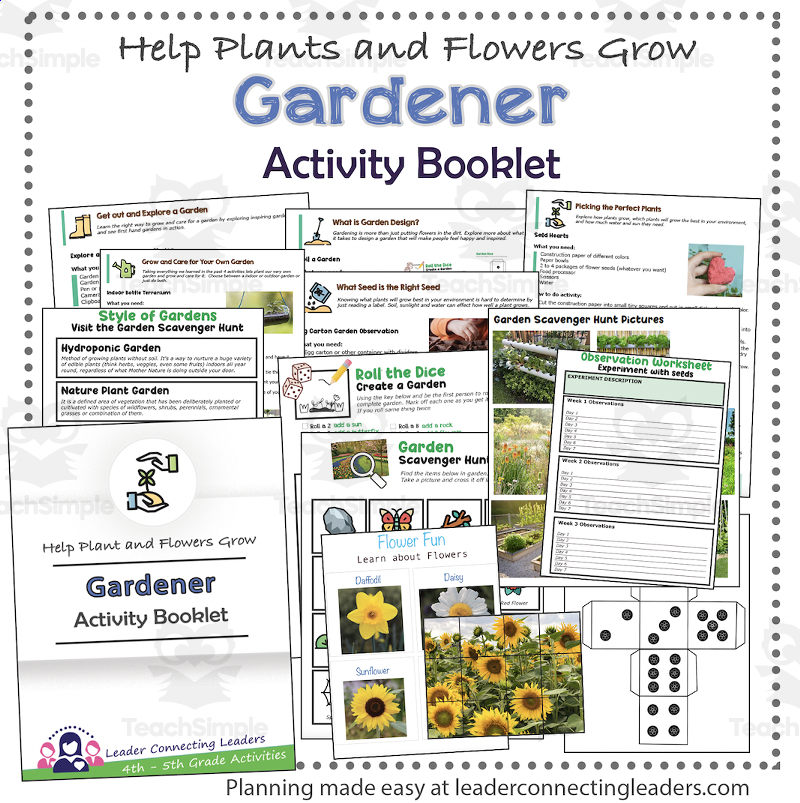
A gardening-themed activity booklet of hands-on, group-based badge-earning activities (originally for Girl Scouts) teaching garden exploration, design, plant care, and observation skills.
Reinforce elementary/upper-elementary science concepts in light and sound (nature of light, reflection, refraction, transparency/opacity, color/spectrum) (grades 4-6) through reproducible worksheets, hands-on activities, and teacher background material.
Reinforce elementary/upper-elementary science concepts in magnetism and electricity (magnetic force/poles, compasses, electromagnets, circuits, conductors/insulators, static and current electricity) (grades 4-6) through reproducible worksheets, hands-on activities, and teacher background material.

In-depth teacher background/theory guide on plant biology (seed anatomy, germination, root systems, photosynthesis) paired with embedded fill-in-the-blank student journal prompts and classroom experiment suggestions, intended to support a plant life-cycle observation unit.
Reinforce elementary/upper-elementary science concepts in planet Earth (composition, crust/plates, minerals, rocks, weathering/erosion, mountain building, soil and soil conservation, earthquakes/volcanoes) (grades 4-6) through reproducible worksheets, hands-on activities, and teacher background material.
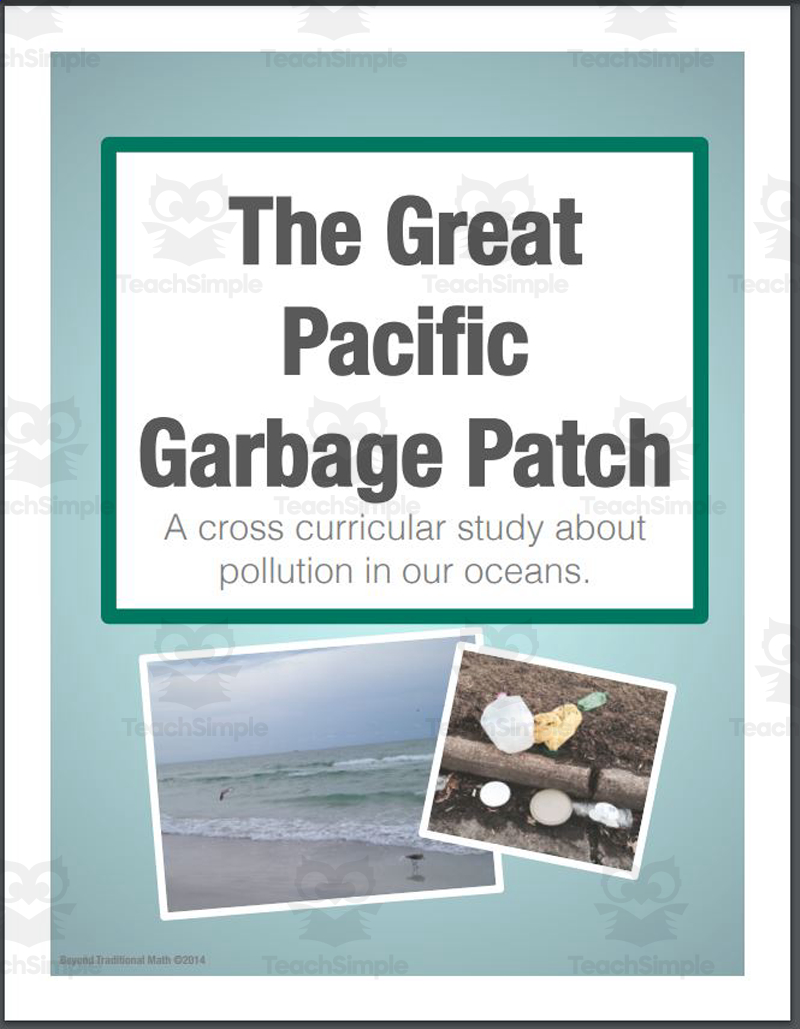
Make Earth Day impactful with this cross-curricular unit focusing on the Great Pacific Garbage Patch. Through reading, writing, math, and science, upper elementary students explore this major but little-known environmental issue.

A STEAM activity combining art, science, and engineering: students build a coin-based spinner and collect/analyze data on how long it spins.
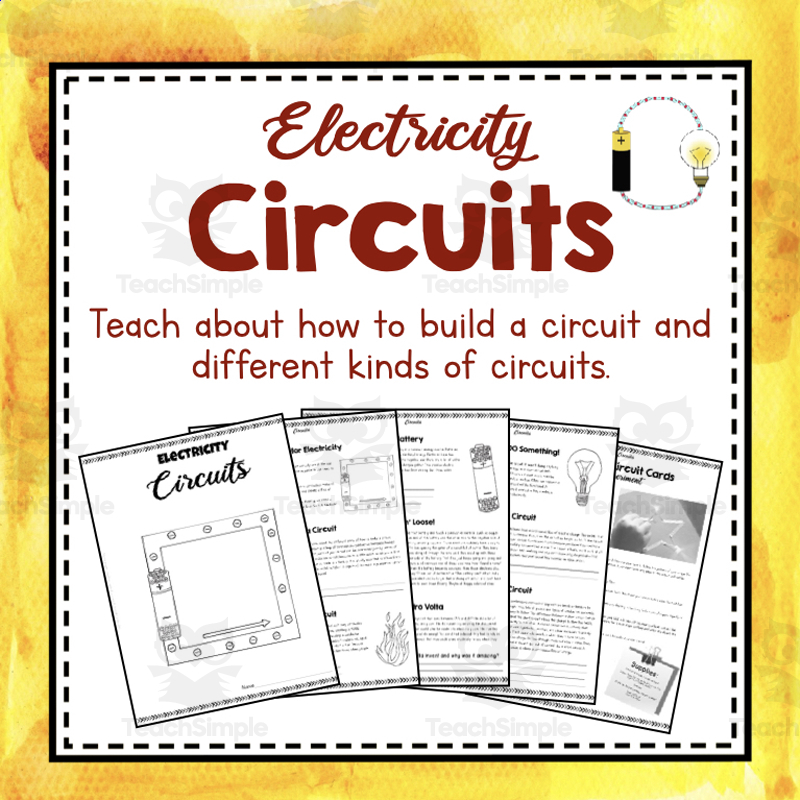
An elementary unit-study booklet teaching how circuits work (components, batteries, short circuits, functional circuits) with a hands-on short-circuit experiment, in matching student and teacher booklet versions.

A full 36-week, 10-unit NGSS-aligned Grade 4 science curriculum built on the 5E instructional model (Engage, Explore, Explain, Elaborate, Evaluate), covering energy, waves, Earth's processes, fossils, plant/animal structures, weathering and erosion, engineering, electricity, and a capstone.
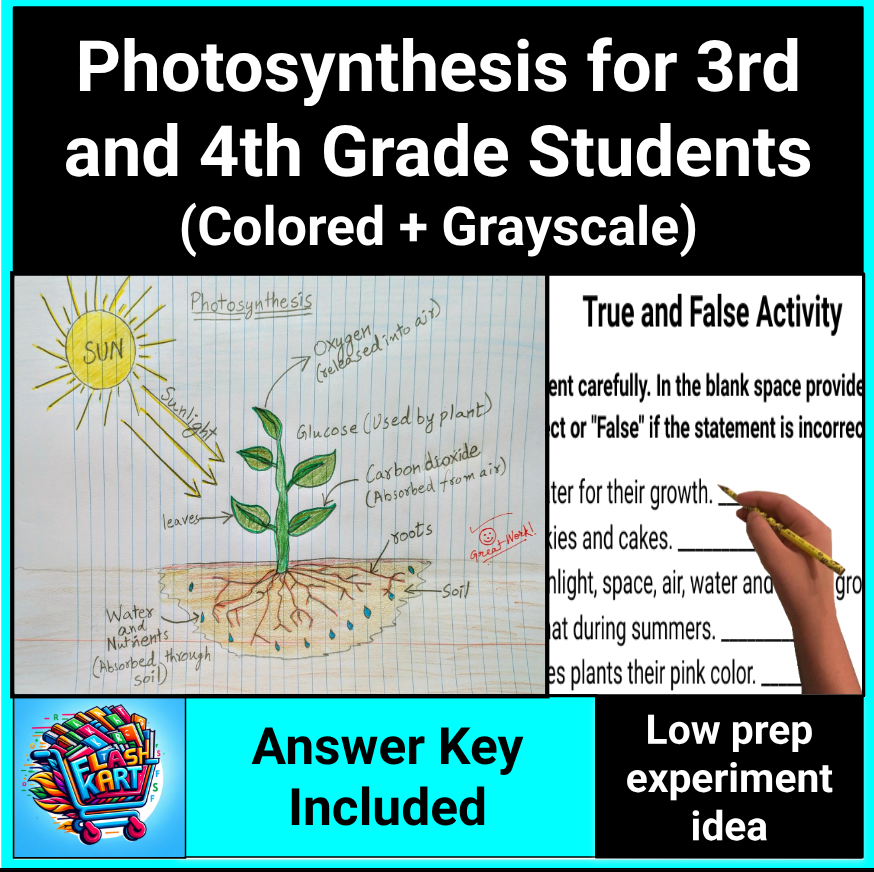
An introductory photosynthesis lesson for elementary science, teaching how plants make food using sunlight, water, and carbon dioxide, paired with a hands-on seed-germination experiment comparing plant growth in light vs. dark.
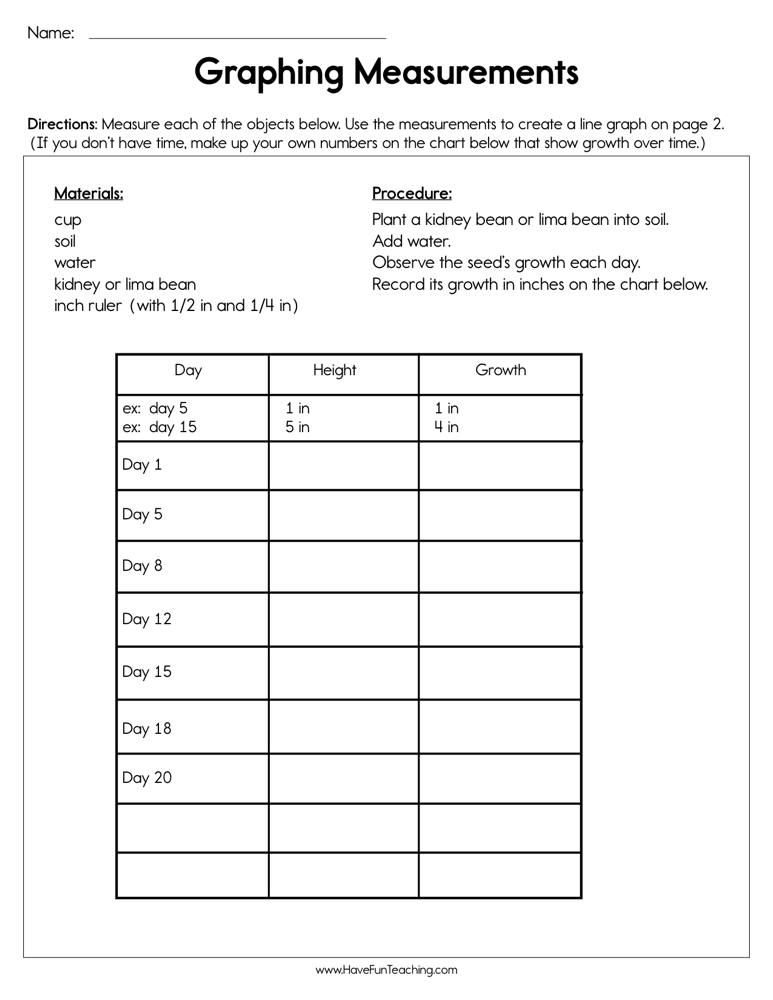
This Graphing Measurements Worksheet is a great way for students to measure the objects below and create a line graph that shows growth over time.
A 90-minute Grade 3-5 science lesson plan teaching what a solar eclipse is and its types via video, demonstration, and a hands-on model activity.
Teach elementary students the basics of static electricity through a set of simple, safe hands-on experiments.
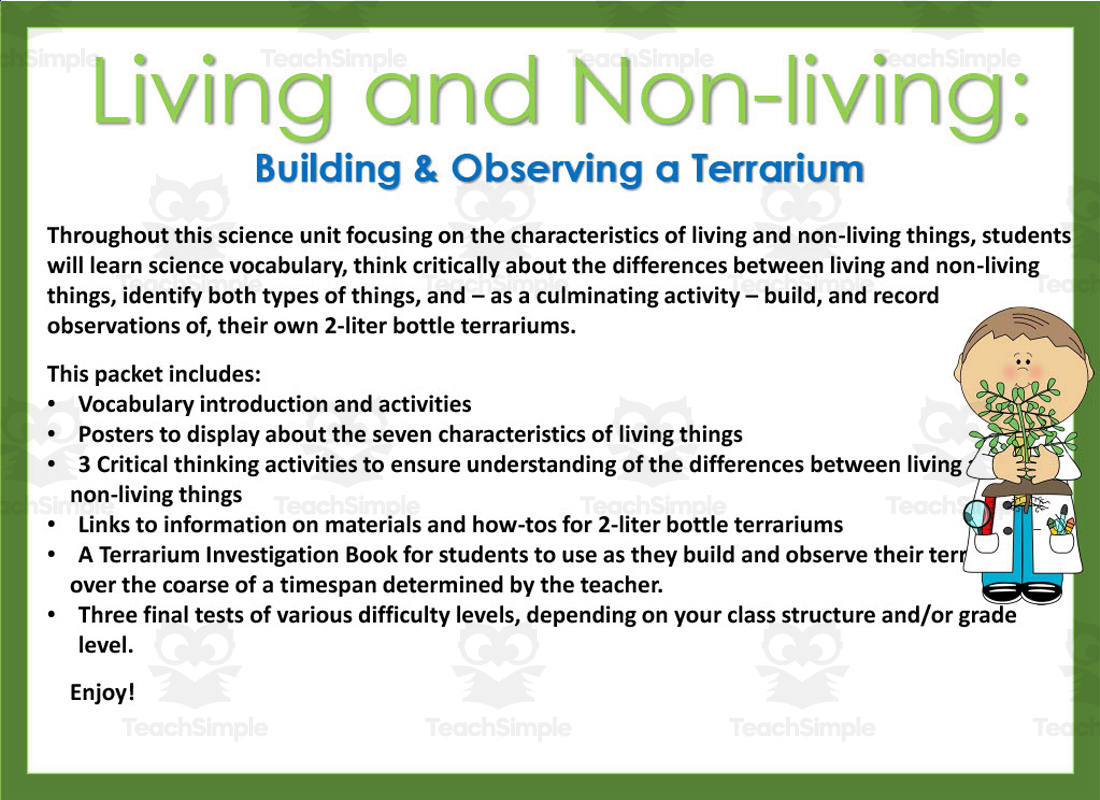
A science unit teaching the characteristics that distinguish living from non-living things through vocabulary work, critical-thinking activities, and a hands-on terrarium-building and observation project.
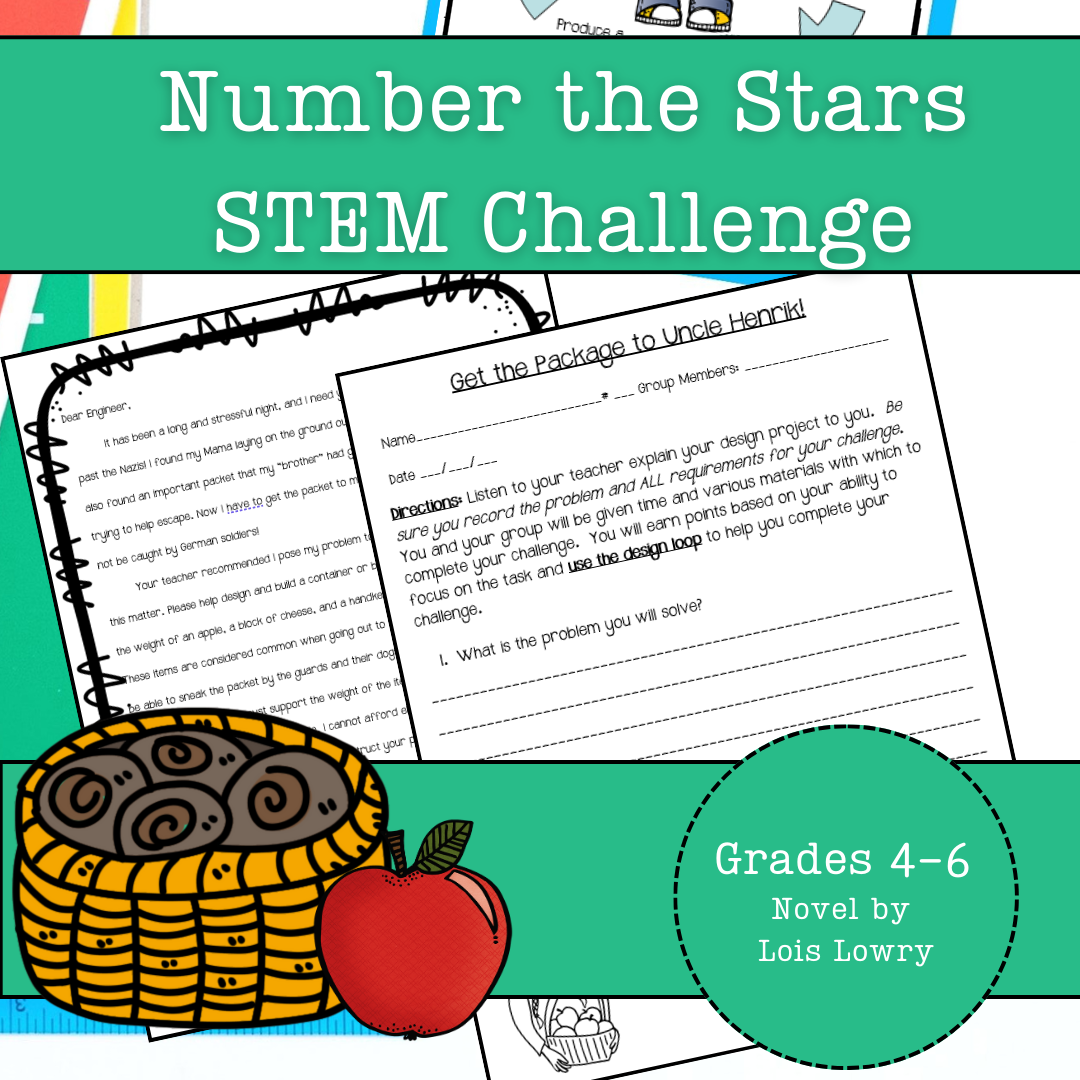
This hands-on activity combines creativity and problem-solving as students design and build a basket for Anne Marie to get the package safely to Uncle Henrik, based on the novel Number the Stars!
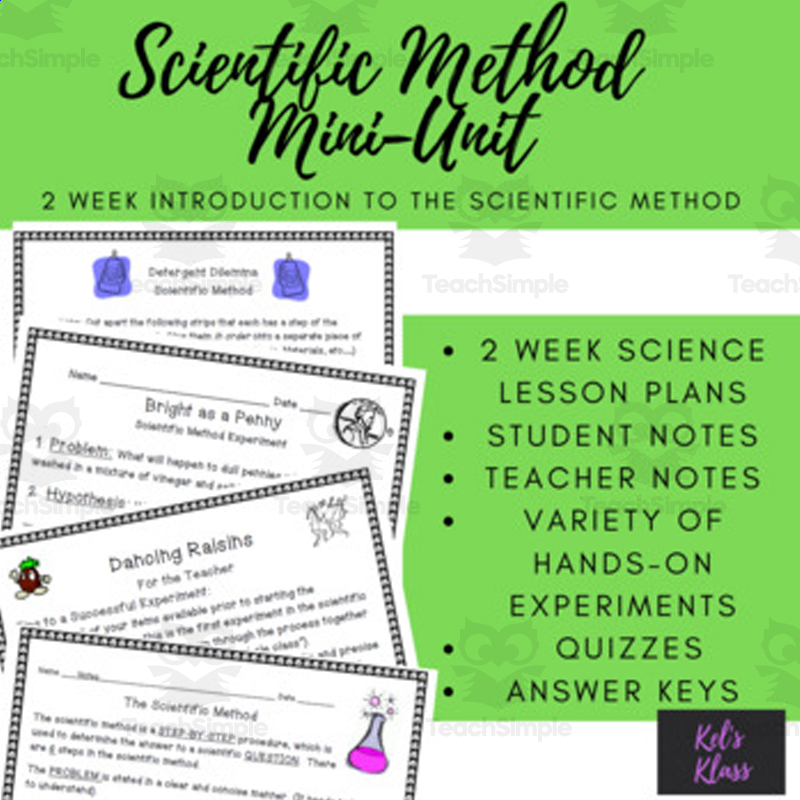
Two-week mini-unit introducing the scientific method and science process skills to upper-elementary students through notes, vocabulary, hands-on experiments, a study guide, and a quiz.

A hands-on inquiry science lab where students conduct three experiments (viscosity comparison, floating paperclip, water drops on a penny) to discover the properties of water: viscosity, surface tension, and cohesion.

A hands-on science lab that teaches or reviews the scientific method (hypothesis, variables, data collection, conclusion) using a soap-bubble comparison experiment.

Sound Energy Two Lesson Unit: Lesson Plan, Printables, Powerpoint and Quiz This comprehensive teaching resource introduces the concept of sound energy to grade 4 and grade 5 students. The Sound Energy mini-unit is divided into two distinct lesson plans supplemented with 10 printable worksheets, an animated powerpoint presentation, and…