



3,923 products added recently
Page 62 - Science Lesson Plans
Bring science to life with lesson plans that cover biology, chemistry, physics, and more. These resources offer experiments and interactive lessons to stimulate curiosity. Implement them to foster a deep understanding of scientific principles and a passion for discovery.

 Show filters


I WONDER - How Do Biofuels Help The Planet | Animated Video Lesson
Environmental Science, Earth and Environmental Sciences, Science, Earth Sciences, Grade 4, 5, 6, 7, 8, 9, 10, Lesson Plans, Teacher Tools
Video Introduction An amazing video designed for the students to learn more about STEM. I WONDER - How Do Biofuels Help The Planet | Animated Video Lesson Do you like STEM subjects? what is your favorite one? Have you ever tried to plant a seed? If yes, tell us more about it. Or have you ever tried to invent something? If yes, tell us more about it. And how do you think it will help us? Have you ever seen a microorganism under a microscope? What was it? And how it looked like? Mathematics is a marvelous subject. Let' sharpen our brains and solve some equations. Do you like timetable tricks? What is your favorite one? Do you know how to code? Have you ever created an app or a game before? If yes, how was it like? I WONDER - How Do Biofuels Help The Planet | Animated Video Lesson The video is perfect for encouraging the researching skills for the students, while learning more about this fantastic topic. I WONDER - How Do Biofuels Help The Planet | Animated Video Lesson This friendly designed video is suitable for students at school, homeschooling, and as a group activity. Format Available in MP4 format.
Author Educational Voice
Tags How Do Biofuels Help The Planet, How Do Biofuels Help The Planet Video, Biofuels, Biofuel, Biofuels Facts, Biofuels Facts For Kids, Biofuels Video, Biofuels Video For Kids, Environment
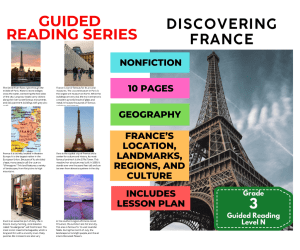
Discovering France: Guided Reading Level N with Lesson Plan
ELA, Resources for Teachers, Reading Comprehension, Reading, Science, Language Development, Vocabulary, Geography, Social Studies, Technology, Grade 2, 3, 4, Worksheets & Printables, Worksheets, Teacher Tools, Centers, Activities, Literacy Readers, Quizzes, Quizzes and Tests, Assessments, Lesson Plans
This Discovering France (level n) guided reading book with lesson plan includes: Guided Reading Color Label (front cover x1) This is a quick way to match the book’s demands to what students can generally handle.. The overall goal is to use the level/color to pick books for several smaller groups. To qualify for a certain level, a student is expected to read a book from that level with about 90–94% accuracy. If a student is consistently accurate and understands, move up a level. If the student is struggling at that level, drop down and add more support. Each student will improve at completely different rates, but it is generally one of the best ways to check progress across the class. DOWNLOAD THE CATALOG TO VIEW ALL GUIDED READING BOOKS AVAILABLE (SORTED LEVELS A-Z) Pre-Reading Question (x1) Teacher asks the prompt aloud, can be while showing the cover or first page. Students share what they already know, or make educated guesses from the cover. Prompt them to use the target vocabulary. Write some of their responses on the board to look back at during the reading. Vocabulary Words (x5) Introduce the five words, best doing it one at a time. Start by saying it, while students repeat and then see if anyone knows what it means before reading further. Read through the meaning and try to briefly connect each word to a picture or gesture so it’s meaningful. Ask students to flip through the book pages and point to where they see each of the vocabulary words. While reading the book pause upon coming across one of the vocab words or read the sentence twice to make sure students understand the word has appeared. Optional: Ask students to raise hands whenever they see/hear one of the new words. Guided Reading Pages (x10) Check the book snapshot (below) for: primary topic - do you need to prep extra reading or intro materials on this? what is taught best - decide on 1-2 bullets to focus on, use the prompt or words provided here for best results. learning goals - what you are checking for students to be able to do after the session, elicit answers using prompts or words provided. key vocabulary (see section above). questions overview - so you know what is coming up and if you need to prep extra materials to assist understanding. Run the lesson You may have already looked at a few of the pages together, but you can show them some of the pictures again first to set meaning. Depending on how much time you have and how familiar your students are with guided reading class, you may want to read the book aloud first with the group first. Students whisper or partner read, while you listen in. If time, do it as a group, one student reading a page each. Use the guided page’s prompts to coach: “Check the picture / does it make sense?” “Point under the words / try the first sound” “Reread the sentence smoothly”. Try to focus more on one student per session (rotating every time), so you can work out if they are ready to move up or need to move down a level. Comprehension Questions (back cover x3) This is your way to check that students didn’t just say the words, but actually understood the text. First, let students answer by pointing to the page/picture and saying a short sentence. After any answer, follow with: “Show me where you found that in the text.” In bigger groups, have partners answer first (10–20 seconds), then call on 2–3 students to share. Differentiation tips: Emerging speakers/struggling readers: oral + pointing On-level: oral in a full sentence Higher: one written sentence or draw + label Book Snapshot Title: Discovering France Genre: Nonfiction Subject: Social Studies (Geography/Culture) Primary Topic: France’s location, landmarks, regions, and culture Estimated Guided Reading Level (A–Z): N What This Book Teaches Best Geography basics about France , including where it is located and how its shape leads to a nickname. Key places and landmarks in Paris , such as the Eiffel Tower, the Seine River, and the Louvre Museum. Regional features of France by describing Provence, the French Alps, the French Riviera, and the Loire Valley. French culture and daily life , especially food traditions like boulangeries, baguettes, and croissants. Modern transportation in France , focusing on the TGV high-speed train and what it allows people to do. Learning Goals Students will identify where France is located and explain why it is called “L’Hexagone.” Students will describe at least two facts about Paris, including details about the Eiffel Tower. Students will explain how the Seine River is described and what people can see from boats on the river. Students will describe characteristics of at least two French regions (Provence, the Alps, the Riviera, or the Loire Valley) using details from the text. Students will describe examples of French culture from the text, including food and museums. Students will explain what the TGV is and how it changes travel across France. Key Vocabulary From the Text landmark — a famous place many people recognize. massive — very big. coastline — the land’s edge next to the sea. lavender — a purple plant/flower that can smell sweet. transportation — ways people travel from place to place. Discussion Prompts Pre-reading question: What do you already know about France, and what would you like to learn? Comprehension questions: Where does the text say France is located, and what nickname do some people give it because of its shape? Comprehension questions: What does the text tell you about the Eiffel Tower (such as when it was built or how tall it is)? Comprehension questions: Choose one region from the book (Provence, the French Alps, the French Riviera, or the Loire Valley) and describe two details the text gives about it. Printing Tips 1. Best Printing Method (Recommended) “Booklet” Printing (Best if Available) If your printer or PDF viewer supports Booklet Printing , use this. Settings to use: Print mode: Booklet Paper size: Letter or A4 (either works) Orientation: Landscape Print on both sides: Yes Flip on: Short edge Scaling: Fit to printable area Booklet subset: First test: Front sides only Then: Back sides only This will automatically: Pair pages correctly Put the cover on the outside Align everything for folding After printing, fold in half and staple along the spine . 2. If “Booklet” Printing Is NOT Available You can still print this correctly with manual duplex printing . Step-by-step: Open the PDF. Choose Print . Set: Orientation: Landscape Pages per sheet: 1 Print on both sides: Yes Flip on: Short edge Print all pages . Because each PDF page already contains two facing book pages, the result will still fold cleanly into a book. Thousands of Cored Education products are included with your TeachSimple membership. Download links and encyclopedia index available here.
Author Cored Education
Rating
Tags Reading Comprehension, Reading Passages, Reading, Guided Reading, Guided Reading Lesson Plan, Guided Reading Activity, Pre-reading, Social Studies, Geography, Technology
I WONDER - How Many Monsoons Are There Each Year | Animated Video
Government, Social Studies, Earth Sciences, Earth and Environmental Sciences, Science, Environmental Science, Grade 4, 5, 6, 7, 8, 9, 10, Lesson Plans, Teacher Tools
Video Introduction An amazing video designed for the students to learn more about natural disasters in different countries. I WONDER - How Many Monsoons Are There Each Year | Animated Video Lesson What do you know about this natural disaster? Do you know in which part of the world this could happen? Have you ever read about the safety misusers that we could have to protect ourselves from this natural disaster? If yes, can you tell us more about them? Can you name other natural disasters? If yes, tell us more about where they are likely to happen? And how frequently? Do you like reading about Geography? What is your favorite country in the whole world? If you are going on a trip where it will be? Which country? What you are going to see there? Does this country has a famous place to visit? Do you like reading about Geology? If yes, what is your favourite topic? I WONDER - How Many Monsoons Are There Each Year | Animated Video Lesson The video is perfect for encouraging the researching skills for the students, while learning more about this fantastic phenomenon. I WONDER - How Many Monsoons Are There Each Year | Animated Video Lesson This friendly designed video is suitable for students at school, homeschooling, and as a group activity. Format Available in MP4 format.
Author Educational Voice
Tags How Many Monsoons Are There Each Year, How Many Monsoons Are There Each Year Video, Monsoons, Monsoon, Monsoons Facts, Monsoons Facts For Kids, Monsoons Video, Monsoons Video For Kids
I WONDER - Can The Weather Help With Pollination | Animated Video
Nature & Plants, Life Sciences, Science, Insects, Grade 6, 7, 8, 9, 10, 11, 12, Lesson Plans, Teacher Tools
Video Introduction An amazing activity designed for the students to learn more about STEM. I WONDER - Can The Weather Help With Pollination | Animated Video Lesson Do you like STEM subjects? what is your favorite one? Have you ever tried to plant a seed? If yes, tell us more about it. Or have you ever tried to invent something? If yes, tell us more about it. And how do you think it will help us? Have you ever seen a microorganism under a microscope? What was it? And how it looked like? Mathematics is a marvelous subject. Let' sharpen our brains and solve some equations. Do you like timetable tricks? What is your favorite one? Do you know how to code? Have you ever created an app or a game before? If yes, how was it like? I WONDER - Can The Weather Help With Pollination | Animated Video Lesson The video is perfect for encouraging the researching skills for the students, while learning more about this fantastic topic. I WONDER - Can The Weather Help With Pollination | Animated Video Lesson This friendly designed video is suitable for students at school, homeschooling, and as a group activity. Format Available in MP4 format.
Author Educational Voice
Tags Can The Weather Help With Pollination, Can The Weather Help With Pollination Video, Weather, Weather Facts, Weather Facts For Kids, Pollination, Pollination Facts, Pollination Video, Pollination Video For Kids
I WONDER - How Can Hydrogen Produce Electricity | Animated Video
Earth Sciences, Earth and Environmental Sciences, Science, Environmental Science, Grade 6, 7, 8, 9, 10, 11, 12, Lesson Plans, Teacher Tools
Video Introduction An amazing video designed for the students to learn more about STEM. I WONDER - How Can Hydrogen Produce Electricity | Animated Video Lesson Do you like STEM subjects? what is your favorite one? Have you ever tried to plant a seed? If yes, tell us more about it. Or have you ever tried to invent something? If yes, tell us more about it. And how do you think it will help us? Have you ever seen a microorganism under a microscope? What was it? And how it looked like? Mathematics is a marvelous subject. Let' sharpen our brains and solve some equations. Do you like timetable tricks? What is your favorite one? Do you know how to code? Have you ever created an app or a game before? If yes, how was it like? I WONDER - How Can Hydrogen Produce Electricity | Animated Video Lesson The video is perfect for encouraging the researching skills for the students, while learning more about this fantastic topic. I WONDER - How Can Hydrogen Produce Electricity | Animated Video Lesson This friendly designed video is suitable for students at school, homeschooling, and as a group activity. Format Available in MP4 format.
Author Educational Voice
Tags How Can Hydrogen Produce Electricity, How Can Hydrogen Produce Electricity Video, Electricity, Electricity Facts, Electricity Facts For Kids, Electricity Video, Electricity Video For Kids, Hydrogen

I WONDER - How Have Humans Contributed To The Greenhouse Effect
Earth Sciences, Earth and Environmental Sciences, Science, Environmental Science, Grade 4, 5, 6, 7, 8, 9, 10, Lesson Plans, Teacher Tools
Video Introduction An amazing video designed for the students to learn more about STEM. I WONDER - How Have Humans Contributed To The Greenhouse Effect | Animated Video Lesson Do you like STEM subjects? what is your favorite one? Have you ever tried to plant a seed? If yes, tell us more about it. Or have you ever tried to invent something? If yes, tell us more about it. And how do you think it will help us? Have you ever seen a microorganism under a microscope? What was it? And how it looked like? Mathematics is a marvelous subject. Let' sharpen our brains and solve some equations. Do you like timetable tricks? What is your favorite one? Do you know how to code? Have you ever created an app or a game before? If yes, how was it like? I WONDER - How Have Humans Contributed To The Greenhouse Effect | Animated Video Lesson The video is perfect for encouraging the researching skills for the students, while learning more about this fantastic topic. I WONDER - How Have Humans Contributed To The Greenhouse Effect | Animated Video Lesson This friendly designed video is suitable for students at school, homeschooling, and as a group activity. Format Available in MP4 format.
Author Educational Voice
Tags How Have Humans Contributed To The Greenhouse Effect, How Have Humans Contributed To The Greenhouse Effect Video, Greenhouse Effect, Greenhouse Effects, Greenhouse Effect Facts, Greenhouse Effect Video
I WONDER - What Is The Tallest Tree In The World | Animated Video Les
Nature & Plants, Life Sciences, Science, Grade 1, 2, 3, 4, 5, 6, 7, 8, Lesson Plans, Teacher Tools
Video Introduction An amazing activity designed for the students to learn more about STEM. I WONDER - What Is The Tallest Tree In The World | Animated Video Lesson Do you like STEM subjects? what is your favorite one? Have you ever tried to plant a seed? If yes, tell us more about it. Or have you ever tried to invent something? If yes, tell us more about it. And how do you think it will help us? Have you ever seen a microorganism under a microscope? What was it? And how it looked like? Mathematics is a marvelous subject. Let' sharpen our brains and solve some equations. Do you like timetable tricks? What is your favorite one? Do you know how to code? Have you ever created an app or a game before? If yes, how was it like? I WONDER - What Is The Tallest Tree In The World | Animated Video Lesson The video is perfect for encouraging the researching skills for the students, while learning more about this fantastic topic. I WONDER - What Is The Tallest Tree In The World | Animated Video Lesson This friendly designed video is suitable for students at school, homeschooling, and as a group activity. Format Available in MP4 format.
Author Educational Voice
Tags Plant, Plants, Tree, Trees, Trees Facts, Trees Facts For Kids, Trees Video, Trees Video For Kids, Plants Video For Kids, Plants Facts
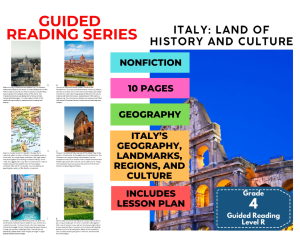
Italy History and Culture: Guided Reading Level R with Lesson Plan
ELA, Resources for Teachers, Reading Comprehension, Reading, Science, Geography, Social Studies, History, Earth and Environmental Sciences, Technology, Grade 3, 4, 5, Worksheets & Printables, Worksheets, Teacher Tools, Centers, Activities, Literacy Readers, Quizzes, Quizzes and Tests, Assessments, Lesson Plans
This Germany: The Heart of Europe (level r) guided reading book with lesson plan includes: Guided Reading Color Label (front cover x1) This is a quick way to match the book’s demands to what students can generally handle.. The overall goal is to use the level/color to pick books for several smaller groups. To qualify for a certain level, a student is expected to read a book from that level with about 90–94% accuracy. If a student is consistently accurate and understands, move up a level. If the student is struggling at that level, drop down and add more support. Each student will improve at completely different rates, but it is generally one of the best ways to check progress across the class. DOWNLOAD THE CATALOG TO VIEW ALL GUIDED READING BOOKS AVAILABLE (SORTED LEVELS A-Z) Pre-Reading Question (x1) Teacher asks the prompt aloud, can be while showing the cover or first page. Students share what they already know, or make educated guesses from the cover. Prompt them to use the target vocabulary. Write some of their responses on the board to look back at during the reading. Vocabulary Words (x5) Introduce the five words, best doing it one at a time. Start by saying it, while students repeat and then see if anyone knows what it means before reading further. Read through the meaning and try to briefly connect each word to a picture or gesture so it’s meaningful. Ask students to flip through the book pages and point to where they see each of the vocabulary words. While reading the book pause upon coming across one of the vocab words or read the sentence twice to make sure students understand the word has appeared. Optional: Ask students to raise hands whenever they see/hear one of the new words. Guided Reading Pages (x10) Check the book snapshot (below) for: primary topic - do you need to prep extra reading or intro materials on this? what is taught best - decide on 1-2 bullets to focus on, use the prompt or words provided here for best results. learning goals - what you are checking for students to be able to do after the session, elicit answers using prompts or words provided. key vocabulary (see section above). questions overview - so you know what is coming up and if you need to prep extra materials to assist understanding. Run the lesson You may have already looked at a few of the pages together, but you can show them some of the pictures again first to set meaning. Depending on how much time you have and how familiar your students are with guided reading class, you may want to read the book aloud first with the group first. Students whisper or partner read, while you listen in. If time, do it as a group, one student reading a page each. Use the guided page’s prompts to coach: “Check the picture / does it make sense?” “Point under the words / try the first sound” “Reread the sentence smoothly”. Try to focus more on one student per session (rotating every time), so you can work out if they are ready to move up or need to move down a level. Comprehension Questions (back cover x3) This is your way to check that students didn’t just say the words, but actually understood the text. First, let students answer by pointing to the page/picture and saying a short sentence. After any answer, follow with: “Show me where you found that in the text.” In bigger groups, have partners answer first (10–20 seconds), then call on 2–3 students to share. Differentiation tips: Emerging speakers/struggling readers: oral + pointing On-level: oral in a full sentence Higher: one written sentence or draw + label Book Snapshot Title: Italy: Land of History and Culture Genre: Nonfiction Subject: Social Studies (Geography/History/Culture) Primary Topic: Italy’s geography, landmarks, regions, and culture Estimated Guided Reading Level (A–Z): R What This Book Teaches Best Describes Italy’s location and physical geography , including its peninsula shape, the Alps, and the Mediterranean Sea. Highlights important historical landmarks and what they represent, such as the Colosseum and the Vatican City/St. Peter’s Basilica. Connects history to art and architecture through Florence and the Renaissance, including the Duomo’s engineering. Explains regional life and land use , including Tuscany’s landscape and agriculture (olive oil, grapes, ingredients for cooking). Shows how Italy blends past and present , from Pompeii and Mount Vesuvius to modern fashion, design, technology, cars, and trains. Learning Goals Students will describe Italy’s location and explain how the text describes its shape. Students will identify key facts about Rome and explain what the text says the Colosseum symbolizes today. Students will describe why Vatican City is important using details from the text. Students will explain why Florence is called the “Cradle of the Renaissance” using text details about arts and learning. Students will describe how Venice’s canals affect transportation in the city. Students will explain one way Italy influences the world today, based on the text’s examples of modern industry and innovation. Key Vocabulary From the Text peninsula — land surrounded by water on three sides. amphitheater — large open building for watching public events. Renaissance — time when art, science, and literature flourished. gondolas — long narrow boats used to travel Venice’s canals. archaeological — about studying the past by examining old remains. Discussion Prompts Pre-reading question: What places or foods do you already connect with Italy? Comprehension questions: What shape does the text say Italy resembles? Comprehension questions: What does the text say the Colosseum could hold in ancient times? Comprehension questions: What does the text say caused the Leaning Tower of Pisa to start tilting? Printing Tips 1. Best Printing Method (Recommended) “Booklet” Printing (Best if Available) If your printer or PDF viewer supports Booklet Printing , use this. Settings to use: Print mode: Booklet Paper size: Letter or A4 (either works) Orientation: Landscape Print on both sides: Yes Flip on: Short edge Scaling: Fit to printable area Booklet subset: First test: Front sides only Then: Back sides only This will automatically: Pair pages correctly Put the cover on the outside Align everything for folding After printing, fold in half and staple along the spine . 2. If “Booklet” Printing Is NOT Available You can still print this correctly with manual duplex printing . Step-by-step: Open the PDF. Choose Print . Set: Orientation: Landscape Pages per sheet: 1 Print on both sides: Yes Flip on: Short edge Print all pages . Because each PDF page already contains two facing book pages, the result will still fold cleanly into a book. Thousands of Cored Education products are included with your TeachSimple membership. Download links and encyclopedia index available here.
Author Cored Education
Rating
Tags Reading Comprehension, Reading Passages, Reading, Guided Reading, Guided Reading Lesson Plan, Guided Reading Activity, Pre-reading, Social Studies, Geography, History
Reducing Your School's Carbon Footprint: Cars, Buses, Bicycles, and Feet Gr. 5-8
Science, Earth and Environmental Sciences, Environmental Science, Grade 5, 6, 7, 8, Teacher Tools, Lesson Plans
Reducing Your School's Carbon Footprint: Cars, Buses, Bicycles, and Feet Gr. 5-8 A unique digital teaching resource for science educators teaching grades 5 to 8. This tool focuses on environmental science and sustainability in promoting awareness about the school's carbon footprint. Features: 30 interactive, ready-to-print pages aimed at informing and motivating students Promotes a sense of responsibility towards the environment among learners Guides students to investigate types of fossil fuels used in schools Fosters collaboration towards reducing energy consumption Covering product life cycle implications on greenhouse gas emissions An introduction to carbon offsetting as an emission reduction strategy Demonstration of how planting trees can help absorb carbon dioxide . This package encourages hands-on learning experiences that allow students autonomy in reducing their school's ecological impact. For examples: The establishment of idle-free zones on school premises. cycle implications on greenhouse gas emissions encapsulate this PDF resource. The role trees play in absorbing CO2 Several practical exercises have been infused into this package including crossword puzzles and word searches . In compliance with Bloom's Taxonomy methodology and STEAM (Science Technology Engineering Art Mathematics) principles for holistic education aims at fostering well-rounded individuals who think critically about our planet’s health. As such resources like 'graphic organizers', calculations exercises revolving around carbon footprints are blended into lesson plans judiciously — contributing extra layers of depth while maintaining engagement levels throughout study sessions. Suitable For: This resource is instrumental for teachers offering comprehensive instructions within classroom settings or homeschooling environments alike. In conclusion, this valuable tool seeks to provide an enjoyable yet informative approach to educating young minds on reducing their school's carbon footprint — thus equipping them with the skills needed for a sustainable future.
Author Classroom Complete Press
Tags Travel, Transportation, Environmental, Science, Carbon Footprint

Animal Science Unit | All About Polar Bears | Learning about Animals
Science, Life Sciences, Animals, Kindergarten, Preschool, Grade 1, 2, Lesson Plans, Teacher Tools
This resource teaches students everything they need to know about polar bears while strengthening kindergarten through second grade literacy skills ranging from science to reading fluency. Strategically designed for differentiated implementation, the materials transform a spotlight on beloved polar bears into applied opportunities to advance academic abilities across ability levels. Over 200 pages of vibrant printables, activities, games and leveled articles break down complex zoological concepts into engaging sequences suited for emerging learners. Teachers may present the full comprehensive unit or customize preferred components matching specific learning objectives. Robust optionality empowers educators to adapt materials for whole group instruction, literacy circles or independent exploration. While vibrant images and maps ignite initial interest, leveled nonfiction passages, customized writing templates and sorting/matching games systematically cement knowledge on evolution, habitats, life cycles and conservation issues. ELA skills strengthen through accountable talk discussion cards, reading comprehension booklets and journaling templates embracing multiple perspectives from field scientists to the bears themselves. Beyond building academic competencies, the heartwarming narratives and activities nurture empathy and environmental stewardship. Students gain confidence in their growing expertise by curating imaginary museums showcasing original plushie designs, sculptures, dioramas and informational brochures about threats facing polar bear populations in increasingly fragile Arctic terrain. This versatile cross-disciplinary resource reflects best practices from project-based learning to social emotional development. Students across learning styles will thrive while collaborating, creating and reflecting around the beloved frigid dwelling bears through authentic, empowering tasks mimicking real world scientific exploration.
Author Simply Schoolgirl
Tags Zoology, Arctic Animals, Blubber, Animal Adaptations, Marine Mammal, Ocean Predator, Winter , Polar Bear Crafts, Polar Bear Activities, Polar Bear Worksheets
I WONDER - What Is Nuclear Energy | Animated Video
Earth Sciences, Earth and Environmental Sciences, Science, Environmental Science, STEM, Grade 6, 7, 8, 9, 10, 11, 12, Lesson Plans, Teacher Tools
Video Introduction An amazing video designed for the students to learn more about STEM. I WONDER - What Is Nuclear Energy | Animated Video Lesson Do you like STEM subjects? what is your favorite one? Have you ever tried to plant a seed? If yes, tell us more about it. Or have you ever tried to invent something? If yes, tell us more about it. And how do you think it will help us? Have you ever seen a microorganism under a microscope? What was it? And how it looked like? Mathematics is a marvelous subject. Let' sharpen our brains and solve some equations. Do you like timetable tricks? What is your favorite one? Do you know how to code? Have you ever created an app or a game before? If yes, how was it like? I WONDER - What Is Nuclear Energy | Animated Video Lesson The video is perfect for encouraging the researching skills for the students, while learning more about this fantastic topic. I WONDER - What Is Nuclear Energy | Animated Video Lesson This friendly designed video is suitable for students at school, homeschooling, and as a group activity. Format Available in MP4 format.
Author Educational Voice
Tags What Is Nuclear Energy, What Is Nuclear Energy Video, Nuclear Energy, Nuclear Energy Facts, Nuclear Energy Facts For Kids, Nuclear Energy Video, Nuclear Energy Video For Kids, Energy
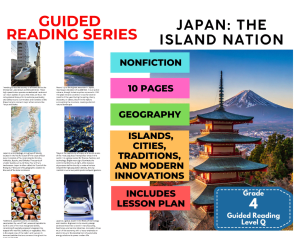
Japan The Island Nation: Guided Reading Level Q with Lesson Plan
ELA, Resources for Teachers, Reading Comprehension, Reading, Science, Geography, Social Studies, History, Earth and Environmental Sciences, Technology, Grade 3, 4, 5, Worksheets & Printables, Worksheets, Teacher Tools, Centers, Activities, Literacy Readers, Quizzes, Quizzes and Tests, Assessments, Lesson Plans
This Japan: The Island Nation (level q) guided reading book with lesson plan includes: Guided Reading Color Label (front cover x1) This is a quick way to match the book’s demands to what students can generally handle.. The overall goal is to use the level/color to pick books for several smaller groups. To qualify for a certain level, a student is expected to read a book from that level with about 90–94% accuracy. If a student is consistently accurate and understands, move up a level. If the student is struggling at that level, drop down and add more support. Each student will improve at completely different rates, but it is generally one of the best ways to check progress across the class. DOWNLOAD THE CATALOG TO VIEW ALL GUIDED READING BOOKS AVAILABLE (SORTED LEVELS A-Z) Pre-Reading Question (x1) Teacher asks the prompt aloud, can be while showing the cover or first page. Students share what they already know, or make educated guesses from the cover. Prompt them to use the target vocabulary. Write some of their responses on the board to look back at during the reading. Vocabulary Words (x5) Introduce the five words, best doing it one at a time. Start by saying it, while students repeat and then see if anyone knows what it means before reading further. Read through the meaning and try to briefly connect each word to a picture or gesture so it’s meaningful. Ask students to flip through the book pages and point to where they see each of the vocabulary words. While reading the book pause upon coming across one of the vocab words or read the sentence twice to make sure students understand the word has appeared. Optional: Ask students to raise hands whenever they see/hear one of the new words. Guided Reading Pages (x10) Check the book snapshot (below) for: primary topic - do you need to prep extra reading or intro materials on this? what is taught best - decide on 1-2 bullets to focus on, use the prompt or words provided here for best results. learning goals - what you are checking for students to be able to do after the session, elicit answers using prompts or words provided. key vocabulary (see section above). questions overview - so you know what is coming up and if you need to prep extra materials to assist understanding. Run the lesson You may have already looked at a few of the pages together, but you can show them some of the pictures again first to set meaning. Depending on how much time you have and how familiar your students are with guided reading class, you may want to read the book aloud first with the group first. Students whisper or partner read, while you listen in. If time, do it as a group, one student reading a page each. Use the guided page’s prompts to coach: “Check the picture / does it make sense?” “Point under the words / try the first sound” “Reread the sentence smoothly”. Try to focus more on one student per session (rotating every time), so you can work out if they are ready to move up or need to move down a level. Comprehension Questions (back cover x3) This is your way to check that students didn’t just say the words, but actually understood the text. First, let students answer by pointing to the page/picture and saying a short sentence. After any answer, follow with: “Show me where you found that in the text.” In bigger groups, have partners answer first (10–20 seconds), then call on 2–3 students to share. Differentiation tips: Emerging speakers/struggling readers: oral + pointing On-level: oral in a full sentence Higher: one written sentence or draw + label Book Snapshot Title: Japan: The Island Nation Genre: Nonfiction Subject: Social Studies (Geography/Culture) Primary Topic: Japan’s islands, cities, traditions, and modern innovations Estimated Guided Reading Level (A–Z): Q What This Book Teaches Best Explains Japan’s geography as an archipelago , naming the four main islands and describing its location off East Asia. Highlights Tokyo as a major metropolitan area , describing its role and features of city life. Describes transportation and technology through the Shinkansen (bullet train), including its speed, safety, and punctuality. Connects landforms and natural features to Japan’s identity by describing Mount Fuji, snow cover, and spring sakura blossoms. Builds understanding of culture and history through Shinto and Buddhism, matsuri festivals, and the Edo period (shoguns, samurai, and castles like Himeji). Learning Goals Students will explain what an archipelago is and name Japan’s four main islands. Students will describe Tokyo’s importance and identify details the text gives about the city. Students will explain how the Shinkansen helps people travel and identify key features the text highlights (such as speed or punctuality). Students will describe Mount Fuji using details from the text, including its height and volcanic history. Students will identify key ideas about Japanese traditions from the text (religions, shrines/torii, cuisine, or festivals). Students will explain how Japan’s climate varies and describe the text’s example of the “snow monkey” in winter. Key Vocabulary From the Text archipelago — a group of islands. metropolitan — related to a very large city area. punctuality — being on time. terraced — built in step-like levels on a hillside. geothermal — heat that comes from inside the Earth. Discussion Prompts Pre-reading question: What places, traditions, or inventions do you expect to learn about in Japan? Comprehension questions: What four main islands does the text name as part of Japan? Comprehension questions: What does the text say the Shinkansen is known for? Comprehension questions: How does the text say the “snow monkey” adapts to cold winters? Printing Tips 1. Best Printing Method (Recommended) “Booklet” Printing (Best if Available) If your printer or PDF viewer supports Booklet Printing , use this. Settings to use: Print mode: Booklet Paper size: Letter or A4 (either works) Orientation: Landscape Print on both sides: Yes Flip on: Short edge Scaling: Fit to printable area Booklet subset: First test: Front sides only Then: Back sides only This will automatically: Pair pages correctly Put the cover on the outside Align everything for folding After printing, fold in half and staple along the spine . 2. If “Booklet” Printing Is NOT Available You can still print this correctly with manual duplex printing . Step-by-step: Open the PDF. Choose Print . Set: Orientation: Landscape Pages per sheet: 1 Print on both sides: Yes Flip on: Short edge Print all pages . Because each PDF page already contains two facing book pages, the result will still fold cleanly into a book. Thousands of Cored Education products are included with your TeachSimple membership. Download links and encyclopedia index available here.
Author Cored Education
Rating
Tags Reading Comprehension, Reading Passages, Reading, Guided Reading, Guided Reading Lesson Plan, Guided Reading Activity, Pre-reading, Social Studies, Geography, History
I WONDER - Where Is The Biggest Zoo In The World | Animated Video
Geography, Social Studies, Animals, Life Sciences, Science, Grade 1, 2, 3, 4, 5, 6, 7, 8, Lesson Plans, Teacher Tools
Video Introduction An amazing video designed for the students to learn more about famous places in different countries. I WONDER - Where Is The Biggest Zoo In The World | Animated Video Lesson Do you like geography?! Let's discover this amazing place and know more about its unique stories. Have you ever visited a unique place or a different country than yours? If yes, tell us about it! If no, tell us what kind of places you would like to visit in the future? Every country has it's own story tell us the story about your country: Where it is located? And when it has been established? I WONDER - Where Is The Biggest Zoo In The World | Animated Video Lesson The activity is perfect for encouraging the researching skills for the students, while learning more about this fantastic place. I WONDER - Where Is The Biggest Zoo In The World | Animated Video Lesson This friendly designed video is suitable for students at school, homeschooling, and as a group activity. Format Available in MP4 format.
Author Educational Voice
Rating
Tags Where Is The Biggest Zoo In The World, The Biggest Zoo In The World, Biggest Zoo In The World Facts, Biggest Zoo In The World Video, Biggest Zoo In The World Video For Kids, Biggest Zoo In The World Facts For Kids
I WONDER - What Are The Seasons Like On Uranus | Animated Video
Space, Earth and Environmental Sciences, Science, Grade 3, 4, 5, 6, 7, 8, 9, Lesson Plans, Teacher Tools
Video Introduction An amazing video designed for the students to learn more about space facts. I WONDER - What Are The Seasons Like On Uranus | Animated Video Lesson Have you ever thought about travelling to space?! Join us with this amazing video about The Moon Ganymede. Can you name any three facts about The Moon Ganymede? How amazing is space! Let's discover some amazing facts about planets and moons! Do you know that we have two kinds of planets in our solar system? Can you name the planets based upon their core type? I WONDER - What Are The Seasons Like On Uranus | Animated Video Lesson The video is perfect for encouraging the researching skills for the students, while learning more about the fantastic space. I WONDER - What Are The Seasons Like On Uranus | Animated Video Lesson This friendly designed video is suitable for students at school, homeschooling, and as a group activity. Format Available in MP4 format.
Author Educational Voice
Rating
Tags What Are The Seasons Like On Uranus, Uranus, Uranus Facts, Uranus Video, Uranus Video For Kids, Uranus Facts For Kids, Uranus Seasons, Uranus Seasons Facts, Uranus Seasons Video
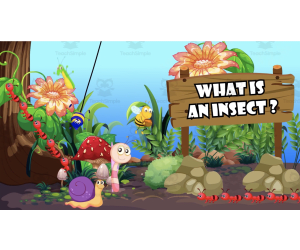
What is an Insect? | Animated Insect Video Lesson
Science, Life Sciences, Insects, Grade 3, 4, 5, 6, Lesson Plans, Teacher Tools
Teaching Resource: What is an Insect? | Animated Insect Video Lesson Description: An animated video lesson that provides comprehensive information on insects. Ideal for 3rd to 6th graders studying Science, especially the sub-topic of insects. Format: Single MP4 file Detailed Information This 11-minute science video lesson takes a simple yet educational approach to teaching students about different types of insects, their characteristics, and their roles in the ecosystem. The use of easy language and engaging visuals makes this resource extremely accessible to early adolescent learners. Purpose & Use Educational Tool: This video can be used as an introduction or review aid during whole-group instruction in any learning environment. It fits seamlessly into both public school settings and individual homeschooled curriculums where a focus on Science concepts is essential. Homeschooling Aid: Teachers have found success assigning this resource as homework reinforcement, lending students the opportunity to learn at their own pace from home. Catalyst for Group Discussions: Its versatility shines during small group discussions where each student can discuss what they learned from the video - promoting peer interactions and enhancing overall comprehension. In conclusion, "What is an Insect? | Animated Inject Video Lesson" greatly enriches a teacher's resources by combining simplicity with depth. The utilization of visual learning strategies through animation not only keeps it interesting but also ensures effectual understanding among students regardless of their academic level. This resource effortlessly manages to make learning both fun and informative!
Author Educational Voice
Tags Insect Characteristics, Ecosystem Roles, Science Curriculum, Animated Video Lesson, Interactive Learning
I WONDER - What Is Uranus Made Out Of | Animated Video Lesson
Space, Earth and Environmental Sciences, Science, Grade 5, 6, 7, 8, 9, 10, 11, Lesson Plans, Teacher Tools
Video Introduction An amazing video designed for the students to learn more about space facts. I WONDER - What Is Uranus Made Out Of | Animated Video Lesson Do you like reading about space? If yes, what is your favorite topic? What do you know about our solar system? What is the smallest planet in our solar system? What is the biggest planet in our solar system? What is the hottest planet in our solar system? And what is the coldest one? Do you think there are aliens? If yes, what do you think they look like? What do they eat and how they speak to each other? Where do they live? What is a galaxy? And what is a milky way? Have you recently saw a shooting star? If yes, tell us more about it, like when did it happen and where? What is a blackhole? Can a blackhole gets bigger by time? Do you like counting the stars? What do you think a star is made of? I WONDER - What Is Uranus Made Out Of | Animated Video Lesson The video is perfect for encouraging the researching skills for the students, while learning more about the fantastic space. I WONDER - What Is Uranus Made Out Of | Animated Video Lesson This friendly designed video is suitable for students at school, homeschooling, and as a group activity. Format Available in MP4 format.
Author Educational Voice
Tags What Is Uranus Made Out Of, What Is Uranus Made Out Of Video, Uranus, Uranus Facts, Uranus Facts For Kids, Uranus Video, Uranus Video For Kids, Space, Space Facts, Space Video

Lesson 3.1 - Forces
Science, Chemistry, Physics, Grade 6, 7, 8, 9, 10, 11, 12, Lesson Plans, Teacher Tools
Lesson 3.1 - Forces: A Comprehensive Teaching Resource As a versatile tool for educators, Lesson 3.1 - Forces can serve as a supplement to classroom instruction, an interactive module for remote or homeschool settings, or even as a study aid providing extra practice. It covers various types and categories of forces along with their potential effects on objects. Inclusive Learning Materials Forces Notes: This resource aims at leaving no learners behind, providing details in two variations; version A with blank spaces allowing students to jot down key points themselves and version B which is pre-filled for those who may require them. Forces Practice:Alike notes section, the practice too comes in two versions; format A outlined for general learners and format B formatted towards absentees or learners requiring accommodations. Engaging Content Tools 'Whiteboard Practice':This part presents an interactive PowerPoint embedding images and questions about different force types bringing forth not just home revisions but also whole class activities during class sessions. 'Objectives & Starter Questions:' A conclusive addition to the package includes a PowerPoint which offers clear objectives bundled with starter questions prior to each topic discussion. Educational Standards Compatibility:The resource efficiently meets specific state educational standards like Indiana's ICP 3/2016 standards (Integrated Chemistry & Physics). All files compatible across various platforms are provided in both .docx/.pptx (editable)&.pdf (non-editable). Suitable from Grades 6 through 12,the resource optimally enhances both Chemistry and Physics subject matter.experiences. For educators targeting a comprehensive understanding of forces, Lesson 3.1 - Forces is the perfect tool.
Author Integrated Chemistry and Physics
Tags Forces, Interactive Learning, Study Aid, Hands-on Exercises, Student Engagement

Why All Snowflakes Have 6 Sides | Interactive Science Lesson | Micro-Learning Deck
Science, Earth and Environmental Sciences, Environmental Science, Grade 6, 7, 8, Teacher Tools, Lesson Plans
This micro-learning deck is the perfect accessory to your Science instruction! This digital slideshow presents Why All Snowflakes Have 6 Sides. Within this slideshow, you will receive: -Video Lesson -Reading Passage w/ Audio -Close Reading -Quick Write The informational texts included in this resource alongside the informal assessments will keep your students engaged from beginning to end.
Author Teach Me This
Tags Snowflakes, Snow Activity, Close Reading, Science Lesson, Digital

I WONDER - What Is The Great Red Spot | Animated Video Lesson
Space, Earth and Environmental Sciences, Science, Grade 6, 7, 8, 9, 10, 11, 12, Lesson Plans, Teacher Tools
Video Introduction An amazing video designed for the students to learn more about space facts. I WONDER - What Is The Great Red Spot | Animated Video Lesson Do you like reading about space? If yes, what is your favorite topic? What do you know about our solar system? What is the smallest planet in our solar system? What is the biggest planet in our solar system? What is the hottest planet in our solar system? And what is the coldest one? Do you think there are aliens? If yes, what do you think they look like? What do they eat and how they speak to each other? Where do they live? What is a galaxy? And what is a milky way? Have you recently saw a shooting star? If yes, tell us more about it, like when did it happen and where? What is a blackhole? Can a blackhole gets bigger by time? Do you like counting the stars? What do you think a star is made of? I WONDER - What Is The Great Red Spot | Animated Video Lesson The video is perfect for encouraging the researching skills for the students, while learning more about the fantastic space. I WONDER - What Is The Great Red Spot | Animated Video Lesson This friendly designed video is suitable for students at school, homeschooling, and as a group activity. Format Available in MP4 format.
Author Educational Voice
Tags What Is The Great Red Spot, What Is The Great Red Spot Video, The Great Red Spot, The Great Red Spot Facts, The Great Red Spot Facts For Kids, The Great Red Spot Video, The Great Red Spot Video For Kids
I WONDER - What Do Turtles Eat | Animated Video Lesson
STEM, Biology, Life Sciences, Science, Animals, Grade 1, 2, 3, 4, 5, 6, 7, 8, Lesson Plans, Teacher Tools
Video Introduction Animal kingdoms are full of fascinating wonders to learn. This video is designed for the students to learn more about animals in different countries. I WONDER - What Do Turtles Eat | Animated Video Lesson Do you like animals? what is your favorite one? Do you own a pet? If yes, tell us more about it, like what its name? And what do you like most about it? What are the animal kingdoms? Can you write down the characteristics of each animal class like mammals, birds, reptiles, amphibian, fish and mollusks. Do you know that some animals can sing, can you name any of them? What is the largest and the smallest mammal in the world? What is the largest and the smallest bird in the world? What is the largest and the smallest fish in the world? I WONDER - What Do Turtles Eat | Animated Video Lesson The video is perfect for encouraging the researching skills for the students, while learning more about these fantastic animals. I WONDER - What Do Turtles Eat | Animated Video Lesson This friendly designed video is suitable for students at school, homeschooling, and as a group activity. Format Available in MP4 format.
Author Educational Voice
Tags What Do Turtles Eat, What Do Turtles Eat Video, Turtles, Turtle, Turtles Facts, Turtles Facts For Kids, Turtles Video, Turtles Video For Kids, Turtles Food, Turtles Food Facts

Waste: The Global View: Oils Spills Gr. 5-8
Science, Earth and Environmental Sciences, Environmental Science, Grade 5, 6, 7, 8, Teacher Tools, Lesson Plans
Waste: The Global View: Oil Spills Gr. 5-8 - A Comprehensive Teaching Resource Description: A comprehensive teaching resource tailored to grade-level students with content that aligns with State Standards and Bloom's Taxonomy. This resource covers a broad spectrum of environmental science topics related to waste management. About the Product: Centered around understanding the type of waste emanating from events like natural disasters, oil spills, agriculture, and mining. Gives insights on significant subjects such as Hurricane Katrina and the Indian Ocean tsunami to instances like the Exxon Valdez oil spill and even dealing with space junk. Discusses complex topics like agricultural pesticides' implications or radioactive waste from nuclear power plants in a simplified language appropriate for students in grades 5-8. Inclusive of Engaging Student Activities: Educators will find engaging student activities for before and after reading that help reaffirm these concepts further. Includes quizzes for testing understanding Crossword puzzles for reinforcing vocabulary retention Word searches promoting engagement in new word learning along with mini color posters lending visual aid towards learning processes Easy-to-Use Lesson Plan Format : This product comes in an easy-to-use PDF file format which allows educators whether they're teaching small groups at public schools or home-schooling lessons, to effectively teach essential environmental science subjects on 'Waste Management’ using real-life contexts. It can be equally used either as reading homework or for whole class instruction. Invaluable Resource: The 'Waste: The Global View: Oils Spills Gr. 5-8' is an invaluable resource that bridges the critical education gap about environmental science and provides creative ways to engage learners effectively.
Author Classroom Complete Press
Tags PDF
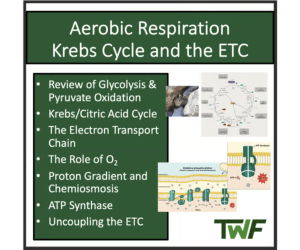
Krebs Cycle and the ETC - Aerobic Cellular Respiration- Biology lesson
Science, Life Sciences, Biology, Grade 11, 12, Teacher Tools, Lesson Plans
Krebs Cycle and the ETC - Aerobic Cellular Respiration - High School Biology lesson Your lesson covers everything from the Krebs cycle to the ETC. In order, the lesson teaches a review of Glycolysis and pyruvate oxidation, the Krebs/Citric Acid Cycle, the Electron Transport Chain, the role of O2, proton gradient and chemiosmosis, ATP Synthase, and uncoupling the ETC. Your lesson includes the teacher and student version of the presentation, four embedded videos, an auto-graded exit ticket, and a student lesson handout so the students can record the notes on a more condensed medium. This lesson is designed to be your go-to resource, whether you're in a traditional classroom or a virtual one. With both a teacher version and a student version, it seamlessly fits into your lesson plans, making learning engaging and adaptable. Assessment made easy We've included an auto-graded Exit Ticket and a quiz with an answer key because I know you don't have an excess of time. I know you don't, because I don't and I know I'll do whatever I can to reduce my grading time. Whether you use PowerPoint or Google Slides, prefer Word or Google Docs, this lesson has you covered. This lesson comes in both Office and Google formats for your convenience. The student version of the presentation has strategically placed blanks for them to fill in as you're teaching. It keeps them active and engaged, encourages discussion, and leaves more time for those "aha" moments.
Author Teach With Fergy
Tags Senior Biology, Biology Lesson, Aerobic Respiration, ETC, Krebs Cycle, Citric Acid Cycle, Pyruvate Oxidation, Proton Gradient, Chemiosmosis
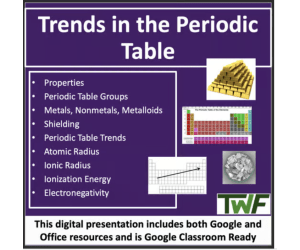
Trends In The Periodic Table - Senior Chemistry lesson
Science, Chemistry, Grade 10, 11, 12, Teacher Tools, Lesson Plans
Trends In The Periodic Table - Senior Chemistry Lesson Your lesson covers the different trends in the periodic table. In order, the lesson teaches about; Properties, Periodic Table Groups, Metals, Nonmetals, Metalloids, Shielding, Periodic Table Trends, Atomic Radius, Ionic Radius, Ionization Energy, and Electronegativity. Your lesson includes the teacher and student version of the presentation, an auto-graded exit ticket, and a student lesson handout so the students can record the notes on a more condensed medium. This lesson is designed to be your go-to resource, whether you're in a traditional classroom or a virtual one. With both a teacher version and a student version, it seamlessly fits into your lesson plans, making learning engaging and adaptable. Assessment made easy We've included an auto-graded Exit Ticket and a quiz with an answer key because I know you don't have an excess of time. I know you don't, because I don't and I know I'll do whatever I can to reduce my grading time. Whether you use PowerPoint or Google Slides, prefer Word or Google Docs, this lesson has you covered. This lesson comes in both Office and Google formats for your convenience. The student version of the presentation has strategically placed blanks for them to fill in as you're teaching. It keeps them active and engaged, encourages discussion, and leaves more time for those "aha" moments.
Author Teach With Fergy
Tags Chemistry Lesson, Periodic Table Groups, Periodic Table Trends, Atomic Radius, Ionization Energy, Electronegativity

Photosynthesis Lesson | Middle School Lesson and Infographic Activity
Science, Basic Science, Earth and Environmental Sciences, Life Sciences, Nature & Plants, Biology, Grade 6, 7, 8, Activities, Projects, Lesson Plans, Teacher Tools, Presentations, Worksheets
Introduce students to the essentials of Photosynthesis and its connection to Cellular Respiration with this ready-to-use science lesson designed for Grades 6–8. This middle school resource provides both foundational knowledge and opportunities for scientific discussion and inquiry-based learning. ✅ Covers Photosynthesis and Cellular Respiration using interactive slides and critical thinking questions ✅ Includes Editable Presentations, Auto-Graded Exit Ticket , Infographic Task, and Student Notes ✅ Aligned to NGSS Standards MS-LS1-5, MS-LS1-6, MS-LS1-7, and MS-LS2-3 ✅ No-Prep Resource with built-in videos and fill-in-the-blank guided notes to support active learning This lesson package is comprehensive and student-friendly. It includes everything needed for a full class session or more, offering a smooth and engaging way to teach key life science concepts. Students will explore how energy from the sun drives life on Earth, how plants process that energy, and how it's transferred through ecosystems. Topics covered in the lesson include: The sun as Earth’s energy source Distribution of energy on Earth The structure and role of chloroplasts The function of chlorophyll Why leaves change color The processes of Photosynthesis and Cellular Respiration ATP as a cellular energy carrier How Photosynthesis supports all life on Earth What’s inside the download: A teacher slideshow with full content and answers A student version of the slideshow with fill-in-the-blank sections An auto-graded 4-question Exit Ticket for quick assessment Two instructional videos embedded within the presentation An infographic-based activity to reinforce learning A printable student worksheet to guide note-taking and discussion Standards alignment: MS-LS1-5 : Students examine how plants rely on air and water to build materials needed for growth, tying into carbon dioxide and water’s role in photosynthesis. MS-LS1-6 : Learners explain how photosynthesis drives the flow of matter and energy in living systems. MS-LS1-7 : The lesson supports modeling how food undergoes chemical reactions in cellular respiration to release energy and support growth. MS-LS2-3 : Students explore how energy and matter cycle between organisms and their environment. The student notes are designed to maximize participation without overwhelming learners with too much writing. Strategic fill-in-the-blank prompts help students focus on key vocabulary and ideas while leaving time for group discussion, exploration, and deeper analysis. These prompts are clearly marked in the teacher copy to make instruction seamless. Whether you’re teaching in person or online, this lesson gives you everything you need to introduce photosynthesis and cellular respiration in a clear, structured, and student-centered way.
Author Teach With Fergy
Rating
Tags Photosynthesis, Cellular Respiration, Biology Lesson, Chloroplast, Plants