



3,923 products added recently
Page 74 - Science Lesson Plans
Bring science to life with lesson plans that cover biology, chemistry, physics, and more. These resources offer experiments and interactive lessons to stimulate curiosity. Implement them to foster a deep understanding of scientific principles and a passion for discovery.

 Show filters


I WONDER - How Long Have Crocodiles Existed | Animated Video
Animals, Life Sciences, Science, History: Ancient, History, Social Studies, History: World, Grade 4, 5, 6, 7, 8, 9, 10, Lesson Plans, Teacher Tools
Video Introduction An amazing video designed for the students to learn more about dinosaurs in different countries. I WONDER - How Long Have Crocodiles Existed | Animated Video Lesson Do you like dinosaurs? what is your favorite one? Do you own a pet? If yes, tell us more about it, like what its name? And what do you like most about it? Do you think that your pet has been evolved from a dinosaur? Can you write down the characteristics of your favourite dinosaur like it's shape, their rivals, where did it use to live and what was their favourite food? What is the largest and the smallest dinosaur that ever found? Why is the T-rex is so famous? Have you ever read any interesting facts about it? Can you name any of the carnivores or herbivores dinosaurs? I WONDER - How Long Have Crocodiles Existed | Animated Video Lesson The video is perfect for encouraging the researching skills for the students, while learning more about dinosaurs. I WONDER - How Long Have Crocodiles Existed | Animated Video Lesson This friendly designed video is suitable for students at school, homeschooling, and as a group activity. Format Available in MP4 format.
Author Educational Voice
Rating
Tags How Long Have Crocodiles Existed, How Long Have Crocodiles Existed Video, Crocodiles, Crocodiles Facts, Crocodiles Video, Crocodiles Facts For Kids, Crocodiles Video For Kids, Dinosaurs, Dinosaur

Reducing Your Own Carbon Footprint: Your Footprint At Home Gr. 5-8
Science, Earth and Environmental Sciences, Environmental Science, Grade 5, 6, 7, 8, Teacher Tools, Lesson Plans
Reducing Your Own Carbon Footprint: Your Footprint At Home Gr. 5-8 Product Description: A unique teaching resource aimed at educating students about global climate change, its effects and the role humans play in it. This particular resource is a slice from "Reducing Your Own Carbon Footprint" named "Your Footprint At Home Gr. 5-8". Main Features: Explanations on greenhouse effect in extensive detail. Promotes critical thinking by making students evaluate everyday energy consumption. Briefs upon how our carbon footprints persist even after waste disposal. Inspires change with ways to implement environmentally friendly resources in daily routines. Bonus Benefits: We provide tools such as graphic organizers to facilitate note-taking ability and creative mapping for better engagement. Your students get access to exciting educational games including crosswords and word searches enhancing interactive learning experience! Educator's Special - An Effective Comprehension Quiz : A comprehension quiz allows educators to measure understanding levels of their students with ease. *Throwable Answer Key* : An added token along serving to verify answers accuracy assuring an all-around learning experience. Our well-crafted product comes ready-to-use, and it aligns perfectly with Bloom’s Taxonomy and STEAM initiatives,. Recommended Grades: 5 through 8. This resource includes 30-pages—all available in a print-friendly PDF format—a fitting addition for teachers seeking engaging ways of conveying environmental science lessons—ideal for whole group lessons, small group activities or even homework assignments! Perfectly suitable for various teaching settings, built with public school teachers and homeschooled students in mind.
Author Classroom Complete Press
Tags Carbon Footprint, Environmental, Science, Reading Passage, Science Quiz
I WONDER - What Did Marie Curie Invent | Animated Video Lesson
Biographies, Social Studies, Inventors, Basic Science, Science, Grade 4, 5, 6, 7, 8, 9, 10, Lesson Plans, Teacher Tools
Video Introduction An amazing video designed for the students to learn more about famous people in different countries. I WONDER - What Did Marie Curie Invent | Animated Video Lesson Do you know this person? How much do you know about him/her? Who is your idol? Why did you choose this person? Tell us more about him/her? Who is your favorite athlete? Or what is your favorite team? Have you recently heard a story about a famous person? Who was this person? Can you tell us more about him/her. Who is your favorite president, king, or queen? Why you chose that person? In your country, who are the most famous people? What did they do? Can you tell us more about them. What is your favorite invention? Who invented it? Who is your favorite artist? What is the most famous thing he/she have done? What is the most enjoyable you have read before? Who wrote it? I WONDER - What Did Marie Curie Invent | Animated Video Lesson The video is perfect for encouraging the researching skills for the students, while learning more about this fantastic place. I WONDER - What Did Marie Curie Invent | Animated Video Lesson This friendly designed video is suitable for students at school, homeschooling, and as a group activity. Format Available in MP4 format.
Author Educational Voice
Rating
Tags What Did Marie Curie Invent, What Did Marie Curie Invent Video, Marie Curie, Marie Curie Video, Marie Curie Video For Kids, Marie Curie Facts For Kids, Marie Curie Inventions, Marie Curie Inventions Video

How do Birds Fly? | Animated Birds Video Lesson
Science, Life Sciences, Animals, Not Grade Specific, Lesson Plans, Teacher Tools
How do Birds Fly? | Animated Birds Video Lesson For educators eager to captivate their students with the fascinating world of avian biology, the How do Birds Fly? animated birds video lesson makes an ideal resource. This unique teaching tool is not grade specific, allowing it to be adapted for a variety of age groups and learning abilities. Ensuring effective learning across multiple educational settings, it can be seamlessly incorporated into both public classroom teachings and homeschooling curriculums. This 11-minute science video tackles the intriguing question - how exactly do birds fly?. Capturing viewers' attention from beginning to end, this engaging animation explores the biological and physical principles that allow birds to take off into the sky. It isn't just a visual stimulus; it’s a comprehensive guide that dives deep into zoology fundamentals while keeping learners actively involved. The video lesson is provided as an MP4 file – an easily accessible format that enables clarity in both graphics and narration. This compatibility paired with its concise runtime makes for effortless integration in synchronous or asynchronous lessons. The group viewing: during class time The individual studying: can be assigned as homework This versatile teaching resource stands apart in its ability to fuse entertainment with education thus making science truly come alive - all without compromising on academic integrity. It can serve various roles within your educational plan: whether you are kick-starting a new topic about birds or recapping previously studied content before tests and assessments – it fits neatly across different parts of your syllabus timeline. In Conclusion 'How do Birds Fly?' Animated Video Lesson offers not just information but also fascination; transforming simple birdwatching into something more profound by imbuing each feathered flight we see around us with scientific significance. Note: Please remember that no singular tool should completely replace traditional methods of teaching- think of such resources as extensions rather than substitutes for carefully planned contextual instruction sessions involving discussions prompts or guided explorations based on this material.
Author Educational Voice
Tags Birds, Flight, Avian Biology, Zoology Fundamentals, Science Education
I WONDER - Do Turtles Have Bones | Animated Video Lesson
STEM, Biology, Life Sciences, Science, Animals, Grade 1, 2, 3, 4, 5, 6, 7, 8, Lesson Plans, Teacher Tools
Video Introduction Animal kingdoms are full of fascinating wonders to learn. This video is designed for the students to learn more about animals in different countries. I WONDER - Do Turtles Have Bones | Animated Video Lesson Do you like animals? what is your favorite one? Do you own a pet? If yes, tell us more about it, like what its name? And what do you like most about it? What are the animal kingdoms? Can you write down the characteristics of each animal class like mammals, birds, reptiles, amphibian, fish and mollusks. Do you know that some animals can sing, can you name any of them? What is the largest and the smallest mammal in the world? What is the largest and the smallest bird in the world? What is the largest and the smallest fish in the world? I WONDER - Do Turtles Have Bones | Animated Video Lesson The video is perfect for encouraging the researching skills for the students, while learning more about these fantastic animals. I WONDER - Do Turtles Have Bones | Animated Video Lesson This friendly designed video is suitable for students at school, homeschooling, and as a group activity. Format Available in MP4 format.
Author Educational Voice
Tags Do Turtles Have Bones, Do Turtles Have Bones Video, Turtles, Turtle, Turtles Facts, Turtles Facts For Kids, Turtles Video, Turtles Video For Kids, Turtles Bones, Turtles Bones Facts

I WONDER - How Do We Measure Wind Speeds | Animated Video Lesson
Earth Sciences, Earth and Environmental Sciences, Science, Grade 4, 5, 6, 7, 8, 9, 10, Lesson Plans, Teacher Tools
Video Introduction An amazing video designed for the students to learn more about famous phenomena in different countries. I WONDER - How Do We Measure Wind Speeds | Animated Video Lesson What do you know about this phenomenon? Where it happens? When it happens? What are the safety measures that we should take to be safe during this phenomenon? Are there any other places in the world that experienced this phenomenon? If yes, tell us more about them. Why do you think it happens? Do you like reading about Geography? What is your favorite country in the whole world? I WONDER - How Do We Measure Wind Speeds | Animated Video Lesson The video is perfect for encouraging the researching skills for the students, while learning more about this fantastic phenomenon. I WONDER - How Do We Measure Wind Speeds | Animated Video Lesson The video is perfect for encouraging the researching skills for the students, while learning more about this fantastic phenomenon. Format Available in a PDF format.
Author Educational Voice
Rating
Tags How Do We Measure Wind Speeds, How Do We Measure Wind Speeds Video, Wind Speeds, Wind Speeds Facts, Wind Speeds Video, Wind Speeds Video For Kids, Wind Speeds Facts For Kids, Wind
I WONDER - How Long Does it Take for a Comet to Orbit The Sun
Space, Earth and Environmental Sciences, Science, Grade 3, 4, 5, 6, 7, 8, 9, Lesson Plans, Teacher Tools
Video Introduction An amazing video designed for the students to learn more about space facts. I WONDER - How Long Does it Take for a Comet to Orbit The Sun | Animated Video Lesson Do you like reading about space? If yes, what is your favorite topic? What do you know about our solar system? What is the smallest planet in our solar system? What is the biggest planet in our solar system? What is the hottest planet in our solar system? And what is the coldest one? Do you think there are aliens? If yes, what do you think they look like? What do they eat and how they speak to each other? Where do they live? What is a galaxy? And what is a milky way? Have you recently saw a shooting star? If yes, tell us more about it, like when did it happen and where? What is a blackhole? Can a blackhole gets bigger by time? Do you like counting the stars? What do you think a star is made of? I WONDER - How Long Does it Take for a Comet to Orbit The Sun | Animated Video Lesson The video is perfect for encouraging the researching skills for the students, while learning more about the fantastic space. I WONDER - How Long Does it Take for a Comet to Orbit The Sun | Animated Video Lesson This friendly designed video is suitable for students at school, homeschooling, and as a group activity. Format Available in MP4 format.
Author Educational Voice
Tags How Long Does It Take For A Comet To Orbit The Sun, How Long Does It Take For A Comet To Orbit The Sun Video, Comet, Comet Facts, Comet Video, Comet Video For Kids, Sun, Sun Facts, Sun Video

I WONDER - How Did Pluto Get So Many Moons | Animated Video Lesson
Space, Earth and Environmental Sciences, Science, Grade 4, 5, 6, 7, 8, 9, 10, Lesson Plans, Teacher Tools
Video Introduction An amazing video designed for the students to learn more about space facts. I WONDER - How Did Pluto Get So Many Moons | Animated Video Lesson Do you like reading about space? If yes, what is your favorite topic? What do you know about our solar system? What is the smallest planet in our solar system? What is the biggest planet in our solar system? What is the hottest planet in our solar system? And what is the coldest one? Do you think there are aliens? If yes, what do you think they look like? What do they eat and how they speak to each other? Where do they live? What is a galaxy? And what is a milky way? Have you recently saw a shooting star? If yes, tell us more about it, like when did it happen and where? What is a blackhole? Can a blackhole gets bigger by time? Do you like counting the stars? What do you think a star is made of? I WONDER - How Did Pluto Get So Many Moons | Animated Video Lesson The video is perfect for encouraging the researching skills for the students, while learning more about the fantastic space. I WONDER - How Did Pluto Get So Many Moons | Animated Video Lesson This friendly designed video is suitable for students at school, homeschooling, and as a group activity. Format Available in MP4 format.
Author Educational Voice
Tags How Did Pluto Get So Many Moons, How Did Pluto Get So Many Moons Video, Pluto's Moons, Pluto's Moons Facts, Pluto's Moons Facts For Kids, Pluto's Moons Video, Pluto's Moons Video For Kids, Pluto

I WONDER - What Animal Group Do Mollusks Belong To | Animated Video
STEM, Animals, Life Sciences, Science, Biology, Grade 1, 2, 3, 4, 5, 6, 7, 8, Lesson Plans, Teacher Tools
Video Introduction Animal kingdoms are full of fascinating wonders to learn. This video is designed for the students to learn more about animals in different countries. I WONDER - What Animal Group Do Mollusks Belong To | Animated Video Lesson Do you like animals? what is your favorite one? Do you own a pet? If yes, tell us more about it, like what its name? And what do you like most about it? What are the animal kingdoms? Can you write down the characteristics of each animal class like mammals, birds, reptiles, amphibian, fish and mollusks. Do you know that some animals can sing, can you name any of them? What is the largest and the smallest mammal in the world? What is the largest and the smallest bird in the world? What is the largest and the smallest fish in the world? I WONDER - What Animal Group Do Mollusks Belong To | Animated Video Lesson The video is perfect for encouraging the researching skills for the students, while learning more about these fantastic animals. I WONDER - What Animal Group Do Mollusks Belong To | Animated Video Lesson This friendly designed video is suitable for students at school, homeschooling, and as a group activity. Format Available in MP4 format.
Author Educational Voice
Tags What Animal Group Do Mollusks Belong To, What Animal Group Do Mollusks Belong To Video, Mollusks, Mollusk, Mollusks Facts, Mollusks Facts For Kids, Mollusks Video, Mollusks Video For Kids

I WONDER - What Is Fast Fashion | Animated Video Lesson
Environmental Science, Earth and Environmental Sciences, Science, Grade 6, 7, 8, 9, 10, 11, 12, Lesson Plans, Teacher Tools
Video Introduction An amazing video designed for the students to learn more about STEM. I WONDER - What Is Fast Fashion | Animated Video Lesson Do you like STEM subjects? what is your favorite one? Have you ever tried to plant a seed? If yes, tell us more about it. Or have you ever tried to invent something? If yes, tell us more about it. And how do you think it will help us? Have you ever seen a microorganism under a microscope? What was it? And how it looked like? Mathematics is a marvelous subject. Let' sharpen our brains and solve some equations. Do you like timetable tricks? What is your favorite one? Do you know how to code? Have you ever created an app or a game before? If yes, how was it like? I WONDER - What Is Fast Fashion | Animated Video Lesson The video is perfect for encouraging the researching skills for the students, while learning more about this fantastic topic. I WONDER - What Is Fast Fashion | Animated Video Lesson This friendly designed video is suitable for students at school, homeschooling, and as a group activity. Format Available in MP4 format.
Author Educational Voice
Tags What Is Fast Fashion, What Is Fast Fashion Video, Fast Fashion, Fast Fashion Facts, Fast Fashion Facts For Kids, Fast Fashion Video, Fast Fashion Video For Kids, Environment, Environment Video For Kids
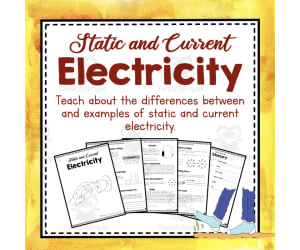
Electricity Unit Study | Static and Current Electricity
Science, Physics, Grade 3, 4, 5, Lesson Plans, Teacher Tools
The Electricity Unit Study | Static and Current Electricity This is a premium teaching resource tailored to teachers and homeschoolers for primarily grades 3-5. In this comprehensive unit, the focus is on the subject of electricity with an emphasis on static and current electricity. About the Study Unit The study unit makes understanding physical science a captivating activity. It delves into differentiating between static and current electricity and other complex concepts like Coulomb's Law, essential for understanding electrostatics. Inspiring Examples & Historical Context Your learners can truly immerse themselves in the absolutely engaging examples provided like how lightning is formed or what comprises an electric circuit. Furthermore, historical contexts relating to Benjamin Franklin add depth to their learning experience. Glossary Support: The inclusion of glossaries inside each booklet enhances word comprehension across various literacy levels. Four Layout Styles: We offer four distinct styles for booklet layout—black/white or color—and two size options—full-size or half-size—to cater to students' preferences, group sizes, or paper-saving objectives. Lively Experiments : Taking theory into practice are two well-outlined experiments that make scientific principles feel manageable and fun. Suitable For Classroom Discussions Or Homework Assignments In addition to being perfect for classroom discussions, these versatile teaching aids may also be used as homework assignments or small group readings. Stimulate individual students to compose their own books using this comprehensive guide thereby fostering creativity! Note For The Teachers To ensure maximum usage of these resources alongside your pre-existing materials preparation methods offered herein do require some preplanning—for instance, when rolling out more extensive projects on physical science. Digital Storing For Convenience The study unit is housed in a convenient 50-page printable PDF format which simplifies storage needs as compared to traditional booklets. This saves time and allows educators efficient access anytime they need without having to carry bulky material around. In conclusion, with little preplanning and resourceful integration, the Electricity Unit Study ensures an interactive and practical learning experience focused on the intriguing world of static and current electricity. It's a comprehensive teaching tool that fosters both educator and student appreciation for the subject matter!
Author Simply Schoolgirl
Tags Electricity, Static Electricity, Current Electricity, Interactive Learning, Hands-on Experiments

I WONDER - How Fast Was The Carontaurus | Animated Video Lesson
History: Ancient, History, Social Studies, History: World, Animals, Life Sciences, Science, Grade 4, 5, 6, 7, 8, 9, 10, Lesson Plans, Teacher Tools
Video Introduction An amazing video designed for the students to learn more about dinosaurs in different countries. I WONDER - How Fast Was The Carontaurus | Animated Video Lesson Do you like dinosaurs? what is your favorite one? Do you own a pet? If yes, tell us more about it, like what its name? And what do you like most about it? Do you think that your pet has been evolved from a dinosaur? Can you write down the characteristics of your favourite dinosaur like it's shape, their rivals, where did it use to live and what was their favourite food? What is the largest and the smallest dinosaur that ever found? Why is the T-rex is so famous? Have you ever read any interesting facts about it? Can you name any of the carnivores or herbivores dinosaurs? I WONDER - How Fast Was The Carontaurus | Animated Video Lesson The video is perfect for encouraging the researching skills for the students, while learning more about dinosaurs. I WONDER - How Fast Was The Carontaurus | Animated Video Lesson This friendly designed video is suitable for students at school, homeschooling, and as a group activity. Format Available in MP4 format.
Author Educational Voice
Rating
Tags How Fast Was The Carontaurus, How Fast Was The Carontaurus Video, Carontaurus, Carontaurus Facts, Carontaurus Video, Carontaurus Facts For Kids, Carontaurus Video For Kids, Dinosaur, Dinosaurs
Space Travel & Technology: The Future of Space Exploration Gr. 5-8
Science, Earth and Environmental Sciences, Space, Common Core, Grade 5, 6, 7, 8, Teacher Tools, Lesson Plans
Space Travel & Technology: The Future of Space Exploration Gr. 5-8 This educational resource provides a vivid picture of the exciting frontiers of space travel and technological advancement in astronomy. It invites students from Grade 5 to Grade 8 to board on a hypothetical shuttle mission to the International Space Station, offering an immersion into the world of scientists, engineers, and astronauts who are at the helm of humanity's journey back to the moon and eventually towards Mars. This teaching tool is particularly suitable for remedial students as it presents complex science concepts about space exploration in simplified language and vocabulary; this makes those concepts more understandable and appealing. It consists primarily of: Reading passages: filled with relevant information, Student activities: engaging tasks designed for hands-on learning experience, TTest preparations:a practical approach for academic progress checks, posters : these could potentially inspire budding astronomers. The material can be appropriately used in various settings such as whole-class group discussions or small group activities—making it versatile for classroom scenarios or home schooling. "As educators utilize this resource in their pedagogy, they play a pivotal role in igniting young minds' curiosity about what unfolds beyond our familiar earthly confines." This educational tool aligns with State Standards, built upon Bloom's Taxonomy principles,and integrated with STEM-driven contents. It aims not only to impart basic subject-matter knowledge but also endorse: Analytical thinking, A solution-oriented mindset,and technological competence—the skills core,the future scientific pioneers need. Note: The product contains one file which is accessible through PDF format—a common file type ensuring usability across different systems, gadgets, and software platforms. Having just one consolidated product file means less clutter,easing navigation within your teaching resources'
Author Classroom Complete Press
Tags PDF

Generative AI Ethics, Deepfakes & Responsible Use Case Studies
Science, Technology, Computer Science, Engineering, Research, Resources for Teachers, Classroom Management, STEM, ELA, Language Development, Grade 6, 7, 8, 9, 10, 11, 12, Worksheets & Printables, Workbooks, Worksheets, Word Searches, Writing Prompts, Teacher Tools, Lesson Plans, Presentations, Outlines, Quizzes and Tests
The complete high school curriculum is prepared and provides an interactive exploration of the topic of ethics in generative AI; deepfakes; responsible use of synthetic media; and provides a thorough introduction to how synthetic media works (to be used by all of our student participants in grades 9-12). The curriculum includes an academic overview of Synthetic Media architecture; multiple chapters for deepfake discussion/analysis; Copyright/Author status; algorithmic bias and epistemic security/provability protocols regarding the use of synthetic media. In addition, there are ten practical, complete, and interactive worksheets for active, individual student participation that have real examples, such as "the Synthesized Senator," "Med-Synthetica Diagnostic Bias," "Voice Cloning," "Influencer Avatars," etc. The students have to complete fill-in-the-blank terminology exercises, scenario analyses, and ethical synthesis prompts that promote critical thinking, media literacy, and digital citizenship skill acquisition. There is also the following in the resource book: (conceptual visual diagrams [mind maps, escalation matrices, process flows], a comprehensive answer key with notes for teachers and benchmarks for mastery) and a detailed teacher guide with pedagogical strategies, assessment tools (rubrics) and teaching protocols. This curriculum is also perfect for English/Language Arts, Social Studies, Computer Science, Digital Literacy, or elective Technology & Ethics classes. This resource is an instant digital download and requires no prep time. Give your students the information they need to be responsible in their use of AI and the topics related to ethics regarding the generative technology called "deepfake." Parents/Schools Appreciate It Because: Essential 21st century skills are being taught through critical thinking, verifying media sources & making ethical choices in dealing with misinformation & threats from deep-fakes and counterfeit media, thereby counteracting those very problems. Students remain engaged while staying motivated to learn by using real-world examples of ethical & responsible use of technology through use of case studies/workheets. The format requires zero preparation & can be easily implemented by teachers; includes lesson plans, case studies, worksheets, visuals, answer keys, teacher’s implementation guide (in pdf format). Responsible use of artificial intelligence & digital stewardship is promoted through use of technology in an aligned manner with modern school standards regarding digital citizenship/social-emotional learning. Materials are flexible in nature so can be used across multiple curriculum areas & for hybrid & remote learning situations. Based on a complete analysis of the submitted PDF, the target audience for this document are Students in grades 9-12 (age 14-18). This project is most suited for high school students enrolled in the following classes: - English/Language Arts or Media Literacy - Social Studies/Civics/Government - Computer Science/Digital Citizenship/Technology and Society - Ethics/Philosophy/STEM/STEAM The majority of the content is age appropriate for students and offers academically challenging material using fictional case studies that are relatable to a student's experience (there are no graphic illustrations or inappropriate material) on real-world current events such as misinformation, bias, copyright, and consent regarding the use of generative AI technology. "Terms & Copyright of Use": This resource has been copyrighted by Syed Hammad Rizvi. Personal use/Single-use in a classroom only. You may NOT change, share or sell this resource. i.e You may NOT post this on the Internet for others to search for/download. If you want to share this resource with other people in your school or district purchase additional copies through Teachsimple. Thank you for your cooperation. This product is provided to you by Syed Hammad Rizvi
Author Creative Book Store
Rating
Tags AIEthics, Deepfakes, GenerativeAI, SyntheticMedia, AI Ethics, DeepfakeAwareness, AIEthicsCurriculum, DeepfakesLessonPlans, GenerativeAIEthics, SyntheticMediaEthics

Discover! Simple Chemistry
Science, Chemistry, Grade 4, 5, 6, Teacher Tools, Lesson Plans
Discover! Simple Chemistry - A Comprehensive Teaching Resource Discover! Simple Chemistry is an invaluable asset for educators seeking a profound, yet easy-to-understand base to teach elementary chemistry concepts to Grade 4, 5, and 6 students. Serving as an all-encompassing guide, this resource is equally beneficial for public school teachers and homeschoolers. The book drastically simplifies complex topics such as: Atomic symbols and structure Compounds and mixtures Matter Acids/Bases Solvents/Solutions Oxidation processes Gases. The product includes a PDF document with 37 printable pages. The sheets not only detail the theoretical aspects but also suggest practical activities to reinforce learning outcomes. Ranging from whole group instructions to individual assignments, suggested discussions stimulate critical thinking in learners. One distinguishing feature of this bundle is the provision of accurate solution keys,, saving educators time in answer preparation while allowing seamless evaluation of students' understanding level. In conclusion, "Discover! Simple Chemistry", with its effective pedagogical strategies offers young learners an appealing method to foster their curiosity about chemistry while simultaneously easing workload off educator's shoulders.
Author Classroom Complete Press
Tags Science Worksheet, Chemistry, Science Review, Periodic Table, Chemistry Test

I WONDER - Can Rocks Float | Animated Video Lesson
Geology, Earth and Environmental Sciences, Science, Earth Sciences, Grade 4, 5, 6, 7, 8, 9, 10, Lesson Plans, Teacher Tools
Video Introduction An amazing activity designed for the students to learn more about STEM. I WONDER - Can Rocks Float | Animated Video Lesson Do you like STEM subjects? what is your favorite one? Have you ever tried to plant a seed? If yes, tell us more about it. Or have you ever tried to invent something? If yes, tell us more about it. And how do you think it will help us? Have you ever seen a microorganism under a microscope? What was it? And how it looked like? Mathematics is a marvelous subject. Let' sharpen our brains and solve some equations. Do you like timetable tricks? What is your favorite one? Do you know how to code? Have you ever created an app or a game before? If yes, how was it like? I WONDER - Can Rocks Float | Animated Video Lesson The video is perfect for encouraging the researching skills for the students, while learning more about this fantastic topic. I WONDER - Can Rocks Float | Animated Video Lesson This friendly designed video is suitable for students at school, homeschooling, and as a group activity. Format Available in MP4 format.
Author Educational Voice
Tags Can Rocks Float, Can Rocks Float Video, Rocks, Rock, Rocks Facts, Rocks Facts For Kids, Rocks Video, Rocks Video For Kids, Floating, Floating Facts
I WONDER - Are All Deserts Hot | Animated Video Lesson
Earth Sciences, Earth and Environmental Sciences, Science, Geography, Social Studies, Grade 4, 5, 6, 7, 8, 9, 10, Lesson Plans, Teacher Tools
Video Introduction An amazing video designed for the students to learn more about famous phenomena in different countries. I WONDER - Are All Deserts Hot | Animated Video Lesson What do you know about this phenomenon? Where it happens? When it happens? What are the safety measures that we should take to be safe during this phenomenon? Are there any other places in the world that experienced this phenomenon? If yes, tell us more about them. Why do you think it happens? Do you like reading about Geography? What is your favorite country in the whole world? I WONDER - Are All Deserts Hot | Animated Video Lesson The video is perfect for encouraging the researching skills for the students, while learning more about this fantastic phenomenon. I WONDER - Are All Deserts Hot | Animated Video Lesson The video is perfect for encouraging the researching skills for the students, while learning more about this fantastic phenomenon. Format Available in a PDF format.
Author Educational Voice
Rating
Tags Are All Deserts Hot, Are All Deserts Hot Video, Deserts, Deserts Facts, Deserts Video, Deserts Video For Kids, Deserts Facts For Kids, Hot Deserts, Cold Deserts, Desert
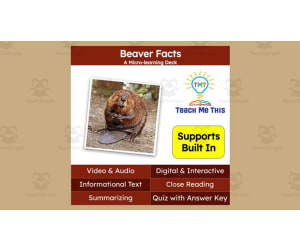
Beaver Facts | Interactive Science Lesson | Micro-Learning Deck
Science, Life Sciences, Animals, Grade 5, 6, 7, 8, Teacher Tools, Lesson Plans
This micro-learning deck is the perfect accessory to your Science instruction! This digital slideshow presents Beaver Facts. Within this slideshow, you will receive: -Video Lesson -Reading Passage w/ Audio -Close Reading -Quick Write The informational texts included in this resource alongside the informal assessments will keep your students engaged from beginning to end.
Author Teach Me This
Tags Beaver Facts, Informational Text, Interactive Science, Predators, Ecosystem
I WONDER - What Is An Algorithm | Animated Video Lesson
STEM, Computer Science, Technology, Science, Grade 6, 7, 8, 9, 10, 11, 12, Lesson Plans, Teacher Tools
Video Introduction An amazing video designed for the students to learn more about STEM. I WONDER - What Is An Algorithm | Animated Video Lesson Do you like STEM subjects? what is your favorite one? Have you ever tried to plant a seed? If yes, tell us more about it. Or have you ever tried to invent something? If yes, tell us more about it. And how do you think it will help us? Have you ever seen a microorganism under a microscope? What was it? And how it looked like? Mathematics is a marvelous subject. Let' sharpen our brains and solve some equations. Do you like timetable tricks? What is your favorite one? Do you know how to code? Have you ever created an app or a game before? If yes, how was it like? I WONDER - What Is An Algorithm | Animated Video Lesson The video is perfect for encouraging the researching skills for the students, while learning more about this fantastic topic. I WONDER - What Is An Algorithm | Animated Video Lesson This friendly designed video is suitable for students at school, homeschooling, and as a group activity. Format Available in MP4 format.
Author Educational Voice
Tags What Is An Algorithm, What Is An Algorithm Video, Algorithm, Algorithm Facts, Algorithm Facts For Kids, Algorithm Video, Algorithm Video For Kids, Coding, Coding Facts, Coding Video

Woodlands - Mini Unit
Science, Life Sciences, Nature & Plants, Biology, Earth and Environmental Sciences, Earth Sciences, Environmental Science, Grade 3, 4, 5, 6, Lesson Plans, Teacher Tools
Woodlands - Mini Unit Woodlands - Mini Unit is a comprehensive teaching resource designed to assist educators in imparting knowledge about deciduous and coniferous woodlands. This instructional material aims to heighten students' understanding of the immense plant and animal biodiversity within these ecosystems. Targeted Audience Aimed at learners in Grade 3-6, this resource incorporates key elements of science disciplines including botany, biology, environmental science, and earth sciences. It simplifies complex topics for educators to easily incorporate into their curriculum. About the Material The material covers an array of topics related like woodland geography, various types of trees along detailed information on leaves and deforestation aspects. A thorough exploration into different woodland creatures from insects to mammals and birds are also covered. Detailed descriptions on plants & fungi roles plus seasonal changes within these habitats are presented comprehensively too. Included Resources The Woodlands - Mini Unit comes with worksheets spanning 13 unique topics available in both PDF and editable PPT formats giving room for flexibility based on teaching style or student needs. An inclusive booklet simplifies reinforcing key points while supporting repetition crucial for learning retention. An engaging PowerPoint presentation accompanies the product package too enhancing dynamic information delivery Evaluation Tools Included: To ensure that key knowledge has been absorbed – there’s crossword sheets included providing a fun element perfect for classroom games or as take-home assignments. In entirety – Woodlands - Mini Unit serves as a versatile tool aiding teachers in stirring up young learners' curiosity through engaging content opening up nature's wondrous woodland world.
Author Mr Gray History
Tags Woodlands, Deciduous, Coniferous, Biodiversity, Ecosystems
I WONDER - How Important Is Ice To Our Planet | Animated Video Lesson
Chemistry, Science, Geology, Earth and Environmental Sciences, Earth Sciences, Environmental Science, Grade 4, 5, 6, 7, 8, 9, 10, Lesson Plans, Teacher Tools
Video Introduction An amazing video designed for the students to learn more about STEM. I WONDER - How Important Is Ice To Our Planet | Animated Video Lesson Do you like STEM subjects? what is your favorite one? Have you ever tried to plant a seed? If yes, tell us more about it. Or have you ever tried to invent something? If yes, tell us more about it. And how do you think it will help us? Have you ever seen a microorganism under a microscope? What was it? And how it looked like? Mathematics is a marvelous subject. Let' sharpen our brains and solve some equations. Do you like timetable tricks? What is your favorite one? Do you know how to code? Have you ever created an app or a game before? If yes, how was it like? I WONDER - How Important Is Ice To Our Planet | Animated Video Lesson The video is perfect for encouraging the researching skills for the students, while learning more about this fantastic topic. I WONDER - How Important Is Ice To Our Planet | Animated Video Lesson This friendly designed video is suitable for students at school, homeschooling, and as a group activity. Format Available in MP4 format.
Author Educational Voice
Tags How Important Is Ice To Our Planet, How Important Is Ice To Our Planet Video, Ice, Ice Facts, Ice Facts For Kids, Ice Video, Ice Video Facts, Our Planet, Our Planet Facts, Our Planet Video For Kids

How Plants Grow | Animated Plants Video Lesson
Science, Life Sciences, Nature & Plants, Not Grade Specific, Lesson Plans, Teacher Tools
This animated plants video lesson is all about how plants grow. Students will love this engaging and interactive video. This video serves as a great introduction or review video for your learners. This is an 11-minute video lesson.
Author Educational Voice
Tags Botanical Studies, Science Lesson, How Plants Grow, Plants Lesson, Science Video

Rice Reading Comprehension Passage - Cored Ed Encyclopedia
ELA, Language Development, Reading Comprehension, Reading, Pre-Reading, Science, Writing, Strategies, Life Sciences, Nature & Plants, Grade 2, 3, 4, 5, Worksheets & Printables, Worksheets, Teacher Tools, Centers, Activities, Writing Prompts, Assessments, Quizzes and Tests, Quizzes, Lesson Plans
This rice reading comprehension includes: Visualization (on the front cover) Start your lesson by taking a minute to think and share something about the topic. Read the script aloud (slowly), perhaps prepare some music or sound effects. Student close their eyes and let their imaginations wander. Students open their eyes, read the question aloud and give them a few minutes to complete. Ask a few students to share or keep answers until the end to compare with what they learn in the passage. Quick pause—thousands of Cored Education products are included with your TeachSimple membership. Download links and encyclopedia index available here. Pre-Reading Trivia Students will write down one thing they already know about the subject and then read five more facts and discuss. These facts are fun, and the students will enjoy learning about the subject before reading more. Give 1 minute for students to write what they already know (no pressure—best guess is fine). Read the five facts together. After each fact, do ask a student for their opinion, was it surprising? Set a purpose by asking students to highlight/underline one fact they want to learn more about during the reading. Reading Passage The text is a high-interest reading passage with set paragraphs, roughly three to four paragraphs long. It contains a variety of themes about the topic, anywhere from history to technology. The passage is between 250 and 350 words in length. First, ask students to look at the headings and see what they’ll learn about today. What do they know about the topic/heading? First read options: Teacher read-aloud (best for support). Partner reading (paragraph by paragraph). While reading, students underline important details, and vocabulary words they think may come up in the questions section. Mixed Questions The first question page contains four multiple-choice questions, each with a choice of four answers, and three written response questions that require a sentence or two from the student. Students complete the mcqs first independently, then review quickly as a class. For the 3 written responses, try to get students giving the answer with some form of evidence: “I think ___ because the text says ___.” If students get stuck, send them back to check the passage. Vocabulary Questions Practice seven key words from the text in this section across two activities. First section is scrambled words where students will unscramble three words given a clue for each. The second section is a word to meaning matching activity. Before starting, have some students read out words they underlined in the passage. Ask students to say the word and read aloud the sentence(s) around each word. Ask students to do scrambled words and the matching exercise in pairs then go through answers as a class. For the scrambled spelling task, get four pairs to come up to the board and write the words for extra practice with the other student reading out the clue. For the matching task, prompt students to give full sentences: “I matched ___ with ___ because ___.” Creative Writing In this question, the student will be required to write a five to eight sentence paragraph on a question related to the topic. Before starting, ask students write down 3 key ideas they are going to include in their piece. Ask students for ideas to share around the class to help those struggling. Pro writing expectations: 5–8 sentences At least 2 facts or details from the passage At least 2 vocabulary words from the previous page Students read their paragraphs while classmates listen for facts and vocabulary words. Extension Activities This page is optional for fast finishers or to take home. There are several activities, each one requiring a different skill. Do some, do none, do all, completely optional - but you will feel reassured knowing every possibility is planned for. Includes summary writting question. Answer Key There are answers for the multiple-choice questions, written response questions have sample answers, vocabulary answers and if there is a summary question then a sample summary will be provided as well. Lesson Plan Included Customized lesson plan for this lesson is included. Lesson Snapshot Title: Rice Genre: Nonfiction (informational text) Subject: Science (Life Science/Agriculture) Primary Topic: How rice was grown and spread Estimated Guided Reading Level (A–Z): R What This Lesson Teaches Best How rice changed from a wild grass into a crop as people “saved the best” seeds and planted them over many seasons. How rice paddies work: shallow flooded fields that help rice grow and can slow weeds while protecting tender plants. How rice spread to new places as traders and travelers carried it along rivers and coasts, with rice learning to fit different climates. How rice has different types (including indica and japonica) and how rice continues changing as farmers and scientists work on challenges like floods, droughts, and plant diseases. Using evidence from the passage to check understanding (some support-page answer choices/answer key items do not match the passage exactly). Learning Goals Explain how people changed rice over time by saving and planting the best seeds each season. Describe what a rice paddy is and how shallow flooding helps rice plants. Identify how rice traveled from Asia to other regions through traders and travelers. Compare indica and japonica using details stated in the text. Describe ways rice continues to change because meals depend on it and it must handle floods, droughts, and diseases. Key Vocabulary From the Text wetlands — watery land where plants grow near rivers. shattering — breaking apart and scattering away. paddies — muddy fields with low banks holding shallow water. indica — a group of long-grained rice types. droughts — long times with very little rain. Discussion Prompts Pre-reading question: What do you already know or wonder about rice and how it grows? Comprehension questions: How did saving the best seeds change rice over many seasons? Comprehension questions: What is a rice paddy, and how does shallow water help rice plants? Comprehension questions: According to the passage, how did rice travel far from home to new places? FULL CATALOG OF DOWNLOAD LINKS AND ENCYCLOPEDIA INDEX HERE
Author Cored Education
Rating
Tags Vocabulary, Reading Comprehension, Reading Passages, Reading, Creative Writing, Reading Strategies, Writing Prompts, Lesson Plans, Life Science, Rice

Solar System: The Outer Planets - FLASH-PC
Science, Earth and Environmental Sciences, Space, Common Core, Grade 5, 6, 7, 8, Teacher Tools, Lesson Plans
The Solar System: The Outer Planets - FLASH-PC FLASH-PC is a premier teaching resource that illuminates key aspects of the outer planets in our solar system. This comprehensive digital tool is ideal for educators, such as public school teachers and homeschoolers. This tool is designed to provide enriching knowledge to students in grades 5 through 8. It includes curriculum-based content featuring carefully crafted reading passages about each planet. 'Before you read' and 'after you read' questions accompany each reading passage to stimulate discussion or individual reflection. Diverse Learning Tools included Within FLASH-PC: Incorporation of printables for visual aids which augment understanding. Vocabulary flash cards introducing crucial terminologies, a helpful tool either for classroom reviews or student use at home. Inclusion of interactive elements such as videos and audios along with text material - catering to different learning styles. All elements adhere closely with Common Core State Standards, ensuring education provided aligns with established guidelines. Furthermore, it's also designed according to Bloom’s Taxonomy principles; assisting teachers in guiding student growth from basic knowledge recall to high-order thinking skills like analysis & evaluation – thus promoting intellectual growth amongst learners. Solar System: The Outer Planets - FLASH-PC Compatibility: This software has hassle-free compatibility with PC platforms providing seamless access across various computing devices; comprising one comprehensive product file easing accessibility & organization while educators prepare their lesson plans on astronomy. Whether desiring large group instruction or planning smaller focus groups lessons or assigning effective homework tasks, FLASH-PC makes learning astronomy an engaging, memorable, and fun experience for both the educator and the student.
Author Classroom Complete Press
Tags Software (PC)