
Reading & language
Introduction to Archetypes Powerpoint
PowerPoint lesson introducing literary archetype theory for a high school ELA unit, covering character, situational, and symbolic archetypes.


Classroom resources
Browse by lesson focus
Choose the topic or kind of practice you need.
Showing 217–240 of 1252 resources

 Show filters
PowerPoint lesson introducing literary archetype theory for a high school ELA unit, covering character, situational, and symbolic archetypes.

A 40-slide interactive PowerPoint presentation (hyperlinked navigation) introducing high-school students to World War 2 from a British perspective: the war's outbreak, the Blitz, effects of air raids, child evacuees, wartime food/rationing, and post-war efforts to prevent future conflict.

Three PowerPoint presentations cover human blood physiology for high school anatomy and physiology classes: a 14-slide deck on platelets and blood physiology, a 14-slide deck on red and white blood cells, and a 12-slide deck on blood types, transfusions, and blood disorders. Across the set, direct-instruction slides — covering hemoglobin's oxygen-carrying role, the three plasma proteins (albumin, globulin, fibrinogen), the five white blood cell types, and ABO blood typing — are accompanied by question-and-answer review slides in the platelet and blood-types decks, such as naming erythropoiesis's controlling hormone or recalling the names of the formed elements. The editable PowerPoint format lets a teacher reorder slides or adjust wording before presenting the three-part unit.
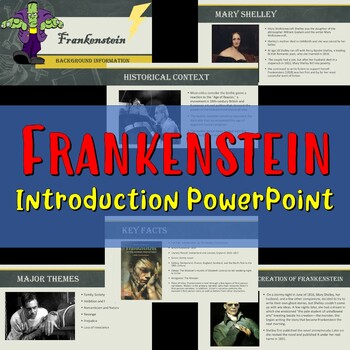
Provide background information on Mary Shelley's novel Frankenstein (author biography, historical/Gothic context, creation story, themes, symbols, and characters) prior to reading or for review.
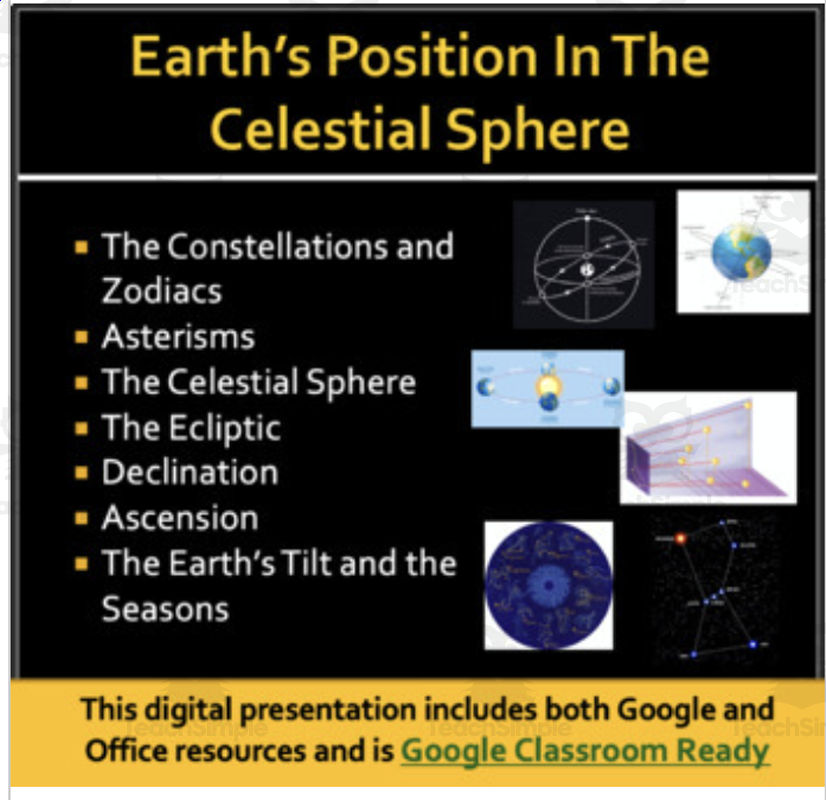
A high-school Earth and Space Science presentation lesson on the celestial sphere: constellations, asterisms, the ecliptic, declination, right ascension, and how Earth's tilt causes the seasons.

A high-school history presentation and matching cloze notes outline teaching the beginnings of industrialization: pre-industrial society, the Agricultural Revolution, the Cottage Industry, the Textile Industry, and the Transportation Revolution (turnpikes, canals, the steam engine, railroads).

A slide-by-slide biography of U.S. Senator Mark Warner (VA) covering personal background, education, career path, and time in the U.S. Senate, including election history and notable votes/positions.
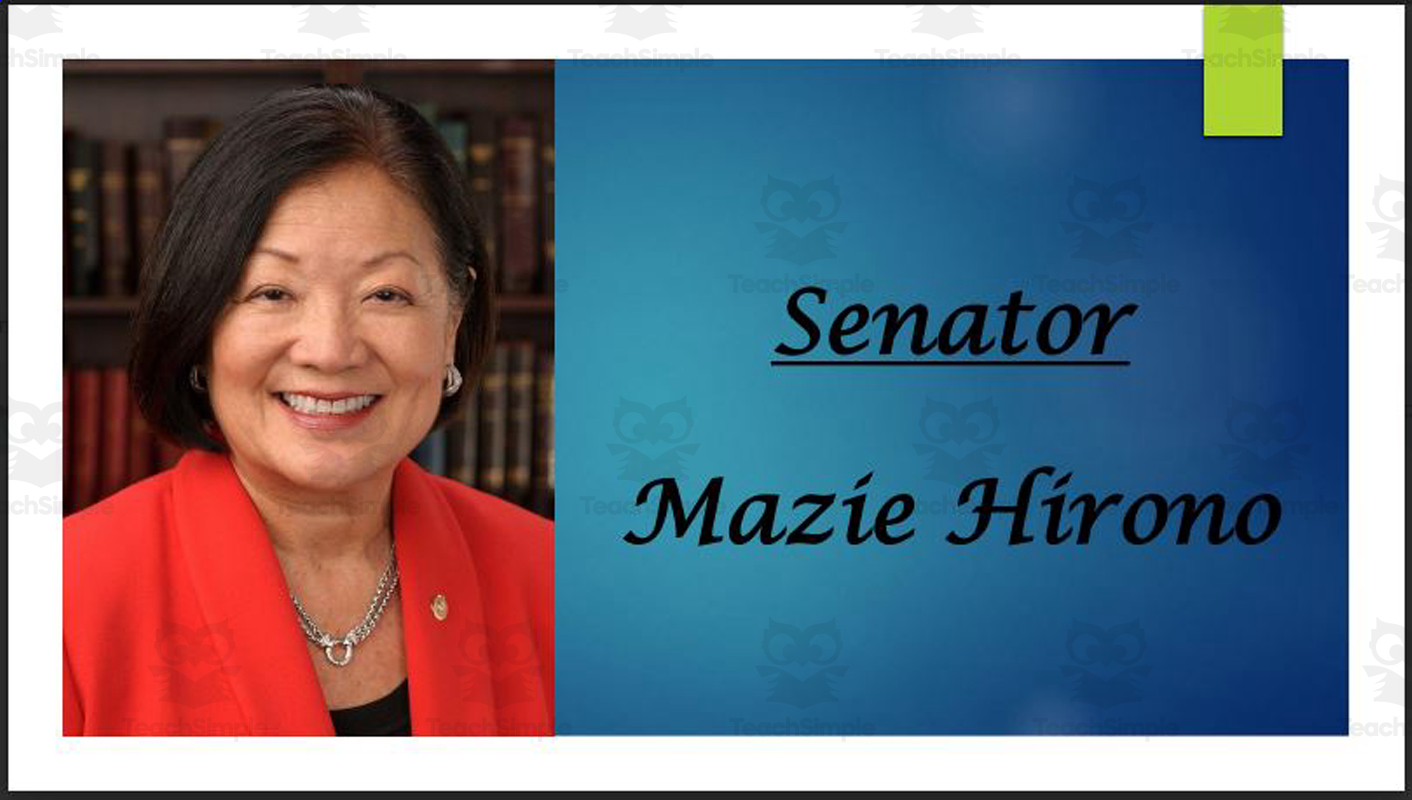
A slide-by-slide biography of U.S. Senator Mazie Hirono (HI) covering personal background, education, career path, and time in the U.S. Senate, including election history and notable votes/positions.
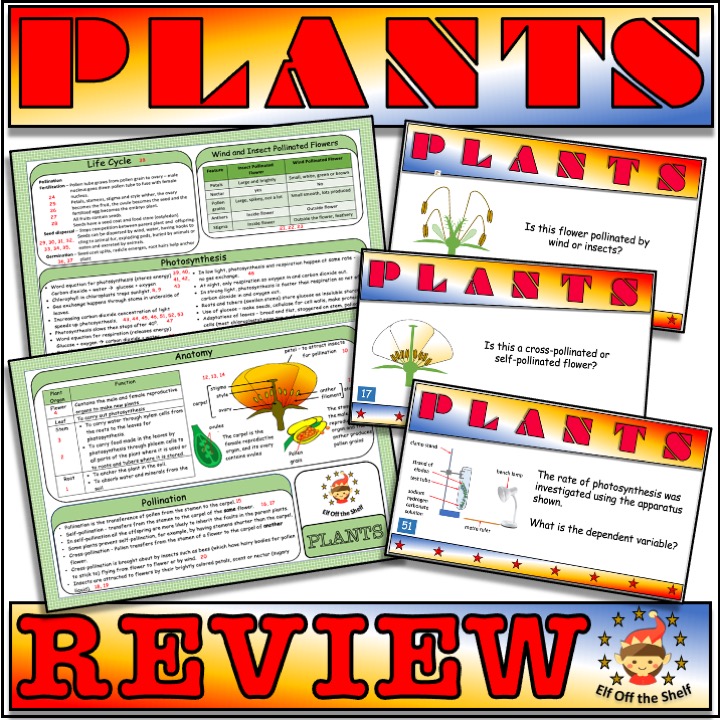
A test-prep lesson package reviewing plant anatomy, pollination, life cycle, and photosynthesis for middle school science, combining a fact sheet, a PowerPoint question/answer review, and a teacher answer key.

A slide-by-slide biography of U.S. Senator Sheldon Whitehouse (RI) covering personal background, education, career path, and time in the U.S. Senate, including election history and notable votes/positions.

18-slide PowerPoint presentation plus a matching fill-in-the-blank skeleton-outline note sheet teaching high school students about the Old Regime and origins of the French Revolution (the Estates system, causes of discontent, the Estates-General, Tennis Court Oath, Storming of the Bastille, the Great Fear).

Teach early contact and colonization dynamics between Native American groups and Europeans, including causes of European exploration and colonial relations.

An 11-slide PowerPoint presentation with a companion fill-in-the-blank outline handout introducing high school students to Romanticism as a literary/artistic movement, contrasted with Neoclassicism and followed by Realism.

A slide-by-slide biography of U.S. Senator Roger Wicker (MS) covering personal background, education, career path, and time in the U.S. Senate, including election history and notable votes/positions.

A high-school Earth Science presentation lesson explaining Earth's internal composition and layers (inner/outer core, mantle, asthenosphere, lithosphere, crust) and the mechanisms behind Earth's magnetic field and plate tectonics.

An introductory notes presentation on the cell for a high school Biology or Anatomy/Physiology course, covering the history of cell discovery, cell theory, prokaryotes vs. eukaryotes, and the plasma membrane.

A slide-by-slide biography of U.S. Senator Marsha Blackburn (TN) covering personal background, education, career path, and time in the U.S. Senate, including election history and notable votes/positions.

A PowerPoint lesson presentation on Excess Post-exercise Oxygen Consumption (EPOC) for GCSE PE anatomy and physiology, explaining oxygen debt and recovery from exercise.

Present the causes of World War II — the Treaty of Versailles' effects on Germany, the Great Depression's global impact, and the rise of fascist dictators — through a slide presentation paired with video content.

A high-school presentation and matching fill-in-the-blank skeleton outline on the foundations of Greek democracy, its reformers (Solon, Cleisthenes, Pericles), and the Greek philosophers (Socrates, Plato, Aristotle), aligned to a World History standard on Judeo-Christian and Greco-Roman traditions.

A slide-by-slide biography of U.S. Senator Mike Rounds (SD) covering personal background, education, career path, and time in the U.S. Senate, including election history and notable votes/positions.

A slide-by-slide biography of U.S. Senator Raphael Warnock (GA) covering personal background, education, career path, and time in the U.S. Senate, including election history and notable votes/positions.
Introduces high school students to the causes of World War I (militarism, alliances, imperialism, nationalism) and the reasons for US entry into the war.

A slide-by-slide biography of U.S. Senator Mike Crapo (ID) covering personal background, education, career path, and time in the U.S. Senate, including election history and notable votes/positions.