Body Systems - Bell Ringers, Class Warm-Ups, and Exit Tickets
Provide 20 days of short daily review activities (bell ringers/warm-ups/exit tickets) covering the digestive, circulatory, and respiratory body systems for a high school biology class.
Classroom resources
Browse by lesson focus
Choose the topic or kind of practice you need.
Provide 20 days of short daily review activities (bell ringers/warm-ups/exit tickets) covering the digestive, circulatory, and respiratory body systems for a high school biology class.
A 20-day set of daily bell-ringer/warm-up/exit-ticket questions, quotes, and videos tied to a Cells unit, used to review each day's lesson at the start or end of class.
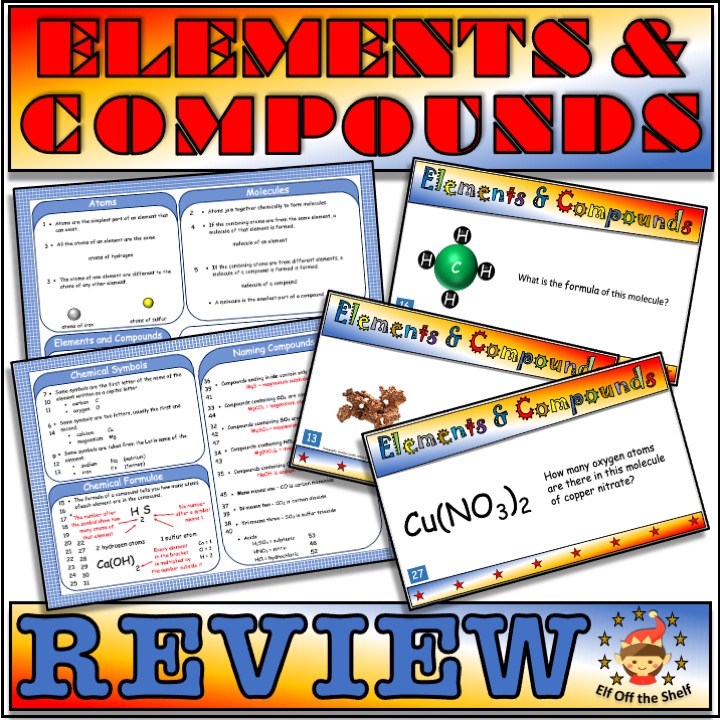
A diagnostic review lesson covering atoms, molecules, elements, compounds, chemical symbols/formulae, and naming compounds, used to check understanding after a module or before testing.
A high school physics lesson teaching refraction, index of refraction, and Snell's Law, including finding the critical angle.
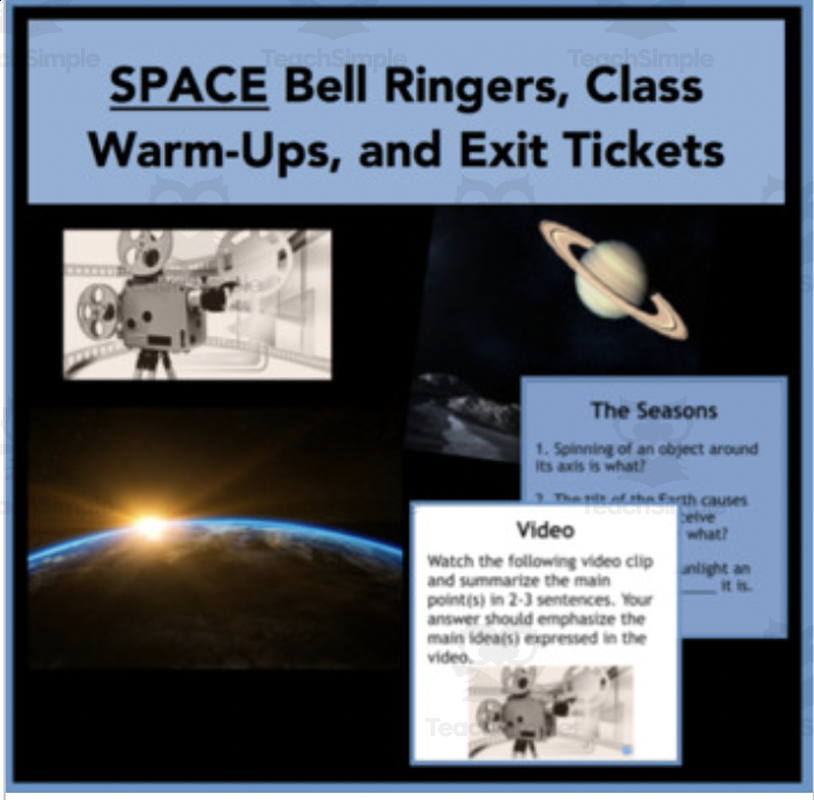
A recurring daily warm-up/exit-ticket system for a space/astronomy science unit, used to review prior lessons and build a review-and-focus classroom routine.
A multi-file resource package teaching the mathematical/historical concept of the Golden Ratio and Fibonacci numbers, connecting math to art, nature, and architecture, via a slideshow, student guide, and project materials.
A social-emotional-learning lesson teaching students the difference between reacting and responding, building self-control and impulse-control skills.
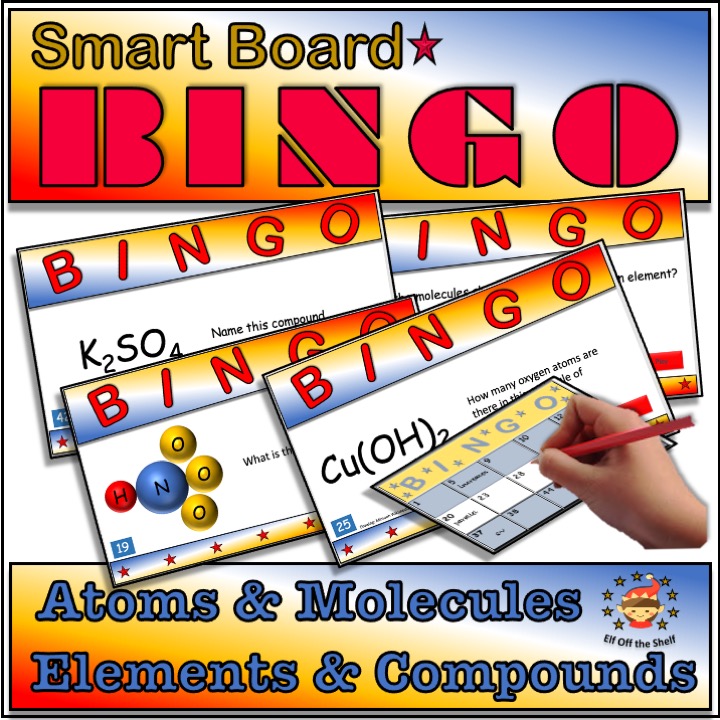
A bingo-format review game covering atoms, molecules, elements, compounds, chemical symbols, formulae, and naming compounds.
A digital micro-learning informational-text lesson about Stonehenge, teaching vocabulary and reading comprehension through close reading, matching, and summarizing activities.
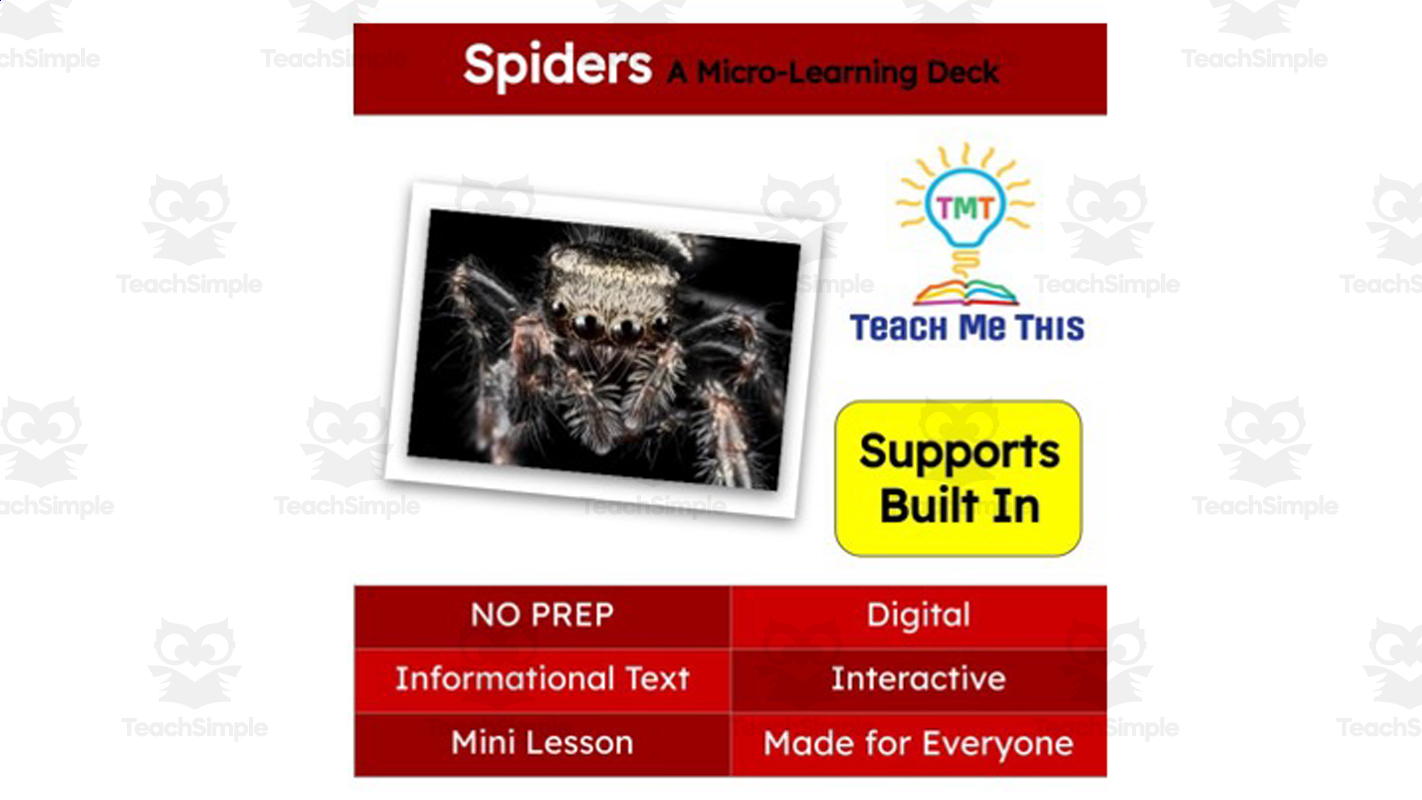
An informational micro-lesson slideshow introducing spiders for middle/high school science classes.
Deliver an interactive digital slideshow lesson about dolphins combining a video, reading passage, close reading, and writing activities.
Deliver a micro-learning interactive lesson teaching about the world's deepest volcanic (hydrothermal) vents and the marine life around them, through a reading passage, vocabulary, and comprehension activities.
A digital micro-learning deck of daily morning-meeting mini-lessons on grit, growth mindset, and inspiration, each pairing a video and/or quote with reflection prompts.
A slide-based lesson plus a companion worksheet teaching students how to recognize and prevent common kitchen hazards (falls, burns, cuts, shocks, poisoning, choking).
A multi-day classroom government-role simulation in which student groups govern a zombie-apocalypse 'Quarantine Zone,' exploring core government functions (common good, vital services, rule of law, safety) through escalating crisis events.
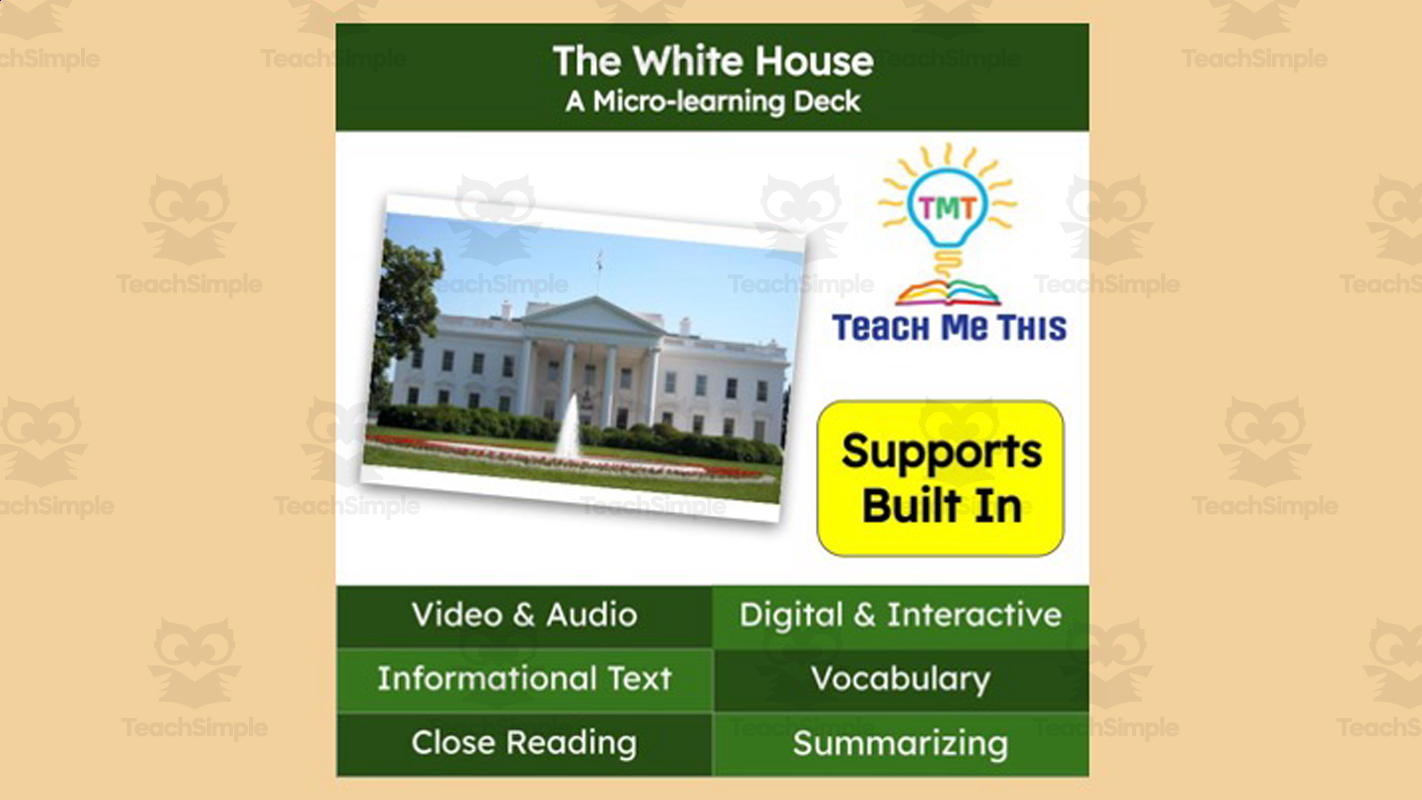
Deliver a micro-learning interactive lesson teaching the history and key rooms/facts of the White House through a reading passage, vocabulary, and comprehension activities.
Teach middle school art students the difference between raster/bitmap and vector digital images, then guide them through creating a self-portrait in vector art style.
Introduce high-school students to citing textual evidence from fiction using a signal-phrase/quotation/citation format, then apply it through a scavenger-hunt activity.
Psychology unit on memory and cognition covering the three types of memory (sensory, short-term, long-term), chunking, the encoding/storage/retrieval process, and case studies such as Clive Wearing.
A lesson guiding art students through planning and creating pixel-art backgrounds/sprites for a video game they are designing, with an assessment rubric.
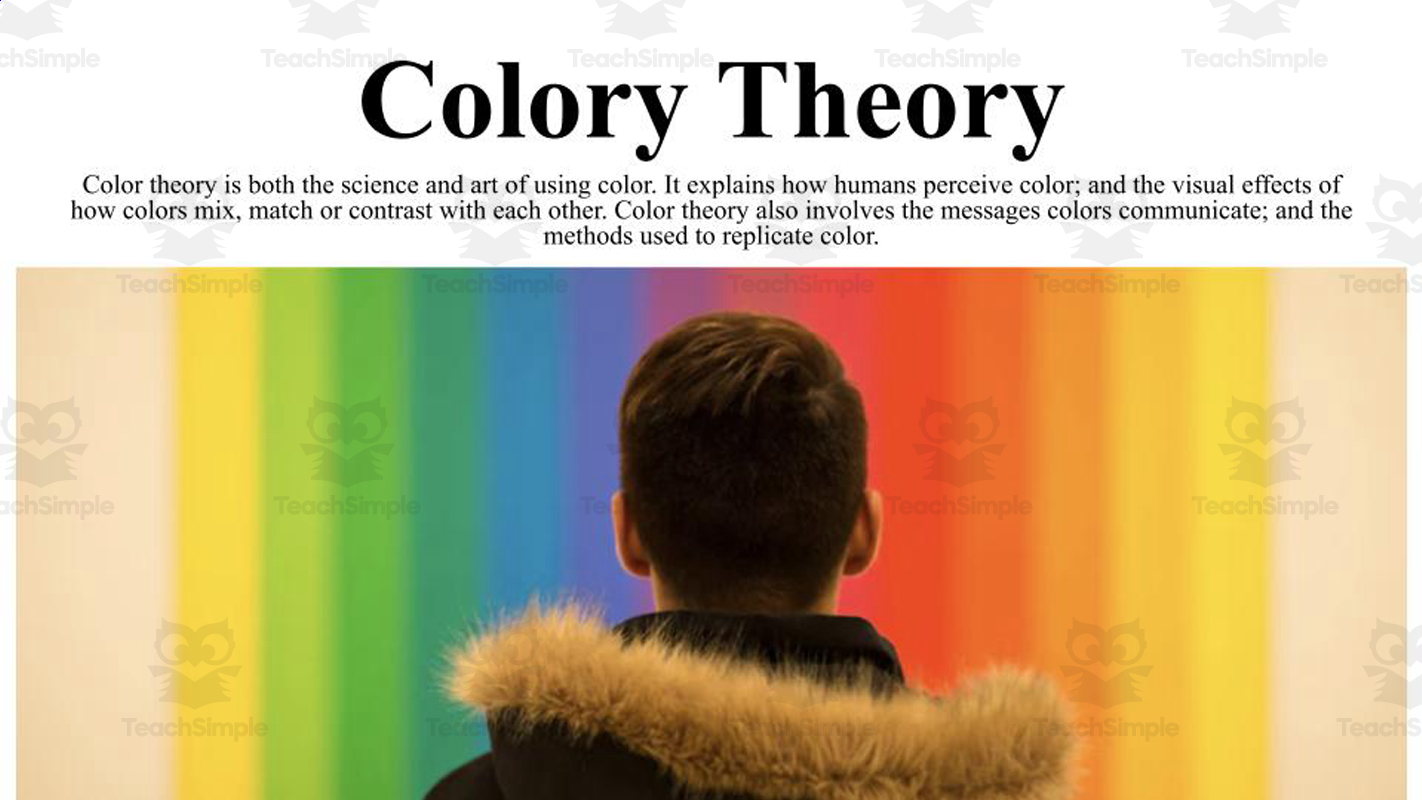
An art project teaching color theory and color schemes, in which students design a mock Instagram feed using cut-out magazine images.
A 2-day slideshow-based lesson package introducing middle/early-high-school students to the science of climate change: the greenhouse effect, greenhouse gases and their sources, the carbon cycle and carbon sinks, and the effects and history of climate change.
Teach students to identify the 7 elements of art through guided artwork discussion questions, then have them demonstrate understanding by designing an original poster.
A multi-day mini unit teaching students professional email etiquette: what makes an email appropriate/professional, the parts of an email, and how to write and revise emails for different real-world purposes.