
Candy land classroom decoration number posters
Candy Land-themed classroom decoration poster set displaying numbers, both individually (1-20 with number words) and as reference charts (1-20, 1-100), per document teacher's notes.


16,389 resources
Explore sub-categories
13 sub-categories · 16,389 resources
Candy Land-themed classroom decoration poster set displaying numbers, both individually (1-20 with number words) and as reference charts (1-20, 1-100), per document teacher's notes.
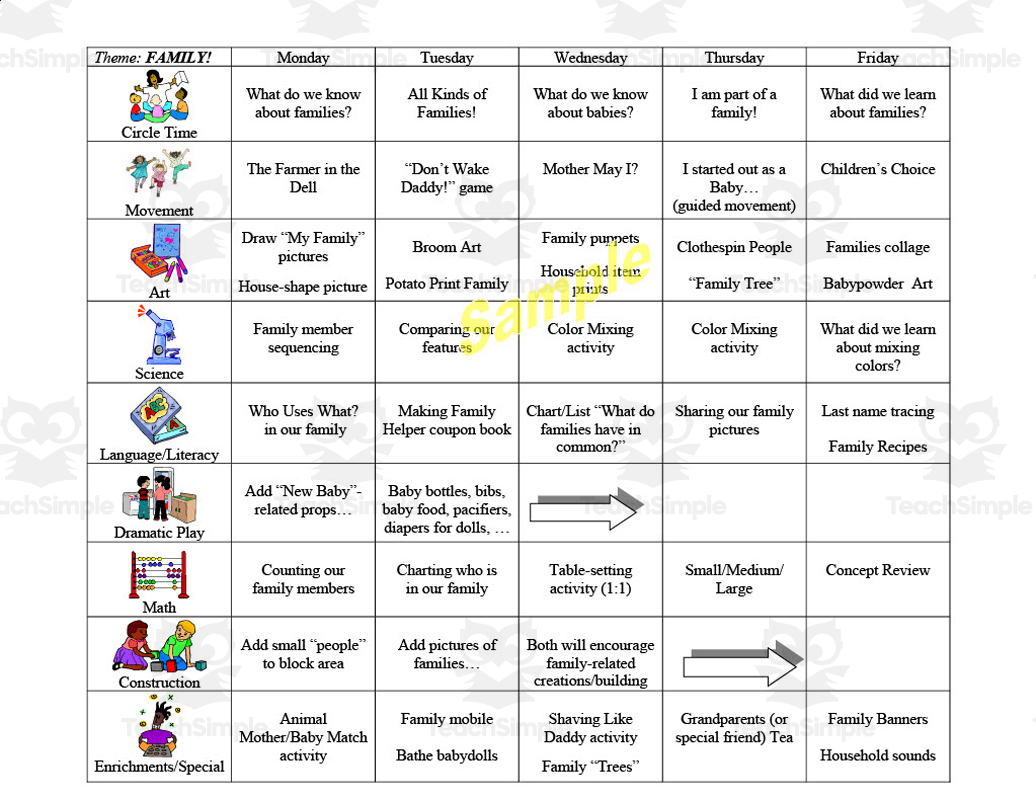
A week-long, day-by-day lesson plan template built around a 'Family' theme for a preschool/kindergarten classroom, organizing activities by daily instructional area.
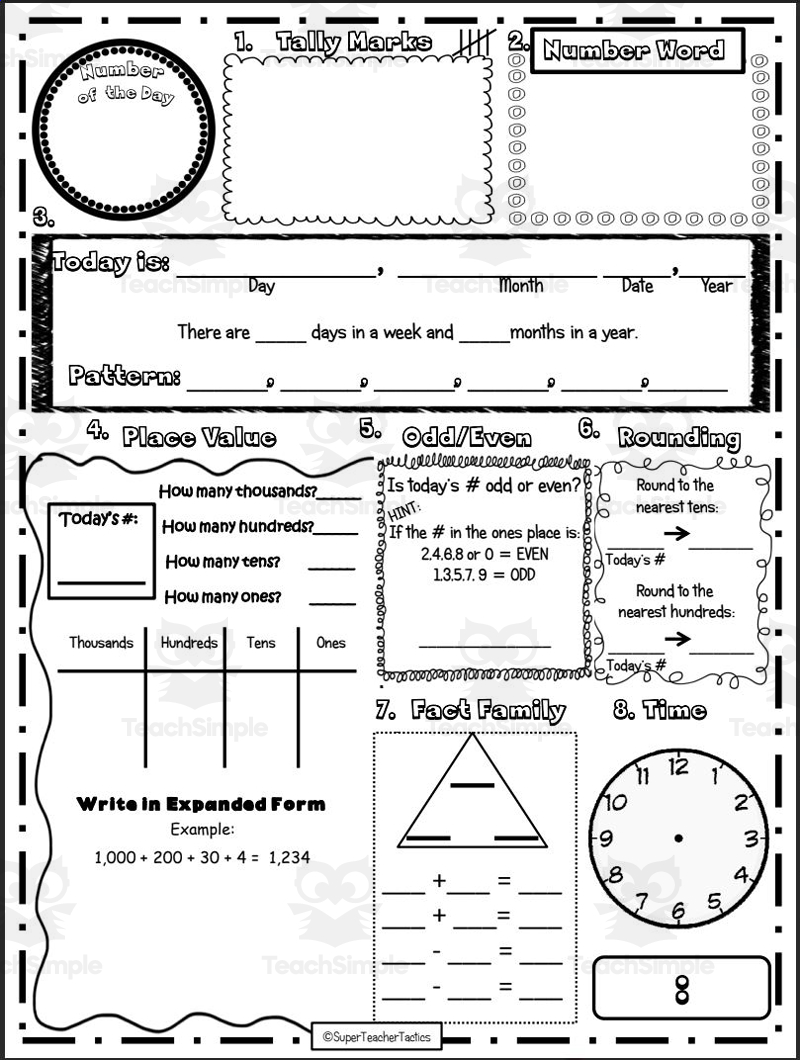
A daily-practice worksheet ('Number of the Day') that has students explore a chosen number across multiple math skill areas: tally marks, number words, calendar/date, patterns, place value, odd/even, rounding, fact families, telling time, expanded form, multiplication grid, fractions, and elapsed time.

Daily subtraction fact-fluency practice, organized into fact-family sections by subtrahend pair, with weekly quizzes and answer keys.
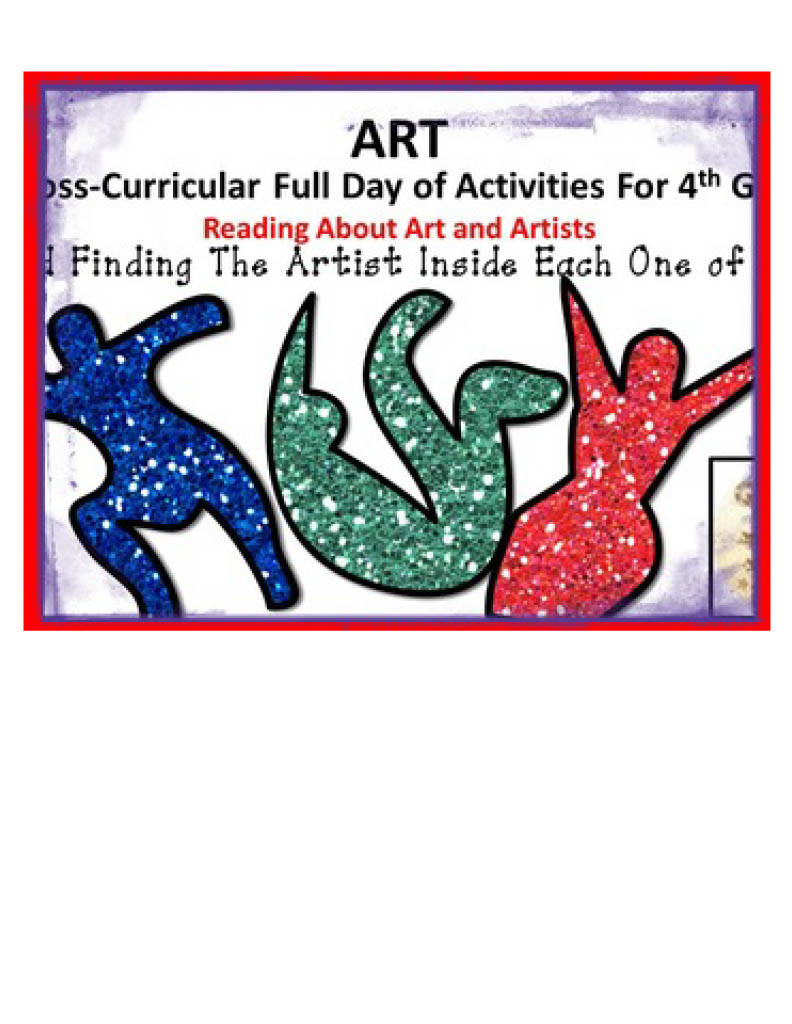
A full-day substitute-teacher lesson-plan packet themed around art and famous artists, combining literacy, social studies, and math activities for a single school day.
 Free download
In this multicultural emotions poster for kids resource, you can use this poster to post in the classroom, in the reset or quiet area of your classroom, or anywhere you want! You can also send this poster home after an SEL or social-emotional learning lesson so students can reference this at home with their families. This is a great way…

Give young students visual cards to help them recognize and name their feelings.
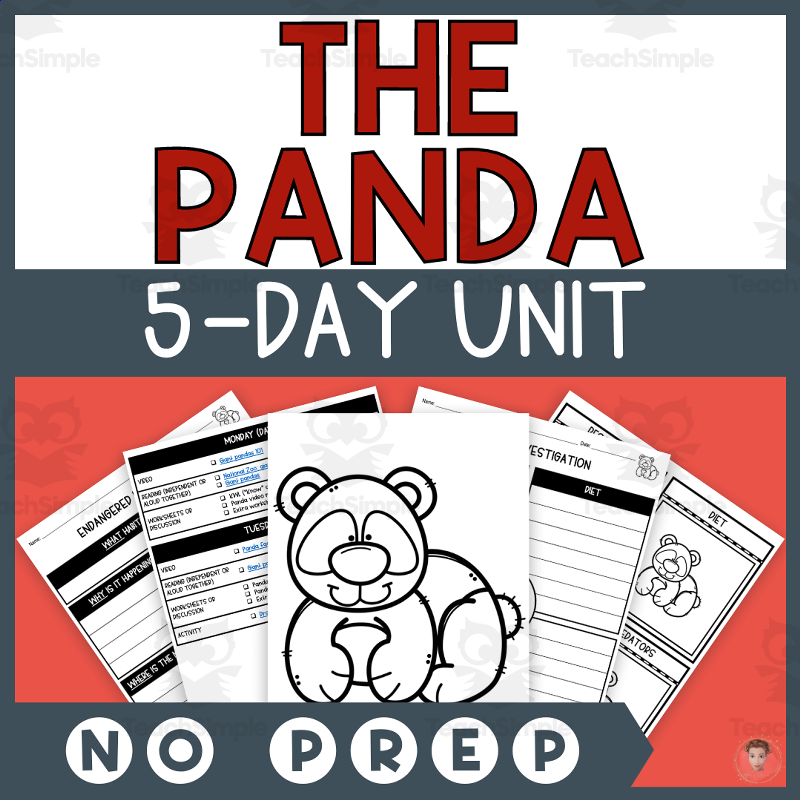
A 5-day homeschool/co-op unit study on endangered animals, focused on giant pandas, combining videos, readings, and worksheets.

A short, single-page formative-assessment worksheet ('Quick Check') on comparing numbers using greater than/less than symbols, designed for use as an exit ticket, warm-up, or brief assessment.

A 30-minute French-language PowerPoint lesson providing practice asking and answering questions about hobbies/leisure activities, centered on 'Qu'est-ce que tu aimes?' and 'J'aime le/la/les...'.
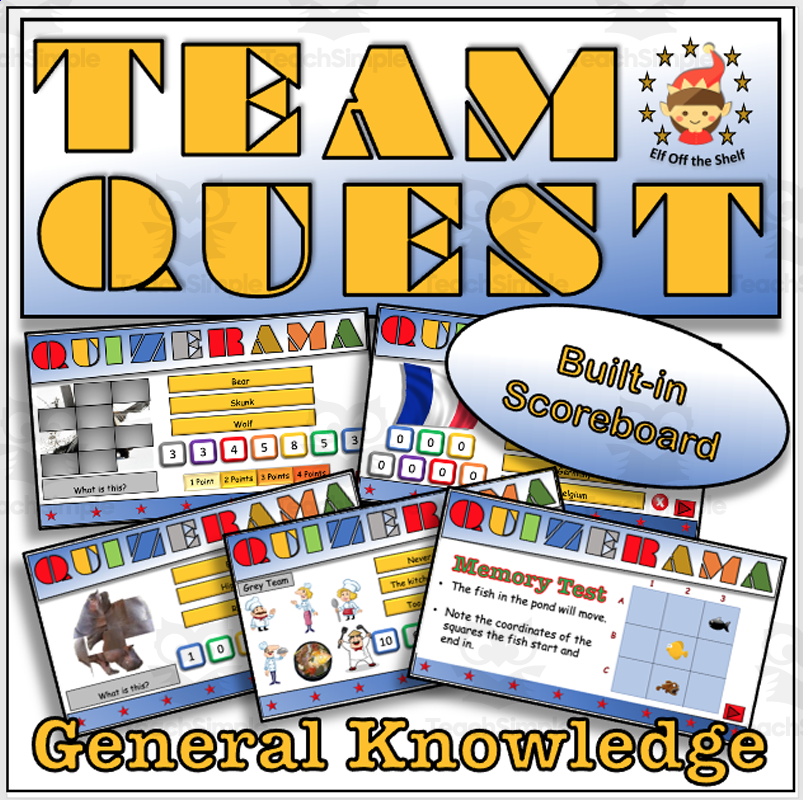
An animated, interactive PowerPoint general-knowledge team quiz game for the classroom (Team Quest 2020), with a built-in on-slide scoreboard.
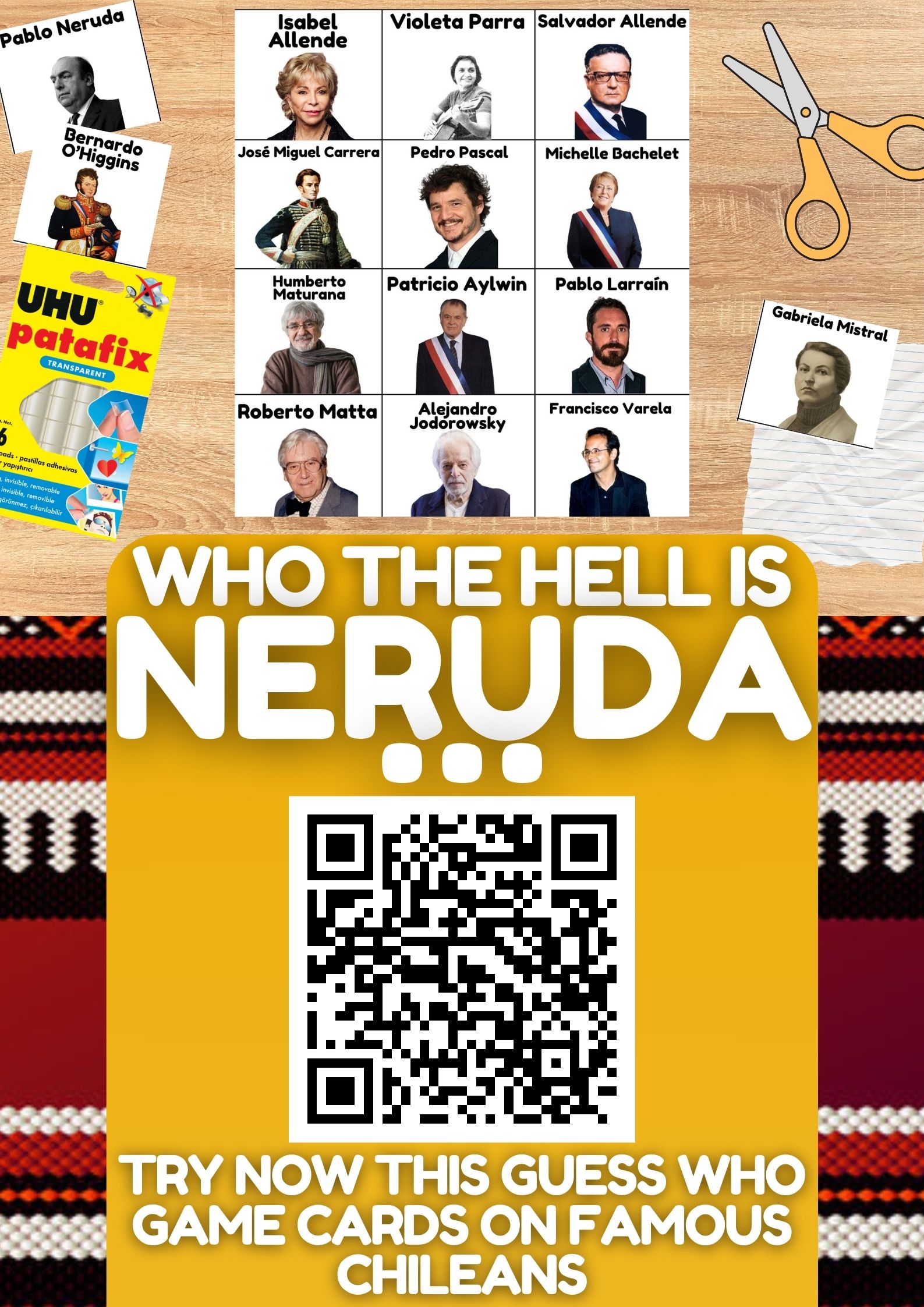
A one-page 'Guess Who' style game card sheet featuring 15 famous people from Chile, for a Chile country-study unit in Geography/Social Studies classes.

Teach 4th-grade CCSS geometry standards (points/lines/angles; classifying 2D figures; line symmetry) through task cards themed around Black History figures and achievements.
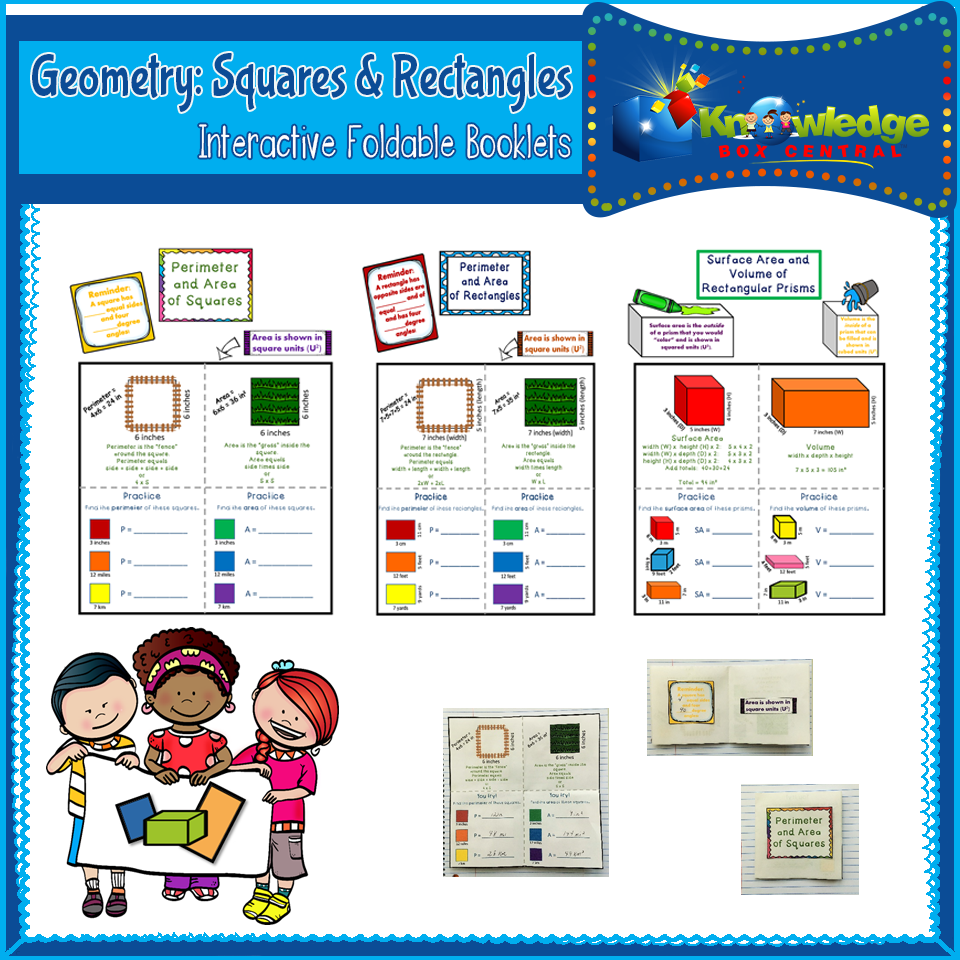
Teach students to calculate the perimeter and area of squares and rectangles, and the surface area and volume of rectangular prisms, using an interactive foldable-booklet format.
An introductory, narrative-driven PowerPoint lesson that introduces the course's comedic characters (Mr. Butt and Bonefish) and frames why grammar and the eight parts of speech matter, setting up the rest of the 'Grammar's House' lesson series.
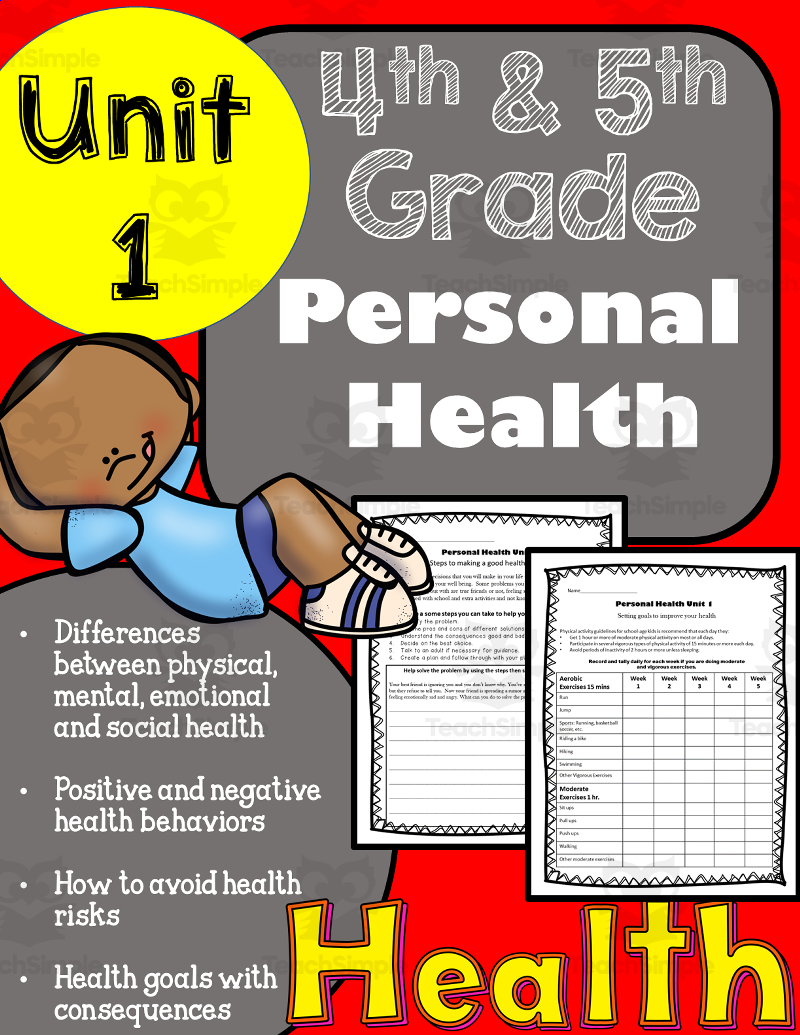
Unit 1 of a 4th/5th grade health curriculum teaching the four dimensions of personal health (physical, mental, emotional, social) and healthy vs. unhealthy behaviors.

Teach students what mental health and stigma mean, examine protective and risk factors for mental health, and reduce stigma around mental illness through survey, discussion, and note-taking activities

A 15-question, 115-point "Geometry Proofs Group Practice Test" bundles most of a first geometry course 's proof and construction topics into one collaborative assessment , from two-column triangle congruence proofs and CPCTC to compass-and-straightedge constructions of an angle duplicate, a perpendicular line, and a triangle's incenter,…

An ESL/ELA reading comprehension and listening lesson built around a biographical text about musician David Bowie, paired with a teacher lesson plan.
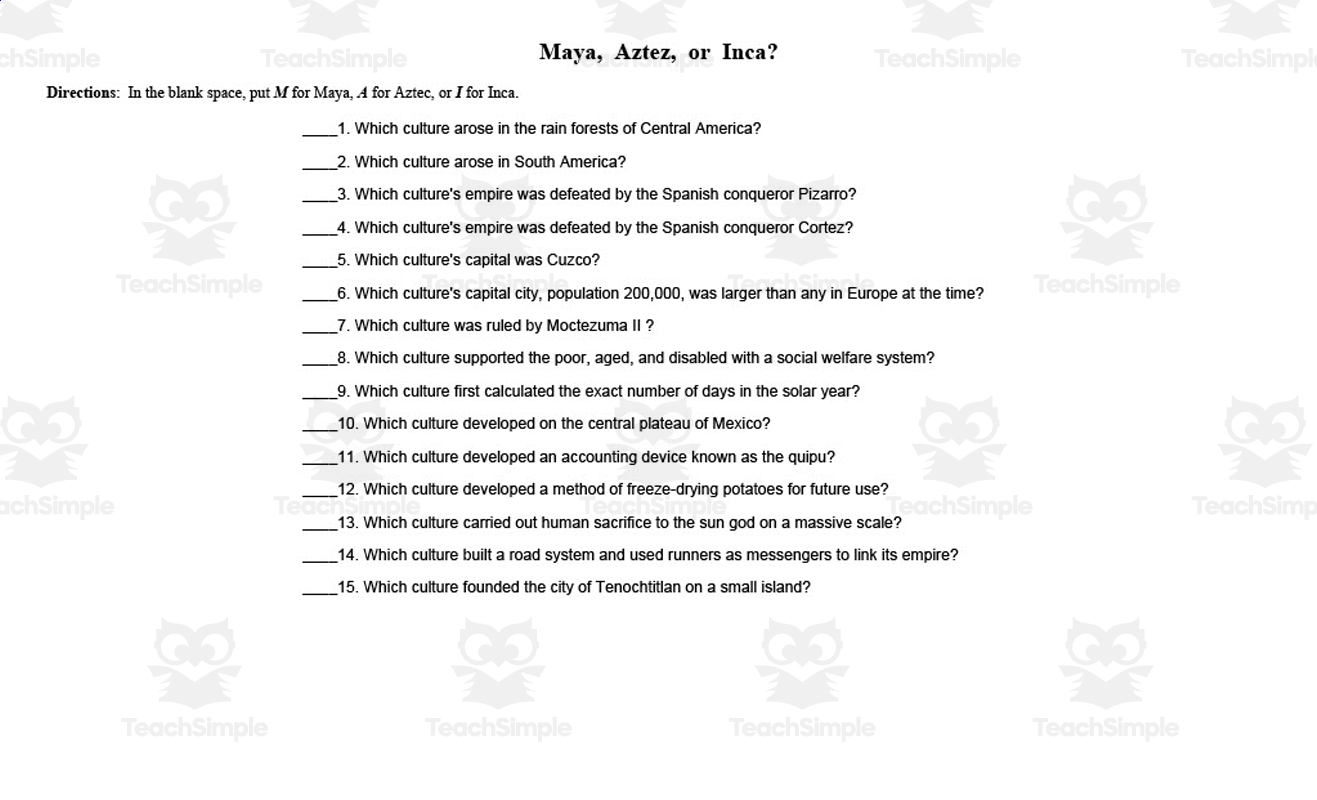
Chart and fill-in worksheet teaching students to compare and identify facts about the Maya, Aztec, and Inca civilizations.
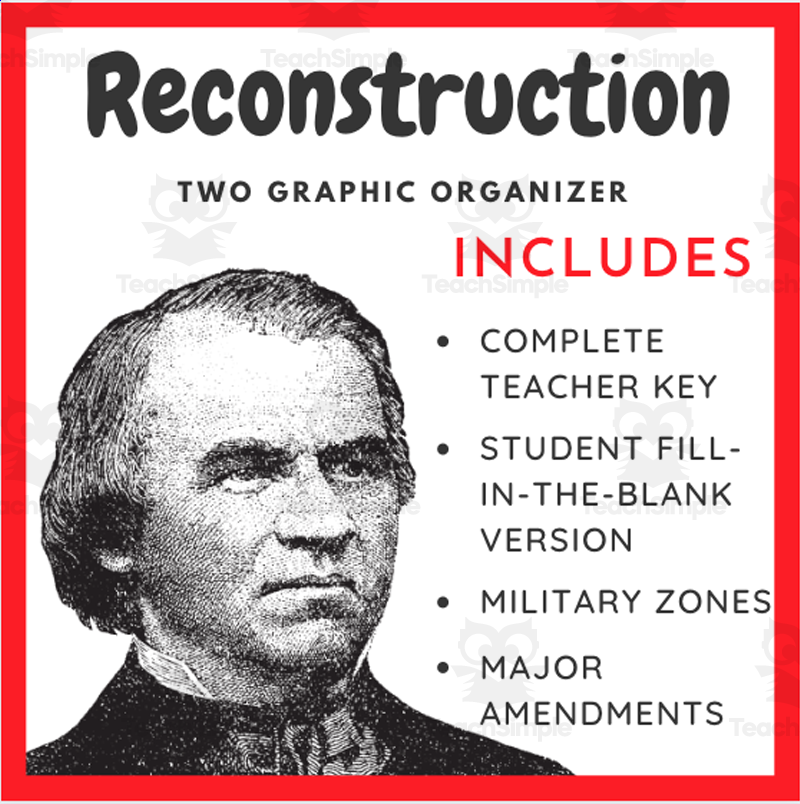
Two graphic organizers that help students analyze and summarize the political, social, and economic history of the Reconstruction era (1865-1877).
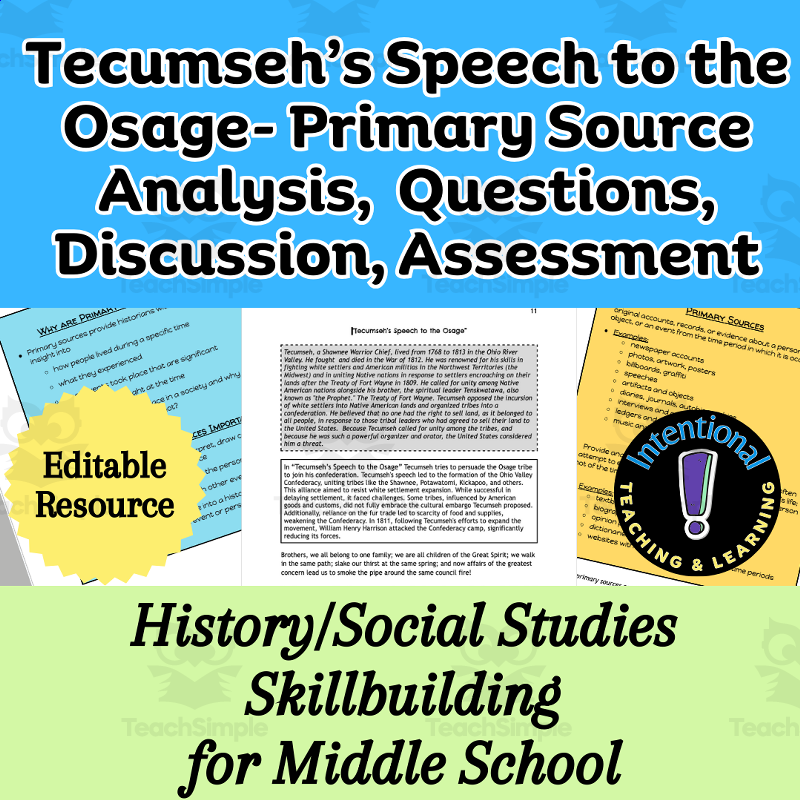
A primary-source analysis lesson pack built around 'Tecumseh's Speech to the Osage', teaching students to read and analyze a historical primary-source document using a structured Four-Reads method, then assess their understanding.

Use the slide notes to guide students through digestive structures and their roles. Organ headings and short explanations give learners a framework for their own notes, while opening review-style questions provide a way to begin discussion. A separate earthworm dissection lab offers a practical comparison with another animal’s digestive anatomy.

Help students distinguish their own point of view from that of the author of a text.