



3,980 products added recently
Page 349 - Teacher Tools
Equip yourself with tools that streamline your teaching process and enrich your classroom experience. This collection includes organizational planners, assessment templates, and classroom management strategies. By integrating these resources, you can focus on delivering impactful instruction and fostering student success.

 Show filters

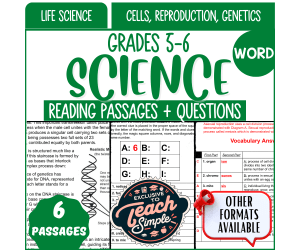
Reading Comprehension Passages on Cells, Reproduction, Genetics (Word)
ELA, Reading, Science, Life Sciences, Human Body, Biology, Common Core, ESL, Language Development, Vocabulary, Grade 5, 6, 7, Worksheets, Worksheets & Printables, Assessments, Teacher Tools, Tests, Quizzes and Tests, Diagrams
Reading Passages on Cells, Reproduction and Genetics for Life Science (Biology) Cells, Reproduction and Genetics: Reading Passages Life Science - Enhance your assessment process with this ready-to-use science reading passage pack. Featuring enjoyable topics and themes, it's tailored to ensure students not only practice but also deepen their scientific understanding in preparation for tests. With questions meticulously aligned to the Common Core State Standards (CCSS), the pack dives into intriguing subjects such as circuits, electricity, and energy sources. It's a must-have resource for educators aiming to make learning both fun and fruitful. What's inside? Part 1 - Cells, Reproduction, Genetics Reading Passage 1: Cells Reading Passage 2: Cell Parts & Functions Reading Passage 3: Reproduction & Growth of Cells Reading Passage 4: Genetics Reading Passage 5: DNA Reading Passage 6: Uses of Genetics Product Info: 48 PAGES (Word Version: US English with Answers) Teaching Duration: 2 Weeks Science Reading Comprehension Outline: Introducing a comprehensive resource tailored for 5th and 6th graders, this product offers enriching reading passages supplemented with illustrative pictures and graphs to clarify key concepts. Aligned with the Common Core State Standards (CCSS), it offers a hassle-free approach to teaching, given that the bulk of the preparation is already done for you. The passages present a diverse set of questions – from multiple choice to data analysis and fill-in-the-blanks. This ensures a rich blend of high-interest content and fundamental curriculum-based science themes. With its versatility, you can seamlessly integrate these lessons into various classroom settings, whether it's whole class discussions, morning exercises, independent desk tasks, small group engagements, contingency plans for substitute teachers, regular homework assignments, or even themed activities for holidays. FULL CATALOG OF DOWNLOAD LINKS HERE Grade 5/6 Links: Physical Science Part 1 - Physical and Chemical Properties Google Docs/Slides/Forms PDF PPT Word Free Supplementary Pack Accompanying Videos Physical Science Part 2 - Motion and Energy Google Docs/Slides/Forms PDF PPT Word Free Supplementary Pack Accompanying Videos Physical Science Part 3 - Electricity and Magnets Google Docs/Slides/Forms PDF PPT Word Free Supplementary Pack Accompanying Videos Life Science Part 1 - Cells, Reproduction and Genetics Google Docs/Slides/Forms PDF PPT Word Free Supplementary Pack Accompanying Videos Life Science Part 2 - Human Body Systems Google Docs/Slides/Forms PDF PPT Word Free Supplementary Pack Accompanying Videos Life Science Part 3 - Plant Parts and Ecosystems Google Docs/Slides/Forms PDF PPT Word Free Supplementary Pack Accompanying Videos Earth Science Part 1 - Plate Tectonics and Rock Cycle Google Docs/Slides/Forms PDF PPT Word Free Supplementary Pack Accompanying Videos Earth Science Part 2 - Ocean Exploration and Natural Resources Google Docs/Slides/Forms PDF PPT Word Free Supplementary Pack Accompanying Videos Earth Science Part 3 - Weather and Solar System Google Docs/Slides/Forms PDF PPT Word Free Supplementary Pack Accompanying Videos For similar products and other frees, do check out Cored Group on TeachSimple .
Author Cored Education
Tags Science, Elementary, Reading, Comprehension, Vocabulary, Answers, Physics, Physical Science, Ccss, Common Core

I WONDER - Where Did The Olympics Begin | Animated Video Lesson
Sports, P.E. & Health, Grade 2, 3, 4, 5, 6, 7, 8, Lesson Plans, Teacher Tools
Video Introduction An amazing video designed for the students to learn more about sports in different countries. I WONDER - Where Did The Olympics Begin | Animated Video Lesson What is your favorite sport? Tell us more about it. Who is your favorite athlete? Or what is your favorite team? Do you know who invented basketball? When basketball has been invented? Can you tell us where is the first time it has been played? Have you ever played soccer or football? If yes, tell us what was your position: A goal keeper, midfield player, or a defender? Do you like watching golf? If yes who is your favorite player? Can you name the differences between tennis and ping pong? Have you ever played volleyball on the beach? When it has been officially recognized by the Olympics? Do you like watching Formula 1 races? If yes, who is your favorite team or driver? Have you ever tried to play handball? If yes tell us more. Do you like watching people skiing or surfing? I WONDER - Where Did The Olympics Begin | Animated Video Lesson The video is perfect for encouraging the researching skills for the students, while learning more about this sport. I WONDER - Where Did The Olympics Begin | Animated Video Lesson This friendly designed video is suitable for students at school, homeschooling, and as a group activity. Format Available in MP4 format.
Author Educational Voice
Rating
Tags Where Did The Olympics Begin, Where Did The Olympics Begin Video, The Olympics, The Olympics Facts, The Olympics Video, The Olympics Facts For Kids, The Olympics Video For Kids, The Olympics History

Pronouns Practice Questions - Grammar Grade 5-6 (PDF)
ELA, Language Development, ESL, Grammar, Common Core, Resources for Teachers, Grade 5, 6, 7, Worksheets & Printables, Worksheets, Quizzes and Tests, Teacher Tools, Tests, Assessments
Pronouns Grammar Practice MCQS ELA MCQS Overview: In this series of lessons, students will embark on an engaging journey to master the language arts skills that make communication effective and expressive. These lessons are designed to help students recognize, understand, and apply key grammar, vocabulary, and writing conventions in both their writing and speech. Each lesson builds upon the previous one, providing a structured blend of direct instruction, interactive group activities, and independent practice. With engaging tasks and thought-provoking questions, students will explore sentence structure, word choice, punctuation, and grammar rules to strengthen their understanding of English language conventions. Accompanied by free supplementary materials covering all topics, this series ensures a well-rounded and enjoyable learning experience. Through practice and exploration, students will develop the skills needed to analyze language, construct clear sentences, and express themselves with confidence. Pronouns Overview: Includes: Indefinite Pronouns Intensive Pronouns Interrogative Pronouns Reflexive Pronouns Relative Pronouns PDF Version This is the PDF uneditable version. This download is available in GOOGLE Docs, GOOGLE Forms, GOOGLE Slides. PDF, PPT, WORD, check the links below for more details. FULL CATALOG OF DOWNLOAD LINKS HERE Grade 5/6 Links: Capitalization & Punctuation Google Docs Google Forms Google Slides PDF PPT Word Free Supplementary Materials Pack Adjectives Google Docs Google Forms Google Slides PDF PPT Word Free Supplementary Materials Pack Nouns Google Docs Google Forms Google Slides PDF PPT Word Free Supplementary Materials Pack Pronouns Google Docs Google Forms Google Slides PDF PPT Word Free Supplementary Materials Pack Verbs Google Docs Google Forms Google Slides PDF PPT Word Free Supplementary Materials Pack Prefixes & Suffixes Google Docs Google Forms Google Slides PDF PPT Word Free Supplementary Materials Pack Sentence Structure Google Docs Google Forms Google Slides PDF PPT Word Free Supplementary Materials Pack Subject Verb Agreement Google Docs Google Forms Google Slides PDF PPT Word Free Supplementary Materials Pack Tenses Google Docs Google Forms Google Slides PDF PPT Word Free Supplementary Materials Pack Context Clues Google Docs Google Forms Google Slides PDF PPT Word Free Supplementary Materials Pack Defining Words Google Docs Google Forms Google Slides PDF PPT Word Free Supplementary Materials Pack Fill in the Blanks Google Docs Google Forms Google Slides PDF PPT Word Free Supplementary Materials Pack Homophones Google Docs Google Forms Google Slides PDF PPT Word Free Supplementary Materials Pack Synonyms Google Docs Google Forms Google Slides PDF PPT Word Free Supplementary Materials Pack ELA Review Questions Overview Questions have three answer choices. There are a handful of pictures on each test for aesthetic purposes, as well as a review sheet covering most of the topics covered in the product. Introduction or Example Sheet Each topic will include an introduction or example sheet to go through first with your students. Full Answer Keys Full answer keys and sample responses are provided so no matter how busy you are, you know you're covered! In the Supplementary Pack Interactive Ice Breakers: Engaging warm-up activities that introduce students to key ELA concepts, such as quick capitalization corrections and punctuation challenges. Guided Practice: Structured teacher-led exercises that reinforce grammar and punctuation rules, helping students identify and apply them correctly in sentences. Group and Partner Tasks: Collaborative activities where students work together to edit sentences, correct capitalization, and improve punctuation through peer discussion and teamwork. Independent Worksheets: Carefully designed worksheets that provide focused practice, allowing students to apply learned concepts and refine their skills independently. Exit Tasks: Quick assessments at the end of each lesson, prompting students to reflect on what they’ve learned and apply their knowledge in writing and editing tasks. For More Like This For similar downloads and other frees, do check out Cored Group on TeachSimple.
Author Cored Education
Tags Elementary, Answers, Ccss, Common Core, Grammar, Tests, Test Prep, Assessment, Grade 5, Grade 6

Math Tests 2: Grade 5
Math, Early Math, Grade 5, Tests, Quizzes and Tests, Teacher Tools
Math Tests 2: Grade 5 Math Tests 2: Grade 5 is an expertly designed resource to assess the mathematical understanding of your grade 5 students. Spread across a concise twelve-page test, it consists of twenty questions related to Basic Math. This teaching tool can be used effectively in different environments, from comprehensive class evaluations to individual tracking of student progress through small-group activities or homework assignments. Administration Tools Pencil Ruler Protractor The test conveniently fits within a one-hour class, including time for reviews and follow-up discussions after administration. Note on Scoring and Customization: An interesting feature - this test does not provide an answer key. This omission offers educators total autonomy to customize scoring metrics according to their evaluation strategies. The format is fully editable giving teachers the flexibility if they desire edits in question specifics that better sync up with their curriculum or focus areas. File Format: Please note that although the file comes as a PDF type, its user-friendly design allows quick access with minimal setup—so grading becomes about providing precise feedback rather than dealing with numerous file components. In Conclusion: The true value of Math Tests 2: Grade 5 entails more than just an evaluation resource—it supports personalised learning journeys tailored for each student’s needs; instilling greater confidence and transforming math challenges into victories.
Author Elementary Resources 4 U
Tags Math Assessment, Mathematical Understanding, Evaluation, Teaching Resource, Classroom Tool
Task Initiation & Micro-Step Breakdown
Life Studies, Career, Leadership, Physical Education, P.E. & Health, Mental Health, Mindfulness, Resources for Teachers, Science, Classroom Management, Grade 6, 7, 8, 9, 10, 11, 12, Teacher Tools, Worksheets & Printables, Workbooks, Worksheets, Word Searches, Assessments, Lesson Plans, Quizzes and Tests, Quizzes, Tests
Are your students or kids stuck with a blank page due to a large assignment? Do they know how to do the assignment but can’t figure out the best way to jump into it? This is not because of laziness—this is an example of a breakdown in Task Initiation, which is one of the key executive functions of the brain. Support your students to move from being passive and procrastinating to becoming active creators of their success with our comprehensive neuroscience-based curriculum. This 42-page instructional manual and workbook supports creating a step-by-step strategy to overcome your student's brain's resistance to getting started with completing tasks. By applying the principles of cognitive offloading and granular sequencing, this manual and workbook will provide you with the ultimate guide to how to accomplish your goals. This resource is designed for teachers, parents, school counselors, and executive function coaches to support helping to create lifelong habits, build confidence in school, and decrease the anxiety and stress associated with homework. Contents of this 42-page document. The Neuroscience Guide (Part 1) (The “Why”) The neuroscience of procrastination. Easy-to-understand explanations for the science of procrastination (brain science) include energy, limbic friction, activation energy, time blindness, etc. Real-life examples of the science from students and short quizzes to test knowledge and understanding. The Student Workbook (Part 2) (The “How”) 10 in-depth printed worksheets provide a complete scaffolded framework for developing executive function. Actionable Steps: Deconstruct larger projects into small tasks, identify and eliminate friction, create a five-minute launchpad, master micro steps, create an executive execution ladder, eliminate distractions, and create empathy for your future self. Capstone Project: A master blueprint for a major project using taught strategies. Part Three: Visual & Teacher/Parent Resources (The “Tools”) Three Strong Visual Supports: Printables and classroom appropriate anchor charts will give students' cognitive relief through visual representation of how to use their brain there are three charts to choose from (The Anatomy of Task Paralysis, The Micro-Step Bridge, The Task Activation Loop). Complete Answer Key: An answer key for all ten student worksheets so that teachers can provide students with a comprehensive answer key. Teacher Implementation Guide: A detailed scripted guide on how to introduce these concepts and protocols such as the “Body Double” technique. Differentiation for Neurodivergent Learners: A separate section for specific, powerful strategies for students with ADHD, ASD, and Dyslexia. Not only is this a study skills printable, but it is a powerful cognitive resource that helps students understand themselves so that they may use the resources available to them to work more efficiently with their brain, rather than against it. Keywords: Executive Functioning, Study Skills, Procrastination, Task Initiation, ADHD Support, Neurodiversity, SEL, Middle School, High School, Printable Workbook, Digital Download, Homework Help, Time Management, Metacognition, Growth Mindset, Resources for Teachers, Resources for School Counselors, Parent Guide. What Makes It Busy and Maternal/School Parent-Friendly : Based on Neuroscience (not-created based off "Shame"): It regards procrastination as a normal neurological event, not an individual's defect nor character flaw. This removes guilt associated with procrastination by providing students with a "hacker" mindset to achieve the best outcome for their situation based on the wiring of their brains. Has Actionable, Step-By-Step Tools: Instead of vague and subjective statements like “just break it down,” this curriculum focuses on rigorous, rigorous sequencing (providing valuable resource worksheets/checklists) and concrete ways that a student can apply the information immediately. Targets Neurodivergent Learners: The section on differentiation for ADHD, ASD and Dyslexia students is a must-have addition to any inclusive classroom and will meet needs of all parents with children needing specific support; therefore, it is an extremely "valuable" and "highly-valuable" resource. Develops Lifelong Skills (beyond a one-time project): In addition to a single project, skills presented include metacognition, self-regulation, and planning—all important life-skills needed to continue and succeed throughout high school, college and after. The primary target audience is middle school students (6th-8th grade). The multiple case studies included (6th, 8th grade), the reorganization of the prefrontal cortex and task characteristics align directly with this group. The second target audience is upper elementary (4th-5th Grade) and high school (9th-12th Grade). As stated in the "Visuals & Teacher Keys" section: "(Grade 4-8)". The concepts provided are foundational and lend themselves readily to alteration, both upwards and downwards. High school students with executive functioning issues, especially those diagnosed with ADHD, would see tremendous benefit from this resource. Copyright Notice: This book was copyrighted by Syed Hammad Rizvi. This resource is available for personal use in a single-classroom setting only and cannot be changed (modifications), No part of this book can be shared, sold, or posted on the Internet to be found or downloaded by the public. Please note that if you wish to share this resource with others (teachers), you must buy additional licenses (a fee) from Teachsimple. Thank you for your cooperation in following these terms of usage. This product has been brought to you with pride by Syed Hammad Rizvi.
Author Creative Book Store
Rating
Tags Procrastination, Motivation, StudySkills, TimeManagement, Organization, Neuroscience, ADHD, GrowthMindset, ExecutiveFunctioning, TaskInitiation

Guided Reading The Nina Pinta and the Vanishing Treasure Trifold
ELA, Reading, Grade 2, 3, 4, Projects, Activities, Teacher Tools, Graphic Organizers, Worksheets & Printables, Novel Studies
The Nina, The Pinta, and the Vanishing Treasure by Jill Santopolo follows the adventures of Alec Flint, a fourth-grade detective with a passion for solving mysteries. When a valuable Christopher Columbus exhibit goes missing from the local museum, Alec teams up with his friend Gina to crack the case. As they gather clues and follow leads, the duo uncovers surprising twists and learns the importance of teamwork and determination. This trifold activity is designed to help students develop essential reading comprehension skills while providing differentiated instruction for various reading levels. Whether used during guided reading, as independent seat work, or within literature circles, this resource keeps students engaged in meaningful and skill-building activities. Additionally, the included writing wrap-up allows for assessing multiple skills in one cohesive project, making it an ideal, standards-aligned resource for busy teachers. What’s Included in This Resource: Trifolds for Differentiated Instruction: Adaptable for a range of reading levels, these trifolds allow every student to engage with the story at their own pace. Skill Development Activities: Making Connections: Encourage students to relate the story to their own lives, other texts, and the wider world. Making Inferences: Help students combine text evidence with prior knowledge to draw logical conclusions. Using Context Clues: Teach students to deduce the meaning of unfamiliar words using hints from the text. Visualization: Support students in creating mental images of characters, events, and settings. Evaluation: Develop critical thinking by analyzing characters, themes, and the author’s message. Writing Wrap-Up: A creative assessment tool for reflection and deeper understanding. How This Resource Benefits Teachers: ✔ Provides differentiated instruction for diverse learners. ✔ Fosters deeper text engagement and critical thinking. ✔ Offers flexibility for grades, seat work, or group discussions. What Teachers Are Saying: ⭐ "This resource made my guided reading groups more organized and productive!" - Rebecca T. ⭐ "Perfect for differentiation and keeping all students engaged at their level." - Larraine C. ⭐ "My students loved the activities, and it worked seamlessly in our literature circles!" - Celia N.
Author Kel's Klass
Tags Making Inferences, Reading Strategies, Guided Reading Activity, Making Connections, Visualization, Context Clues, Evaluation, The Nina Pinta And Vanishing Treasure, Trifold Project, Novel Study

The Cask of Amontillado Case Study
ELA, Literature, Grade 7, 8, 9, 10, Teacher Tools, Lesson Plans
The Cask of Amontillado Case Study Teaching Resource This engaging teaching resource brings a unique approach to Edgar Allan Poe's The Cask of Amontillado. Designed specifically for grades 7 through 10, it aims to gear students towards in-depth literary exploration and character comprehension, interleaving the same with elements of detective pursuits. Distinct Features: Vocabulary activity: This enhances linguistic proficiency by introducing a richer lexicon. Analysis questions: These promote thoughtful reasoning while studying narratives. Character sketches: An immersive method for understanding intricate layers within characters via analyzing actions, reactions and encouraging discussions among peers. "Witness" Interrogations: An introduction to evaluation techniques inherent in crime fiction literature. Crafting a Crime Scene Summary:This exercises descriptive narrative abilities while offering deeper insight into the concept of story progression. A distinctive feature is the assessment tasks that reinforce students' understanding of plot progression and character dynamics. Here they apply their knowledge as if they were genuine investigators! Educator Support: Detailed lesson plans for effective execution regardless educator experience levels. Presentation assessment measures with well-designed rubrics for post-learning evaluations. We recognize the needs of our rapidly digitizing world by providing both digital and printable versions. In conclusion, this resource is not just an ordinary Language Arts lesson plan but effectively stimulates intellectual curiosity about literature among young learners using modern educational insights.
Author Fairways and Chalkboards
Tags Cold Case, Literary Analysis, Character Comprehension, Vocabulary Activity, Narrative Analysis

Attorney General Matt Platkin (NJ) BIO PPT
Social Studies, History, History: USA, Government, Not Grade Specific, Teacher Tools, Presentations
Introducing an informative 14-page PDF biography PowerPoint on New Jersey's current Attorney General Matt Platkin. This concise presentation explores Platkin's background, education, early career, and political accomplishments. Educators can engage students by highlighting Platkin's journey from Chief Counsel in the New Jersey Governor's Office to his election as Attorney General in 2022. The biography covers details such as his birthplace, college education, and prior role advising the Governor on legal affairs. Whether used in civics, government, or history courses, this PowerPoint provides a personable look at a key leader in New Jersey politics. Teachers can easily incorporate it into lectures on state government or assign it for students to study independently. The content was designed to be accessible for upper elementary and middle school grade levels.
Author Mr. Matthews Teacher Store
Tags Attorney General, Matt Platkin, New Jersey, Government, Biography
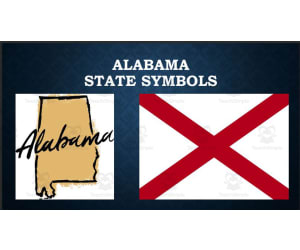
Alabama State Symbols PowerPoint
Social Studies, History, History: USA, Government, Grade 3, 4, 5, Teacher Tools, Presentations
Learn all about the state of Alabama with this informative 35-page PowerPoint presentation . Students will be engaged as they explore Alabama's state symbols, including the state flower (camellia), tree (Longleaf pine), bird (Yellowhammer), and more. The presentation brings symbols like the state gem (Star Blue Quartz) and state motto ("We Dare Defend Our Rights") to life through vivid images. Educators can use this versatile resource in a variety of ways - present the full slide deck or just a few slides to teach Alabama history, government, or state pride. Written at a 7-8 grade reading level, the presentation is ideal for elementary grades. Explore the Magnolia State through its unique state symbols!
Author Mr. Matthews Teacher Store
Tags Alabama, State History, State Symbols, Powerpoint

The Gift of the Magi: Full Lesson Plan w/ PowerPoints & Graphic Organizers
ELA, Literature, Grade 6, 7, 8, 9, Lesson Plans, Teacher Tools
This resource will give you everything you need to complete a full, comprehensive reading lesson plan for The Gift of the Magi text by O. Henry. Files are offered as PDFs and Word documents. Included: -The Gift of the Magi Lesson Plan -The Gift of the Magi Worksheet -The Gift of the Magi Answer Key Graphic Organizers: Author’s Purpose Characterization Chart Figurative Language Chart Historical Analysis Chart Imagery Chart Peer Evaluation Sheet Plot Diagram Read for Detail Setting Style Chart Symbol Chart Symbolism Chart Theme Diagram Tone and Mood Diagram Universal Plot Diagram Venn Diagram PowerPoints: Characterization Imagery, Voice, and Persona Irony and Ambiguity Narrator and Voice Plot Structure Symbolism and Allegory Theme - How to Interpret Theme Thank You Bonus Stuff!
Author Quality Teaching Products
Tags Literature, Short Story, Fiction Text, Reading Lesson Plan, Reading Powerpoint, The Gift Of The Magi Lesson Plans Pdf, The Gift Of The Magi Answers Key, Gift Of The Magi Answer Key, Magi Worksheet, The Gift Of The Magi Lesson Plans Middle School, The Gift Of Magi Answer Key, Figurative Language In The Gift Of The Magi, The Gift Of The Magi Plot Diagram, The Gift Of The Magi Answer Key

U.S. Representative Warren Davidson (OH - 8th) BIO PPT
Social Studies, History, History: USA, Government, Not Grade Specific, Teacher Tools, Presentations
Introducing an informative 35-page PDF biography PowerPoint about Warren Davidson, the current U.S. Representative serving Ohio's 8th congressional district since 2016. This concise teaching resource outlines Representative Davidson's background and accomplishments in an engaging slideshow format ideal for social studies classes. Educators can use this product as a whole group lesson to introduce students to key details of Davidson's life, including his birthdate, education, early career, political experience, and legislative actions in Congress. The content covers informative topics at a 7th-8th grade reading level while avoiding a "salesy" tone. Teachers may find it useful as a printable handout, discussion starter, or independent research prompt on modern political leaders.
Author Mr. Matthews Teacher Store
Tags Warren Davidson Bio, Ohio Representative, Congressman Ppt, Social Studies Lesson, American Government

I WONDER - What Happens When The Liver Gets Damaged | Animated Video
Biology, Life Sciences, Science, Human Body, STEM, Grade 5, 6, 7, 8, 9, 10, 11, Lesson Plans, Teacher Tools
Video Overview The human body is full of fascinating wonders to learn. This video is created to help the students recognize the anatomy and the job of the human body. I WONDER - What Happens When The Liver Gets Damaged | Animated Video Lesson Every part and organ in our human body is vital so let's see how important they are. Have you ever imagined how we look like if we didn't have a skeleton? Did you know that because we have our amazing muscles we can stand! Do you know how many teeth do we have? Have you ever wondered about the food journey inside our body? Can you name all the glands in our body? Why do we have skin? Our nervous system is really good at sending signals. Can you tell us more about it? Are you really good at Mathematics, painting, or any other thing? You should really thank your brain about it! The famous five senses are really doing a great work? Can you explain how every sense works? I WONDER - What Happens When The Liver Gets Damaged | Animated Video Lesson The video is perfect for encouraging the researching skills for the students, while learning more about our fantastic human body. I WONDER - What Happens When The Liver Gets Damaged | Animated Video Lesson This friendly designed video is suitable for students at school, homeschooling, and as a group activity. Format Available in MP4 format.
Author Educational Voice
Tags What Happens When The Liver Gets Damaged, What Happens When The Liver Gets Damaged Video, Liver, Liver Facts, Liver Facts For Kids, Liver Video, Liver Video For Kids, Liver Damaged, Liver Damaged Facts

Conjunctions Sample: Grammar Grade 3-4 (Word)
ELA, Language Development, ESL, Grammar, Common Core, Grade 3, 4, Worksheets & Printables, Worksheets, Quizzes and Tests, Teacher Tools, Tests, Assessments
Conjunctions Sample Lesson ELA MCQS Overview: In this series of lessons, students will embark on an engaging journey to explore the grammar skills that make our language vibrant and expressive. These lessons are crafted to help students identify, comprehend, and effectively apply language arts skills in both writing and speech. Accompanied by free supplementary materials available for all topics, each lesson builds on the previous one, offering a balanced mix of direct instruction, interactive group activities, and independent practice. Through fun and creative tasks, students will learn to recognize grammar within sentences, understand their function, and use them to enrich their own writing and speech. Conjunctions Overview: Includes: Correlative Conjunctions Coordinating Conjunctions Subordinating Conjunctions Mistake Finding Word Version This is the Word editable and version. This download is available in GOOGLE Docs, GOOGLE Forms, GOOGLE Slides. PDF, PPT, WORD, check the links below for more details. FULL CATALOG OF DOWNLOAD LINKS HERE Grade 3/4 Links: Adjectives Google Docs Google Forms Google Slides PDF PPT Word Free Supplementary Materials Pack Adverbs Google Docs Google Forms Google Slides PDF PPT Word Free Supplementary Materials Pack Conjunctions Google Docs Google Forms Google Slides PDF PPT Word Free Supplementary Materials Pack Nouns Google Docs Google Forms Google Slides PDF PPT Word Free Supplementary Materials Pack Pronouns Google Docs Google Forms Google Slides PDF PPT Word Free Supplementary Materials Pack Verbs Google Docs Google Forms Google Slides PDF PPT Word Free Supplementary Materials Pack Sentence Structure Google Docs Google Forms Google Slides PDF PPT Word Free Supplementary Materials Pack Present Tense Google Docs Google Forms Google Slides PDF PPT Word Free Supplementary Materials Pack Past Tense Google Docs Google Forms Google Slides PDF PPT Word Free Supplementary Materials Pack Future Tense Google Docs Google Forms Google Slides PDF PPT Word Free Supplementary Materials Pack Context Clues Google Docs Google Forms Google Slides PDF PPT Word Free Supplementary Materials Pack Defining Words Google Docs Google Forms Google Slides PDF PPT Word Free Supplementary Materials Pack Fill the Blanks Google Docs Google Forms Google Slides PDF PPT Word Free Supplementary Materials Pack Homophones Google Docs Google Forms Google Slides PDF PPT Word Free Supplementary Materials Pack Synonyms Google Docs Google Forms Google Slides PDF PPT Word Free Supplementary Materials Pack ELA Review Questions Overview Questions have three answer choices. There are a handful of pictures on each test for aesthetic purposes, as well as a review sheet covering most of the topics covered in the product. Introduction or Example Sheet Each topic will include an introduction or example sheet to go through first with your students. Full Answer Keys Full answer keys and sample responses are provided so no matter how busy you are, you know you're covered! In the Supplementary Pack Interactive Ice Breakers: Fun, hands-on activities that get students thinking about adjectives right from the start. Guided Practice: Teacher-led exercises that reinforce the day’s lesson, ensuring students can confidently identify and use adjectives. Group and Partner Tasks: Collaborative activities that allow students to work together to solve problems, categorize adjectives, and create descriptive sentences. Independent Worksheets: Structured worksheets that provide individual practice and help solidify understanding of key concepts. Exit Tasks: Quick, reflective activities at the end of each lesson that assess understanding and encourage students to apply what they’ve learned. For similar downloads and other frees, do check out Cored Group on TeachSimple.
Author Cored Education
Tags Elementary, Answers, Ccss, Common Core, Grammar, Tests, Test Prep, Assessment, Grade 3, Grade 4
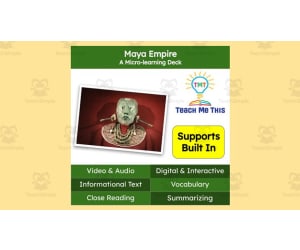
Mayan Empire | Reading Comprehension Deck | Interactive Lesson
Social Studies, History, History: Ancient, Grade 5, 6, 7, 8, Teacher Tools, Lesson Plans
Mayan Empire | Reading Comprehension Lesson Transport students back in time to uncover the mysteries of the remarkable Mayan civilization. This interactive digital lesson guides learners through an informative video and audio-enabled reading passage spotlighting defining aspects of the Mayans, including their advanced architecture, calendar systems, and decline. Students then analyze the text through close reading questions and a quick write activity. Use this versatile resource in whole or small groups to build content knowledge and literacy skills. The combo of visual, auditory, and written materials alongside critical thinking questions engages various learning styles.
Author Teach Me This
Tags Mayan Empire, Comprehension, Interactive Lesson, Reading Passage, Informational Text, Mayan Reading
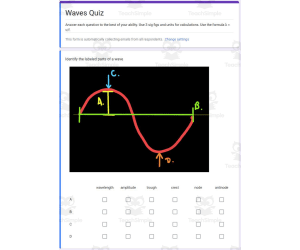
Physics Google Form Test: Waves
Science, Physics, Grade 9, 10, 11, 12, Tests, Quizzes and Tests, Teacher Tools
Physics Google Form Test: Waves An ingenious educational resource aimed at boosting knowledge in wave properties and calculations, tailored predominately for educators specializing in physical science or physics instruction from grade 9 up to grade 12. Quiz Composition: Skillfully crafted quiz that revolves around an 11-question layout dealing with a myriad wave properties and calculations topics, comprises of: The identification of parts of a wave, A comparison of frequency and period across various waves, Solving tasks for the unknown variables namely speed, wavelength, and frequency according to the formula λ = v/f. Digital Format via Google Forms: The tool is equipped with resilient features enabled by the digital format: - Auto-Grading- Made possible through an efficient auto-grading system through which feedback can be provided promptly upon submission. The feature presents multiple benefits such as time-efficiency when used as real-time assessment tactics during bellringer activities or exit slips sessions. - Visually Engaging Elements- Incorporating visually appealing elements via digitally designed images accompanying majority questions. This handy element proves effective in promoting deeper student engagement while also offering more tangible visualization for better comprehension. - Answers & Solutions Provided- To maximize teaching outcomes, correct answers are included along with their detailed solutions. This will be especially beneficial during full class discussions or individual follow-ups after self-study routines have been finished off by students. In Conclusion: The Physics Google Form Test: Waves resource package delivers promising innovation within its interactive platform all deliberately home-designed towards promoting efficiency not just among educators but - significantly - instilling progressive development among learners delving into physical sciences.
Author Schrim's Chem
Tags Physics, Wave Properties, Calculations, Google Forms, Autograde

SL.2.4 Second Grade Common Core Lesson
ELA, Language Development, ESL, Common Core, Grade 2, Teacher Tools
This SL.2.4 Second Grade Common Core Lesson is great for helping students tell a story or recount an experience. It provides them with appropriate facts and relevant, descriptive details, so they can speak audibly and coherently.
Author Have Fun Teaching
Tags Speaking And Listening
I WONDER - Are Sugars Carbohydrates | Animated Video Lesson
Biology, Life Sciences, Science, Human Body, STEM, Grade 2, 3, 4, 5, 6, 7, 8, Lesson Plans, Teacher Tools
Video Overview The human body is full of fascinating wonders to learn. This video is created to help the students recognize the anatomy and the job of the human body. I WONDER - Are Sugars Carbohydrates | Animated Video Lesson Every part and organ in our human body is vital so let's see how important they are. Have you ever imagined how we look like if we didn't have a skeleton? Did you know that because we have our amazing muscles we can stand! Do you know how many teeth do we have? Have you ever wondered about the food journey inside our body? Can you name all the glands in our body? Why do we have skin? Our nervous system is really good at sending signals. Can you tell us more about it? Are you really good at Mathematics, painting, or any other thing? You should really thank your brain about it! The famous five senses are really doing a great work? Can you explain how every sense works? I WONDER - Are Sugars Carbohydrates | Animated Video Lesson The video is perfect for encouraging the researching skills for the students, while learning more about our fantastic human body. I WONDER - Are Sugars Carbohydrates | Animated Video Lesson This friendly designed video is suitable for students at school, homeschooling, and as a group activity. Format Available in MP4 format.
Author Educational Voice
Tags Are Sugars Carbohydrates, Are Sugars Carbohydrates Video, Sugars, Sugar, Sugars Facts, Sugars Facts For Kids, Sugars Video, Sugars Video For Kids, Carbohydrates, Carbohydrates Facts

Adverbs Practice Questions - Grades 3-4 Grammar (Presentable PDF)
ELA, Language Development, ESL, Grammar, Common Core, Resources for Teachers, Grade 3, 4, Worksheets & Printables, Worksheets, Quizzes and Tests, Teacher Tools, Tests, Assessments
Adverbs Grammar Practice MCQS Snapshot Title: Parts of Speech: Adverbs Genre: Instructional Nonfiction Subject: Language Arts Main Focus: Identifying and using adverbs in sentences What This Resource Helps Students Do Identify adverbs in sentences, including words that describe verbs, adjectives, other adverbs, or even the whole sentence. Practice sorting adverbs by what they tell us: when , where , or how . Use common adverb forms correctly, especially -ly words like instantly , sleepily , and regularly . Strengthen editing skills by fixing mistakes such as changing quiet to quietly . Learning Goals Students will: identify adverbs in complete sentences. decide whether an adverb tells when , where , or how . choose adverbs that best fit the meaning of a sentence. form common adverbs correctly, including many -ly words. correct mistakes in adverb use during editing practice. Key Vocabulary From the Text adverb — a word that tells how, when, or where something happens. corresponding — matching or connected in some way. quickly — at a fast speed. carefully — with care and attention. anywhere — in any place. Adverbs Overview: Includes: When Adverbs Where Adverbs How Adverbs Mistake Finding Final thoughts on this product Helps students get comfortable with adverbs in a simple, practical way Shows how adverbs add detail by telling how, when, or where something happens Gives students real sentence practice instead of just rule-based learning Helps them notice and fix common mistakes, including missing or incorrect -ly endings Builds stronger grammar, clearer writing, and more confidence in everyday speaking and writing PRESENTABLE PDF VERSION Run it like a slide show straight from a PDF, with no PowerPoint or extra software needed, just open, project, and teach. Other versions are available in the links list below or in the full catalog. FULL CATALOG OF DOWNLOAD LINKS HERE
Author Cored Education
Rating
Tags Elementary, Answers, Ccss, Common Core, Grammar, Tests, Test Prep, Assessment, Grade 3, Grade 4

Coloring Lesson for Middle School
Creative Arts, Art, Grade 6, 7, 8, Teacher Tools, Lesson Plans
This is a Coloring Lesson Plan designed for your middle school art students. It is no secret that middle school students probably think they know how to color and do not need a coloring lesson, but there is so much more than what meets the eye with this lesson! The basic success criteria in this lesson for students is: Stay within the lines Colour in the same direction (usually) Take your time Stay focused Students will learn about 6 different “tricks of the trade” when it comes to coloring. 1. Stippling 2. Hatching 3. Cross-hatching 4. Back and forth stroke 5. Scumbling 6. Shading Each technique will have its own slide that explains what it is and provides visuals to show what it looks like. Student’s assignment will be to: Create an agamograph that will be coloured in with pencil crayon. An agamograph is a series of images that change at different angles. This work is named after the Israeli sculptor, Yaacov Agam, who was born in 1928 and is still alive today. This artist is known for his optical and kinetic art. To create his agamographs he used “lenticular printing.” This process is very technical and complicated so we will be using a much more simplified technique. Draw two contrasting images. The first, how they perceive our planet should look like, and the second, what they think it will become if humankind continues to treat it the way we do. The two images should be from the same perspective - as if they are standing and looking at this view from the same spot, like a before and after. An agamograph scoring rubric is included.
Author Resource Garden
Tags Coloring Lesson, Middle School, Coloring Techniques, Shading, Art Lesson, Art History, Art Project, Agamograph, Paintings, Famous Artists

Jeeps Reading Comprehension Passage - Cored Ed Encyclopedia
ELA, Reading Comprehension, Reading, Language Development, Vocabulary, History, Social Studies, Technology, Science, Pre-Reading, Grade 2, 3, 4, 5, Worksheets & Printables, Worksheets, Teacher Tools, Centers, Activities, Writing Prompts, Assessments, Quizzes and Tests, Quizzes, Lesson Plans
This Jeeps reading comprehension with lesson plan includes: Visualization (on the front cover) Start your lesson by taking a minute to think and share something about the topic. Read the script aloud (slowly), perhaps prepare some music or sound effects. Student close their eyes and let their imaginations wander. Students open their eyes, read the question aloud and give them a few minutes to complete. Ask a few students to share or keep answers until the end to compare with what they learn in the passage. Quick pause—thousands of Cored Education products are included with your TeachSimple membership. Download links and encyclopedia index available here. Pre-Reading Trivia Students will write down one thing they already know about the subject and then read five more facts and discuss. These facts are fun, and the students will enjoy learning about the subject before reading more. Give 1 minute for students to write what they already know (no pressure—best guess is fine). Read the five facts together. After each fact, do ask a student for their opinion, was it surprising? Set a purpose by asking students to highlight/underline one fact they want to learn more about during the reading. Reading Passage The text is a high-interest reading passage with set paragraphs, roughly three to four paragraphs long. It contains a variety of themes about the topic, anywhere from history to technology. The passage is between 250 and 350 words in length. First, ask students to look at the headings and see what they’ll learn about today. What do they know about the topic/heading? First read options: Teacher read-aloud (best for support). Partner reading (paragraph by paragraph). While reading, students underline important details, and vocabulary words they think may come up in the questions section. Mixed Questions The first question page contains four multiple-choice questions, each with a choice of four answers, and three written response questions that require a sentence or two from the student. Students complete the mcqs first independently, then review quickly as a class. For the 3 written responses, try to get students giving the answer with some form of evidence: “I think ___ because the text says ___.” If students get stuck, send them back to check the passage. Vocabulary Questions Practice seven key words from the text in this section across two activities. First section is scrambled words where students will unscramble three words given a clue for each. The second section is a word to meaning matching activity. Before starting, have some students read out words they underlined in the passage. Ask students to say the word and read aloud the sentence(s) around each word. Ask students to do scrambled words and the matching exercise in pairs then go through answers as a class. For the scrambled spelling task, get four pairs to come up to the board and write the words for extra practice with the other student reading out the clue. For the matching task, prompt students to give full sentences: “I matched ___ with ___ because ___.” Creative Writing In this question, the student will be required to write a five to eight sentence paragraph on a question related to the topic. Before starting, ask students write down 3 key ideas they are going to include in their piece. Ask students for ideas to share around the class to help those struggling. Pro writing expectations: 5–8 sentences At least 2 facts or details from the passage At least 2 vocabulary words from the previous page Students read their paragraphs while classmates listen for facts and vocabulary words. Extension Activities This page is optional for fast finishers or to take home. There are several activities, each one requiring a different skill. Do some, do none, do all, completely optional - but you will feel reassured knowing every possibility is planned for. Includes summary writting question and additional facts. Answer Key There are answers for the multiple-choice questions, written response questions have sample answers, vocabulary answers and if there is a summary question then a sample summary will be provided as well. Lesson Plan Included Customized lesson plan for this lesson is included. Lesson Snapshot Title: Jeeps Genre: Nonfiction (informational text) Subject: Social Studies (History) / Reading (Informational Text) Primary Topic: WWII jeep origins and how the Jeep line evolved Estimated Guided Reading Level (A–Z): S What This Lesson Teaches Best Explains why the U.S. Army wanted a small, tough 4-wheel-drive truck in 1940 and how designs led to the World War II jeep (Willys MB and Ford GPW). Uses concrete facts and numbers (more than 600,000 built; held 3 to 6 people; carried scouts, messengers, and heavy gear). Explores multiple possible origins of a word/nickname (“g.p.”, soldier slang, and Eugene the Jeep) and shows that history can have more than one source. Traces change over time: military jeep → civilian CJs (starting 1945) → a family of vehicles including SUVs and the Wrangler as a descendant of the CJ line. Supports comprehension with clear section headings that organize the timeline and ideas. Learning Goals Identify the problem armies faced in 1940 and what kind of truck the U.S. Army wanted. Describe two details about World War II jeeps (names, number built, what they carried, or how many people fit). Explain why the passage says the nickname “jeep” is “not that simple,” using text evidence. Describe how jeeps changed after the war when Willys began selling CJs. Summarize how the Jeep line continued and changed “over the years,” including the Wrangler and one feature it kept. Key Vocabulary From the Text 4-wheel-drive — power can go to all four wheels. nickname — a fun or short name. civilian — not in the military. surplus — extra items left over after use. descendant — a newer vehicle from the same family line. FULL CATALOG OF DOWNLOAD LINKS AND ENCYCLOPEDIA INDEX HERE
Author Cored Education
Rating
Tags Vocabulary, Reading Comprehension, Reading Passages, Lesson Plans, Ela Lesson Plans, Reading Comprehension Lesson Plans, Pre-reading, Social Studies Lesson Plans, History, Technology
Gliders Reading Comprehension Passage - Cored Ed Encyclopedia
ELA, Reading Comprehension, Reading, Science, Technology, Pre-Reading, Language Development, Physics, History, Social Studies, Grade 2, 3, 4, 5, Worksheets & Printables, Worksheets, Teacher Tools, Centers, Activities, Writing Prompts, Assessments, Quizzes and Tests, Quizzes, Lesson Plans
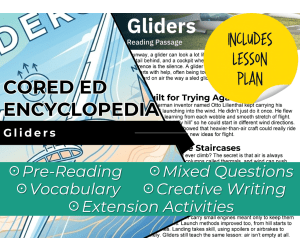
This gliders reading comprehension with lesson plan includes: Visualization (on the front cover) Start your lesson by taking a minute to think and share something about the topic. Read the script aloud (slowly), perhaps prepare some music or sound effects. Student close their eyes and let their imaginations wander. Students open their eyes, read the question aloud and give them a few minutes to complete. Ask a few students to share or keep answers until the end to compare with what they learn in the passage. Quick pause—thousands of Cored Education products are included with your TeachSimple membership. Download links and encyclopedia index available here. Pre-Reading Trivia Students will write down one thing they already know about the subject and then read five more facts and discuss. These facts are fun, and the students will enjoy learning about the subject before reading more. Give 1 minute for students to write what they already know (no pressure—best guess is fine). Read the five facts together. After each fact, do ask a student for their opinion, was it surprising? Set a purpose by asking students to highlight/underline one fact they want to learn more about during the reading. Reading Passage The text is a high-interest reading passage with set paragraphs, roughly three to four paragraphs long. It contains a variety of themes about the topic, anywhere from history to technology. The passage is between 250 and 350 words in length. First, ask students to look at the headings and see what they’ll learn about today. What do they know about the topic/heading? First read options: Teacher read-aloud (best for support). Partner reading (paragraph by paragraph). While reading, students underline important details, and vocabulary words they think may come up in the questions section. Mixed Questions The first question page contains four multiple-choice questions, each with a choice of four answers, and three written response questions that require a sentence or two from the student. Students complete the mcqs first independently, then review quickly as a class. For the 3 written responses, try to get students giving the answer with some form of evidence: “I think ___ because the text says ___.” If students get stuck, send them back to check the passage. Vocabulary Questions Practice seven key words from the text in this section across two activities. First section is scrambled words where students will unscramble three words given a clue for each. The second section is a word to meaning matching activity. Before starting, have some students read out words they underlined in the passage. Ask students to say the word and read aloud the sentence(s) around each word. Ask students to do scrambled words and the matching exercise in pairs then go through answers as a class. For the scrambled spelling task, get four pairs to come up to the board and write the words for extra practice with the other student reading out the clue. For the matching task, prompt students to give full sentences: “I matched ___ with ___ because ___.” Creative Writing In this question, the student will be required to write a five to eight sentence paragraph on a question related to the topic. Before starting, ask students write down 3 key ideas they are going to include in their piece. Ask students for ideas to share around the class to help those struggling. Pro writing expectations: 5–8 sentences At least 2 facts or details from the passage At least 2 vocabulary words from the previous page Students read their paragraphs while classmates listen for facts and vocabulary words. Extension Activities This page is optional for fast finishers or to take home. There are several activities, each one requiring a different skill. Do some, do none, do all, completely optional - but you will feel reassured knowing every possibility is planned for. Includes summary writting question and additional facts. Answer Key There are answers for the multiple-choice questions, written response questions have sample answers, vocabulary answers and if there is a summary question then a sample summary will be provided as well. Lesson Plan Included Customized lesson plan for this lesson is included. Lesson Snapshot Title: Gliders Genre: Nonfiction (informational text) Subject: Science (flight/engineering) Primary Topic: How gliders fly using lift and launch methods Estimated Guided Reading Level (A–Z): Q What This Lesson Teaches Best Explains what makes a glider different from a small airplane (no motor; quiet flight; “trade height for distance”). Describes how gliders get into the sky (help at the start, including being towed; later mentions aerotows and winches). Teaches how moving air helps a glider climb—especially rising warm air (“thermals”) and wind pushed upward at a ridge or hill. Shows how design features support gliding (long, narrow wings; smooth body; low drag to lose little energy). Connects gliders to early flight experiments through Otto Lilienthal’s repeated testing and “fly hill.” Learning Goals Students will describe how a glider is similar to and different from a small airplane. Students will explain how a glider usually starts flying using details from the text. Students will identify two kinds of lift described in the passage and tell how each helps a glider climb. Students will explain why long, narrow wings and low drag help a glider glide efficiently. Students will describe how gliders and launch methods changed over time, using examples from the text. Students will explain how spoilers or airbrakes help with landing safely. Key Vocabulary From the Text cockpit — where the pilot sits and reads instruments. thermals — rising columns of warm air. drag — air resistance that slows motion. aerotows — launches where an airplane tows the glider. spoilers — panels that help a glider slow down and descend. FULL CATALOG OF DOWNLOAD LINKS AND ENCYCLOPEDIA INDEX HERE
Author Cored Education
Rating
Tags Vocabulary, Reading Comprehension, Reading Passages, Lesson Plans, Ela Lesson Plans, Reading Comprehension Lesson Plans, Pre-reading, Science Lesson Plans, Physics, History
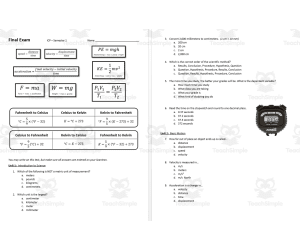
Science Final Exam - Semester 1 (Units 1-5)
Science, Chemistry, Physics, Grade 6, 7, 8, 9, 10, 11, 12, Teacher Tools, Assessments
Science Final Exam - Semester 1 (Units 1-5) This beneficial teaching resource is designed especially for educators and suitable for grades 6 to 12. It includes vital topics from the field of science such as: Introduction to Science Basic Motion Newton's Laws of Motion Energy The Particle Theory of Matter Educational Resource Layout and features: The layout mirrors a final exam with forty multiple-choice questions along with a free-response section.In the latter, students are encouraged to graph data, label a graph and draw best-fit lines, facilitating different learning strategies beyond rote memorization. Adaptable Classroom Incorporation: This material can be adapted to suit various classroom settings based on individual teaching styles or student learning requirements. Options include whole class participation or small group discussions around each question before attempting solutions individually or in teams. Distribution Of Questions: Six: Introduction to Science (Including graphing) Nine: Basic Motion Nine: Newton's Laws of Motion Seven: In relation to understanding Energy Nine more: Focusing on the comprehension of the Particle theory. JavaS JavaS Formula.javaScript The product's value is enhanced by its adaptable format, suitable for different technology platforms. It provides .docx files (for Microsoft Word or similar word processing software), .pptx ones (for Microsoft PowerPoint or similar presentation software) and a PDF format (accessible via any PDF viewer like Adobe Reader). Conclusion: The Science Final Exam - Semester 1 (Units 1-5) acts as an expedient guide simplifying final exam preparation while maintaining academic rigor across different science branches – undeniably a crucial component in every effective educator's teaching collection.
Author Integrated Chemistry and Physics
Tags Science Education, Final Exam, Comprehensive Curriculum, Multiple-choice Questions, Free-response Section

G 9–12 Health Curriculum | Nutrition & Physical Education Activities
P.E. & Health, Grade 9, 10, 11, 12, Lesson Plans, Teacher Tools, Worksheets & Printables
High School Nutrition & Physical Literacy Curriculum | Complete Health Curriculum for Grades 9–12 | Health, PE & Wellness Activities Looking for a rigorous, standards-aligned Nutrition & Physical Literacy Curriculum for high school? This comprehensive Grades 9–12 Health Curriculum transforms health education into an engaging, college-preparatory course where students analyze scientific evidence, interpret data, evaluate media claims, conduct research, participate in structured debates, and write evidence-based arguments. Designed for high school classrooms, this complete curriculum develops critical thinking while helping students build the knowledge and habits needed for lifelong health and wellness. With 731 printable pages , including 481 student activity pages , a 136-page Teacher Guide , and 11 bonus resource sets , this complete curriculum provides approximately 30–36 hours of ready-to-teach instruction across 24 engaging topics organized into 6 comprehensive units . ⭐ What's Included This complete high school curriculum includes: Core Curriculum ✅ Comprehensive 136-page Teacher Guide ✅ 481 student activity pages ✅ 24 complete lessons across 6 instructional units ✅ Informational reading passages ✅ Academic vocabulary development ✅ Data interpretation & graph analysis ✅ Scientific research projects ✅ Case studies ✅ Quantitative reasoning activities ✅ Structured classroom debates ✅ Claim-Evidence-Reasoning (CER) writing ✅ Seminar discussions ✅ Reflection activities Bonus Teacher Resources ✅ Answer Key ✅ College-preparatory Assessment Rubrics ✅ Unit Tests ✅ Exit Tickets ✅ 143 Academic Vocabulary Cards ✅ Concept Flashcards ✅ Classroom Posters ✅ Award Certificates ✅ Family Letters ✅ Progress Checklists ✅ Editable Planning Documents Everything is designed as a print-and-teach curriculum with comprehensive teacher support, differentiation ideas, pacing guidance, and assessment tools to simplify planning while promoting rigorous instruction. ❤️ Units & Topics Covered Unit 1: Nutrition Students investigate: Macronutrients Micronutrients Dietary Guidelines Meal Planning Unit 2: Exercise Science Students explore: Energy Systems Strength Training Cardio Training Recovery Unit 3: Wellness Students learn about: Sleep Science Stress Management Mental Well-Being Healthy Routines Unit 4: Media Literacy Students analyze: Food Marketing Supplements Body Image Social Media & Health Unit 5: Personal Health Students investigate: Goal Setting Healthy Habits Lifestyle Diseases Prevention Unit 6: Lifetime Fitness Students develop: Personal Fitness Plans Community Recreation Active Living Long-Term Wellness Each topic follows a consistent research-based instructional model featuring reading, higher-order analysis, data interpretation, research, applied tasks, case studies, quantitative reasoning, structured debate, and Claim-Evidence-Reasoning writing. 🏫 How It Works in the Classroom This curriculum is flexible enough to be used as: High School Health Physical Education Nutrition Courses Wellness Classes Career & Technical Education Advisory Homeschool Intervention Semester Electives Cross-Curricular Science & ELA Integration Teach the complete course or use individual units independently. Every lesson follows a predictable instructional sequence: Read & Learn Analyze Interpret Data Investigate Reason Argue & Reflect Lessons integrate science, literacy, mathematics, and health education while encouraging students to think critically, evaluate evidence, and apply learning to real-world health decisions. 🎯 Standards & Learning Goals Students will learn to: Analyze nutrition using scientific evidence Interpret health data, graphs, and research Design balanced meal plans using evidence-based guidelines Explain exercise physiology and fitness principles Evaluate health claims and media messages critically Develop healthy lifestyle habits supported by research Understand the relationship between sleep, stress, and wellness Analyze chronic disease prevention strategies Design personalized fitness and wellness plans Conduct research and support arguments with evidence Strengthen critical thinking, communication, and problem-solving skills Apply health knowledge to lifelong decision-making ❤️ Why Teachers Love It ⭐ Complete Grades 9–12 Nutrition & Physical Literacy Curriculum ⭐ College-preparatory, inquiry-based lessons that promote higher-order thinking ⭐ Integrates health, science, literacy, math, and research skills ⭐ Consistent lesson structure saves planning time ⭐ Includes case studies, debates, CER writing, and research projects ⭐ Comprehensive Teacher Guide with lesson plans and instructional support ⭐ Includes assessments, rubrics, answer keys, tests, and exit tickets ⭐ Editable planning documents simplify course organization ⭐ Family letters encourage home-school communication ⭐ Classroom posters, vocabulary cards, flashcards, certificates, and progress trackers extend learning beyond daily lessons ⭐ Perfect for health teachers, PE teachers, CTE programs, homeschool educators, and secondary intervention or enrichment courses 📚 Prepare Students for Lifelong Health and Informed Decision-Making Empower students to become informed, critical thinkers with this engaging High School Nutrition & Physical Literacy Curriculum for Grades 9–12 . Through authentic research, scientific analysis, structured debate, and real-world applications, students build the knowledge and confidence to make evidence-based health decisions while developing the academic skills they need for college, careers, and lifelong wellness.
Author Bright Classroom Ideas Marketplace
Rating
Tags Nutrition, Health, Activities, Curriculum, Yearlong, Full Year, Back To School
L.3.6 Third Grade Common Core Lesson
ELA, Common Core, Grade 3, Teacher Tools
This L.3.6 Third Grade Common Core Lesson is perfect for helping students collect vocabulary words and phrases in their reading so they can use them for inspiration in their writing. This is a great way for teachers to help their students improve their writing skills.
Author Have Fun Teaching
Tags