



3,892 products added recently
Page 501 - Teacher Tools
Equip yourself with tools that streamline your teaching process and enrich your classroom experience. This collection includes organizational planners, assessment templates, and classroom management strategies. By integrating these resources, you can focus on delivering impactful instruction and fostering student success.

 Show filters


Colorado State Symbols PowerPoint
Social Studies, History, History: USA, Government, Grade 3, 4, 5, Teacher Tools, Presentations
Discover the beloved state symbols of colorful Colorado with this engaging 35-page PowerPoint presentation. Learn about the Rocky Mountain Columbine (state flower), Colorado Blue Spruce (state tree), Lark Bunting (state bird), and more. This informative resource spotlights 16 official state symbols total, including the state animal, fish, insect and even fossil. Visuals and details are provided for each symbol. Use this versatile resource in a variety of settings - whole group, small group, independent work or homework. Presentation slides cover essential state facts as well, like Colorado's nicknames "The Centennial State" and "Colorful Colorado", the state motto Nil Sine Numine ("Nothing without Providence"), and images of the state seal and flag. Supplement any Colorado history or geography curriculum with this useful presentation.
Author Mr. Matthews Teacher Store
Tags Colorado, Symbols, State, History, Geography
I WONDER - How Many Constellations Are There | Animated Video Lesson
Space, Earth and Environmental Sciences, Science, Grade 6, 7, 8, 9, 10, 11, 12, Lesson Plans, Teacher Tools
Video Introduction An amazing video designed for the students to learn more about space facts. I WONDER - How Many Constellations Are There | Animated Video Lesson Do you like reading about space? If yes, what is your favorite topic? What do you know about our solar system? What is the smallest planet in our solar system? What is the biggest planet in our solar system? What is the hottest planet in our solar system? And what is the coldest one? Do you think there are aliens? If yes, what do you think they look like? What do they eat and how they speak to each other? Where do they live? What is a galaxy? And what is a milky way? Have you recently saw a shooting star? If yes, tell us more about it, like when did it happen and where? What is a blackhole? Can a blackhole gets bigger by time? Do you like counting the stars? What do you think a star is made of? I WONDER - How Many Constellations Are There | Animated Video Lesson The video is perfect for encouraging the researching skills for the students, while learning more about the fantastic space. I WONDER - How Many Constellations Are There | Animated Video Lesson This friendly designed video is suitable for students at school, homeschooling, and as a group activity. Format Available in MP4 format.
Author Educational Voice
Tags How Many Constellations Are There, How Many Constellations Are There Video, Constellations, Constellations Facts, Constellations Facts For Kids, Constellations Video, Constellations Video For Kids, Constellation
I WONDER - What Equipment Do Gymnastics Use | Animated Video Lesson
Sports, P.E. & Health, Grade 3, 4, 5, 6, 7, 8, 9, Lesson Plans, Teacher Tools
Video Introduction An amazing video designed for the students to learn more about sports in different countries. I WONDER - What Equipment Do Gymnastics Use | Animated Video Lesson We have lots of sports nowadays, so tell us about your favourite sport! Do you know the history of soccer? Have you ever tried to play it? Or have you attended a football match? Have you ever tried to play golf? Or do you know what are different flags in formula 1 mean? Do you know the rules of cricket? Have you ever attended a tennis match before? I WONDER - What Equipment Do Gymnastics Use | Animated Video Lesson The video is perfect for encouraging the researching skills for the students, while learning more about this sport. I WONDER - What Equipment Do Gymnastics Use | Animated Video Lesson This friendly designed video is suitable for students at school, homeschooling, and as a group activity. Format Available in MP4 format.
Author Educational Voice
Rating
Tags What Equipment Do Gymnastics Use, Gymnastics, Gymnastics Facts, Gymnastics Video, Gymnastics Facts For Kids, Gymnastics Video For Kids, Gymnastics Equipment, Gymnastics Equipment Facts
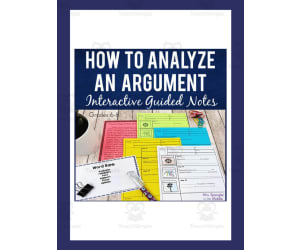
Analyzing Arguments PowerPoint + Guided Notes
ELA, Strategies, Grade 6, 7, 8, Literacy Readers, Teacher Tools
Make the difficult concept of analyzing and evaluating argumentative text easier for you and your Middle School students with these interactive guided notes! There are 4 versions with different levels of scaffolding but all with the same content so that all students can get what they need. Save tons of time with this easy-to-use, differentiated resource! Objective: Students will learn how to analyze an argument with this 3 step process that they can use with any argumentative text. This lesson will be a foundation for students to build upon as they analyze various texts throughout the year! Your students will love this because it gives them a blueprint of knowing what to do when analyzing an argumentative text. Plus, they'll enjoy the interactive flaps! You will love that the differentiation is already done! ____________________________________________ Supports Common Core Standards: CCSSCCRA.R.8 Delineate and evaluate the argument and specific claims in a text, including the validity of the reasoning as well as the relevance and sufficiency of the evidence.
Author Mrs. Spangler in the Middle
Tags Guided Notes, Analyzing Arguments, Vocabulary, Assessments, Reading Strategies, Argument Powerpoint Middle School

Reading Comprehension: Context Clues - FLASH-PC
ELA, Reading, Reading Comprehension, Grade 5, 6, 7, 8, Teacher Tools, Lesson Plans
Reading Comprehension: Context Clues - FLASH-PC FLASH-PC is a teaching resource that has been thoughtfully designed to improve students' reading skills from Grade 5 and up. Its prime focus lies on the "Context Clues" of Reading Comprehension. Both public school educators and homeschoolers can get immense benefit from this resource since its utility extends beyond the traditional learning environments. What Does The Resource Offer? A mini chapter that includes curriculum -based reading passages which are paired with questions labeled as "Before You Read" and "After You Read". These stimulate critical thinking in students both before and after their exploration with reading. Apart from this core substance, users can also expect printable educational materials that could be utilized for standalone classes or to supplement existing course workbooks. An exciting addition is the Vocabulary Flash Cards given within the package, enhancing linguistic comprehension amongst learners. Diverse Functionalities: The software includes Graphic Organizers assisting learners to structurally prioritize information presented in Language Arts sessions. The resource provides interactive activities fostering an environment where pupils apply learned knowledge actively as opposed to passively accumulating information derived from texts. In conclusion, Reading Comprehension: Context Clues - FLASH-PC isn't just a simple teaching resource but a comprehensive tool guiding educators towards inspiring curiosity, engagement, and better comprehension abilities among their scholars. Since it's offered as PC software using JSON-LD technology, it eliminates spatial limitations – thereby providing education wherever there's access to a computer!
Author Classroom Complete Press
Tags Software (PC)

Reading Simplified B - Guided Practice
ELA, Reading, Grade 1, 2, 3, Literacy Readers, Teacher Tools
This reading-based resource is designed for grades 1 to 3. Reading is a crucial skill for all learners. Having basic reading skills acts as the foundation for a student’s future success in life. This Reading Simplified program gives students the building blocks required in order to lay the foundation for literacy moving forward. This resource breaks down the reading structure to present proper literary steps, from letter and sound recognition, to phonics and word structure, to vocabulary and comprehension, and finally to study skills. Students will become engaged with the variety of activities included in this resource; motivating them to practice these ever-important reading skills and become master readers. Aligned to the International Reading Association and National Council of Teachers of English Standard 3.
Author Classroom Complete Press
Tags Reading, Letter, Sound, Recognition, Primary, Vocabulary, Answers, Elementary

Candy land classroom decoration job chart
Resources for Teachers, Classroom Management, Kindergarten, Preschool, Grade 1, 2, 3, Charts, Teacher Tools
Candy Land Classroom Decoration Job Chart An innovative teaching tool designed to elevate your classroom atmosphere and engage your students. Inspired by the playful and colorful imagination of Candy Land, this resource aids in cultivating a vibrant yet controlled environment. It is ideal for educators focusing on early learning through grade three. A Practical Resource The chart serves as more than just engaging decor; it also offers a practical purpose. It presents both the educator and students with an attractive point of reference for various roles within the classroom, promoting responsibility-taking, and ensuring class operations run efficiently. 30 Diverse Jobs: The chart encompasses 30 jobs that cover nearly all tasks needed to smoothly manage daily class activities. These range from general roles like Teacher Helper to specific duties such as Lunch Monitor or Weather Checker. Foster Basic Skills: Jobs like 'Recycle Manager' or 'Tech Helper' support basic skills for handling technology while encouraging environmental awareness. Variety in Font Styles: Each job title uses a different font style - granting teachers the chance to switch things up or select styles that best match with their students’ personalities or aesthetic appeal. This product's effectiveness spans across varying class sizes - whether it’s rotations of weekly job assignments within whole group settings or delegating roles based on group tasks during project-based learning units. Beyond school hours, these charts can function as homework reminders by assigning responsibilities such as 'Homework Checker' among parents during home schooling scenarios. Purpose-Built Design Features The Candy Land Classroom Decoration Job Chart comes furnished in convenient PDF files ready for print and lamination – ensuring longevity even in bustling classrooms! This creative resource entwines functionality into classrooms without veering away from the main academic focus. Offering vibrancy and unique features aimed at alleviating daily classroom management stressors related to student transitions throughout the day – we can rightfully say, Candyland never looked more educational! Looking for more decorations? Don’t forget to view our other candy land themed classroom decorations like Focus Walls, Number Posters and so forth. Explore potential classroom transformations through our Candy Land Classroom Decoration Job Chart .
Author Ezee 101
Tags Candy Land, Classroom Decoration, Job Chart, Responsibility-taking, Classroom Management
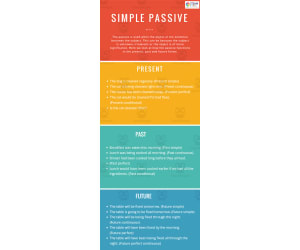
Simple Passive Intermediate Lesson Plan
ELA, Grammar, Grade 5, 6, 7, 8, 9, 10, 11, 12, Teacher Tools, Lesson Plans
Simple Passive | Intermediate Lesson Plan The Simple Passive | Intermediate Lesson Plan is an exceptional teaching resource designed for educators catering to students of all grades. This resource provides comprehensive insight into the Simple Passive aspect of grammar under the Language Arts subject. Main Features: Pedagogically Sound: This lesson plan has been meticulously crafted considering the intellectual requirements and learning pace of intermediate-level students. Analytical Skill-based: The exercises within foster analytical thinking abilities and enhance language comprehension skills. Digitally Accessible: Beside printed version, digital accessibility via Google Apps is also offered to maximize convenience. User-Friendly Material: A package of three easy-to-print PDFs with an answer key promotes independent progress checks by students. This versatile resource can easily be integrated into large classrooms or small-group instructions, enhancing students' understanding and application of grammatical principles effectively. Furthermore, it also suits homeschooling avenues or tutoring operations providing round-the-clock homework support with a dual-function - instructional aid as well as a tool for reinforcing at home lessons learned. The numerous advantages listed serve to not only minimize preparation time but also maximize educational impact, promising enriched learning experiences in both classroom and homeschooling settings. This ESL ELA TEFL lesson plan now includes new flash cards and exercises as well as a warmer, conversation questions, main use, construction, rules, examples, open questions, closed questions, activity, writing drill and extra study. The TEFL resource is available in PDF with 35 ready to print pages and one digital access file. A part of it is on Google Apps. The answer key is also included for reference.
Author TEAM TEFL
Tags Passive Voice, Grammar, Language Arts, Intermediate, Worksheets
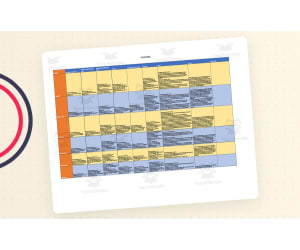
Curriculum Map for 1st Grade - Massachusetts
, Grade 1, Lesson Plans, Teacher Tools
The 1st Grade Curriculum Map for Massachusetts provides a comprehensive overview of the learning standards across subjects. This Excel resource maps out the math, language arts, social studies, and science goals that first grade students in Massachusetts need to meet. Teachers can use this adaptable tool to plan lessons and track student progress against state standards. It outlines skills and topics on a week-by-week basis, helping educators pace instruction and ensure adequate coverage of the material. Whether teaching a whole class, small group, leading a homework assignment, or facilitating independent practice, this curriculum map assists with aligning teaching to required benchmarks. Fully editable, it enables customization to individual classroom needs.
Author DK's Creations
Tags Curriculum Map, Massachusetts, Planning, State Standars, Language Arts
All About G - Letter of the Week Unit
ELA, Language Development, Pre-Reading, Kindergarten, Teacher Tools, Lesson Plans
All About G - Letter of the Week Unit This preschool letter recognition resource helps teach students all about the letter G through a variety of engaging activities. With over 60 pages of printable worksheets, crafts , games, and more, this packet allows teachers to easily create a full letter of the week curriculum. Students will have fun practicing letter formation, letter sounds, beginning sounds, and using the letter G in words. Activities like paper bag puppets, wikki stick mats, letter bingo, and memory games make learning memorable. The materials can be used for whole group, small group, or independent practice. Similar resources are available for each letter, allowing teachers to take a consistent approach across the alphabet. This comprehensive letter G unit saves planning time while providing students with a fun, multi-sensory preschool experience.
Author Simply Schoolgirl
Tags Letter Of The Week, Alphabet Games, Paper Bag Puppets, Letter Word Cards, Letter Bingo, Preschool, Kindergarten, Phonics, Letters, Formation

Sentence Structure Sample - Grades 1-2 Grammar (Word)
ELA, Language Development, ESL, Grammar, Common Core, Resources for Teachers, Grade 1, 2, Teacher Tools, Assessments, Quizzes and Tests, Tests, Worksheets, Worksheets & Printables
Sentence Structure - 1 Sample Lesson ELA MCQS Overview: In this series of lessons, students will embark on an engaging exploration of the grammar skills that bring our language to life. These lessons are designed to help students identify, understand, and effectively use language arts skills in their writing and speech. Used with the free supplementary materials available for all topics, each lesson builds on the last, offering a mix of direct instruction, interactive group activities, and independent practice. Through fun and creative tasks, students will learn how to recognize grammar in sentences, understand their role in sentences and use them to enhance their own writing and speech. Sentence Structure Overview: Includes: Complete Sentences Sentence Fragments Subject of a Sentence Types of Sentence End Punctuation Word Version This is the Word editable and version. This download is available in GOOGLE Docs, GOOGLE Forms, GOOGLE Slides. PDF, PPT, WORD, check the links below for more details. FULL CATALOG OF DOWNLOAD LINKS HERE Grade 1/2 Links: Capitalization and Punctuation Google Docs Google Forms Google Slides PDF PPT Word Free Supplementary Materials Pack Adjectives Google Docs Google Forms Google Slides PDF PPT Word Free Supplementary Materials Pack Nouns Google Docs Google Forms Google Slides PDF PPT Word Free Supplementary Materials Pack Pronouns Google Docs Google Forms Google Slides PDF PPT Word Free Supplementary Materials Pack Verbs Google Docs Google Forms Google Slides PDF PPT Word Free Supplementary Materials Pack Prefixes & Suffixes Google Docs Google Forms Google Slides PDF PPT Word Free Supplementary Materials Pack Sentence Structure Google Docs Google Forms Google Slides PDF PPT Word Free Supplementary Materials Pack Subject-Verb Agreement Google Docs Google Forms Google Slides PDF PPT Word Free Supplementary Materials Pack ELA Review Questions Overview Questions have three answer choices. There are a handful of pictures on each test for aesthetic purposes, as well as a review sheet covering most of the topics covered in the product. Introduction or Example Sheet Each topic will include an introduction or example sheet to go through first with your students. Full Answer Keys Full answer keys and sample responses are provided so no matter how busy you are, you know you're covered! In the Supplementary Pack Interactive Ice Breakers: Fun, hands-on activities that get students thinking about adjectives right from the start. Guided Practice: Teacher-led exercises that reinforce the day’s lesson, ensuring students can confidently identify and use adjectives. Group and Partner Tasks: Collaborative activities that allow students to work together to solve problems, categorize adjectives, and create descriptive sentences. Independent Worksheets: Structured worksheets that provide individual practice and help solidify understanding of key concepts. Exit Tasks: Quick, reflective activities at the end of each lesson that assess understanding and encourage students to apply what they’ve learned. For similar downloads and other frees, do check out Cored Group on TeachSimple.
Author Cored Education
Tags Elementary, Reading, Comprehension, Vocabulary, Answers, Ccss, Common Core, Spelling, Writing, Passages

Guided Reading Level Q - The Living Rainforest (with Lesson Plan)
ELA, Resources for Teachers, Reading Comprehension, Reading, Animals, Life Sciences, Science, Nature & Plants, Earth and Environmental Sciences, Physics, Grade 3, 4, 5, Worksheets & Printables, Worksheets, Teacher Tools, Centers, Activities, Literacy Readers, Quizzes, Quizzes and Tests, Assessments
This Guided Reading Book - The Living Rainforest (Level Q) with lesson plan includes: Guided Reading Color Label (front cover x1) This is a quick way to match the book’s demands to what students can generally handle.. The overall goal is to use the level/color to pick books for several smaller groups. To qualify for a certain level, a student is expected to read a book from that level with about 90–94% accuracy. If a student is consistently accurate and understands, move up a level. If the student is struggling at that level, drop down and add more support. Each student will improve at completely different rates, but it is generally one of the best ways to check progress across the class. DOWNLOAD THE CATALOG TO VIEW ALL GUIDED READING BOOKS AVAILABLE (SORTED LEVELS A-Z) Pre-Reading Question (x1) Teacher asks the prompt aloud, can be while showing the cover or first page. Students share what they already know, or make educated guesses from the cover. Prompt them to use the target vocabulary. Write some of their responses on the board to look back at during the reading. Vocabulary Words (x5) Introduce the five words, best doing it one at a time. Start by saying it, while students repeat and then see if anyone knows what it means before reading further. Read through the meaning and try to briefly connect each word to a picture or gesture so it’s meaningful. Ask students to flip through the book pages and point to where they see each of the vocabulary words. While reading the book pause upon coming across one of the vocab words or read the sentence twice to make sure students understand the word has appeared. Optional: Ask students to raise hands whenever they see/hear one of the new words. Guided Reading Pages (x10) Check the book snapshot (below) for: primary topic - do you need to prep extra reading or intro materials on this? what is taught best - decide on 1-2 bullets to focus on, use the prompt or words provided here for best results. learning goals - what you are checking for students to be able to do after the session, elicit answers using prompts or words provided. key vocabulary (see section above). questions overview - so you know what is coming up and if you need to prep extra materials to assist understanding. Run the lesson You may have already looked at a few of the pages together, but you can show them some of the pictures again first to set meaning. Depending on how much time you have and how familiar your students are with guided reading class, you may want to read the book aloud first with the group first. Students whisper or partner read, while you listen in. If time, do it as a group, one student reading a page each. Use the guided page’s prompts to coach: “Check the picture / does it make sense?” “Point under the words / try the first sound” “Reread the sentence smoothly”. Try to focus more on one student per session (rotating every time), so you can work out if they are ready to move up or need to move down a level. Comprehension Questions (back cover x3) This is your way to check that students didn’t just say the words, but actually understood the text. First, let students answer by pointing to the page/picture and saying a short sentence. After any answer, follow with: “Show me where you found that in the text.” In bigger groups, have partners answer first (10–20 seconds), then call on 2–3 students to share. Differentiation tips: Emerging speakers/struggling readers: oral + pointing On-level: oral in a full sentence Higher: one written sentence or draw + label Book Snapshot Title: The Living Rainforest Genre: Nonfiction (informational text) Subject: Life Science / Reading (Informational Text) Primary Topic: Rainforest layers, cycles, and why they matter Estimated Guided Reading Level (A–Z): Q What This Book Teaches Best Rainforest location and climate patterns: Tropical rainforests are near the equator and stay warm and rainy year-round. Structure of a rainforest ecosystem: The text explains distinct vertical layers (forest floor, understory, canopy, emergent layer) and what makes each layer different. Earth science connection (water cycle): Transpiration is described as a process that helps form clouds and rain over the forest. Biodiversity and ecosystem balance: Rainforests hold a huge variety of life, and organisms play roles that keep the ecosystem balanced. Why rainforests matter globally: The book connects rainforests to photosynthesis, oxygen/carbon dioxide exchange, carbon storage, rainfall patterns, and climate. Learning Goals Students will describe where tropical rainforests are located and what their climate is like. Students will explain how the rainforest is organized into layers and compare the conditions in at least two layers. Students will describe what happens on the forest floor when leaves, seeds, and fruits decompose. Students will explain transpiration and how it helps create rain over the rainforest. Students will summarize why rainforests are called the “lungs of the planet,” using details from the text. Students will identify reasons the text gives for preserving tropical rainforests. Key Vocabulary From the Text ecosystems — living things and their environment working together. decompose — break down and rot into smaller parts. understory — plant layer below the canopy. transpiration — plants release water vapor from leaves. biodiversity — many different living things in one place. Discussion Prompts Pre-reading question: How might the different rainforest layers change where plants and animals can live? Comprehension questions: What makes the forest floor dark and damp, according to the text? Comprehension questions: How does the text describe transpiration helping rain form over the rainforest? Comprehension questions: Why does the text call rainforests the “lungs of the planet”? Printing Tips 1. Best Printing Method (Recommended) “Booklet” Printing (Best if Available) If your printer or PDF viewer supports Booklet Printing , use this. Settings to use: Print mode: Booklet Paper size: Letter or A4 (either works) Orientation: Landscape Print on both sides: Yes Flip on: Short edge Scaling: Fit to printable area Booklet subset: First test: Front sides only Then: Back sides only This will automatically: Pair pages correctly Put the cover on the outside Align everything for folding After printing, fold in half and staple along the spine . 2. If “Booklet” Printing Is NOT Available You can still print this correctly with manual duplex printing . Step-by-step: Open the PDF. Choose Print . Set: Orientation: Landscape Pages per sheet: 1 Print on both sides: Yes Flip on: Short edge Print all pages . Because each PDF page already contains two facing book pages, the result will still fold cleanly into a book. Thousands of Cored Education products are included with your TeachSimple membership. Download links and encyclopedia index available here.
Author Cored Education
Rating
Tags Reading Comprehension, Reading Passages, Reading, Guided Reading, Guided Reading Lesson Plan, Guided Reading Activity, Pre-reading, Science Lesson Plans, Animals, Plants
Step-by-Step - Grades 3-4: Year-Round Practice for Following Directions and Promoting Listening Skills
, Grade 3, 4, Teacher Tools, Lesson Plans
Step-by-Step - Grades 3-4: Year-Round Practice for Following Directions and Promoting Listening Skills This exceptional resource is designed for 3rd and 4th grade teachers, aiming to enhance two crucial skills in students—'Following Directions' and 'Attentive Listening'. The book contains step-by-step instructions, ideal for both independent reading by students or collectively listening as read aloud by the teacher. This unique setup promotes inclusive learning across various skill levels within one classroom setting. Students are equipped with drawing paper, pencil, crayons, and an activity sheet from this versatile guidebook. Besides improving adherence to directions, these interactive activities additionally nurture children's creativity through fun tasks. Touted as an invaluable tool by teachers, this resource can seamlessly become part of existing lesson plans. It also serves as a straightforward aid for parents opting for homeschooling. The format allows flexibility—instruction can be delivered in a whole group setting or smaller groups; it even doubles up as enjoyable homework assignment encouraging responsibility. The digital PDF format caters explicitly to 'Grade 3' and 'Grade 4'. This offers the advantage of convenience—you can print what you need when you need it! Incorporate Step-by-Step - Grades 3-4: Year-Round Practice into your teaching plan With the integration of this educational aid to your teaching tools, facilitate honing cognitive abilities among your young learners while making learning enjoyable!
Author Classroom Complete Press
Tags PDF

Legislative Branch of the Government: History Speaks . . .
Social Studies, History, History: USA, Grade 4, 5, 6, 7, 8, Teacher Tools, Lesson Plans
The Legislative Branch of the Government: History Speaks . . . This educational resource, designed for Grade 4 to Grade 8 students, prioritizes American history with a special focus on the legislative proceedings. Topics Covered: Congressional roles, law-making processes, and differences between Senate and House. Nature: Functional and academic but goes beyond simple facts presentations. A unique aspect: Includes mock Congress sessions for practical learning implementation. The resource emphasis extends to deciphering historical documents to nurture analytical skills in relevance to present sociopolitical contexts. This significant feature is expected to deepen student engagement and enhance learning outcomes. The grade-level aptness of this material ensures that all students find it valuable regardless of their affinity or prior exposure towards Social Studies or American History. Easily Integrable Teaching Aid This comprehensive teaching aid comes with lesson plans carefully combined into flawless PDF files for effortless incorporation into diverse teaching styles: Suitable for whole group instructions in traditional classrooms. Also perfect for facilitating self-paced learning scenarios like homeschooling. In conclusion, The Legislative Branch of the Government: History Speaks . . introduces an immersive approach to history instruction by making factual information interactive thereby facilitating educators' endeavors in instilling timeless knowledge among enthusiastic young learners!
Author Classroom Complete Press
Tags PDF

Coordinate Transformations QUIZ
Math, Geometry, Grade 8, Quizzes, Quizzes and Tests, Teacher Tools
A quick and concise way to assess your students' understanding of the four basic geometric transformations (reflection*, rotation*, translation, dilation). Use as a quiz or extra practice (great for end of year review or substitute lesson plans)! The version for Google Forms allows for giving students immediate feedback OR waiting to receive their score after all have been assessed. *This quiz only assesses reflections over each axis, rotations of 90 and 180 degrees.
Author The Math Cafe
Tags Quiz, Google Forms, Transformations, Coordinate Transformations Quiz, Geometry Quiz, Geometric Transformations Test, Transformation Quiz
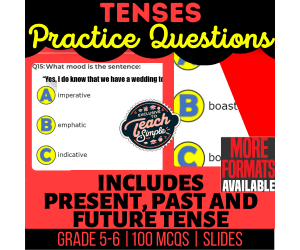
Tenses Practice Questions - Grammar Grade 5-6 (Slides)
ELA, Language Development, ESL, Grammar, Common Core, Resources for Teachers, Grade 5, 6, 7, Quizzes and Tests, Teacher Tools, Tests, Assessments, Activities
Tenses Grammar Practice MCQS ELA MCQS Overview: In this series of lessons, students will embark on an engaging journey to master the language arts skills that make communication effective and expressive. These lessons are designed to help students recognize, understand, and apply key grammar, vocabulary, and writing conventions in both their writing and speech. Each lesson builds upon the previous one, providing a structured blend of direct instruction, interactive group activities, and independent practice. With engaging tasks and thought-provoking questions, students will explore sentence structure, word choice, punctuation, and grammar rules to strengthen their understanding of English language conventions. Accompanied by free supplementary materials covering all topics, this series ensures a well-rounded and enjoyable learning experience. Through practice and exploration, students will develop the skills needed to analyze language, construct clear sentences, and express themselves with confidence. Tenses Overview: Present Tense Practice Past Tense Practice Future Tense Practice Further Tense Practice Slides Version This is the Slides editable and interactive version. There is a fillable answer sheet at the end. This download is available in GOOGLE Docs, GOOGLE Forms, GOOGLE Slides. PDF, PPT, WORD, check the links below for more details. FULL CATALOG OF DOWNLOAD LINKS HERE Grade 5/6 Links: Capitalization & Punctuation Google Docs Google Forms Google Slides PDF PPT Word Free Supplementary Materials Pack Adjectives Google Docs Google Forms Google Slides PDF PPT Word Free Supplementary Materials Pack Nouns Google Docs Google Forms Google Slides PDF PPT Word Free Supplementary Materials Pack Pronouns Google Docs Google Forms Google Slides PDF PPT Word Free Supplementary Materials Pack Verbs Google Docs Google Forms Google Slides PDF PPT Word Free Supplementary Materials Pack Prefixes & Suffixes Google Docs Google Forms Google Slides PDF PPT Word Free Supplementary Materials Pack Sentence Structure Google Docs Google Forms Google Slides PDF PPT Word Free Supplementary Materials Pack Subject Verb Agreement Google Docs Google Forms Google Slides PDF PPT Word Free Supplementary Materials Pack Tenses Google Docs Google Forms Google Slides PDF PPT Word Free Supplementary Materials Pack Context Clues Google Docs Google Forms Google Slides PDF PPT Word Free Supplementary Materials Pack Defining Words Google Docs Google Forms Google Slides PDF PPT Word Free Supplementary Materials Pack Fill in the Blanks Google Docs Google Forms Google Slides PDF PPT Word Free Supplementary Materials Pack Homophones Google Docs Google Forms Google Slides PDF PPT Word Free Supplementary Materials Pack Synonyms Google Docs Google Forms Google Slides PDF PPT Word Free Supplementary Materials Pack ELA Review Questions Overview Questions have three answer choices. There are a handful of pictures on each test for aesthetic purposes, as well as a review sheet covering most of the topics covered in the product. Introduction or Example Sheet Each topic will include an introduction or example sheet to go through first with your students. Full Answer Keys Full answer keys and sample responses are provided so no matter how busy you are, you know you're covered! In the Supplementary Pack Interactive Ice Breakers: Engaging warm-up activities that introduce students to key ELA concepts, such as quick capitalization corrections and punctuation challenges. Guided Practice: Structured teacher-led exercises that reinforce grammar and punctuation rules, helping students identify and apply them correctly in sentences. Group and Partner Tasks: Collaborative activities where students work together to edit sentences, correct capitalization, and improve punctuation through peer discussion and teamwork. Independent Worksheets: Carefully designed worksheets that provide focused practice, allowing students to apply learned concepts and refine their skills independently. Exit Tasks: Quick assessments at the end of each lesson, prompting students to reflect on what they’ve learned and apply their knowledge in writing and editing tasks. For More Like This For similar downloads and other frees, do check out Cored Group on TeachSimple.
Author Cored Education
Tags Elementary, Answers, Ccss, Common Core, Grammar, Tests, Test Prep, Assessment, Grade 5, Grade 6

I WONDER - What Are The Different Types Of Cells | Animated Video
Human Body, Life Sciences, Science, Biology, Grade 5, 6, 7, 8, 9, 10, 11, Lesson Plans, Teacher Tools
Video Overview The human body is full of fascinating wonders to learn. This video is created to help the students recognize the anatomy and the job of the human body. I WONDER - What Are The Different Types Of Cells | Animated Video Lesson Every part and organ in our human body is vital so let's see how important they are. Have you ever imagined how we look like if we didn't have a skeleton? Did you know that because we have our amazing muscles we can stand! Do you know how many teeth do we have? Have you ever wondered about the food journey inside our body? Can you name all the glands in our body? Why do we have skin? Our nervous system is really good at sending signals. Can you tell us more about it? Are you really good at Mathematics, painting, or any other thing? You should really thank your brain about it! The famous five senses are really doing a great work? Can you explain how every sense works? I WONDER - What Are The Different Types Of Cells | Animated Video Lesson The video is perfect for encouraging the researching skills for the students, while learning more about our fantastic human body. I WONDER - What Are The Different Types Of Cells | Animated Video Lesson This friendly designed video is suitable for students at school, homeschooling, and as a group activity. Format Available in MP4 format.
Author Educational Voice
Tags What Are The Different Types Of Cells, What Are The Different Types Of Cells Video, Different Types Of Cells, Different Types Of Cells Facts, Different Types Of Cells Facts For Kids, Different Types Of Cells Video
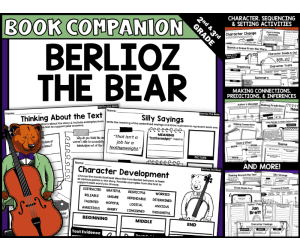
Berlioz the Bear by Jan Brett Interactive Read-Aloud Activities
ELA, Reading, Reading Comprehension, Language Development, Vocabulary, Grade 2, 3, 4, Literacy Readers, Teacher Tools
This picture book companion is a complete supplemental resource for the book Berlioz the Bear by Jan Brett. With 27 print-and-go reading activities to choose from, this resource is ideal for customizing learning to your student's specific needs and academic abilities. Students will identify story elements, determine the theme, analyze characters, compare and contrast, make predictions, inferences, and connections, answer questions that require them to think within and beyond the text, and so much more! Students will love the engaging and fun activities, and you will appreciate the time saved hunting for high-level resources to teach reading concepts that students frequently struggle with. The activities provided are designed to enable students to apply higher-level thinking skills, encourage them to provide text evidence to support their thinking, and challenge them to express their own thoughts and/or perspectives. ⭐️This Resource Includes:⭐️ Making Predictions: Students will make predictions about the text before reading the book. Story Elements: Students fill in the boxes with words & pictures to represent the story elements. Sequencing: Students will retell & illustrate the important parts of the story. Recalling Events in Chronological Order: Students describe and illustrate four major events in the story chronologically. Summary: Students complete the Somebody, Wanted, Because, But, So graphic organizer and write a summary of the story. Story Event Sort: Students will describe a scene or event from the story that fits into each of the categories & explain how the event made them feel & how it relates to the category. Making Connections: Students make connections to an event from the story. Cause & Effect: Students fill in the missing causes and effects (ANSWER KEY included). Using Details to Make Inferences: Students will read the text from the story to answer the leading questions and make inferences (ANSWER KEY included). Making Inferences: Students use clues & schema to make inferences while reading the story. Character Traits: Students choose four words from the list that describe the character and give examples from the story to explain how they show each trait. Character Inside & Out: Students include details from the story to describe what the character says, thinks, does, and feels. Character Feelings: Students describe how the character's feelings change throughout the story & give examples of the events that cause them to feel the way they do. Character Development: Students select character traits that best describe the character at different times throughout the story and give examples from the book to support the traits they choose. Character Change: Students will explain how the character changed from the beginning to the end of the story and describe the events that caused the change to happen. Overcoming Obstacles: Students will pick two physical, emotional, or mental challenges that the character faced in the story, describe how they responded to those challenges, and choose a character trait that developed as a result of their experiences. Sketch a Scene From the Story: Students will draw a scene from the story and describe what happened there and why it was important to the plot. Setting the Scene: Students identify three different settings in the story and explain how they know the setting changed. Author's Message: Students describe four important events from the story and put them in chronological order. Then, answer the questions about the author's message. Theme: Students answer the questions to determine which theme best fits the story and provide text evidence to support their choice. Thinking About the Text: Students will answer the questions about the story & include examples from the text to support their answers. Thinking Beyond the Text: Students will answer the questions about the story & include examples from the text to support their answers. Silly Sayings: Students read the text from the story, write the meaning of the underlined sayings, and draw a picture to represent each one. (ANSWER KEY included). Crossword Puzzle: Students use the definitions and the word bank to fill in the crossword puzzle (ANSWER KEY included). Social Media Post: Students imagine they are a character in the story and create a social media post to share one event from the story. They will include a caption, name, location, the number of likes, and a creative hashtag. Book Review: Students rate and review the book. Author Study Brochure: Students research to learn more about the author's life and create a brochure. This resource is for extension read-aloud activities only. The book is not included.
Author Creatively Gifted
Tags Reading, Fountas And Pinnell, Second Grade, Elementary Ela, Reading Comprehension, Character Traits, Guided Reading, Interactive Read-aloud, Picture Book, Berlioz The Bear By Jan Brett

Sociocultural Diversity
Social Studies, History, Psychology, Grade 7, 8, 9, 10, Teacher Tools, Presentations
Sociocultural Diversity: An Educational Resource This comprehensive teaching tool is designed to guide discussions on some of the most significant social issues confronting our society today. It explores societal and implicit biases, their roots and impacts, and how they shape people’s daily interactions. Content Focus Specially developed for students in grades 7 through 10, Sociocultural Diversity delicately navigates topics which include: Racial bias Gender bias Class bias Age bias Sexual orientation bias. In addition to these primary areas, it delves into psychology-based concepts such as the Pygmalion Effect and expectation biases that further perpetuate these social problems. Educational Format & Features The format of Sociocultural Diversity includes a full class slide deck with clear visuals appropriate for grasping complex topics effectively. One of its distinctive features is an embedded crash course psychology video accompanied by pertinent questions. Note:This interactive feature serves to supplement classroom discussions while facilitating comprehension through audio-visual inputs - an effective method known to enhance information retention among younger learners. Auxiliary Learning Components : A manageable student worksheet for reflecting upon personal understanding and practising critical thinking skills outside class hours. This invaluable educational resource forms part of the social studies syllabus under the psychology sub-category, modeling empathetic perspectives towards differences between individuals because it doesn't just teach - it instills values! Inclusive education has never been more fundamental than now when schools aim to raise well-rounded thinkers who can navigate our multifaceted world without prejudice or discrimination. Educating about diversity today fosters respect tomorrow!
Author Ed Dynamic
Tags Diversity Education, Social Biases, Psychology, Empathy Training, Interactive Learning
Galaxies & The Universe: Introduction to the Universe - FLASH-PC
Science, Earth and Environmental Sciences, Space, Common Core, Grade 5, 6, 7, 8, Teacher Tools, Lesson Plans
Galaxies and the Universe: Introduction to the Universe - FLASH-PC An essential teaching resource designed to simplify complex astronomy concepts for Grade 5 through Grade 8 students. It's compatible with PC software and aims at creating a comprehensive, interactive environment that fosters curiosity about cosmic entities. Tailored Educational Content This educational content is geared towards introducing students to the colossal expanse of galaxies and universe. The materials are Informed by Common Core State Standards, guaranteeing they meet designated learning outcomes. Follows Bloom's Taxonomy, which promotes varied levels of thinking skills among students. Robust Reading Passages With Galaxies & The Universe: Introduction to the Universe FLASH-PC, educators receive robust reading passages that have been carefully crafted for optimum comprehension. This approach ensures students grasp core concepts while stimulating a deep interest in studying astronomy. Also included are 'before you read' and 'after you read' questions with each passage. Sterling Features Incorporated: Appealing printables and vocabulary flash cards – promoting hands-on involvement while expanding scientific terminologies. An integration of audio-video components along with interactive activities offers immersive experiences solidifying comprehension through visualizations combined with auditory reinforcements. Apt For Various Settings: Equally suited to both public-school teachers as well as homeschoolers alike. Whether implemented in whole group classes or smaller study circles or even assigned as out-of-class assignments. In summary, the "Galaxies & The Universe: Introduction to the Universe FLASH-PC" emerges as an effective tool responding adeptly to evolving instructional methods within educational landscapes today. It provides a streamlined blend of theory information supplemented by not just active but interactive learning tools fostering holistic student growth within astronomical sciences.
Author Classroom Complete Press
Tags Software (PC)

Whales Gr. 2-3
Science, Life Sciences, Animals, Grade 2, 3, Teacher Tools, Lesson Plans
Whales Gr. 2-3 An insightful resource for educators, Whales Gr. 2-3, offers a fascinating glimpse into the world of these magnificent marine mammals and their significant role in Earth's ecosystem. This teaching resource is designed to optimize learning for students in Grades 2 and 3 studying zoology within the field of science. Whales Gr. 2-3 is not an ordinary teaching guide – it's an experience that brings together classrooms with nature by exploring thought-provoking subjects such as: whale extinction, Inuit culture and whales, Distribution of whales across Canada, The unique methods of whale communication amongst other engaging themes. We have infused the material with learning activities that encourage students' exploration while providing appropriate visuals to aid understanding. It becomes a comprehensive tool for teaching or augmenting lessons on marine life, specifically related to whales. The package dives into explicit details like: dietary preferences, mammalian features that make them unique among sea creatures. Coverage includes: Societal patterns (whale families & social groups) Potential threats (whale hunting) Using this curriculum based upon your needs - during whole class lessons or smaller group settings - ensures flexibility. The guide also comprises hands-on exercises such as word searches along with creative tasks like themed bookmaking projects. Designed as a .PDF format file for easy access across diverse educational environments including traditional schools and homeschooling setups. The product includes student sections containing reading passages expanding upon each topic which can be utilized effectively during lessons. Finally, a significant feature is the integration of a big book to enhance reading comprehension skills, making Whales Gr.2-3 an indispensable teaching material for any educator passionate about inspiring curiosity about the natural world among their students.
Author Classroom Complete Press
Tags PDF

Volcano Rising Interactive Read-Aloud Book Companion Activities
ELA, Reading, Reading Comprehension, Language Development, Vocabulary, Science, Earth and Environmental Sciences, Earth Sciences, Grade 2, 3, 4, Literacy Readers, Teacher Tools
🌋Volcano Rising Picture Book Companion : A Comprehensive Resource for Teachers This comprehensive companion resource is designed to enhance the learning experience of students while reading the book "Volcano Rising" by Elizabeth Rusch. With 24 ready-to-use activities, this resource allows for customized learning to meet the specific needs and academic abilities of your students. It covers a wide range of skills, including listening and note-taking, understanding the formation and impact of volcanoes on Earth, making inferences and connections, expanding vocabulary, analyzing text and graphic features, and critical thinking. ⌚Engaging Activities for Students, Time-Saving for Teachers The activities provided in this resource are engaging and fun for students, ensuring an enjoyable learning experience. As an educator, you will appreciate the time saved by not having to search for high-level resources to teach reading concepts that students often struggle with. 💭Promotes Higher-Level Thinking Skills The activities in this resource are designed to enable students to apply higher-level thinking skills. Students will be encouraged to provide text evidence to support their thinking, express their own thoughts and perspectives, and engage in analytical thinking. 🌟Resource Highlights:🌟 Making Predictions: Encourage students to make predictions about the book before reading. KWL Graphic Organizer: Help students activate prior knowledge and set learning goals by filling in a chart with what they know, what they want to learn, and what they have learned. Volcano Rising Students Notes Booklet: Guide students to take notes while reading the story with a printable booklet. (Includes answer key) Main Idea & Supporting Details: Improve comprehension by identifying main ideas and supporting details. (Includes answer key) Word Scramble: Use details from the book to unscramble words. (Includes answer key) Who Am I?: Match words from a word bank to descriptions and draw and color pictures of volcanoes. (Includes answer key) Fact or Fiction: Determine whether details from the story are facts or fiction. (Includes answer key) True or False (bubble answers ONLY): Assess comprehension with true or false statements. (Includes answer key) True or False (bubble answers & correct the false statement): Evaluate understanding by determining if statements are true or false and correcting false statements. (Includes answer key) Cause & Effect: Identify cause and effect relationships. (Includes answer key) Parts of a Volcano Diagram: Label the parts of a volcano. (Includes answer key) 3-2-1: Describe different types of volcanoes, things created by volcanic eruptions, and choose a word to describe volcanoes. (Includes answer key) Figurative Language Match-Up: Match figurative language descriptions of volcanoes to corresponding pictures. (Includes answer key) Compare & Contrast: Compare and contrast creative eruptions and destructive eruptions. Thinking About the Text: Answer questions about the story and provide examples from the text to support answers. Thinking Beyond the Text: Answer questions about the story and provide examples from the text to support answers. Volcano ABCs: Write words or phrases related to volcanoes for each letter of the alphabet. Volcano Playing Cards: Create playing cards with facts and illustrations about each volcano. Crossword Puzzles: Solve crossword puzzles related to volcanoes. (Includes answer key) Word Search Puzzle: Find volcano-related words in a word search. (Includes answer key) Acrostic Poem: Create an acrostic poem using letters from the word "volcanoes." Volcano Poster: Design an informative poster about volcanoes, including illustrations, key facts, and vocabulary words. Fun Facts About Volcanoes: Record interesting information and fun facts about volcanoes. New Vocabulary: Choose four new words from the book, find their meanings, and illustrate each word. Book Review: Rate and review the book. All About Volcanoes Brochure: Research and learn more about volcanoes using provided guiding questions. Volcano Roll & Research: Roll a die to explore and research a specific volcano using teacher-approved resources. This resource is designed to make teaching "Volcano Rising" easier and more effective. It provides a variety of activities to engage students and promote deeper understanding of the book's concepts. This resource is for extension read-aloud activities only. The book is not included.
Author Creatively Gifted
Tags Fountas And Pinnell, Second Grade, Elementary Ela, Reading Comprehension, Character Traits, Guided Reading, Interactive Read-aloud, Picture Book, Folktales, The Treasure By Uri Shulevitz

Internet Reading Comprehension Passage - Cored Ed Encyclopedia
ELA, Language Development, Resources for Teachers, Reading Comprehension, Reading, Pre-Reading, Writing, Science, Technology, Strategies, Grade 2, 3, 4, 5, Worksheets & Printables, Worksheets, Teacher Tools, Centers, Activities, Writing Prompts, Assessments, Tests, Quizzes and Tests, Quizzes
This Internet reading comprehension contains the following: Pre-Reading Trivia Students will write down one thing they already know about the subject and then read five more facts and discuss. These facts are fun, and the students will enjoy learning about the subject before reading more. Reading Passage The text is a high-interest reading passage with set paragraphs, roughly three to four paragraphs long. It contains a variety of themes about the topic, anywhere from history to technology. The passage is between 250 and 350 words in length. Mixed Questions The first question page contains four multiple-choice questions, each with a choice of four answers, and three written response questions that require a sentence or two from the student. Vocabulary Questions Practice seven key words from the text in this section across two activities. First section is scrambled words where students will unscramble three words given a clue for each. The second section is a word to meaning matching activity. Creative Writing In this question, the student will be required to write a five to eight sentence paragraph on a question related to the topic. Extension Activities This page is optional for fast finishers or to take home. There are several activities, each one requiring a different skill. Do some, do none, do all, completely optional - but you will feel reassured knowing every possibility is planned for. Answer Key There are answers for the multiple-choice questions, written response questions have sample answers, vocabulary answers and if there is a summary question then a sample summary will be provided as well. FULL CATALOG OF DOWNLOAD LINKS AND ENCYCLOPEDIA INDEX HERE Lesson Snapshot Title: Internet Genre: Nonfiction (informational text) Subject: Reading (Informational Text) / Technology Primary Topic: How the Internet works and how it began Estimated Guided Reading Level (A–Z): Q What This Lesson Teaches Best Defines the Internet as a worldwide system of connected computer networks that use shared rules (TCP/IP) to communicate. Explains how messages travel by being split into small chunks called packets that can take different routes and arrive out of order. Describes what routers do: forward packets between networks by choosing paths toward the right destination. Builds background knowledge about early Internet history (ARPANET, the 1969 “lo” message, and the 1983 switch to TCP/IP). Clarifies the difference between the Internet and the World Wide Web, introducing hypertext and using a browser to view linked pages. Learning Goals Students can explain what the Internet is using details from the passage. Students can describe how a message is broken into packets and why packets can arrive out of order. Students can identify what a router does when packets travel between networks. Students can summarize key early-history facts about ARPANET, including the 1969 message and the 1983 switch to TCP/IP. Students can describe one difference between the Internet and the World Wide Web based on the passage. Key Vocabulary From the Text TCP/IP — shared rules networks use to communicate. packets — small chunks of a message that travel separately. routers — devices that forward packets between networks. ARPANET — an early packet-switched network before today’s Internet. hypertext — linked pages you view with a browser. Cored Ed Encyclopedia Overview The Cored Ed Encyclopedia is a weekly series of lessons that you can pick up and use right away. These short readings fit into whatever time you have available. Each one includes a warm-up, a reading, and a set of questions, but it’s flexible — you can do just the reading, the full lesson, or skip the writing section if you need to. Each lesson focuses on a single topic so students don’t get lost. The writing is clear but never childish, making it perfect for grades two through five. Topics range from animals and science to history, inventions, and everyday things. No matter the level of the student, everyone should take away at least one new idea or fact from each lesson. The materials are easy to print, easy to explain, and require no setup. They work well for whole-class teaching, partner work, or independent study.
Author Cored Education
Rating
Tags Vocabulary, Spelling, Reading Comprehension, Reading Passages, Reading, Creative Writing, Reading Strategies, Writing Prompts, Internet, Technology

US History Regents Short Essay "Reconstruction No. 3" + Video Lessons
Social Studies, History, History: USA, Grade 10, 11, 12, Teacher Tools, Assessments
US History Regents Short Essay "Reconstruction No. 3" + Video Lessons The repeated and continuing challenge of the United States is to incorporate citizens in a multi-ethnic nation-state. In the aftermath of the Civil War, the challenge of integrating former slaves in the south was met. In the west in the late 19th century, in was addressing the presence of native peoples whose presence predated white Americans. This product is a short essay task in the format of the new New York State Regents examination in US History and Government. The updated New York State Regents examination in United States History and Government, part II, is a short essay task designed to measure students’ ability to work with historic documents. It is a mature version of the “CRQ” found on the tenth grade Global Regents. Students are called upon to understand text, engage it with historical context, and assess a text’s reliability. In document set 1, students describe the historical context surrounding two documents and identify and explain the relationship between the events and/or ideas found in those documents (Cause/Effect or Similarity/Difference or Turning Point). Document set 2 asks students to describe the historical context surrounding two documents and (for one identified document) analyze and explain how audience, or purpose, or bias, or point of view affects the document’s use as a reliable source of evidence. [Read more about teaching this at the Innovation blog ] If you are afraid to assign your students this as a test because they are not likely to do well at first and don’t want to bother their GPA, I recommend using standardized scoring. You can use the z-score calculator here at Innovation Assessments. Use 78 as your standard mean and 14.8 as your standardized standard deviation. Read more about standardized scoring here and where I got those figures. The beauty of this system is you can apply this to their grades every month and as the class improves, as the class average approaches the standardized mean (78 in this case), then the algorithm affects their scores less and less. This product includes: Set 1, 2 documents Set 2, 2 documents Scoring rubric Passcode to video lessons students can use to prepare the task. For an extensive collection of similarly designed resources, visit my store here! Documents: An excerpt from the Semi-annual report on schools for freedom, 1866. Newspaper Article in the Richmond planet, 15 September 1900, Page 8 Homestead Certificate for Daniel Freeman, 20 January 1868 Before and After Photos of Native American Students at the Carlisle Indian School From the Late 19th Century Passcode Lessons: Intro to Reconstruction The American Presidential Election of 1876 Native Americans Struggle to Survive Populating the West Native Americans, late 19th Cen. (14m)] Reform Movements part 1 Reform Movements part 2 About Innovation Passcodes Passcodes let your students access selected lessons in my own virtual classroom at InnovationAssessments.com . No registration is required. Use the codes at InnovationAssessments.com/TestDrive . Subscribers to Innovation can use a passcode to import the entire task into their own test question bank. There is no charge for subscribing to Innovation. Read more about Innovation passcodes at the blog here.
Author Innovation Assessments LLC
Tags New York State Regents, Us History And Government, Short Essay, Reconstruction, Video Lesson