3,930 products added recently
Page 11 - Worksheets & Printables
Discover a wealth of worksheets and printables to supplement your teaching. Covering multiple subjects and grade levels, these resources provide activities that reinforce learning objectives. Incorporate them into your lessons to offer hands-on practice and enrich your curriculum.
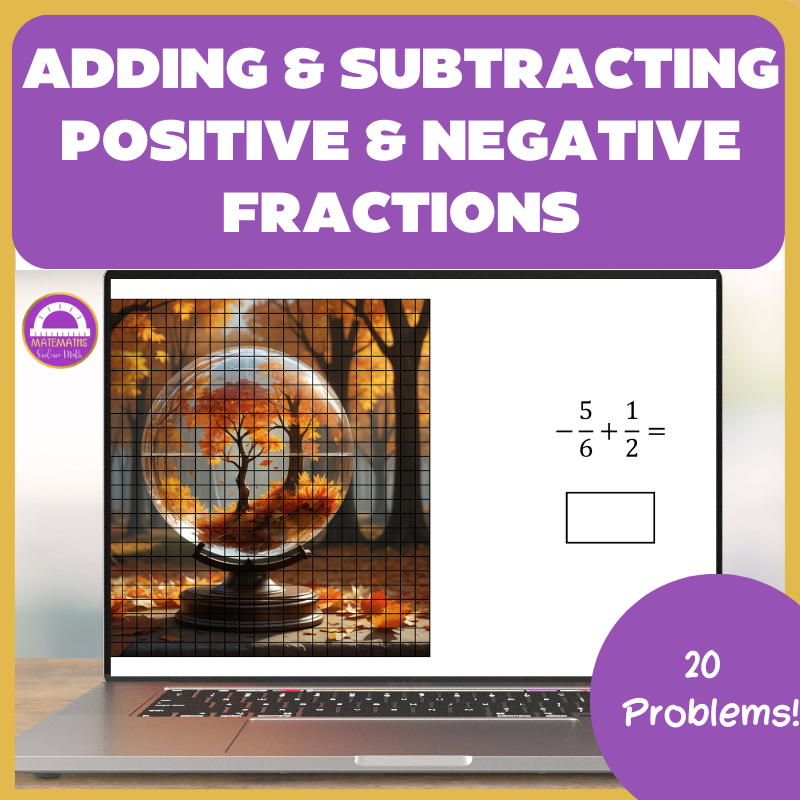
Halloween Order of Operations with Integers Pixel Art and Task Cards
Math, Addition and Subtraction, Addition, Subtraction, Order Of Operations, Grade 6, 7, 8, Worksheets & Printables, Activities, Task Cards
Need a fun way to teach order of operations with integers? Look no further! This Halloween-themed pixel art activity is your answer. With 20 thoughtfully designed problems, students will work through expressions containing both positive and negative numbers while revealing a captivating Halloween image with each correct answer. Why You'll Love This Product: No Prep Required: Save your time with this ready-to-go, hassle-free activity that requires minimum setup. Just share the link with your students, and they can go on the process. Self-Checking: The activity makes it perfect for immediate feedback, hence for independent work. You get your results right away with it to help boost their confidence as they go. Fun and Engaging: A Halloween theme in the pixel art adds an element of excitement to make students want to stay focused and solve all problems in order to see what picture is hidden. Pace Yourself: This allows the student to go at their own pace. They may go through the problems themselves and ask for help when they need it. Perfect for 7th Grade Math: The following activity has 20 expressions using the order of operations with integers. It only includes addition, subtraction, and multiplication; no exponents or parentheses are included. What's Included: Digital Pixel Art Activity: A set of 20 problems on integer operations all created to make learning fun and interesting for the students. Handouts and Task Cards for Printing: Reinforcer sheets to let them have a more profound knowledge of the concept at hand. Easy Grading and Review Answers Provided: Grade in a snap and with the provided answers, give effective feedback. Get into the 'spirit' of Halloween and some seasonal fun in your math classes! Highlighting Features: Multi-Use Type: No-prep, self-checking resource can be utilized in the classroom, assigned for homework, or integrated into math center activities. Focus on Positive and Negative Numbers: Students will be able to practice operating both positive and negative integers within the context of order of operations. Engaging and Educational: Your students will have fun while they solve the problems to uncover the pixel art, making learning fun. Perfect For: Classwork or Independent Learning: Use this resource for a variety of teaching environments and learning styles. Homework Assignments: A nice way to extend the learning beyond the classroom. Math Centers: Encourages peer learning in a collaborative setting. Distance Learning: Seamlessly blends into online teaching environments. Since it is all an online activity with interactive pages, prep work is minimal: just provide the link and they are off. No locks to really configure, no clues to hide. Seamlessly integrated for a fun and engaging experience, no Google Classroom or Microsoft Teams logins. Turn math into a spooktacularly good time this year!
Author Matemaths
Tags Matemaths, Pixel Art, Math, Integer, Fall, Order Of Operations
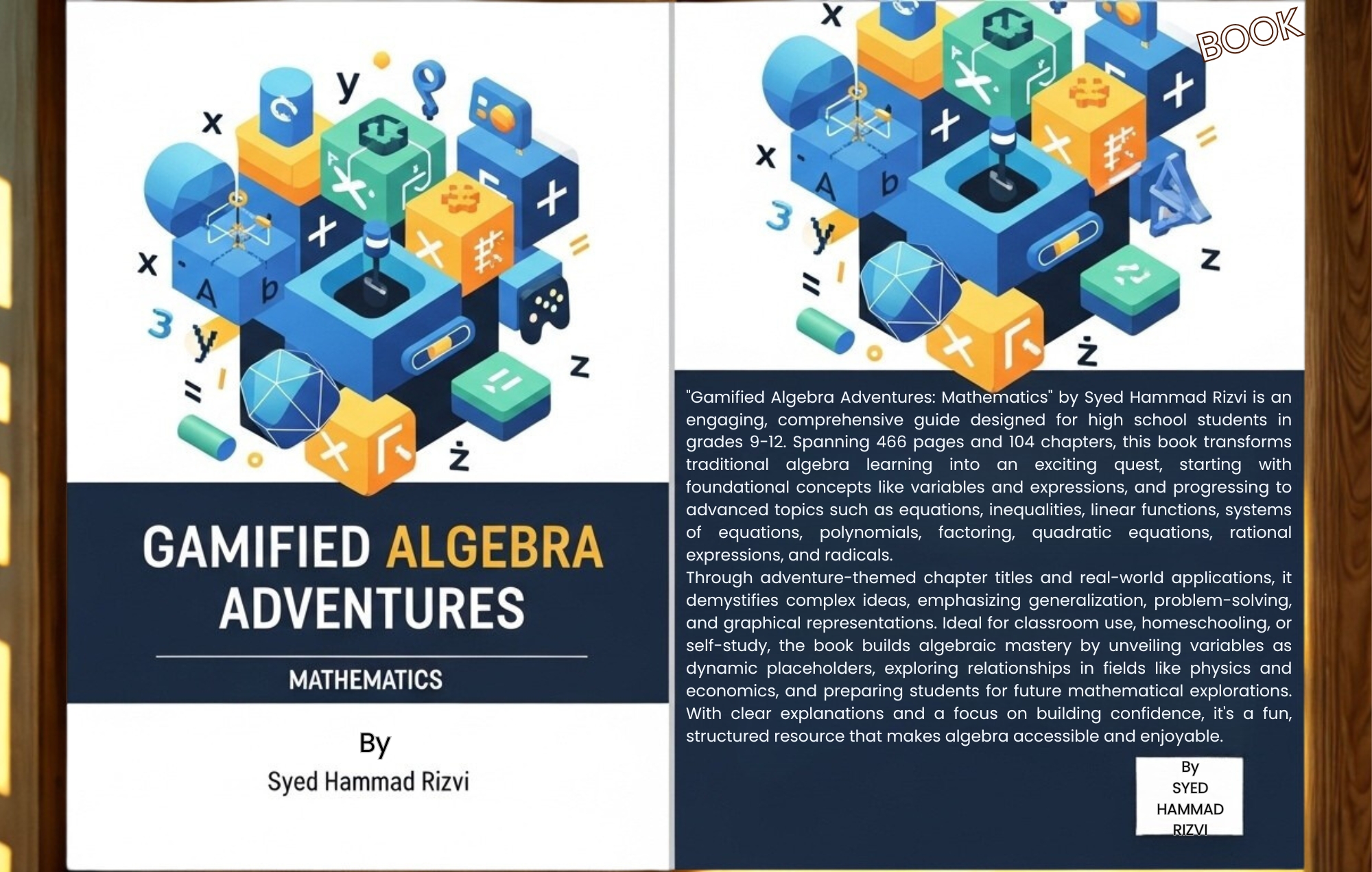
AI Ethics for Young Learners - Artificial Intelligence Book
Strategies, Reading, ELA, Reading Comprehension, Research, Technology, Science, Computer Science, Engineering, STEM, Grade 3, 4, 5, 9, 10, 11, 12, Activities, Projects, Teacher Tools, Assessments, Lesson Plans, Literacy Readers, Outlines, Rubrics, Writing Prompts, Worksheets & Printables
Unravel the fascinating realm of artificial intelligence through "AI Ethics for Young Learners - Artificial Intelligence," an all-inclusive textbook crafted to inculcate AI concepts and ethical values in young minds in an interesting and young-friendly manner. Offering in-depth information starting from AI in daily life examples such as assistants and video games to more complex topics such as biased computer algorithms, issues of data privacy, fundamental concepts of cybersecurity, and AI use, this SEO-friendly kids’ book is most suited to class 4 to class 12 settings, providing young minds with empowerment to learn AI basics, identify ethical issues, and become responsible digital participants. With 90 chapters spread throughout AI learning patterns in young minds, ethical issues in decision-making algorithms, robot AI while maintaining system security, program accountability in AI, and AI in the coming age of medicine, creativity, and environmental protection, this AI book by subject experts is ideal to disrupt young minds with AI-related critical thinking skills through practical AI examples and ethical tales of AI adventures in society. Tags: AI ethics education in kids, AI textbook in classroom education, AI education in teen brains, ethical AI learning book, classroom learning books in grade 4 to grade12 levels. Why Parents/Schools Love It: Engaging and Age-Appropriate Content: Reduces complex AI and ethics topics to simple and relatable stories and examples that hold the attention of young learners without causing an overload. Encourages Critical Thinking and Responsibility: Students learn to second-guess AI decisions, to perceive bias, and to claim responsibility for their actions as advocates for the appropriate use of technology in daily life. Comprehensive Curriculum Support: With 90 chapters, it leads the students from the basics of AI through advanced ethical dilemmas; perfect for STEM lessons, homeschooling, or classroom discussions. Values and Safety: Stressing the importance of privacy, fairness, and human judgment in AI-all important to giving parents peace of mind that aligns with family values. Inspires Innovation: This lets the kids come up with their own ethical AI ideas and concepts, which can trigger their innovative thinking to make them future-ready in the tech arena. Targeted Classes for Students : It can be seen from the thorough evaluation of the contents and suitability of the material in the book that it is ideally suited for students from grades 4 through 12 as mentioned in the title page. The contents begin with explanatory pieces that are simple and accessible in terms of the examples they use such as “What is Artificial Intelligence?" and examples such as smart assistants in basic forms for earlier grades (4-6), then move into advanced examples such as bias in algorithms, the issue of privacy laws and cybersecurity threats and ethical problem-solving for advanced students from grades 7-12. The text is written in simple sentences and analogies (as in the explanation given in “How A.I. Learns Like Playing a Game"), and sophisticated technical terms are avoided in this manner and can be suited for the entire spectrum mentioned. Copyright/Terms of Use : This Book was copyrighted by Syed Hammad Rizvi. Please do not give out or sell copies of this resource or any part of it. Furthermore, do not post this resource on the Internet in such a way that people can download this resource. By the way, you can modify this resource, but only for your personal or school-class usage. Please note that if you would like to share this resource with your peers, licensing options for additional copies are available via Teachsimple. Thank you for your compliance with this usage agreement. This product is delightedly presented to you by Syed Hammad Rizvi
Author Creative Book Store
Rating
Tags AIEthicsForKids, ArtificialIntelligenceBook, AIEducationForTeens, EthicalAIForYoungLearners, STEMBooksForStudents, AIBasicsForGrades4to12, DataPrivacyForKids, BiasInAIExplained, ResponsibleTechForYouth, AIAndEthicsCurriculum
Zoo Animal Research Writing Project on MONKEYS for K-2nd Grade
Life Studies, ELA, Writing, Creative Writing, Reading, Science, Life Sciences, Animals, Research, Kindergarten, Grade 1, 2, Activities, Teacher Tools, Lesson Plans, Worksheets & Printables, Worksheets, Coloring Pages, Writing Prompts
Animal Research Writing Project on Monkeys for K-2nd Grade. Engage young learners in reading, writing, and science with this 19-page informational writing project on monkeys. Students will examine real-life photos, read age-appropriate facts, color images, draw habitat scenes, and organize information using writing organizers. Differentiated writing pages allow kids to write at their level. When finished, students and the entire classroom can bind everything together into a customized book. This monkey-themed unit promotes creativity, reading comprehension, and nonfiction writing skills. Implement as whole class, small group, centers, or individual work. Suitable for homeschools or grades Kindergarten, first grade classrooms., and for second graders. Click the links below to view similar units on other zoo animals and to do research on zoo animals. Teachers appreciate the ready-to-use animal units covering reading, note-taking, drafting, illustrating, and publishing. Engage your class in meaningful informational writing with this standards-based project on monkeys. Plus, there are many more zoo animals to research as well in my store: K-5 Treasures! For additional Zoo Animal reports, click on the following links below: Animal Research Writing Project on TIGERS for K-2nd Grade Animal Research Writing Project on MONKEYS for K-2nd Grade Animal Research Writing Project on PANDAS for K-2nd Grade Animal Research Writing Project on HIPPOS for K-2nd Grade Animal Research Writing Project on ELEPHANTS for K-2nd Grade Animal Research Writing Project on GIRAFFES for K-2nd Grade Here are even more informational resources on report writing for OCEAN ANIMALS. Click on the links below: Animal Research Writing Project on WHALES for K-2nd Grade Animal Research Writing Project on the OCTOPUS for K-2nd Grade Animal Research Writing Project on SEA TURTLES for K-2nd Grade Animal Research Writing Project on ORCAS for K-2nd Grade Animal Research Writing Project on the SHELLFISH for K-2nd Grade Animal Research Writing Project on DOLPHINS for K-2nd Grade Animal Research Writing Project on SEALS for K-2nd Grade
Author K-5 Treasures
Tags Animal Research, Informational Writing, Writing Report, Zoo Animals, Report On Animals, Report On Zoo Animals, 1st Grade Writing, 2nd Grade Writing, Monkeys, Report On Monkeys
Grade 5 Beginning of Year Social Studies Assessment Diagnostic
Social Studies, Grade 5, Assessments, Teacher Tools, Lesson Plans, Worksheets & Printables
Start the year with confidence using this 5th Grade Beginning of Year Social Studies Assessment and complete targeted intervention system! This comprehensive Grade 5 Social Studies Diagnostic goes far beyond a simple pretest by helping you assess student understanding, identify skill gaps, create flexible small groups, assign targeted practice, provide enrichment, and monitor growth—all with one easy-to-use, no-prep resource. Designed as a complete Assess → Identify → Group → Practice → Reassess system, this resource includes a 46-question diagnostic assessment , skill analysis tools, 26 targeted follow-up practice pages , enrichment activities, and complete answer keys so you can immediately turn assessment data into effective instruction. What's Included This 5th Grade Beginning of Year Social Studies Assessment Bundle includes: ✅ Teacher Guide & Implementation Overview ✅ 46-question Beginning-of-Year Social Studies Diagnostic ✅ Printable Student Answer Sheet ✅ Skill Analysis & Grouping Tools ✅ Item-to-Skill Mapping Guide ✅ Class Skill Grid ✅ Individual Student Profiles ✅ Grouping Planner ✅ Reassessment Tracker ✅ 26 Targeted Follow-Up Practice Worksheets ✅ Extension Activities ✅ Choice Board for enrichment ✅ Complete Answer Key ✅ Scoring Guide ✅ Two Written Response Rubrics ✅ Printable PDF format ✅ No-prep, print-and-go resource Students are assessed across five major social studies strands : 🌎 Geography & Environment Latitude & longitude Map scale & distance Geographic regions Human-environment interaction Physical & political maps 🕰️ Time & Chronology Chronology & sequencing BCE & CE Time spans Centuries, decades & eras Change over time 📚 Sources & Historical Thinking Primary vs. secondary sources Source reliability Historical perspective Bias Cause & effect Multiple causes 🏛️ Civics & Economics Government structures Three branches & checks and balances Rights & responsibilities Basic economics Trade Supply & demand 📊 Data & Argument Reading charts & tables Population data Data interpretation Evidence-based conclusions Claim-Evidence-Reasoning (CER) The Teacher Guide explains that the complete bundle contains approximately 94 printable pages across seven coordinated resources , all using the same skill codes so every component works together seamlessly. How It Works in the Classroom This 5th Grade Social Studies Beginning of Year Assessment follows a simple five-step instructional cycle that transforms assessment data into meaningful instruction. Step 1 — Assess Students complete the 46-question diagnostic using the separate Student Answer Sheet. Step 2 — Identify Skill Gaps Score assessments with the Answer Key and record results using the Class Skill Grid. Step 3 — Group Students Use the Grouping Planner to build flexible intervention groups based on shared skill needs. Step 4 — Assign Targeted Practice Assign only the follow-up practice pages that match each student's assessment results. Step 5 — Reassess Monitor student growth using the Reassessment Tracker and regroup as needed. The Teacher Guide recommends administering the assessment during the first week of school in approximately 55 minutes , or dividing it into five shorter sessions by skill area. Questions may be read aloud because the assessment is designed to measure social studies knowledge—not reading speed. Perfect for: Beginning of Year Assessment Social Studies Pretest Back to School Activities Diagnostic Assessment RTI MTSS Intervention Small Groups Progress Monitoring Data Meetings Flexible Grouping Review Before State Testing Standards & Learning Goals This 5th Grade Social Studies Diagnostic Assessment reviews the foundational knowledge students should demonstrate at the beginning of fifth grade. Students demonstrate understanding of: Geography & Environment Latitude & longitude Map scale Measuring distance Geographic regions Human-environment interaction Physical maps Political maps Time & Chronology Chronology Sequencing BCE & CE Time spans Centuries Decades Eras Change over time Sources & Historical Thinking Primary sources Secondary sources Source reliability Historical perspective Bias Cause & effect Multiple causes Civics & Economics Government structures Federal, state & local government Three branches of government Checks & balances Rights & responsibilities Basic economics Opportunity cost Trade Exports & imports Supply & demand Data & Argument Reading charts Reading tables Population data Data interpretation Evidence-based conclusions Claim-Evidence-Reasoning (CER) Students demonstrate understanding through a variety of engaging formats including: Multiple-choice questions Coordinate maps Physical and political maps Climate region maps Timelines Historical scenarios Charts and tables Population graphs Two written CER responses The diagnostic measures 26 beginning-of-year skills across five content areas, and every assessment item is linked directly to a matching practice page through the Skill Analysis Tools. Why Teachers Love It ✨ More than a beginning-of-year test—it is a complete instructional system. ✨ Saves 10+ hours of planning by combining assessment, data analysis, intervention, enrichment, and reassessment into one coordinated resource. ✨ Every assessment question aligns directly to one specific social studies skill. ✨ Easily identify exactly what students know and where additional instruction is needed. ✨ Create flexible intervention groups using built-in planning tools. ✨ Includes 26 targeted follow-up practice worksheets , each beginning with a student-friendly "Remember" mini lesson followed by fresh practice questions that do not repeat the assessment. ✨ Differentiate instruction with ease. Students who need additional support receive targeted reteaching while students demonstrating mastery complete engaging enrichment challenges and a choice board. ✨ Extension Activities encourage higher-level thinking through projects such as: Mapping original regions with coordinates, keys, and scale Exploring how people adapt to and change environments Building BCE and CE era timelines Evaluating primary and secondary sources for reliability Investigating bias and historical perspective Demonstrating checks and balances Planning regional trade using exports and imports Writing evidence-based claims from graphs and data These enrichment activities emphasize inquiry, critical thinking, historical reasoning, and authentic application rather than repetitive practice. ✨ Skill Analysis Tools simplify instructional planning. Teachers receive: Item-to-Skill Map Class Skill Grid Student Profiles Grouping Planner Reassessment Tracker Every diagnostic question is connected directly to a matching follow-up worksheet, making it easy to assign only the practice each student needs. ✨ Includes complete scoring guidance. The Answer Key provides: Correct answers Skill codes Answer explanations Skill mastery bands Two written-response rubrics Teachers can quickly determine whether students are Approaching , On Track , or Strong in each skill area and immediately plan targeted instruction. ✨ Supports meaningful data-driven instruction while remaining easy to administer and simple to score. Start your school year with meaningful assessment data and a clear instructional plan using this 5th Grade Beginning of Year Social Studies Assessment . Whether you're looking for a 5th Grade Social Studies Diagnostic , Beginning of Year Pretest , Back to School Assessment , RTI Intervention Resource , Social Studies Skill Review , Progress Monitoring Tool , Small Group Instruction Resource , or a complete assessment-to-intervention system, this bundle gives you everything you need to assess, analyze, group, reteach, enrich, and monitor student growth throughout the year.
Author Bright Classroom Ideas Marketplace
Rating
Tags Social Studies, Back To School, Assessment, Diagnostic
Useful Robots Reading Comprehension Passage - Cored Ed Encyclopedia
ELA, Language Development, Reading Comprehension, Reading, Pre-Reading, History, Social Studies, Technology, Science, Earth and Environmental Sciences, Grade 2, 3, 4, 5, Worksheets & Printables, Worksheets, Teacher Tools, Centers, Activities, Writing Prompts, Assessments, Quizzes and Tests, Quizzes, Lesson Plans
This useful robots reading comprehension with lesson plan includes: Visualization (on the front cover) Start your lesson by taking a minute to think and share something about the topic. Read the script aloud (slowly), perhaps prepare some music or sound effects. Student close their eyes and let their imaginations wander. Students open their eyes, read the question aloud and give them a few minutes to complete. Ask a few students to share or keep answers until the end to compare with what they learn in the passage. Quick pause—thousands of Cored Education products are included with your TeachSimple membership. Download links and encyclopedia index available here. Pre-Reading Trivia Students will write down one thing they already know about the subject and then read five more facts and discuss. These facts are fun, and the students will enjoy learning about the subject before reading more. Give 1 minute for students to write what they already know (no pressure—best guess is fine). Read the five facts together. After each fact, do ask a student for their opinion, was it surprising? Set a purpose by asking students to highlight/underline one fact they want to learn more about during the reading. Reading Passage The text is a high-interest reading passage with set paragraphs, roughly three to four paragraphs long. It contains a variety of themes about the topic, anywhere from history to technology. The passage is between 250 and 350 words in length. First, ask students to look at the headings and see what they’ll learn about today. What do they know about the topic/heading? First read options: Teacher read-aloud (best for support). Partner reading (paragraph by paragraph). While reading, students underline important details, and vocabulary words they think may come up in the questions section. Mixed Questions The first question page contains four multiple-choice questions, each with a choice of four answers, and three written response questions that require a sentence or two from the student. Students complete the mcqs first independently, then review quickly as a class. For the 3 written responses, try to get students giving the answer with some form of evidence: “I think ___ because the text says ___.” If students get stuck, send them back to check the passage. Vocabulary Questions Practice seven key words from the text in this section across two activities. First section is scrambled words where students will unscramble three words given a clue for each. The second section is a word to meaning matching activity. Before starting, have some students read out words they underlined in the passage. Ask students to say the word and read aloud the sentence(s) around each word. Ask students to do scrambled words and the matching exercise in pairs then go through answers as a class. For the scrambled spelling task, get four pairs to come up to the board and write the words for extra practice with the other student reading out the clue. For the matching task, prompt students to give full sentences: “I matched ___ with ___ because ___.” Creative Writing In this question, the student will be required to write a five to eight sentence paragraph on a question related to the topic. Before starting, ask students write down 3 key ideas they are going to include in their piece. Ask students for ideas to share around the class to help those struggling. Pro writing expectations: 5–8 sentences At least 2 facts or details from the passage At least 2 vocabulary words from the previous page Students read their paragraphs while classmates listen for facts and vocabulary words. Extension Activities This page is optional for fast finishers or to take home. There are several activities, each one requiring a different skill. Do some, do none, do all, completely optional - but you will feel reassured knowing every possibility is planned for. Includes summary writting question. Answer Key There are answers for the multiple-choice questions, written response questions have sample answers, vocabulary answers and if there is a summary question then a sample summary will be provided as well. Lesson Plan Included Customized lesson plan for this lesson is included. Lesson Snapshot Title: Useful Robots Genre: Nonfiction (Informational passage) Subject: Science & Technology (Engineering/Robotics) Primary Topic: How robots developed and help people Estimated Guided Reading Level (A–Z): P Support pages included: Pre-reading trivia, mixed questions, vocabulary activities, creative writing prompt, extension activities, and an answer key. QA notes on support pages: Support content generally matches the passage; however, the support pages use “automaton” (singular) while the passage uses “automata” (plural), and an extension prompt suggests “hills,” which is not stated in the passage (the passage names rocks and dust). What This Lesson Teaches Best Robots have a history: Explains that long ago people created “automata” that moved using steam, air, water, or falling weights. Modern robots and factory work: Describes an early industrial robot, Unimate, working in 1961 at a General Motors plant handling hot metal parts that were tough and dangerous for people. How robots learn repeatable motions: Shows how a person can guide a robot’s movements while sensors send signals to a computer that stores a pattern to repeat the job. Robots go where people can’t: Highlights the rover Opportunity exploring Mars for years (2004–2018) and sending back clues from rocks and dust. Big idea across time: Connects early moving devices to today’s robots as tools that learned to move, repeat, and help humans discover more. Learning Goals Students will explain what “automata” were and what powered them. Students will describe why Unimate’s factory job mattered for people. Students will identify how a robot can be “taught” motions and then repeat them. Students will summarize how robots can help in places that are risky, far away, or hard to reach. Students will use details from the text to tell what Opportunity did on Mars and what it sent back. Key Vocabulary From the Text automata — moving devices from long ago; not thinking machines. program — give a machine instructions to do a job. industrial — related to factories and making things. sensors — parts that notice and send signals to a computer. rover — a robot vehicle that travels to explore places. FULL CATALOG OF DOWNLOAD LINKS AND ENCYCLOPEDIA INDEX HERE
Author Cored Education
Rating
Tags Vocabulary, Reading Comprehension, Reading Passages, Lesson Plans, Ela Lesson Plans, Reading Comprehension Lesson Plans, Pre-reading, Science Lesson Plans, Technology, History
Printable Math Worksheets Bundle | Homeschool Math Practice PDF K-3
Math, Calculus, Resources for Teachers, Special Resources, Kindergarten, Preschool, Grade 1, 2, 3, Activities, Teacher Tools, Worksheets & Printables, Worksheets, Workbooks
Practice mathematics easily, happily, and without any stress! This amazing 82-page Math Worksheets Bundle is the best printable package to help young children build strong number knowledge. Be it homeschooling, be it teaching or tutoring – this downloadable worksheet bundle includes everything your 5-9-year-old child needs to learn about math addition, subtraction, multiplication, and division. Print, download, and practice! ✏️ Why Choose This Package? : This worksheet bundle is filled with focused math sheets aimed at developing specific skills: Addition worksheets for young students include easy single-digit and harder multi-digit addition exercises for beginners. Subtraction is another math operation included here to help develop an understanding of subtraction and improve number skills in children. Mathematics multiplication worksheets will provide a great tool for learning times tables for young students. Division worksheets are an amazing opportunity to teach young children this tricky math operation. Each category contains carefully selected worksheets from simple to more complicated math problems. 📚 Includes: Pages for practicing addition Pages for practicing subtraction Pages for practicing multiplication Pages for practicing division 🌟 Great For: Home schooling Supplementing classroom education Tutoring lessons Practice at home each day During the summer months 🖨️ Get Your Copy Now – Download & Print! Receive instant access to your download and start printing unlimited copies immediately. No delays, no shipping fees. 📏 Reasons Why Educators Adore This Pack: All four math operations covered in one pack Ages from Kindergarten to Grade 3 Easy-to-understand design for children Reusable – print multiple times Save valuable preparation time
Author BrightPrintsNY
Rating
Tags Math Worksheets, Printable Math, Addition Worksheets, Subtraction Sheets, Multiplication Math, Division Worksheets, Math Workbook, Kindergarten Math, Printable Math Worksheets Bundle
4th Grade Morning Work | 180 Days Review | Math & ELA | 3rd Quarter
ELA, Math, Grade 4, Centers, Activities, Lesson Plans, Teacher Tools, Worksheets & Printables
Grade 4 Morning Work | 3rd Quarter Student Pages + Full-Year Teacher Resources Keep your fourth grade mornings consistent, purposeful, and easy to manage with 45 days of Grade 4 morning work for Quarter 3 . This resource includes ALL teacher resources for the complete 180-day program , while the student practice pages in this pack are specifically for 3rd Quarter: Days 91–135 . What’s Included ⭐ FULL-YEAR TEACHER RESOURCES You receive the complete teacher toolkit for planning, organizing, differentiating, and assessing the entire 180-day Grade 4 morning work program : Teacher Guide Full 36-week Pacing Guide Skills Checklist for tracking student progress Fully Editable Morning Work Schedule Weekly planning support 36-week Year-at-a-Glance Planner Differentiation strategies Complete Answer Key for Days 1–180 Printing and classroom organization guidance 📚 STUDENT PAGES INCLUDED: 3RD QUARTER The student portion of this product includes Days 91–135 , providing 45 days of ready-to-use Grade 4 morning work . Each day includes a two-page set with 24 consistent sections . Page A — Language Arts Grammar Vocabulary Reading comprehension and reading skills Writing Vocabulary Word of the Day Writing Prompt Reading Challenge Morning SEL Check-In Joke of the Day Brain Teaser Growth Mindset Would You Rather Page B — Math & Think Number Sense Mental Math & Fact Fluency Multi-Digit Multiplication Long Division Fractions Decimals Measurement Geometry Data and Graphs Word Problems Math Challenges Daily Enrichment Fun Facts Important: The student practice pages included in this product are Days 91–135 only . The teacher resources and complete Answer Key cover all 180 days . How It Works in the Classroom Use this Grade 4 morning work as a daily bell ringer, morning routine, independent practice, homework, or spiral review. Each two-page daily set takes approximately 10–15 minutes . Students move through Language Arts and Math & Think while you circulate, confer, pull small groups, or prepare for the day. The consistent format makes it easy for students to know what to expect each morning. Use the pages for: Morning work Bell ringers Homework Early finishers Sub plans Small-group warm-ups Math intervention Spiral review Test preparation Independent practice Print the pages two-sided, flipping on the long edge , for one sheet per student per day. You can print one week at a time or staple the Quarter 3 pages into a student packet. Standards & Learning Goals This Grade 4 morning work resource provides daily spiral review across important Grade 4 ELA and math skills. Quarter 3 specifically increases the difficulty in multiplication and division, number sense, and reading comprehension . 📖 ELA Skills Students practice: Grammar and language conventions Vocabulary Prefixes, suffixes, and Greek and Latin roots Context clues Reading comprehension Inference Author's purpose Main idea Theme Writing and constructed responses Revising and editing Reading challenges Quarter 3 places greater emphasis on inference and author's purpose . Students encounter reading passages and targeted reading-skill questions that ask them to think beyond literal recall. Examples include identifying an author's purpose, making inferences from evidence, determining themes, and analyzing details within nonfiction and fiction passages. 🔢 Math Skills Students practice: Number sense Rounding to different place values Mental math and fact fluency Multi-digit multiplication Long division Fractions Decimals Measurement Geometry Data and graphs Word problems Multi-step mathematical reasoning Quarter 3 moves into 3-digit × 1-digit multiplication, larger quotients, and rounding to any place value . Students also continue working with fraction comparison and operations, decimal notation and comparison, elapsed time, perimeter and area, angles, symmetry, graphs, and real-world problem solving. Why Teachers Love It ✨ You get ALL the teacher resources for the entire year. The Teacher Guide, pacing guide, Skills Checklist, editable schedule, differentiation support, and complete 180-day Answer Key are included. ✨ Students get exactly what they need for Quarter 3. Days 91–135 provide a complete 45-day student set for the third quarter. ✨ Save valuable planning time. The daily routine is already organized across ELA, math, enrichment, and engaging thinking activities. ✨ Build student independence. The same 24 sections appear every day, helping students quickly learn the routine and work independently. ✨ True spiral review. Skills return throughout the 180-day program while the difficulty increases. No content repeats across the 180 days. ✨ A built-in difficulty ramp. Quarter 3 moves students into 3-digit multiplication, larger division problems, and rounding to any place value. Reading also shifts toward inference and author's purpose . ✨ Practice real mathematical thinking. Students work with actual graphs, measurement figures, geometry figures, fractions, decimals, and multi-step word problems. ✨ Differentiate with ease. The Teacher Guide recommends assigning only taught sections, highlighting fewer boxes for students needing shorter tasks, reading passages aloud, and using math supports when appropriate. ✨ Support small groups. Use Page B as a quick warm-up for math intervention groups without creating another activity. ✨ Track student growth. Use the Skills Checklist to mark skills as Introduced, Practiced, or Mastered and identify areas needing additional instruction. ✨ Keep mornings engaging. Jokes, brain teasers, growth mindset reflections, SEL check-ins, enrichment challenges, and Would You Rather questions add variety. ✨ Have answers for the whole year. The complete Answer Key covers the Days 1–180 program, so your teacher resources remain useful across every quarter. Looking for Grade 4 morning work for Quarter 3 that saves planning time and keeps students practicing essential skills every day? This pack includes 45 days of student practice (Days 91–135) PLUS ALL teacher resources for the full 180-day program . Give your fourth graders a predictable, engaging morning routine that strengthens ELA and math skills while building independence throughout the school year! Print it, prep it, and make your fourth grade mornings easier! 💛
Author Bright Classroom Ideas Marketplace
Rating
Tags Math, Ela, Morning Work, Back To School
Halloween Order of Operations with Integers Challenging Pixel Art
Math, Addition and Subtraction, Addition, Subtraction, Order Of Operations, Multiplication and Division, Multiplication, Division, Grade 6, 7, 8, Worksheets & Printables, Activities, Task Cards
Have a howling good time this Halloween and make math fun and engaging with this no-prep pixel art activity to help 7th graders master the order of operations with positive and negative integers. This is great to get higher-order math skills in with an engaging, no-prep, self-checking resource where students apply the order of operations to solve expressions containing integers using parentheses and exponents. With each problem solved, a different Halloween-themed picture in pixel art form will appear; math has never been easier and more fun! Product Highlights: Grade Level: 7th Grade Activity Type: Digital and printing resources Focus Skills: Reinforces order of operations with parentheses and exponents to build confidence in handling both positive and negative integers. Self-Checking & Immediate Feedback: Students immediately know if their answers are correct; students are allowed to find and correct errors on their own. 20 Engaging Problems: An extended set of exercises that will make students work but keep them at an engaging level. No-Prep for Teachers: Just assign it, and the students can jump right into it independently-saving precious time. Halloween Theme: Adds seasonal excitement to keep students interested and motivated as they work through each question. Autosave Feature: Students can pick up where they left off on the same device and browser using the "Continue" button; great for working across multiple sessions. What's Included: Digital Pixel Art Activity: A Halloween image is revealed as students solve each problem correctly; making the learning process a bit more fun. Again, this can make the process of learning a bit more fun for them. Printable Task Cards & Handouts: Accommodates classrooms that need the activity in both digital and printable formats. Suitable for all sorts of learning situations: in-class, at home or hybrid learning activities. Solution Key Provided: Makes grading easy and allows students to review work. Why Teachers Love This Activity: Engage the Students in Interactive Practice Math: The Halloween theme and reward system lighten the disposition towards the math to be learned through this pixel art. Independent, self-paced learning: The self-checking format encourages independence in learning; students will be able to work on the problems with minimal intervention from others. Advanced Integer Skills: Emphasizing parentheses, exponents, and the order of operations, this activity reinforces basic math skills. Make Order of Operations Practice a Holiday of Fun! Get your students into learning about the order of operations with integers through this no-prep, Halloween-themed pixel art activity. Assign it today, and let them work at their own pace through math challenges as they get to enjoy the seasonal fun!
Author Matemaths
Tags Matemaths, Pixel Art, Math, Integer, Fall, Order Of Operations
Guided Reading Level L - All About Horses (with Lesson Plan)
ELA, Resources for Teachers, Reading Comprehension, Reading, Science, Language Development, Life Sciences, Animals, Pre-Reading, Vocabulary, Grade 2, 3, 4, Worksheets & Printables, Worksheets, Teacher Tools, Centers, Activities, Literacy Readers, Quizzes, Quizzes and Tests, Assessments, Lesson Plans
This Guided Reading Book - All About Horses (Level L) with lesson plan includes: Guided Reading Color Label (front cover x1) This is a quick way to match the book’s demands to what students can generally handle.. The overall goal is to use the level/color to pick books for several smaller groups. To qualify for a certain level, a student is expected to read a book from that level with about 90–94% accuracy. If a student is consistently accurate and understands, move up a level. If the student is struggling at that level, drop down and add more support. Each student will improve at completely different rates, but it is generally one of the best ways to check progress across the class. DOWNLOAD THE CATALOG TO VIEW ALL GUIDED READING BOOKS AVAILABLE (SORTED LEVELS A-Z) Pre-Reading Question (x1) Teacher asks the prompt aloud, can be while showing the cover or first page. Students share what they already know, or make educated guesses from the cover. Prompt them to use the target vocabulary. Write some of their responses on the board to look back at during the reading. Vocabulary Words (x5) Introduce the five words, best doing it one at a time. Start by saying it, while students repeat and then see if anyone knows what it means before reading further. Read through the meaning and try to briefly connect each word to a picture or gesture so it’s meaningful. Ask students to flip through the book pages and point to where they see each of the vocabulary words. While reading the book pause upon coming across one of the vocab words or read the sentence twice to make sure students understand the word has appeared. Optional: Ask students to raise hands whenever they see/hear one of the new words. Guided Reading Pages (x10) Check the book snapshot (below) for: primary topic - do you need to prep extra reading or intro materials on this? what is taught best - decide on 1-2 bullets to focus on, use the prompt or words provided here for best results. learning goals - what you are checking for students to be able to do after the session, elicit answers using prompts or words provided. key vocabulary (see section above). questions overview - so you know what is coming up and if you need to prep extra materials to assist understanding. Run the lesson You may have already looked at a few of the pages together, but you can show them some of the pictures again first to set meaning. Depending on how much time you have and how familiar your students are with guided reading class, you may want to read the book aloud first with the group first. Students whisper or partner read, while you listen in. If time, do it as a group, one student reading a page each. Use the guided page’s prompts to coach: “Check the picture / does it make sense?” “Point under the words / try the first sound” “Reread the sentence smoothly”. Try to focus more on one student per session (rotating every time), so you can work out if they are ready to move up or need to move down a level. Comprehension Questions (back cover x3) This is your way to check that students didn’t just say the words, but actually understood the text. First, let students answer by pointing to the page/picture and saying a short sentence. After any answer, follow with: “Show me where you found that in the text.” In bigger groups, have partners answer first (10–20 seconds), then call on 2–3 students to share. Differentiation tips: Emerging speakers/struggling readers: oral + pointing On-level: oral in a full sentence Higher: one written sentence or draw + label Book Snapshot Title: All About Horses Genre: Nonfiction (informational) Subject: Life Science / Reading (Informational Text) Primary Topic: Horse body parts, needs, and behaviors Estimated Guided Reading Level (A–Z): L What This Book Teaches Best Key animal facts about horses (they are strong animals, mammals, and live outdoors in grassy areas). How horse body parts help them (mane and tail; tail swishes away flies). What horses need to stay healthy (they eat plants and drink a lot of water). How horses move (trot with “diagonal pairs,” and gallop as the fastest way to move with hooves off the ground). Special horse behaviors and life stages (sleeping while standing; a baby horse is a foal). Learning Goals Students will identify key facts about horses (habitat, body traits, and needs) from the text. Students will explain how a horse uses its tail based on details in the book. Students will describe what horses eat and how they graze using evidence from the text. Students will compare two horse movements (trot and gallop) using information from the book. Students will explain how a horse can sleep while standing without falling over. Students will describe what a foal is and what it can do soon after being born. Key Vocabulary From the Text mammal — an animal that breathes air with lungs. herbivores — animals that eat only plants. grazing — eating grass little by little over time. diagonal — slanted, from one corner to the opposite corner. hooves — the hard feet of a horse. Discussion Prompts Pre-reading question: What do you think a horse needs to stay healthy outdoors? Comprehension questions: What does the text say a horse uses its tail for? How does the text describe a trot? What is a foal, and what can it do within an hour of being born? Printing Tips 1. Best Printing Method (Recommended) “Booklet” Printing (Best if Available) If your printer or PDF viewer supports Booklet Printing , use this. Settings to use: Print mode: Booklet Paper size: Letter or A4 (either works) Orientation: Landscape Print on both sides: Yes Flip on: Short edge Scaling: Fit to printable area Booklet subset: First test: Front sides only Then: Back sides only This will automatically: Pair pages correctly Put the cover on the outside Align everything for folding After printing, fold in half and staple along the spine . 2. If “Booklet” Printing Is NOT Available You can still print this correctly with manual duplex printing . Step-by-step: Open the PDF. Choose Print . Set: Orientation: Landscape Pages per sheet: 1 Print on both sides: Yes Flip on: Short edge Print all pages . Because each PDF page already contains two facing book pages, the result will still fold cleanly into a book. Thousands of Cored Education products are included with your TeachSimple membership. Download links and encyclopedia index available here.
Author Cored Education
Rating
Tags Reading Comprehension, Reading Passages, Reading, Guided Reading, Guided Reading Lesson Plan, Guided Reading Activity, Pre-reading, Science Lesson Plans, Life Science, Animals
High School Cybercrime: The New Frontier of Justice Reading Passage
STEM, Social Studies, Science, Computer Science, Technology, Research, Life Studies, ELA, Reading, Writing, High School, Homeschool Resources, Middle School, Adult Education, Teacher Tools, Assessments, Lesson Plans, Literacy Readers, Quizzes and Tests, Worksheets & Printables, Writing Prompts
As a homeschool mom, I understand how challenging it can be to find engaging, real-world content that captures our teenagers' attention while teaching them essential life skills. Cybercrime: The New Frontier of Justice Reading Passage, Q & A, and Note-Taking Sheets resource addresses one of the most pressing issues our kids face today—staying safe and informed in our digital world. This resource takes your students/homeschoolers beyond basic internet safety into the fascinating and complex realm of cybercrime, law enforcement, and the ongoing battle between online criminals and those working to stop them. I have designed this educational package to make sophisticated concepts understandable and relevant, giving your teens the knowledge they need to navigate today's technology-driven society with confidence and awareness. INCLUDED IN THIS RESOURCE: Comprehensive reading passage covering all major aspects of cybercrime 20 thought-provoking passage questions with detailed answer key Complete MLA-formatted bibliography with credible source references 25 professionally designed note-taking sheets for organized learning TOPICS COVERED: Online fraud, phishing attacks, and social engineering techniques Hacking, data breaches, and cybersecurity vulnerabilities Ransomware attacks and digital extortion methods Digital espionage and state-sponsored cyber operations When I created this cybercrime resource, I was thinking about preparing our children for the world they are actually going to live and work in—not just helping them pass a test. Our students/homeschoolers are growing up in a time when cybersecurity knowledge isn't just helpful, it is absolutely essential for their future success and safety. This Cybercrime: The New Frontier of Justice Reading Passage, Q & A, and Note-Taking Sheets resource goes beyond memorizing facts; it teaches our students/homeschoolers how to think critically about real problems they will encounter as adults, whether they are protecting their own families or pursuing careers in technology, law enforcement, or business. I am confident that the skills and awareness your students/homeschoolers gain from this study will serve them well throughout their lives, giving them the foundation they need to be informed, responsible digital citizens in an increasingly connected world. If you and your students/homeschoolers enjoyed this resource, please leave a review. Thank you for your support! Tina - Big Easy Homeschooling Mom Please subscribe: www.tidewindacademyhomeschool.com
Author Homeschool with Big Easy Homeschooling Mom
Rating
Tags Cybercrime Lesson Plans, Cybercrime Educational Materials For High School Students, Cybersecurity Education, Cybercrime Study Guides, Criminal Justice Curriculum, Digital Crime And Justice Teaching Resources, Computer Crime Resources, Internet Security Teaching Resources, Cyber Law Education, Cybersecurity Awareness Curriculum For Teens
Science Mazes - Set 3 (PDF)
ELA, Language Development, Vocabulary, Spelling, ESL, Resources for Teachers, Science, Physics, Earth and Environmental Sciences, Life Sciences, Grade 2, 3, 4, 5, Worksheets & Printables, Worksheets, Teacher Tools, Centers, Activities, Mazes
Maze Series This maze series is designed for students in grades 2–5. Each set features a clear, kid-friendly theme with scene-based mazes that students first navigate, then complete by drawing a few target words from a simple word list. Pages come in varied styles and graduated difficulty, with an optional “color it in” step—and some themes invite quick calculations to match the task. These mazes are student-friendly, classroom-ready, and perfect for literacy warmups, seasonal units, fast-finisher bins, centers, sub plans, or home learning extensions. The playful, structured format builds problem-solving, attention to detail, and fine-motor control while reinforcing themed content in a motivating way. Note: Unlike many themed products, not all word-list words appear on the maze pages. To support full vocabulary coverage, we’ve released a companion word list you can find in the links section. Science Set 3 Word List 1. Human Body Systems Brain, Heart, Lungs, Muscles, Bones, Veins, Digest, Nerves 2. Ecosystems and Food Chains Ecosystem, Habitat, Producer, Consumer, Decomposer, Food Chain, Predator, Prey 3. States of Matter Matter, Solid, Liquid, Gas, Melt, Freeze, Evaporate, Condense 4. Space and the Universe Galaxy, Milky Way, Orbit, Gravity, Black Hole, Meteor, Astronomer, Telescope 5. Plants and Photosynthesis Roots, Stem, Leaf, Flower, Seed, Sunlight, Oxygen, Chlorophyll 6. Simple Machines and Engineering Lever, Pulley, Ramp, Wheel, Axle, Screw, Gears, Invent PDF Version Other versions will appear here when available. Follow the store for the lastest on new products. How to Use These Mazes Perfect for: Morning work or early-finisher bins Literacy or STEM centers Holiday/seasonal review lessons Independent stations, sub plans, or take-home enrichment More Science Themed Products Science Crosswords (Set 1) PDF Science Crosswords (Set 2) PDF Science Crosswords (Set 3) PDF Science Word Searches (Set 1) PDF Science Word Searches (Set 2) PDF Science Word Searches (Set 3) PDF Science Mazes (Set 1) PDF Science Mazes (Set 2) PDF FULL CATALOG OF DOWNLOAD LINKS HERE Themed Mazes Links Addition PDF Animals PDF Around the Home PDF Birthday PDF Candy PDF Christmas PDF Cinco de Mayo PDF Clothes PDF Colors PDF Days and Months PDF Division PDF Earth Day PDF Easter PDF Easy Mazes PDF Fall PDF Father's Day PDF Food PDF Geography (Set 1) PDF Geography (Set 2) PDF Geography (Set 3) PDF Graduation PDF Health PDF History (Set 1) PDF History (Set 2) PDF History (Set 3) PDF Human Body PDF Kindness PDF Life Skills PDF Mother's Day PDF Multiplication PDF Science (Set 1) PDF Science (Set 2) PDF Science (Set 3) PDF Shapes PDF Social Skills PDF Spring PDF Sports PDF St. Patrick's Day PDF Subtraction PDF Summer PDF Thanksgiving PDF Transport PDF Valentine's Day PDF Winter PDF Mazes in Depth Structure Each maze is crafted around a focused sub-theme. Students navigate the maze, encountering branches and cul-de-sacs that build attention and planning. Most pages include a tiny follow-up box—students draw or label 2–3 target words from a small word box, add a quick count, or color in the scene—so the activity reinforces both content and skills in a highly engaging format. Each completed set includes: A themed maze page. A simple student instruction strip. An answer key showing the solved path for teacher support or self-checking Themes Included These mazes cover a wide range of fun, age-appropriate themes, including: Seasons & Holidays (e.g., Halloween, Easter, Valentine’s Day) Math-Lite Connections (e.g., quick counts, number words) Everyday Topics (e.g., Animals, Weather, School) Special Units (e.g., Health, Earth Day, Sports, Kindness) Each topic reflects students’ real-life experiences and interests while strengthening problem-solving, visual scanning, and fine-motor control in a playful, highly visual way. Easy extensions (optional): Time it: solve once in pencil, then try to beat the time in pen Retell the route using sequence words (first, next, then, finally) Count intersections or turns and graph the results Write a 1–2 sentence mini-story about the scene using the target words Design a tiny maze in the corner for a partner to solve Differentiation tips: Offer a finger-trace pass before pencils for emerging learners Highlight the borders of the correct region on first attempts Use thicker-line versions or simpler pages to build confidence Pair roles: “navigator” gives directions; “driver” traces the path For similar downloads and other frees, do check out Cored Group on TeachSimple.
Author Cored Education
Rating
Tags Vocabulary, Spelling, Science, Human Body Systems, Ecosystems, Food Chains, States Of Matter, Plants And Photosynthesis, Mazes, Science Mazes
AmeriMath Series: Math Kindergarten Workbook
Math, Numbers, Preschool, Workbooks, Worksheets & Printables
The AmeriMath Series: Math Kindergarten Workbook is a 60-page download that is divided into 6 sections: 1. Number and Place Value 2. Patterns and Algebra 3. Using Units of Measurement 4. Shape 5. Location and Transformation 6. Statistics and Probability This workbook is filled with activity pages for kindergarten students to sharpen their math skills. Answer key included.
Author Ready-Ed Publications
Tags Units Of Measurement, Shapes Cut And Paste, Algebra Worksheet, Time Lines, Comparing Numbers
Physical Science Reading Comprehension Passage: Acids and Bases (Docs)
Science, ELA, Reading, Reading Comprehension, Strategies, Resources for Teachers, Chemistry, Grade 6, 7, 8, 9, Writing Prompts, Worksheets & Printables, Centers, Activities, Teacher Tools, Assessments, Quizzes and Tests, Quizzes, Tests
Physical Science Reading Comprehension Passage and Questions: Acids and Bases (Docs) This very engaging science reading passage is about acids and bases and how they appear in everyday materials. It explains that acids release hydrogen ions in water and are found in substances such as lemon juice, vinegar, citrus fruits, and stomach acid. It also describes bases, including soap, baking soda, ammonia, and cleaners, and explains how scientists use the pH scale to compare how acidic or basic a substance is. The passage introduces neutralization reactions , showing how acids and bases can react to form water and a salt, and connects the topic to real-life uses in farming, medicine, cooking, and cleaning. This passage is designed to bridge the gap between science and literacy by strengthening reading comprehension while sparking scientific curiosity in middle school students. It blends English Language Arts skills with accurate science content, helping students build background knowledge, understand key concepts, use evidence from the text, and explain scientific ideas clearly. This resource supports science classroom practice while also reinforcing important literacy skills such as main idea, vocabulary, comprehension, and summarizing. Ideal for interdisciplinary learning in ELA and Science. Suitable for Grade 9 review, too! Student Tasks for The Passage: 10 multiple-choice questions targeting main idea, key details, science concepts, comparison, and real-world applications 10 True/False statements to check understanding and address common misconceptions 5 text-based short-answer questions that require students to explain important ideas from the passage 5 vocabulary matching items with clear, student-friendly definitions 1 summary prompt that asks students to condense the central ideas accurately Full answer key for every section Available Formats for this Resource PDF Fillable PDF Word Docs FULL CATALOG OF DOWNLOADING LINKS HERE Product Details Length: 6 pages total Grades: 6–8, also suitable for Grade 9 review Use cases: close reading, stations, homework, intervention, test prep, and sub plans Standards support: Reinforces informational-text skills and supports NGSS-style sense-making by helping students read scientific explanations, connect evidence to key concepts, interpret real-world examples, and explain cause-and-effect relationships in science. Why Teachers Choose This Set Authentic science content paired with rigorous literacy practice Consistent task structure across all passages for easier planning and smoother student routines Clear, age-appropriate writing that builds confidence without oversimplifying Other Science Reading Collections and Topics You May Find in the Store: 1. Astronomy & Space Science 2. Volcanoes, Rocks, & Mountains 3. Rock Cycle, Soil, & Sinkholes 4. Mars, Glaciers, & Antarctica 5. Water Cycle, Acid Rain, & Wastewater 6. Insects, Animals, & Ecosystems 7. Bioluminescence & Insects 8. Animal Skin, Cats, & T. Rex 9. Human Body and Senses 10. Health & Applied Bioscience 11. Waves, Light, & Imaging 12. Electricity & Energy 13. Motion & Materials 14. Chemistry and Materials Science 15. Electromagnetism 16. Acids and Bases 17. Gas Laws 18. Biotechnology 19. Periodic Trends 20. Protists and Fungi 21. Microevolution 22. Blood 23. Chemical Bonding 24. Magnets 25. Muscles 26. Nuclear Chemistry 27. Electromagnetic Devices 28. Epigenetics 29. The Law of Conservation of Mass 30. Atomic Models 31. Isotopes and Ions 32. Light 33. Human-Environment Interaction 34. Theory of Evolution 35. Photosynthesis 36. Origins of Life and Early Earth 37. Gene Expression and Regulation 38. Thermochemistry 39. Allergies 40. Coevolution 41. Birth to Adulthood 42. Cells 43. Entropy and Free Energy 44. The Human Brain 45. Mixtures and Solutions 46. Invertebrates 47. Zoo Animals 48. Biochemistry 49. Animal Behavior 50. Population Ecology ...and many more engaging science reading passages that cover intriguing and important topics designed to spark curiosity and support student learning. Use this passage to reinforce ELA skills in science, to add literacy to your lessons, and to support independent work. The passages strengthen main idea, evidence use, vocabulary in context, inference, cause and effect, and summary writing. With ready-to-use assessments and complete answer keys, you can provide focused practice that is simple to run and fast to review.
Author Middle & High School - CORED Education
Rating
Tags Middle School, Reading Comprehension, Reading Strategies, ELA, Centers, Reading Passage, Assessments, Vocabulary, Chemistry, Physical Science
4th Grade Morning Work | 180 Days of Daily Spiral Review | Math & ELA
ELA, Math, Grade 4, Assessments, Teacher Tools, Lesson Plans, Worksheets & Printables
Grade 4 Morning Work | 180 Days of Common Core Spiral Review | Math & ELA Bell Ringers | Print & Go Start every school day with meaningful, standards-based practice using this Grade 4 Morning Work resource! With 180 days of Common Core spiral review , students reinforce essential fourth-grade math and ELA skills through engaging daily activities that review previously taught concepts all year long. Designed as a simple, no-prep routine, this resource builds independence, strengthens retention, and helps students begin each day focused and ready to learn. What's Included 180 days of printable morning work Two-page daily format (360 student pages) Daily Language Arts practice: Grammar Vocabulary Reading comprehension passages Reading skills Writing tasks Vocabulary Word of the Day Writing prompts Reading challenges SEL check-ins Jokes Brain teasers Growth mindset quotes Would You Rather questions Daily Math & Think practice: Number sense Mental math and fact fluency Multi-digit multiplication Long division Fractions Decimals Measurement Geometry Data analysis using graphs and tables Word problems Math challenges Daily enrichment rotation Fun facts Teacher Guide 36-week Pacing Guide Skills Checklist Editable Morning Work Schedule (Word & PDF) Complete Answer Key for every day of the school year How It Works in the Classroom This Grade 4 Morning Work resource is designed for a consistent 10–15 minute daily routine while remaining flexible for a variety of classroom needs. Use it for: Morning work Bell ringers Daily spiral review Independent practice Homework Early finisher activities Math warm-ups Reading review RTI and intervention Test preparation Substitute plans The predictable structure allows students to work independently while teachers greet students, take attendance, conference with individuals, or pull small groups. The daily enrichment rotation adds variety with brain teasers, logic puzzles, growth mindset reflections, vocabulary challenges, and trivia throughout the week. Standards & Learning Goals This comprehensive Grade 4 Morning Work resource reinforces essential Common Core skills across the entire school year. Language Arts Grammar and conventions Vocabulary development Context clues Greek and Latin roots Prefixes and suffixes Reading comprehension Main idea and supporting details Theme and author's purpose Inference Opinion, narrative, and informative writing Constructed responses Sentence revision and editing Math Place value to 1,000,000 Multi-digit multiplication Long division with remainders Fractions Decimals Measurement and conversions Geometry Angles Perimeter and area Data analysis Word problems Mathematical reasoning Students also develop: Reading stamina Critical thinking Problem-solving skills Growth mindset Social-emotional learning Independent work habits Long-term retention through daily spiral review Why Teachers Love It ❤️ Zero prep—just print and teach ❤️ Covers all 180 instructional days ❤️ True spiral review helps students retain skills throughout the year ❤️ Combines math and language arts in one consistent daily routine ❤️ Skills increase in complexity throughout the year, supporting student growth ❤️ Includes real-world graphs, geometry figures, measurement visuals, and enrichment activities ❤️ Supports classroom management with a predictable, independent routine ❤️ Includes pacing guides, assessment checklists, editable schedules, teacher guidance, and a complete answer key ❤️ Perfect for classrooms, homeschool, intervention groups, and substitute teachers Perfect For Grade 4 Classrooms Morning Work Bell Ringers Daily Spiral Review Common Core Review Math Review Reading Review Independent Practice Early Finishers Homework RTI & MTSS Test Prep If you're looking for a comprehensive Grade 4 Morning Work resource that combines engaging literacy instruction with meaningful math practice, this complete 180-day Common Core spiral review provides everything you need to establish an effective daily routine while reinforcing essential fourth-grade skills all year long. Download today and make mornings productive, organized, and stress-free from the very first day of school!
Author Bright Classroom Ideas Marketplace
Rating
Tags Ela, Math, Spiral, Review, Yearlong, Full Year, Morning Work
Teaching Primary Art Activity Book
Creative Arts, Art, Fine Arts, Preschool, Grade 1, 2, 3, 4, 5, Workbooks, Worksheets & Printables
This Teaching Primary Art Activity Book is filled with art lessons for the regular classroom teacher or an art teacher for primary students. There are a total of 17 activities that vary in context - from painting to cut and paste. Through many of these activities, students will learn pivotal art history to make the lesson and craft even more meaningful. Each activity is broken up into 2-5 lessons. This is a 56-page download.
Author Ready-Ed Publications
Tags Art Activity, Art Lesson Plans, Teaching Primary Art, Mixing Paints, Pablo Picasso
ALL ABOUT PERU | FREE MINIBOOK IN ENGLISH
Geography, Social Studies, Adult Education, Early Learning, Elementary, High School, Homeschool Resources, Middle School, Not Grade Specific, Pre-K, Flashcards, Worksheets & Printables, Diagrams, Teacher Tools, Presentations, Door Decor, Classroom Decor, Posters, Activities, Projects
ALL ABOUT PERU | FREE MINIBOOK IN ENGLISH THIS RESOURCE HAVE INFORMATION ABOUT PERU. INFORMATION OF THE AUTHOR: Thank you for choosing EDITORIAL ARENAS EDUCATIVAS! Our mission is to deliver a variety of learning resources that make education enjoyable and effective for children. Don't forget to visit our store to explore products for reading, writing, math, and Spanish language skills. MAIN DESCRIPTION OF THIS RESOURCE: 1) What educational standards were used as the basis for creating this material? This document was not developed based on any specific standard. 2) Who is the creator of this resource and how should it be cited? The creator of this document is EDITORIAL ARENAS EDUCATIVAS. 3) Is this resource available for free or does it require a purchase? Because we vocationally work for the education of thousands of students, we are offering this document for free. 4) This resource is for individual use only; what restrictions apply to its redistribution or sale? We ask that you share our link so more people can download our resource or recommend our store. It would help us greatly. SECONDARY AND COMPLEMENTARY INFORMATION: 1) What recommendations are there for making the most of this resource? To make the most of this resource, I recommend first analyzing it, then looking at the specific topic your student needs to learn and assess whether my resource addresses it. I also ask you to consider how you will print it. 2) Is this material up to date with the latest educational changes? Yes, this material primarily addresses all learning theories about children, which tell us that children should learn in an educational and fun way. 3) What printing format guarantees the best results? I recommend printing this document in PDF format. I would also ask you to carefully check whether you have a color or black and white printer.
Author EDITORIAL LAURA EDUCA
Rating
Tags ALL ABOUT PERU, ALL ABOUT, PERU, PERUVIAN, SPANISH, SPANISH RESOURCES
Narrative Tenses ESL Advanced Lesson Plan
ELA, Language Development, ESL, Grammar, Not Grade Specific, Middle School, High School, Adult Education, Teacher Tools, Lesson Plans, Worksheets & Printables
Narrative Tenses | Advanced Lesson Plan provides educators with a comprehensive resource to teach upper-level students about utilizing proper verb tenses in narrative writing. This packet begins by clearly explaining the nuances between simple past, past continuous, past perfect, and past perfect continuous tenses. Students then apply their knowledge by completing targeted exercises assessing their comprehension and ability to correctly implement these grammar skills. Whether used for whole-class instruction, small group work, or independent practice, this versatile resource aligns well with any language arts curriculum. Answer keys are included, allowing educators to easily provide students with feedback. This advanced lesson can also be utilized digitally through Google Apps, providing flexible access to engage 21st century learners. The ESL lesson plan includes flashcards , a warmer, grammar rules, exercises, role-play, conversation, writing drill, activity, answers and an extra study that would be good to set as homework. There are 34+ pages and there are teachers notes to guide the teacher. Answers are included in the zip file.
Author TEAM TEFL
Tags Narrative, Tenses, ESL, Lesson Plan, Language Arts
High School Tardigrade Extremotolerance Unit
Reading, ELA, Writing, Biology, Life Sciences, Science, Research, Resources for Teachers, Homeschool Resources, High School, Writing Prompts, Worksheets & Printables, Teacher Tools, Assessments, Lesson Plans, Diagrams, Quizzes and Tests, Rubrics
Let’s be honest: finding high school curriculum that is genuinely tough but actually keeps a teenager’s attention is a massive challenge. When my daughter and I hit this stage, I knew I did not want another textbook that just asked her to memorize basic biology facts. I wanted something that would challenge her to think and question like a real scientist. That is exactly why I put together this High School Tardigrade Extremotolerance Unit . I wanted to create something that could easily turn a kitchen table or a standard classroom into a hands-on research lab. Instead of just another dry nature study, this unit dives deep into how these tiny creatures impact modern medicine. It is a fantastic, stress-free way to build your teen's confidence and get them completely ready for college-level science. INCLUDED IN THIS RESOURCE: 10-Day comprehensive lesson plan. 30-slide presentation deck with notes. 25-question test with answer key. Research project rubric and grading scale. TOPICS COVERED: Tardigrade anatomy and phylum. Cryptobiosis and vitrification. Dsup protein and DNA repair. Biomedical and medical technology. I also made sure this unit is completely open-and-go, focusing entirely on big-picture understanding instead of mind-numbing memorization. Whether you are working one-on-one at home or leading a busy co-op group, I have done the heavy lifting for you. The included instructor notes break down complex biological concepts into easy-to-explain talking points, while the open-ended project options let your teen lean into what they care about most. You are not just downloading another digital file to clog up your hard drive; you are getting a reliable, stress-free roadmap to help your student/homeschooler truly thrive. If you and your students/homeschoolers enjoyed this resource, please leave a review. Thank you for your continued support! Tina - Big Easy Homeschooling Mom
Author Homeschool with Big Easy Homeschooling Mom
Rating
Tags Cellular Glass Tech, Deep Dive Science Unit , Tardigrade Unit, Scientific Writing, Water Bear Study, Tardigrade Lesson, Extremophile Biology, Microscopic Animal Study, High School Science Project, Homeschool Science Curriculum
Video Games Reading Comprehension Passage - Cored Ed Encyclopedia
ELA, Language Development, Reading Comprehension, Reading, Pre-Reading, Science, Technology, Engineering, History, Social Studies, Grade 2, 3, 4, 5, Worksheets & Printables, Worksheets, Teacher Tools, Centers, Activities, Writing Prompts, Assessments, Quizzes and Tests, Quizzes, Lesson Plans
This video games reading comprehension with lesson plan includes: Visualization (on the front cover) Start your lesson by taking a minute to think and share something about the topic. Read the script aloud (slowly), perhaps prepare some music or sound effects. Student close their eyes and let their imaginations wander. Students open their eyes, read the question aloud and give them a few minutes to complete. Ask a few students to share or keep answers until the end to compare with what they learn in the passage. Quick pause—thousands of Cored Education products are included with your TeachSimple membership. Download links and encyclopedia index available here. Pre-Reading Trivia Students will write down one thing they already know about the subject and then read five more facts and discuss. These facts are fun, and the students will enjoy learning about the subject before reading more. Give 1 minute for students to write what they already know (no pressure—best guess is fine). Read the five facts together. After each fact, do ask a student for their opinion, was it surprising? Set a purpose by asking students to highlight/underline one fact they want to learn more about during the reading. Reading Passage The text is a high-interest reading passage with set paragraphs, roughly three to four paragraphs long. It contains a variety of themes about the topic, anywhere from history to technology. The passage is between 250 and 350 words in length. First, ask students to look at the headings and see what they’ll learn about today. What do they know about the topic/heading? First read options: Teacher read-aloud (best for support). Partner reading (paragraph by paragraph). While reading, students underline important details, and vocabulary words they think may come up in the questions section. Mixed Questions The first question page contains four multiple-choice questions, each with a choice of four answers, and three written response questions that require a sentence or two from the student. Students complete the mcqs first independently, then review quickly as a class. For the 3 written responses, try to get students giving the answer with some form of evidence: “I think ___ because the text says ___.” If students get stuck, send them back to check the passage. Vocabulary Questions Practice seven key words from the text in this section across two activities. First section is scrambled words where students will unscramble three words given a clue for each. The second section is a word to meaning matching activity. Before starting, have some students read out words they underlined in the passage. Ask students to say the word and read aloud the sentence(s) around each word. Ask students to do scrambled words and the matching exercise in pairs then go through answers as a class. For the scrambled spelling task, get four pairs to come up to the board and write the words for extra practice with the other student reading out the clue. For the matching task, prompt students to give full sentences: “I matched ___ with ___ because ___.” Creative Writing In this question, the student will be required to write a five to eight sentence paragraph on a question related to the topic. Before starting, ask students write down 3 key ideas they are going to include in their piece. Ask students for ideas to share around the class to help those struggling. Pro writing expectations: 5–8 sentences At least 2 facts or details from the passage At least 2 vocabulary words from the previous page Students read their paragraphs while classmates listen for facts and vocabulary words. Extension Activities This page is optional for fast finishers or to take home. There are several activities, each one requiring a different skill. Do some, do none, do all, completely optional - but you will feel reassured knowing every possibility is planned for. Includes summary writting question. Answer Key There are answers for the multiple-choice questions, written response questions have sample answers, vocabulary answers and if there is a summary question then a sample summary will be provided as well. Lesson Plan Included Customized lesson plan for this lesson is included. Lesson Snapshot Title: Video Games Genre: Nonfiction (Informational text) Subject: Science & Technology / Media Literacy Primary Topic: How video games changed from dots to VR Estimated Guided Reading Level (A–Z): P Story text location: Reading Passage on page 3. Support pages included: Visualization prompt (p.1), Pre-Reading Trivia (p.2), Mixed Questions (p.4), Vocabulary (p.5), Creative Writing (p.6), Extension Activities (p.7), Answers (p.8). Support-page QA check: The questions, vocabulary tasks, and answer key match the passage’s details (dates, examples, and key terms). What This Lesson Teaches Best Early video games grew from science tools and big computers: Describes room-sized computers and a “game screen” idea using an oscilloscope. Timeline of key early games and places: Connects Tennis for Two (1958), Spacewar! at MIT (1962), Computer Space (1971), and Atari’s Pong (1972). How cartridges changed home gaming: Explains that swapping cartridges let one system play many different games, and names early cartridge consoles (Fairchild system, Atari 2600). Technology improvements changed how games look, sound, and where they are played: Notes smoother movement, clearer pictures, richer sound, and games moving to handheld screens, computers, consoles, and phones. Games became many types of experiences: Lists examples like puzzles, team sports, building sets, long stories with choices, and virtual reality. Learning Goals Students will describe how Tennis for Two worked and what device showed the moving dot. Students will identify major milestones in early video game history by placing key examples in order. Students will explain how cartridges helped video games spread at home. Students will summarize how video games changed as computers became smaller and stronger. Students will give examples of different kinds of games mentioned in the passage. Key Vocabulary From the Text oscilloscope — a screen tool that can show moving signals. physicist — a scientist who studies matter and energy. arcades — public places where people play games. cartridges — plastic game boxes you swap into a system. virtual — computer-made, not physically real. FULL CATALOG OF DOWNLOAD LINKS AND ENCYCLOPEDIA INDEX HERE
Author Cored Education
Rating
Tags Vocabulary, Reading Comprehension, Reading Passages, Lesson Plans, Ela Lesson Plans, Reading Comprehension Lesson Plans, Pre-reading, Science Lesson Plans, Technology, History Lesson Plans
Quest for 100 Powered Interactive Classroom Journey & Milestone
Math, Early Math, Addition and Subtraction, Algebra, Calculus, Decimals, Basic Operations, Counting, Fact Families, Numbers, Infant, Toddler, Grade 1, 2, 3, 4, 5, Teacher Tools, Anchor Charts, Assessments, Charts, Diagrams, Graphic Organizers, Lesson Plans, Worksheets & Printables, Workbooks, Worksheets
Celebrate the 100th Day of School with this one-stop-shop, AI-powered interactive classroom kit! This resource is designed for students in Kindergarten through 5th grade, helping you turn what is traditionally just a celebration into an interactive educational experience that develops number sense and is easily integrated with your lesson plans. This is what you get in this PDF Bundle: Annotating Available Apricot PHASE 1: Core Teacher Guide Grounded in education literature, this guide explores the educational significance of tracking milestones, design principles for young students, and lesson plans for using AI (Canva AI) to produce high-quality “100 Days of School” posters. PHASE 2: Ready-to-Print Student Workbook – 10 engaging worksheets that make the journey to 100 days interactive! Activities include: Counting and Number Sense Challenges Challenges in Personal Reflections and Self-Improvement Journals Creative Writing & Storytelling Tasks Math calculations or problems using 100 Thinking about the Future and Planning Celebrations PHASE 3: Visual Resources & Teacher Keys - Comes with SVG concept illustrations for implementation in the classrooms, differentiated activity packets (K-1, 2-3, 4-5), and an answer key to make implementation smooth. Why This Kit is a Game-Changer: Powered Customization: See how you can use generate themes, icons, or prompts to make a personalized poster each year. Standards-Aligned: Direct support for the CCSS Math Standards (K.CC.A.1, 1.NBT.A.1, 2 Saves Hours of Planning: From theory to print-ready activities, it all is provided for a rich, educational celebration. Differentiated for All Elementary Grades: Activities are leveled to reach both younger and older students in elementary school. It is perfect for teachers, homeschooling parents, or school-wide events that aim to make the 100th day more significant and interactive as a learning experience. FORMAT: Instant Digital Download (PDF) Pages: More than 30 pages of professional material Grades: K, 1, 2, 3, 4, 5 Disciplines: Math, Writing, Holidays/Seasons, Back to School, All Subjects Resource Type: Activities, Posters, Lesson, Printables 3. Why Parents/Schools Love It Saves Teacher Time: “It offers everything you need for a full 100th Day celebration without searching for ideas or preparing materials by hand.” Boosts Creativity: Equips teachers with the ability to create customized posters for their classrooms so that each year's event is special. Academically Rigorous & Fun: Strives to do more than crafts by integrating authentic math, writing, and SEL skills into their celebratory activities, meeting K-5 standards. Fosters Classroom Community: Class activities such as the interactive poster emphasize the creation of an excellent learning environment that encourages high self-esteem. Differentiated & Flexible: It is a flexible resource that can be used for students of multiple grade levels since it contains activities for K-5. PDF Analysis & Target Audience : Content Summary: This is a total educational kit that is professionally made for educational purposes, entitled "Quest for 100: Powered Interactive Classroom Journey & Milestone Display Kit – 100 Days of School Poster Edition." This is a three-in-one educational resource that can be utilized by teachers, homeschooling parents, or school administrators: Part 1: Teacher’s Guide & Theoretical Foundation Covers the pedagogy related to celebrating the 100th day of school, the principles of effective posters, and ways to make use of software such as for creating customized posters and activities. Part 2: Student Workbook: This package contains 10 ready-to-use student workbooks that include exercises on math, reflection, creative writing, vocabulary, and project-based learning related to the number 100. Part 3: Visuals & Teacher Resources- This part covers concepts of SVG Diagrams, Answer Keys, and Differentiated Activity Sets for K-5 with emphasis on integrating interactive posters and AI prompt tasks. Primary Target Audience (By Grade): K-5 Teachers-Kindergarten through 5th grade It is differentiated learning material that is specifically tied back to K-5 Common Core Math Standards and Social-Emotional Learning Skills. Activities are tiered by complexity, allowing it to be used for a broad range of elementary-aged children. Secondary Audience: Homeschooling parents seeking organized activities to commemorate milestones. School administrators or curriculum coordinators who are looking for resources to celebrate the 100th day of school Teacher students and educational resource creators. Copyright/Terms : Use This Book is copyrighted by Syed Hammad Rizvi. This material is for personal and classroom use only. You cannot modify it, distribute it, or sell it in any form or manner. This means that you cannot upload it onto the Internet for public download. This is plagiarism. You cannot plagiarize your own work. If you would like to share this resource with your colleagues, you are encouraged to purchase additional licenses through the Teachsimple website. Thank you for observing the terms of use. This product is gladly brought to you by Syed Hammad Rizvi
Author Creative Book Store
Rating
Tags Math, Writing, Holidays/Seasonal, Back To School, For All Subjects, 100 Days Of School Poster, Posters, 100's Day, Activities, Lesson
Leveled Phonics Activities Workbook
ELA, Language Development, Phonics, Preschool, Grade 1, 2, Workbooks, Worksheets & Printables
This workbook is a 60-page download filled with leveled phonics activities. It is geared towards K-2 students and has a ton of practice with the different type of vowel teams. An answer key is included at the end.
Author Ready-Ed Publications
Tags Phonics Worksheets, Phonics Activity, Leveled Phonics, Rhyming Words, Long Vowels
Reading Comprehension Passages Fiction Set 6 - Family (Fillable PDF)
ELA, Reading, Reading Comprehension, Common Core, Children’s Literature, Literature, Vocabulary, Language Development, Spelling, Writing, Grade 2, 3, Worksheets & Printables, Worksheets, Assessments, Teacher Tools, Tests, Quizzes and Tests, Writing Prompts, Centers, Activities
Reading Comprehension Passages Fiction Set 6 Snapshot Genre: Fiction (short story + comprehension practice) Subject: Reading (Literature) Primary Topic: Family support and problem-solving at home Estimated Guided Reading Level (A–Z): M What This Teaches Best How a character responds when plans change (Molly can’t attend a party because she has a fever). How family members show support through actions (her parents and brother set up games in her room). Sequencing key events across a short narrative with dialogue and action. Understanding setting details and objects that matter to the plot (thermometer, balloons, soda cans, sock ball). Learning Goals Students will identify the problem and explain why it happens in the story. Students will describe how Molly’s family helps her and cite details from the text. Students will retell the story in order, including beginning, middle, and end events. Students will answer questions about key details (who, what, where, why) using the text. Students will use context clues to explain the meaning of unfamiliar words from the story. Passages Include 1.Molly's Home Carnival: It looks like Molly will miss the carnival. Until... 2.Big Bro's Big Idea: Noah's big brother does his best to cheer him up. 3.Denny's Car Wash: Denny wants a new game, but does he get the money for it? 4.Tessa's Grandma: Emma misses her grandma, but Tessa has a great idea. 5.Tom's Canadian Mom: The most important person from Canada is...Tom's mom! 6.Big Brother Woes: Big Brother gets to do whatever he wants. It's just not fair! 7.Tell Us a Story, Grandpa: Grandpa's tales are true family treasures. 8.My Weekend: Read about the author's fun weekend in this interesting story. 9.All in the Picture: Learn how the author has changed in the last 22 years. 10.California 'Coaster: Find out how this author spends his summer vacation. Additional File: Big Bro's Big Idea: Cork Boat Instructions FILLABLE PDF VERSION Worksheet-style pages, but with type-in answer boxes so students can complete and save their work digitally. Other versions are available in the links list below or in the full catalog. FULL CATALOG OF DOWNLOAD LINKS HERE For similar downloads and other frees, do check out Cored Group on TeachSimple.
Author Cored Education
Rating
Tags Elementary, Reading, Comprehension, Vocabulary, Answers, Spelling, Writing, Passages, Reading Centers, Reading Comprehension Assessment
The Life of a Forest Fire: Guided Reading Level P with Lesson Plan
ELA, Resources for Teachers, Reading Comprehension, Reading, Science, Language Development, Life Sciences, Earth and Environmental Sciences, Physics, Technology, Grade 2, 3, 4, Worksheets & Printables, Worksheets, Teacher Tools, Centers, Activities, Literacy Readers, Quizzes, Quizzes and Tests, Assessments, Lesson Plans
This The Life of a Forest Fire (level p) guided reading book with lesson plan includes: Guided Reading Color Label (front cover x1) This is a quick way to match the book’s demands to what students can generally handle.. The overall goal is to use the level/color to pick books for several smaller groups. To qualify for a certain level, a student is expected to read a book from that level with about 90–94% accuracy. If a student is consistently accurate and understands, move up a level. If the student is struggling at that level, drop down and add more support. Each student will improve at completely different rates, but it is generally one of the best ways to check progress across the class. DOWNLOAD THE CATALOG TO VIEW ALL GUIDED READING BOOKS AVAILABLE (SORTED LEVELS A-Z) Pre-Reading Question (x1) Teacher asks the prompt aloud, can be while showing the cover or first page. Students share what they already know, or make educated guesses from the cover. Prompt them to use the target vocabulary. Write some of their responses on the board to look back at during the reading. Vocabulary Words (x5) Introduce the five words, best doing it one at a time. Start by saying it, while students repeat and then see if anyone knows what it means before reading further. Read through the meaning and try to briefly connect each word to a picture or gesture so it’s meaningful. Ask students to flip through the book pages and point to where they see each of the vocabulary words. While reading the book pause upon coming across one of the vocab words or read the sentence twice to make sure students understand the word has appeared. Optional: Ask students to raise hands whenever they see/hear one of the new words. Guided Reading Pages (x10) Check the book snapshot (below) for: primary topic - do you need to prep extra reading or intro materials on this? what is taught best - decide on 1-2 bullets to focus on, use the prompt or words provided here for best results. learning goals - what you are checking for students to be able to do after the session, elicit answers using prompts or words provided. key vocabulary (see section above). questions overview - so you know what is coming up and if you need to prep extra materials to assist understanding. Run the lesson You may have already looked at a few of the pages together, but you can show them some of the pictures again first to set meaning. Depending on how much time you have and how familiar your students are with guided reading class, you may want to read the book aloud first with the group first. Students whisper or partner read, while you listen in. If time, do it as a group, one student reading a page each. Use the guided page’s prompts to coach: “Check the picture / does it make sense?” “Point under the words / try the first sound” “Reread the sentence smoothly”. Try to focus more on one student per session (rotating every time), so you can work out if they are ready to move up or need to move down a level. Comprehension Questions (back cover x3) This is your way to check that students didn’t just say the words, but actually understood the text. First, let students answer by pointing to the page/picture and saying a short sentence. After any answer, follow with: “Show me where you found that in the text.” In bigger groups, have partners answer first (10–20 seconds), then call on 2–3 students to share. Differentiation tips: Emerging speakers/struggling readers: oral + pointing On-level: oral in a full sentence Higher: one written sentence or draw + label Book Snapshot Title: The Life of a Forest Fire Genre: Nonfiction (informational) Subject: Earth & Environmental Science Primary Topic: How forest fires start, spread, and shape forests Estimated Guided Reading Level (A–Z): P What This Book Teaches Best Explains common natural causes of forest fires , including how lightning can ignite dry wood and start a blaze. Teaches the Fire Triangle (heat, fuel, oxygen) and applies it to forest conditions like pine needles, branches, and grass as fuel. Compares types of forest fires (surface fires vs. crown fires) using clear, text-based differences in location, intensity, and damage. Shows how wind affects fire behavior , including carrying embers ahead of the fire and starting new fires through “spotting.” Describes fire’s ecological role and forest recovery , including nutrients returning to soil, new plant growth, and succession over time. Learning Goals Students can explain how a forest fire can begin in nature using details from the text (spark/lightning/heat on dry wood). Students can identify and describe the three parts of the Fire Triangle and explain why each is needed for a fire to keep burning. Students can compare a surface fire and a crown fire by describing where each burns and what the text says it can damage. Students can describe how wind changes a fire’s spread, including what “spotting” means in the text. Students can explain ways fire can help a forest over time (clearing debris, returning nutrients, creating open spaces for sunlight). Students can describe what happens after a fire during succession, using the sequence of changes described in the book. Key Vocabulary From the Text ecosystems — places where living things and land work together. ignite — to start burning. oxygen — a gas in air that fire needs. embers — small burning pieces carried ahead of a fire. succession — how a forest grows back after a fire. Discussion Prompts Pre-reading question: What are some natural ways a forest fire might start? Comprehension questions: What three elements does the text say a fire needs to exist? Comprehension questions: How does the text describe a surface fire as different from a crown fire? Comprehension questions: According to the text, what happens to the forest after a fire during succession? Printing Tips 1. Best Printing Method (Recommended) “Booklet” Printing (Best if Available) If your printer or PDF viewer supports Booklet Printing , use this. Settings to use: Print mode: Booklet Paper size: Letter or A4 (either works) Orientation: Landscape Print on both sides: Yes Flip on: Short edge Scaling: Fit to printable area Booklet subset: First test: Front sides only Then: Back sides only This will automatically: Pair pages correctly Put the cover on the outside Align everything for folding After printing, fold in half and staple along the spine . 2. If “Booklet” Printing Is NOT Available You can still print this correctly with manual duplex printing . Step-by-step: Open the PDF. Choose Print . Set: Orientation: Landscape Pages per sheet: 1 Print on both sides: Yes Flip on: Short edge Print all pages . Because each PDF page already contains two facing book pages, the result will still fold cleanly into a book. Thousands of Cored Education products are included with your TeachSimple membership. Download links and encyclopedia index available here.
Author Cored Education
Rating
Tags Reading Comprehension, Reading Passages, Reading, Guided Reading, Guided Reading Lesson Plan, Guided Reading Activity, Pre-reading, Science Lesson Plans, Earth Science, Physics
Summer Reading for Grade 3
Reading, ELA, Reading Comprehension, Grade 3, Read Alouds, Activities, Worksheets & Printables
This book is a perfect summer reading tool for Grade 3 students. It includes 10 exciting reading passages, each around 300 words long. The stories are fun, thoughtful, and full of adventure. Students will read about treehouse rescues, island maps, science fairs, new friendships, and more. Each passage is followed by three simple comprehension questions. These help students practice reading skills, remember details, and think about what they’ve read. All answers are included at the end of the book. The language is clear and age-appropriate. Sentences are short, and the vocabulary fits the needs of growing readers. These passages help students enjoy reading while building confidence and understanding. Teachers can use this book during summer break, for reading homework, or classroom review. It keeps learning fun and easy to manage. Help your students stay on track during the holidays. With stories that make them laugh, think, and imagine, this book will keep them reading all summer long. A great resource for every Grade 3 classroom!
Author Bright Classroom Ideas Marketplace
Rating
Tags Summer, Reading, Grade 3