Alphabet and Beginning Sounds Chart – Phonics Reference
- Grades
- Pre-K–1
- Pages
- 12
- File type
- Preparation
- Print ready


- Subject
- ELA, Phonics
- Topic
- Alphabet, Beginning sounds
- Resource types
- Anchor Charts
- Preparation
- Print ready
- Standards
- RF.K.3.a
Product description
From the author
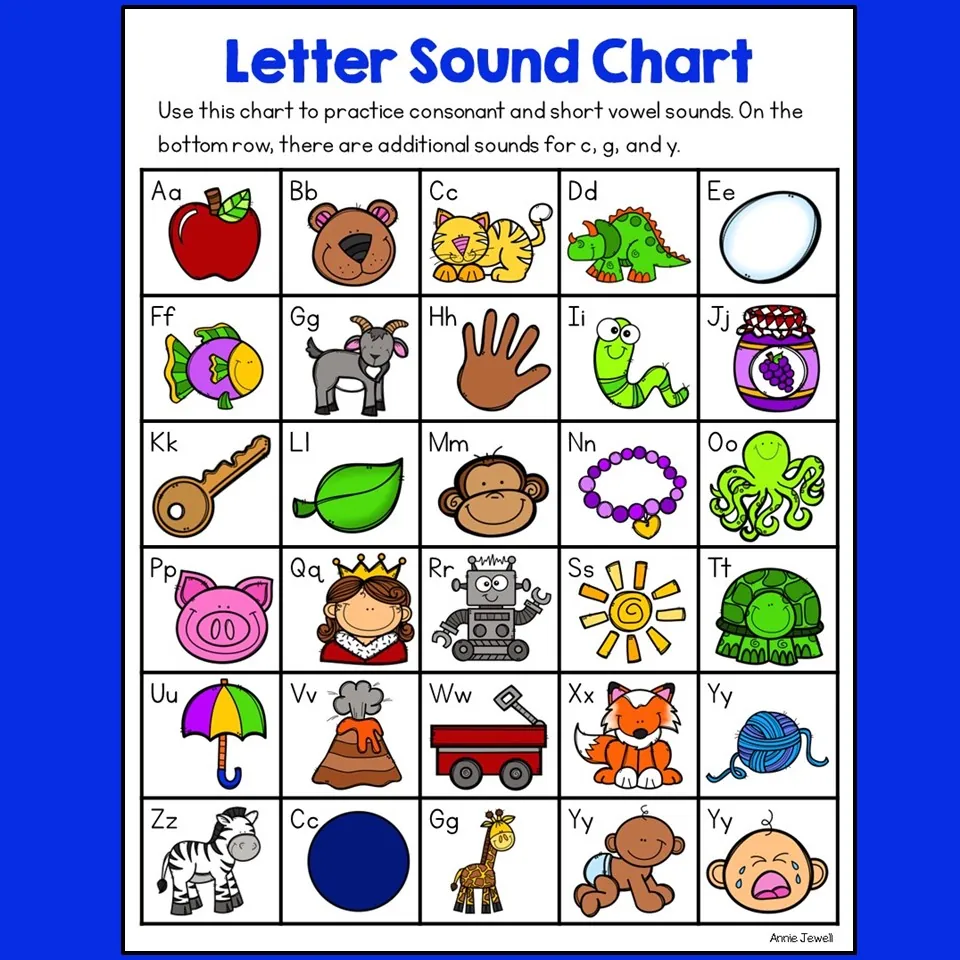
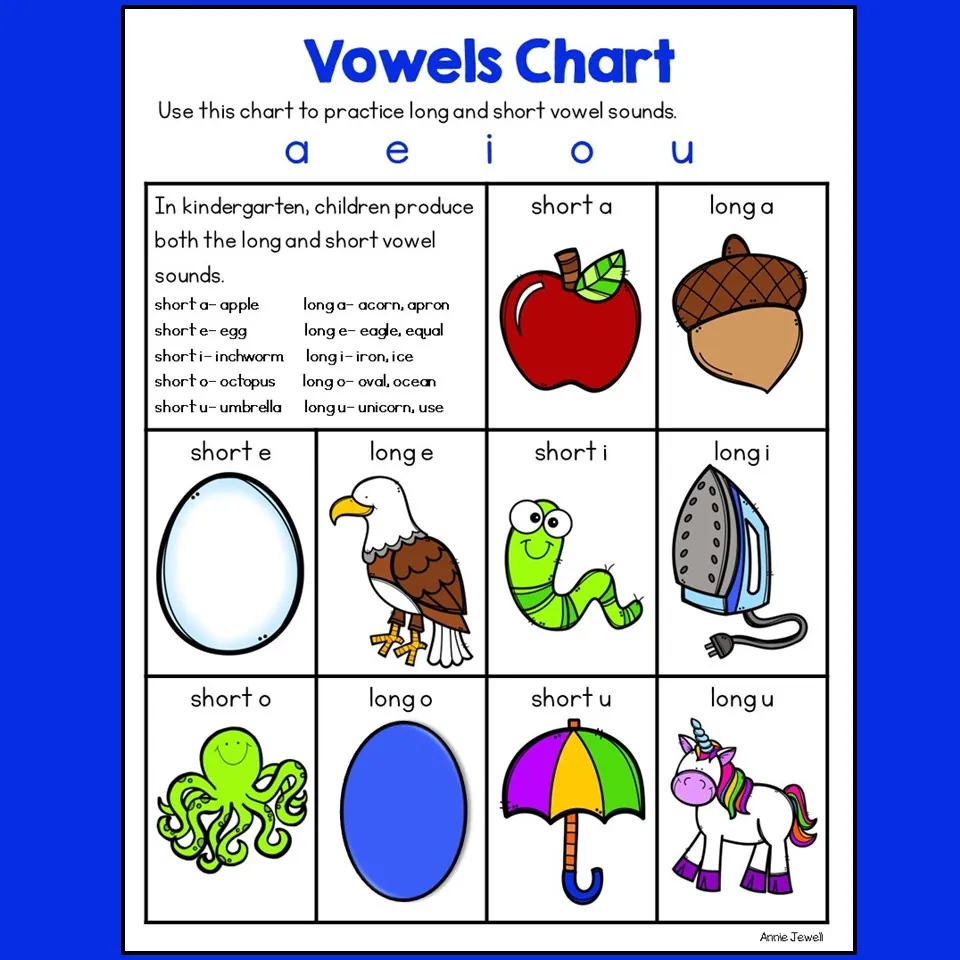
Alphabet and Beginning Sounds Charts are for children beginning to learn letter sounds and associate sounds with their letters. There are 2 charts in this resource. The first is for common letter sounds. The second chart focuses on short and long vowel sounds. The Vowel Chart has examples for both sounds for each vowel. Charts may be printed in color or in black/white.
There are two identical Vowels Charts - one for kindergarten and the other replaces the word kindergarten with 1st grade.
Use as a personal anchor chart.
Share with parents to work with their children on letters and sounds.
Build common vocabulary in your classroom.
Related resources
More resources teachers may find useful
24 related resources were found using this product's title, contributor, categories and tags.


In the classroom
Teaching tips & learning objectives

Learning objectives
Associate letters with the sounds in the supplied picture words, including final x in fox
Distinguish the short and long sound of each vowel using an example word for each

Teaching tips
Post the beginning-sounds chart at a student's personal workspace as a quick reference during independent writing.
Send a copy home so parents can use the same letter-sound examples when practicing with their child, per the file's stated intent.
Use the vowel chart's short/long example words as a routine warm-up, having students sort additional words by whether they match the short or long sound shown.

Skills covered
Letter-sound correspondence — students connect letters to sounds in picture words; most cues use beginning sounds, while fox illustrates final x.
Short and long vowel discrimination — students compare example words like 'apple' (short a) and 'acorn' (long a) to distinguish the two vowel sounds.

No reviews yet
Downloaded this resource? Tell other teachers how it went.
Curriculum
Standards, concepts & topics
Standards
 Standards
- RF.K.3.a
Core concepts
 Core concepts
Letter-sound correspondence
Beginning sounds
Short and long vowels
 Topics
Explore more
Categories this resource belongs to
Explore related searches
More to explore
You may also like