Big Feelings, Friendships, Conflict, Peer Pressure & Healthy Relations

Special Resources, Life Skills, Social Emotional Learning (SEL), Special Education Needs (SEN), Social Skills, Life Studies, Health, P.E. & Health
Presentations, Teacher Tools, Lesson Plans, Assessments, Rubrics, Quizzes and Tests, Workbooks, Worksheets & Printables, Worksheets, Drawing Templates & Outlines


About This Product
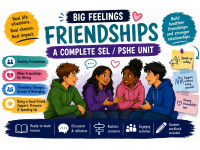
Big Feelings – Friendships, Conflict, Peer Pressure & Healthy Relationships | Complete 4-Lesson Social Emotional Learning (SEL) Resource Pack
Help students build healthy friendships, manage disagreements, understand changing relationships and develop the confidence to handle peer pressure with this complete four-lesson Social Emotional Learning (SEL) resource pack.
Part of the Big Feelings curriculum, Friendships, Conflict & Healthy Relationships explores the challenges of developing and maintaining positive relationships.
Friendships are not always straightforward. Students may experience disagreements, changing friendship groups, misunderstandings, exclusion or pressure to fit in.
This unit encourages students to recognise the qualities of healthy friendships, understand that conflict does not always mean a friendship is broken and develop practical strategies for communicating, setting boundaries and seeking support.
Through engaging classroom discussions, realistic scenarios, interactive activities and personal reflection, students develop essential relationship skills, emotional awareness and confidence.
Designed for middle school, secondary school and other age-appropriate educational settings, this flexible resource supports social emotional learning, personal development and student wellbeing.
What's Included?
4 complete PowerPoint lessons (73 slides) featuring structured learning activities, discussion questions and realistic friendship scenarios.
Comprehensive student workbook with reflective exercises and activities supporting all four lessons.
Teacher guidance and assessment materials outlining learning outcomes, teaching approaches and opportunities to assess understanding.
Scenario-based activities encouraging students to explore friendship challenges and consider different perspectives.
Discussion and reflection tasks covering trust, respect, boundaries, communication and peer pressure.
Ready-to-use teaching materials suitable for whole-class lessons, small-group learning and pastoral support.
The Four Lessons
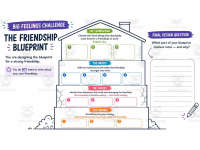
Lesson 1 – What Makes a Good Friend?
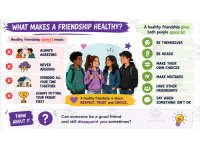
Students explore the characteristics of healthy friendships and consider what makes relationships positive, supportive and respectful.
They investigate the importance of trust, honesty, respect, boundaries and communication while recognising that healthy friendships do not require people to agree on everything.
Through realistic scenarios, students consider the differences between healthy, unhealthy and complicated friendship behaviours.
Key message: A healthy friendship allows both people to be themselves, make choices and feel respected.
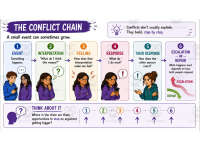
Lesson 2 – Does an Argument Mean a Friendship Is Broken?
Students explore why disagreements happen and how conflict can affect friendships.
They investigate the difference between normal disagreements and harmful patterns of behaviour, consider how misunderstandings develop and explore constructive ways to respond.
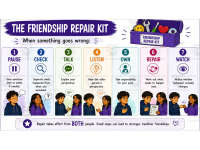
Activities encourage students to recognise different perspectives, communicate respectfully and understand when a friendship may need boundaries or additional support.
Key message: Disagreements do not automatically mean a friendship is over.
Lesson 3 – What Happens When Friendships Change?
Students explore how friendships naturally develop and change over time.
They consider situations involving changing interests, new friendship groups, exclusion, growing apart and feelings of uncertainty.
Through discussion and reflection, students develop strategies for responding to friendship changes while respecting their own feelings and the choices of others.
Key message: Friendships can change without anyone necessarily being at fault.
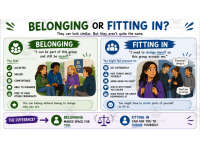
Lesson 4 – Friends, Support, Pressure & Speaking Up
Students investigate the difference between positive friendship support and unhealthy peer pressure.
They explore loyalty, belonging, personal boundaries and situations where friends may encourage choices that do not feel right.
Students consider how to communicate assertively, make independent decisions, speak up when something is wrong and identify appropriate sources of support.
Key message: Being a good friend does not mean agreeing with everything or ignoring your own boundaries.
Key Learning Outcomes
By completing this unit, students will develop their ability to:
Recognise the qualities of healthy friendships.
Understand the importance of trust, respect, honesty and support.
Identify appropriate personal boundaries.
Recognise the difference between disagreements and harmful behaviour.
Explore constructive approaches to resolving conflict.
Understand how misunderstandings and assumptions affect relationships.
Recognise that friendships can change over time.
Respond positively to changing friendship groups and social situations.
Identify peer pressure and unhealthy expectations.
Develop assertive communication and independent decision-making skills.
Understand when to speak up or seek support.
Build empathy, emotional awareness and relationship skills.
Ideal For
Social Emotional Learning (SEL)
PSHE and personal development education
Healthy relationships education
Friendship and conflict resolution lessons
Peer pressure and decision-making activities
Character education
Emotional literacy and wellbeing
Homeroom and advisory periods
Life skills education
Anti-bullying and positive relationships programmes
Pastoral and student support
Special education and additional learning needs
Small-group social skills interventions
Why Choose This Resource?
Realistic and relatable
Students explore friendship situations that reflect everyday experiences, including disagreements, changing relationships, social pressure and difficult decisions.
Encourages critical thinking
Rather than presenting friendship situations as simply right or wrong, students are encouraged to consider context, intentions, behaviour and different perspectives.
Engaging and interactive
The lessons include fictional scenarios, recurring Big Feelings characters, discussion questions, reflective activities and opportunities for collaborative learning.
Develops essential life skills
Students learn practical approaches to communication, conflict resolution, boundary setting, independent decision-making and seeking support.
Structured learning journey
The four lessons build progressively from understanding healthy friendships to managing conflict, navigating change and responding to peer pressure.
Inclusive and supportive
Fictional scenarios allow students to explore sensitive relationship challenges without being required to share private experiences.
Ready to teach
Save valuable planning time with complete PowerPoint presentations, a supporting student workbook, teacher guidance and assessment opportunities.
Assessment and Student Development
Assessment opportunities are integrated throughout the unit through scenario analysis, classroom discussions, workbook exercises and personal reflection.
Students are encouraged to demonstrate their understanding by considering different perspectives, explaining their decisions and identifying healthy ways to respond to challenging friendship situations.
Part of the Big Feelings Curriculum
Friendships, Conflict & Healthy Relationships is Unit 5 of the Big Feelings series, a collection of Social Emotional Learning resources designed to help students understand emotions, develop confidence, build resilience and form positive relationships.
This unit builds upon earlier learning about identity, emotional awareness, stress, anxiety and self-esteem, while also functioning as a complete standalone teaching resource.
Help students understand that healthy friendships are built on respect, communication, trust and the freedom to be themselves.
Created by MrSportandPE – Practical, engaging resources for real classrooms.
Resource Tags
0 Reviews
Check out these other great products