Character Traits word search, scramble and crossword puzzle
- Grades
- Grades 4–6
- Pages
- 6
- File type
- Answer key
- Included


- Subject
- ELA, Vocabulary
- Topic
- Character traits, Trait adjectives
- Resource types
- Worksheets, Word Searches, Crosswords Puzzles
- Answer key
- Included
- Standards
- L.4.6
Product description
From the author
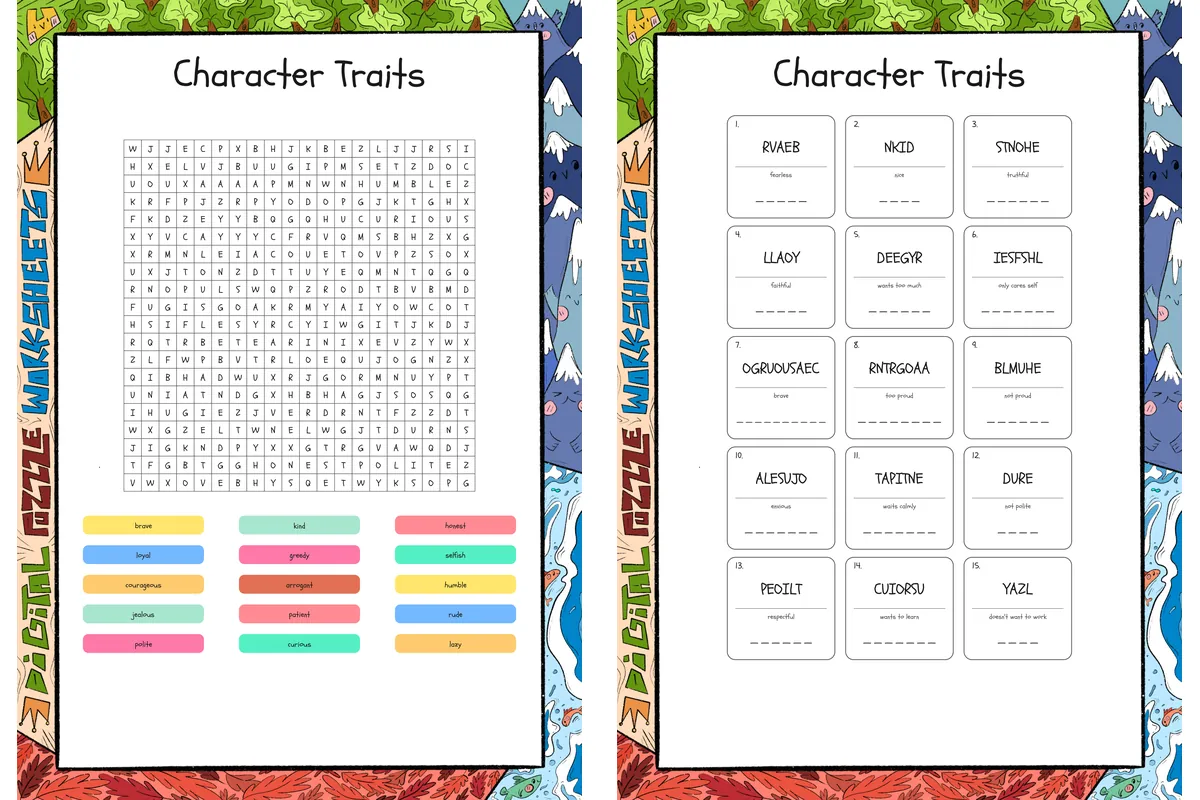
I made this character-traits puzzle set for vocabulary work during reading lessons. A word search, scramble and crossword use fifteen traits: brave, kind, honest, loyal, greedy, selfish, courageous, arrogant, humble, jealous, patient, rude, polite, curious and lazy.
Each puzzle is a separate two-page PDF with an answer version, for six pages total. The scramble and crossword use short clues; the word search supplies a word list.
Try the crossword with partners or use a puzzle for early finishers. Afterwards, ask students to describe a book character using two traits and explain their choices.
Related resources
More resources teachers may find useful
24 related resources were found using this product's title, contributor, categories and tags.


In the classroom
Teaching tips & learning objectives

Learning objectives
Name fifteen adjectives that describe a person's character, from brave and honest through arrogant and lazy
Match a short paraphrase clue to the trait it names — "waits calmly" to patient, "only cares self" to selfish, "envious" to jealous
Spell each trait correctly when rebuilding it from scrambled letters such as OGRUOUSAEC and RNTRGOAA

Teaching tips
Start with the scramble: it prints the clue directly under every jumbled string and provides a blank line for each answer, which makes it the most supported of the three.
Use the printed word list as a ready-made trait bank afterwards: ask students to pick two of the fifteen and justify them against a character in whatever the class is reading.
Nine of the traits are positive and six are unflattering, which sets up a sorting discussion once the puzzles are done.

Skills covered
Character-trait vocabulary — students work through fifteen describing words: brave, kind, honest, loyal, greedy, selfish, courageous, arrogant, humble, jealous, patient, rude, polite, curious and lazy.
Synonym reasoning — every clue is a paraphrase rather than a definition, so "envious" has to be turned into jealous and "not polite" into rude.
Visual scanning — the fifteen answers sit inside a twenty-by-twenty grid with the word list printed below rather than alongside.

No reviews yet
Downloaded this resource? Tell other teachers how it went.
Curriculum
Standards, concepts & topics
Standards
 Standards
- L.4.6
Core concepts
 Core concepts
Character traits
Vocabulary
Synonyms
Word puzzles
 Topics
Explore more
Categories this resource belongs to
Explore related searches
More to explore
You may also like