Crash Course: Entrepreneurship #1 Who Even Is An Entrepreneur? Worksheet
- Grades
- Grades 7–8, High School
- Pages
- 1
- File type
- Zip
- Answer key
- Included


- Subject
- Social Studies
- Topic
- Entrepreneurship, Crash Course
- Resource types
- Worksheets
- Answer key
- Included
Product description
From the author
Related resources
More resources teachers may find useful
24 related resources were found using this product's title, contributor, categories and tags.
In the classroom
Teaching tips & learning objectives

Learning objectives
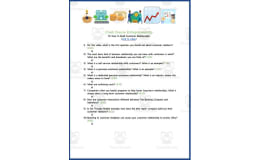
Define an entrepreneur as someone who takes on financial risk to pursue a business idea, in the student's own words
Distinguish an entrepreneurial venture from an employee's idea by asking who carried the financial risk, using the Cat Cycle and Cat Board contrast
Explain what the gig economy is and how working project by project changes the options open to an aspiring entrepreneur

Teaching tips
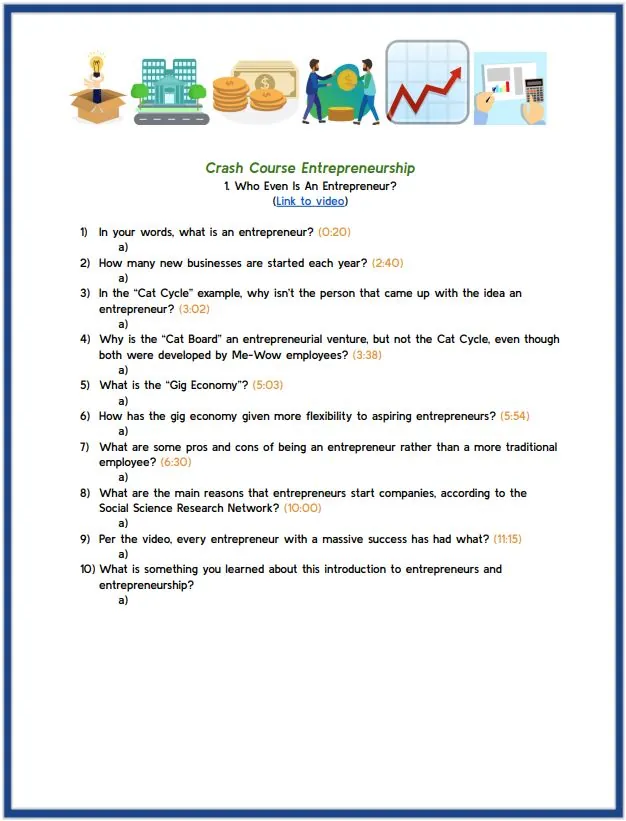
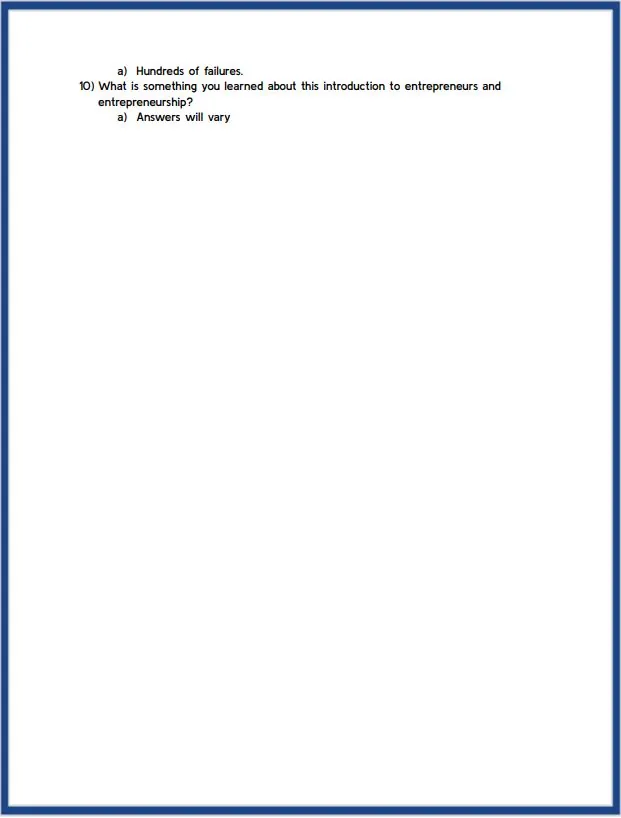
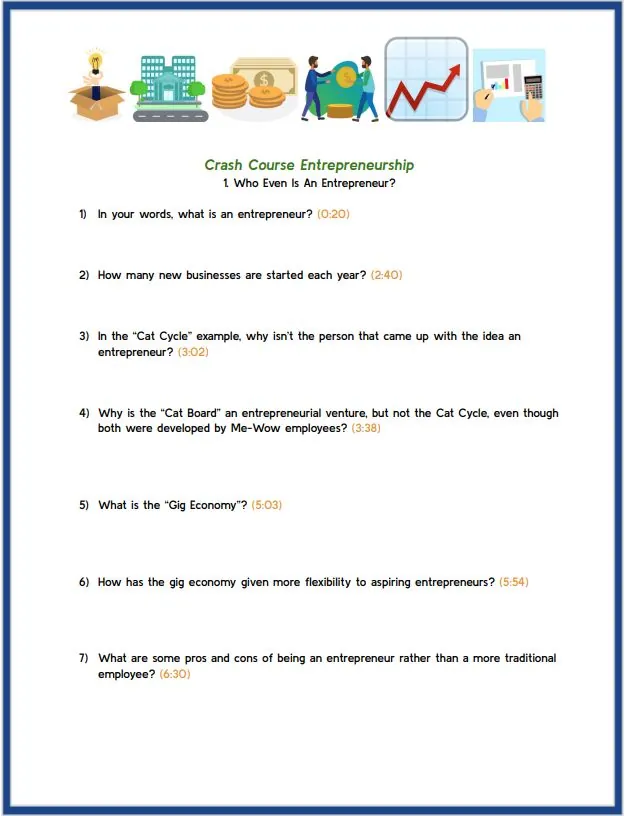
Timestamps sit beside nine of the ten questions, so students who miss an answer can jump straight back to the right moment in the episode rather than rewatching from the start
The Word versions can be trimmed to fewer questions or reordered before printing, since the same ten items appear in every version
Frame statistics and broad claims about entrepreneurship as statements from the 2019 episode, not current facts or guarantees. Question 10 is open-ended, and reasonable student wording may differ from the key.

Skills covered
Listening for detail in a video - students answer to a stated timestamp, such as the number of new businesses started each year at (2:40).
Concept discrimination - the Cat Cycle and Cat Board questions ask students to say why one Me-Wow employee's idea counted as an entrepreneurial venture and the other did not.
Economic vocabulary - students define the gig economy and explain how project-based work changes an entrepreneur's options.
Good to know
Questions teachers ask about this resource
How can students return to a missed detail in the video?
Nine questions have timestamps beside them. Use the relevant time to revisit an explanation or example; the final question asks students what they learned after viewing.
Can I use paper and typed responses in the same class?
Yes. The print and online-assignment versions use the same ten questions, with open writing space or a typing slot beneath each. Word files allow adjustments before assigning.

No reviews yet
Downloaded this resource? Tell other teachers how it went.
Resource details
Concepts & topics
Core concepts
 Core concepts
Entrepreneurship
Gig economy
Financial risk
Video note-taking
 Topics
Explore more
Categories this resource belongs to
Explore related searches
More to explore
You may also like