Group Work Dynamics & Team Roles Guide (SURV06)


About This Product
Put an end to group project arguments, unequal workload complaints, and off-task behavior with the Group Work Dynamics & Team Roles Guide (SURV06)! Designed for Middle School ELA, STEM, Science labs, Social Studies, Advisory, and Homeroom classes, this 3-page, print-ready packet teaches students how to collaborate effectively using clear team role assignments and structured accountability tools.
What Is Included in This 3-Page Packet?
📋 Page 1: Teacher Guide & Lesson Plan
Features Common Core Speaking & Listening alignment, common middle school group work pitfalls, lesson facilitation steps, expected learning outcomes, role definitions, and an answer key for scenario exercises.
👥 Page 2: Student Mission Card & Practical Guide
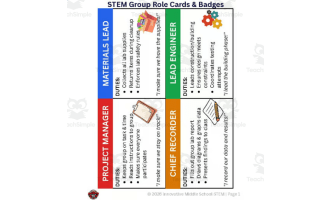
Hooks students with a relatable scenario on group project miscommunication. Features a high-visibility "Golden Rules" callout box highlighting the "3-Before-Me" teacher question rule, role ownership expectations, and "I-statement" conflict resolution strategy. Includes an annotated "4 Essential Team Roles" visual matrix diagram (Leader, Scribe, Manager, Speaker).
✍️ Page 3: Practical Application & Skill Reflection
Engages students in the "Group Conflict Scenario Solver"—evaluating realistic group work breakdowns and applying role-based solutions. Features a fillable "Team Member Charter Contract" that students complete before starting group projects, followed by executive function reflection questions analyzing workload equity, personal strengths, and professional workplace teamwork.
Educational Value & Key Benefits:
Establishes Clear Peer Accountability: Eliminates the "one person does all the work" problem by giving every student a specific, defined role.
Teaches Constructive Conflict Resolution: Gives 6th, 7th, and 8th graders practical strategies ("I-statements" and the "3-Before-Me" rule) to solve minor disagreements independently.
Plug-and-Play for Any Group Activity: Ideal for setting up science lab groups, ELA literature circles, social studies poster projects, or advisory team-building units.
Resource Tags
0 Reviews
Check out these other great products