Homographs & Multiple Meaning Words Worksheets
- Grades
- Grades 2–4
- Pages
- 39
- File type
- Preparation
- Print ready


- Subject
- ELA, Vocabulary
- Topic
- Homographs, Multiple-Meaning Words
- Resource types
- Worksheets
- Preparation
- Print ready
- Standards
- L.2.4
Product description
From the author
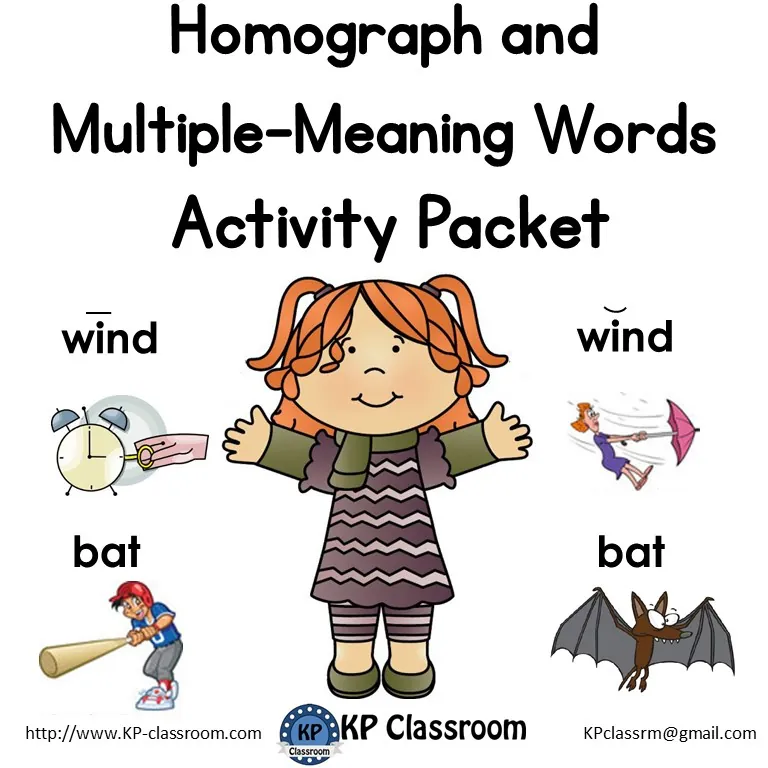
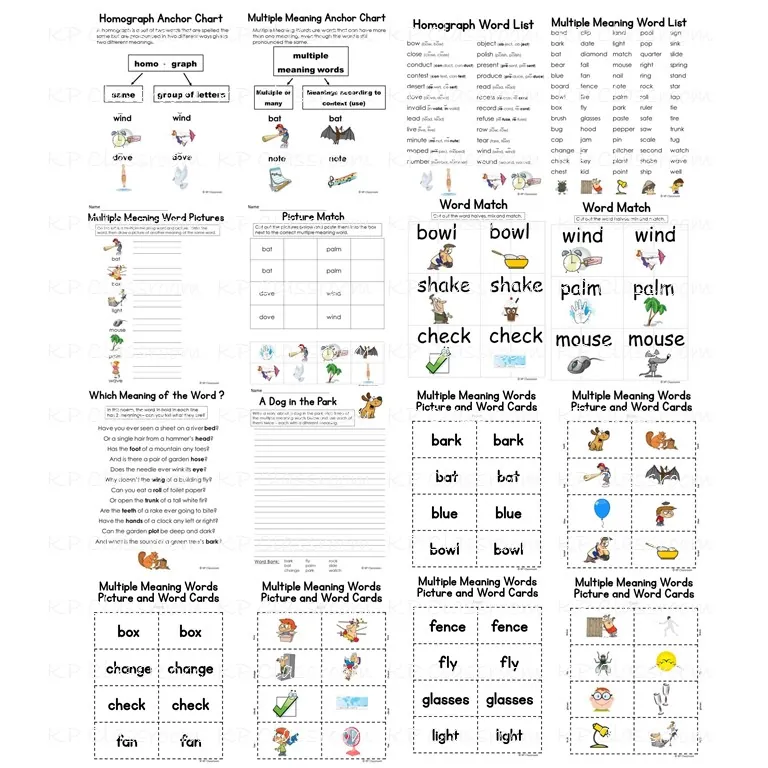
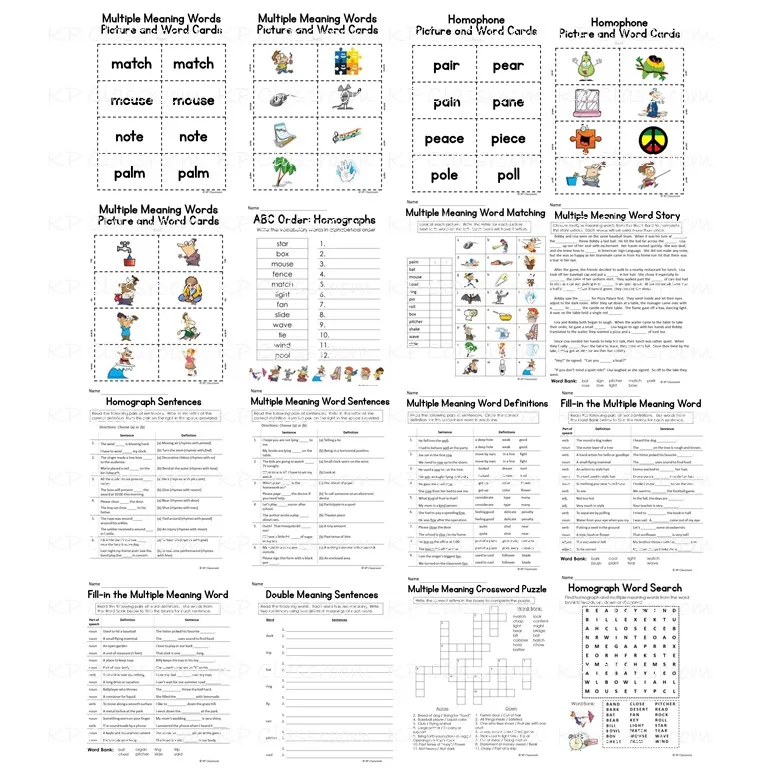
This " Homograph and Multiple Meaning Words Activity Packet and Worksheets " is a fun packet of no prep activities for homographs, homonyms and multiple meaning words. These printables are great for improving phonics skills, spelling, grammar, reading comprehension, and writing with words that are spelled the same but have different meanings.
These activities are designed for kids at differing levels in First Grade, Second Grade, Third Grade or Fourth Grade. Please note that not all activities in this packet will meet your class' particular levels, but there should be enough variation in the resources from your high flyers to those that are more challenged.
Related resources
More resources teachers may find useful
24 related resources were found using this product's title, contributor, categories and tags.


In the classroom
Teaching tips & learning objectives

Learning objectives
Recognize that the same spelling can represent different meanings and sometimes different pronunciations.
Use sentence context to choose the intended meaning.
Write sentences that use different meanings of the same word.

Teaching tips
Introduce the two anchor charts side by side, since the packet's later worksheets deliberately mix homograph tasks (e.g. Homograph Sentences) with multiple-meaning-word tasks (e.g. Multiple Meaning Word Sentences) that rely on the distinction being clear first.
Use the picture-and-word flashcards for a quick matching or memory game before assigning the more structured sentence and definition worksheets.
Use homograph broadly for words with the same spelling and different meanings; different pronunciation is possible, not required. The packet uses homograph mainly for the different-pronunciation examples.

Skills covered
Recognizing shared spellings with different meanings
Using context to interpret vocabulary
Writing with multiple-meaning words
Good to know
Questions teachers ask about this resource
How does this packet organize the word examples?
Its homograph section emphasizes words such as wind with different pronunciations, while its multiple-meaning section uses examples such as bat with the same pronunciation.

No reviews yet
Downloaded this resource? Tell other teachers how it went.
Curriculum
Standards, concepts & topics
Standards
 Standards
- L.2.4
Core concepts
 Core concepts
Homographs
Multiple meaning words
Vocabulary in context
 Topics
Explore more
Categories this resource belongs to
Explore related searches
More to explore
You may also like