PEE 5 Paragraph Persuasive Essay Templates: Point Evidence Explanation


- Grades
- Grades 5–9, Elementary, Middle School, High School
- Pages
- 9
- File type
- Answer key
- Included


- Subject
- ELA, Strategies, Writing
- Topic
- essay, essay writing
- Resource types
- Worksheets & Printables, Worksheets
- Answer key
- Included
- Standards
- CCSS.W.6.1 CCSS.W.6.4 +1
About this resource
What's inside this resource
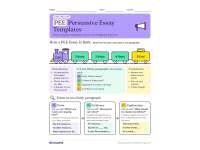
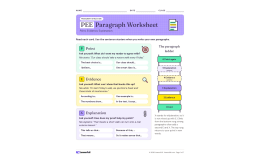
This PEE essay pack walks students through a five-paragraph persuasive essay, from the opening hook to the final thought. Page 1 pictures the essay as a five-car train: an introduction with a hook, thesis and preview of three reasons, three body paragraphs, and a conclusion. A zoomed-in body paragraph spells out each step (Point, Evidence, Explanation) with a guiding question, an example and three sentence starters, plus a Link back to the thesis.
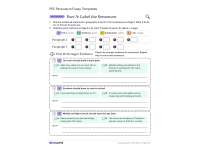
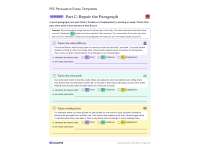
A 410-word model essay, "Every School Should Have a School Garden," shows the structure in action. Students then label numbered sentences from two of its body paragraphs as P, Ev, Ex or L and choose the stronger evidence for three points, explaining their choice. A repair page follows, with a worked example and three short paragraphs that each need a new point, evidence or explanation sentence.
Planning comes next. Students pick a topic or their own, choose a hook type, write a thesis with three reasons and plan the conclusion. One planner per body paragraph records the point, evidence and its type, explanation and link. A linking-words card groups transitions by job, and a 12-item checklist with a partner star-and-wish box guides revision.
- Grades 5–9: persuasive and argument writing
- Nine pages: structure guide, model essay, two practice pages, three planners, a self and peer check and an answer key
- Formats: a full-color PDF and a grayscale print version
Related resources
More resources teachers may find useful
24 related resources were found using this product's title, contributor, categories and tags.



In the classroom
Teaching tips & learning objectives

Learning objectives
Describe the parts of a five-paragraph persuasive essay: hook, thesis, three body paragraphs and conclusion.
Label Point, Evidence, Explanation and Link sentences in a model essay.
Judge which of two pieces of evidence better supports a point and explain why.

Teaching tips
Have students read the model essay before starting Part A; the small numbers in paragraphs 2 and 3 match the boxes on page 3.
Point out that paragraph 2 of the model gives two pieces of evidence before its explanation, a common spot for mislabeling.
Remind students that the practice paragraphs use made-up examples, while their own essays need facts they can look up, real examples or true experiences.

Skills covered
Essay organization: students follow a hook, a thesis with three reasons, three body paragraphs and a conclusion that restates the thesis.
Weighing evidence: each Stronger Evidence item sets a checkable fact against a weaker option, such as personal taste or an unsourced report.
Paragraph repair: students decide whether a paragraph lacks its point, evidence or explanation and write a sentence to fill the gap.
Good to know
Questions teachers ask about this resource
What do the P, Ev, Ex and L labels mean?
Point, Evidence, Explanation and Link. Link is a closing sentence in each body paragraph that ties the reason back to the thesis.
Is there a model essay?
Yes. Page 2 has a five-paragraph model, "Every School Should Have a School Garden," and students label sentences from its body paragraphs on page 3.
What topics can students write about?
The planner offers four topics, including school uniforms, phones at lunch, esports teams and a four-day week, plus a line for a topic of their own.
Where do students write the full essay?
On separate paper. The planners on pages 5–7 hold the outline and the first sentence, and page 8 is used to check the finished draft.

No reviews yet
Downloaded this resource? Tell other teachers how it went.
Curriculum
Standards, concepts & topics
Standards
 Standards
- CCSS.W.6.1 — Write arguments to support claims with clear reasons and relevant evidence. a. Introduce claim(s) and organize the reasons and evidence clearly. b. Support claim(s) with clear reasons and relevant evidence, using credible sources and demonstrating an understanding of the topic or text. c. Use words, phrases, and clauses to clarify the relationships among claim(s) and reasons. d. Establish and maintain a formal style. e. Provide a concluding statement or section that follows from the argument presented.
- CCSS.W.6.4 — Produce clear and coherent writing in which the development, organization, and style are appropriate to task, purpose, and audience. (Grade-specific expectations for writing types are defined in standards 1–3 above.)
- CCSS.W.6.5 — With some guidance and support from peers and adults, develop and strengthen writing as needed by planning, revising, editing, rewriting, or trying a new approach. (Editing for conventions should demonstrate command of Language standards 1–3 up to and including grade 6 on page 53.)
Core concepts
 Core concepts
PEE paragraph
persuasive essay
five-paragraph essay
thesis statement
hook
transitions
argument writing
 Topics
Explore more
Categories this resource belongs to
Explore related searches
More to explore
You may also like