Political Cartoon Analysis Template
- Grades
- Grades 6–8, High School
- Pages
- 2
- File type
- Preparation
- Print ready


- Subject
- Social Studies
- Topic
- Political cartoon, Source analysis
- Resource types
- Worksheets
- Preparation
- Print ready
Product description
From the author
This resource is a Political Cartoon Analysis Template.
Provide approved cartoon sources and printing materials before students begin.
Your students can use this worksheet to analyze political cartoons after viewing them.
There are graphic organizers and writing spaces for students to reflect on the main message, the cartoonist's perspective and so much more.
Related resources
More resources teachers may find useful
24 related resources were found using this product's title, contributor, categories and tags.



In the classroom
Teaching tips & learning objectives

Learning objectives
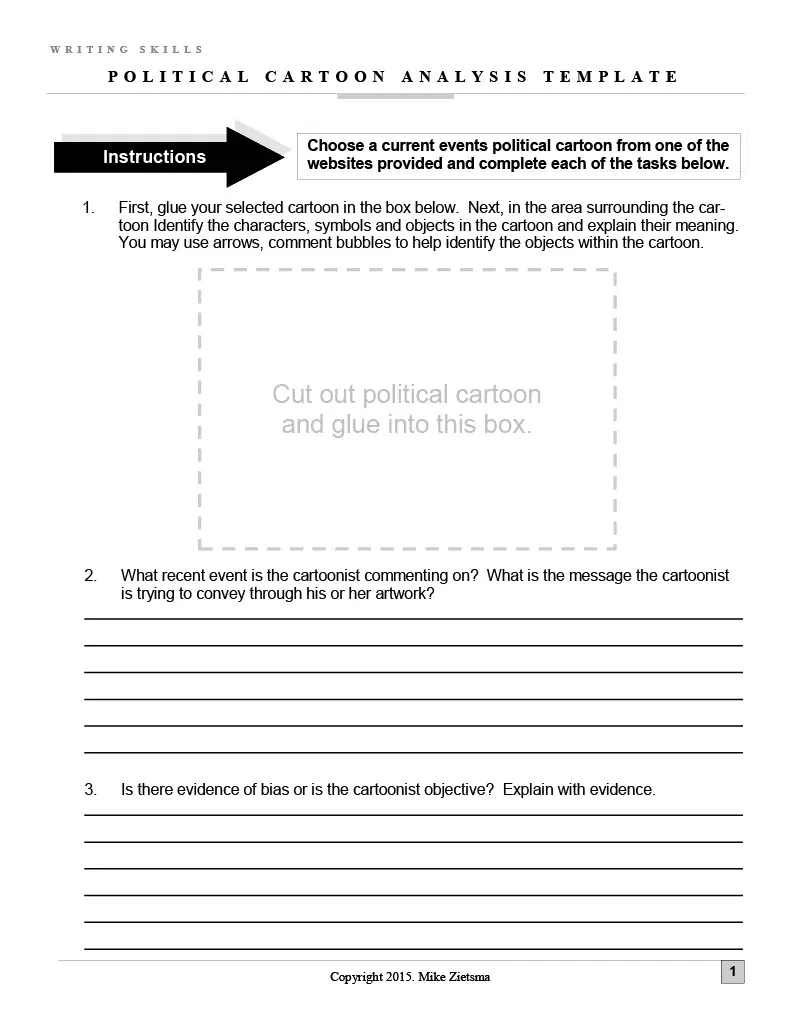
Identify and explain the symbols, characters, and objects used in a political cartoon.
Determine the current event and message a political cartoonist is conveying.
Evaluate a political cartoon for evidence of bias versus objectivity, citing specific evidence.

Teaching tips
Provide the list of approved current-events cartoon websites referenced in the instructions ahead of time, since the template assumes students already have a source to choose from.
Model the arrow-and-comment-bubble labeling technique on a sample cartoon before students glue in their own, since the symbol-identification task (page 1) has no worked example.
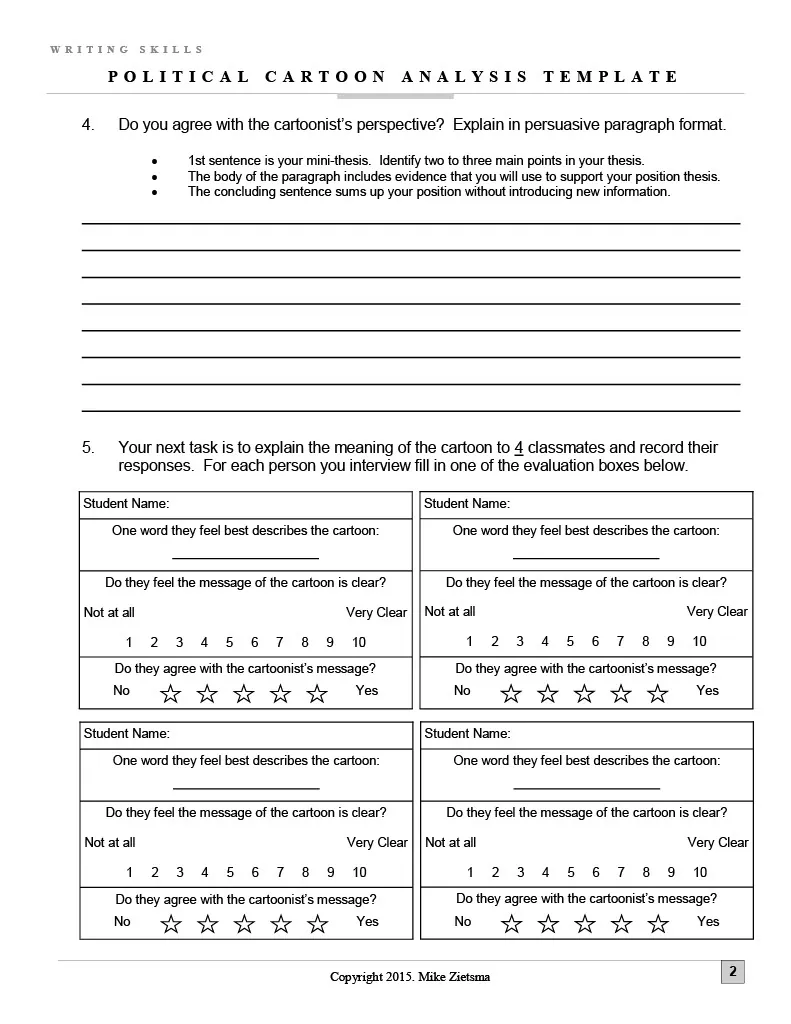
Allow time for the four-classmate interview task (page 2), during the same or a later class session, since it requires students to circulate and record other students' responses after finishing their own analysis.

Skills covered
Visual symbol interpretation — students identify and explain characters, symbols, and objects within a political cartoon (page 1).
Bias evaluation — students judge whether a cartoon is objective or biased and support their judgment with evidence (page 1).
Persuasive paragraph writing — students construct a mini-thesis, evidence, and conclusion to argue their own position on the cartoon (page 2).
Good to know
Questions teachers ask about this resource
Does the template supply the political cartoon students will analyze?
No — students choose their own current-events cartoon from a list of websites the teacher provides, then glue their selection into the template's boxed space themselves.

No reviews yet
Downloaded this resource? Tell other teachers how it went.
Resource details
Concepts & topics
Core concepts
 Core concepts
Political cartoon analysis
Bias and objectivity
Persuasive writing
 Topics
Explore more
Categories this resource belongs to
Explore related searches
More to explore
You may also like