Sentence Fix-Ups Worksheet Pack
- Grades
- Grades 1–2
- Pages
- 55
- File type
- Answer key
- Included


- Subject
- ELA, Writing
- Topic
- Sentence Editing, Grammar
- Resource types
- Worksheets
- Answer key
- Included
Product description
From the author
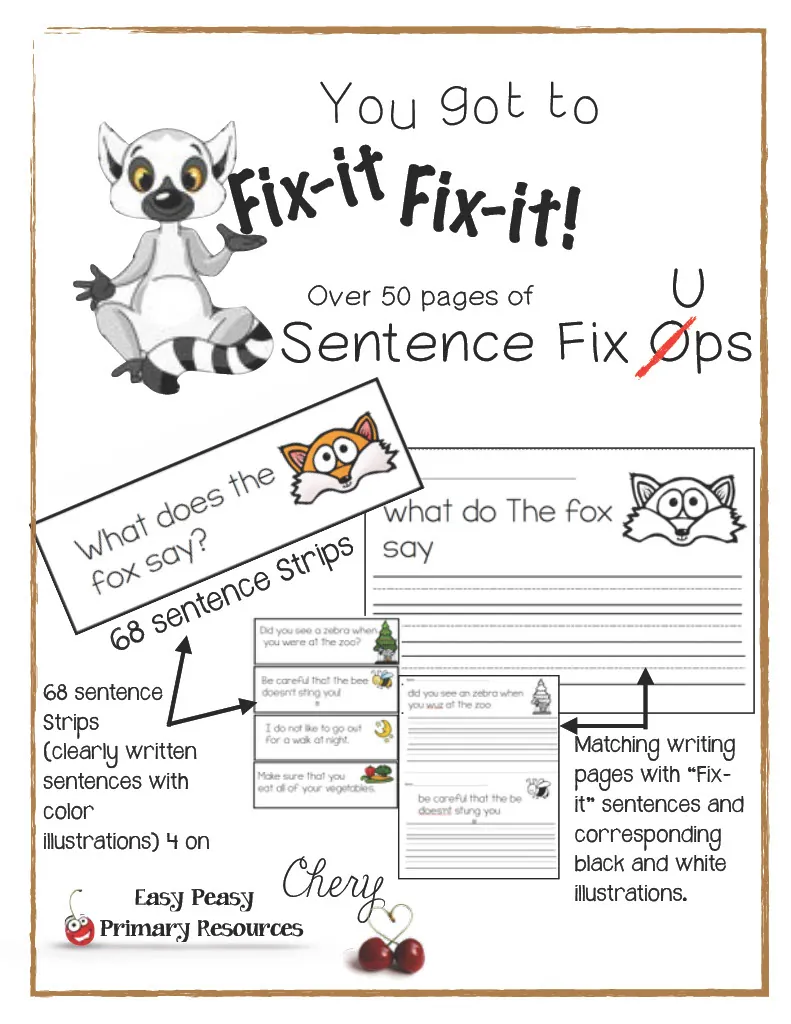
This resource is a Sentence Fix-Ups Worksheet Pack.
With over 50 pages of sentences, students will have all the practice they need to edit and write sentences correctly.
These worksheets are paired with sentence strips that make great reinforcement for students as they correct mistakes.
Related resources
More resources teachers may find useful
24 related resources were found using this product's title, contributor, categories and tags.


In the classroom
Teaching tips & learning objectives

Learning objectives
Correct missing or misplaced capitalization.
Match verbs with their subjects.
Choose end punctuation that matches a sentence’s meaning.

Teaching tips
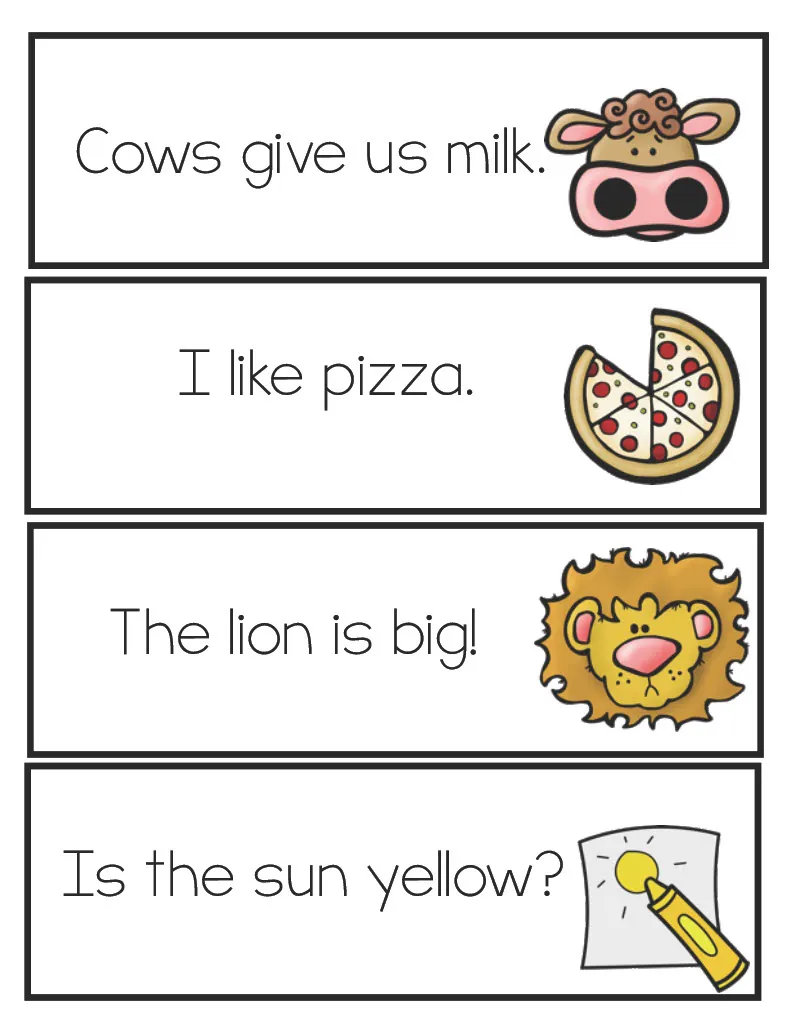
The corrected form of every fix-it sentence sits on the strip page that opens its group of three pages, so a group can self-check by turning back to the strip page one or two pages earlier
Preview and select sentences by the skill and difficulty needed: the opening strips are four- and five-word sentences with short-vowel words (gag, sap, yams), while the later ones run to two clauses
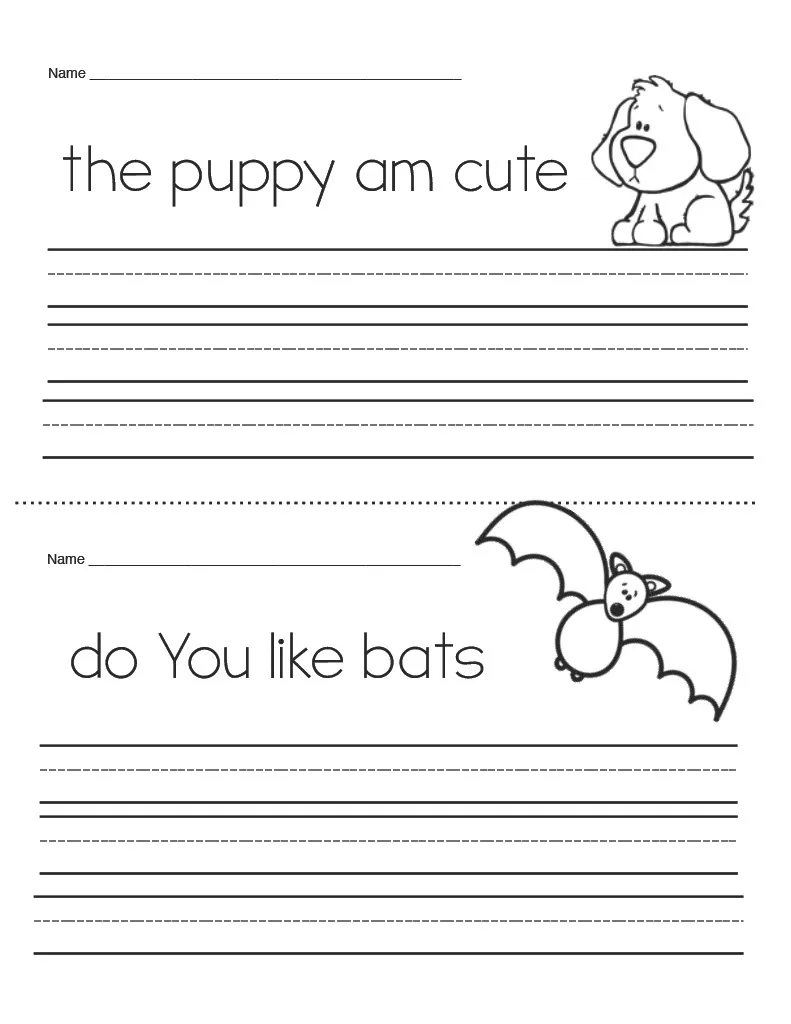
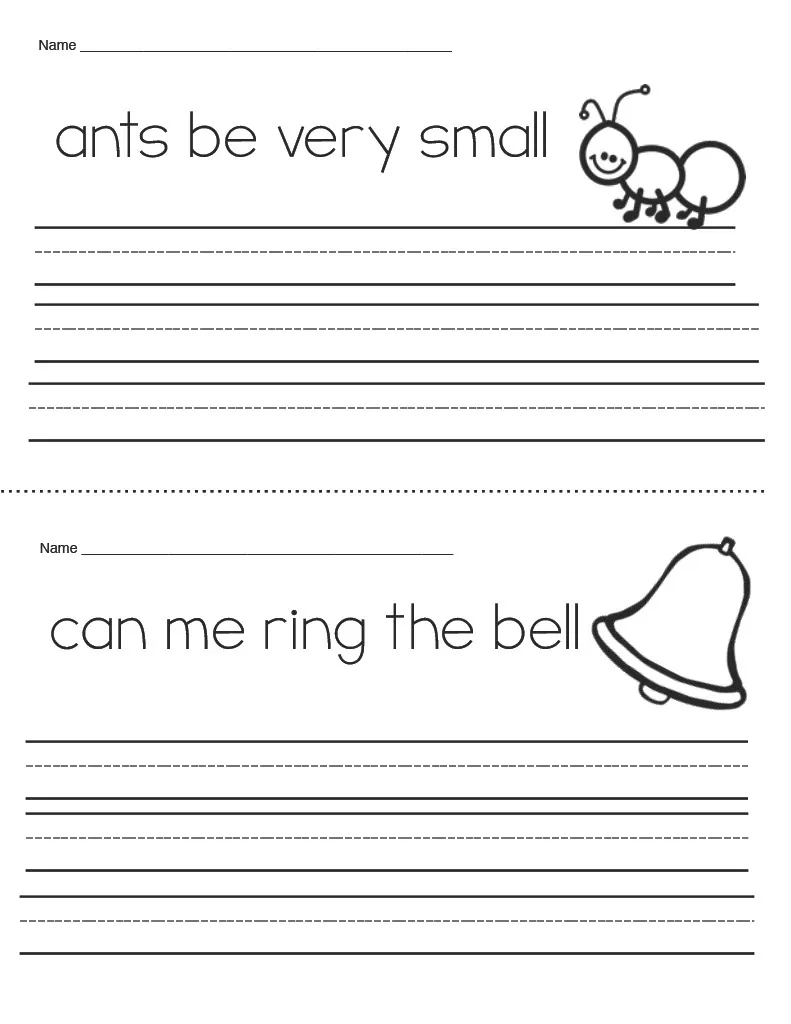
Each fix-it sentence occupies a half page with its own Name line, so one sheet can be cut in two and given to two students

Skills covered
Sentence editing — students take a printed sentence carrying deliberate faults and rewrite it correctly, sixty-eight times over the pack.
Capitalisation — the broken sentences drop the opening capital and add wrong ones mid-sentence ("the Boy am sad", "this Walrus has too big tusk"), so students must fix both directions.
Pronoun case — sentences repeatedly substitute me and mine for I and my, as in "me sees three egg" and "me big Sister have her own cell phone".
Good to know
Questions teachers ask about this resource
How are the pages grouped?
Seventeen groups each pair a four-sentence model strip page with two writing pages containing those four sentences to edit. A blank writing page is also supplied.
How should I choose the practice?
Choose sentences by the skills and difficulty your students need. Many contain several deliberate errors; the sequence is not a guarantee of steadily increasing difficulty.

No reviews yet
Downloaded this resource? Tell other teachers how it went.
Curriculum
Standards, concepts & topics
Standards
 Standards
- L.1.1
- L.1.2
Core concepts
 Core concepts
Sentence editing
Capitalization
Punctuation
Subject-verb agreement
Spelling
Topics
 Topics
Explore more
Categories this resource belongs to
Explore related searches
More to explore
You may also like