search
user.png
vertical menu

Social Media and the Psychology of Phone Use (Screen Time Slides and Experiment)

Social Media and the Psychology of Phone Use (Screen Time Slides and Experiment) preview

Social Media and the Psychology of Phone Use (Screen Time Slides and Experiment) preview 2
Social Media and the Psychology of Phone Use (Screen Time Slides and Experiment) preview 3
Social Media and the Psychology of Phone Use (Screen Time Slides and Experiment) preview 4

Social Media and the Psychology of Phone Use (Screen Time Slides and Experiment) preview 5
Social Media and the Psychology of Phone Use (Screen Time Slides and Experiment) preview 6

Look Inside · 10 pages

Unit cover: Social Media and the Psychology of Phone Use, featuring slides, videos, and a student experiment
Cover introducing the phone-use psychology unit
Opening quotation slide: Abhijit Naskar contrasts owning technology with being owned by technology.
Opening quotation about technology use
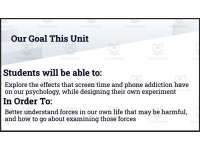
Unit goal slide: explore the psychological effects of screen time and phone addiction and design an experiment.
Unit goals for exploration and experiment design
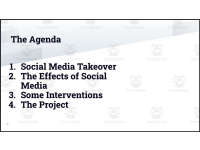
Unit agenda slide lists Social Media Takeover, The Effects of Social Media, Some Interventions, and The Project.
Agenda outlining the unit's four sections
Section 1 opener, Social Media Takeover: how social media has become central to modern life and growing up.
Section 1 introduction: Social Media Takeover
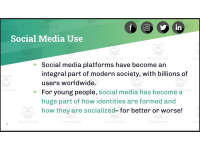
Social Media Use lesson slide introduces worldwide use and social media's role in youth identity and socialization.
Introduction to social media's role in young lives
Teen usage statistics slide compares 2012 and 2018; social media use more than once a day rises from 34% to 70%.
Teen social media frequency comparison, 2012–2018
Societal effects statistics slide: 14% positive, 46% negative, 24% neither, and 16% don't know in a YouGov poll.
Poll on social media's overall effect on society
Teen perceptions slide: 31% view social media positively, 45% neutrally, and 24% negatively, with negative reasons.
Teen perceptions and reasons for negative views
Screen-time lesson slide cites a 2019 study reporting American teens average 7 hours daily on screen-based activities.
Reported daily screen time among American teens
Attributes
Add To Collection
Add to collection Add to collection

About This Product

Introducing a teaching resource that explores the psychology of social media and phone use. This product guides students to understand the current research on how social media impacts identity, relationships, and wellbeing. It begins by presenting statistics and discussion questions about social media usage. A TED talk with guided reflection prompts students to think critically about the effects of technology. Explanatory content dives deeper into concerns like digital addiction, comparison culture, privacy issues, and more with embedded discussion questions. Finally, an experiential project has students track their personal screen time, try an intervention to reduce usage, and reflect. This multifaceted resource covers the key issues through slides, videos, readings, discussions, and student self-exploration to illuminate the psychology behind social media and empower more intentional technology usage. Applicable for adolescent development or intro psychology courses.

0 Reviews

Explore related searches
you may also like...

Check out these other great products