"To Be or Not to Be" Hamlet Soliloquy Analysis



- Grades
- Grades 9–12, High School
- File type
- Preparation
- Print ready


- Subject
- ELA, Literature
- Topic
- Hamlet, Soliloquy
- Resource types
- Graphic Organizers, Worksheets & Printables
- Preparation
- Print ready
- Standards
- CCSS.RL.9.4 CCSS.RI.9.1
About this resource
What's inside this resource
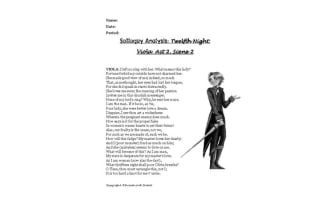
A soliloquy Analysis of Hamlet's famous soliloquy. Includes a link to a video, handouts, and an answer key.
Related resources
More resources teachers may find useful
24 related resources were found using this product's title, contributor, categories and tags.

In the classroom
Teaching tips & learning objectives

Learning objectives
Analyze the advantages and disadvantages Hamlet weighs regarding suicide within the soliloquy
Identify and interpret Hamlet's metaphors for death, such as sleep and the 'undiscovered country'
Define and apply the literary concept of a tragic flaw to Hamlet's character

Teaching tips
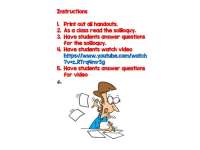
Read the soliloquy aloud as a class before assigning the graphic organizer, as the included instructions specifically recommend
Use the answer key's note that video-response answers 'may vary' to set expectations that those three questions are opinion-based, unlike the soliloquy analysis section
Preview the linked Sonnet Man video before class to confirm it is still available and appropriate for your students

Skills covered
Close reading of Shakespearean verse — students read and interpret the 'To be or not to be' soliloquy for meaning.
Literary device identification — students name Hamlet's specific metaphors for death, such as sleep and the undiscovered country.
Character analysis — students identify Hamlet's tragic flaw as indecision and inability to act, based on textual evidence.
Good to know
Questions teachers ask about this resource
How do the pros/cons list and the tragic-flaw question in the graphic organizer build on each other?
The advantages/disadvantages list has students trace Hamlet's internal weighing of life versus death, and the tragic-flaw question then asks them to name the personal quality — indecision and inability to act — that explains why he ultimately does neither, tying the two parts of the organizer together.

No reviews yet
Downloaded this resource? Tell other teachers how it went.
Curriculum
Standards, concepts & topics
Standards
 Standards
- CCSS.RL.9.4 — Determine the meaning of words and phrases as they are used in the text, including figurative and connotative meanings; analyze the cumulative impact of specific word choices on meaning and tone (e.g., how the language evokes a sense of time and place; how it sets a formal or informal tone).
- CCSS.RI.9.1 — Cite strong and thorough textual evidence to support analysis of what the text says explicitly as well as inferences drawn from the text.
Core concepts
 Core concepts
Hamlet
soliloquy analysis
tragic flaw
Shakespearean literature
 Topics
More to explore
You may also like