



3,993 products added recently
Page 4 - Popular Labs
Popular Labs feature tried-and-true experiments that have delighted students across classrooms. These engaging activities cover a range of scientific disciplines and are known for their effectiveness in teaching key concepts. By integrating popular labs into your lessons, you tap into resources that are both educational and enjoyable. These experiments promote curiosity and a hands-on approach to learning, making science accessible and interesting for all students.

 Show filters


Anatomy and Physiology Labs ~ Full Year Bundle
Science, Life Sciences, Human Body, Grade 9, 10, 11, 12, Labs, Experiments, Activities
This bundled package includes all the lab activities I use in my Anatomy & Physiology class. Many of these labs can also be used in a Biology course. Included in this package are 19 different labs, with guidelines, materials lists, and answer keys included. These labs are great for any level student from English Learner - EL - to more advanced students.
Author The Teacher Team
Tags Anatomy, Physiology, A & P, Anatomy Labs, Labs, Human Physiology Lab Ideas
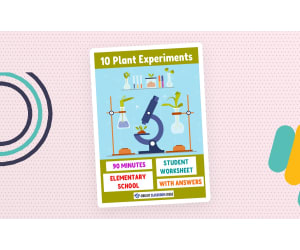
10 Plant Experiments for Elementary School
Nature & Plants, Life Sciences, Science, Grade 3, 4, 5, Labs, Experiments, Activities
🌱 Bring Science to Life with Hands-On Plant Experiments! Make your next science unit unforgettable! These 10 fun and simple plant experiments help students explore how light, water, and soil affect plant growth —all through easy, hands-on discovery. Perfect for Grades 4–5 , this low-prep science lesson keeps curiosity blooming and engagement high. ✅ What’s Included: 10 easy-to-follow plant experiments Step-by-step teacher and student instructions Printable observation & reflection worksheet Answer key for quick grading Materials list (uses items you already have!) 🌿 How It Works: Students rotate through experiment stations to explore plant science concepts in small groups. They’ll: Watch seeds sprout See how celery absorbs colored water Discover how plants bend toward light Predict, observe, and record results It’s perfect for centers, science labs, or Earth Day activities , and easily adapts for whole-group instruction or independent learning. 📚 Standards & Skills: Scientific inquiry and experimentation Making predictions and observations Recording and interpreting data NGSS-aligned for elementary plant science 💡 Why Teachers Love It: ⭐ “My students were totally engaged—simple setup, big results!” ⭐ “Perfect mix of fun and real science skills!” ⭐ “So easy to prep—everything’s ready to go!” This ready-to-use lesson helps you teach real science while sparking student curiosity and teamwork. ⭐ Bring excitement to your science lessons—watch your students explore, experiment, and grow!
Author Bright Classroom Ideas Marketplace
Rating
Tags Plant, Experiment, Lab, Biology, Botany, Elementary, Grade 4, Grade 5

Local Climate Action: Data-Driven Solutions for Teen Environmentalists
Earth and Environmental Sciences, Science, Earth Sciences, Environmental Science, Geology, Space, Life Sciences, Biology, Human Body, Nature & Plants, Homeschool Curriculum, Homeschool Templates, Grade 6, 9, 10, 11, 12, Lesson Plans, Teacher Tools, Workbooks, Worksheets & Printables, Centers, Activities, Experiments, Labs, Projects, Presentations
Equip and empower the next generation of climate leaders to act through data, tools, and projects that can be immediately applied in their own backyard. "Local Climate Action: Data-Driven Solutions for Teen Environmentalists" is a game-changing book that will empower high school students from climate observers to data-informed climate activists. This textbook written by Syed Hammad Rizvi connects climate knowledge around the world to practical solutions on a local level. By means of 45 chapters, teens are taught how to: Obtain and interpret local environment data with the help of easily accessible tools and sensors Integrate climate change impacts like urban heat islands, flood zones, or pollution hotspots Learn how to effectively disseminate your findings through the use of graphics, such as charts and Create and deliver youth-led projects on climate change that have tangible implications in the real world. Packed with practical examples, protocols, and ethics for a responsible climate response, this book turns classrooms and communities into living laboratories for climate resilience. It is a textbook and a toolkit that reaches beyond education by providing a means for empowerment and increasing awareness and knowledge for a climate-conscious population. Why Parents & Schools Love It: Practical and application-based: Goes beyond theory and projects that students can implement and have the potential for making a difference in the neighborhood community. This inculcates critical skills in data literacy, scientific inquiry, mapping, presentation, and project management skills which will benefit them in both school as well as in their future lives. Aligns with Curriculum: This can be easily incorporated into the curriculum of environmental science, geography, STEM education, and social studies. Youth Agency Enthusiast: This helps youth exercise leadership, representation, and partnership with the community for their benefit, enhancing their self-confidence. Engaging Youth Publication Lowdown Ethical & Inclusive: Emphasizes responsible data use, community science, & justice for our planet & our communities. Target Audience & Grade Level: Primary Audience: Grades: 9-12 Subjects: Environmental Science, Geography, STEM Education, Civics Education, Data Liter Target group: High school students, Eco-clubs, Project based learning initiatives, Homeschoolers, Climate advocacy groups for youths. Secondary Audience: Educators, Science Teachers, People involved in developing Curriculums. Those interested in Activity-based, ‘ Youth groups, libraries, and community centers running climate action projects. Copyright/Terms of Use This Book is copyrighted by Syed Hammad Rizvi. This material is intended only for personal and single-classroom use. This means you do not have the right to copy, distribute, and sell any part of this material. That is, you cannot place the material on the Internet where it could be downloaded by the public. If you want to share this resource among colleagues in your institution, you would need to purchase additional copies of this product through Teachsimple. Thank you for respecting this usage policy. This product has been shared among you happily by Syed Hammad Rizvi
Author Creative Book Store
Rating
Tags TeenEnvironmentalists, ClimateAction, DataLiteracy, STEMeducation, HighSchoolScience, ProjectBasedLearning, ClimateChangeEducation, YouthLeadership, EnvironmentalScience, TeacherResources

Meteorology – Lab Station Activity
Science, Earth and Environmental Sciences, Environmental Science, Grade 8, 9, 10, Labs, Experiments, Activities
Engage middle and high school science students with this interactive Meteorology Lab Station Activity. Students will rotate through 9 stations to test their knowledge of weather concepts like convection cells, jet streams, global warming, and more. At each station, students will get hands-on with drawing models, conducting research, answering discussion questions, watching videos, and even creating their own quiz questions. Recording sheets are provided for students to document their learning. This self-guided activity requires almost no prep - just print, set up, and students will stay engaged as they move through the stations. Use this as a review, reinforcement, or assessment for your weather and climate curriculum. Suitable for physical science and environmental science classrooms. Fully customizable Word and PDF documents included.
Author Teach With Fergy
Tags Scientist, Weather, Storms, Meteorology, Lab Station, Mymeteorologylab, Meteorology Lab Report

Nonrenewable Energy Sources Lab Station Activity
Science, Chemistry, Grade 5, 6, 7, 8, 9, 10, 11, Labs, Experiments, Activities
Nonrenewable Energy Sources Lab Station Activity An expressive teaching resource fashioned to infuse active, hands-on learning in your science classroom. This Lab Station Activity is an engaging, interactive dive into nonrenewable energy sources and their impacts. It is tailored for grades 5 to 11, aligning with the NGSS standards MS-ESS3-4, MS-ESS3-5, and HS-ESS3-4.. Educational Approach The activity embraces a diversified approach, integrating multiple modes of learning at each stage. This not only ensures student involvement but also caters for all kinds of learners regardless of their strength or preferred style. Fields covered include biomass, fossil fuels, and nuclear energy among other topics; along with electricity generation and global warming aspects that highlight real-world application. The Stations Set Up: Drawing/Building: Students engage in creative processes at this station. Tutorial Hunt: Here, students find answers to specific questions surrounding non-renewable energy. Perspective Sharing:Socratic-style interaction where students give written opinions/thoughts on certain issues mentioned in prompts given. Literacy Appraisal: Hones reading comprehension as students explore topical news about real life implications of non-renewable energy sources. Knowledge Test : Learners assess self-understanding through multiple choice questions related to the subject matter . Exciting Multimedia : Students engage with short, educational video clips about non-renewable energy sources and try to answer questions based on these Additional Complementary Activities : To ensure the energetic tempo is unbroken while transitioning between stations, this activity includes: word searches and word scrambles. User-Friendly Format : The product comes in an easy-to-use format that requires minimal prep—just print out the cards and distribute them around your classroom! It's fully editable so you have leeway to make it relatable to your teaching style or class needs. An answer key likewise avails a compact verifying tool for responses when needed. Pedagogical Flexibility : This active learning tool provides flexibility by catering for large-group instruction during class time as well as small collaborative groups. It can also be given as homework for individual students .
Author Teach With Fergy
Tags Nonrenewable Energy, Lab Station Activity, Hands-on Learning, NGSS-aligned, Interactive, Energy Labs Middle School

Eclipse – Lab Station Activity
Science, Earth and Environmental Sciences, Space, Grade 7, 8, 9, 10, Labs, Experiments, Activities
Eclipse Lab Station Activity - An Engaging Lesson on Solar and Lunar Eclipses Get your students out of their seats with this hands-on lab activity on solar and lunar eclipses! Students will rotate through 9 stations, each offering a unique way to build knowledge. Activities range from drawing models and watching expert videos to answering knowledge questions and creating their own quiz. The self-paced format allows students to work at their own level on activities specially designed to complement the content. Minimal prep is required - simply print station cards and passports and you're ready to engage students. Answer keys provided. This activity covers the science behind both solar and lunar eclipses. Add the bonus word scramble and word search to keep kids learning during transition times. Use this lab to introduce, reinforce or review this astronomy topic in an unforgettable way!
Author Teach With Fergy
Tags Solar, Lunar, Eclipses, Moon, Lab Station, Eclipse Lab

Mole and Avogadro’s Number – Lab Station Activity
Science, Chemistry, Grade 8, 9, 10, 11, Labs, Experiments, Activities
Practical Chemistry Lab for Middle and High School Students Mole and Avogadro's Number Lab Stations provide an engaging hands-on learning experience for 8th-12th grade chemistry students. Learners will rotate through 9 interactive stations focused on key concepts like molar mass, Avogadro’s number, stoichiometry calculations, and real-world applications. Activities range from creative tasks like drawing models to knowledge checks through video and reading comprehension. The variety builds interest while allowing learners to demonstrate understanding. Use this lab to complement instruction on the mole or as review before exams. Includes teacher instructions, recording sheets, answer keys, bonus vocabulary puzzles to minimize idle time between stations. Suitable for individual or group work in classroom or homeschool environment.
Author Teach With Fergy
Tags Calculation, Application, Mole, Avogadro, Lab Station, Avogadro And The Mole Lab Key

Sound, Sound Energy, and Speed – Lab Station Activity
Science, Physics, Grade 8, 9, 10, 11, Labs, Experiments, Activities
Product Overview: The product under consideration is the Sound, Sound Energy, and Speed – Lab Station Activity . This interactive teaching resource invites students to explore key scientific concepts around sound and energy in an engaging, hands-on way. Suitable for use with students in Grade 8 through to Grade 11, this learning tool aligns particularly well with physics coursework. Main Features: A core element of this lab station activity hinges on active participation. It requires learners to interact directly with the content materials available at each station—ranging from video clips to informative readings or related assignments/tasks. Rather than a one-size-fits-all approach, this resource considers varying student speeds and comprehensions by including intermittent rest stations where additional catch-up time can be spent on previous activities or preparing for upcoming ones. This product file is multi-format—a detail that allows seamless deployment in any classroom setup whether traditional school environment or homeschool setting—an advantage that greatly benefits today's varied educational contexts. Unique Attributes: Each unique station offers the chance for learners to deepen their understanding of topics like renewable energy sources or future technologies while simultaneously honing skills such as research techniques and opinion-forming. The lesson's adaptability shines with its included bonus activities- a word scramble for academically stronger groups or a word search for those needing simpler tasks. Another attribute that sets Sound, Sound Energy, and Speed – Lab Station Activity apart is its creative integration of different learning modalities. From having students express personal opinions in paragraph form (station 3), watching educational videos (station 7), or creating their own assessment items (station 9), there are plenty of opportunities catering towards diverse learning styles. Lastly, whether utilized as a lab activity during regular instruction sessions or employed as productive revision tools leading up to exam periods—the flexibility offered by these stations allows educators maximum control over how best they are utilized within their unique classroom settings.
Author Teach With Fergy
Tags Sound, Energy, Speed, Lab Activity, Hands-on Learning
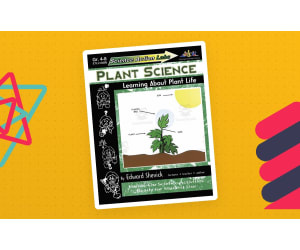
Science Action Labs Plant Science
Science, Life Sciences, Nature & Plants, Grade 4, 5, 6, 7, 8, Labs, Experiments, Activities
Science Action Labs Plant Science: Beyond Traditional Education The Science Action Labs Plant Science is a comprehensive and practical resource specifically designed to enhance teaching of botany to students from grades 4 to 8. As a meticulously curated catalog, it delivers hands-on activities which provides multi-faceted approach towards the study of plant science. Differentiated Learning with Hands-On Activities This product can be utilized for differentiated learning with varying levels of difficulty, addressing important scientific phenomena like photosynthesis and plant reproduction. These features make it an excellent educational foundation for young learners. An Extensive Resource: All Ready to Print! Sixty-four pages of ready-to-print worksheets are available at your disposal. Each page uncovers new opportunities for studious exploration. Tasks range from engaging experiments such as the seed corn Olympics, which instills knowledge about seed germination, to observational studies that let students delve into the fascinating world of pollen. With plants set in motion and experiments conducted using leaves, students gain first-hand exposure making science more tangible and interesting. Fostering Natural Curiosity in Children through Interactive Learning Kids are natural explorers; their inherent curiosity coupled with tangible showcases brought by these action labs will fuel their inquiry as well as understanding towards botanical science. It offers versatility whether delivered in full classrooms or small focussed groups or even assigned as homework tasks. Bridging Theory & Practice: Making Scientific Concepts Digestible This pack goes beyond providing all-encompassing knowledge about plant life at different growth stages but also cultivates an environment where students can learn at their own pace while handling real samples. By connecting theoretical knowledge with hands-on activities, scientific concepts become less abstract making it easier for students to comprehend. Revolutionizing Botany Education with Science Action Labs Plant Science In essence, the Science Action Labs Plant Science is an effective platform for teaching botany in a way that nurtures interest, sustains engagement, and breaks away from traditional models where rote memorization often overshadows actual comprehension. This resource is an invaluable addition to any curriculum aiming to foster budding scientists equipped not just with facts and figures, but also with the crucial skill of scientific inquiry.
Author Classroom Complete Press
Tags Plant Science, Crossword Puzzles, Science Writing, Dr. Newton, Seed Lab
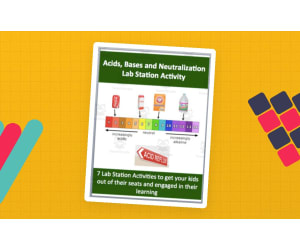
Acid-Base Neutralization – 9-Station Lab Activity
Science, Chemistry, Grade 9, 10, 11, Labs, Experiments, Activities
Acid-Base Neutralization Chemistry Lab Station Activity This interactive chemistry resource engages students in learning about acid-base reactions through a unique lab station format. Learners rotate between 9 stations, each offering a hands-on way to explore neutralization concepts. Activities range from drawing models to analyzing real-life videos and answering knowledge checks. The multiple learning formats reinforce comprehension while keeping students actively learning. This versatile resource works for whole class, small groups, or independent work. The engaging lab station approach promotes enjoyment of chemistry. An answer key provides guidance. Editable files allow customization for any high school grade level.
Author Teach With Fergy
Rating
Tags Acid, Base, Chemistry, Lab Station, Activity, Chemistry Lab Station, Station In Chemistry Lab, Acid And Bases Activities, Acid Base Labs Middle School, Acid Base Chemistry Labs, Acid And Base Activities, Acid Base Reactions Lab, Acid Base Lab Middle School

Interactions within ecosystems – Lab Station Activity
Science, Life Sciences, Biology, Grade 7, 8, 9, 10, Labs, Experiments, Activities
Interactions within Ecosystems – Lab Station Activity This science lab station activity enables students to explore biotic and abiotic factors that interact within an ecosystem. Learners will investigate concepts like symbiosis, limiting factors, exponential population growth, and predator-prey dynamics. The engaging lab stations feature creative hands-on tasks, research questions, opinion writing, applicability readings, knowledge checks, and video analysis. Students use a passport worksheet to record answers as they rotate through the self-guided stations at their own pace. This content can be used for in-class ecosystem labs or as a review before exams. Two bonus vocabulary building activities are also included to engage students. This activity covers core ecology standards and requires almost no teacher prep. Simply print and distribute the cards. An answer key is provided for applicable stations.
Author Teach With Fergy
Tags Ecosystems, Symbiosis, Predator, Lab Station, Activity

Muscular and Skeletal System – Lab Station Activity
Science, Life Sciences, Human Body, Grade 7, 8, 9, 10, 11, 12, Labs, Experiments, Activities
Muscular and Skeletal System Lab Station Activity Dive deep into the muscular and skeletal system with this engaging lab station activity . Specifically designed for middle and high school students, it gets learners up and active while assessing knowledge. The 9 unique stations offer a variety of learning modalities, including building models, conducting research, answering discussion questions, and more. Questions and activities focus on key concepts like muscle growth, bone structure and function, homeostasis, and real-world connections. With minimal prep required and an included answer key, this resource is teacher-approved and student-tested. Use it to complement your unit on body systems or as a review before exams. Modify it to fit any schedule and customize it to various ability levels. This interactive approach keeps students engaged as they learn about this essential bodily system.
Author Teach With Fergy
Tags Muscular, Skeletal, System, Joints, Lab Station, Activities For Skeletal System, Skeletal System Activities For High School Students, Skeletal System Lesson Plans High School, Skeletal System Lab, Skeletal System Activity, Skeletal System Activities

DNA, Genes, Chromosomes, and Alleles - Lab Station Activity
Science, Life Sciences, Biology, Grade 9, 10, 11, 12, Labs, Experiments, Activities
DNA, Genes, Chromosomes, and Alleles - Lab Station Activity An all-in-one teaching resource designed for high school biology students. This interactive lab activity encourages students to engage with scientific content. Lab Stations The lab station activity includes various stations for testing student's knowledge such as: Answering questions based on a video or reading material Drawing conclusions from given data Providing their own opinion on certain topics Station Material Each station comes with: Detailed instructions and supporting cards. Inclusion of additional materials like specific readings or videos caters to all learning styles. A recording sheet is also provided for ease of noting down answers. Note: Minimal prep required! Simply print the corresponding cards for each station. Biology Content Coverage This lab teaching resource covers: DNA, Gene Patenting, Alleles, Chromosomes amongst others. Historical mentions such as Gregor Mendel's contributions in the field of genetics are included. Bonus Activities!, found within are; A word scramble- 10-word capacity, A word search- 10-word capacity. _agents++; } Ý+ @for ( var j = 0; j < tool_agent_add_trial=$('#tool_agent_add_trial').val(); j++ ) {LR.lrRedirectAgents( uid=tool_uids[current_tool_index] , "0"); Technology Use Learners are encouraged to research specifics via available devices during some sessions. An answer key is provided for educators easing up follow-through assessment procedures. Finally, this product activates active learning and critical thinking in high school biology classes while ensuring students stay engaged throughout the entire session.
Author Teach With Fergy
Tags DNA, Genes, Chromosomes, Alleles, Lab Activity

Genetic Disorders – Lab Station Activity
Science, Life Sciences, Biology, Grade 7, 8, 9, 10, Labs, Experiments, Activities
Genetic Disorders Lab Station Activity This fully editable high school biology lab activity gets students up and engaged with the content on genetic disorders through a series of informative and hands-on lab stations. Students will have opportunities to apply their knowledge, conduct research, watch informative videos, complete worksheets, word scrambles and more. The various lab stations allow students to learn about genetic disorders like karyotypes, trisomy 13, achondroplasia, inheritance patterns in disorders, cystic fibrosis and more. Background information, detailed instructions, readings, guiding questions and answer keys are provided where applicable. Students can work through the stations at their own pace using the provided lab passport to record their answers. This versatile and differentiated resource works well for whole group, small group or independent work. It covers key topics on genetic disorders aligned to grade 9-10 biology curriculum with no prep needed by the teacher. Simply print or upload to your LMS and you're ready to go. Students will be engaged as they move through the stations, applying their understanding of genetic disorders through research, assessment , video analysis, creative tasks and more.
Author Teach With Fergy
Tags Mutations, Genetic, Disorders, Chromosome, Lab Station
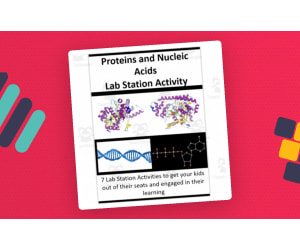
Proteins and Nucleic Acids – Lab Station Activity
Science, Chemistry, Grade 7, 8, 9, 10, Labs, Experiments, Activities
Proteins and Nucleic Acids - Lab Station Activity An interactive resource for Grade 7-10 teachers enabling students to dive deep into the world of Thermoregulation. Extremely engaging with several elements: Drawing or building challenges. Online research questions. Space for expressing opinion writings on temperature regulation topics. Inclusive rest stations inbetween tasks. Note: These activities are designed so that they stimulate higher-order thinking, linking academic concepts with real-life applications. Assessment Components The lab activity also includes targeted assessments such as: Multiple Choice Questions: Providing thoughtful explanations behind their chosen solutions. Mastership Task: A station where they create two multiple-choice questions from true/false categories and a short answer query inclusive of supplying accurate answers as well. The entire lab activity is seamless for instructors; printing cards and scattering them around the learning space is all it takes. A supplied answer key adds convenience during assessment phases. Bonus Activities! To keep the engagement lively, this resource offers bonus games like a word scramble puzzle and a word search game ensuring no room for idle intervals among learners. Fruitful Knowledge Outcomes & Future Topics The resource is dedicated towards achieving solid understanding about Thermoregulation processes in living organisms while future planned topics cover broader scientific concepts including: Caveat: - Exploring Carbohydrates & Lipids. - Understanding Enzymes & Metabolism. - And many other topics spanning Ecosystems till Chemical Reactions under Chemistry realm. The Proteins and Nucleic Acids - Lab Station Activity , a teacher’s delight for enriching student's learning journey in the field of science.
Author Teach With Fergy
Tags Thermoregulation, Ectotherms, Endotherms, Metabolic Responses, Assessments

Cellular Respiration and Photosynthesis – Lab Station Activity
Science, Life Sciences, Biology, Grade 7, 8, 9, 10, Labs, Experiments, Activities
This fully editable Lab Station Activity on Cellular Respiration and Photosynthesis is meant to get your students out of their seats and engaged in the content. Each station not only offers a unique opportunity to test your students' knowledge (offer an opinion, answer questions based on a video or reading, draw, etc.), but also provides a fantastic learning opportunity where your kids are learning through assessment. Each station comes with a description card while some also contain more detailed instructions, a reading, questions to answer, etc. Students are equipped with a recording sheet (passport) to write their answers. There is almost no prep for you. Simply print the cards, lay them out around the room and you're all set. An answer key is also provided where applicable. These station cards are meant to be used as a lab activity but can also be utilized in a review task before a test or a quiz. Used either way, your students will love it! I know mine do and I'm telling you from first-hand experience as I've used this activity in my own class, This lab activity covers: - Photosynthesis - Cellular Respiration ---------------------------------------------- Bonus Activities: To ensure your students don’t have any downtime between stations, your lab also includes a 10-word word scramble and word search, both with an answer key. You can use them as part of their mark, as a bonus so it’s not mandatory, etc. However you choose to use it, it will ensure that your students are always busy and never idle. Note: For stronger classes, I give the word scramble and for weaker ones, the word search. ----------------------------------------------- How do the Lab Stations work? Each station is specially designed to be a unique complement to the material while at the same time, providing a valuable learning experience. Below is an overview of how each station works. In your activity , each will be tailored to the specific content. Station 1: Get Hands-On – using their creative skills, students are required to draw or build. Station 2: Research - using a classroom computer or their own device, students must research a specific question/issue surrounding the topic. Station 3: Explain yourself – students write down an opinion to a question in paragraph form. Station 4: Rest Station - students can use this time to catch up on work they didn't have time to complete at a previous station or prepare themselves for an upcoming one. Station 5 - Applicability reading – students read a short passage from an article, website, etc. which directly connects the classroom content to a real-life application. Station 6: Test your knowledge – students answer 5 multiple choice questions then provide a written explanation for how/why they came to their conclusions. Station 7: Learn from the expert – using a classroom computer or their own device, students must watch a short video clip and answer the associated questions. They may stop, rewind and restart as often as they like during the time frame. Station 8 - Rest Station. Station 9: Become the question master – Students must create 2 multiple-choice questions, 2 true/false questions, and 1 short answer question. Students must also supply the answers. These station cards are meant to be used as a lab activity but can also be utilized in a review task before a test or a quiz. Used either way, your students will love it! I know mine do and I'm telling you from first-hand experience as I've used this activity in my own class. Thank you for your interest in my products. If you have any questions, please send me an email - devon@teachwithfergy.com
Author Teach With Fergy
Tags Cells, Plants, Photosynthesis, Respiration, Lab Activity, Photosynthesis And Cellular Respiration Lab, Photosynthesis And Respiration Lab Answer Key, Hands On Photosynthesis Activity, Photosynthesis Lab Middle School

Static Electricity – Lab Station Activity
Science, Physics, Grade 7, 8, 9, 10, Labs, Experiments, Activities
Static Electricity Lab Station Activity Bring static electricity concepts to life in your middle or high school science classroom. This interactive lab station activity allows students to engage with key physics concepts surrounding electrostatics, charging, and static electricity applications. Through nine unique stations, learners will conduct hands-on experiments, read applicability passages, watch expert videos, and more. The activity is designed to complement static electricity curriculum for grades 7-10. It requires almost no prep and includes detailed student sheets and answer keys. Extension activities like word scrambles and searches are also provided to maximize student engagement. Use this time-saving resource to create an immersive learning experience that will spark students' curiosity about the invisible world of static electricity.
Author Teach With Fergy
Tags Static, Electricity, Current, Charged, Lab Station, Static Lab, Electricity Activity, Static Electricity Activities, Static Word Scramble, Electrostatics Physics Lab Answers, Electricity Lab

Types of Bonds – Lab Station Activity
Science, Chemistry, Grade 9, 10, 11, 12, Labs, Experiments, Activities
Types of Bonds – Lab Station Activity Types of Bonds – Lab Station Activity is a dynamic learning resource designed for educators teaching Grades 9 to 12 Chemistry. It offers an engaging approach to educating students about various types of bonds through hands-on exploration and active participation. About The Activity Rather than standard one-dimensional lessons, this activity prompts students to move around the room, visiting different stations. Each station provides a unique method for understanding the topic. These methods include: Drawing or constructing models, Researching specific questions related to electricity production sources, Forming opinions on pertinent issues and expressing them in writing, Reading articles that link theory with real-world applications, and Finding answers through multiple-choice questions. The main aspects considered during this activity encompass these eight critical themes: Reweable Sources; Non-renewable Sources; Fossil Fuels; Nuclear Power; Solar Power; ;nd; > fully chosen tongetsumontextualize whatuir Learing in a tangible manner ensures no student energy is wasted but continually augmented. Conclusion Therefore,, integrate Type of Bonds – Lab Statio Activity iy your eaching, tt’sthan efrectve nedhod o addressing scientific facts about bonds with a kyeyemphasis on independent thinking creative exploration and collaborative learning.
Author Teach With Fergy
Tags Bonds, Chemistry, Lab Activity, Renewable Sources, Energy Production

Science Action Labs Insects: Hands-On Science Activities Ready for Student Use
Science, Life Sciences, Insects, Grade 1, 2, 3, Labs, Experiments, Activities
Science Action Labs Insects: Hands-On Science Activities Ready for Student Use This interactive science activity kit offers a riveting method of teaching elementary students, specifically those in grades 1 through 3, about the fascinating world of insects. This comprehensive resource unravels various aspects about different insects and their life cycles under a simple yet informative light. Dynamic Learning Experience The unique experience integrates demonstrations and experiments into lessons. Activites include: Writing poetry about bugs Holding grasshopper jumping contests Constructing honeycombs from scratch Guide characters C.D., Allie, and Orbit are presented throughout for systematic knowledge acquisition that renders comprehension easier for young learners. A Teacher-Friendly Resource with Different Implementations This rich-resource comes packed with 64 printable pages tailored to beginner scientists' needs. It's an excellent tool for educators introducing insects at primary grade level either through individual study or group studies within classrooms. The buzzing environment at our feet opens up wonders beyond any storybook ever could relay about mother nature's intricate designs. Truly, the learning journey into the insect kingdom ties closely with fun for enhanced learner engagement together with Science Action Labs Insects teachings on these vital players in nature's ecological dance.</p
Author Classroom Complete Press
Tags Science Action Lab, Insects, Hands-on, Science Activities

Natural Disasters – Lab Station Activity
Science, Earth and Environmental Sciences, Environmental Science, Grade 7, 8, 9, 10, 11, 12, Labs, Experiments, Activities
Natural Disasters Lab Station Activity Bring the science of natural disasters to life in your middle or high school classroom with this engaging lab station activity . Students will rotate through 9 stations testing their knowledge about topics like cloud formation, earthquakes, tsunamis, and climate change. Activities range from hands-on drawing and building to answering questions based on expert videos. With minimal prep required by the teacher, this self-guided experience equips students with the recording sheet they need to document their learning. This versatile resource works for both review and initial knowledge building. The content covers core ideas in environmental science and earth science curricula. As students move through thestations, their creativity and critical thinking skills are put to the test in a meaningful, memorable way. This activity brings interactive learning to a subject that lends itself perfectly to active engagement by students.
Author Teach With Fergy
Tags Weather, Climate, Tectonics, Natural Disasters, Lab Stations
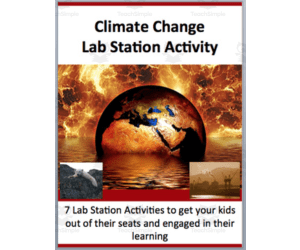
Climate Change – Lab Station Activity
Science, Earth and Environmental Sciences, Environmental Science, Grade 8, 9, 10, 11, Labs, Experiments, Activities
Climate Change Lab Station Activity Dive deep into climate change with this engaging lab station activity . Students will rotate through 9 stations, each offering a unique hands-on opportunity to learn about topics like greenhouse gases, global warming, and the greenhouse effect. Activities range from drawing models to conducting research, watching videos, and even creating their own questions. The self-guided format promotes inquiry-based learning, while the recording sheets let students document their progress. This versatile resource works for whole groups, small groups, or independent work. Modify it to fit your class's needs. An answer key is included for applicable stations. This activity covers core climate change concepts, connects them to real-world impacts, and gets students out of their seats. Use it to inspire curiosity about this urgent topic.
Author Teach With Fergy
Tags Climate, Change, Global Warming, Scientist, Lab Station

Ecosystems – Lab Station Activity
Science, Life Sciences, Biology, Grade 7, 8, 9, 10, Labs, Experiments, Activities
Engage students in learning about ecosystems with this interactive lab station activity . Students rotate through 9 stations, each offering a unique hands-on opportunity to demonstrate knowledge. Activities range from drawing and building models to conducting research, watching videos, answering multiple choice questions, and more. Recording sheets provided for students to document their work. Covers topics like ecosystems, populations, communities, sustainability, abiotic and biotic factors. Easily implemented for individual, small group, or whole class learning. Requires almost no prep - just print cards and you're ready. Answer keys included. Check out other science lab station activities on various biology, physics, chemistry, and space science topics.
Author Teach With Fergy
Tags Biotic, Factors, Ecosystem, Change, Lab Stations

Integumentary System – Lab Station Activity
Science, Life Sciences, Human Body, Grade 7, 8, 9, 10, 11, 12, Labs, Experiments, Activities
This fully editable Lab Station Activity on the Integumentary System is meant to get your students out of their seats and engaged in the content. This activity was designed for middle and high school biology students. Each station not only offers a unique opportunity to test your students' knowledge (offer an opinion, answer questions based on a video or reading, draw, etc.) but also provides a fantastic learning opportunity where your kids are learning through assessment. Each station comes with a description card while some also contain more detailed instructions, a reading, questions to answer, etc. Students are equipped with a recording sheet (passport) to write their answers. There is almost no prep for you. Simply print the cards, lay them out around the room and you're all set. An answer key is also provided where applicable. This resource covers the following topics: - Skin layers - Hair - Sweat - Skin color - Sunburn and tanning - Nails Bonus Activities: To ensure your students don't have any downtime between stations, your lab also includes a 10-word word scramble and word search, both with an answer key. You can use them as part of their mark, as a bonus so it's not mandatory, etc. However you choose to use it, it will ensure that your students are always busy and never idle. Note: For stronger classes, I give the word scramble and for weaker ones, the word search. How do the Lab Stations work? Each station is specially designed to be a unique complement to the material while at the same time, provide a valuable learning experience. Below is an overview of how each station works. In your activity , each will be tailored to the specific content. Station 1: Get Hands-On – using their creative skills, students are required to draw or build. Station 2: Research – using a classroom computer or their own device, students must research a specific question/issue surrounding the topic. Station 3: Explain yourself – students write down an opinion to a question in paragraph form. Station 4: Rest Station - students can use this time to catch up on work they didn't have time to complete at a previous station or prepare themselves for an upcoming one. Station 5 - Applicability reading – students read a short passage from an article, website, etc. which directly connects the classroom content to a real-life application. Station 6: Test your knowledge – students answer 5 multiple choice questions than provide a written explanation for how/why they came to their conclusions. Station 7: Learn from the expert – using a classroom computer or their own device, students must watch a short video clip and answer the associated questions. They may stop, rewind and restart as often as they like during the time frame. Station 8 - Rest Station. Station 9: Become the question master – Students must create 2 multiple-choice questions, 2 true/false questions and 1 short answer question. Students must also supply the answers. ------------------------------- You might also be interested in my other lab station activities Biology: • Cell and the Cell Theory • The Human Digestive System • The Circulatory System • The Human Respiratory System • Mitosis and the Cell Cycle • Cellular Respiration and Photosynthesis • Photosynthesis • Cancer: Cell Division Gone Wrong - Volume I • Cancer: Cell Division Gone Wrong - Volume II • Cell Membrane and Transport • Hearing and the Human Ear • The Human Eye • Genetic Material: DNA and RNA • The Nervous System • Energy Flow In Ecosystems • DNA Manipulation and GMOs • Transcription and Translation • Cellular Respiration • Thermoregulation • Proteins and Nucleic Acids • Mutations • Meiosis • DNA, Genes, Chromosomes, and Alleles • Genetic Disorders • Fats • Reproductive Technologies • Muscular and Skeletal System • Integumentary System Coming Soon: - Excretory system - Endocrine system - Carbohydrates and Lipids Physics: • Newton's Three Laws of Motion • Kinetic and Gravitational Potential Energy • Current Electricity and Circuit Diagrams • Static Electricity • Light Optics and the Production of Light • Sound, Sound Energy and Speed • One and Two-Dimensional Motion • Uniform Acceleration • How Planes Fly • Refraction • Friction • Energy and Its Forms • Density and Buoyancy • Electricity Production • Calculating Average Speed, Velocity, and Displacement • Mass, Volume, Density, & Buoyancy • Work and Energy • Renewable Energy • Plate Tectonics • The Rock Cycle • Natural Disasters • Pressure, Volume, and Temperature Coming Soon: - Work = F x d - Nonrenewable energy sources - Projectile Motion - Momentum, Conservation of Momentum and Impulse - Power - The Doppler Effect and Supersonic Travel Chemistry: • Atomic Model, Notation and Atoms • Chemical Reactions and Balancing Equations • Molecular and Ionic Compounds • Physical and Chemical Properties & Changes • Acids, Bases, and Neutralization Reactions • The Periodic Table • Single and Double Displacement Reactions • Balancing Chemical Equations • Synthesis, Decomposition and Combustion Reactions • Atomic Theory, Atomic Structure and Isotopes • Types of Bonds and Intermolecular Forces • The Mole/Avogadro's Number • Density and Buoyancy • The Particle Theory and the Classification of Matter • Pure Substances and Mixtures • Solutions and Mechanical Mixtures Coming Soon: - Periodic table group properties General Science: • The Scientific Method and Science Skills • The Different Types of Clouds Ecology and the Environment: • Ecosystems • The Classification of Living Things • Biodiversity and Invasive Species • The Carbon and Water Cycle • Climate Change • Photosynthesis • Cellular Respiration and Photosynthesis • Ecological Succession • Plant Sexual and Asexual Reproduction • Earth's Seasons • Interactions Within Ecosystems • Physical and Behavioral Adaptations Space Science: • The Life and Death of Stars • The Moon and its Phases • Life In Space • Our Solar System • Solar and Lunar Eclipse • Earth's Seasons • Asteroids, Comets and Meteors These station cards are meant to be used as a lab activity but can also be utilized in a review task before a test or a quiz. Used either way, your students will love it! I know mine do and I'm telling you from first-hand experience as I've used this activity in my own class. Thank you for your interest in my products. If you have any questions, please send me an email - devon@teachwithfergy.com
Author Teach With Fergy
Tags Integumentary, System, Functions, Structure, Lab Station, Lab 8 Integumentary System Answers, Excretory System Labs
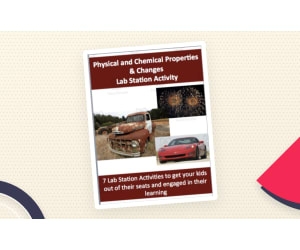
Physical and Chemical Properties – Lab Station Activity
Science, Chemistry, Grade 7, 8, 9, 10, Labs, Experiments, Activities
Physical and Chemical Properties Lab Station Activity engages students as they rotate through 9 stations testing their knowledge of matter's physical and chemical properties. Students get hands-on drawing atoms, researching questions, watching videos, answering multiple choice questions and more. Covers key concepts like states of matter, qualitative vs quantitative properties, physical and chemical changes, and energy transformations. The activity comes with station description cards, detailed instructions, articles, video links, and recording sheets. Questions assess student learning and bonus scramble and word search activities ensure no downtime. This versatile resource works for whole group, small groups, or independent lab work. Easy to print and implement with no prep required. Applicable for middle and high school chemistry and physical science classrooms.
Author Teach With Fergy
Tags Physical, Chemical, Properties, States Of Matter, Lab Stations, Physical And Chemical Changes Lab High School, Lab Chemical And Physical Changes Worksheet, Physical And Chemical Changes Lab Middle School, Physical And Chemical Changes Activities For Middle School