



3,992 products added recently
Page 5 - Popular Labs
Popular Labs feature tried-and-true experiments that have delighted students across classrooms. These engaging activities cover a range of scientific disciplines and are known for their effectiveness in teaching key concepts. By integrating popular labs into your lessons, you tap into resources that are both educational and enjoyable. These experiments promote curiosity and a hands-on approach to learning, making science accessible and interesting for all students.

 Show filters


Biomes – Lab Station Activity
Science, Earth and Environmental Sciences, Environmental Science, Grade 6, 7, 8, 9, Labs, Experiments, Activities
Biomes Lab Station Activity Bring the diverse biomes of planet Earth into your middle or high school science classroom with this engaging lab station activity . Students will rotate through 9 stations to get hands-on experience with concepts like major biome types, adaptation, and more. Activities range from creative drawing prompts to knowledge checks and inquiry-based reading. An included recording sheet allows students to document their learning journey. This ready-to-implement resource covers terrestrial biomes like grasslands, forests, deserts and tundra as well as aquatic environments. Word scramble, word search and answer keys provide built-in differentiation. Modify the content or instructions as needed with the fully editable teacher version. Turn key lab stations make biome exploration interactive, memorable and fun.
Author Teach With Fergy
Tags Biomes, Freshwater, Marines, Environment, Science

Nervous System – Lab Station Activity
Science, Life Sciences, Biology, Grade 8, 9, 10, 11, 12, Labs, Experiments, Activities
This fully editable Lab Station on The Nervous System is meant to get your students out of their seats and engaged in the content. Each station not only offers a unique opportunity to test your students knowledge (offer an opinion, answer questions based on a video or reading, draw, etc.), but also provides a fantastic learning opportunity where your kids are learning through assessment. Each station comes with a description card while some also contain more detailed instructions, a reading, questions to answer, etc. Students are equipped with a recording sheet (passport) to write their answers. There is almost no prep for you. Simply print the cards, lay them out around the room and you're all set. An answer key is also provided where applicable. This lab activity covers: - Structure, Parts and Functions of the Nervous System - Structure, Types and Functions of the Neuron - Reflex Arc - Nerve Signal Transmission and Action Potential - The Schwann Cell and Action Potential - Sodium-Potassium Pump - Neurotransmitters and its Functions ---------------------------------------------- Bonus Activities: To ensure your students don’t have any downtime between stations, your lab also includes a 10-word word scramble and word search, both with an answer key. You can use them as part of their mark, as a bonus so it’s not mandatory, etc. However you choose to use it, it will ensure that your students are always busy and never idle. Note: For stronger classes, I give the word scramble and for weaker ones, the word search. ----------------------------------------------- How do the Lab Stations work? Each station is specially designed to be a unique complement to the material while at the same time, provide a valuable learning experience. Below is an overview of how each station works. In your activity , each will be tailored to the specific content. Station 1: Get Hands-On – using their creative skills, students are required to draw or build. Station 2: Research – using a classroom computer or their own device, students must research a specific question/issue surrounding the topic. Station 3: Explain yourself – students write down an opinion to a question in paragraph form. Station 4: Rest Station - students can use this time to catch up on work they didn't have time to complete at a previous station or prepare themselves for an upcoming one. Station 5 - Applicability reading – students read a short passage from an article, website, etc. which directly connects the classroom content to a real life application. Station 6: Test your knowledge – students answer 5 multiple choice questions then provide a written explanation for how/why they came to their conclusion. Station 7: Learn from the expert – using a classroom computer or their own device, students must watch a short video clip and answer the associated questions. They may stop, rewind and restart as often as they like during the time frame. Station 8 - Rest Station. Station 9: Become the question master – Students must create 2 multiple-choice questions, 2 true/false questions and 1 short answer question. Students must also supply the answers. ------------------------------- You might also be interested in my other lab station activities Biology: • Cell and the Cell Theory • The Human Digestive System • The Circulatory System • The Human Respiratory System • Mitosis and the Cell Cycle • Cellular Respiration and Photosynthesis • Photosynthesis • Cancer: Cell Division Gone Wrong - Volume I • Cancer: Cell Division Gone Wrong - Volume II • Cell Membrane and Transport • Hearing and the Human Ear • The Human Eye • Genetic Material: DNA and RNA • The Nervous System • Energy Flow In Ecosystems Ecology and the Environment: • Ecosystems • The Classification of Living Things • Biodiversity and Invasive Species • The Carbon and Water Cycle • Climate Change • Photosynthesis • Cellular Respiration and Photosynthesis • Ecological Succession • Plant Sexual and Asexual Reproduction • Earth's Seasons • Interactions Within Ecosystems Physics: • Newton's Three Laws of Motion • Kinetic and Gravitational Potential Energy • Current Electricity and Circuit Diagrams • Static Electricity • Light Optics and the Production of Light • Sound, Sound Energy and Speed • One and Two-Dimensional Motion • Uniform Acceleration • How Planes Fly • Refraction • Friction • Energy and Its Forms • Density and Buoyancy Space Science: • The Life and Death of Stars • The Moon and its Phases • Life In Space • Our Solar System • Solar and Lunar Eclipse • Earth's Seasons • Asteroids, Comets and Meteors Chemistry: • Atomic Model, Notation and Atoms • Chemical Reactions and Balancing Equations • Molecular and Ionic Compounds • Physical and Chemical Properties & Changes • Acids, Bases, and Neutralization Reactions • The Periodic Table • Single and Double Displacement Reactions • Balancing Chemical Equations • Synthesis, Decomposition and Combustion Reactions • Atomic Theory, Atomic Structure and Isotopes • Types of Bonds and Intermolecular Forces • The Mole/Avogadro's Number • Density and Buoyancy These station cards are meant to be used as a lab activity but can also be utilized in a review task before a test or a quiz. Used either way, your students will love it! I know mine do and I'm telling you from first-hand experience as I've used this activity in my own class. Thank you for your interest in my products. If you have any questions, please send me an email - devon@teachwithfergy.com
Author Teach With Fergy
Tags Nervous, System, Neurons, Disorders, Lab Station, Nervous System Activity, Nervous System Lab, Nervous System Activities, Nervous System Activities Middle School
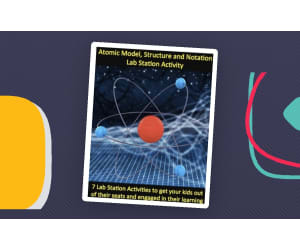
Atomic Model, Structure and Notation – Lab Station Activity
Science, Chemistry, Grade 7, 8, 9, 10, Labs, Experiments, Activities
Atomic Model, Structure and Notation Lab Station Activity Engage students in learning atomic model, structure, and notation through this customizable lab station activity . Students move through various stations testing their knowledge about topics like atomic theory history, the Bohr-Rutherford atomic model, subatomic particles, calculating atomic mass/numbers, and more. Activities include drawing models, researching questions, writing explanations, watching videos, answering test questions, and even formulating their own questions. Recording sheets provided for students to document their work. Use this as an introductory or review lab activity in individual, small group, or whole class settings to bring interactive chemistry learning to life. Modifiable with answer keys. 7th-10th grade. Chemistry.
Author Teach With Fergy
Tags Atomic, Model, Structure, Notation, Lab Station, Simple Atomic Model
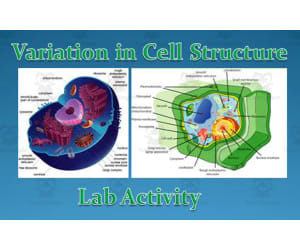
Cell Lab Activity
Science, Life Sciences, Human Body, Grade 9, 10, 11, 12, Labs, Experiments, Activities
Cell Lab Activity: An Engaging Teaching Resource for Science Educators Enhance your science curriculum with the interactive Cell Lab Activity focused on differentiating between animal and plant cells. This adaptable lab suits a wide demographic of students, emphasizing a hands-on learning approach. The Activity Process In this hands-on experiment, students: Observe cells from sources such as tomato pulp and skin, potato, and human cheek cells. Analyze biological material under scientific scrutiny. Gain insightful knowledge about the functions of various cell parts. Depending upon your classroom's pace, this activity spans approximately 1½ to 2 days—optimizing time towards understanding complex concepts. What Else is Included? The kit includes: A Variation in Cell Structure Lab worksheet with an answer key for students to verify their findings- reinforcing self-evaluation techniques. A helpful materials list and general guidelines that assist educators in organizing resources smoothly. Inclusive sample pictures which support descriptions of cellular concepts accessible to all learners—including visual-learners—for better comprehension! The inclusion of practical thinking into teaching methodologies widens horizons: Leveraging education beyond textbooks boundaries preparing our future scientific pioneers—to drive societal goals—from just simple thinkers to thought leaders! Note: It’s important teachers know that every lab activity must always be performed under supervision!
Author The Teacher Team
Tags Cell Structure, Lab Activity, Plant Cells, Animal Cells, Hands-on Learning

Pure Substances and Mixtures – Lab Station Activity
Science, Chemistry, Grade 7, 8, 9, 10, Labs, Experiments, Activities
Pure Substances and Mixtures – Lab Station Activity A comprehensive, flexible teaching resource brimming with educational benefits for educators in middle schools and high schools. A definitive tool that sparks creativity while teaching students about key chemistry concepts of pure substances and mixtures. Key Topics Covered: Homogeneous mixtures Heterogeneous mixtures Centrifuge functions Solutions - Unsaturated, Saturated, Supersaturated Intriguing fact-checking multiple-choice questions have been included to assess student's proficiency in these topics. Main Features: Diverse Set of Activities: Each station provides a unique learning experience for the students from hands-on activities to research tasks. Variety of Learning Modes: A composition enabling independent work or collaborative group projects. Digital Integration: Incorporated are digital stations where learners research specific subject areas or view informative video clips. The Accessibility Advantage: All required materials have been made available online making this tool readily accessible for teachers. Add-ons: Fun word games like scramble and other activities are also included as bonus features. Can be used as part grade assessments or optional supplemental material that helps maintain student engagement during transitions between lab activities. A Comprehensive Solution: The Pure Substances and Mixtures – Lab Station Activity presents an innovative approach to chemistry education appropriate for grades 7-10. Easy-to-use, fully editable and adaptable based on teacher preferences, it seamlessly fits any learning environment.
Author Teach With Fergy
Tags Pure Substances, Mixtures, Lab Stations, Chemistry Education, Hands-on Activities, Pure Substances And Mixtures Worksheets

Thermoregulation – Lab Station Activity
Science, Life Sciences, Biology, Grade 8, 9, 10, Labs, Experiments, Activities
Thermoregulation – Lab Station Activity : Interactive Teaching Resource The primary objective of this multifaceted and fully editable Lab Station activity is to foster student engagement and create an interactive learning atmosphere. It uses several instructional methods, providing a dynamic approach to learning the critical subject of thermoregulation. This comprehensive Lab activity covers: Maintenance of body temperature Ectotherms and endotherms Metabolic responses to external temperatures Hibernation and cold conditions responses Torpor periods Estivation during hot weather scenarios etc. The lab showcases seven participatory stations along with two resting stations for reflection or preparation. Bonus activities such as word scrambles or searches further reinforce essential vocabulary associated with thermoregulation. An Organized Layout for Seamless Learning: All teachers need to do is print out the cards and arrange them throughout their classroom. The structured layout allows students an effortless transition between different activities, enhancing productivity while minimizing prep work on your end! Included Answer Key & Flexible Use Advantage: •An available answer key enhances this lab station's usability. •This thermoregulation resource can be used not only for lab activities but also as a performance assessment tool or revision resource. •Catering predominantly to Grade 8 – Grade 10 students studying Biology, it can be implemented in diverse educational settings ranging from whole-group instruction to small cluster teaching or even home assignments. Thermoregulation – Lab Station Activity not only makes learning about body temperature regulation engaging and impactful but is also versatile, catering to different teaching strategies and student learning styles.
Author Teach With Fergy
Tags Thermoregulation, Lab Activity, Interactive Learning, Body Temperature Regulation, Biology
Cardiovascular System ~ The Effects of Exercise Lab Activity
Science, Life Sciences, Human Body, Grade 9, 10, 11, 12, Labs, Experiments, Activities
Need to get your students up and moving? Maybe even take them outside when the weather is good? This lab can be used during any unit on the heart or Cardiovascular System. This lab is very flexible as it will work for any level student from English Learner - EL - to more advanced students.
Author The Teacher Team
Tags Cardiovascular System, Anatomy, Physiology, Biology, ELL
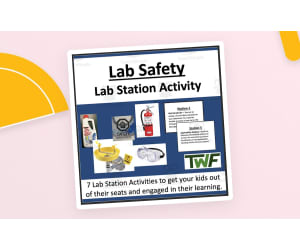
Lab Safety - Lab Station Activity
Science, Basic Science, Grade 6, 7, 8, 9, Labs, Experiments, Activities
Lab Station Activity - Classroom Lab Safety. This activity will get your students moving around the room, and applying what they've learned regarding the scientific method. This activity was designed for high school and middle science students. You can either use it to introduce the topic or assess their understanding of the scientific method. This resource covers the following topics: Lab Safety Equipment Basic Emergency Procedures How To Keep Safe in a Lab Setting Lab Station Activity - Classroom Lab Safety. This activity will get your students moving around the room, and applying what they've learned regarding the scientific method. This activity was designed for high school and middle science students. You can either use it to introduce the topic or assess their understanding of the scientific method. Lab Station Activity - Classroom Lab Safety. This activity will get your students moving around the room, and applying what they've learned regarding the scientific method. This activity was designed for high school and middle science students. You can either use it to introduce the topic or assess their understanding of the scientific method. I also have many other lab stations in my store. Please have a look. They cover topics within all branches of science including chemistry, physics, biology, general science, and space science. They work well in middle as well as high school classrooms. If you have any questions, please send me an email - devon@teachwithfergy.com
Author Teach With Fergy
Tags Lab Safety, Science Safety, Classroom Lab Safety, Lab Safety Lab Station, Lab Station Activity

Science Popcorn Activity | Heat Transfer Lab
Science, Physics, Grade 5, 6, 7, 8, Labs, Experiments, Activities
This resource is a Science Popcorn Activity Heat Transfer Lab . This activity is focused on Convection, Conduction, & Radiation. Students will follow procedures, document their observations, collect data and so much more.
Author Maude in the Middle
Tags Science Lab, Heat Transfer, Popcorn Activity, Physical Science, Student Observation, Popcorn Lab, Heat Transfer Labs, Heat Transfer Lab Middle School