



3,993 products added recently
Page 2 - Popular Labs
Popular Labs feature tried-and-true experiments that have delighted students across classrooms. These engaging activities cover a range of scientific disciplines and are known for their effectiveness in teaching key concepts. By integrating popular labs into your lessons, you tap into resources that are both educational and enjoyable. These experiments promote curiosity and a hands-on approach to learning, making science accessible and interesting for all students.

 Show filters


Plant Sexual and Asexual Reproduction – Lab Station Activity
Science, Life Sciences, Biology, Grade 8, 9, 10, 11, 12, Labs, Experiments, Activities
Plant Sexual and Asexual Reproduction Lab Stations provide educators with a hands-on learning activity to engage students on plant reproduction concepts. Learners rotate through nine stations, each offering a unique way to assess and build knowledge on reproduction methods, the role of bees, and plant growth. The activity comes with station description cards, questions, articles, video clips, creative drawing prompts, and more to suit various learning styles. Easy to implement with no prep work required, just print and distribute the cards. The lab also includes bonus vocabulary boosters like word scrambles and searches so students stay actively learning. This versatile resource works for whole class, small groups, or independent work.
Author Teach With Fergy
Tags Plants, Reproduction, Pollination, Photosynthesis, Lab Station, Asexual Reproduction Answer Key

Solutions and Mechanical Mixtures – Lab Station Activity
Science, Chemistry, Grade 7, 8, 9, 10, Labs, Experiments, Activities
Solutions and Mechanical Mixtures Activity for Chemistry Class This editable chemistry lab station activity helps students learn about solutions, mechanical mixtures, saturation, solubility, and separation techniques. It is designed for high school chemistry classes. The hands-on activity features 9 stations that engage students in the content through drawing, research, writing opinions, watching videos, answering questions, and more. A recording sheet allows students to document their learning. Answer keys are provided for applicable stations. Topics covered include: - Homogeneous mixtures - Heterogeneous mixtures - Centrifuge - Saturated, unsaturated, and supersaturated solutions To maximize student learning, the activity includes bonus vocabulary puzzles that can be used for additional practice or assessment . The customizable lab stations promote active learning while assessing student knowledge. Teachers can use this as an introductory or review activity before tests and quizzes. The engaging format helps students retain information. This product includes editable station cards and student sheets that can be customized as needed. Simply print and distribute to have an interactive solutions and mixtures lab ready to go!
Author Teach With Fergy
Tags Solutions, Mechanical, Mixtures, Solubility, Lab Station

How Planes Fly – Lab Station Activity
Science, Technology, Engineering, Grade 7, 8, 9, 10, Labs, Experiments, Activities
The How Planes Fly - Lab Station Activity An interactive teaching resource designed to engage students in a hands-on exploration of aeronautics. This activity is tailored for Grade 7-10 students, covering critical aspects of how airplanes achieve flight. Features: Exploration of the four forces of flight. Understanding why planes travel at such heights. Distinguishing visual differences between airplanes and helicopters. Ease of Use for Educators: This fuss-free activity requires minimal preparation. Simply print the provided station cards, strategically distribute them around the classroom,and guide the students to embark on their discovery journey through seven engaging lab stations. An answer key is also conveniently provided where necessary. Each lab station provides unique learning opportunities while testing student knowledge in different ways: from drawing conclusions based on videos or readings to active participation with independent research tasks or hands-on creative projects and question-answer scenarios positioning student as an expert opinion-holder; it packages engagement with learning seamlessly! Versatility: A standout feature - this resource's flexibility regarding implementation methods can smoothly adapt into any classroom setup allowing whole group participation or be broken down for smaller groups or even assigned as individual homeworks. Bonus Features: To foster continuous engagement even during transitions from one station to another, bonus activities have been included: Word scrambles . /> In summary, Whether you're planning your next science class about aeronautics, or need an interactive tool that engrosses each student while ensuring they grasp key concepts about flight — this product acts as your valuable educational enhancement tool. It’s not just us assuring you, countless educators have experienced it before –once implemented in class–your students will undoubtedly enjoy learning through these stimulating hands-on activities.
Author Teach With Fergy
Tags Planes, Flight, Aeronautics, Lab Activity, Education

Human Digestive System – Lab Station Activity
Science, Life Sciences, Human Body, Grade 7, 8, 9, 10, Labs, Experiments, Activities
Human Digestive System – Lab Station Activity This interactive human digestive system resource engages students through eight diverse lab stations. Learners examine models, draw diagrams, watch videos, research online, solve puzzles, and respond to questions. The self-guided format enables customized implementation for individuals, small groups, or whole class. The non-repetitive blend of creativity, writing, media, and critical thinking caters to multiple learning styles. Students reinforce anatomy concepts like organs and disorders while connecting ideas to digestion processes. The activity concludes with an assessment where learners develop their own questions. Educators save prep time since the package provides content cards, recording sheets, and answer keys. Extendable to a unit on body systems.
Author Teach With Fergy
Tags Human, Digestive, System, Lab Station, Anatomy, Hands On Digestive System Activities, Digestive System Hands-on Activities, Digestive System High School Activities
Molecular and Ionic Compounds – Lab Station Activity
Science, Chemistry, Grade 8, 9, 10, 11, Labs, Experiments, Activities
Molecular and Ionic Compounds Lab Station Activity Engage students in learning about molecular and ionic compounds through this interactive lab station activity . Students will rotate through 9 stations, each offering a unique hands-on opportunity to build knowledge. Activities range from drawing models to conducting research, answering discussion questions, solving word puzzles, and more. Covers key concepts like naming compounds, writing formulas, and real-world applications. Includes all prep materials like station direction cards, student recording sheets, answer keys, bonus vocabulary puzzles with answers, and expansion ideas. Provides a fun, memorable way for students to master the content. Easily adaptable for whole class, small groups, or independent work.
Author Teach With Fergy
Tags Molecular, Ionic, Compounds, Chemistry, Lab Station
Life and Death of Stars – Lab Station Activity
Science, Earth and Environmental Sciences, Space, Grade 8, 9, 10, Labs, Experiments, Activities
Life and Death of Stars Lab Station Activity Dive into the life cycle of stars with this engaging lab station activity . Students will rotate through 9 stations, each offering a unique way to explore concepts like stellar life cycles, types of stars, the H-R diagram, stellar nucleosynthesis, and more. Activities range from creative tasks to research questions to knowledge checks. Word scrambles and searches ensure students stay busy. Almost no prep required - just print and go. Covers key ideas in stellar astronomy through varied formats for enhanced engagement and learning. Useful as an introductory or review activity for middle and high school physical science and physics. Provides an exciting hands-on complement to any unit on space science.
Author Teach With Fergy
Tags Stars, Life Cycle, Elements, Astronomy, Lab Station, Stars Activity
Static Electricity Experiments for Elementary School
Physics, Science, Grade 2, 3, 4, 5, Labs, Experiments, Activities
What is electrostatics, or static electricity? The buildup of electric charge on an object's surface is called static electricity, or electrostatics. This charge, which can be either positive or negative, is produced when a material's atoms acquire or lose electrons. When two objects rub against one another, electrons are transferred from one to the other, creating this static energy. As a result, one of the materials has a negative charge due to an excess of electrons, while the other material has a positive charge due to a lack of electrons. The feeling of a tiny electric shock after stepping on a rug and then contacting a metal surface is a typical example. Ten extremely basic and doable experiments that use or create static electricity are included in this useful e-book. Every experiment is safe and may be carried out using normal, commonplace items. Every experiment has comprehensive, step-by-step instructions. Lastly, each experiment is given a brief explanation so that elementary school pupils can understand it. Have fun exploring the marvels of static electricity through experimentation!
Author Bright Classroom Ideas Marketplace
Rating
Tags Static, Electricity, Experiment, Elementary, Science, Physics

Density and Buoyancy – Lab Station Activity
Science, Chemistry, Grade 7, 8, 9, 10, Labs, Experiments, Activities
Density and Buoyancy – Lab Station Activity An instructional resource crafted for grade 7-10 classrooms, this activity provides an explorable environment where learners can understand and apply principles of density and buoyancy. Mass, volume, density calculations, measurements, and the behaviors of different dense objects are key topics reinforced. A versatile tool suitable for homeschoolers as well. Promotes active interaction within student groups through hands-on tasks and multimedia components. The Unique Lab Station Arrangement Each of the seven stations offers a different task: "Get Hands-On"" station - introduces drawing or building exercises. "Research station" - equips students with a computer or device for online research. "Explain Yourself" station - encourages critical thinking as students express their opinions in paragraph form based on researched facts. Bonus Activities Included! A word scramble and word search keep mind active without heavy academic rigor reliance alone. These stimulate continual learning while helping manage pacing across activities. Incorporation into Conventional Educational Scenarios: This lab station activity fits effortlessly into school-based instruction scenarios or home-bound instruction settings – be it group sessions in classrooms small-group settings amongst peers or homework assignments. This remarkable tool nurtures scientific minds by fostering a deeper understanding of density and buoyancy further.
Author Teach With Fergy
Tags Density, Buoyancy, Lab Station, Hands-on Activity, Scientific Experiments
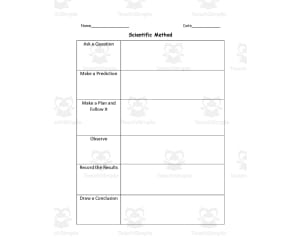
Scientific Method Templates - Perfect for Basic Science Experiments
Research, Science, Basic Science, Elementary, Homeschool Resources, Not Grade Specific, Pre-K, Experiments, Activities, Labs
This super basic Scientific Method Template is perfect for getting kids started with the scientific method and for teaching them about scientific research. There are two versions of the template, one with cute pictures and one without pictures. This template can and has been used for all ages up to high school and even adults for basic in-home and at school experiments. Not only could you use this template in the kitchen for food science and baking experiments, for example, comparing the different weights between baking flours, but you can use it for basic chemistry, physics, life science, and more. Kids can use it to jot their ideas down if they aren't sure what they want to do for their experiment or science research project. It is super easy to use and self-explanatory and would be a perfect brainstorming tool. pdf downloadable file, 2 usable pages with cover sheet. Minimal ink needed. Not age specific but may be especially useful for younger elementary and special education students. Also, for visual learners and kids who aren't reading yet (the template with the pictures tells the story without needing to read).
Author Homeschooling Dietitian Mom
Tags 1st Grade Science Experiments, 2nd Grade Science Experiments, 3rd Grade Science Experiments, Scientific Research Projects, Science Templates, Science Worksheets, Science Writing Prompts
Particle Theory and Matter Classification – Lab Station Activity
Science, Chemistry, Grade 8, 9, 10, 11, Labs, Experiments, Activities
This fully editable Lab Station on The Particle Theory and the Classification of Matter is meant to get your students out of their seats and engaged in the content. Each station not only offers a unique opportunity to test your students' knowledge (offer an opinion, answer questions based on a video or reading, draw, etc.), but also provides a fantastic learning opportunity where your kids are learning through assessment. Each station comes with a description card while some also contain more detailed instructions, a reading, questions to answer, etc. Students are equipped with a recording sheet (passport) to write their answers. There is almost no prep for you. Simply print the cards, lay them out around the room and you're all set. An answer key is also provided where applicable. This lab activity covers: - The particle theory - Matter classification - Mixtures --> Homogeneous (solutions) --> Heterogeneous (mechanical mixtures) - Pure substances --> Elements --> Compounds How do the Lab Stations work? Each station is specially designed to be a unique complement to the material while at the same time, provide a valuable learning experience. Below is an overview of how each station works. In your activity , each will be tailored to the specific content. Station 1: Get Hands-On – using their creative skills, students are required to draw or build. Station 2: Research – using a classroom computer or their own device, students must research a specific question/issue surrounding the topic. Station 3: Explain yourself – students write down an opinion to a question in paragraph form. Station 4: Rest Station - students can use this time to catch up on work they didn't have time to complete at a previous station or prepare themselves for an upcoming one. Station 5 - Applicability reading – students read a short passage from an article, website, etc. which directly connects the classroom content to a real life application. Station 6: Test your knowledge – students answer 5 multiple choice questions then provide a written explanation for how/why they came to their conclusions. Station 7: Learn from the expert – using a classroom computer or their own device, students must watch a short video clip and answer the associated questions. They may stop, rewind and restart as often as they like during the time frame. Station 8 - Rest Station. Station 9: Become the question master – Students must create 2 multiple-choice questions, 2 true/false questions and 1 short answer question. Students must also supply the answers. ------------------------------- You might also be interested in my other lab station activities Physics: • Newton's Three Laws of Motion • Kinetic and Gravitational Potential Energy • Current Electricity and Circuit Diagrams • Static Electricity • Light Optics and the Production of Light • Sound, Sound Energy and Speed • One and Two-Dimensional Motion • Uniform Acceleration • How Planes Fly • Refraction • Friction • Energy and Its Forms • Density and Buoyancy • Electricity Production Coming Soon: - Calculating average speed, velocity, and displacement - Work = F x d - Renewable energy sources - Nonrenewable energy sources Space Science: • The Life and Death of Stars • The Moon and its Phases • Life In Space • Our Solar System • Solar and Lunar Eclipse • Earth's Seasons • Asteroids, Comets and Meteors Ecology and the Environment: • Ecosystems • The Classification of Living Things • Biodiversity and Invasive Species • The Carbon and Water Cycle • Climate Change • Photosynthesis • Cellular Respiration and Photosynthesis • Ecological Succession • Plant Sexual and Asexual Reproduction • Earth's Seasons • Interactions Within Ecosystems Biology: • Cell and the Cell Theory • The Human Digestive System • The Circulatory System • The Human Respiratory System • Mitosis and the Cell Cycle • Cellular Respiration and Photosynthesis • Photosynthesis • Cancer: Cell Division Gone Wrong - Volume I • Cancer: Cell Division Gone Wrong - Volume II • Cell Membrane and Transport • Hearing and the Human Ear • The Human Eye • Genetic Material: DNA and RNA • The Nervous System • Energy Flow In Ecosystems Coming Soon: - Excretory system - Endocrine system Chemistry: • Atomic Model, Notation and Atoms • Chemical Reactions and Balancing Equations • Molecular and Ionic Compounds • Physical and Chemical Properties & Changes • Acids, Bases, and Neutralization Reactions • The Periodic Table • Single and Double Displacement Reactions • Balancing Chemical Equations • Synthesis, Decomposition and Combustion Reactions • Atomic Theory, Atomic Structure and Isotopes • Types of Bonds and Intermolecular Forces • The Mole/Avogadro's Number • Density and Buoyancy • The Particle Theory and the Classification of Matter Coming Soon: - Counting atoms - Periodic table group properties These station cards are meant to be used as a lab activity but can also be utilized in a review task before a test or a quiz. Used either way, your students will love it! I know mine do and I'm telling you from first-hand experience as I've used this activity in my own class. Thank you for your interest in my products. If you have any questions, please send me an email - devon@teachwithfergy.com
Author Teach With Fergy
Tags Particles, Classification, Matter, Lab Station, Chemistry

Liquids and Gases – Lab Station Activity
Science, Physics, Grade 6, 7, 8, 9, Labs, Experiments, Activities
Liquids and Gases – Lab Station Activity is a valuable educational resource designed to enhance classroom learning for middle and high school students, especially those studying physical science. This affirmative lab activity engages students with an in-depth examination of Earth's biomes, promoting student movement and interaction. What sets this comprehensive resource apart is its coverage of critical topics like: Biome Types, Aquatic areas, Grasslands, Forests, Deserts, Tundra, etc., Beyond passive learning, different stations offer tasks that engage students actively, teaching them through the process of doing. The task may range from"drawing", or"constructing at one station", to developing their own comprehension testing queries at another. The way these stations function: Drawing or Construction tasks which require creativity. Involves research where children can look into pre-set questions about relevant subjects using either classroom computers or personal devices. , Inclusion of writing activities where participants express their formulated opinions cohesively in paragraphs form. . To counterbalance workload: We've got rest stations designed for reviewing prior content or preparing for future sections. More so there are real-life-based activity sections that lean into reading articles. Testing: The curriculum is reinforced with multiple-choice quizzes. Media-based Learning: Includes video content with corresponding questionnaires to further grasp comprehension level. Create your own Quiz Station: This exciting station allows students to both answer pre-set quiz questions and devise their student quizzes by creating multiple choice true/false queries alongside short response questions! For an elevated learning experience, word scramble and word search games have been cleverly interposed between activities; this sustains learner engagement and eradicates classroom monotony. Finally, Liquids and Gases – Lab Station Activity accounts for teachers' convenience too! Without requiring any elaborate preparations or setup hassles, even fully ready to print when needed! With its interactive nature, this lab activity could be easily incorporated into whole group studies, small group explorations, pair work or given as homework assignments. This makes it is versatile enough useful whether you're a public school teacher looking to provide engaging instruction or a homeschooler seeking varied resources.
Author Teach With Fergy
Tags Liquids, Gases, Lab Activity, Ecosystems, Hands-on Learning

Respiratory System – Lab Station Activity
Science, Life Sciences, Human Body, Grade 8, 9, 10, Labs, Experiments, Activities
Respiratory System Lab Station Activity Bring the human respiratory system to life in your middle or high school science classroom. This engaging lab activity includes 8 interactive stations where students can draw , research, watch videos, answer questions, and more. Cover core concepts like respiratory system structures, gas exchange, and diseases. Streamline setup with station description cards and a recording sheet for students. Boost engagement with bonus vocabulary puzzles like a word scramble and word search. Suitable for whole class or small groups as a lab activity or test review. Fully customizable and editable files provided, with answer keys included. Spans a 50-minute class period with minimal prep required. Extendable to other body systems like circulatory, digestive, nervous, and more, sold separately in my store.
Author Teach With Fergy
Tags Respiratory, System, Diseases, Lab Station, Organ, Respiratory System Lab Activities, Respiratory System Activities, Respiratory System Review Games, Anatomy Of The Respiratory System Lab, Respiratory System Interactive Activities

Periodic Table – Lab Station Activity
Science, Chemistry, Grade 9, 10, 11, 12, Labs, Experiments, Activities
This fully editable Lab Station Activity on the Periodic Table is meant to get your students out of their seats and engaged in the content. Each station not only offers a unique opportunity to test your students' knowledge (offer an opinion, answer questions based on a video or reading, draw, etc.), but also provides a fantastic learning opportunity where your kids are learning through assessment. Each station comes with a description card while some also contain more detailed instructions, a reading, questions to answer, etc. Students are equipped with a recording sheet (passport) to write their answers. There is almost no prep for you. Simply print the cards, lay them out around the room and you're all set. An answer key is also provided where applicable. This lab activity covers: - The Periodic Table - The History behind its creation ---------------------------------------------- Bonus Activities: To ensure your students don’t have any downtime between stations, your lab also includes a 10-word word scramble and word search, both with an answer key. You can use them as part of their mark, as a bonus so it’s not mandatory, etc. However you choose to use it, it will ensure that your students are always busy and never idle. Note: For stronger classes, I give the word scramble and for weaker ones, the word search. ----------------------------------------------- ---------------------------------------------- How do the Lab Stations work? Each station is specially designed to be a unique complement to the material while at the same time, provide a valuable learning experience. Below is an overview of how each station works. In your activity , each will be tailored to the specific content. Station 1: Get Hands-On – using their creative skills, students are required to draw or build. Station 2: Research – using a classroom computer or their own device, students must research a specific question/issue surrounding the topic. Station 3: Explain yourself – students write down an opinion to a question in paragraph form. Station 4: Rest Station - students can use this time to catch up on work they didn't have time to complete at a previous station or prepare themselves for an upcoming one. Station 5 - Applicability reading – students read a short passage from an article, website, etc. which directly connects the classroom content to a real life application. Station 6: Test your knowledge – students answer 5 multiple choice questions then provide a written explanation for how/why they came to their conclusions. Station 7: Learn from the expert – using a classroom computer or their own device, students must watch a short video clip and answer the associated questions. They may stop, rewind and restart as often as they like during the time frame. Station 8 - Rest Station. Station 9: Become the question master – Students must create 2 multiple-choice questions, 2 true/false questions and 1 short answer question. Students must also supply the answers. ------------------------------- You might also be interested in my other lab station activities Biology: • Cell and the Cell Theory • The Human Digestive System • The Circulatory System • The Human Respiratory System • Mitosis and the Cell Cycle • Cellular Respiration and Photosynthesis • Photosynthesis • Cancer: Cell Division Gone Wrong - Volume I • Cancer: Cell Division Gone Wrong - Volume II • Cell Membrane and Transport • Hearing and the Human Ear • The Human Eye • Genetic Material: DNA and RNA • The Nervous System • Energy Flow In Ecosystems Ecology and the Environment: • Ecosystems • The Classification of Living Things • Biodiversity and Invasive Species • The Carbon and Water Cycle • Climate Change • Photosynthesis • Cellular Respiration and Photosynthesis • Ecological Succession • Plant Sexual and Asexual Reproduction • Earth's Seasons • Interactions Within Ecosystems Physics: • Newton's Three Laws of Motion • Kinetic and Gravitational Potential Energy • Current Electricity and Circuit Diagrams • Static Electricity • Light Optics and the Production of Light • Sound, Sound Energy and Speed • One and Two-Dimensional Motion • Uniform Acceleration • How Planes Fly • Refraction • Friction • Energy and Its Forms • Density and Buoyancy Space Science: • The Life and Death of Stars • The Moon and its Phases • Life In Space • Our Solar System • Solar and Lunar Eclipse • Earth's Seasons • Asteroids, Comets and Meteors Chemistry: • Atomic Model, Notation and Atoms • Chemical Reactions and Balancing Equations • Molecular and Ionic Compounds • Physical and Chemical Properties & Changes • Acids, Bases, and Neutralization Reactions • The Periodic Table • Single and Double Displacement Reactions • Balancing Chemical Equations • Synthesis, Decomposition and Combustion Reactions • Atomic Theory, Atomic Structure and Isotopes • Types of Bonds and Intermolecular Forces • The Mole/Avogadro's Number • Density and Buoyancy These station cards are meant to be used as a lab activity but can also be utilized in a review task before a test or a quiz. Used either way, your students will love it! I know mine do and I'm telling you from first-hand experience as I've used this activity in my own class. Thank you for your interest in my products. If you have any questions, please send me an email - devon@teachwithfergy.com
Author Teach With Fergy
Tags Chemistry, Periodic Table, Elements, Metals, Lab Station, The Periodic Table Lab, The Periodic Table Lab Answers, Periodic Table Activities, Periodic Table Lab Answer Key

Science Action Labs Electricity & Magnetism
Science, Physics, Grade 4, 5, 6, 7, 8, Labs, Experiments, Activities
Science Action Labs Electricity & Magnetism A comprehensive teaching resource tailor-made for educators working with 4th to 8th grade students. This resource transmutes theoretical knowledge of electricity and magnetism into hands-on experiences. Contents The teaching toolkit contains: 64 ready-to-print pages: Neatly organized in a single PDF format. Detailed experiments : Students will construct an electroscope, generate their own electricity, put various magnets to test, evaluate magnetic potency and much more. Educational Value Theoretical and practical components balanced: This makes it an excellent tool for cultivating scientific curiosity among young learners while strengthening their understanding about electricity and magnetism. Can be used flexibly in various scenarios to meet specific pedagogical needs whether opted for group work or individual assignments; in-class activities or as homework supplements. Promotes physics literacy: Hands-on nature of the activities engages learners directly in scientific exploration. Cultivate future scientists by demystifying complex theories through first-hand experiences! Harnessing such stimulating resources contributes significantly towards building solid foundations today which will help them understand Physics' intricate wonders tomorrow.
Author Classroom Complete Press
Tags Science Labs, Electricity, Magnetism, Electromagnet Lab, Building An Electroscope

Life In Space – Lab Station Activity
Science, Earth and Environmental Sciences, Space, Grade 7, 8, 9, 10, Labs, Experiments, Activities
Life In Space Lab Station Activity Presenting an exclusive and innovative teaching tool, the Life In Space Lab Station Activity . Exploring the areas of space science and Astronomy,, it is tailored for active learning within Grades 7-10. A Multidimensional Learning Platform Unlike others This resource boasts of seven independent yet interconnected learning stations allowing students to engage in comprehensive space-themed activities. The activity styles include but are not limited to: Drawing or constructing Forming opinions on topics Multiple choice questions Video-based learning The flexibility is extended to include enriching research tasks that solidify their learning experience. Navigating Through the Stations The journey begins with understanding historic human space travel, delving deeper into International Space Station (ISS), appreciating the effects of microgravity on health and investigating sustainable long-term solutions for life in space. Note About The Exercise Cards at Each station: "Cards carry instructions about various exercises which range from simple Q&Ato advanced assignments digging deeper into each topic.” The Guided Self-Assessment Passport Sheet Students record their progress through lab stations on a sheet where they answer questions, enabling constant self-evaluation, goal-setting,mapping progressrate both for students themselves and teachers. Bonus Material – Fun With Vocabulary! Bonus content includes word scrambles & searches that extend vocabulary related lessons; ensuring student engagement soars high during every class. This highly interactive program accomodates different strength levels across a mixed ability group. Cooperation during group tasks coexists with independence for solo homework/assignments. WhyChoose "Life In Space - Lab Station Activity ?" "This program stands out for transforming passive lectures into hands-on exploration of the fascinating topic of life beyond Earth's atmosphere." Experience an education resource like no other; placed light years ahead in terms of learning effectiveness.
Author Teach With Fergy
Tags Space Science, Active Learning, Astronomy, Lab Activity, Engagement
Mutations – Lab Station Activity
Science, Life Sciences, Biology, Grade 9, 10, 11, 12, Labs, Experiments, Activities
This fully editable Lab Station Activity on Mutations is meant to get your students out of their seats and engaged in the content. This activity was designed for High School Biology students. Each station not only offers a unique opportunity to test your students' knowledge (offer an opinion, answer questions based on a video or reading, draw, etc.) but also provides a fantastic learning opportunity where your kids are learning through assessment. Each station comes with a description card while some also contain more detailed instructions, a reading, questions to answer, etc. Students are equipped with a recording sheet (passport) to write their answers. There is almost no prep for you. Simply print the cards, lay them out around the room and you're all set. An answer key is also provided where applicable. This lab activity covers: - Mutations Overview - Small-scale Mutations - Missense Mutations - Nonsense Mutations - Silent Mutations - Frameshift Mutations - Large-scale Mutations - Causes - Mutagens ---------------------------------------------- Bonus Activities: To ensure your students don't have any downtime between stations, your lab also includes a 10-word word scramble and word search, both with an answer key. You can use them as part of their mark, as a bonus so it's not mandatory, etc. However you choose to use it, it will ensure that your students are always busy and never idle. Note: For stronger classes, I give the word scramble and for weaker ones, the word search. ----------------------------------------------- How do the Lab Stations work? Each station is specially designed to be a unique complement to the material while at the same time, provide a valuable learning experience. Below is an overview of how each station works. In your activity , each will be tailored to the specific content. Station 1: Get Hands-On – using their creative skills, students are required to draw or build. Station 2: Research – using a classroom computer or their own device, students must research a specific question/issue surrounding the topic. Station 3: Explain yourself – students write down an opinion to a question in paragraph form. Station 4: Rest Station - students can use this time to catch up on work they didn't have time to complete at a previous station or prepare themselves for an upcoming one. Station 5 - Applicability reading – students read a short passage from an article, website, etc. which directly connects the classroom content to a real life application. Station 6: Test your knowledge – students answer 5 multiple choice questions then provide a written explanation for how/why they came to their conclusions. Station 7: Learn from the expert – using a classroom computer or their own device, students must watch a short video clip and answer the associated questions. They may stop, rewind and restart as often as they like during the time frame. Station 8 - Rest Station. Station 9: Become the question master – Students must create 2 multiple-choice questions, 2 true/false questions and 1 short answer question. Students must also supply the answers. ------------------------------- You might also be interested in my other lab station activities Biology: • Cell and the Cell Theory • The Human Digestive System • The Circulatory System • The Human Respiratory System • Mitosis and the Cell Cycle • Cellular Respiration and Photosynthesis • Photosynthesis • Cancer: Cell Division Gone Wrong - Volume I • Cancer: Cell Division Gone Wrong - Volume II • Cell Membrane and Transport • Hearing and the Human Ear • The Human Eye • Genetic Material: DNA and RNA • The Nervous System • Energy Flow In Ecosystems • DNA Manipulation and GMOs • Transcription and Translation • Cellular Respiration • Thermoregulation • Proteins and Nucleic Acids • Mutations Coming Soon: - Excretory system - Endocrine system - Carbohydrates and Lipids - Meiosis Ecology and the Environment: • Ecosystems • The Classification of Living Things • Biodiversity and Invasive Species • The Carbon and Water Cycle • Climate Change • Photosynthesis • Cellular Respiration and Photosynthesis • Ecological Succession • Plant Sexual and Asexual Reproduction • Earth's Seasons • Interactions Within Ecosystems • Physical and Behavioral Adaptations Physics: • Newton's Three Laws of Motion • Kinetic and Gravitational Potential Energy • Current Electricity and Circuit Diagrams • Static Electricity • Light Optics and the Production of Light • Sound, Sound Energy and Speed • One and Two-Dimensional Motion • Uniform Acceleration • How Planes Fly • Refraction • Friction • Energy and Its Forms • Density and Buoyancy • Electricity Production Coming Soon: - Calculating average speed, velocity, and displacement - Work = F x d - Renewable energy sources - Nonrenewable energy sources - Projectile Motion - Momentum, Conservation of Momentum and Impulse - Power - The Doppler Effect and Supersonic Travel Space Science: • The Life and Death of Stars • The Moon and its Phases • Life In Space • Our Solar System • Solar and Lunar Eclipse • Earth's Seasons • Asteroids, Comets and Meteors Chemistry: • Atomic Model, Notation and Atoms • Chemical Reactions and Balancing Equations • Molecular and Ionic Compounds • Physical and Chemical Properties & Changes • Acids, Bases, and Neutralization Reactions • The Periodic Table • Single and Double Displacement Reactions • Balancing Chemical Equations • Synthesis, Decomposition and Combustion Reactions • Atomic Theory, Atomic Structure and Isotopes • Types of Bonds and Intermolecular Forces • The Mole/Avogadro's Number • Density and Buoyancy • The Particle Theory and the Classification of Matter Coming Soon: - Periodic table group properties General Science: • The Scientific Method and Science Skills These station cards are meant to be used as a lab activity but can also be utilized in a review task before a test or a quiz. Used either way, your students will love it! I know mine do and I'm telling you from first-hand experience as I've used this activity in my own class. Thank you for your interest in my products. If you have any questions, please send me an email - devon@teachwithfergy.com
Author Teach With Fergy
Tags Mutations, Mutagens, DNA, Cancer
Muscular System ~ Muscle Labs Package
Science, Life Sciences, Human Body, Grade 7, 8, 9, 10, 11, 12, Labs, Experiments, Activities
This Lab Package combines 3 labs into 1 product. These labs are very flexible and will work for any level student from English Learner - EL - to more advanced students. The Lab will take the student through the process of obtaining muscle tissue suitable for viewing under a microscope enhancing microscope usage skills and show the structure of muscle tissue. Normally done after a discussion of muscle energy and muscle contraction at the cellular level, this lab uses a small sample of stew beef to get outstanding results. This lab usually lasts from lasts from 1-2 days depending on your level of student. The Muscle Tissue Prepared Slide Lab includes a complete lab, answer key and brief administration guidelines. It will take the student through the microscopic anatomy of muscle using prepared slides of muscle tissue with a longitudinal and cross-sectional view. This lab usually lasts from lasts from 1-2 days depending on your level of student. The Vertical Jump Test-Calculating Anaerobic Power Lab is normally conducted after a discussion of muscle energy, and includes a complete lab and administration guidelines. There is also an opportunity to add graphing or data analysis to this lab at your discretion. In addition, this lab provides an opportunity to get your students out of your classroom and move around for a change of pace. The lab activities in this product can be purchased separately, but purchased together are a great value. For any teacher looking for “hands on” enrichment activities that will fully engage the student, this product is for you.
Author The Teacher Team
Tags Muscular System, Anatomy, Physiology, Body Systems, ELL, Activities For Muscular System, Muscle Labs
Science Action Labs Environment: Explorations in Environmental Science
Science, Earth and Environmental Sciences, Environmental Science, Grade 4, 5, 6, 7, 8, Labs, Experiments, Activities
Science Action Labs Environment: Explorations in Environmental Science This comprehensive teaching resource is designed to bring science to life for Grade 4 to 8 students. The toolkit offers an interesting adventure into environmental science, provoking students to engage deeply with various scientific problems. Main Features: The resource primarily focuses on different scientific mysteries which can be applied in a variety of classroom settings. It can be used as part of whole-group instruction, in small study groups or even assigned as homework, opening doors for differentiated learning. Gives both teachers and students the freedom to experiment with a wide array of scientific concepts without feeling overwhelmed. Provides ample opportunities for promoting active learning through hands-on experience. Molding Young Minds: Students are encouraged to use their thinking abilities and problem-solving skills vastly while navigating through these intriguing scientific puzzles. It triggers interest about environmental science subjects via engaging labs thereby fostering deeper understanding amongst the youngsters. Syllabus Compatibility and Approachability: The toolkit contains 64 ready-to-print PDF pages packed with practical content making it align perfectly with core Environmental Science syllabus common at primary schools. Additionally, the easy-to-comprehend language used throughout this resource accommodates varying reading abilities present within those grades. Educational Impact This tool truly simplifies intricate ideas and facilitates children approach them at their own pace under guided supervision from educators. By integrating this aid into lesson planning - educators could considerably boost classroom discussions around logical reasoning all while effectively sparking intellectual growth among budding learners over time.' Lasting Influence: Habitual usage of this dynamic resource not only amplifies student engagement but also succeeds to instill critical-thinking skills crucial in developmental years leading up towards higher education—making education substantial and nourishing at every step.
Author Classroom Complete Press
Tags Environmental, Science, Action Labs, Explorations, Science Activity

Watersheds – Lab Station Activity
Science, Earth and Environmental Sciences, Environmental Science, Grade 7, 8, 9, 10, Labs, Experiments, Activities
The Watersheds – Lab Station Activity The Watersheds – Lab Station Activity is a well-crafted educational resource dedicated to engaging middle school students (Grades 7-10) in hands-on learning focused on watershed topics. Shedding light on aspects such as watershed health, groundwater, the importance and protection of watersheds, and human influence. Features of Lab Stations: Eight unique stations providing varied exploration methods for content; Creative tasks at a hands-on station for demonstrating knowledge through illustrations; Promoting research skills by giving specific questions related to the subject matter; Fostering critical thinking by encouraging formulation of original questions. The lab kit also contains recording sheets or "passports", for tracking answers with response keys available for educators. Additionally, it includes various enriching bonus activities like word scrambles and academic word searches; complete with answer keys catering to varying class strengths. Hassle-Free Set-up & Flexible Usage: This activity offers ease of setup requiring minimal educator preparation. Furthermore, it can be used effectively across different formats - individual homework assignment, group work in class or small cooperative learning groups. Next Generation Science Standards (NGSS) Aligned: This lab-station activity aligns coherently with several middle school standards outlined in NGSS covering core competencies such as 5-ESS2-1 MS-ESS2-1 MS-ESS2-2 MS-ESS2-4 MS-ESS3-3 and MS-Ls2.5 thereby aiding in meeting necessary performance expectations. In conclusion: Fitting seamlessly into any ecosystem or environmental science lesson plan, the Watersheds – Lab Station Activity proves to be a valuable hands-on educational tool providing comprehensive study material on watersheds.
Author Teach With Fergy
Tags Watersheds, Lab Activity, Experiential Learning, NGSS Aligned, Environmental Science

Power – Lab Station Activity
Science, Physics, Grade 8, 9, 10, 11, Labs, Experiments, Activities
The Power-Lab Station Activity : An all-inclusive teaching resource designed specifically for passionate middle and high school educators. The ultimate goal is to facilitate a profound understanding of power physics through an engaging, interactive learning ecosystem presented via multiple activity stations, each comprising unique student engagement modes. Key Teaching Focus: Primarily focuses: On key physics concepts such as: Power Horsepower Energy efficiency Work and energy. Bonus Activities: The riveting word scrambles and searches related to the topic prevent idle-time between sessions. Diverse Stations: The Power-Lab Station Activity incorporates nine different stations. A station encourages students to "release their creativity". A station that uses technology for research purposes - enhancing their analytical skills. Incorporates writing tasks :This encourages learners' critical thinking abilities whilst getting them involved in reflective writing processes. Solely dedicated rest stations: Gives diligent learners time off or those with some extra work can catch up on unfinished tasks. Note: Last but not least another station motivates pupils creating multi-format questions stimulating strategic thought processes behind question framing consequential in collaborative educational environments. Advantageous features: One of the benefits is short readings that check comprehension by connecting the instruction with real-life applications and also testing knowledge through multiple-choice questions that require written explanations from learners. In line with today’s digital age, one of the stations compels students to watch a related video clip and dissect its aspects through inquiry-based learning techniques Ease of use: Teachers of grades 8-11 will find this package easy to use – simply print out or upload digitally! The resource is also editable and comes along with an answer key for easy assessments. The Power-Lab Station Activity : Conclusively, it meshes knowledge and creativity perfectly, making it an indispensable educational tool.
Author Teach With Fergy
Tags Power Physics, Interactive Learning, Student Engagement, Real-life Applications, Critical Thinking
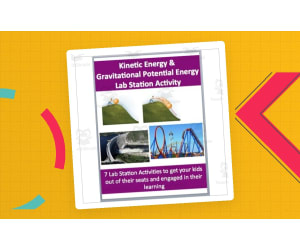
Kinetic and Gravitational Potential Energy – Lab Station Activity
Science, Physics, Grade 9, 10, 11, Labs, Experiments, Activities
Kinetic and Gravitational Potential Energy Lab Station Activity This editable 9-station lab activity allows students to get out of their seats and actively learn about kinetic and gravitational potential energy. The hands-on stations engage students through drawing , research, opinion-writing, and more. Questions and reading assignments connect the content to real-world applications. A recording sheet allows students to document their work as they rotate through the stations. This activity can be used to review before a test or as an immersive lab experience. It covers key concepts like kinetic energy, gravitational potential energy, and the conservation of energy. Bonus vocabulary puzzles are included to keep students productive during transition times. Suitable for grade 9-11 physics classes, this lab station activity needs almost no teacher prep and provides an exciting opportunity for students to interact with the content.
Author Teach With Fergy
Tags Kinetic, Energy, Gravity, Conservation, Lab Station, Potential And Kinetic Energy Games Online, Work And Energy Lab, Kinetic And Potential Energy Word Search

Cancer – Lab Station Activity
Science, Life Sciences, Biology, Grade 8, 9, 10, 11, Labs, Experiments, Activities
Cancer – Lab Station Activity This is a dynamic and engaging resource designed to enhance student understanding around the scientific complexities of cancer. It's characterized by its flexibility, effectively catering to different learning styles through various interactive tasks and exercises. Primarily intended for Grades 8-11 biology education. The activity revolves around seven unique lab stations. Every station includes an instruction card; some provide detailed prompts or reading material. Students use a record sheet (passport) at each station for recording responses, encouraging active engagement with the content. Detailed Exploration of Cancer-related Topics This comprehensive product delivers more than just scientific facts about cancer. It elaborates on aspects ranging from metastasis and causes to prevention strategies and treatment options - stimulating critical thought about the broader context of cancer in healthcare. Versatile Classroom Application Apart from being a lab activity , these versatile cards can be used for review sessions before tests or quizzes as well. Rotating between stations helps keep boredom at bay while maintaining consistent learning outcomes. Bonus Activities Included A word scramble and word search puzzle are included as fun extras - no idle moments while waiting between rotating stations! Educator Discretion & Personalization List item The formatting is fully customizable according to individual class needs. Can cater to stronger students with word scrambles whilst supporting weaker ones with simpler word searches. Ensures minimal preparation time without any compromise on learning outcomes.
Author Teach With Fergy
Tags Cancer Education, Lab Activity, Interactive Learning, Critical Thinking, Healthcare, Cancer Lesson Plans High School
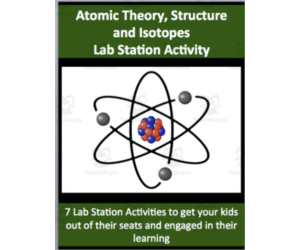
Atomic Theory, Structure and Isotopes – Lab Station Activity
Science, Chemistry, Grade 7, 8, 9, 10, Labs, Experiments, Activities
Atomic Theory, Structure and Isotopes Lab Stations Engage students in learning atomic theory, atomic structure, and isotopes with this interactive lab station activity. Students move through nine stations, including drawing atoms, watching expert videos, completing knowledge checks, reading real-life applications, and formulating their own questions.recording answers on a passport worksheet. This resource requires almost no teacher prep - just print the self-explanatory station cards with detailed student directions. The activity works well for whole group or independent work, covers core topics, and aligns to grades 7-10 science standards. Assessment at multiple stations allows students to exhibit understanding in various ways while staying focused and challenged. Extend student learning by pairing the lab stations with the included word scramble and word search.
Author Teach With Fergy
Tags Atoms, Atomic, Theory, Structure, Isotopes

One and Two Dimensional Motion – Lab Station Activity
Science, Physics, Grade 9, 10, 11, 12, Labs, Experiments, Activities
Physics Lab Station Activity: Exploring One and Two-Dimensional Motion In this inquiry-based physics lab activity, students will actively investigate concepts of one and two-dimensional motion through nine interactive stations. As students move through stations testing knowledge, drawing models, conducting research, and more, they will gain hands-on experience with topics like SI units, scalars, vectors, speed, velocity, position, and displacement. The activity can be used for independent student work or whole class instruction. Implementation ideas such as using it as a review, homework assignment, or summative assessment are also provided. This customizable resource contains station description cards, a recording sheet, word puzzles, and answer keys. It covers core physics topics on motion while getting learners out of their seats.
Author Teach With Fergy
Tags Motion, Physics, Linear, Lab Station, Dimensional, Cell Motion Laboratories